
Lecture 2 Maturity Indices Harvesting And Post Harvest







- Slides: 30
Lecture 2: Maturity Indices, Harvesting And Post Harvest Handling Of Fruits And Vegetables
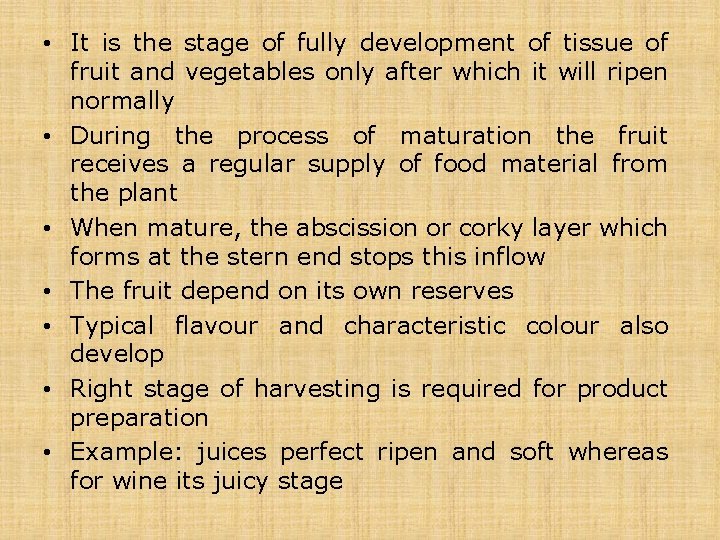
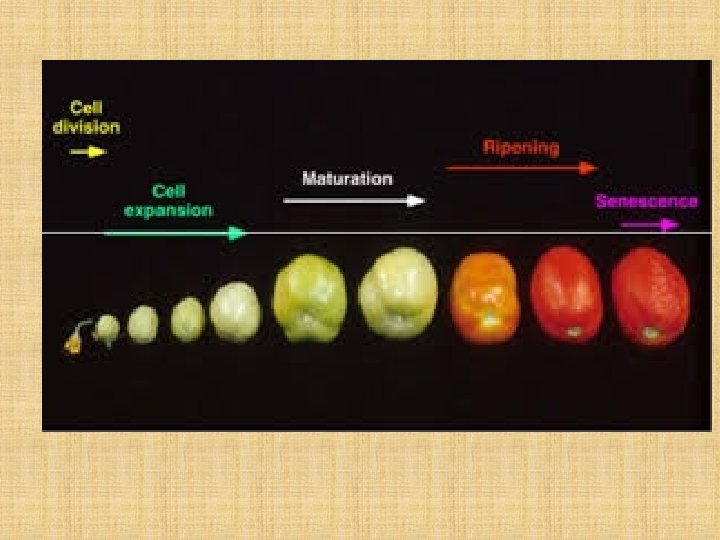
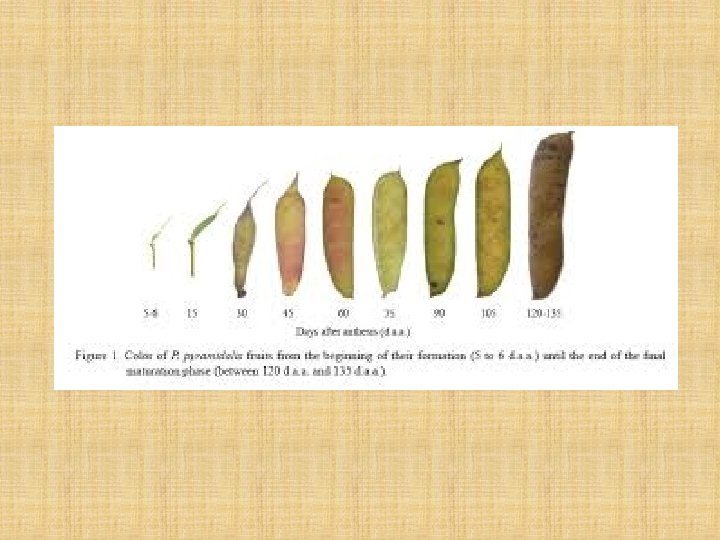
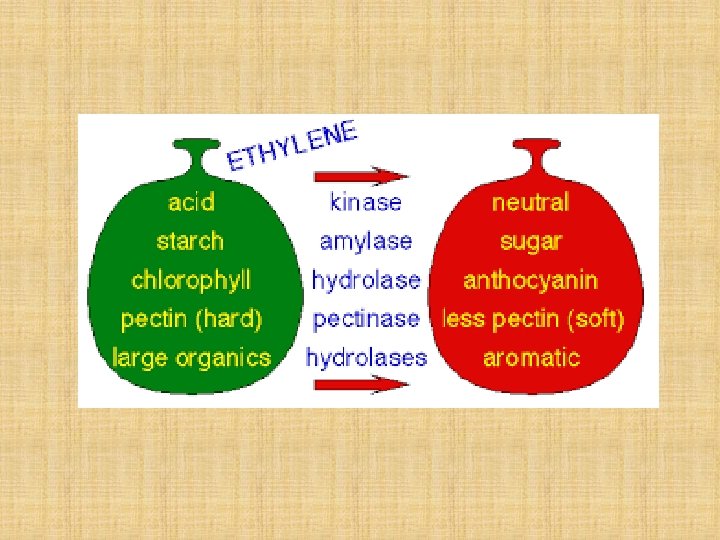
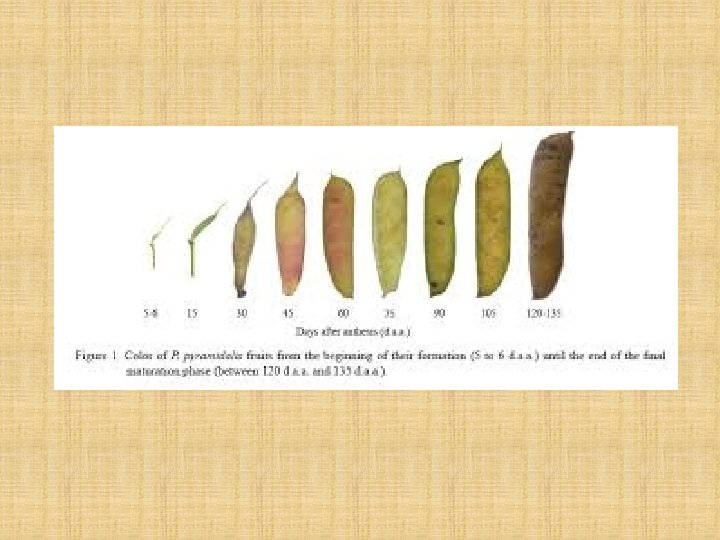
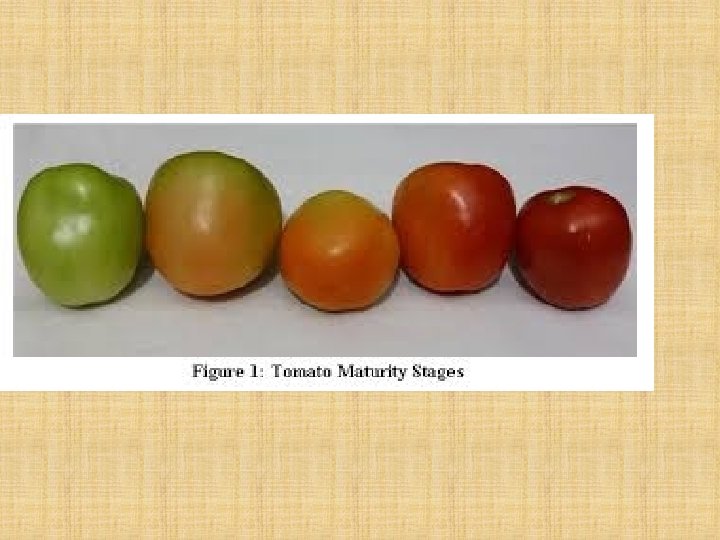
• It is the stage of fully development of tissue of fruit and vegetables only after which it will ripen normally • During the process of maturation the fruit receives a regular supply of food material from the plant • When mature, the abscission or corky layer which forms at the stern end stops this inflow • The fruit depend on its own reserves • Typical flavour and characteristic colour also develop • Right stage of harvesting is required for product preparation • Example: juices perfect ripen and soft whereas for wine its juicy stage
Improper judging the stage of maturity affects • the storage life • quality of fruit, when picked immature like mango develop white patches or air pockets during ripening and lacking in normal brix acid ratio or sugar acid ratio • Flavour • Susceptible to microbial and physiological spoilage • Marketing • Processing
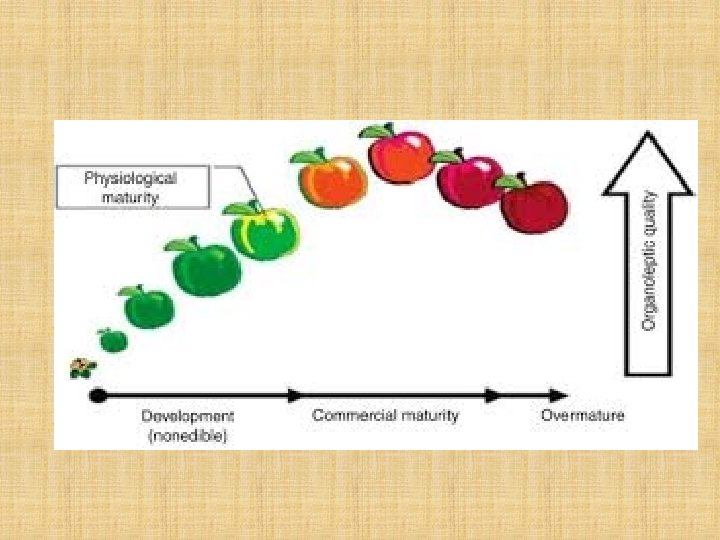
• Horticultural maturity It is a developmental stage of the fruit on the tree, which will result in a satisfactory product after harvest • Physiological maturity It refers to the stage in the development of the fruits and vegetables when maximum growth and maturation has occurred. It is usually associated with full ripening in the fruits. The Physiological mature stage is followed by senescence.
Commercial maturity • It is the state of plant organ required by a market Harvest Maturity • it is a stage, which will allow fruits / vegetables at its peak condition when it reaches to the consumers and develop acceptable flavour or appearance and having adequate shelf life
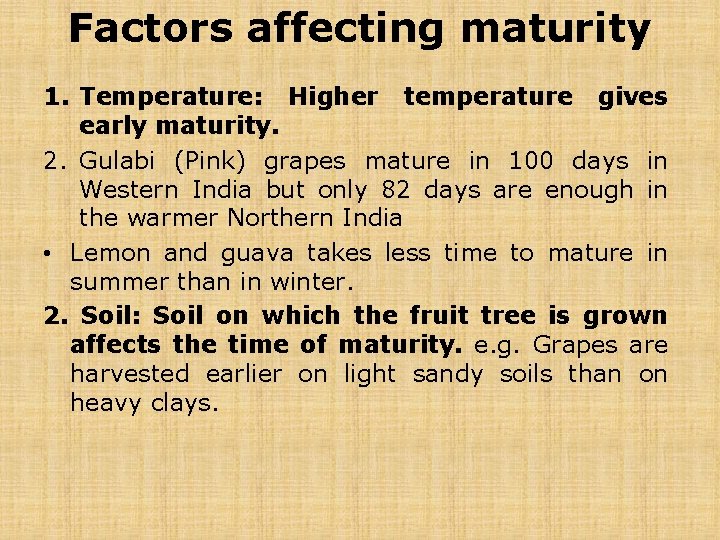
Factors affecting maturity 1. Temperature: Higher temperature gives early maturity. 2. Gulabi (Pink) grapes mature in 100 days in Western India but only 82 days are enough in the warmer Northern India • Lemon and guava takes less time to mature in summer than in winter. 2. Soil: Soil on which the fruit tree is grown affects the time of maturity. e. g. Grapes are harvested earlier on light sandy soils than on heavy clays.
3. Size of planting material: This factor in propagated fruits affects fruit maturity. e. g. In pineapple, the number of days taken from flowering to fruit maturity was more by planting large suckers and slips than by smaller ones. 4. Closer spacing: Close spacing of hill bananas hastened maturity. And in some it reduces 5. Pruning intensity: It enhanced the maturity of Flordasun and sharbati Peaches. 6. Girdling: Process of constricting the periphery of a stem which blocks the downward translocation of CHO, hormones, etc. Beyond the constriction which rather accumulates above it
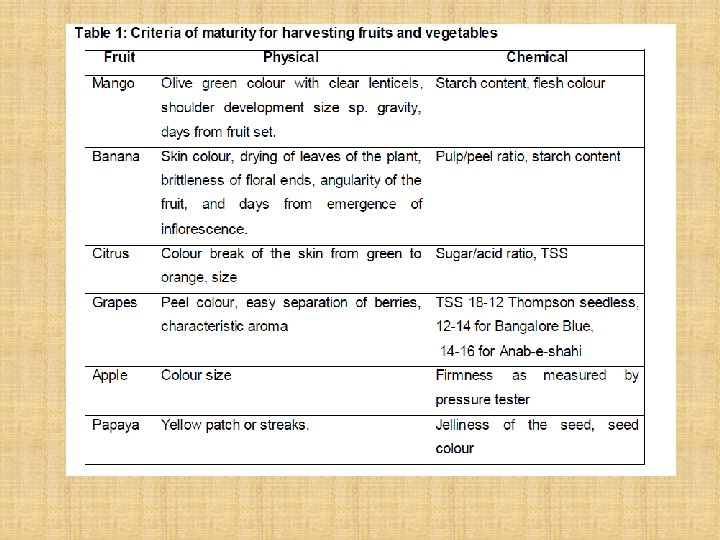
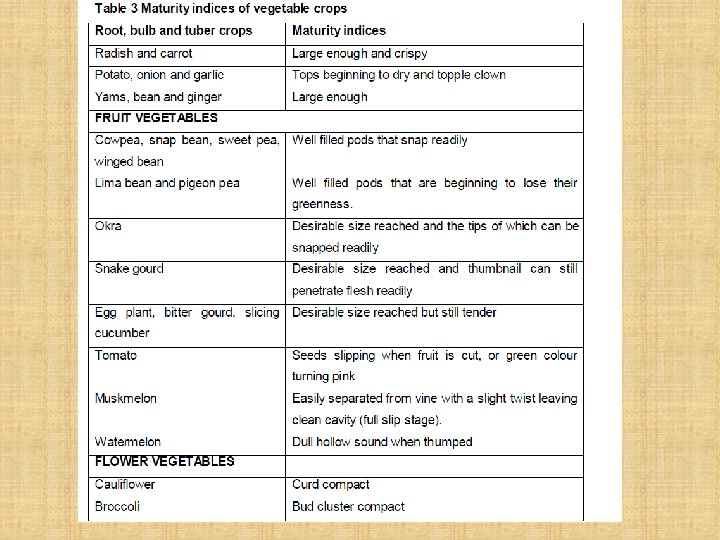
Maturity index • The factors for determining the harvesting of fruits, vegetables and plantation crops according to consumer’s purpose, type of commodity, etc • Signs that shows the readiness of fruits and vegetable for harvesting
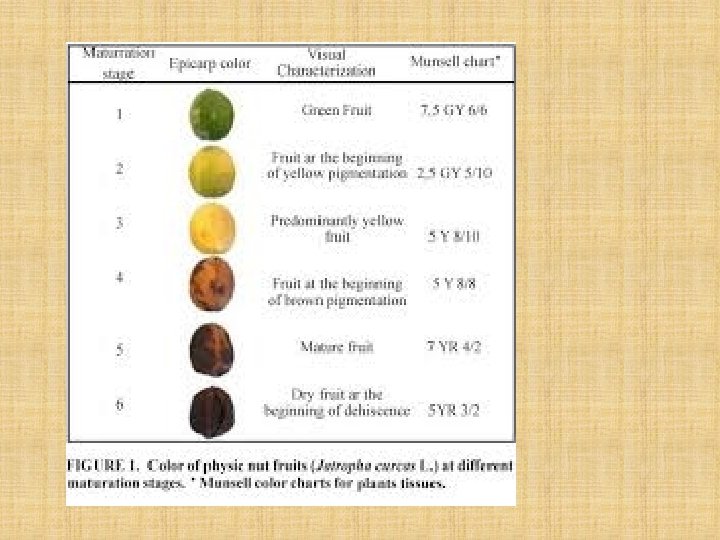
1. Visual indices • Drying of top leaves in banana • Flow of sap from cut fruit stalk of mango slows • Exudation is more and comes with force in a jet form in papaya, the latex becomes almost watery eg. sapota • Sapota, floral ends become more brittle and shed with a gentle touch or even on their own • Sapota, the brown scurf on the fruit skin • In mango, lenticels become more prominent and the waxy bloom gradually disappears. • Angularity in banana
• Development of wide space between custard apple segments • flattening of the eyes in pineapple • Tubercles in litchi
• • Fruit retention strength Fruit size Surface morphology Weight Specific gravity Color Firmness T. S. S
2. Computational • Calendar date: For perennial fruit crops grown in seasonal climate which are more or less uniform from year to year, calendar date for harvest is a reliable guide to commercial maturity • Mean heat Value: Harvest date of newly introduced fruits in a widely varying climate can be predicted with the help of heat unit. • T-Stage: 90 o
3. Chemical • • Titratable acidity TSS: acid ratio Total Sugars Starch Tannins Oil content Juice content
4. Physiological methods • Respiration rate • Ethylene rate
HARVESTING • 1. Hand Harvesting • Hand harvesting has a number of advantages over machine harvest • People can accurately determine product quality, allowing accurate selection of mature product. • Properly trained workers can pick and handle the product with a minimum of damage. Many freshmarket products have a short shelf life if they are bruised or damaged during harvest and handling
• The rate of harvest can easily be increased by hiring more workers. Hand- harvesting also requires a minimum of capital investment • The main problem with hand harvesting is labor management. Labor supply is a problem for growers who • cannot offer a long employment season. Labor strikes during the harvest period can be costly • In spite of these problems, quality is so important to marketing fresh- market commodities successfully that hand harvesting remains the dominant method of harvest of most fruits and vegetables and for all cut flowers. • Effective use of hand labor requires careful management. New employees must be trained to harvest the product at the required quality and at an acceptable rate of productivity. • Employees must know what level of performance and must be encouraged and trained to reach that level.
2. Mechanical Harvesting • Mechanical harvest is currently used for fresh-market crops that are roots, tubers, or rhizomes and for nut crops. Vegetables that are grown below ground (radishes, potatoes, garlic, carrots, beets and others) are always harvested only once and the soil can be used to cushion the product from machine caused mechanical injury. Tree nuts and peanuts are protected by a shell and easily withstand mechanical handling. A number of products destined for processing such as tomatoes, wine grapes, beans, peas, prunes, peachesand some leafy green vegetables are machine harvested because harvest damage does not significantly affect the quality of processed product. This is often because the product is processed quickly after harvest. These crops have also been amenable to new production techniques and breeding that allow the crop • to be better suited to mechanical harvest.
• The main advantage of mechanical harvest equipment is that machines can often harvest at high rates. Tree nut harvesters, for eg. attaching a shaking mechanism to the tree and remove most of the nuts in few seconds. The nuts are either caught on a fabric- covered frame or picked up from the ground by other machines. This allows an orchard to be harvested very quickly compared to handshaking with poles. Machine harvest also reduces management • problems associated with workers. The commodity must be grown to accept mechanical
• Demerits of Mechanical Harvesting • Machines are rarely capable of selective harvest. Mechanical harvesting will not be feasible until the crop or production techniques can be modified to allow one time harvest. • Harvesting machines often causes excessive product perennial crops eg. Bark damage from a tree shaker. The harvesting machines are quite expensive
• Any Questions?