
Lecture 2 Lab 2 Allele classification Genetic screens
Lecture 2 • Lab 2 • Allele classification • Genetic screens • Epistasis
Groups Group 1 -1 Josh Farhi Tyler Madden Group 1 -2 Youssef Neema Christine Schmidt Group 2 -1 Caitlin Carlisle Kourtney Gordon Nina Nissan Group 2 -2 Nicole Stabler Rachel Edgar Group 2 -3 Kathleen Shah Camille Fong Chih Kai
Sunday heat shock times
Monday heat shock times
Where do we do the heat shocks? Room 361 of the Western Science Center. How do I get there on Sunday if the front doors of WSC are locked? Tunnels. A) Middlesex College front door turn left down to the staircase in the middle of the hallway. Go down to tunnel that leads to the WSC. B) Natural Science Center to Physics and find a tunnel leading to WSC. C) Natural Science Center to B&G third floor to WSC
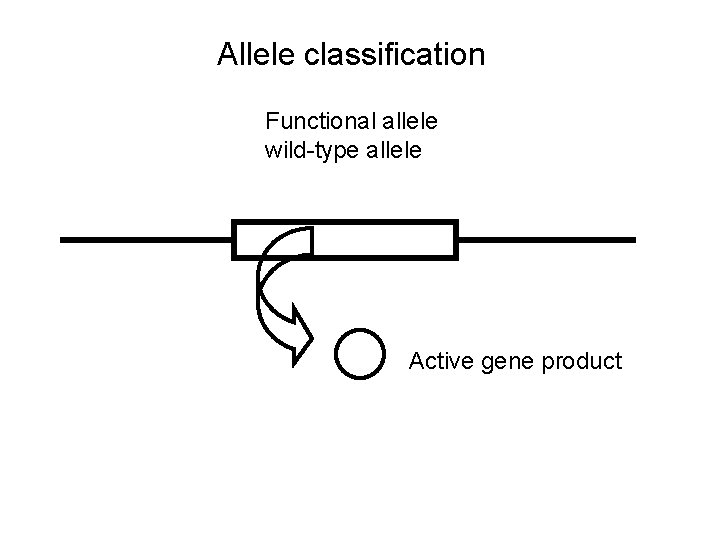
Allele classification Functional allele wild-type allele Active gene product
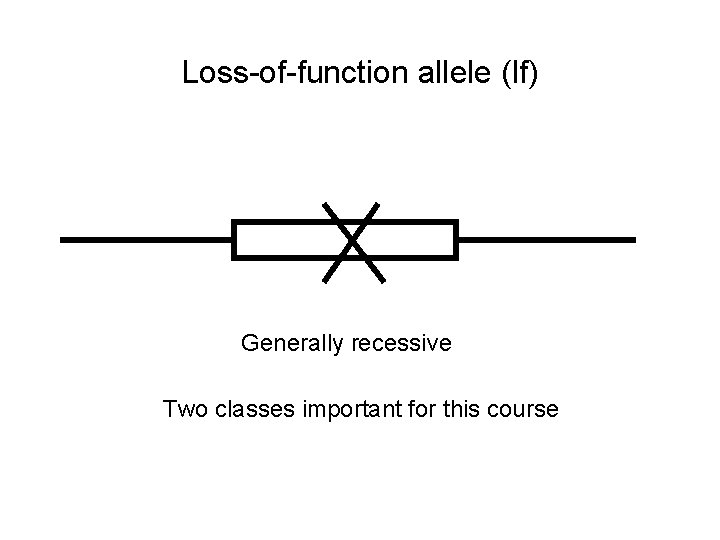
Loss-of-function allele (lf) Generally recessive Two classes important for this course
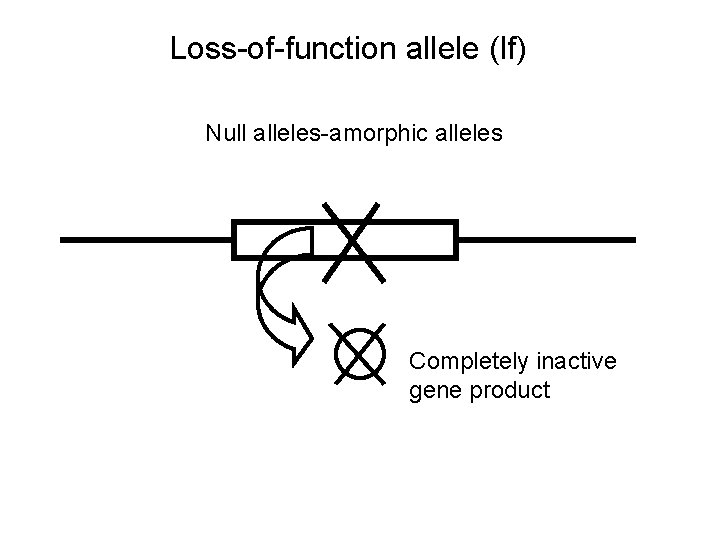
Loss-of-function allele (lf) Null alleles-amorphic alleles Completely inactive gene product
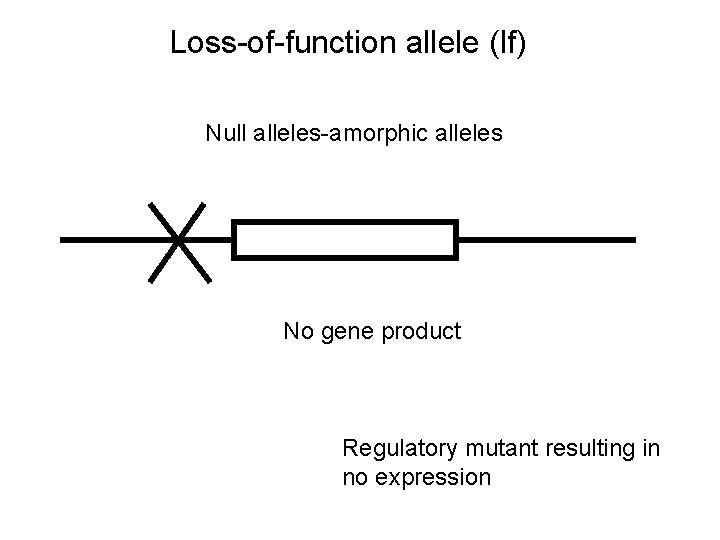
Loss-of-function allele (lf) Null alleles-amorphic alleles No gene product Regulatory mutant resulting in no expression
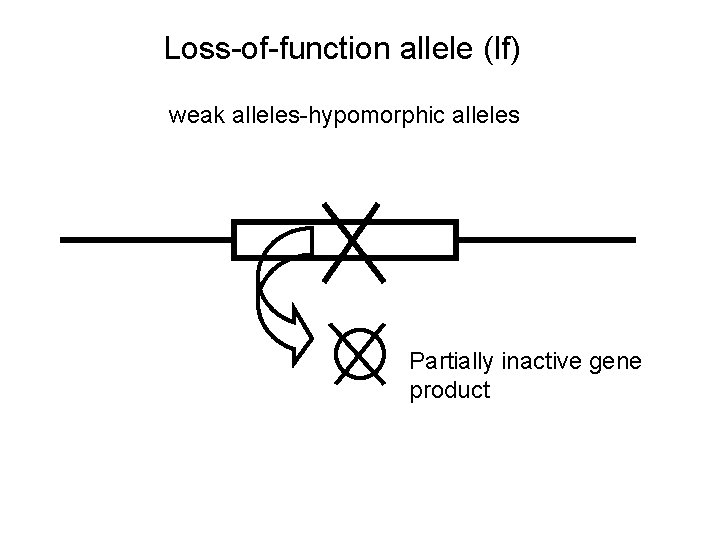
Loss-of-function allele (lf) weak alleles-hypomorphic alleles Partially inactive gene product
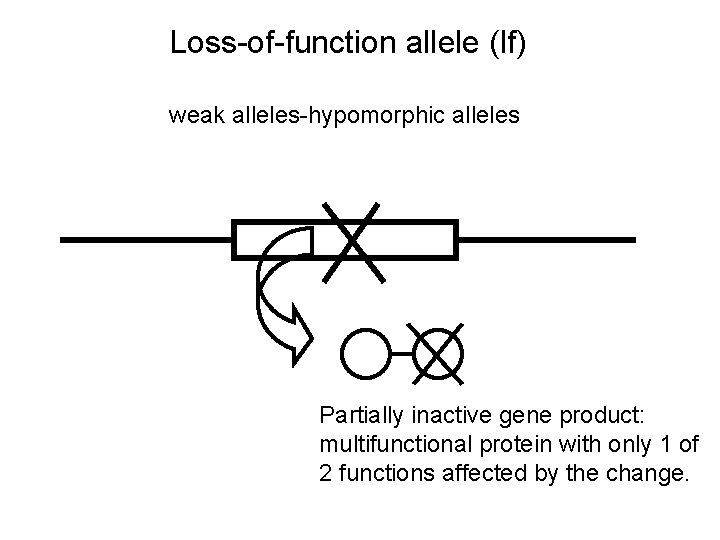
Loss-of-function allele (lf) weak alleles-hypomorphic alleles Partially inactive gene product: multifunctional protein with only 1 of 2 functions affected by the change.
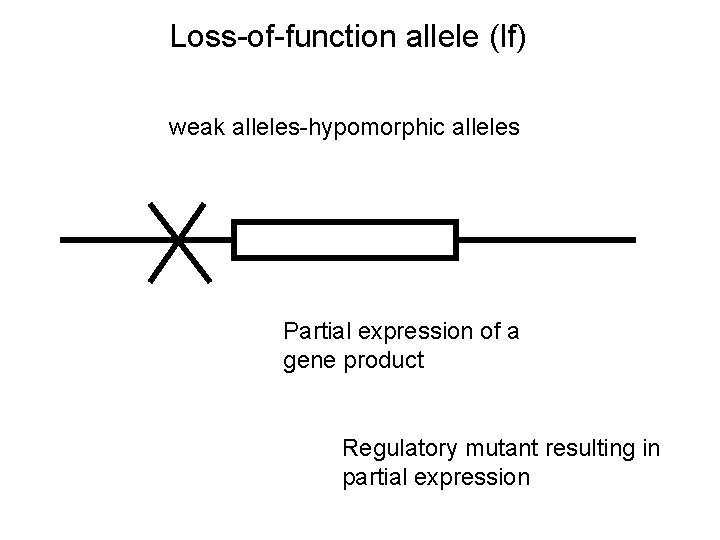
Loss-of-function allele (lf) weak alleles-hypomorphic alleles Partial expression of a gene product Regulatory mutant resulting in partial expression
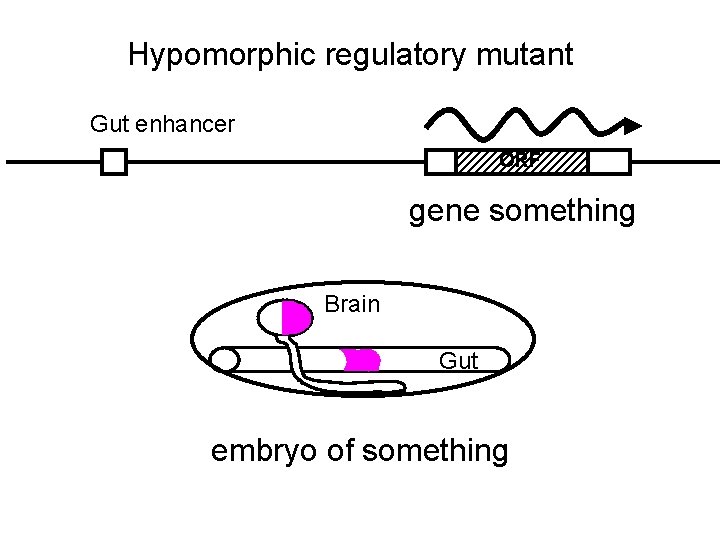
Hypomorphic regulatory mutant Gut enhancer ORF gene something Brain Gut embryo of something
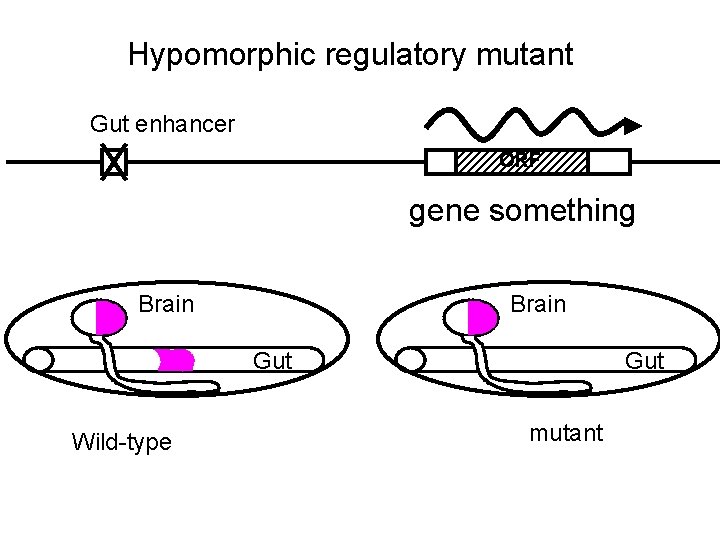
Hypomorphic regulatory mutant Gut enhancer ORF gene something Brain Gut Wild-type Gut mutant
Gain-of-function alleles (gf) Generally associated with misregulation of a gene product’s activity, and are generally dominant. Three examples

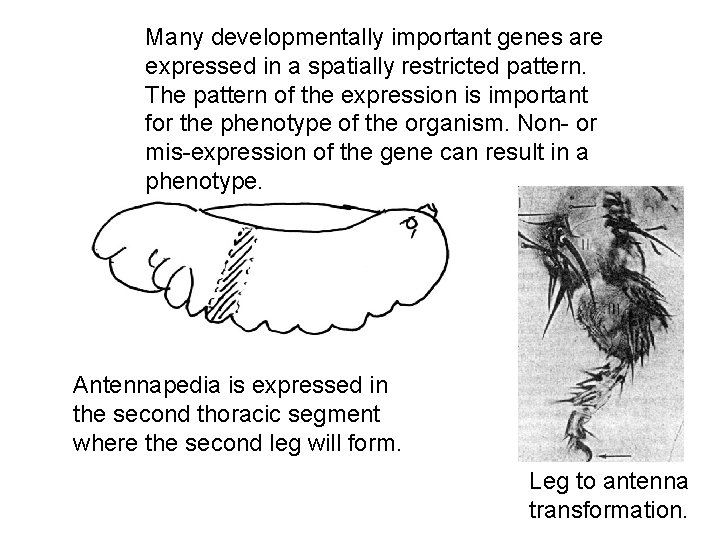
Many developmentally important genes are expressed in a spatially restricted pattern. The pattern of the expression is important for the phenotype of the organism. Non- or mis-expression of the gene can result in a phenotype. Antennapedia is expressed in the second thoracic segment where the second leg will form. Leg to antenna transformation.
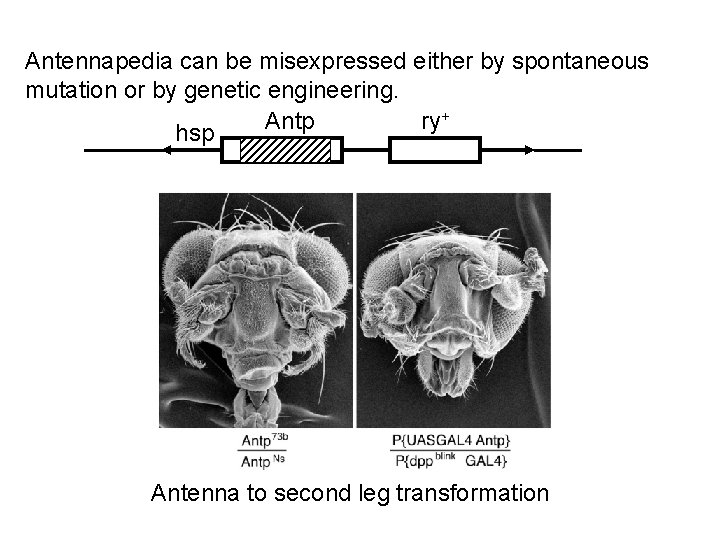
Antennapedia can be misexpressed either by spontaneous mutation or by genetic engineering. + Antp ry hsp Antenna to second leg transformation
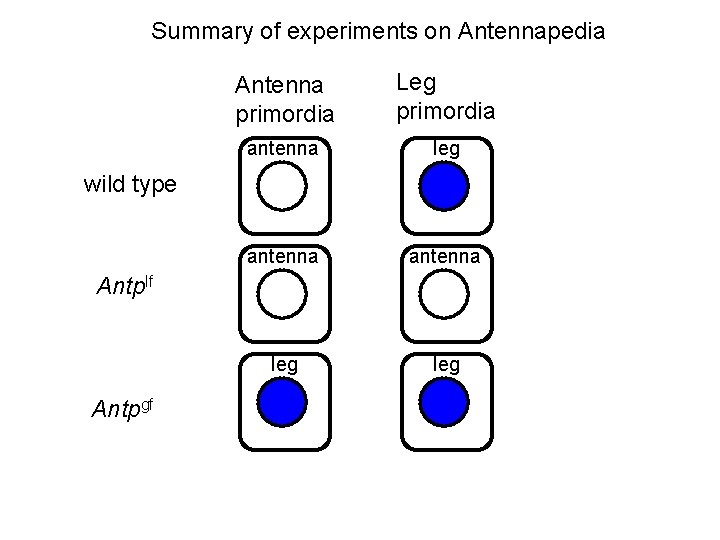
Summary of experiments on Antennapedia Antenna primordia Leg primordia antenna leg wild type Antplf Antpgf
Dominant negative (dn) antimorph Criteria The gene product works in a complex, either with itself or another protein, and the activity of all the proteins in the complex is essential for the total activity of the complex.
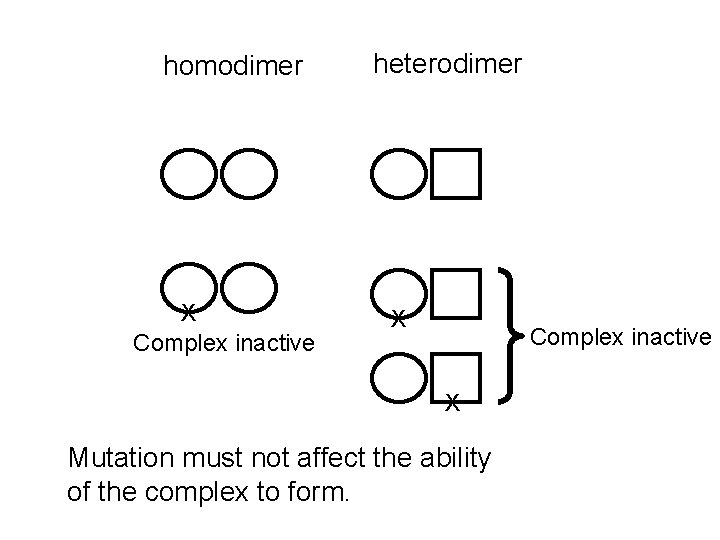
homodimer X Complex inactive heterodimer X Complex inactive X Mutation must not affect the ability of the complex to form.
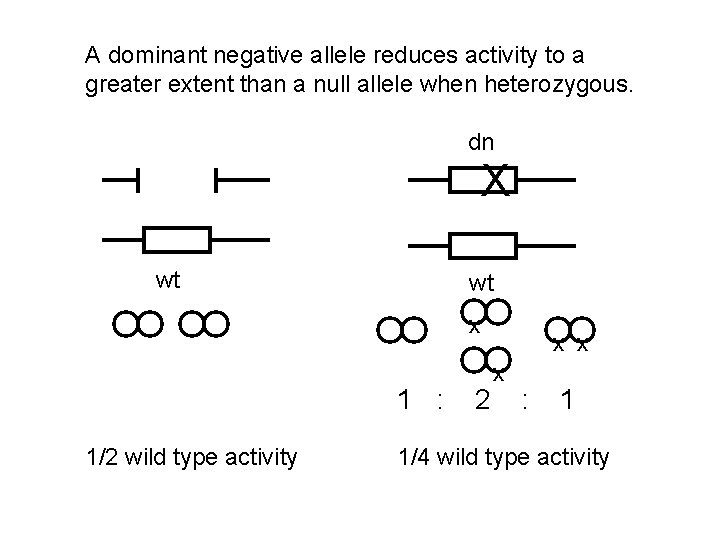
A dominant negative allele reduces activity to a greater extent than a null allele when heterozygous. dn X wt wt x 1 : 1/2 wild type activity 2 x x x : 1 1/4 wild type activity
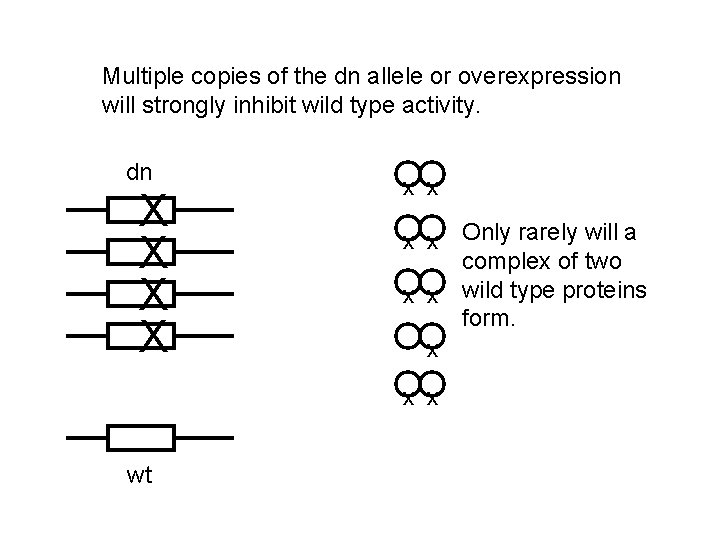
Multiple copies of the dn allele or overexpression will strongly inhibit wild type activity. dn X X x x Only rarely will a complex of two x x wild type proteins form. x x x wt
Genetic screens Genetic analysis requires genetic variants.
Saturation screens An attempt to identify as many genes whose products contribute to the process that you are studying as is statistically and technically possible.
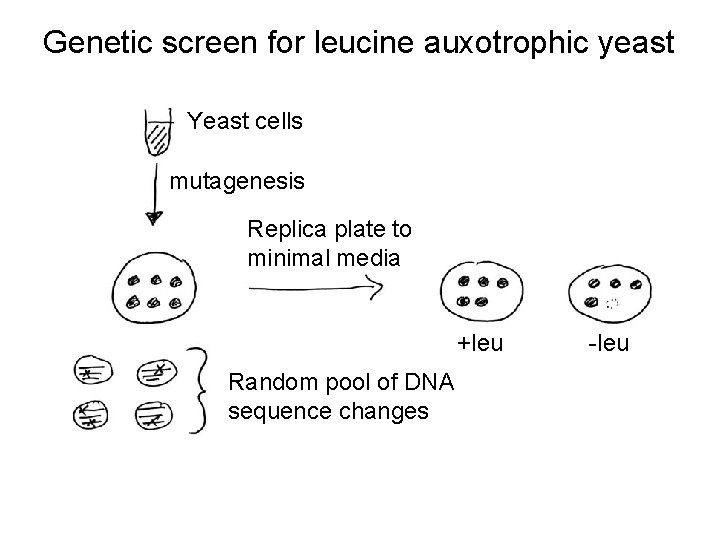
Genetic screen for leucine auxotrophic yeast Yeast cells mutagenesis Replica plate to minimal media +leu Random pool of DNA sequence changes -leu
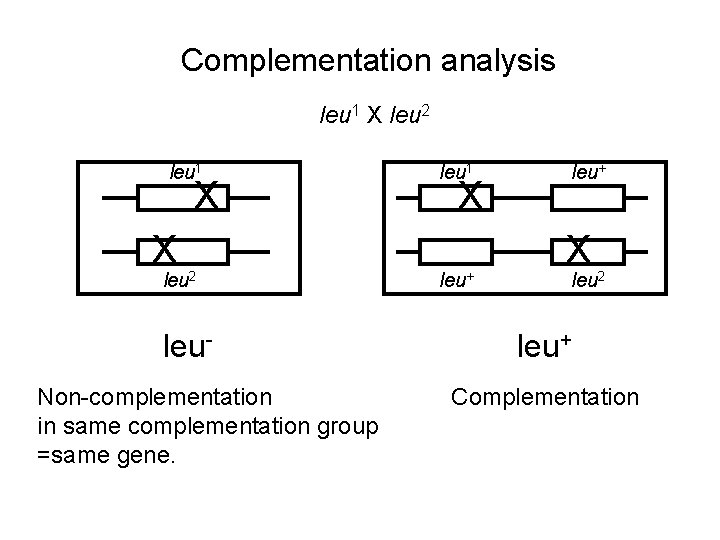
Complementation analysis leu 1 X leu 2 leu 1 X X leu 2 leu. Non-complementation in same complementation group =same gene. leu 1 X leu+ X leu 2 leu+ Complementation
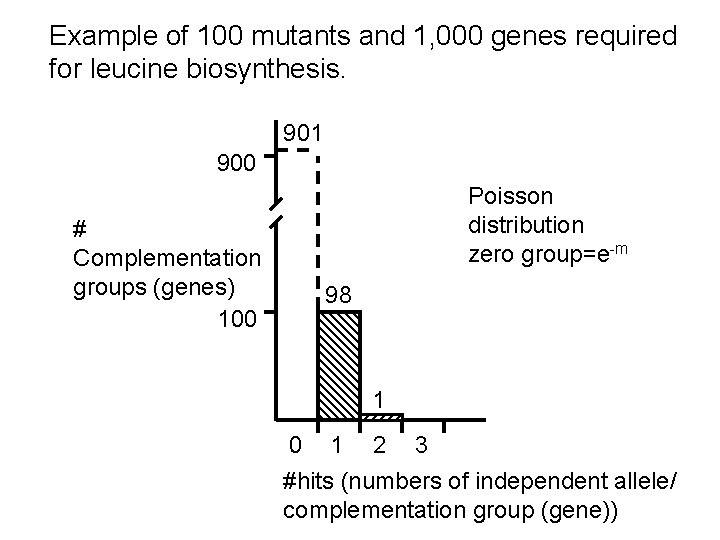
Example of 100 mutants and 1, 000 genes required for leucine biosynthesis. 901 900 # Complementation groups (genes) 100 Poisson distribution zero group=e-m 98 1 0 1 2 3 #hits (numbers of independent allele/ complementation group (gene))
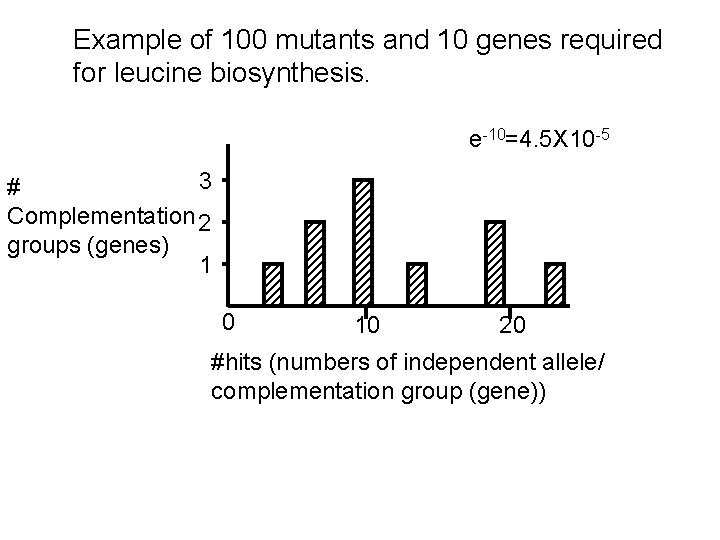
Example of 100 mutants and 10 genes required for leucine biosynthesis. e-10=4. 5 X 10 -5 3 # Complementation 2 groups (genes) 1 0 10 20 #hits (numbers of independent allele/ complementation group (gene))
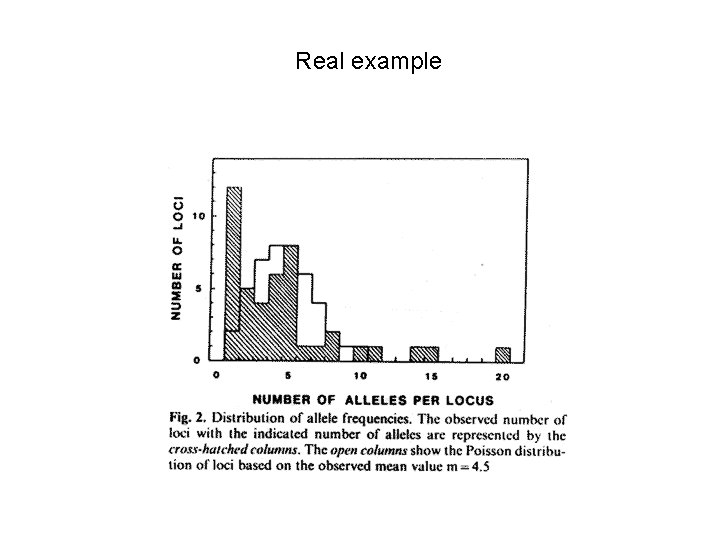
Real example
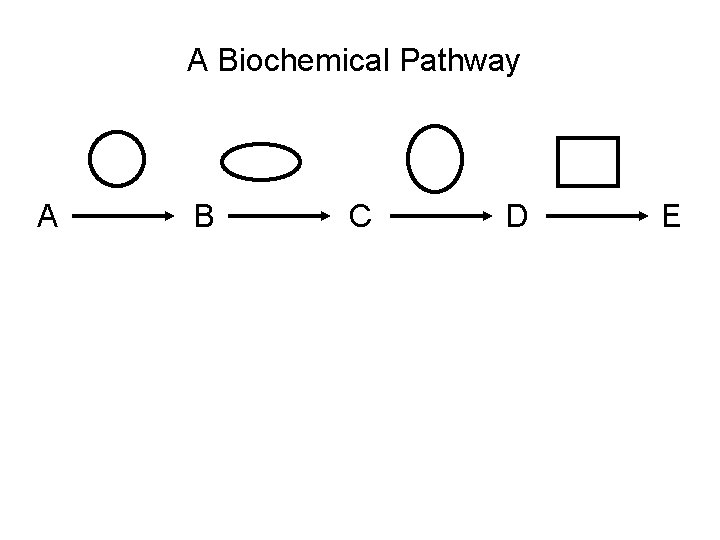
A Biochemical Pathway A B C D E
Epistasis Epistatic interactions are assayed by comparing the phenotype of a double mutant organism with that of the singly mutant organisms.
Epistasis: Criteria for the two mutations A. Have related phenotypes growth control sex determination dorsal ventral axis determination B. Work on a pathway that makes a distinct decision growth/nongrowth male/female expression/nonexpression C. The two mutations have distinct/opposite phenotypes all males versus all females expression always ON versus always OFF Ventralized versus Dorsalized
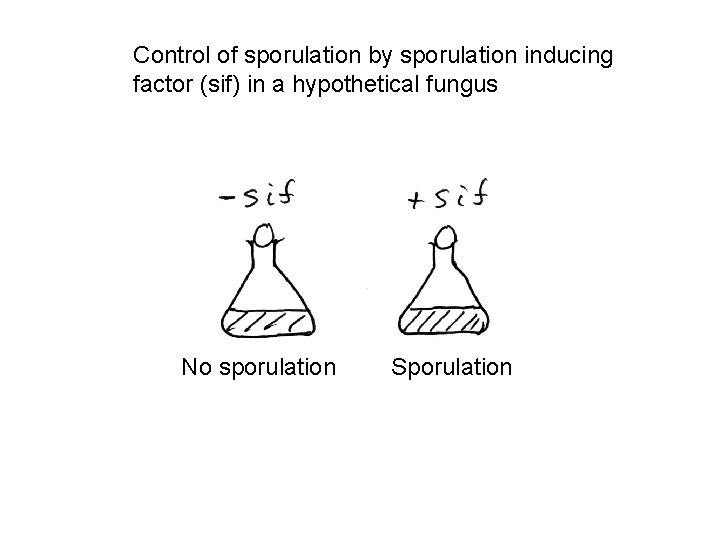
Control of sporulation by sporulation inducing factor (sif) in a hypothetical fungus No sporulation Sporulation
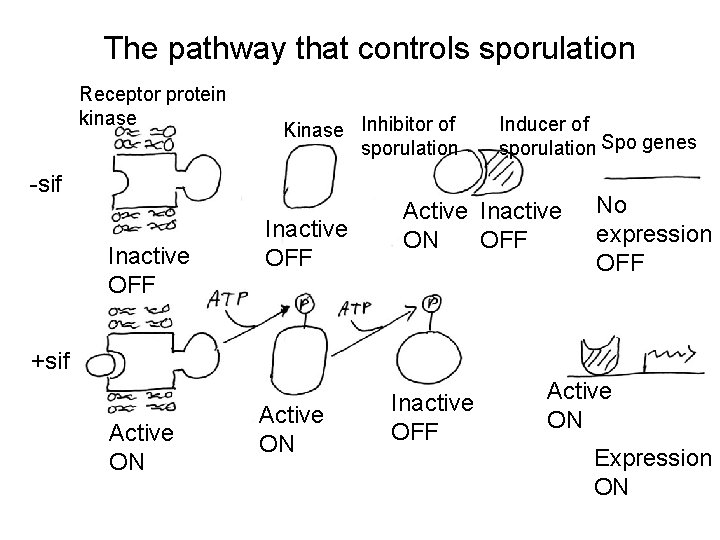
The pathway that controls sporulation Receptor protein kinase Kinase Inhibitor of sporulation Inducer of sporulation Spo genes -sif Inactive OFF Active Inactive ON OFF No expression OFF +sif Active ON Inactive OFF Active ON Expression ON

Epistasis example Drosophila embryos have a dorsal and ventral side. Mutations exist where the mother lays eggs where the embryo develops with only the dorsal side lacking The ventral side (dorsalized). Mutations exist also that ventralize the embryo.
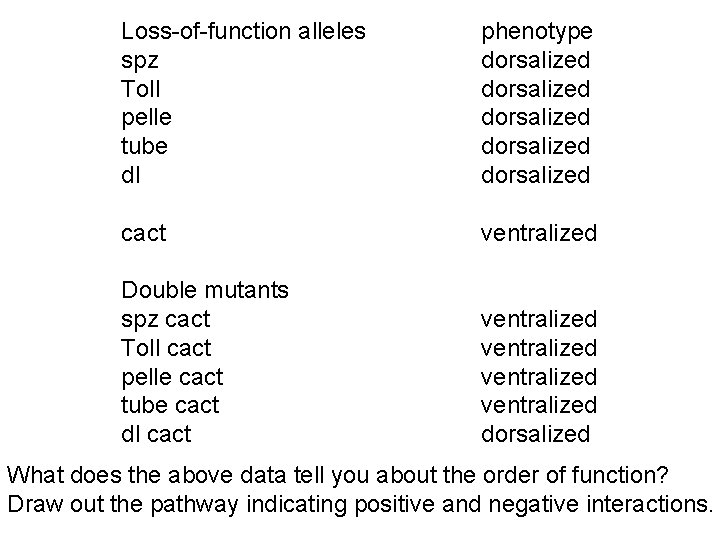
Loss-of-function alleles spz Toll pelle tube dl phenotype dorsalized dorsalized cact ventralized Double mutants spz cact Toll cact pelle cact tube cact dl cact ventralized dorsalized What does the above data tell you about the order of function? Draw out the pathway indicating positive and negative interactions.
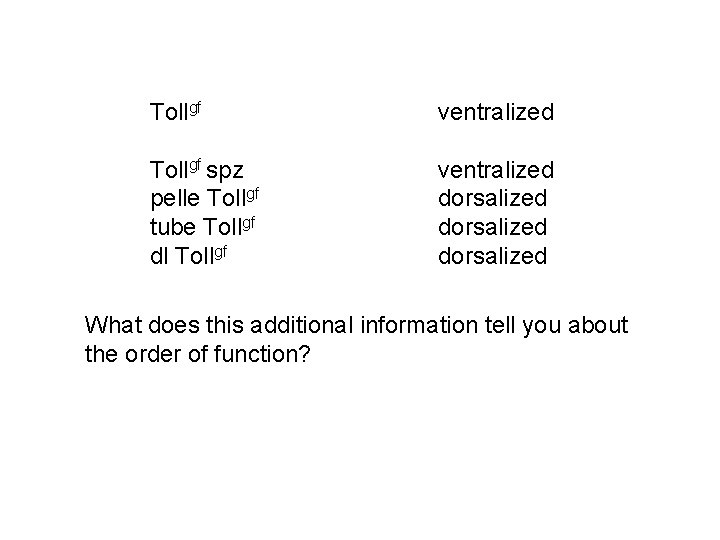
Tollgf ventralized Tollgf spz pelle Tollgf tube Tollgf dl Tollgf ventralized dorsalized What does this additional information tell you about the order of function?
- Slides: 39