
LECTURE 2 DARWINIAN EVOLUTION What is Evolution Evolution
- Slides: 37
LECTURE 2: DARWINIAN EVOLUTION
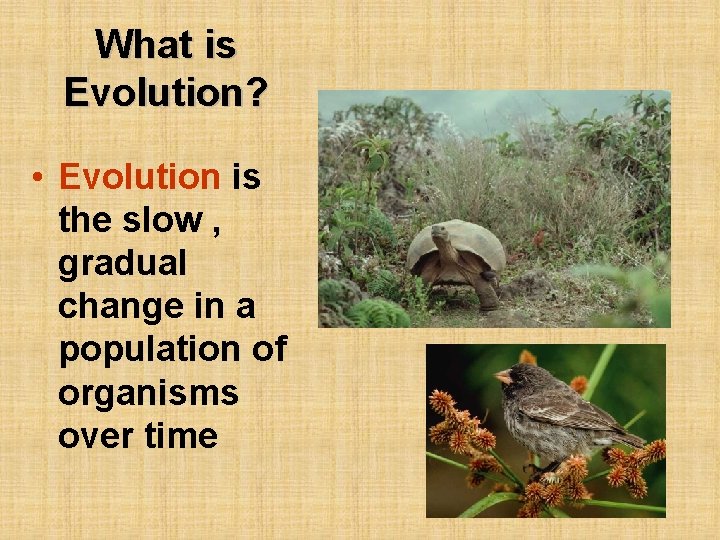
What is Evolution? • Evolution is the slow , gradual change in a population of organisms over time 2
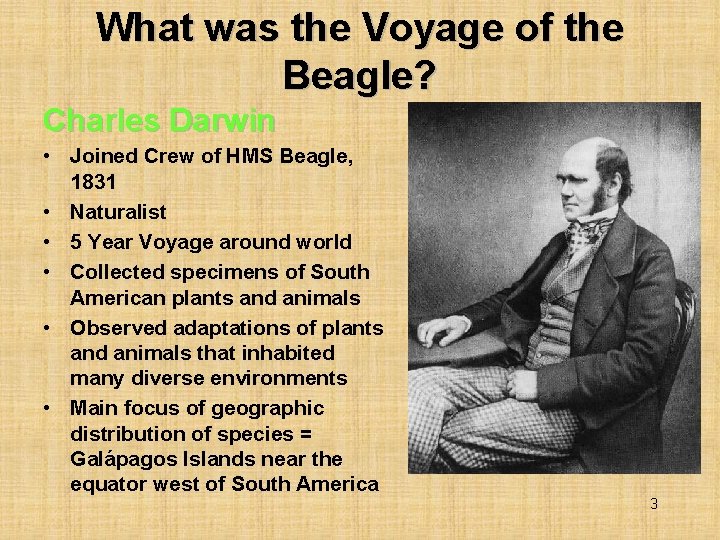
What was the Voyage of the Beagle? Charles Darwin • Joined Crew of HMS Beagle, 1831 • Naturalist • 5 Year Voyage around world • Collected specimens of South American plants and animals • Observed adaptations of plants and animals that inhabited many diverse environments • Main focus of geographic distribution of species = Galápagos Islands near the equator west of South America 3
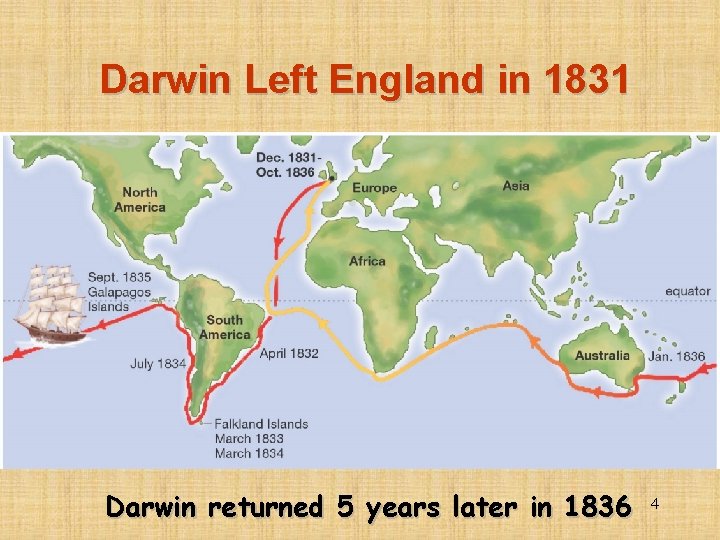
Darwin Left England in 1831 Darwin returned 5 years later in 1836 4
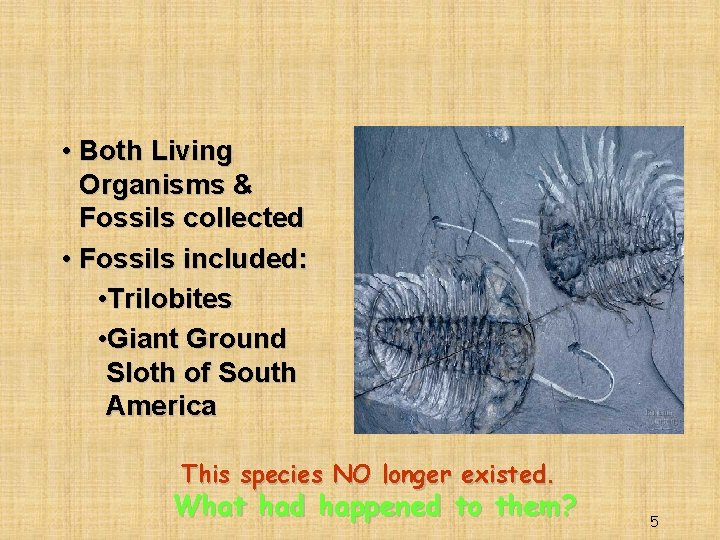
• Both Living Organisms & Fossils collected • Fossils included: • Trilobites • Giant Ground Sloth of South America This species NO longer existed. What had happened to them? 5
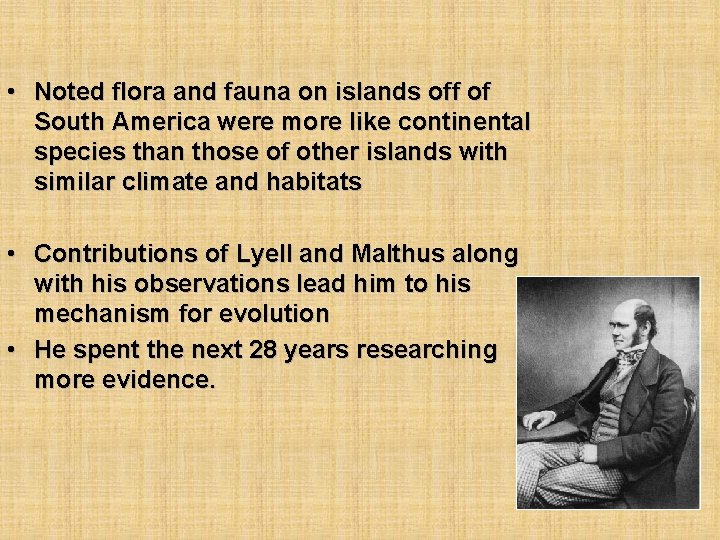
• Noted flora and fauna on islands off of South America were more like continental species than those of other islands with similar climate and habitats • Contributions of Lyell and Malthus along with his observations lead him to his mechanism for evolution • He spent the next 28 years researching more evidence.
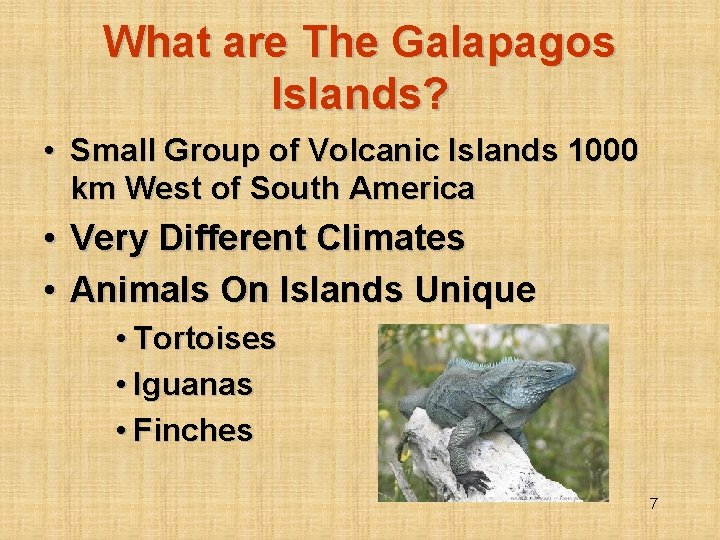
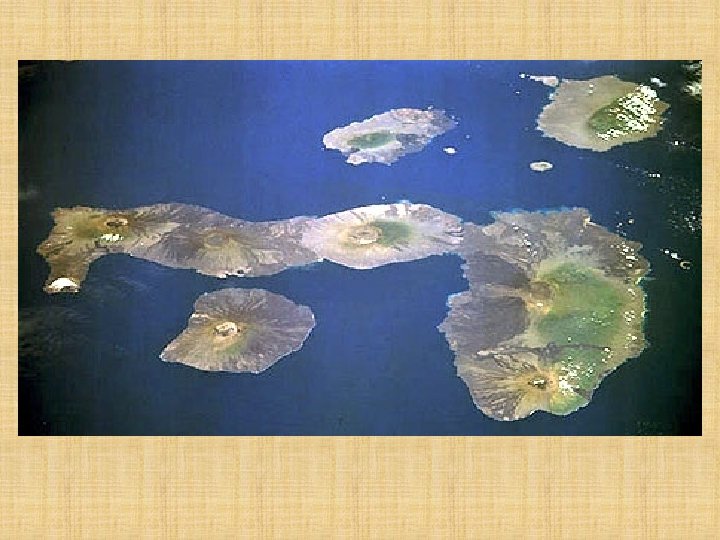
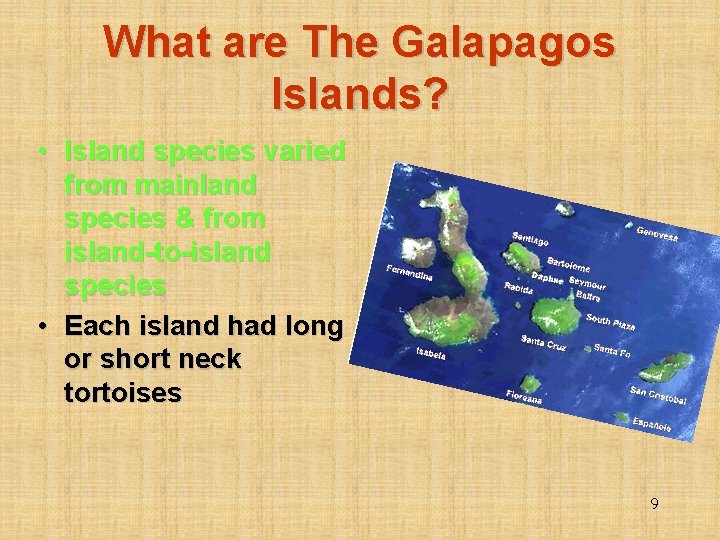
What are The Galapagos Islands? • Small Group of Volcanic Islands 1000 km West of South America • Very Different Climates • Animals On Islands Unique • Tortoises • Iguanas • Finches 7
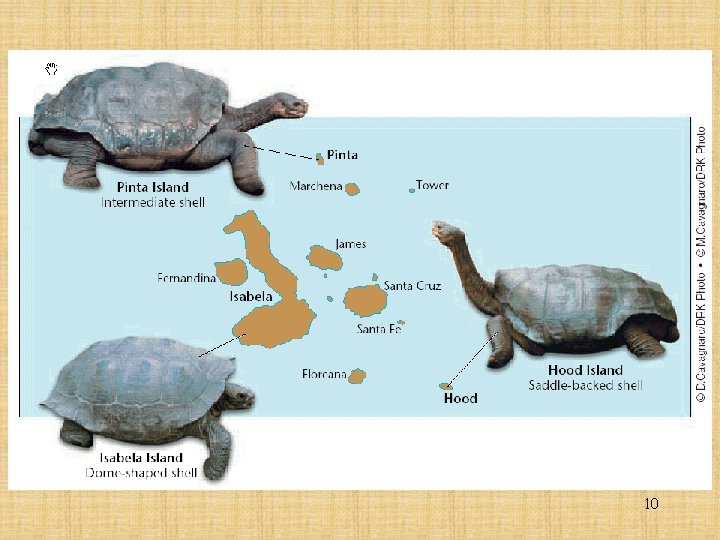
What are The Galapagos Islands? • Island species varied from mainland species & from island-to-island species • Each island had long or short neck tortoises 9
10
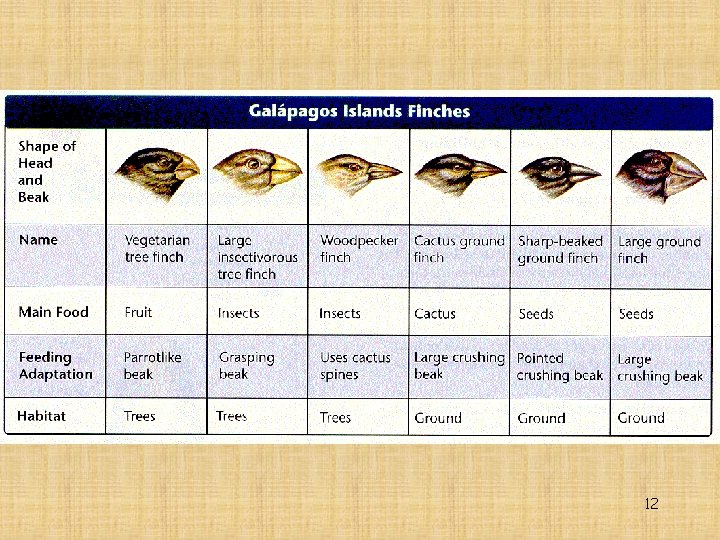
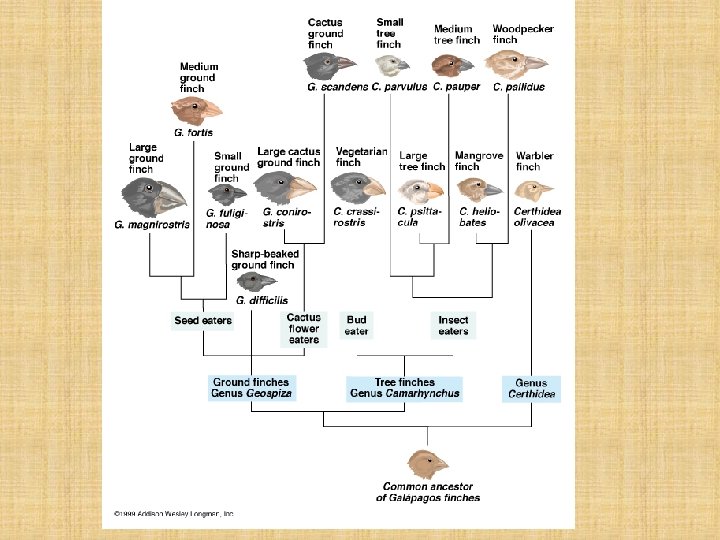
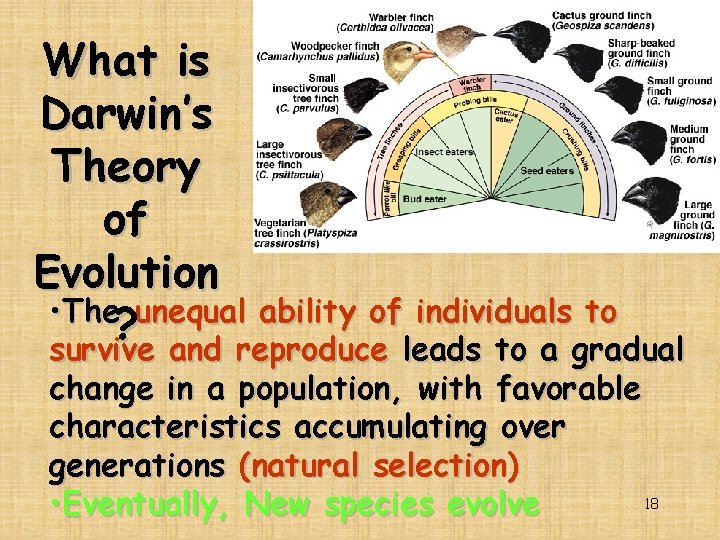
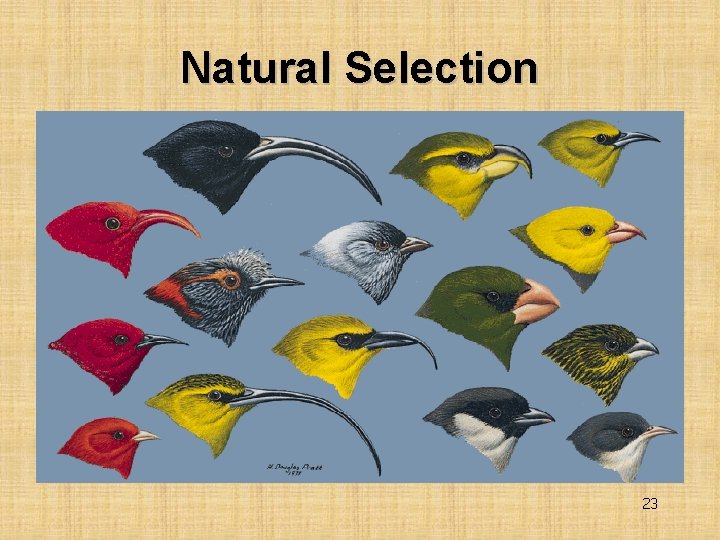
What are Characteristics of Finches? • Finches on the islands resembled a mainland finch • More types of finches appeared on the islands where the available food was different (seeds, nuts, berries, insects…) • Finches had different types of beaks adapted to their type of food gathering 11
12
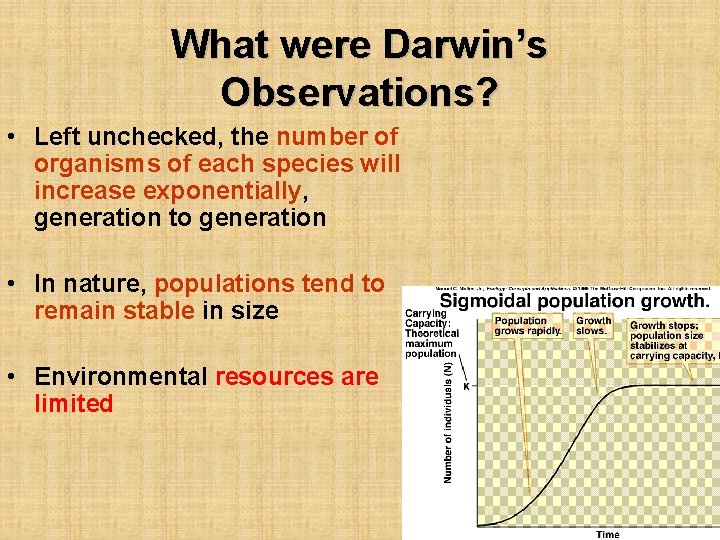
What were Darwin’s Observations? • Left unchecked, the number of organisms of each species will increase exponentially, generation to generation • In nature, populations tend to remain stable in size • Environmental resources are limited 14
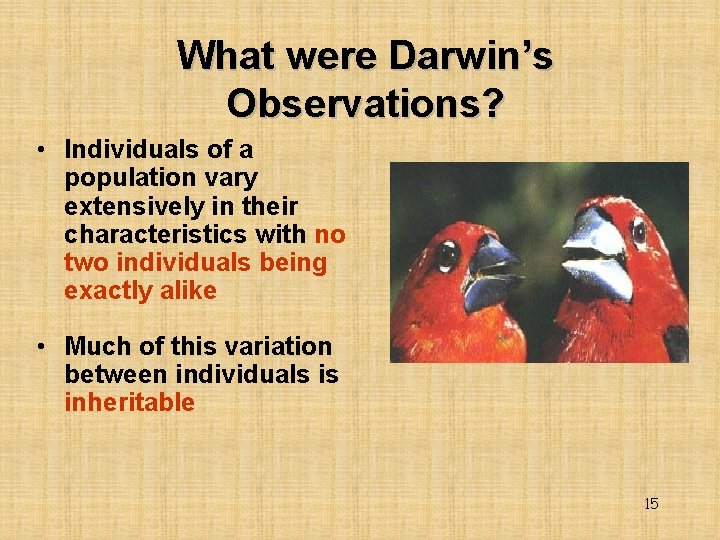
What were Darwin’s Observations? • Individuals of a population vary extensively in their characteristics with no two individuals being exactly alike • Much of this variation between individuals is inheritable 15
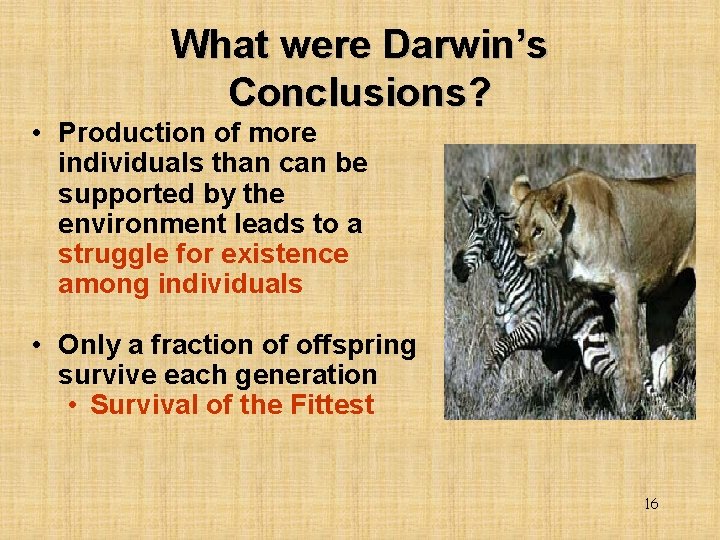
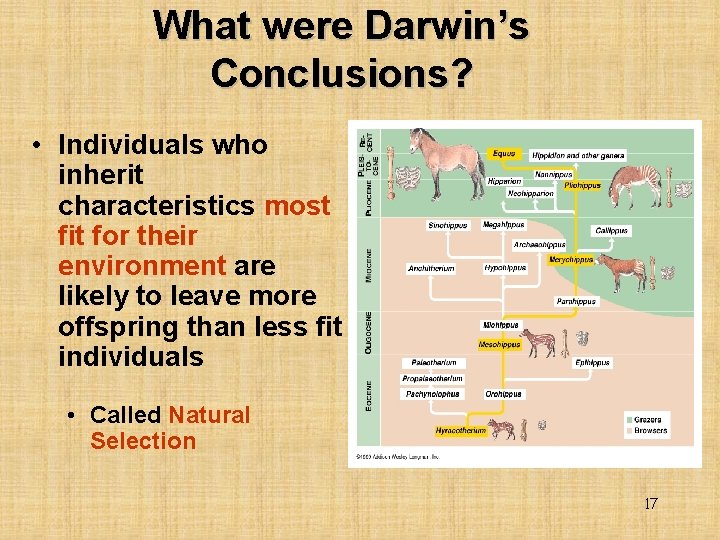
What were Darwin’s Conclusions? • Production of more individuals than can be supported by the environment leads to a struggle for existence among individuals • Only a fraction of offspring survive each generation • Survival of the Fittest 16
What were Darwin’s Conclusions? • Individuals who inherit characteristics most fit for their environment are likely to leave more offspring than less fit individuals • Called Natural Selection 17
What is Darwin’s Theory of Evolution • The unequal ability of individuals to ? survive and reproduce leads to a gradual change in a population, with favorable characteristics accumulating over generations (natural selection) 18 • Eventually, New species evolve
What are Natural Selection Concepts? • The Struggle for Existence – compete for food, mates, space, water, etc. • Survival of the Fittest – better adapted able to survive and reproduce • Descent with Modification – new species arise from common ancestor replacing less fit species 19
What is Fitness? • Ability of an Individual To Survive & Reproduce • An individual’s contribution of genes to the next generation (i. e. number of offspring) – Fitness Is Central To The Process Of Evolution – Individuals With Low Fitness • Die • Produce Few Offspring Survival of the Fittest AKA Natural Selection 20
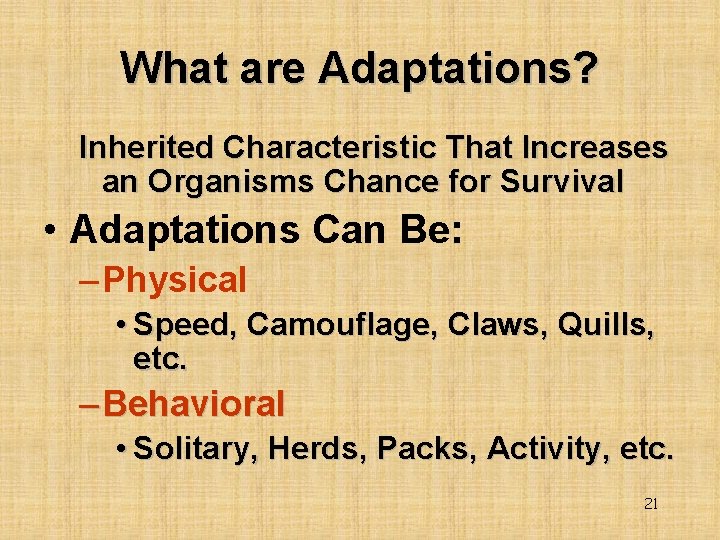
What are Adaptations? Inherited Characteristic That Increases an Organisms Chance for Survival • Adaptations Can Be: – Physical • Speed, Camouflage, Claws, Quills, etc. – Behavioral • Solitary, Herds, Packs, Activity, etc. 21
What is Survival of the Fittest? Key Concept Over Time, Natural Selection Results In Changes In The Inherited Characteristics Of A Population (adaptations). These Changes Increase A Species Fitness In Its Environment 22
Natural Selection • Cannot Be Seen Directly • It Can Only Be Observed As Changes In A Population Over Many Successive Generations – Radiation – Fossil Record 23
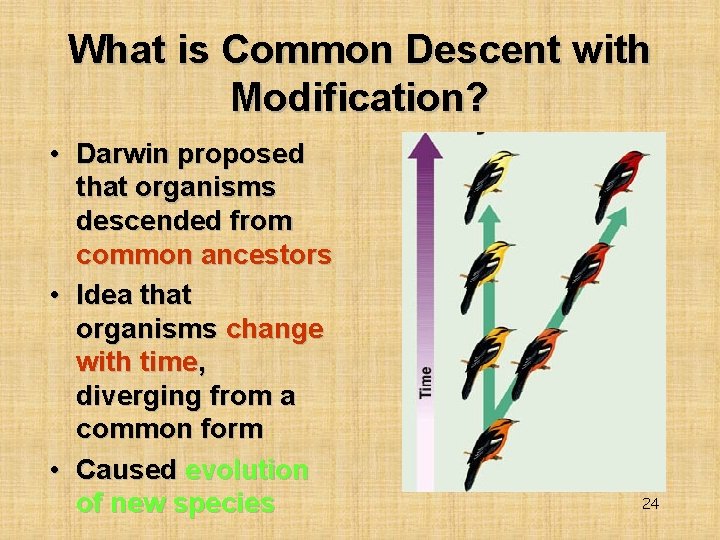
What is Common Descent with Modification? • Darwin proposed that organisms descended from common ancestors • Idea that organisms change with time, diverging from a common form • Caused evolution of new species 24
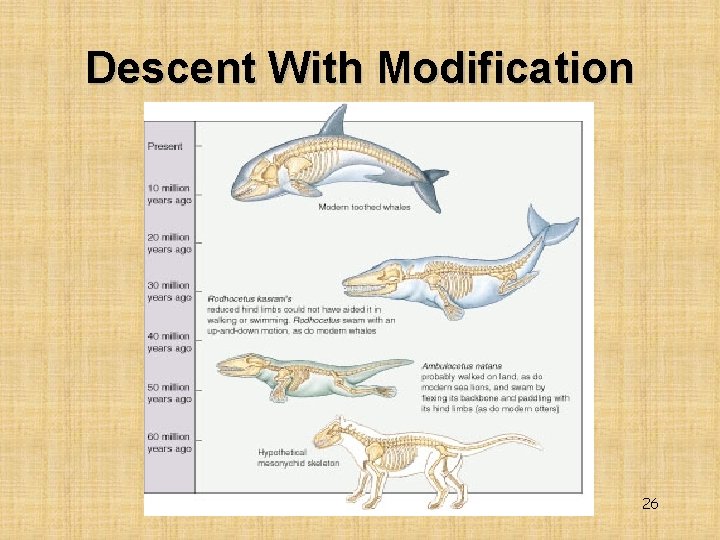
What is Descent With Modification? • Takes Place Over Long Periods of Time • Species Today Look Different From Their Ancestors – Each Living Species Has • Descended With Changes From Other Species Over Time 25
Descent With Modification 26
What is Descent With Modification? • Implies – All Living Organisms Are Related – Single Tree of Life • DNA, Body Structures, Energy Sources • Common Descent – All Species, Living & Extinct, Were Derived From Common Ancestors 27
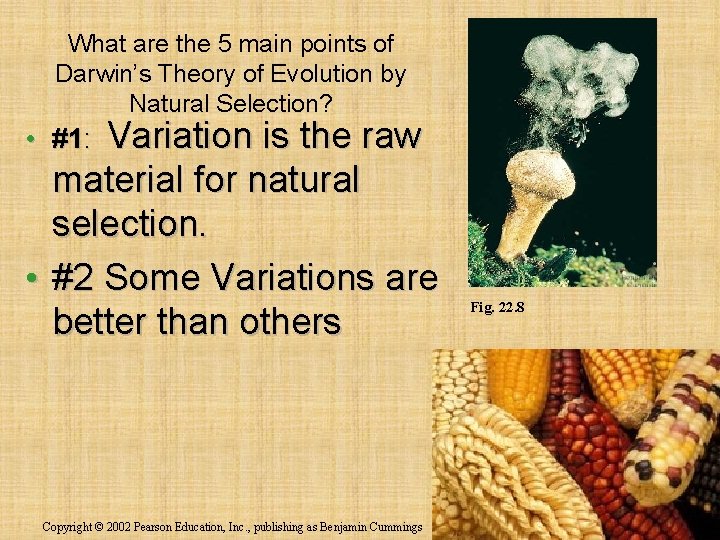
What are the 5 main points of Darwin’s Theory of Evolution by Natural Selection? Variation is the raw material for natural selection. • #2 Some Variations are better than others • #1: Copyright © 2002 Pearson Education, Inc. , publishing as Benjamin Cummings Fig. 22. 8
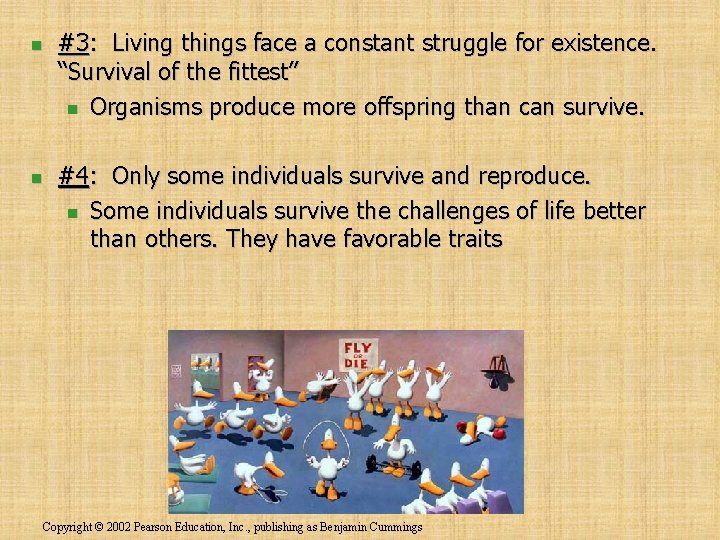
n n #3: Living things face a constant struggle for existence. “Survival of the fittest” n Organisms produce more offspring than can survive. #4: Only some individuals survive and reproduce. n Some individuals survive the challenges of life better than others. They have favorable traits Copyright © 2002 Pearson Education, Inc. , publishing as Benjamin Cummings
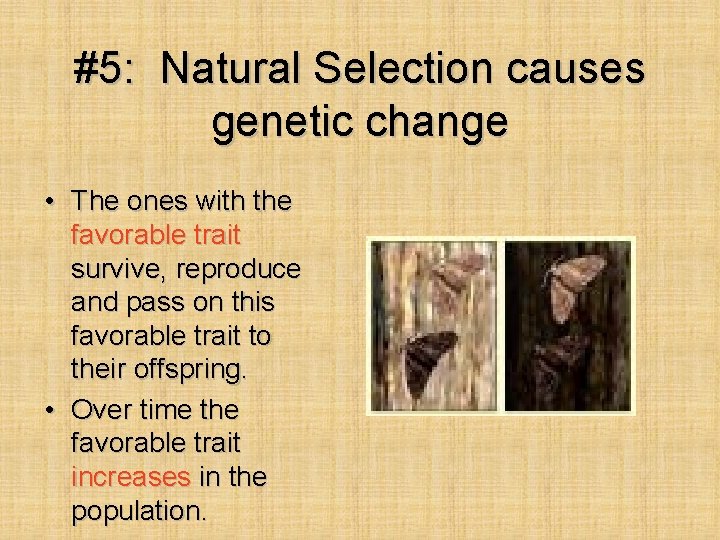
#5: Natural Selection causes genetic change • The ones with the favorable trait survive, reproduce and pass on this favorable trait to their offspring. • Over time the favorable trait increases in the population.
What are the 5 main points of Darwin’s Theory of Evolution by Natural Selection? • • • Population has variations. Some variations are favorable. More offspring are produced than survive Those that survive have favorable traits. A population will change over time.
Natural Selection and Adaptation • Evolutionary biologist Ernst Mayr has dissected the logic of Darwin’s theory into 3 inferences based on five observations
• Observation #1 • For any species, population sizes would increase exponentially if all individuals that are born reproduced successfully • Observation #2 • Populations tend to be stable in size, except for seasonal fluctuations • Observation #3 • Resources are limited • Inference #1: • Production of more individuals than the environment can support leads to a struggle for existence among individuals of a population, with only a fraction of their offspring surviving
• Observation #4 • Members of a population vary in their characteristics; no two are exactly alike • Observation #5 • Much of this variation is heritable • Inference #2 • Survival depends in part on inherited traits; individuals whose inherited traits give them a high probability of surviving and reproducing are likely to leave more offspring than other individuals
• Inference #3 • This unequal ability of individuals to survive and reproduce will lead to a gradual change in a population, with favorable characteristics accumulating over generations
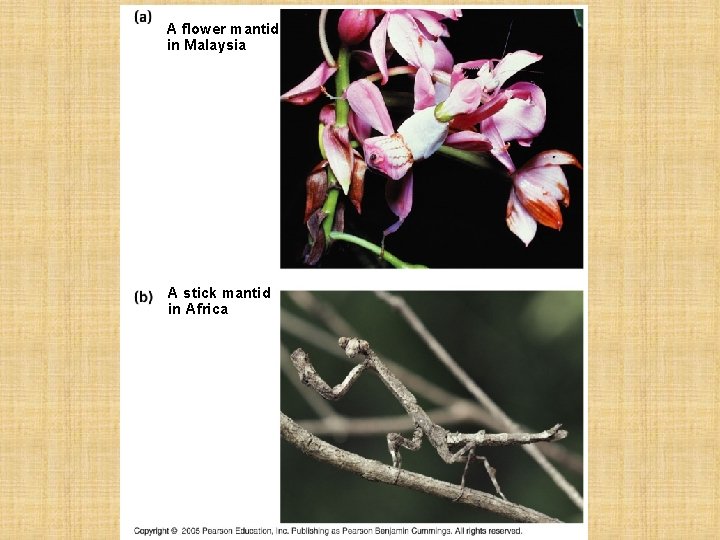
A flower mantid in Malaysia A stick mantid in Africa
Species adapt to their environment • Natural Selection tends to make a population better suited to its environment. • The environment determines the direction of genetic change. • -ADD DIRECTIONAL SELECTION