
Lecture 2 Biomolecules What is Life Made of
Lecture 2: Bio-molecules What is Life Made of? Everything is made up of atoms. Living things are made up of cells. Cells are made up of atoms.
Bio-molecules 1. Structure of Water 1. Organic molecules Carbohydrates Lipids Proteins Nucleic acids
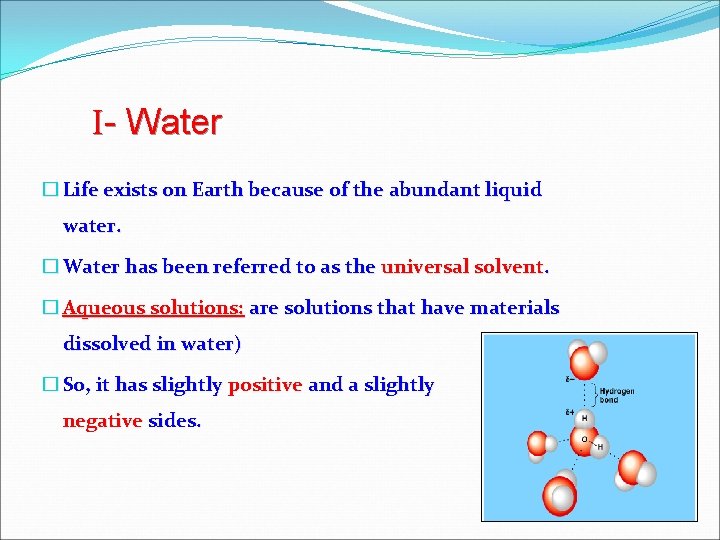
I- Water � Life exists on Earth because of the abundant liquid water. � Water has been referred to as the universal solvent. � Aqueous solutions: are solutions that have materials dissolved in water) � So, it has slightly positive and a slightly negative sides.
Types of solutions l Hydrophilic (Glucose): l Is any substance that has an affinity for water> l Hydrophobic (Lipid): l Is the substances that have no affinity for water. Because they have non-ionic and non-polar covalent bonds. – Thus, water molecules cannot form hydrogen bonds with these molecules. l Amphipathic (Phospholipid): l Has end with affinity for water and the other end with no affinity for water l The Hydrophobic molecules are the major components of cell membranes.
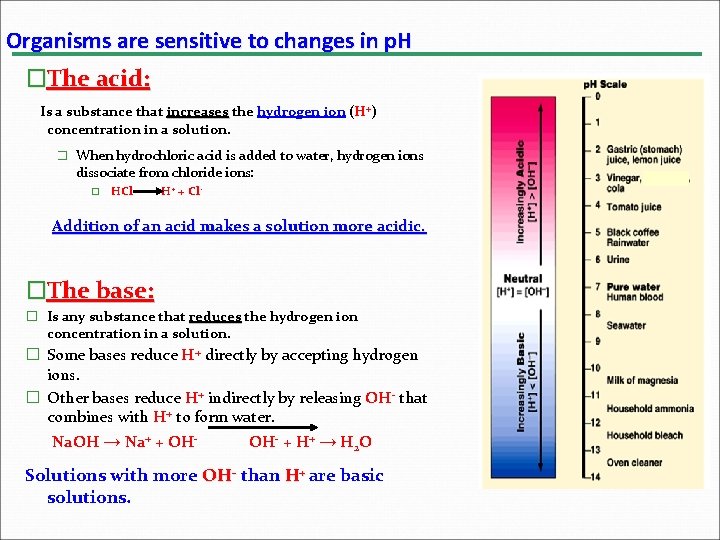
Organisms are sensitive to changes in p. H �The acid: Is a substance that increases the hydrogen ion (H+) concentration in a solution. � When hydrochloric acid is added to water, hydrogen ions dissociate from chloride ions: � HCl H+ + Cl- Addition of an acid makes a solution more acidic. �The base: � Is any substance that reduces the hydrogen ion concentration in a solution. � Some bases reduce H+ directly by accepting hydrogen ions. � Other bases reduce H+ indirectly by releasing OH- that combines with H+ to form water. Na. OH → Na+ + OH- + H+ → H 2 O Solutions with more OH- than H+ are basic solutions.

2. Biomolecules 4 main molecules involved in life 1. 2. 3. 4. Carbohydrates Lipids Proteins Nucleic Acids
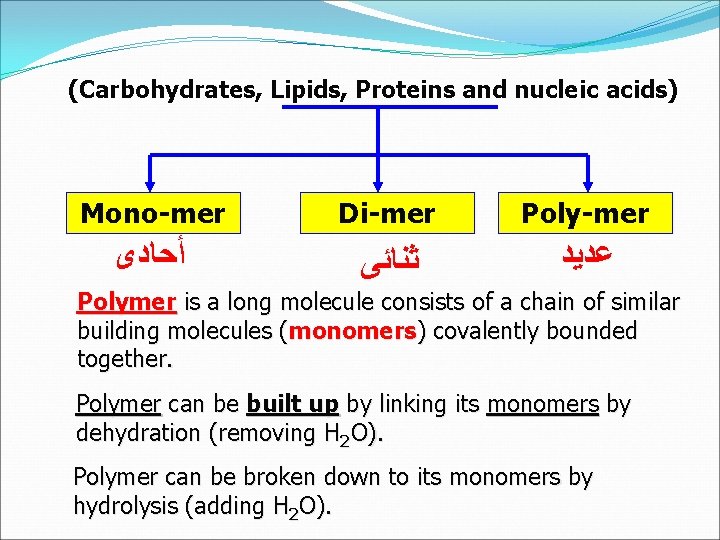
(Carbohydrates, Lipids, Proteins and nucleic acids) Mono-mer Di-mer Poly-mer ﺃﺤﺎﺩﻯ ﺛﻨﺎﺋﻰ ﻋﺪﻳﺪ Polymer is a long molecule consists of a chain of similar building molecules (monomers) covalently bounded together. Polymer can be built up by linking its monomers by dehydration (removing H 2 O). Polymer can be broken down to its monomers by hydrolysis (adding H 2 O).
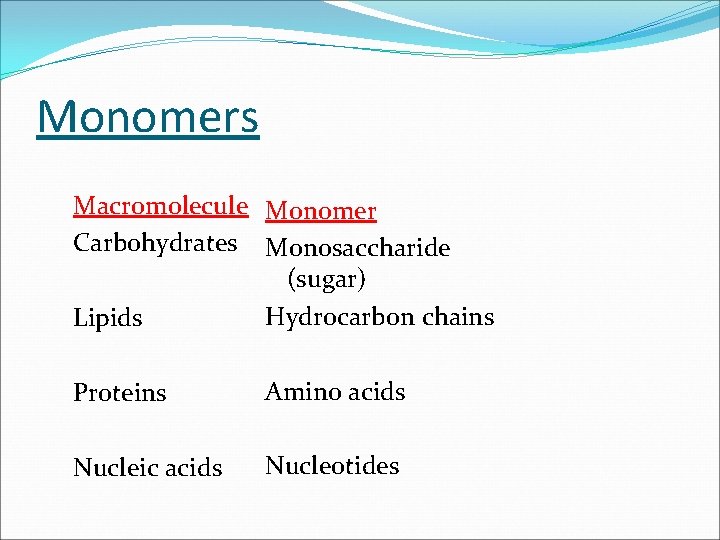
Monomers Macromolecule Monomer Carbohydrates Monosaccharide (sugar) Hydrocarbon chains Lipids Proteins Amino acids Nucleic acids Nucleotides
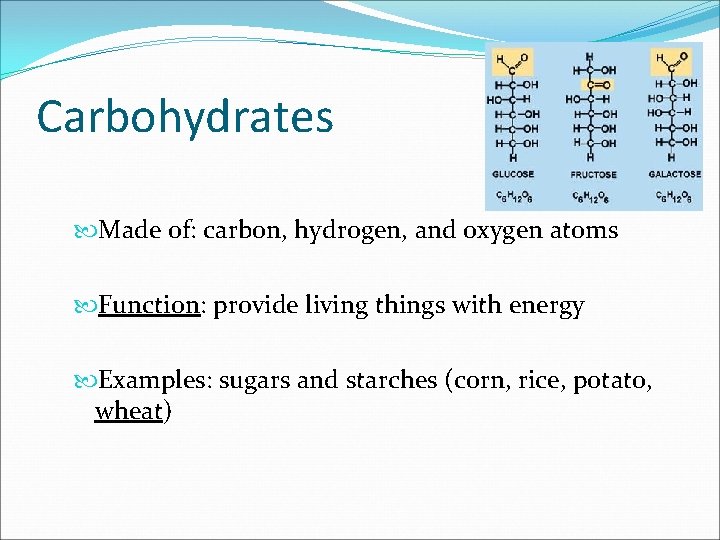
Carbohydrates Made of: carbon, hydrogen, and oxygen atoms Function: provide living things with energy Examples: sugars and starches (corn, rice, potato, wheat)
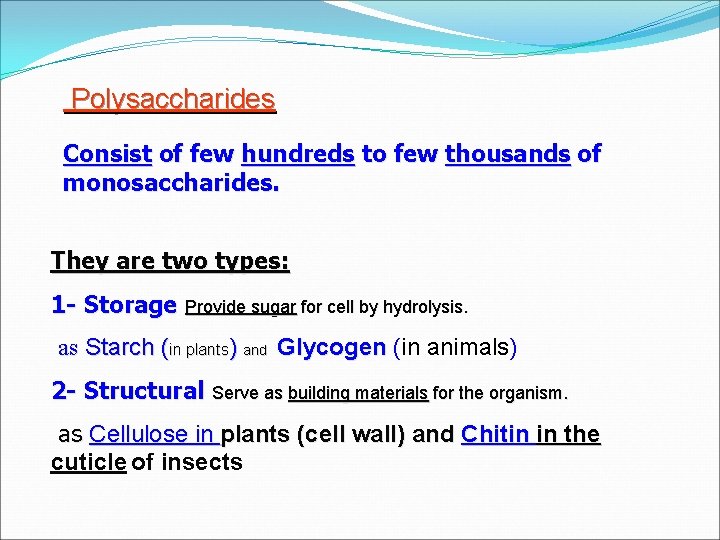
Polysaccharides Consist of few hundreds to few thousands of monosaccharides. They are two types: 1 - Storage Provide sugar for cell by hydrolysis. as Starch (in plants) and Glycogen (in animals) 2 - Structural Serve as building materials for the organism. as Cellulose in plants (cell wall) and Chitin in the cuticle of insects
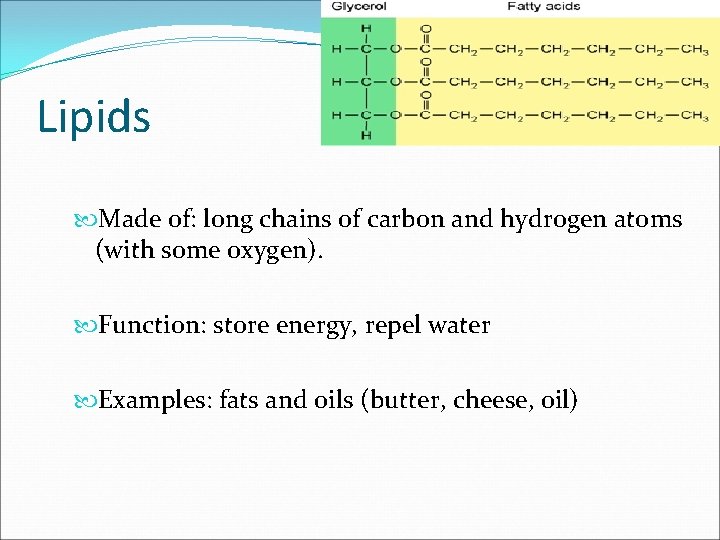
Lipids Made of: long chains of carbon and hydrogen atoms (with some oxygen). Function: store energy, repel water Examples: fats and oils (butter, cheese, oil)
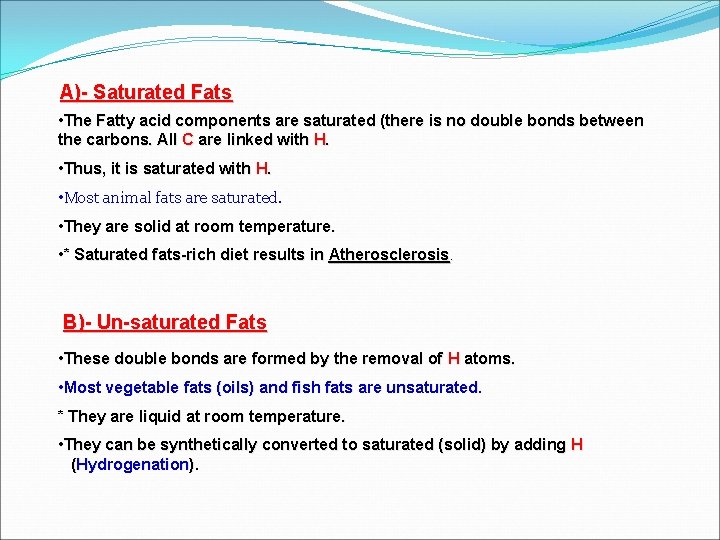
A)- Saturated Fats • The Fatty acid components are saturated (there is no double bonds between the carbons. All C are linked with H. • Thus, it is saturated with H. • Most animal fats are saturated. • They are solid at room temperature. • * Saturated fats-rich diet results in Atherosclerosis. B)- Un-saturated Fats • These double bonds are formed by the removal of H atoms. • Most vegetable fats (oils) and fish fats are unsaturated. * They are liquid at room temperature. • They can be synthetically converted to saturated (solid) by adding H (Hydrogenation).
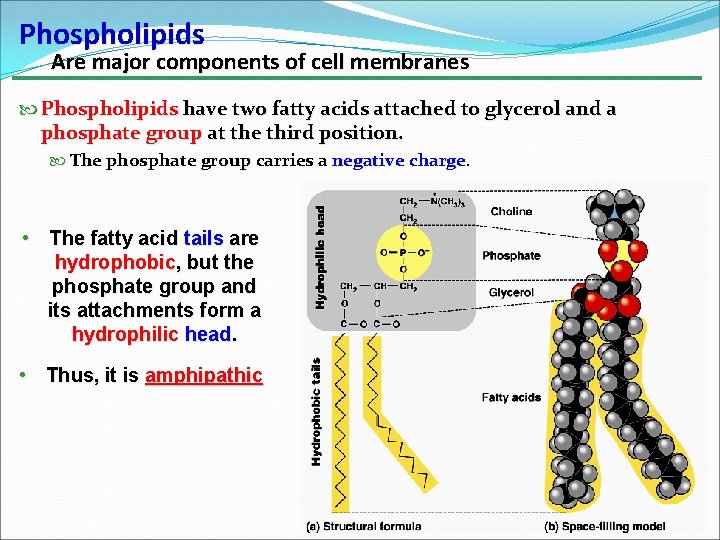
Phospholipids Are major components of cell membranes Phospholipids have two fatty acids attached to glycerol and a phosphate group at the third position. The phosphate group carries a negative charge • The fatty acid tails are hydrophobic, but the phosphate group and its attachments form a hydrophilic head. • Thus, it is amphipathic 13
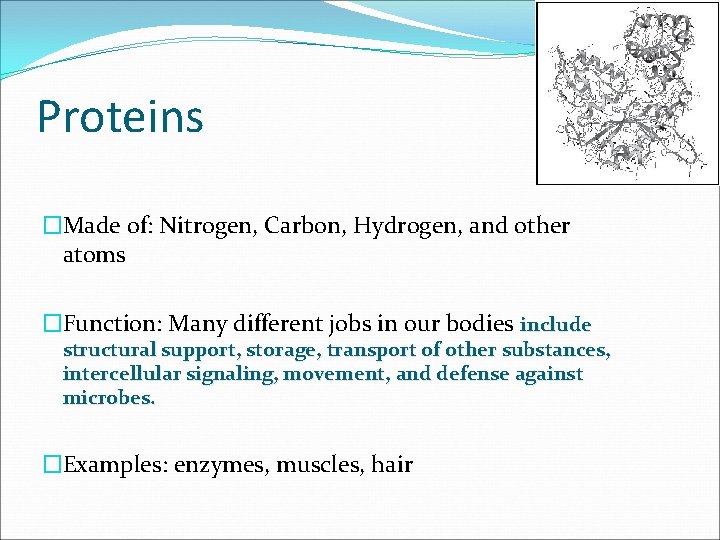
Proteins �Made of: Nitrogen, Carbon, Hydrogen, and other atoms �Function: Many different jobs in our bodies include structural support, storage, transport of other substances, intercellular signaling, movement, and defense against microbes. �Examples: enzymes, muscles, hair
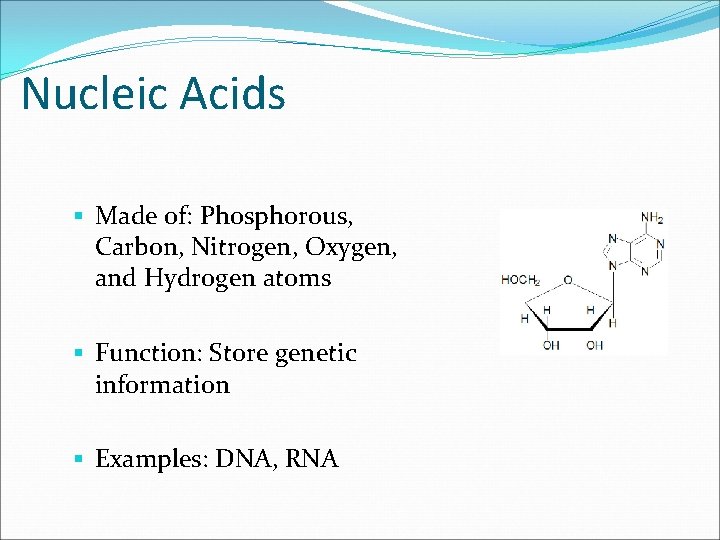
Nucleic Acids § Made of: Phosphorous, Carbon, Nitrogen, Oxygen, and Hydrogen atoms § Function: Store genetic information § Examples: DNA, RNA
- Slides: 15