
Lecture 2 10 Module 2 AVIATION TELECOMMUNICATION SYSTEMS

- Slides: 41
Lecture 2. 10 Module 2. AVIATION TELECOMMUNICATION SYSTEMS Topic 2. 10. POWER IN SATELLITE COMMUNICATION LINE
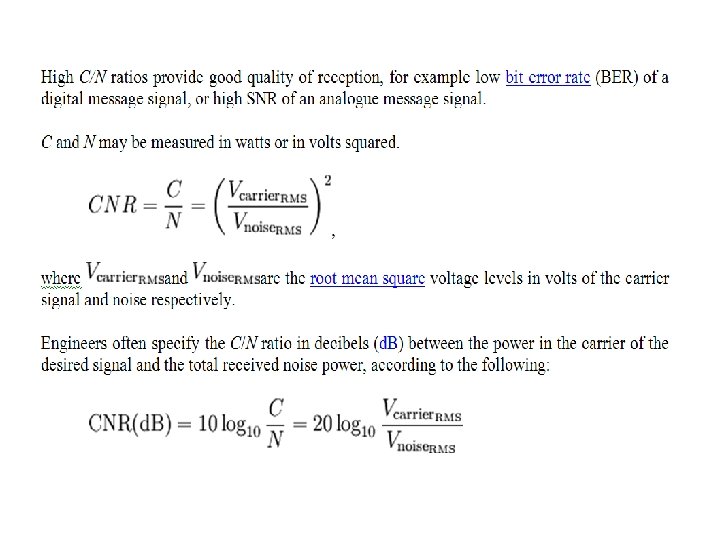
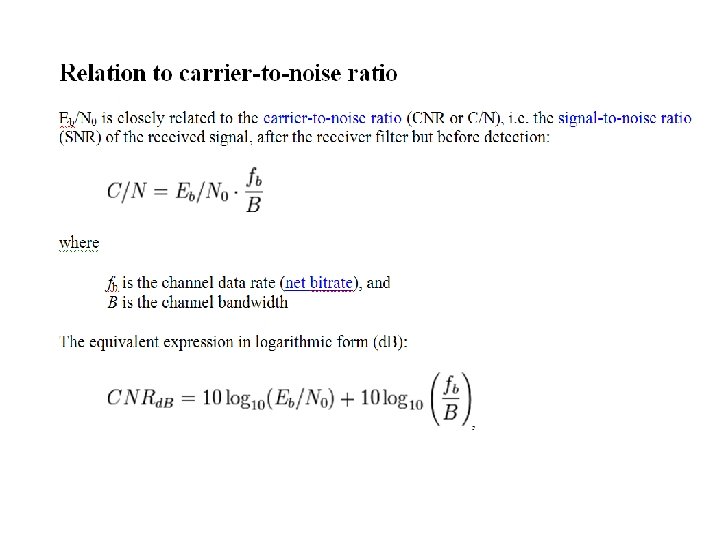
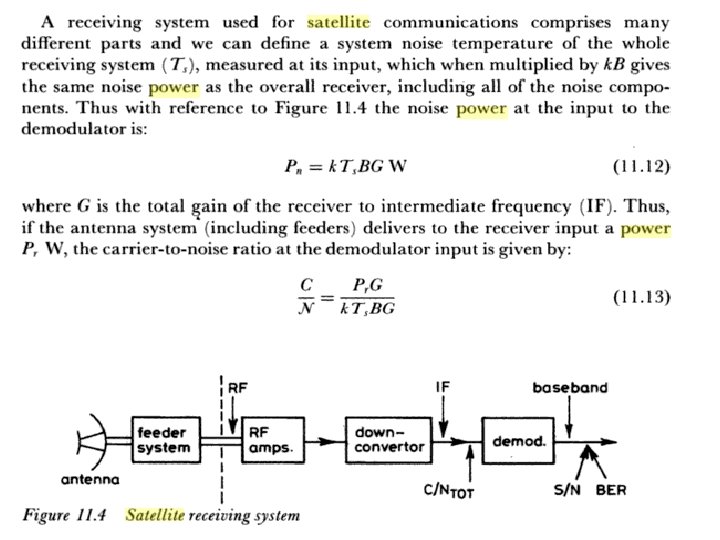
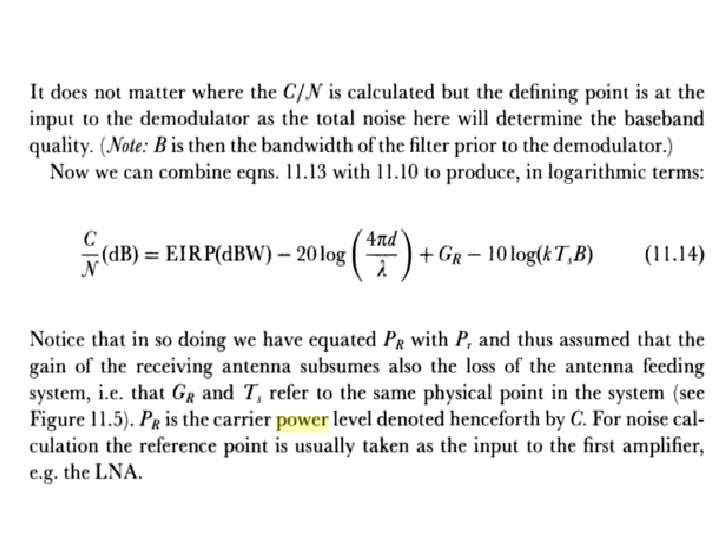
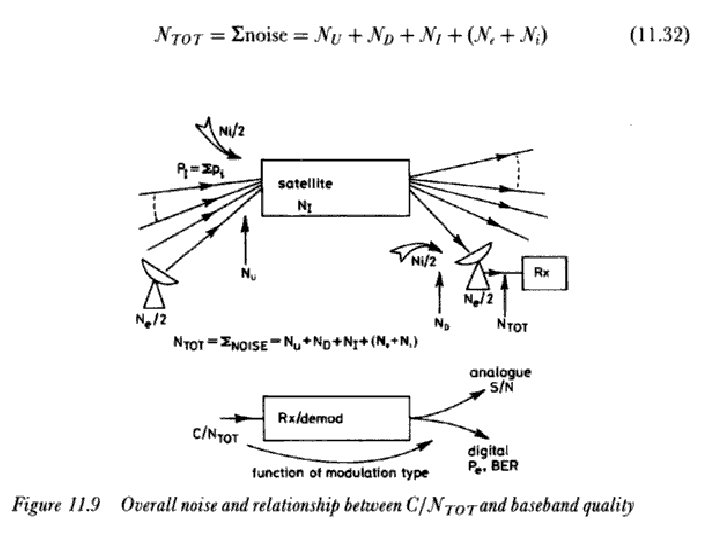
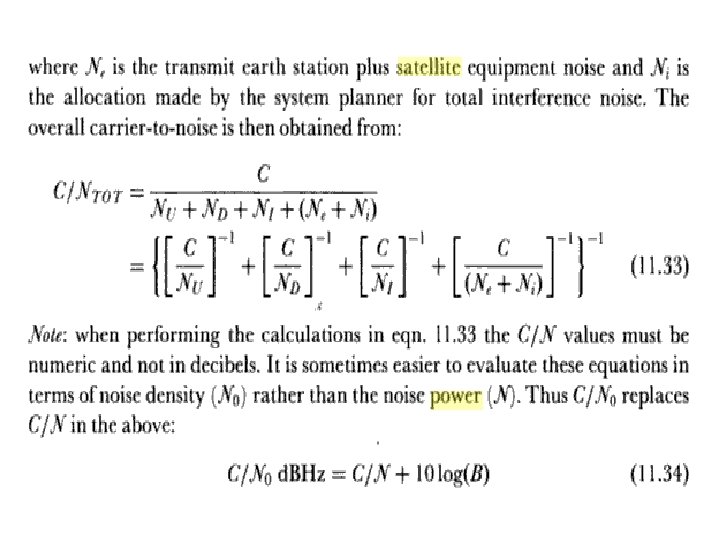
Carrier-to-noise ratio In telecommunications, the carrier-to-noise ratio, often written CNR or C/N, is the signal-to-noise ratio (SNR) of a modulated signal. The CNR is the quotient between the average received modulated carrier power C and the average received noise power N after the receiver filters. The aim of the term is to distinguish the CNR of the radio frequency passband signal from the SNR of an analogue base band message signal after demodulation, for example an audio frequency analogue message signal. If this distinction is not necessary, the term SNR is often used instead of CNR, with the same definition.
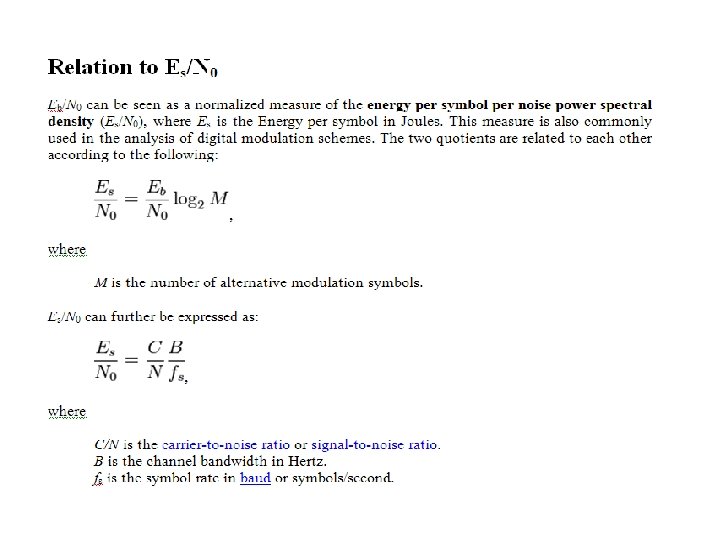
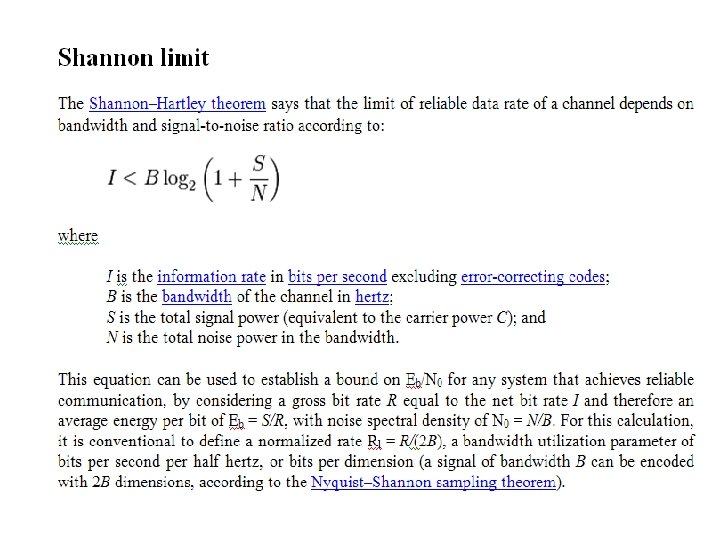
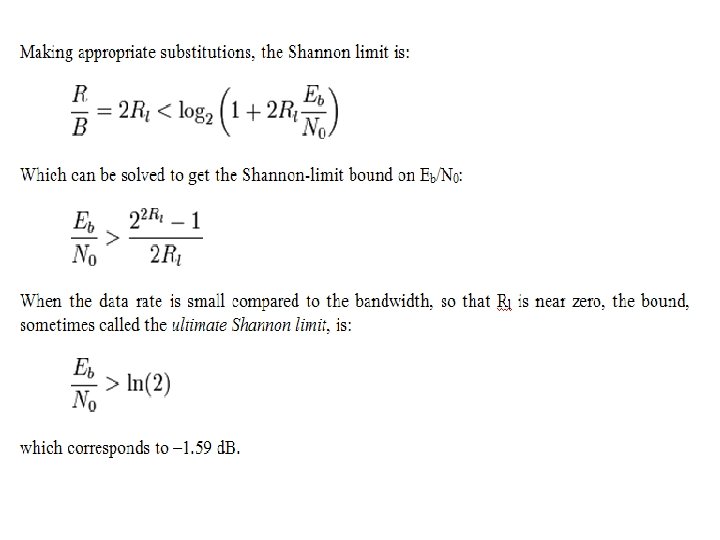
Eb/N 0 (the energy per bit to noise power spectral density ratio) is an important parameter in digital communication or data transmission. It is a normalized signal-to-noise ratio (SNR) measure, also known as the "SNR per bit". It is especially useful when comparing the bit error rate (BER) performance of different digital modulation schemes without taking bandwidth into account. Eb/N 0 is equal to the SNR divided by the "gross" link spectral efficiency in (bit/s)/Hz, where the bits in this context are transmitted data bits, inclusive of error correction information and other protocol overhead. When forward error correction is being discussed, Eb/N 0 is routinely used to refer to the energy per information bit. In this context, Es/N 0 is generally used to relate actual transmitted power to noise.
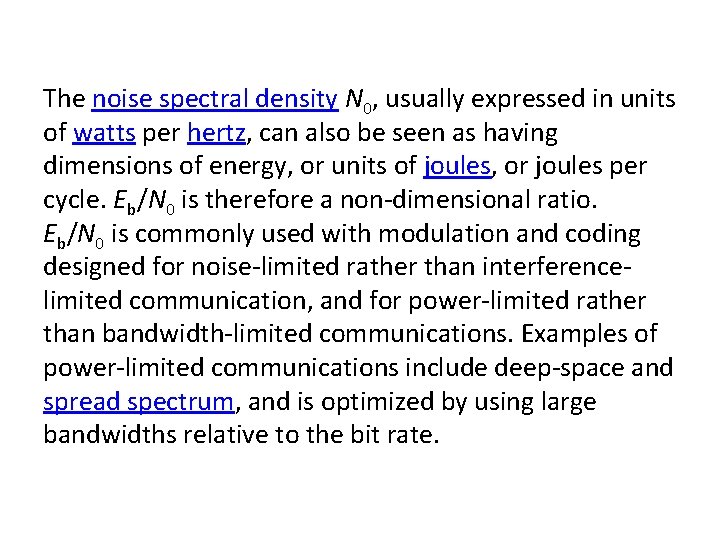
The noise spectral density N 0, usually expressed in units of watts per hertz, can also be seen as having dimensions of energy, or units of joules, or joules per cycle. Eb/N 0 is therefore a non-dimensional ratio. Eb/N 0 is commonly used with modulation and coding designed for noise-limited rather than interferencelimited communication, and for power-limited rather than bandwidth-limited communications. Examples of power-limited communications include deep-space and spread spectrum, and is optimized by using large bandwidths relative to the bit rate.
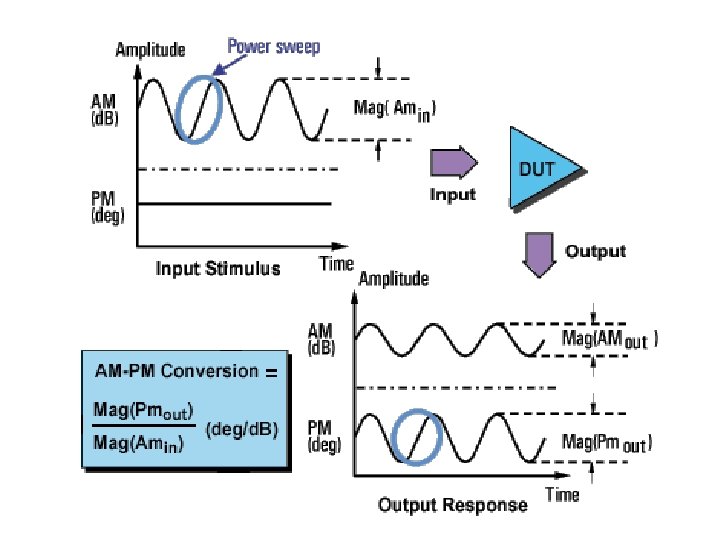
What Is AM-PM Conversion? AM-to-PM conversion measures the amount of undesired phase deviation (PM) that is caused by amplitude variations (AM) of the system.
END.