
Lecture 19 Review CS 109 AAC 209 ASTAT

- Slides: 25
Lecture 19. Review CS 109 A/AC 209 A/STAT 121 A Data Science: Harvard University Fall 2016 Instructors: P. Protopapas, K. Rader, W. Pan
Announcements • Lecture on Wednesday is on Experimental Design and more reviews • Labs on Thursday and Friday will be reviews on material for midterm #2 • No quizzes Monday Nov. 28: Guest Lecture by Jeff Palmucci, Director, Machine Intelligence at Trip. Advisor
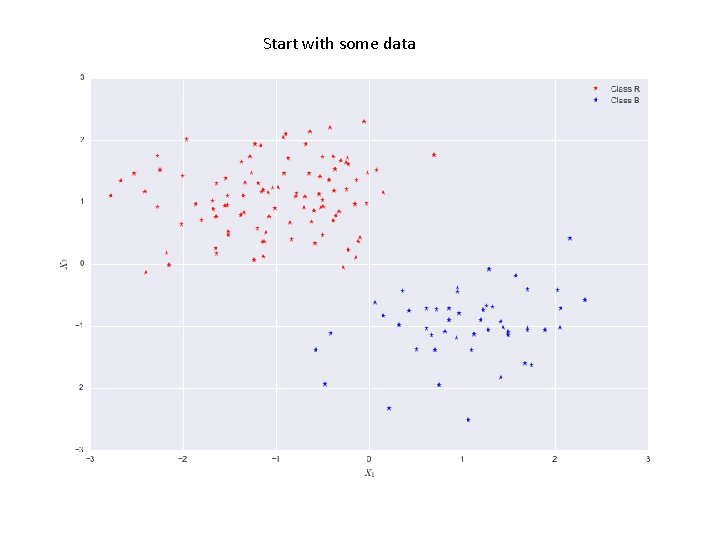
Start with some data
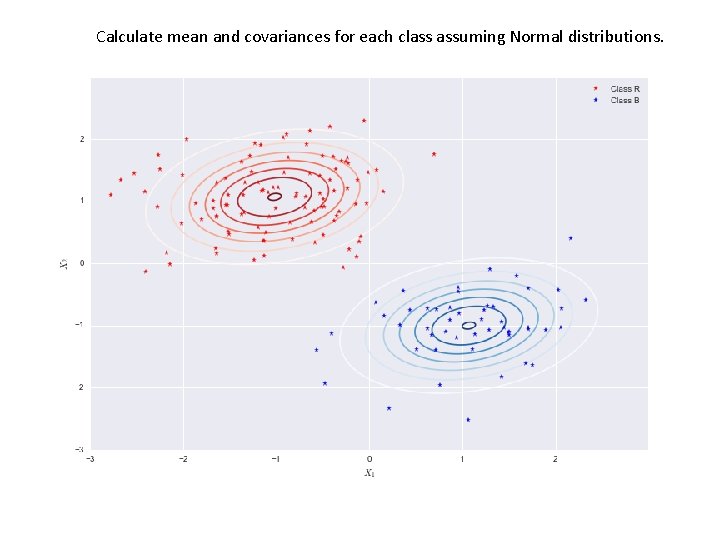
Calculate mean and covariances for each class assuming Normal distributions.
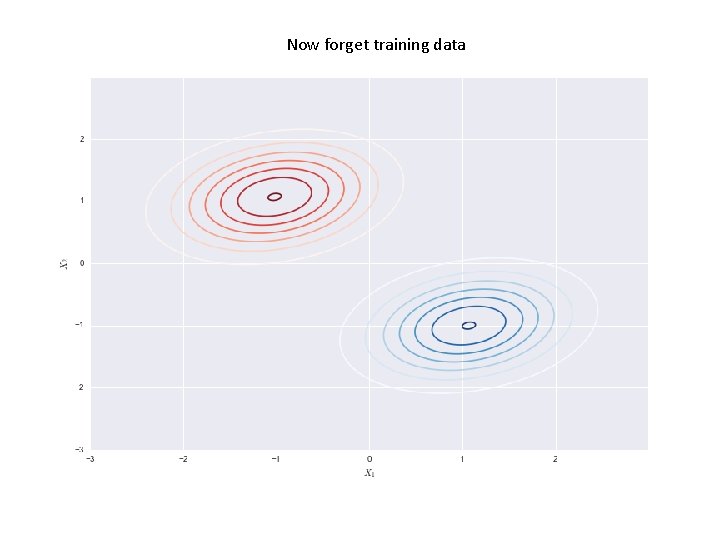
Now forget training data
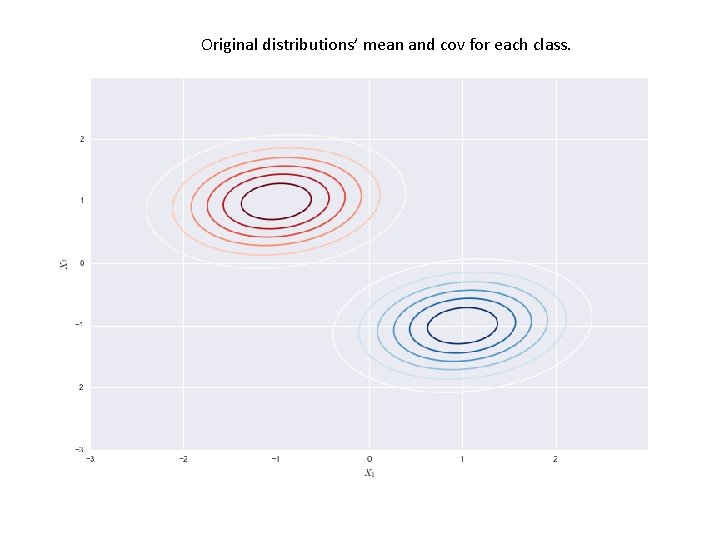
Original distributions’ mean and cov for each class.
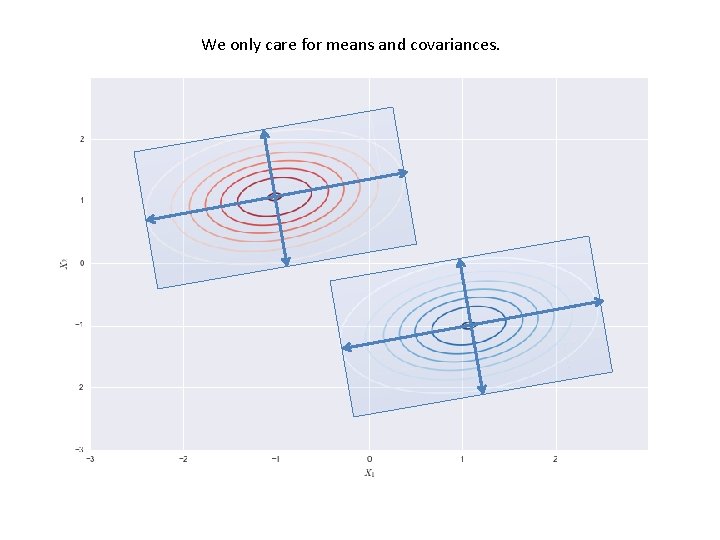
We only care for means and covariances.
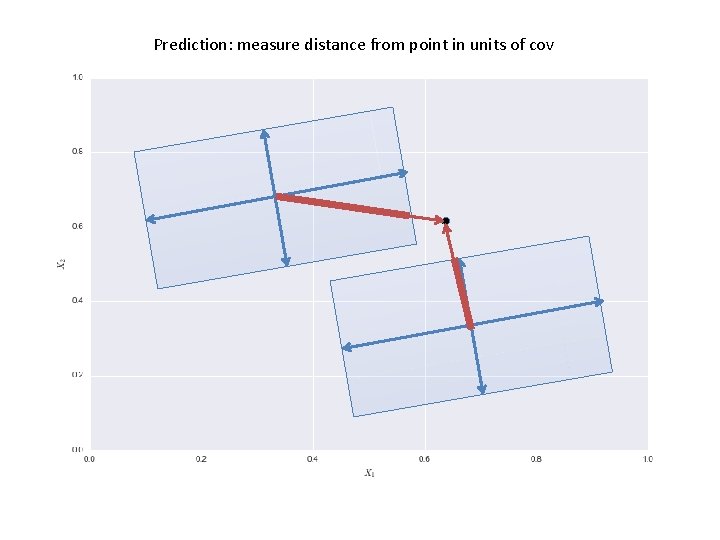
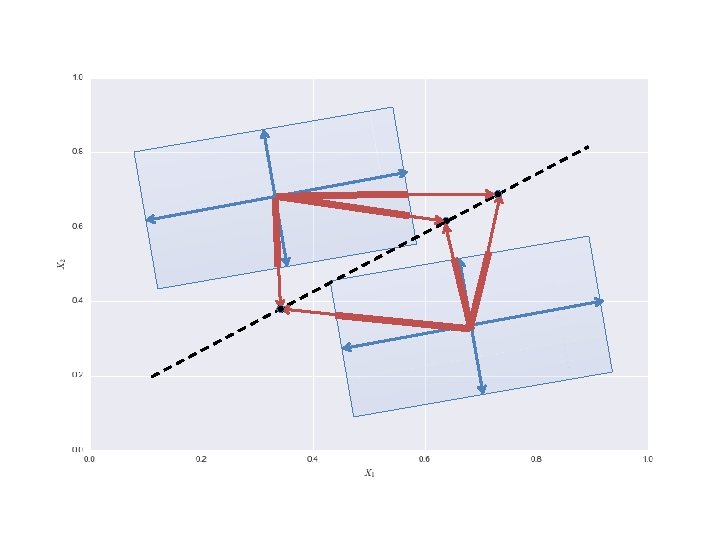
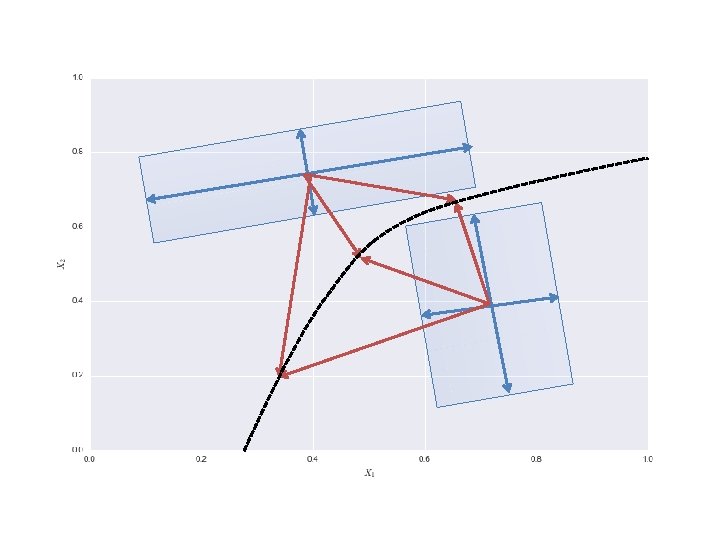
Prediction: measure distance from point in units of cov
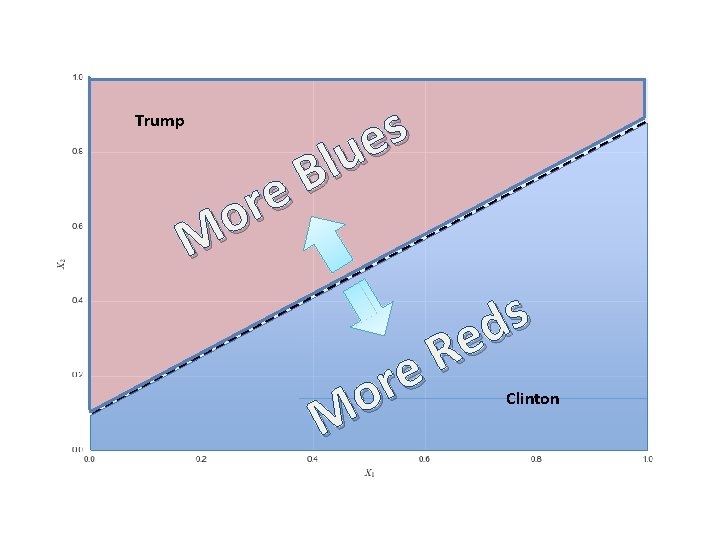
Trump e r o M s e u l B s d e R e r o M Clinton
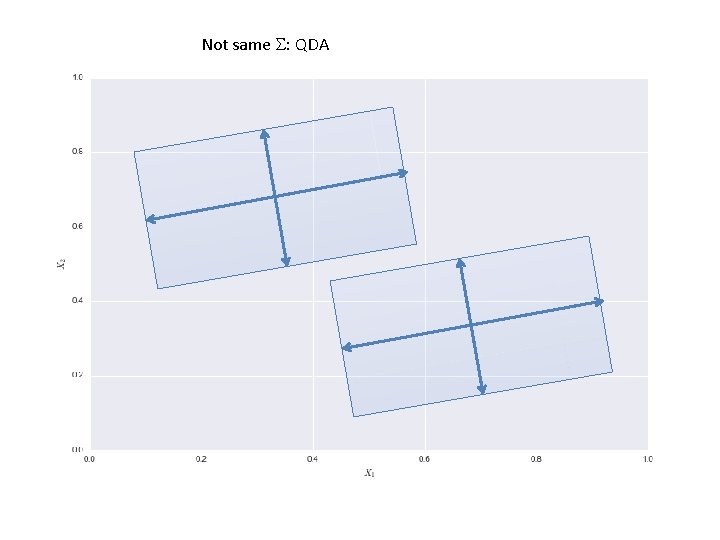
Not same S: QDA
When do we need to regularize? • • Overfitting Colinearity Lasso/Ridge/Random Sampling/Dropout Model Selection when, what, how?
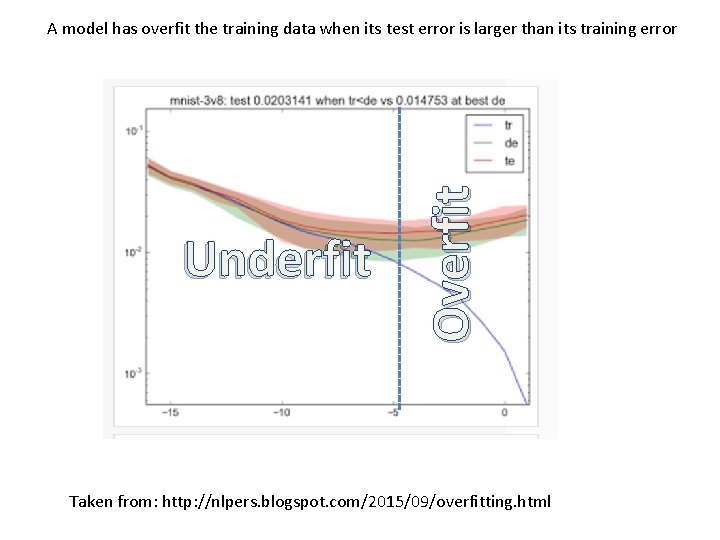
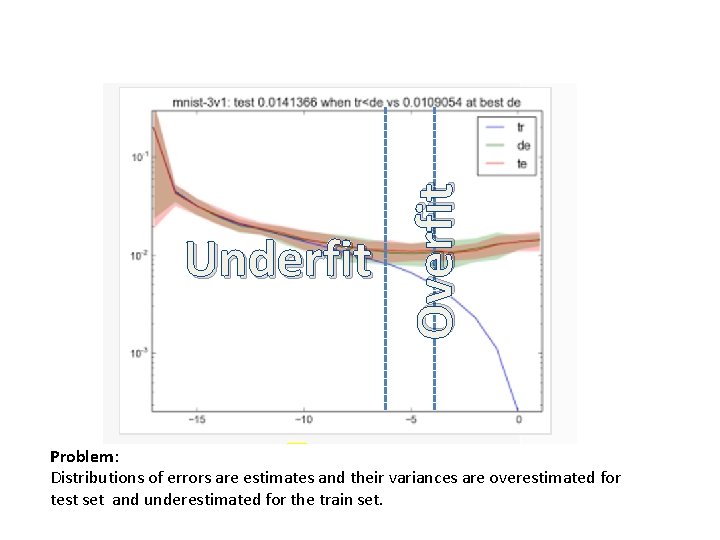
Overfitting How do we know we overfit? • Test error is rising as a function of some tuning parameter that captures the flexibility of the model • A model has overfit the training data when its test error is larger than its training error • Model is too complex – How many parameters vs how many training points • Variance of the training or testing error is too large • Trade-off bias and variance
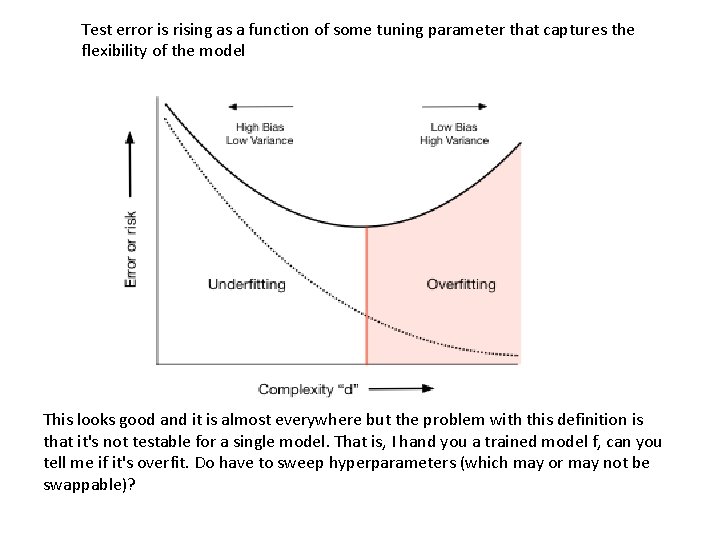
Test error is rising as a function of some tuning parameter that captures the flexibility of the model This looks good and it is almost everywhere but the problem with this definition is that it's not testable for a single model. That is, I hand you a trained model f, can you tell me if it's overfit. Do have to sweep hyperparameters (which may or may not be swappable)?
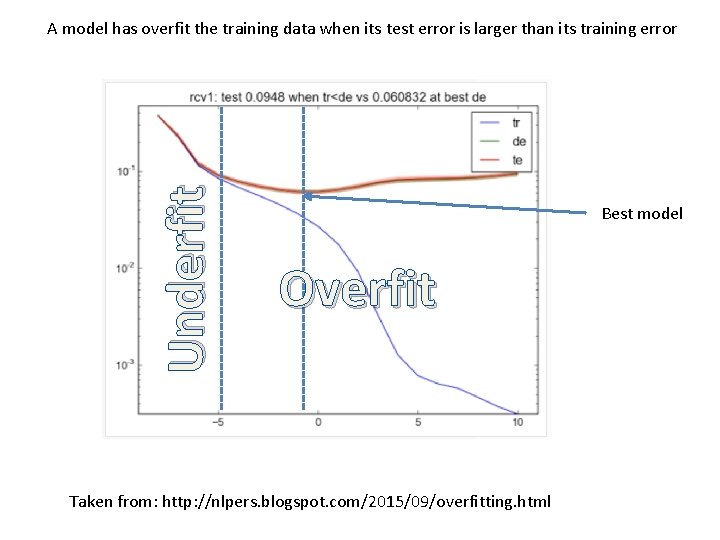
Underfit A model has overfit the training data when its test error is larger than its training error Best model Overfit Taken from: http: //nlpers. blogspot. com/2015/09/overfitting. html
Underfit Overfit A model has overfit the training data when its test error is larger than its training error Taken from: http: //nlpers. blogspot. com/2015/09/overfitting. html
Overfit Underfit Problem: Distributions of errors are estimates and their variances are overestimated for test set and underestimated for the train set.
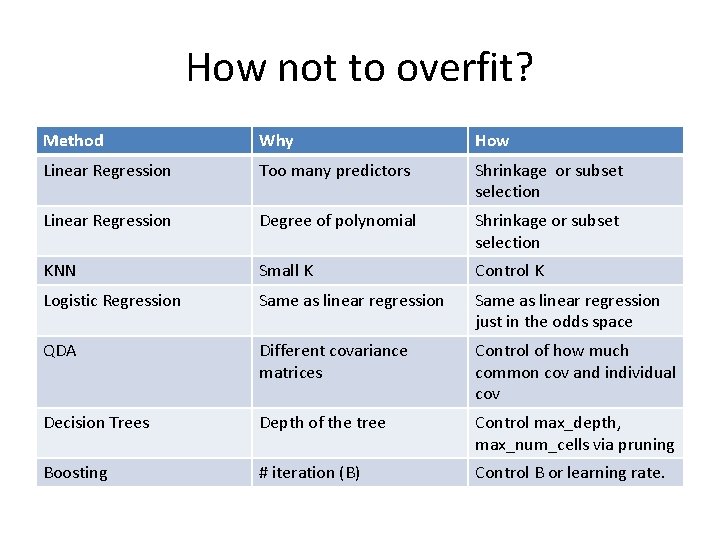
How not to overfit? Method Why How Linear Regression Too many predictors Shrinkage or subset selection Linear Regression Degree of polynomial Shrinkage or subset selection KNN Small K Control K Logistic Regression Same as linear regression just in the odds space QDA Different covariance matrices Control of how much common cov and individual cov Decision Trees Depth of the tree Control max_depth, max_num_cells via pruning Boosting # iteration (B) Control B or learning rate.
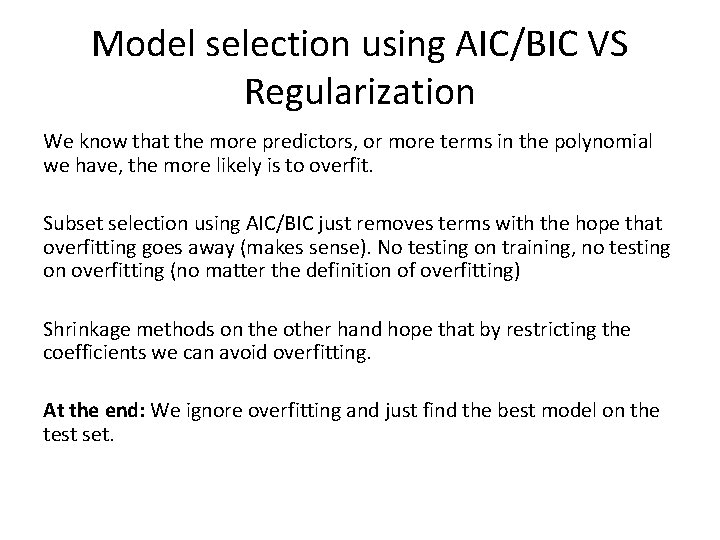
Model selection using AIC/BIC VS Regularization We know that the more predictors, or more terms in the polynomial we have, the more likely is to overfit. Subset selection using AIC/BIC just removes terms with the hope that overfitting goes away (makes sense). No testing on training, no testing on overfitting (no matter the definition of overfitting) Shrinkage methods on the other hand hope that by restricting the coefficients we can avoid overfitting. At the end: We ignore overfitting and just find the best model on the test set.
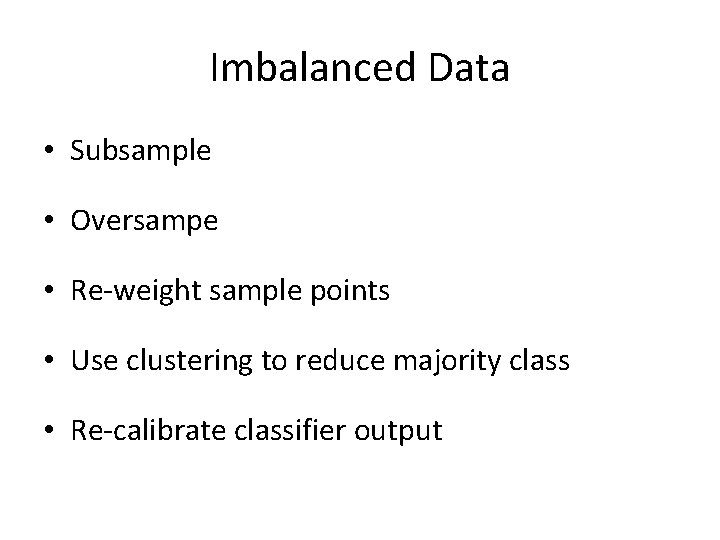
Imbalanced Data • Subsample • Oversampe • Re-weight sample points • Use clustering to reduce majority class • Re-calibrate classifier output
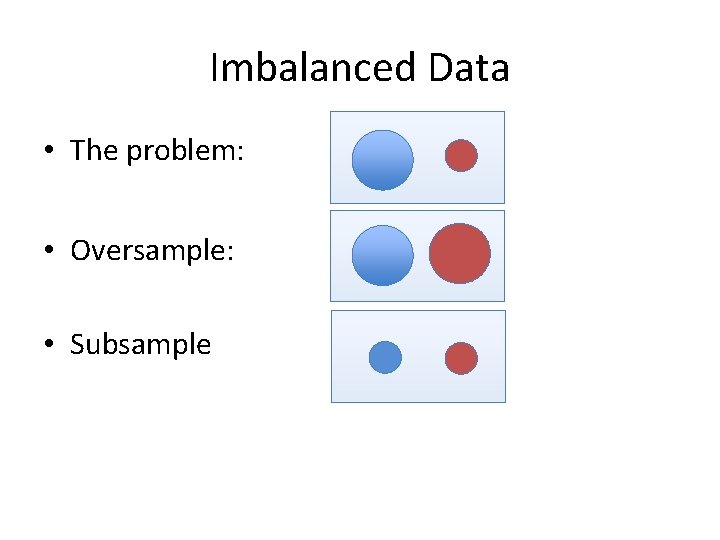
Imbalanced Data • The problem: • Oversample: • Subsample
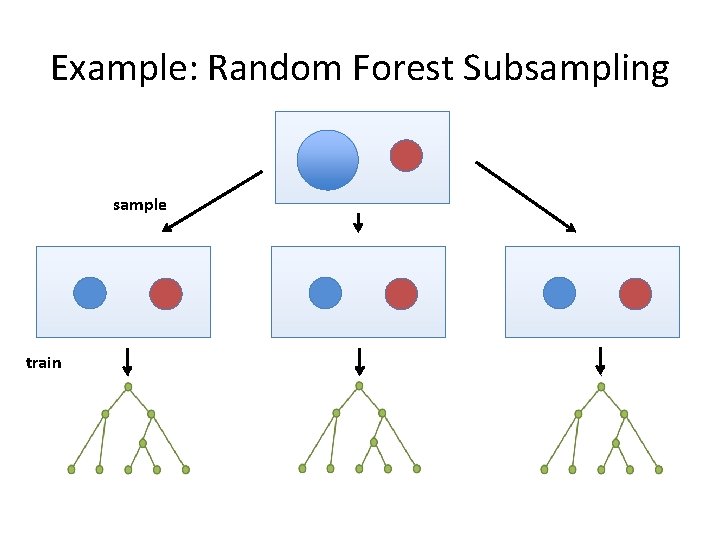
Example: Random Forest Subsampling sample train
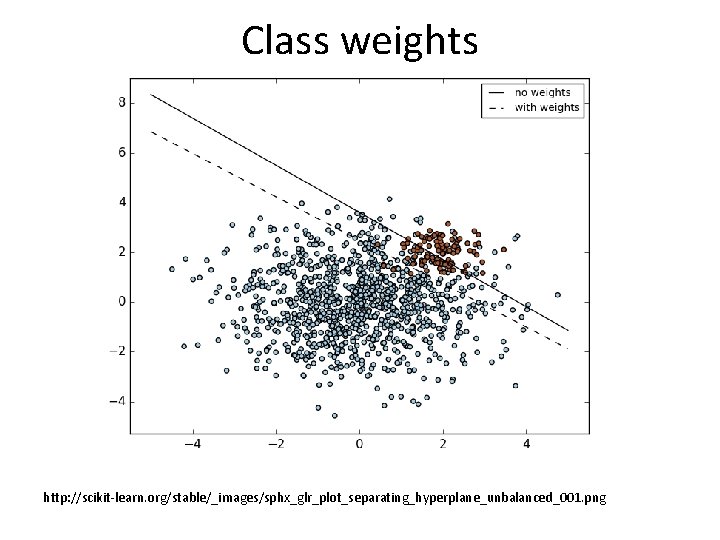
Class weights http: //scikit-learn. org/stable/_images/sphx_glr_plot_separating_hyperplane_unbalanced_001. png