
Lecture 19 Professional Communication Letter Writing Basic Letter
Lecture 19 Professional Communication Letter Writing
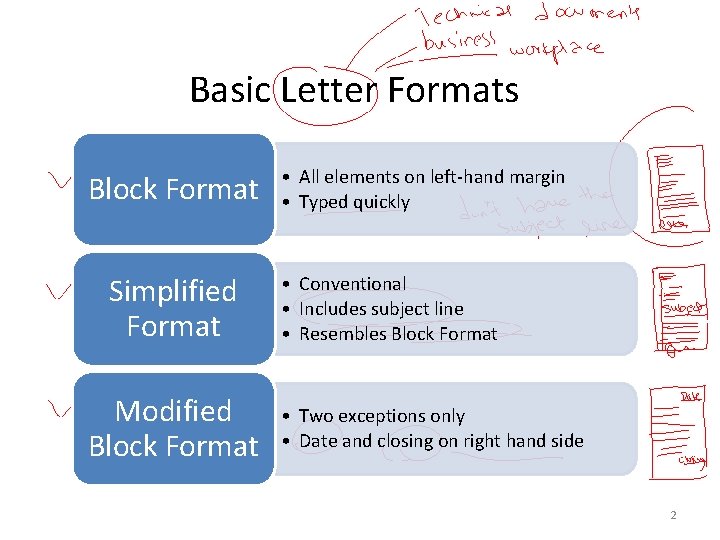
Basic Letter Formats Block Format Simplified Format Modified Block Format • All elements on left-hand margin • Typed quickly • Conventional • Includes subject line • Resembles Block Format • Two exceptions only • Date and closing on right hand side 2
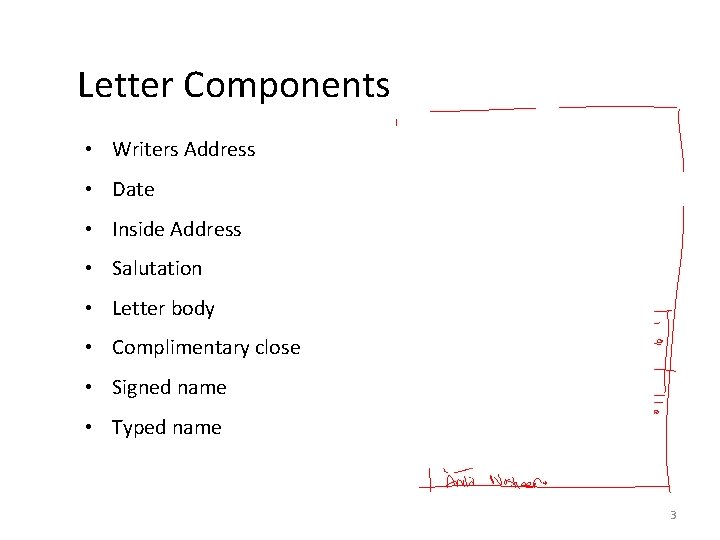
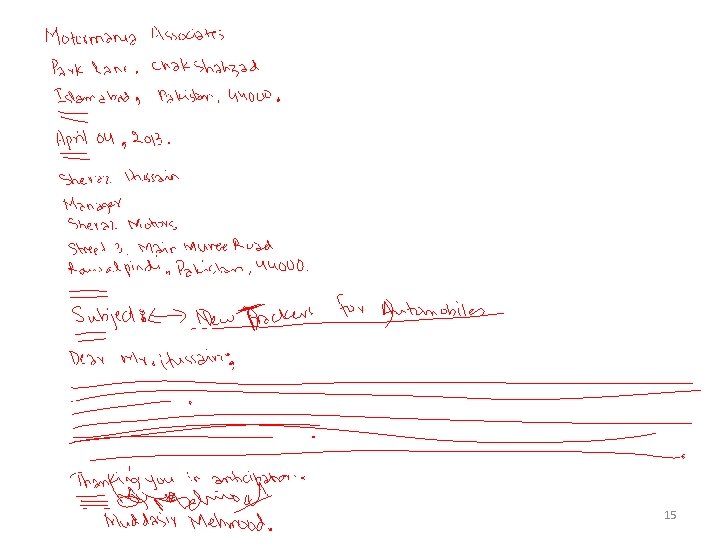
Letter Components • Writers Address • Date • Inside Address • Salutation • Letter body • Complimentary close • Signed name • Typed name 3
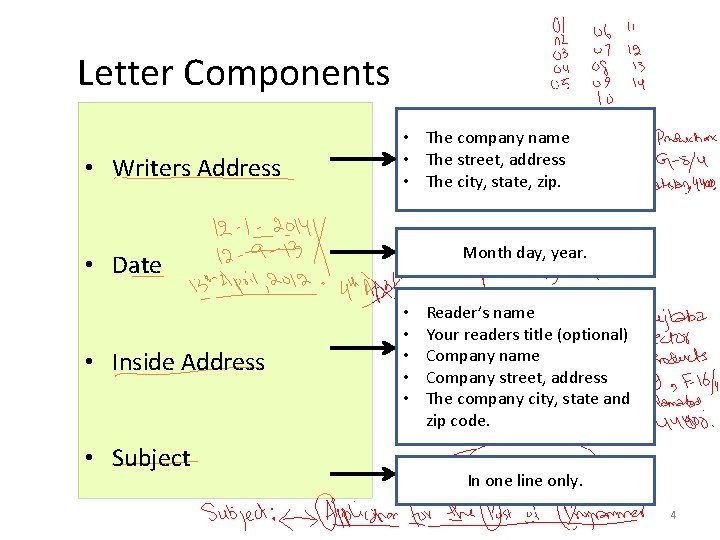
Letter Components • Writers Address • The company name • The street, address • The city, state, zip. Month day, year. • Date • Inside Address • Subject • • • Reader’s name Your readers title (optional) Company name Company street, address The company city, state and zip code. In one line only. 4
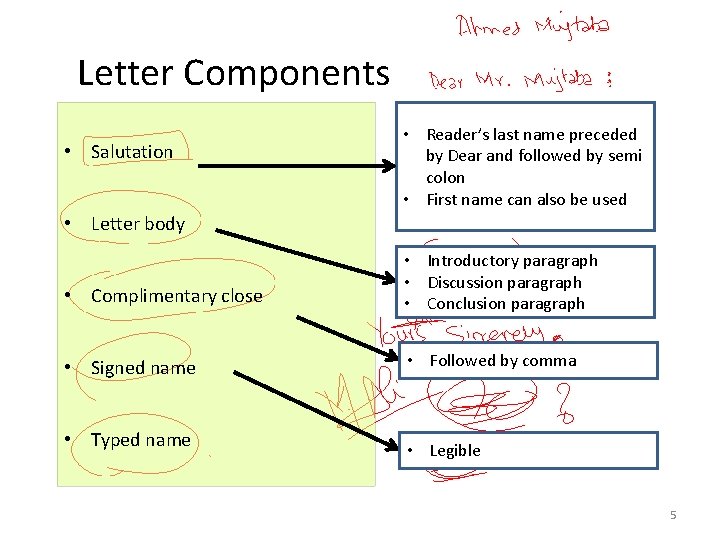
Letter Components • Salutation • Reader’s last name preceded by Dear and followed by semi colon • First name can also be used • Letter body • Complimentary close • Introductory paragraph • Discussion paragraph • Conclusion paragraph • Signed name • Followed by comma • Typed name • Legible 5
Kinds of Letters – Inquiry – Cover (transmittal) – Good news – Bad news – Complaint – Adjustment – Sales 6
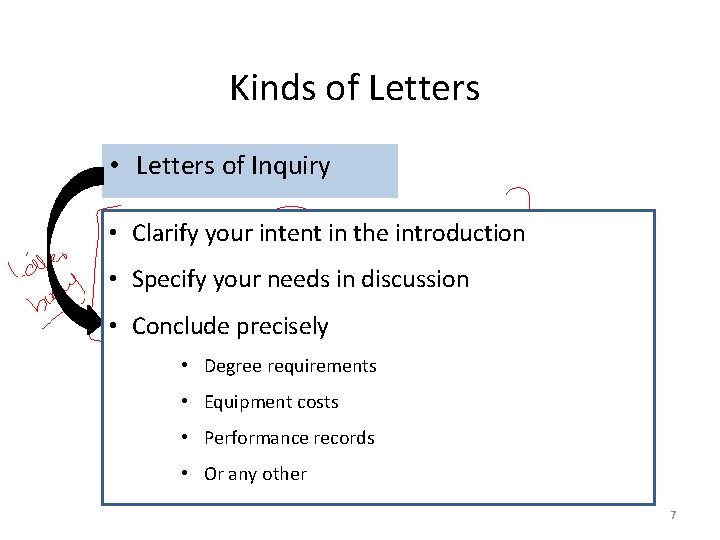
Kinds of Letters • Letters of Inquiry • Clarify your intent in the introduction • Specify your needs in discussion • Conclude precisely • Degree requirements • Equipment costs • Performance records • Or any other 7
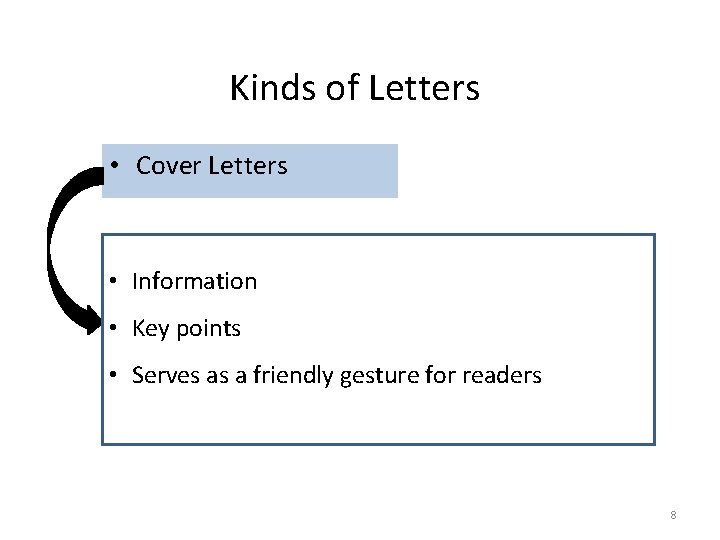
Kinds of Letters • Cover Letters • Information • Key points • Serves as a friendly gesture for readers 8
Kinds of Letters • Good news Letters • Promoting an employee • Job offer • Approval 9
Kinds of Letters • Bad news Letters • Rejection of a job applicant • Reject customers request • termination 10
Kinds of Letters • Complaint Letters • Mostly has enclosures • Invoice/ receipts etc. 11
Kinds of Letters • Adjustment Letters • Response to the complaint letter § 100 % yes § 100 % no 12
Kinds of Letters • Sales Letters • Introducing a new product 13
Exercise-1 • Write a sales letter. To do so, imagine what product or service you could provide to a potential client. Select one from your area of expertise or academic major. Write a letter using techniques discussed in the presentation. 14
15
COVER LETTER Never send a resume without a cover letter!
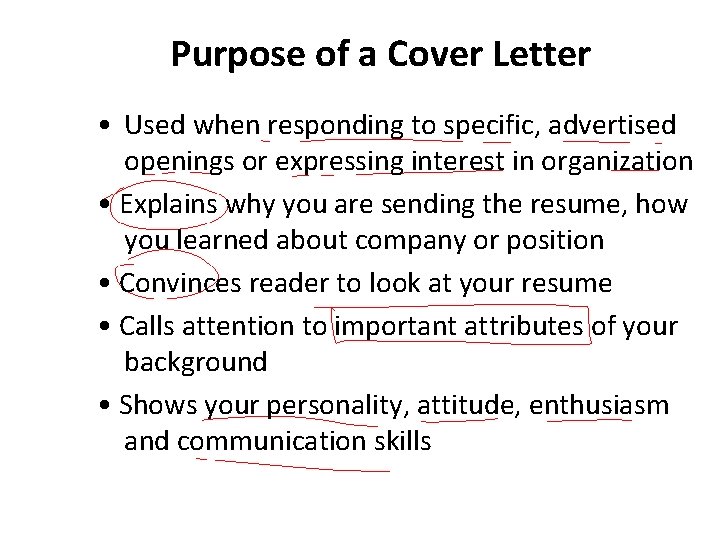
Purpose of a Cover Letter • Used when responding to specific, advertised openings or expressing interest in organization • Explains why you are sending the resume, how you learned about company or position • Convinces reader to look at your resume • Calls attention to important attributes of your background • Shows your personality, attitude, enthusiasm and communication skills
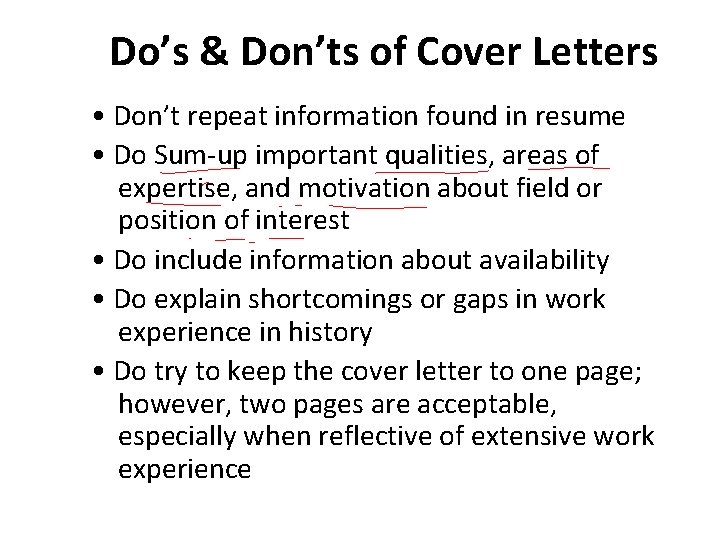
Do’s & Don’ts of Cover Letters • Don’t repeat information found in resume • Do Sum-up important qualities, areas of expertise, and motivation about field or position of interest • Do include information about availability • Do explain shortcomings or gaps in work experience in history • Do try to keep the cover letter to one page; however, two pages are acceptable, especially when reflective of extensive work experience
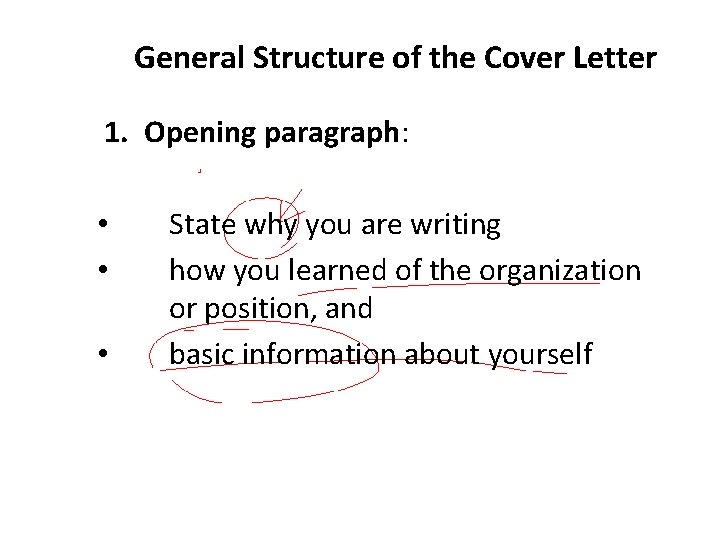
General Structure of the Cover Letter 1. Opening paragraph: • • • State why you are writing how you learned of the organization or position, and basic information about yourself
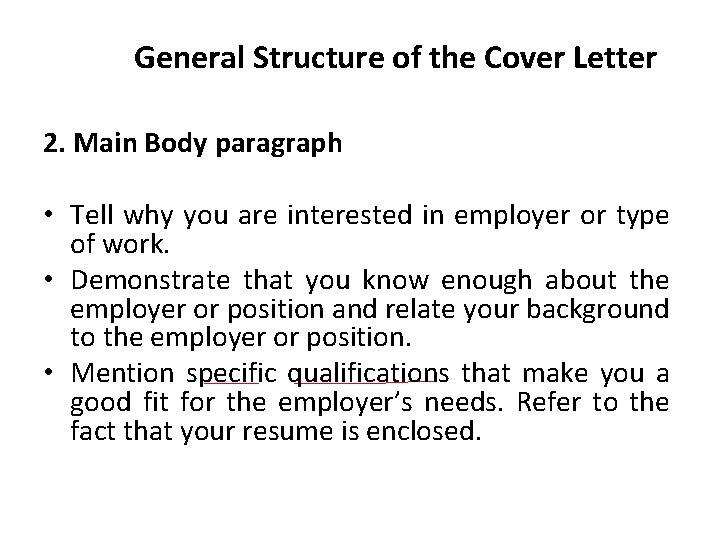
General Structure of the Cover Letter 2. Main Body paragraph • Tell why you are interested in employer or type of work. • Demonstrate that you know enough about the employer or position and relate your background to the employer or position. • Mention specific qualifications that make you a good fit for the employer’s needs. Refer to the fact that your resume is enclosed.
General Structure of the Cover Letter 3. Closing paragraph: • Indicate you would like opportunity to interview for a position or to talk with employer to learn more about career opportunities. • State how you will follow up on the letter – such as calling the company/employer • Offer to provide employer with additional information – such as certificates, references, etc.
4. Thank the employer for his or her consideration of your letter/attached resume (could be a brief 4 th paragraph).
Formatting Concerns • Be sure you use standard, acceptable margins for page layout (MS Word default) • Use business letter style (first sentences are not indented) • Block style is acceptable, with text flush with left margin
Types of Cover Letters 1. The application letter which responds to a known job opening 2. The prospecting letter which inquires about possible positions 3. The networking letter which requests information and assistance in your job search
Recap • Letter Formats – Block Format – Simplified Format – Modified Block Format • Kinds of Letters – Inquiry – Cover (transmittal) – Good news – Bad news – Complaint – Adjustment – Sales • Cover Letter 25
- Slides: 25