
Lecture 19 Intro to OO Components Copyright W



- Slides: 27
Lecture 19: Intro to O/O Components Copyright W. Howden 1
O/O Components • A computational unit that exposes a well defined, contractual interface – constructed from a set of one or more classes • Sample components – Applets, Servlets, Java Beans, Enterprise Java Beans Copyright W. Howden 2
O/O World Dream • Goal: objects everywhere • To get something done, send a message to the appropriate kind of object • Problems – how to find objects, how to communicate – sharing, persistency, load balancing, transactions Copyright W. Howden 3
Distributed O/O Objects – Simple Early Models • RMI (Java), Corba, Com • RMI – register remote objects with a public name – create stub and skeleton proxies that are network savvy • Limited facilities for persistency, sharing, transactions, remote creation Copyright W. Howden 4
Bean Components • Java Beans – “ A reusable software component based on the JB’s specification that can be manipulated visually in a builder tool. ” • Enterprise Java Beans – “A set of contracts between the component developer and the system that hosts the component. ” Copyright W. Howden 5
Additional Component Aspects • Deployable – loaded into a container in which they can run – linked together to build a system • Runs in a “container” that supplies services need for running and managing the components • Distributable, with remote invocation via a specified interface Copyright W. Howden 6
Servlet Components • compiled Java classes with special methods • run on a request/response oriented server – request (possibly with data) arrives at server – servlet is run to generate response that is returned • Used for programming server side presentation logic, e. g. – servlet code constructs HTML specified page and returns it – results in a thin “client”, i. e. browser Copyright W. Howden 7
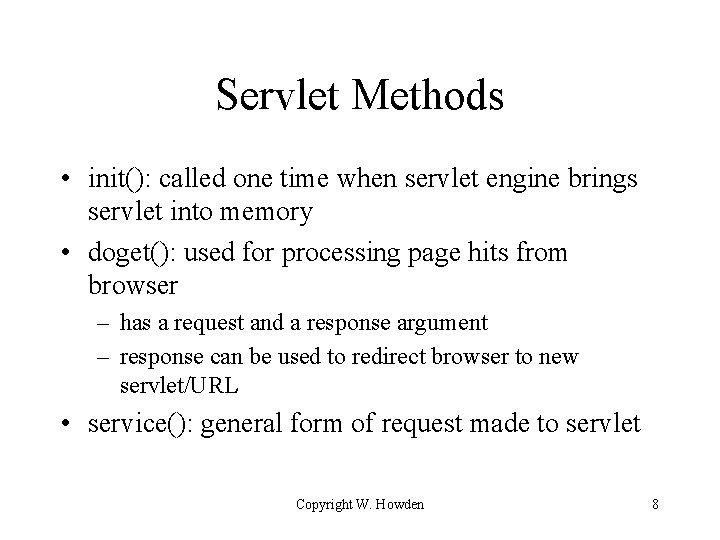
Servlet Methods • init(): called one time when servlet engine brings servlet into memory • doget(): used for processing page hits from browser – has a request and a response argument – response can be used to redirect browser to new servlet/URL • service(): general form of request made to servlet Copyright W. Howden 8
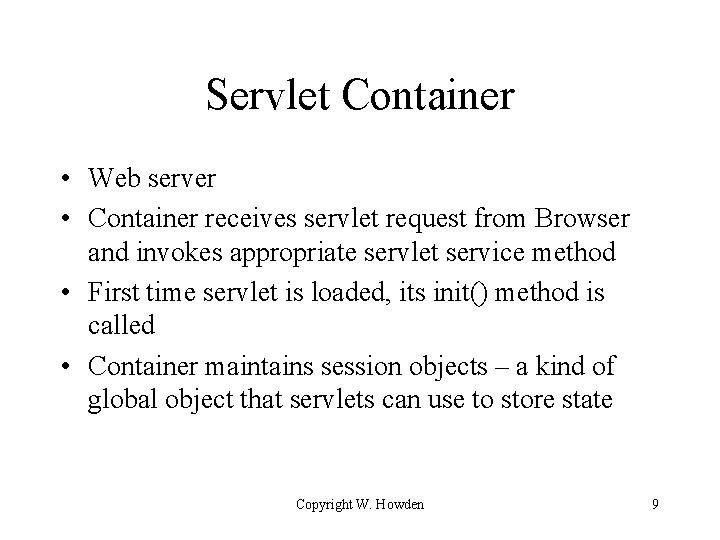
Servlet Container • Web server • Container receives servlet request from Browser and invokes appropriate servlet service method • First time servlet is loaded, its init() method is called • Container maintains session objects – a kind of global object that servlets can use to store state Copyright W. Howden 9
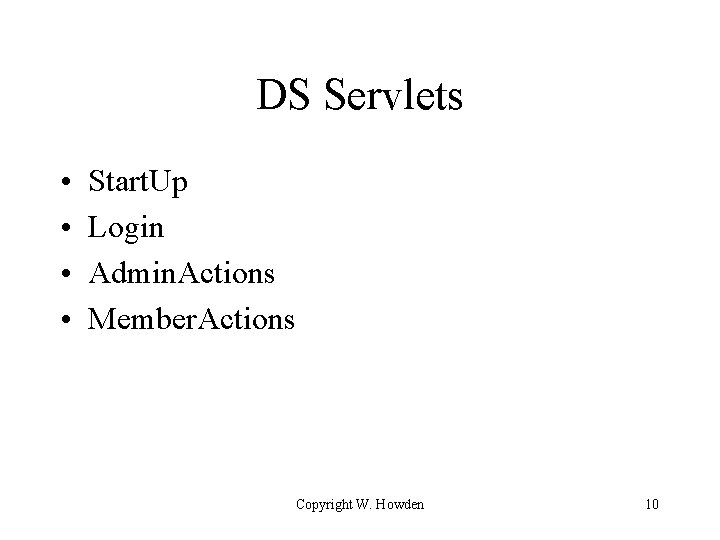
DS Servlets • • Start. Up Login Admin. Actions Member. Actions Copyright W. Howden 10
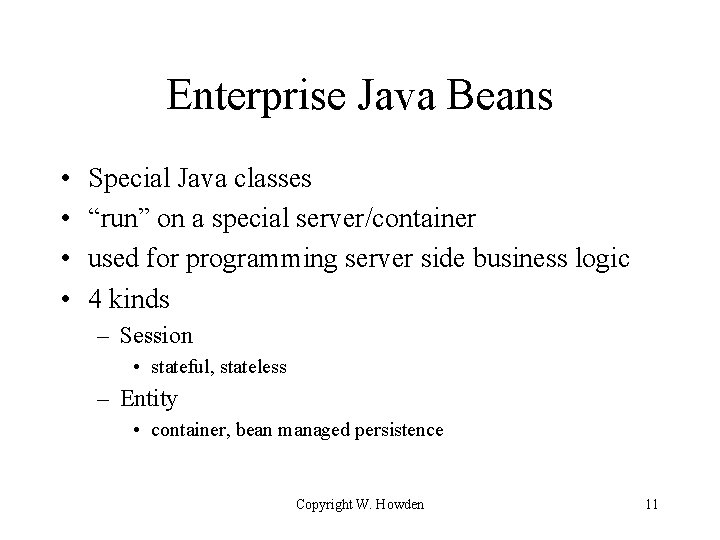
Enterprise Java Beans • • Special Java classes “run” on a special server/container used for programming server side business logic 4 kinds – Session • stateful, stateless – Entity • container, bean managed persistence Copyright W. Howden 11
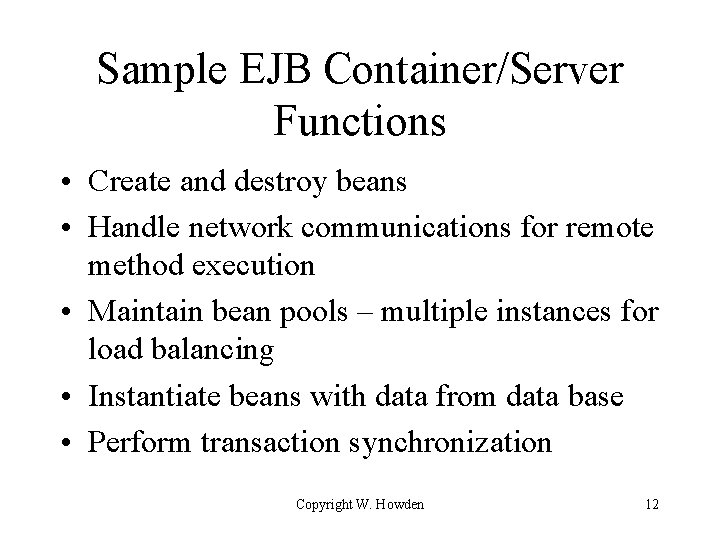
Sample EJB Container/Server Functions • Create and destroy beans • Handle network communications for remote method execution • Maintain bean pools – multiple instances for load balancing • Instantiate beans with data from data base • Perform transaction synchronization Copyright W. Howden 12
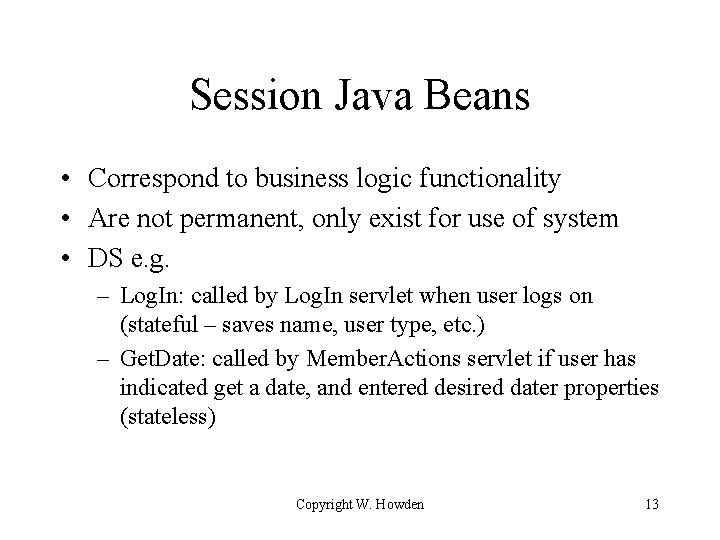
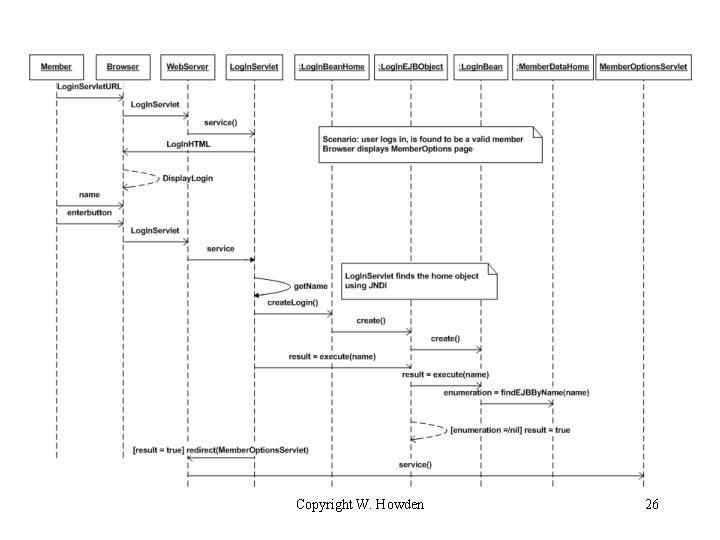
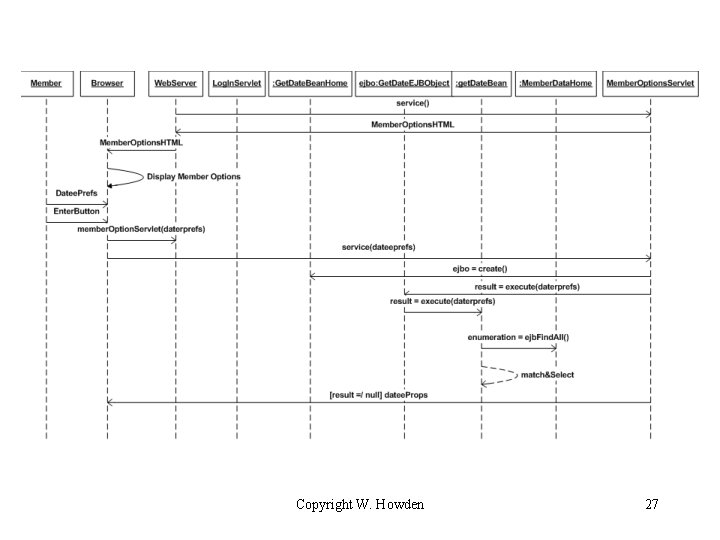
Session Java Beans • Correspond to business logic functionality • Are not permanent, only exist for use of system • DS e. g. – Log. In: called by Log. In servlet when user logs on (stateful – saves name, user type, etc. ) – Get. Date: called by Member. Actions servlet if user has indicated get a date, and entered desired dater properties (stateless) Copyright W. Howden 13
Entity Java Beans • Correspond to business logic permanent data • DS e. g. – Member. Data (we will choose container managed persistence) Copyright W. Howden 14
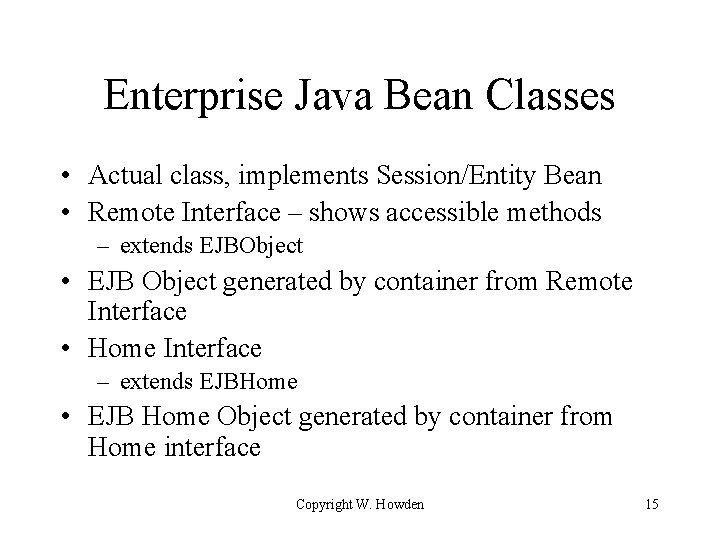
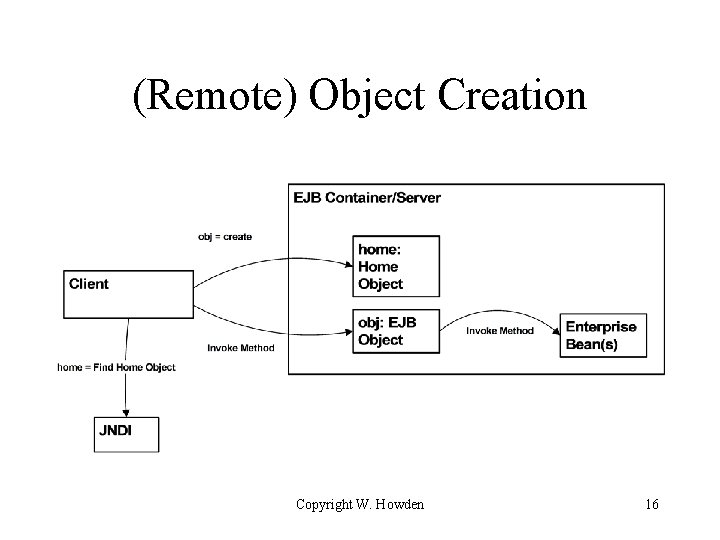
Enterprise Java Bean Classes • Actual class, implements Session/Entity Bean • Remote Interface – shows accessible methods – extends EJBObject • EJB Object generated by container from Remote Interface • Home Interface – extends EJBHome • EJB Home Object generated by container from Home interface Copyright W. Howden 15
(Remote) Object Creation Copyright W. Howden 16
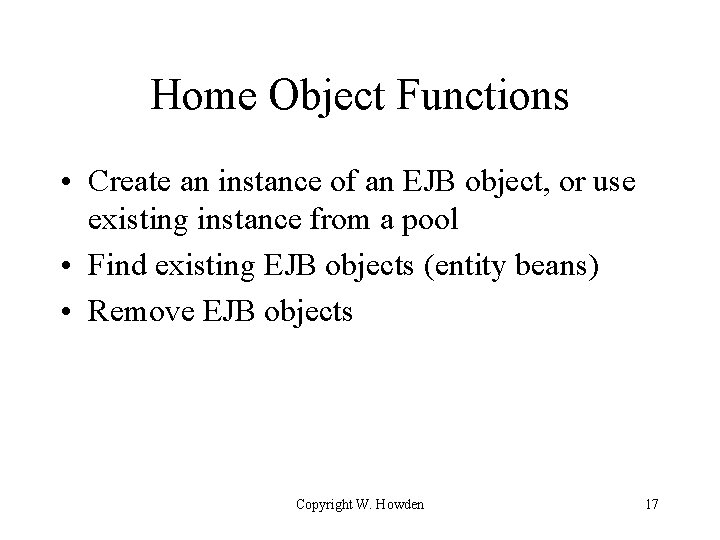
Home Object Functions • Create an instance of an EJB object, or use existing instance from a pool • Find existing EJB objects (entity beans) • Remove EJB objects Copyright W. Howden 17
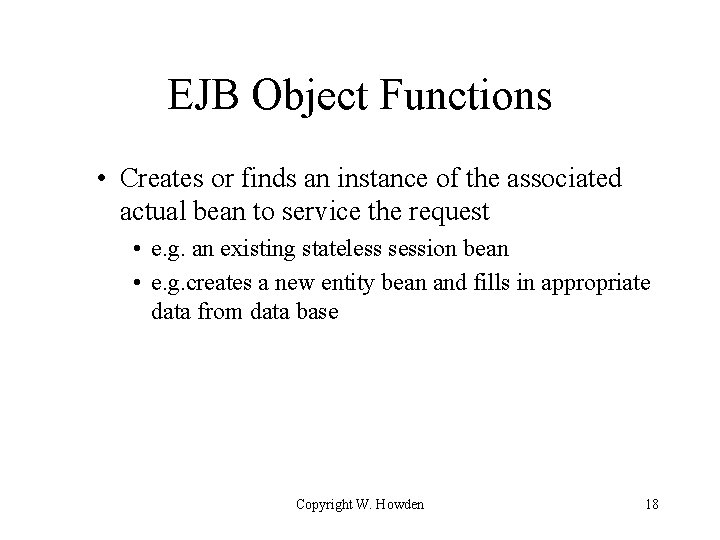
EJB Object Functions • Creates or finds an instance of the associated actual bean to service the request • e. g. an existing stateless session bean • e. g. creates a new entity bean and fills in appropriate data from data base Copyright W. Howden 18
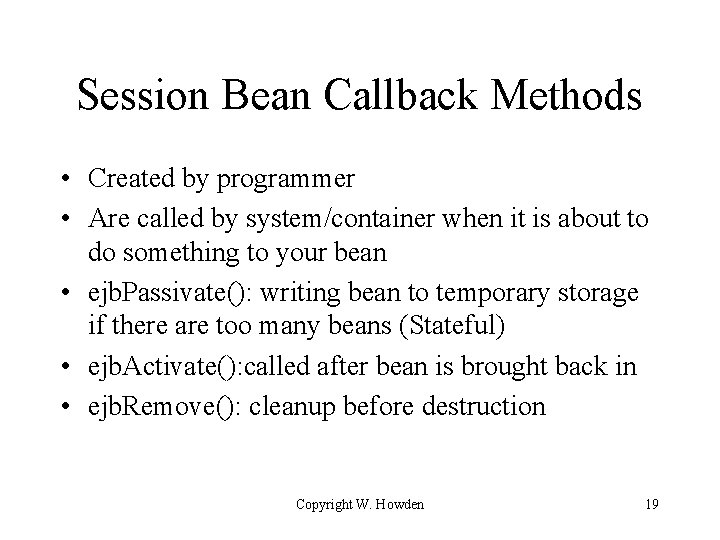
Session Bean Callback Methods • Created by programmer • Are called by system/container when it is about to do something to your bean • ejb. Passivate(): writing bean to temporary storage if there are too many beans (Stateful) • ejb. Activate(): called after bean is brought back in • ejb. Remove(): cleanup before destruction Copyright W. Howden 19
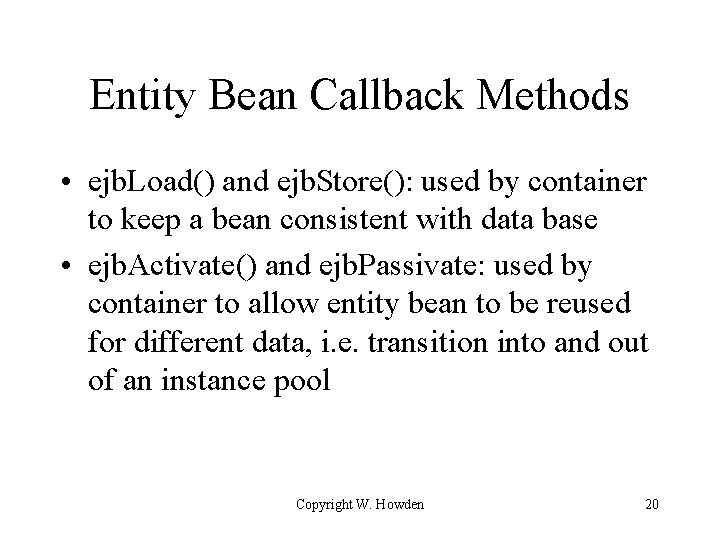
Entity Bean Callback Methods • ejb. Load() and ejb. Store(): used by container to keep a bean consistent with data base • ejb. Activate() and ejb. Passivate: used by container to allow entity bean to be reused for different data, i. e. transition into and out of an instance pool Copyright W. Howden 20
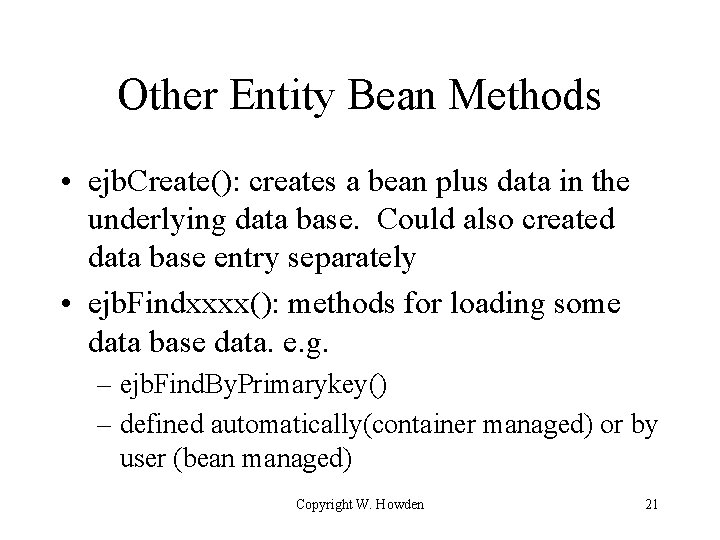
Other Entity Bean Methods • ejb. Create(): creates a bean plus data in the underlying data base. Could also created data base entry separately • ejb. Findxxxx(): methods for loading some data base data. e. g. – ejb. Find. By. Primarykey() – defined automatically(container managed) or by user (bean managed) Copyright W. Howden 21
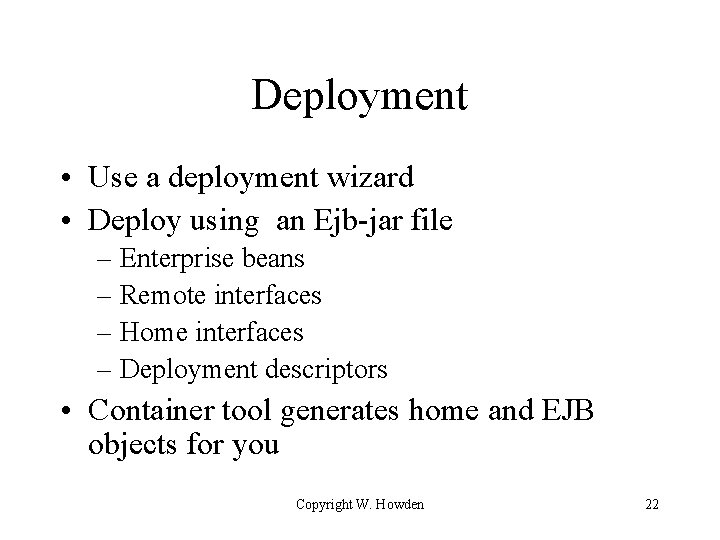
Deployment • Use a deployment wizard • Deploy using an Ejb-jar file – Enterprise beans – Remote interfaces – Home interfaces – Deployment descriptors • Container tool generates home and EJB objects for you Copyright W. Howden 22
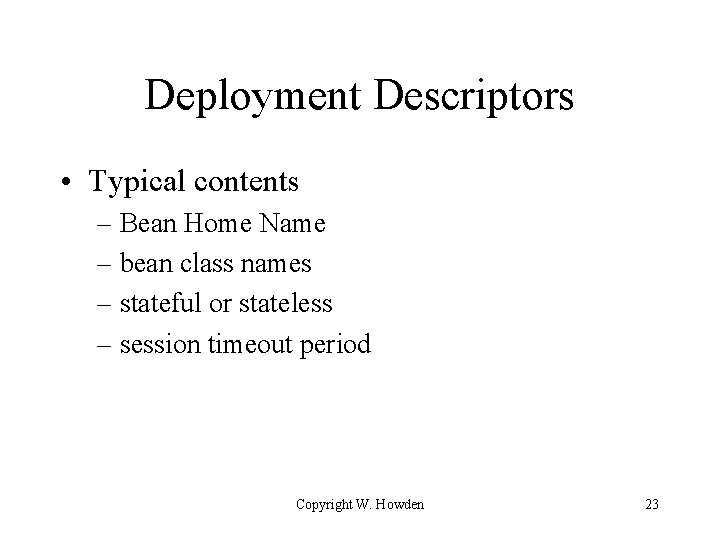
Deployment Descriptors • Typical contents – Bean Home Name – bean class names – stateful or stateless – session timeout period Copyright W. Howden 23
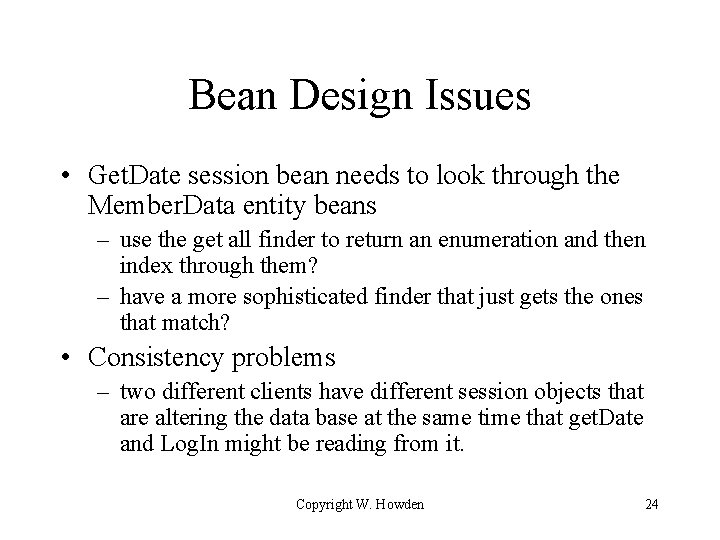
Bean Design Issues • Get. Date session bean needs to look through the Member. Data entity beans – use the get all finder to return an enumeration and then index through them? – have a more sophisticated finder that just gets the ones that match? • Consistency problems – two different clients have different session objects that are altering the data base at the same time that get. Date and Log. In might be reading from it. Copyright W. Howden 24
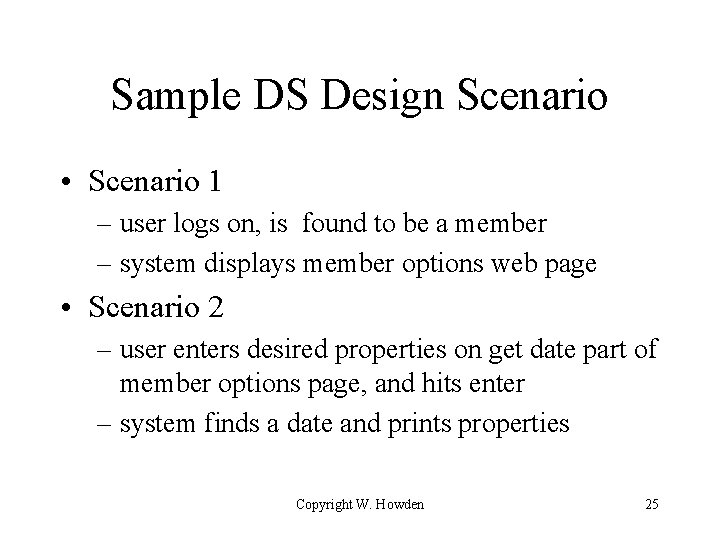
Sample DS Design Scenario • Scenario 1 – user logs on, is found to be a member – system displays member options web page • Scenario 2 – user enters desired properties on get date part of member options page, and hits enter – system finds a date and prints properties Copyright W. Howden 25
Copyright W. Howden 26
Copyright W. Howden 27