
Lecture 18 GENETICS Outline Recombination crossing over Basic
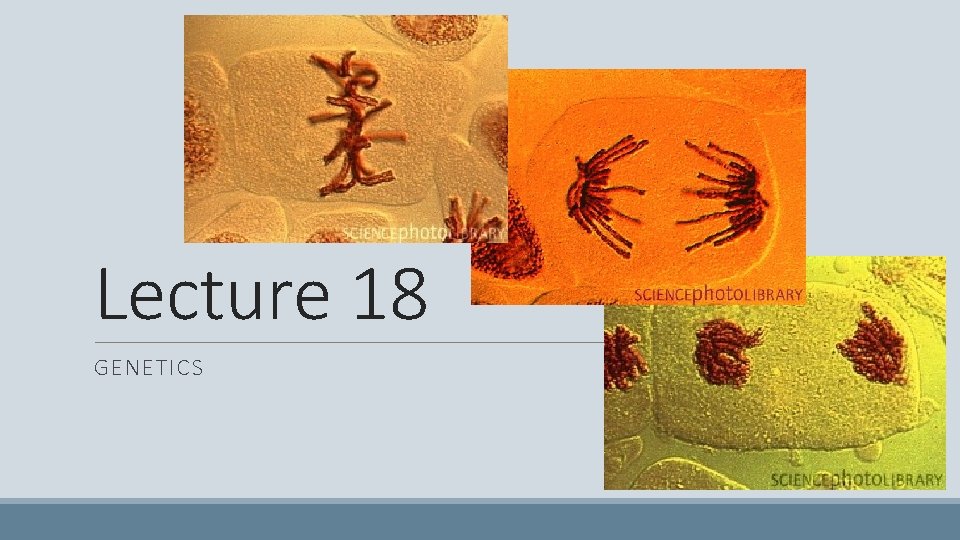
Lecture 18 GENETICS
Outline Recombination – crossing over Basic Genetic concepts Genetic terms (Genotype, Phenotype, F 1…) Genetic Tools (Punnett Squares, Probabilities, Pedigrees)
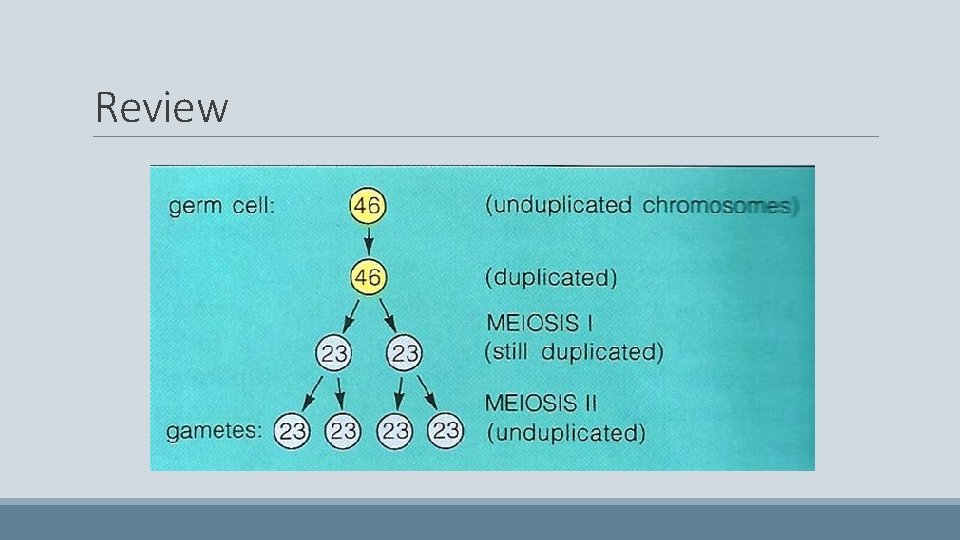
Review
Review Alleles – different versions of the same gene Maternal Allele – the version of the gene from your mother Paternal Allele – the version of the gene from your father
Independent Assortment Homologous pairs of chromosomes orient randomly at metaphase I of meiosis Each pair of chromosomes sorts maternal and paternal homologs into daughter cells independently of every other pair
Independent Assortment The number of combinations possible when chromosomes assort independently into gametes is 2 n, where n is the haploid number For humans (n = 23), there are more than 8 million (223) possible combinations of chromosomes
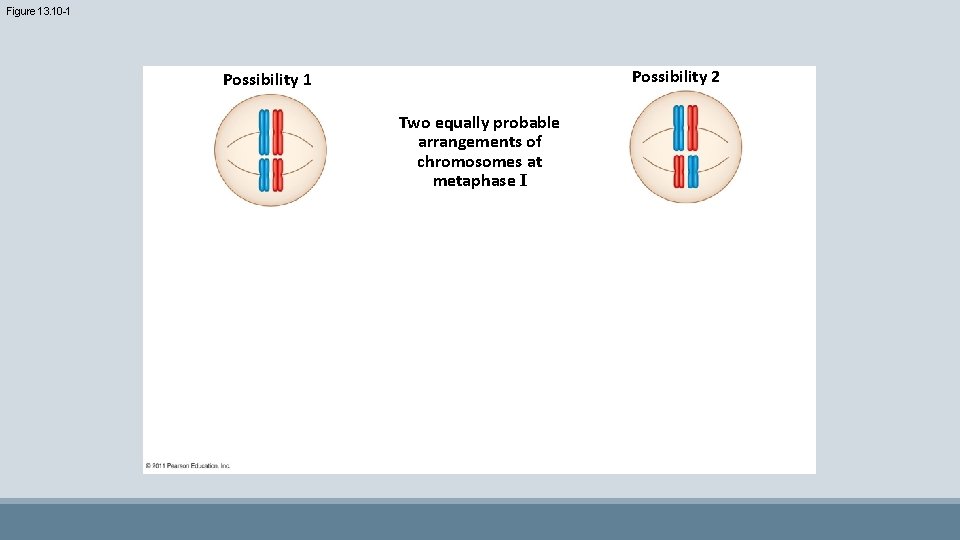
Figure 13. 10 -1 Possibility 2 Possibility 1 Two equally probable arrangements of chromosomes at metaphase I
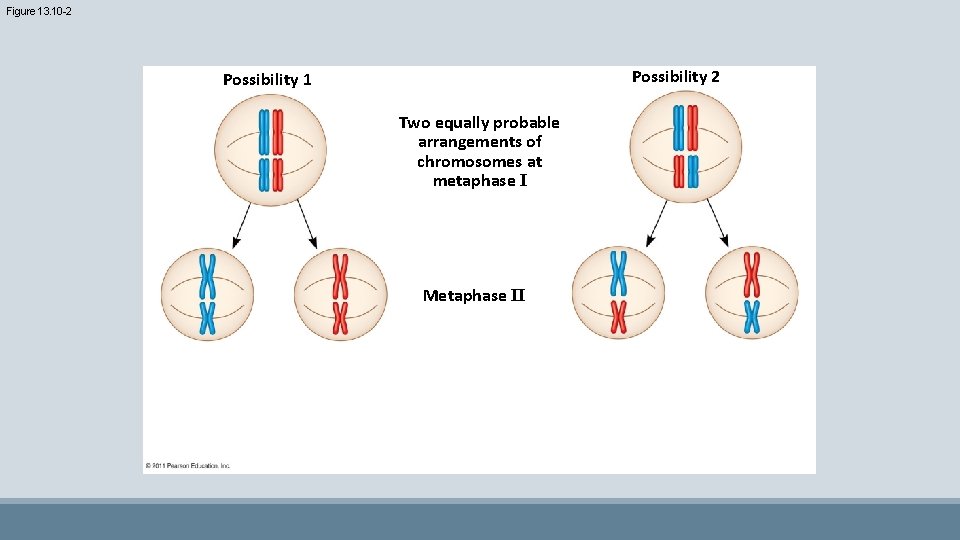
Figure 13. 10 -2 Possibility 1 Two equally probable arrangements of chromosomes at metaphase I Metaphase II
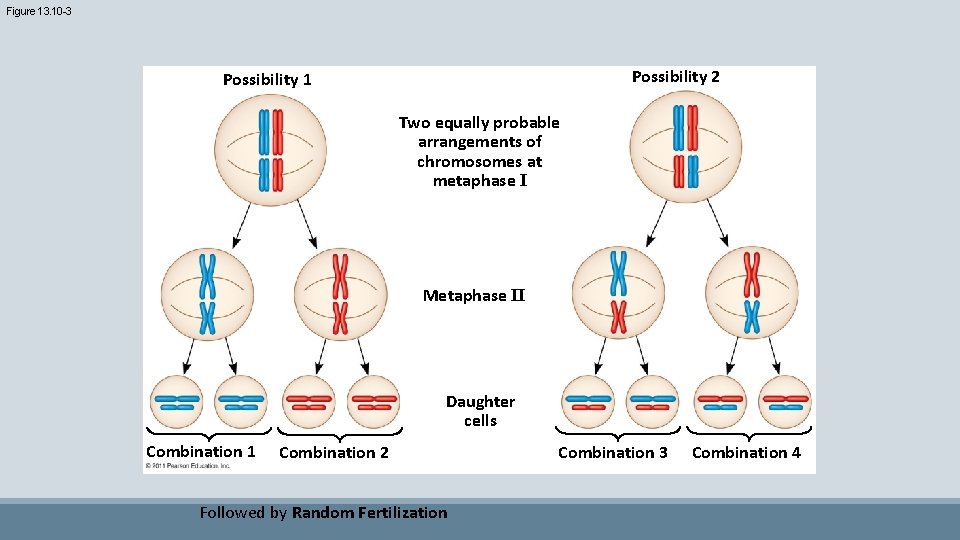
Figure 13. 10 -3 Possibility 2 Possibility 1 Two equally probable arrangements of chromosomes at metaphase I Metaphase II Daughter cells Combination 1 Combination 2 Followed by Random Fertilization Combination 3 Combination 4
Crossing Over Crossing over produces recombinant chromosomes, which combine DNA inherited from each parent Crossing over begins very early in prophase I, as homologous chromosomes pair up gene by gene
Crossing Over In crossing over, homologous portions of two nonsister chromatids trade places Crossing over contributes to genetic variation by combining DNA from two parents into a single chromosome
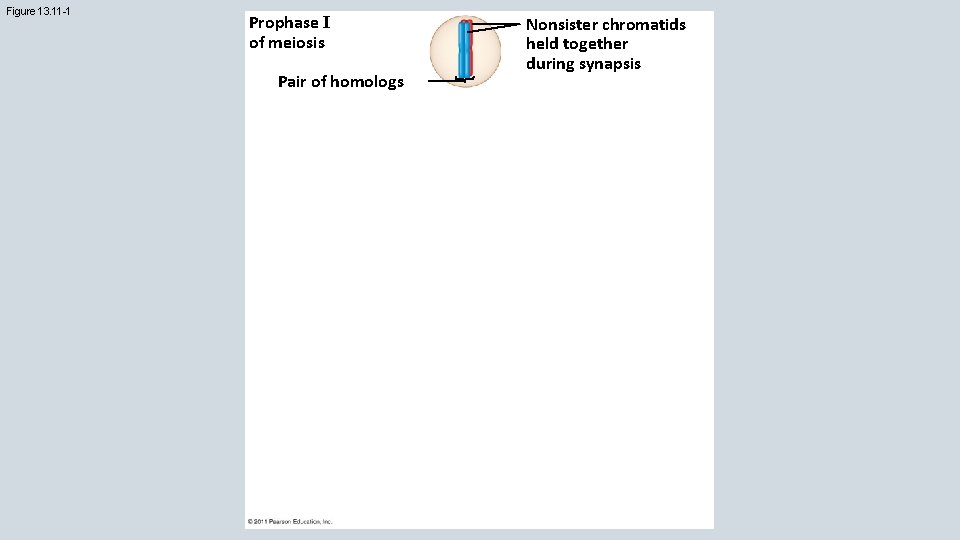
Figure 13. 11 -1 Prophase I of meiosis Pair of homologs Nonsister chromatids held together during synapsis
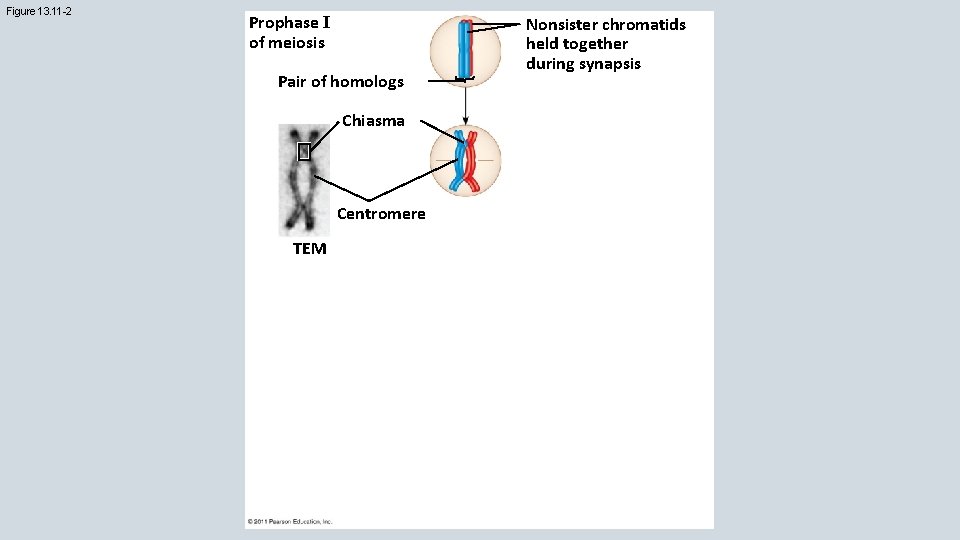
Figure 13. 11 -2 Prophase I of meiosis Pair of homologs Chiasma Centromere TEM Nonsister chromatids held together during synapsis
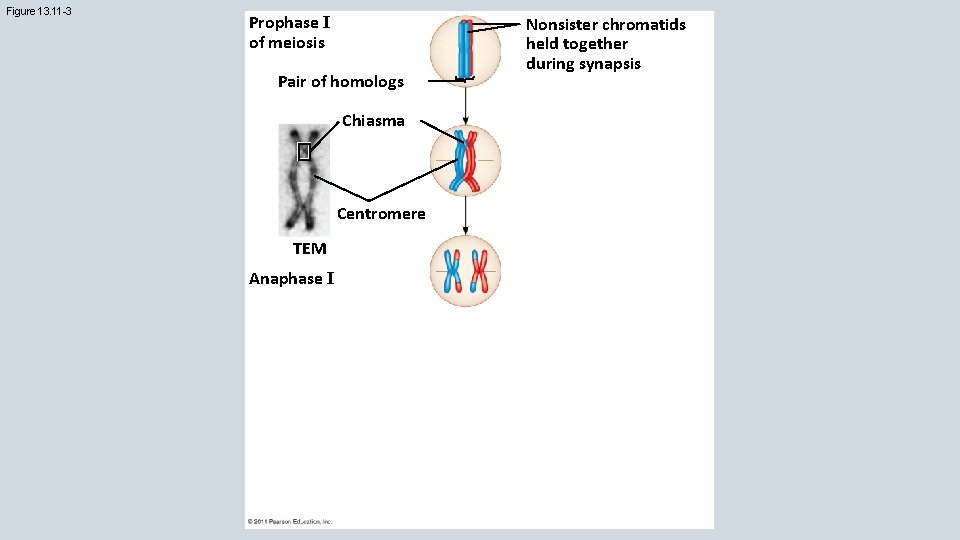
Figure 13. 11 -3 Prophase I of meiosis Pair of homologs Chiasma Centromere TEM Anaphase I Nonsister chromatids held together during synapsis
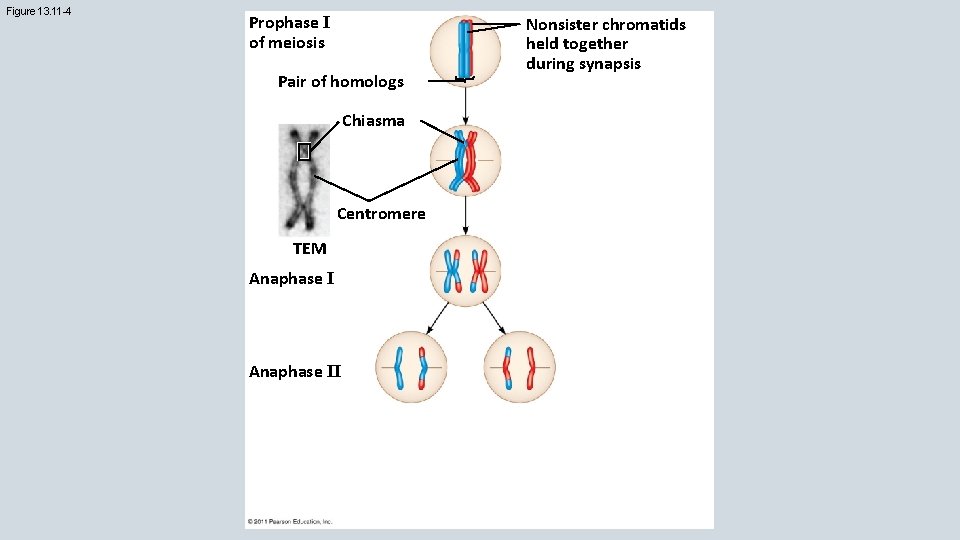
Figure 13. 11 -4 Prophase I of meiosis Pair of homologs Chiasma Centromere TEM Anaphase II Nonsister chromatids held together during synapsis
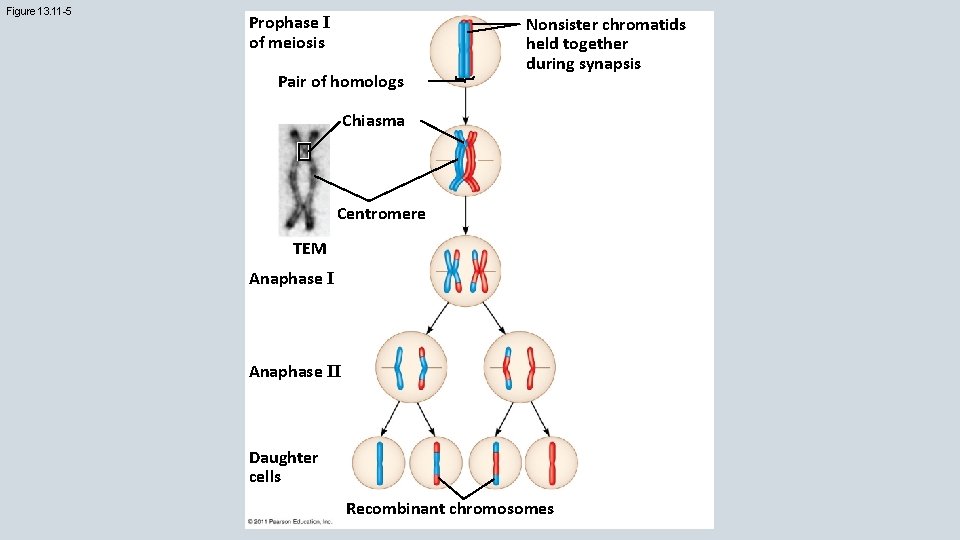
Figure 13. 11 -5 Prophase I of meiosis Pair of homologs Nonsister chromatids held together during synapsis Chiasma Centromere TEM Anaphase II Daughter cells Recombinant chromosomes
Summary of genetic variation Three mechanisms contribute to genetic variation ◦ Independent assortment of chromosomes ◦ Crossing over ◦ Random fertilization

Figure 13. 7 -3 Interphase Pair of homologous chromosomes in diploid parent cell Duplicated pair of homologous chromosomes Chromosomes duplicate Sister chromatids Diploid cell with duplicated chromosomes Meiosis I 1 Homologous chromosomes separate Haploid cells with duplicated chromosomes Meiosis II 2 Sister chromatids separate Haploid cells with unduplicated chromosomes
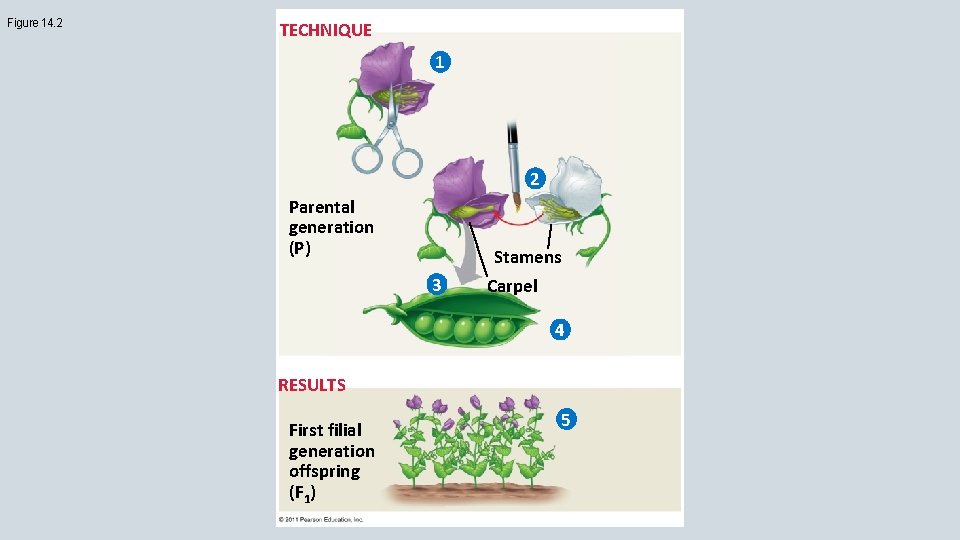
Figure 14. 2 TECHNIQUE 1 2 Parental generation (P) 3 Stamens Carpel 4 RESULTS First filial generation offspring (F 1) 5
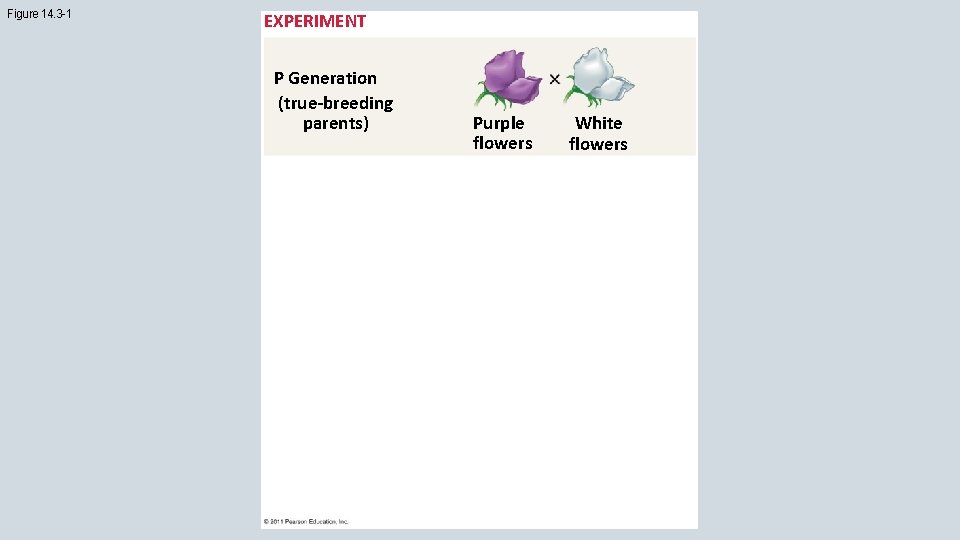
Figure 14. 3 -1 EXPERIMENT P Generation (true-breeding parents) Purple flowers White flowers
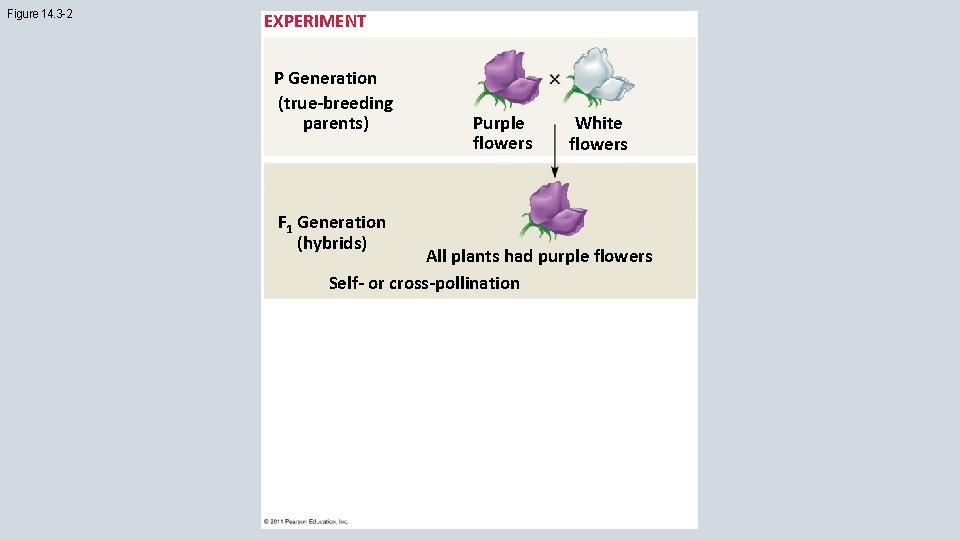
Figure 14. 3 -2 EXPERIMENT P Generation (true-breeding parents) F 1 Generation (hybrids) Purple flowers White flowers All plants had purple flowers Self- or cross-pollination
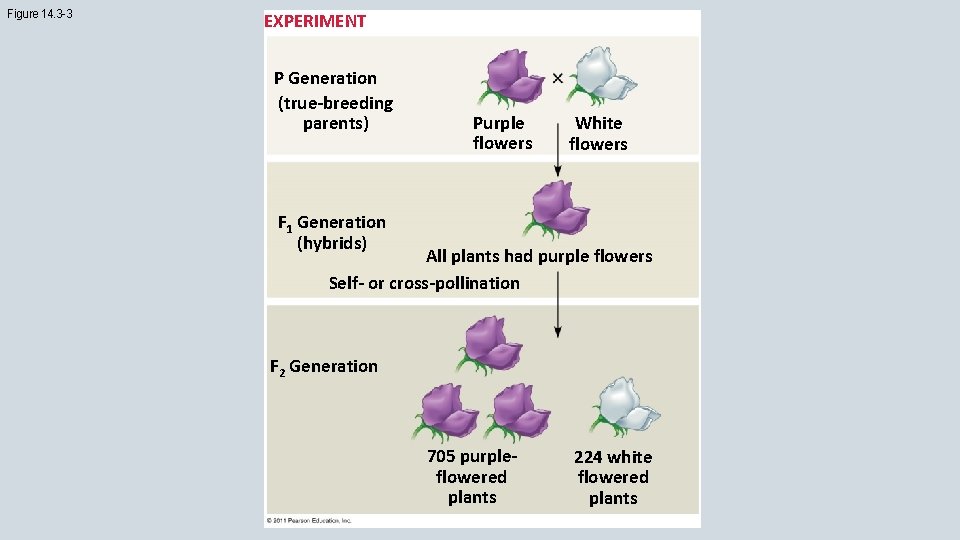
Figure 14. 3 -3 EXPERIMENT P Generation (true-breeding parents) Purple flowers White flowers F 1 Generation (hybrids) All plants had purple flowers Self- or cross-pollination F 2 Generation 705 purpleflowered plants 224 white flowered plants
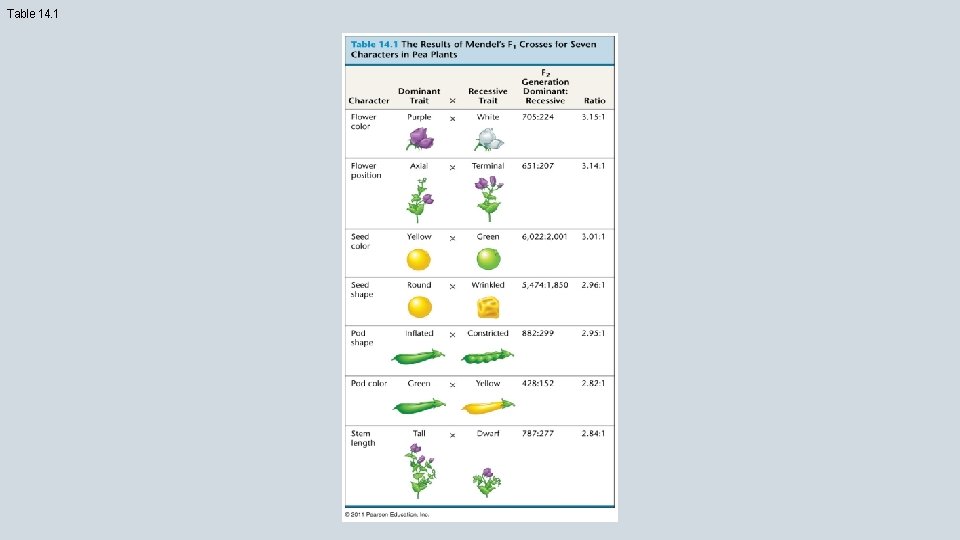
Table 14. 1
Terms Trait/Phenotype/Genotype Generations: Parental, F 1, F 2 Self pollination vs Cross pollination True breeding Hybrid
Mendel’s Model Mendel developed a hypothesis to explain the 3: 1 inheritance pattern he observed in F 2 offspring Four related concepts make up this model We now know the molecular explanation for this model
1 st Concept To Explain 3: 1 Pattern in F 2 generation First: alternative versions of genes account for variations in inherited characters One Gene: Purple flower – White Flower These alternative versions of a gene are alleles Each gene resides at a specific locus on a specific chromosome
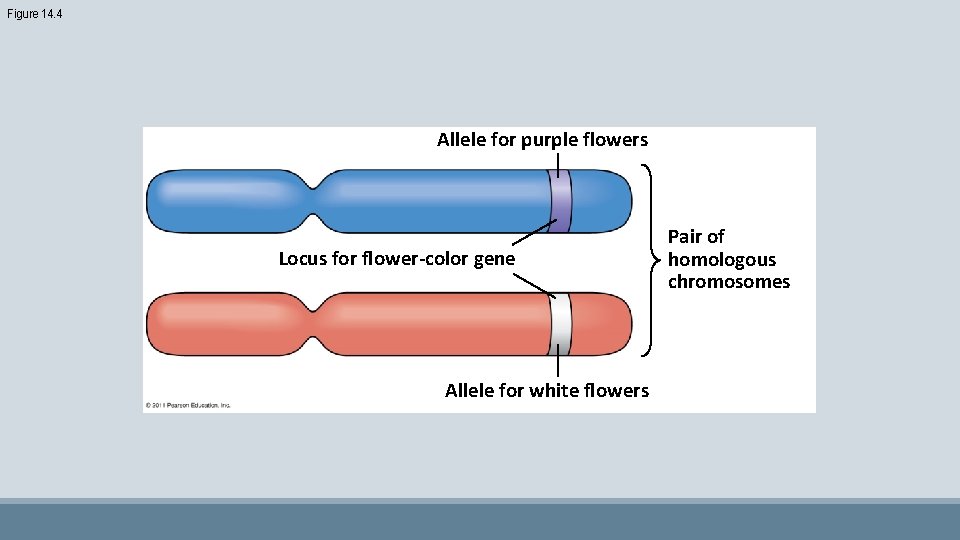
Figure 14. 4 Allele for purple flowers Locus for flower-color gene Allele for white flowers Pair of homologous chromosomes
2 nd Concept To Explain 3: 1 Pattern in F 2 generation Second: for each character (phenotype), an organism inherits two alleles, one from each parent The two alleles at a particular locus may be identical, as in the true-breeding plants of Mendel’s P generation Alternatively, the two alleles at a locus may differ, as in the F 1 hybrids
3 rd Concept To Explain 3: 1 Pattern in F 2 generation Third: if the two alleles at a locus differ, then one (the dominant allele) determines the organism’s appearance, and the other (the recessive allele) has no noticeable effect on appearance In the flower-color example, the F 1 plants had purple flowers because the allele for that trait is dominant
4 th Concept To Explain 3: 1 Pattern in F 2 generation Fourth: The law of independent segregation: the two alleles for a heritable characteristic (phenotype) separate (segregate) during gamete formation and end up in different gametes An egg or a sperm get only one of the two alleles Allele segregation is because homologous chromosomes segregate during meiosis
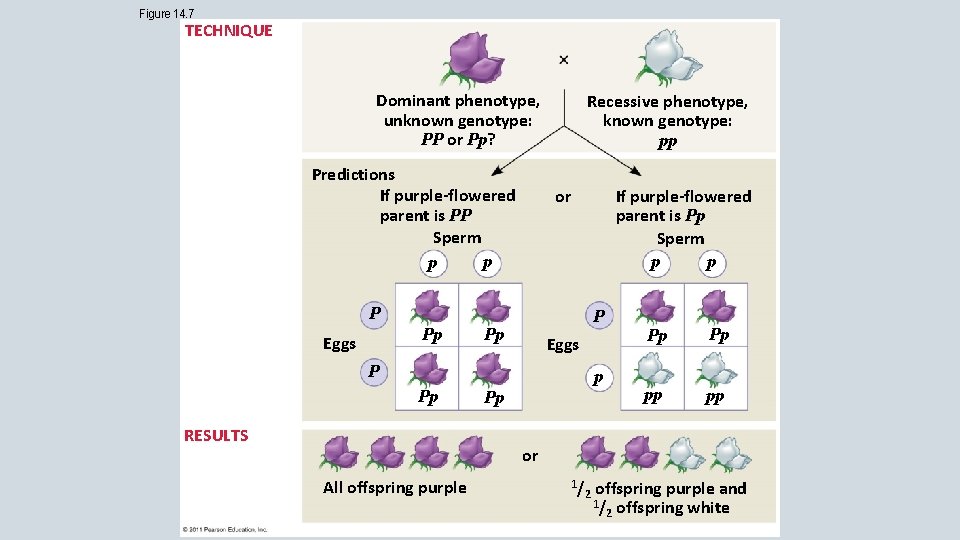
Figure 14. 7 TECHNIQUE Dominant phenotype, unknown genotype: PP or Pp? Predictions If purple-flowered parent is PP Sperm p p Recessive phenotype, known genotype: pp If purple-flowered parent is Pp Sperm p p or P Pp Eggs P p Pp RESULTS Pp Pp Pp pp pp or All offspring purple 1/ 2 offspring purple and 2 offspring white 1/
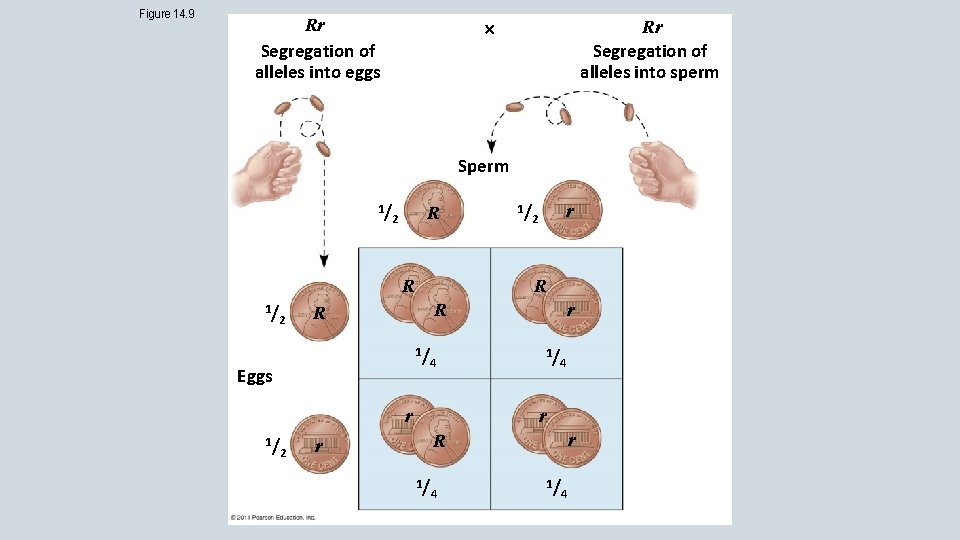
Figure 14. 9 Rr Segregation of alleles into eggs Rr Segregation of alleles into sperm Sperm 1/ R 2 2 1/ 4 r 2 r R R Eggs 1/ r 2 R R 1/ 1/ 1/ 4 r r R r 1/ 4
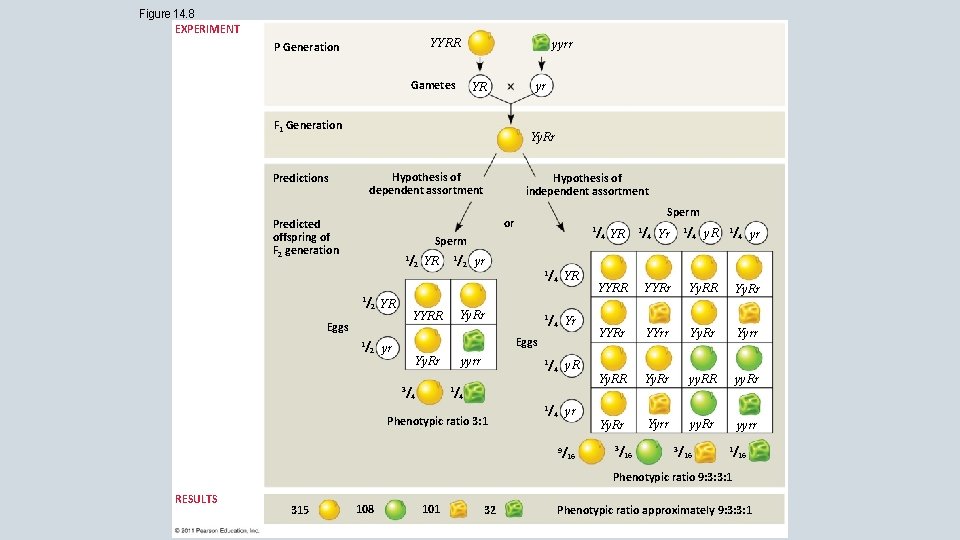
Figure 14. 8 EXPERIMENT YYRR P Generation yyrr Gametes yr YR F 1 Generation Predictions Yy. Rr Hypothesis of dependent assortment Hypothesis of independent assortment Sperm or Predicted offspring of F 2 generation 1/ 4 Sperm 1/ 2 YR Eggs 1/ 2 YR YYRR 1/ 2 yr Yy. Rr 1/ 4 YR 1/ 4 Yr 1/ 4 y. R 1/ 4 yr Eggs yr Yy. Rr 3/ 4 yyrr 1/ 4 Phenotypic ratio 3: 1 9/ 16 YR 1/ 4 Yr 1/ 4 y. R 1/ 4 yr YYRR YYRr Yy. RR Yy. Rr YYrr Yy. Rr Yyrr Yy. RR Yy. Rr yy. RR yy. Rr Yyrr yy. Rr yyrr 3/ 16 1/ 16 Phenotypic ratio 9: 3: 3: 1 RESULTS 315 108 101 32 Phenotypic ratio approximately 9: 3: 3: 1
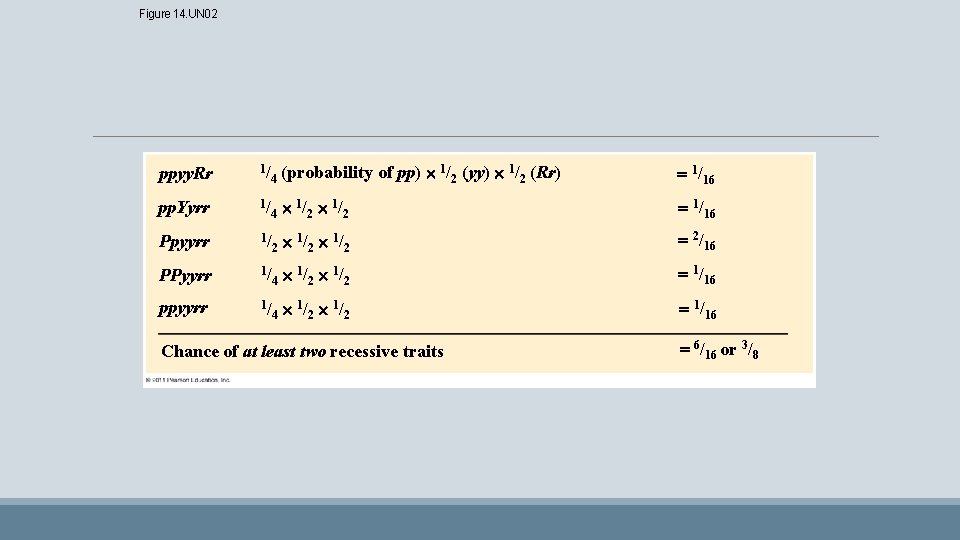
Figure 14. UN 02 (probability of pp) 1/2 (yy) 1/2 (Rr) 1/16 1 /2 1/16 2 1 /2 2/16 1/ 4 1 /2 1/16 ppyy. Rr 1/ pp. Yyrr 1/ Ppyyrr 1/ PPyyrr ppyyrr 4 4 Chance of at least two recessive traits 6/16 or 3/8
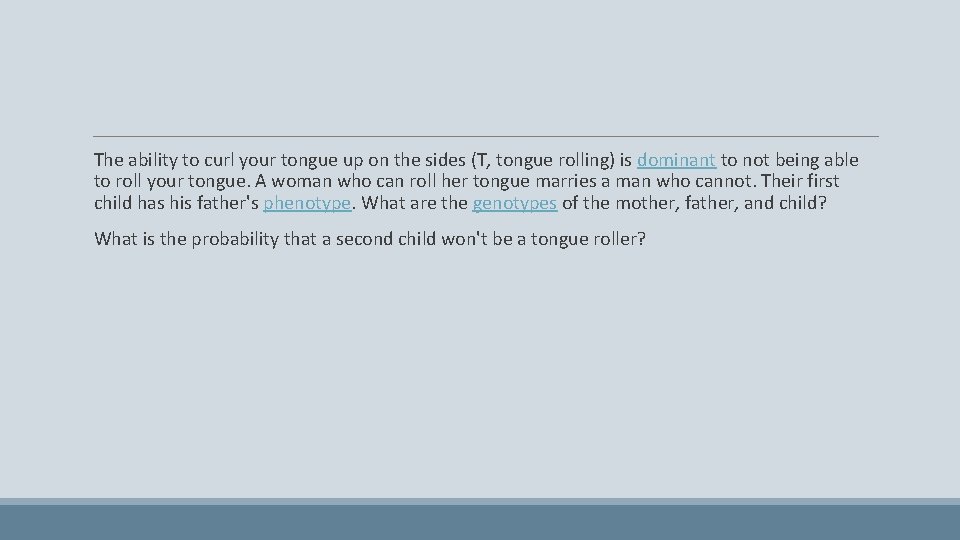
The ability to curl your tongue up on the sides (T, tongue rolling) is dominant to not being able to roll your tongue. A woman who can roll her tongue marries a man who cannot. Their first child has his father's phenotype. What are the genotypes of the mother, father, and child? What is the probability that a second child won't be a tongue roller?
Often inheritance patterns are more complicated Many heritable characters are not determined by only one gene with two alleles Basic principles of segregation and independent assortment apply even to more complex patterns of inheritance
Examples of single gene not following Mendelian patterns Inheritance of characters by a single gene may deviate from simple Mendelian patterns in the following situations: ◦ When alleles are not completely dominant or recessive ◦ When a gene has more than two alleles ◦ When a gene produces multiple phenotypes
Degrees of Dominance Complete dominance: phenotypes of the heterozygote and dominant homozygote are identical Incomplete dominance, the phenotype of F 1 hybrids is in between the phenotypes of the two parental varieties Codominance, two dominant alleles affect the phenotype in separate, distinguishable ways
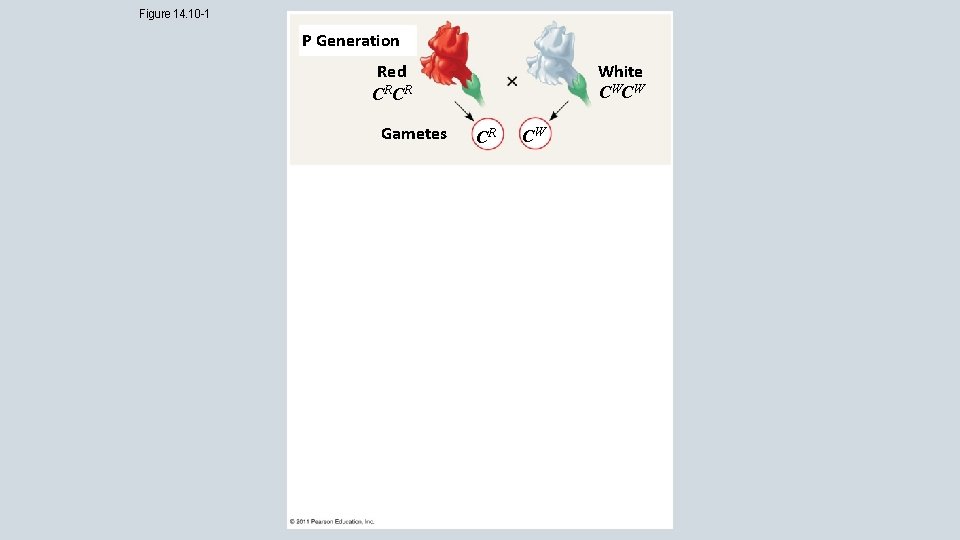
Figure 14. 10 -1 P Generation White CW CW Red CRCR Gametes CR CW
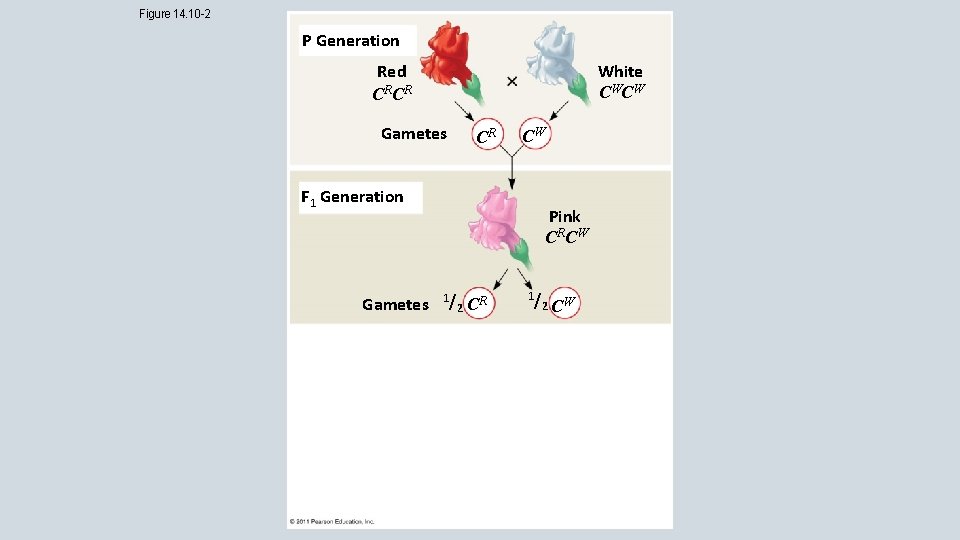
Figure 14. 10 -2 P Generation White CW CW Red CRCR Gametes CR CW F 1 Generation Gametes Pink CRCW 1/ 2 CR 1/ 2 CW
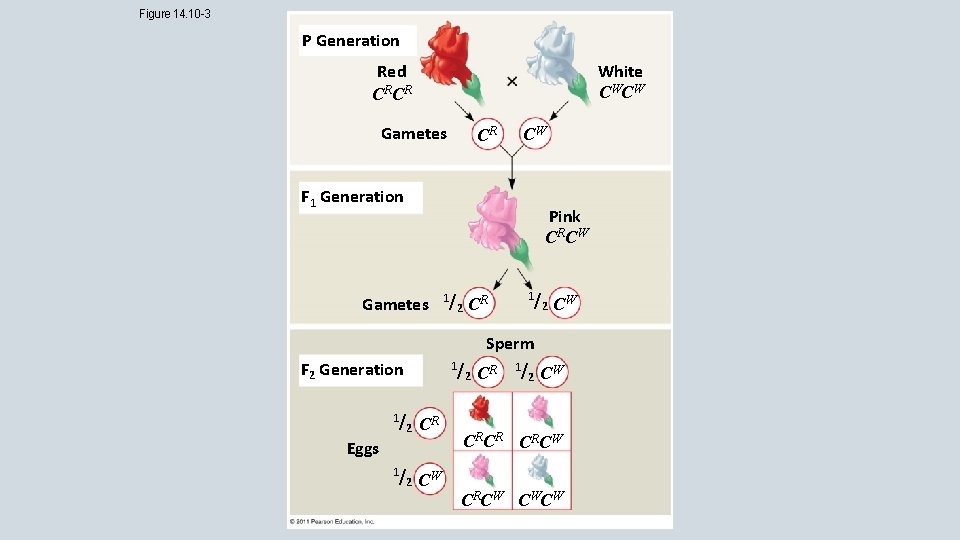
Figure 14. 10 -3 P Generation White CW CW Red CRCR Gametes CR CW F 1 Generation Pink CRCW Gametes 1/ CR 2 1/ 2 CW Sperm F 2 Generation 1/ 1/ 2 CR 1/ 2 CW Eggs 2 CR 1/ 2 CW CRCR CRCW CWCW
Tay-Sachs disease is fatal; a dysfunctional enzyme causes an accumulation of lipids in the brain ◦ At the organismal level, the allele is recessive ◦ At the biochemical level, the phenotype (i. e. , the enzyme activity level) is incompletely dominant ◦ At the molecular level, the alleles are codominant
Multiple Alleles Most genes exist in populations in more than two allelic forms The ABO blood group in humans are determined by three alleles Single Gene codes for an enzyme that attaches a specific carbohydrate to the surface of the RBC ◦ ◦ ◦ IA allele – The enzyme adds the A carbohydrate IB allele – The enzyme adds the B carbohydrate i allele – Adds neither
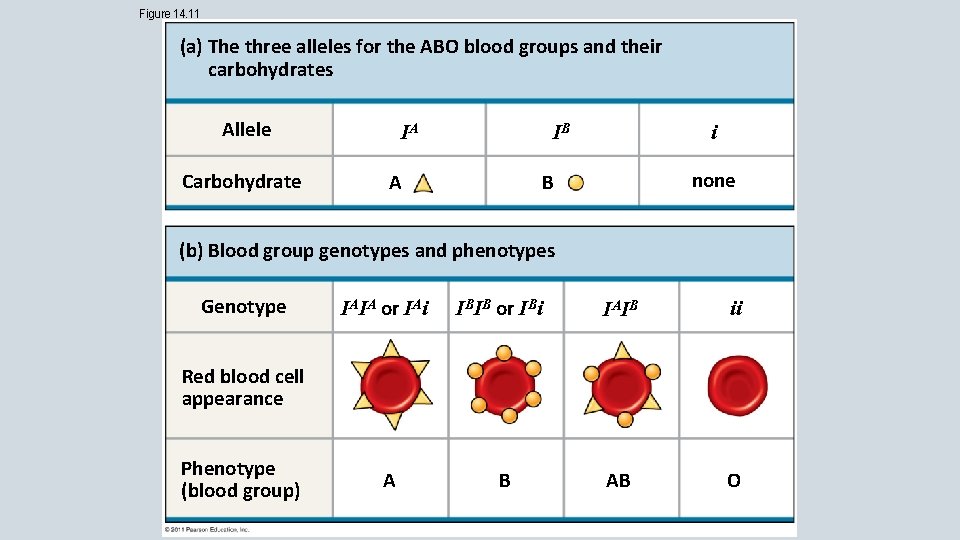
Figure 14. 11 (a) The three alleles for the ABO blood groups and their carbohydrates Allele Carbohydrate IA IB i none B A (b) Blood group genotypes and phenotypes Genotype IAIA or IAi IBIB or IBi IA IB ii A B AB O Red blood cell appearance Phenotype (blood group)
Pleotrophy Most genes have multiple phenotypic effects, a property called pleiotropy Pleiotropic alleles are responsible for the multiple symptoms of certain hereditary diseases, such as cystic fibrosis and sickle-cell disease Some traits may be determined by two or more genes
Epistasis In epistasis, a gene at one locus alters the phenotypic expression of a gene at a second locus Labrador retrievers and many other mammals, coat color depends on two genes One gene determines the pigment color (with alleles B for black and b for brown) The other gene (with alleles C for color and c for no color) determines whether the pigment will be deposited in the hair
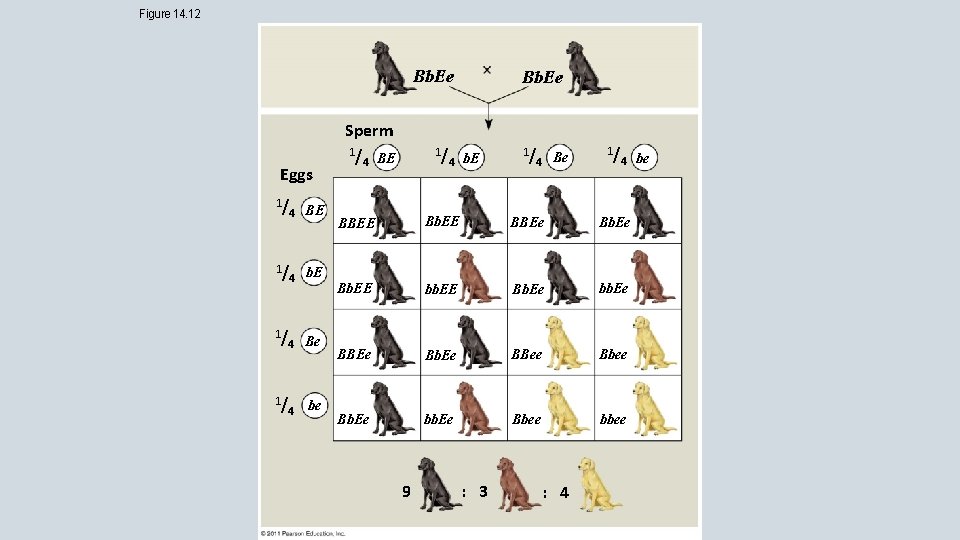
Figure 14. 12 Bb. Ee Eggs 1/ 4 BE 1/ 4 b. E 1/ 4 Be 1/ 4 be Sperm 1/ 4 BE 1/ Bb. Ee 4 b. E 1/ 4 Be 1/ 4 be BBEE Bb. EE BBEe Bb. EE bb. EE Bb. Ee bb. Ee BBEe Bb. Ee BBee Bb. Ee bb. Ee Bbee bbee 9 : 3 : 4
Polygenic Inheritance Quantitative characters are those that vary in the population along a continuum Quantitative variation usually indicates polygenic inheritance, an additive effect of two or more genes on a single phenotype Skin color in humans is an example of polygenic inheritance
Nature vs. Nurture
- Slides: 50