
LECTURE 17 Wednesday 3817 Chapter 17 Carbohydrates IMPORTANT
LECTURE 17 Wednesday 3/8/17

Chapter 17 Carbohydrates
IMPORTANT FUNCTIONS OF CARBOHYDRATES • • To provide energy through their oxidation To supply carbon for the synthesis of cell components To serve as a stored form of chemical energy To form a part of the structural elements of some cells and tissues • __________ is a general term referring to organic compounds essential to life. • ___________ is a study of the compounds and processes associated with living organisms.
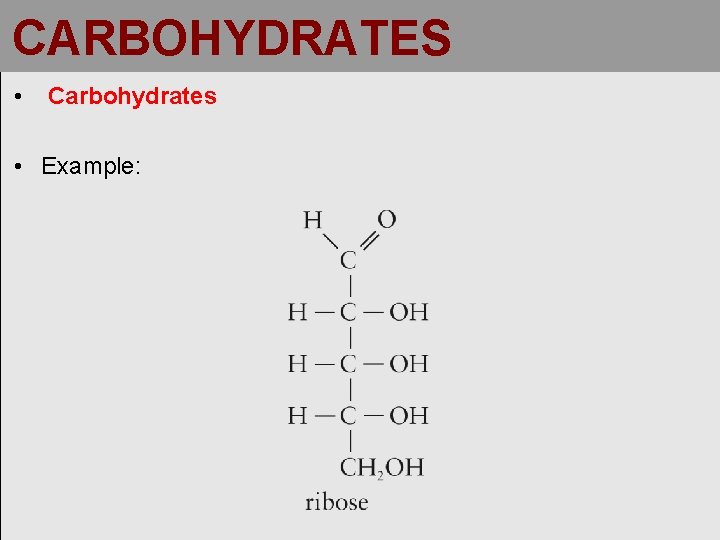
CARBOHYDRATES • Carbohydrates • Example:
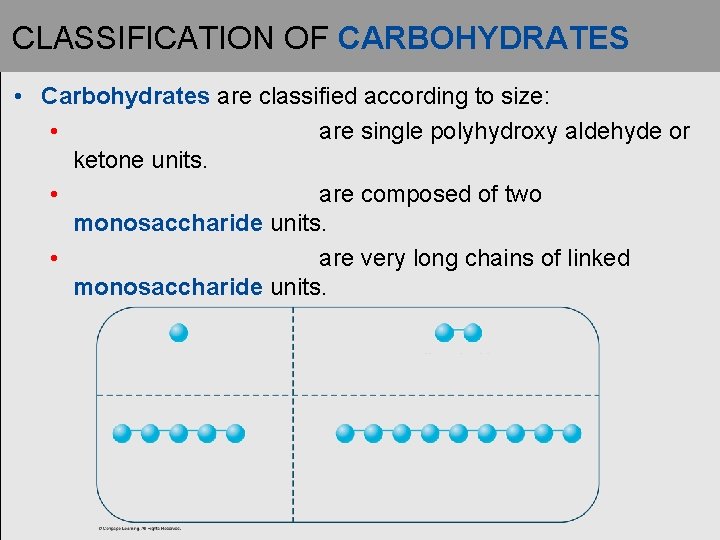
CLASSIFICATION OF CARBOHYDRATES • Carbohydrates are classified according to size: • are single polyhydroxy aldehyde or ketone units. • are composed of two monosaccharide units. • are very long chains of linked monosaccharide units.
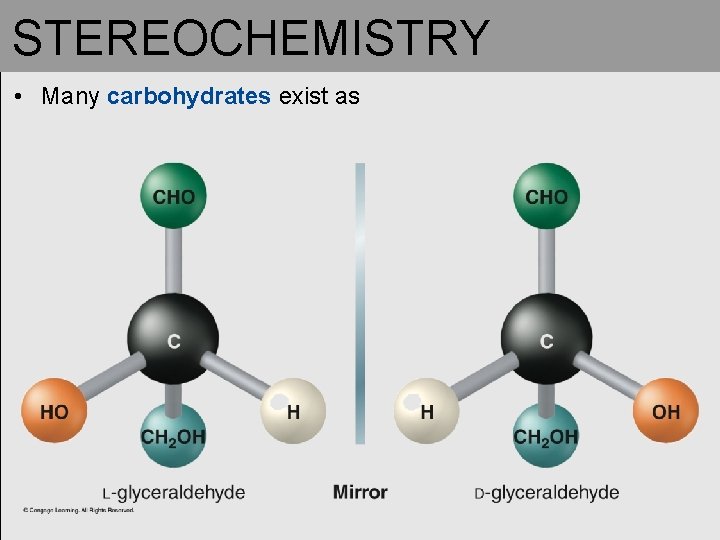
STEREOCHEMISTRY • Many carbohydrates exist as
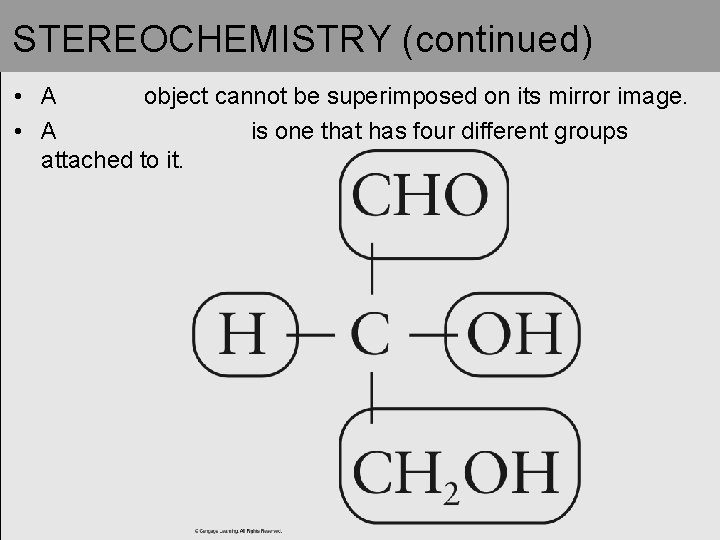
STEREOCHEMISTRY (continued) • A object cannot be superimposed on its mirror image. • A is one that has four different groups attached to it.
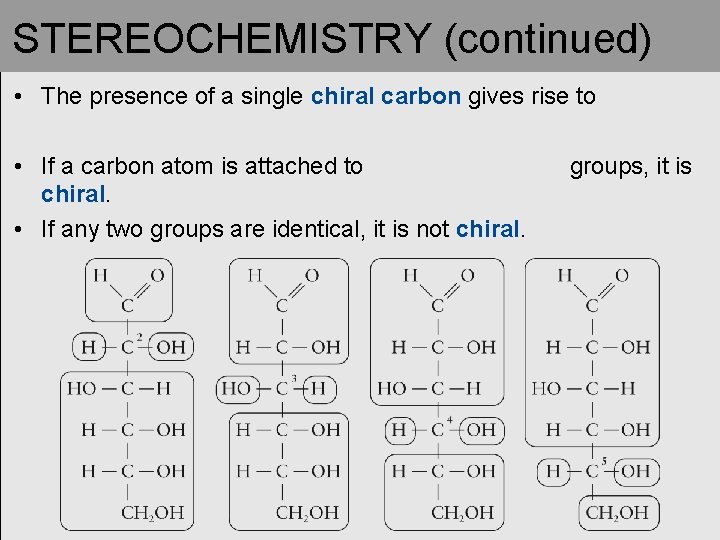
STEREOCHEMISTRY (continued) • The presence of a single chiral carbon gives rise to • If a carbon atom is attached to chiral. • If any two groups are identical, it is not chiral. groups, it is
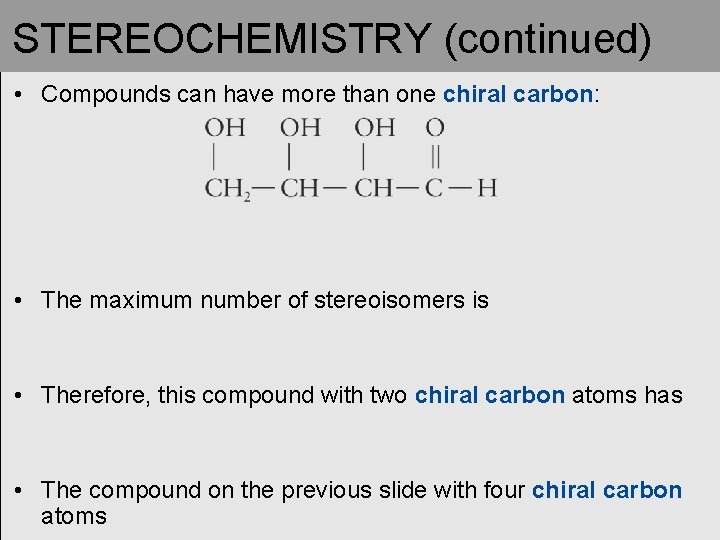
STEREOCHEMISTRY (continued) • Compounds can have more than one chiral carbon: • The maximum number of stereoisomers is • Therefore, this compound with two chiral carbon atoms has • The compound on the previous slide with four chiral carbon atoms
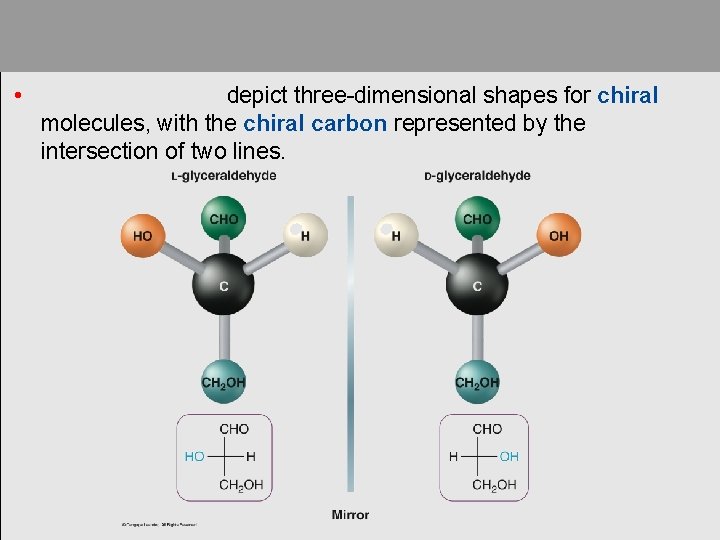
• depict three-dimensional shapes for chiral molecules, with the chiral carbon represented by the intersection of two lines.
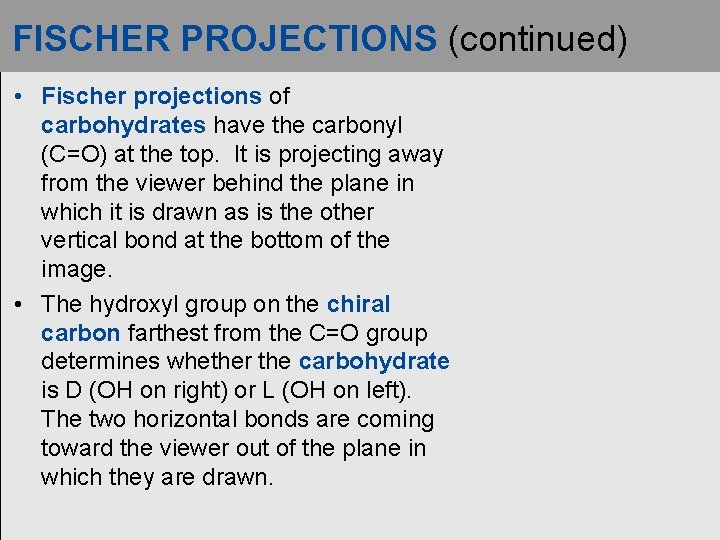
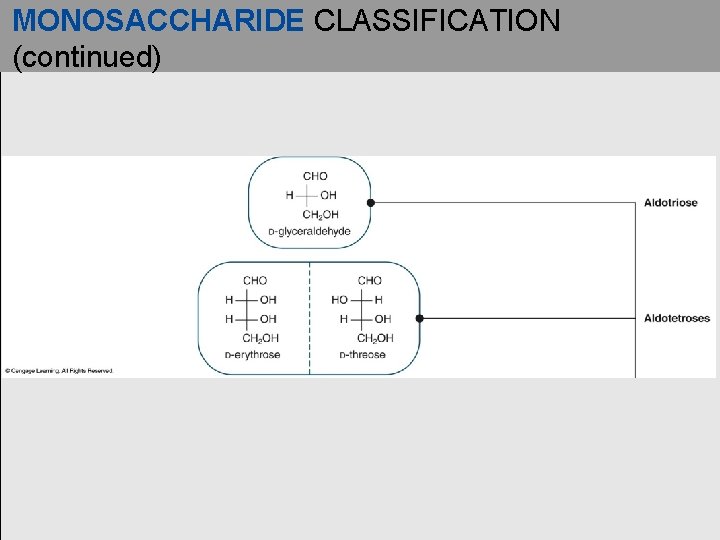
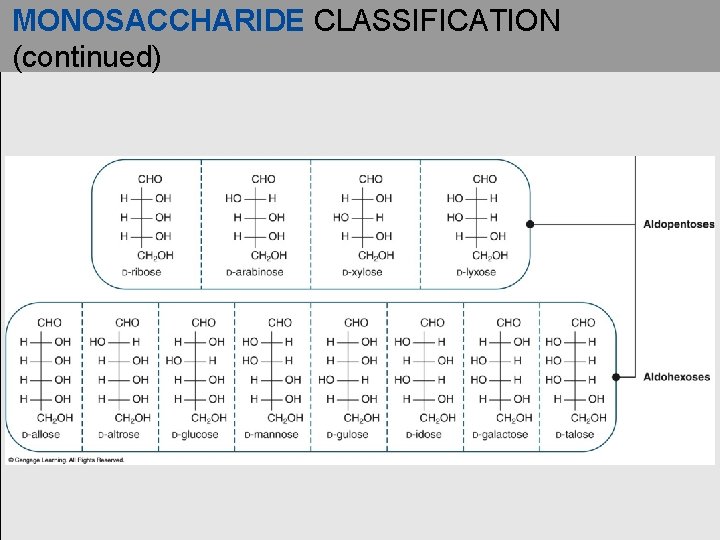
FISCHER PROJECTIONS (continued) • Fischer projections of carbohydrates have the carbonyl (C=O) at the top. It is projecting away from the viewer behind the plane in which it is drawn as is the other vertical bond at the bottom of the image. • The hydroxyl group on the chiral carbon farthest from the C=O group determines whether the carbohydrate is D (OH on right) or L (OH on left). The two horizontal bonds are coming toward the viewer out of the plane in which they are drawn.
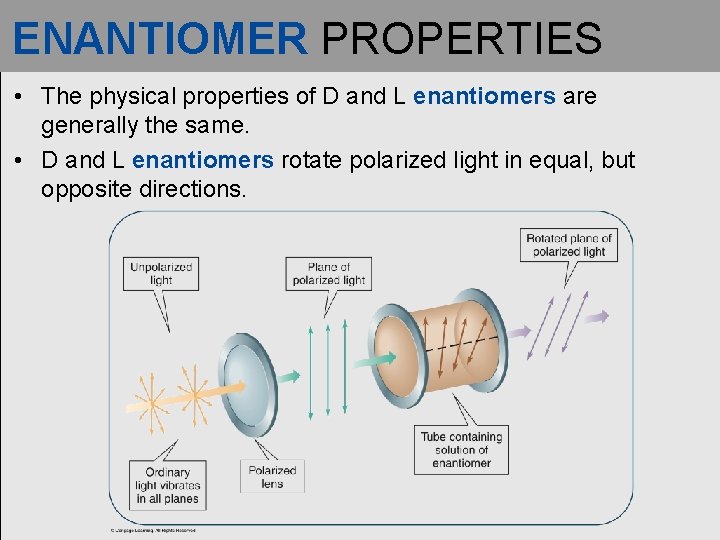
ENANTIOMER PROPERTIES • The physical properties of D and L enantiomers are generally the same. • D and L enantiomers rotate polarized light in equal, but opposite directions.
ENANTIOMER PROPERTIES (continued) • The enantiomer that rotates polarized light to the left is the • The enantiomer that rotates it to the right is the • The D and L designations • The property of rotating the plane of polarized light is called optical activity, and the molecules with this property are said to be • Measurements of optical activity are useful for differentiating between enantiomers.
ENANTIOMER PROPERTIES (continued) • In some instances, only the D or L enantiomers are found in nature. • If both D and L forms are found in nature, they are rarely found together in the same biological system. • For example: • Carbohydrates and amino acids are chiral. • Humans can only metabolize the of monosaccharides. • Most animals are only able to utilize the to synthesize proteins.
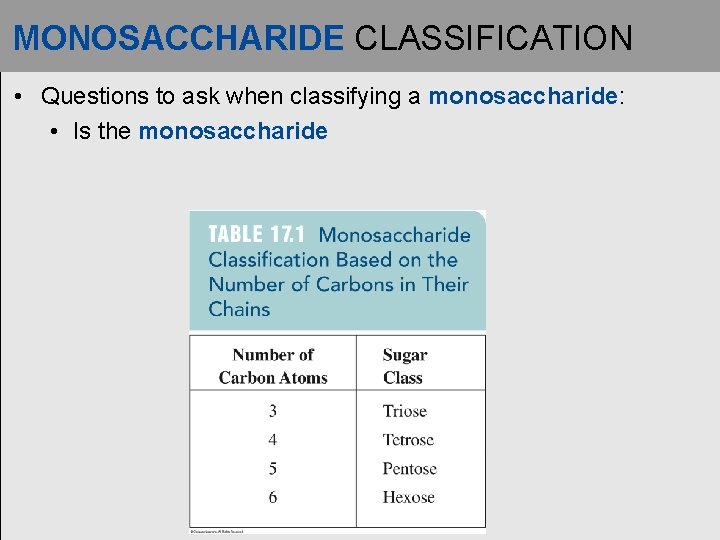
MONOSACCHARIDE CLASSIFICATION • Questions to ask when classifying a monosaccharide: • Is the monosaccharide
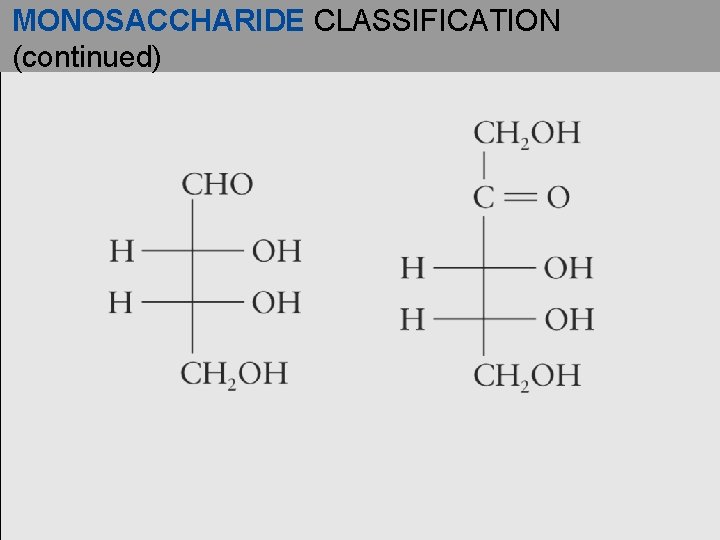
MONOSACCHARIDE CLASSIFICATION (continued)
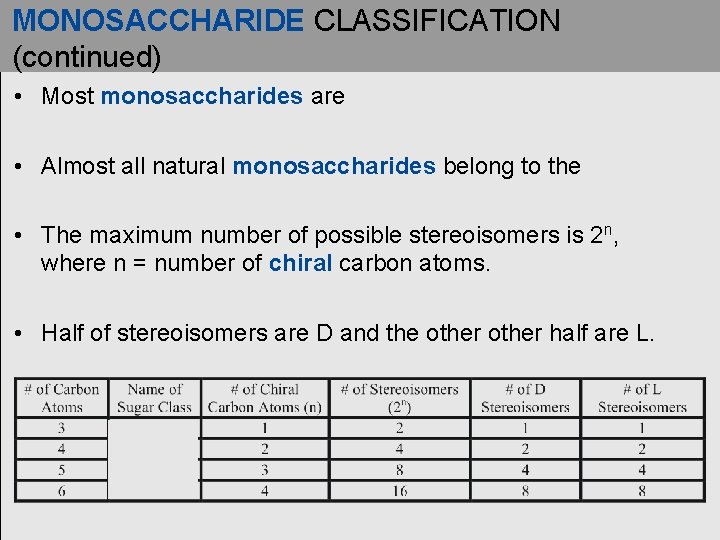
MONOSACCHARIDE CLASSIFICATION (continued) • Most monosaccharides are • Almost all natural monosaccharides belong to the • The maximum number of possible stereoisomers is 2 n, where n = number of chiral carbon atoms. • Half of stereoisomers are D and the other half are L.
MONOSACCHARIDE CLASSIFICATION (continued)
MONOSACCHARIDE CLASSIFICATION (continued)
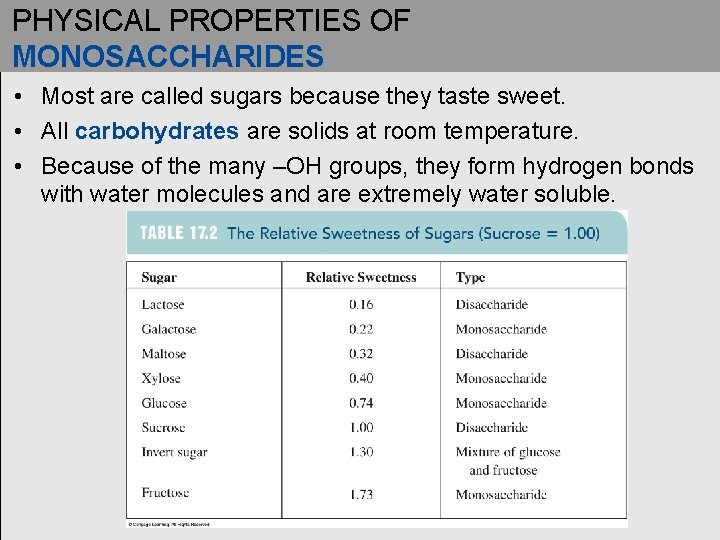
PHYSICAL PROPERTIES OF MONOSACCHARIDES • Most are called sugars because they taste sweet. • All carbohydrates are solids at room temperature. • Because of the many –OH groups, they form hydrogen bonds with water molecules and are extremely water soluble.
- Slides: 20