
Lecture 17 Static Fluids Pressure Pascals Principle Buyoancy
Lecture 17: Static Fluids • Pressure • Pascal’s Principle • Buyoancy force
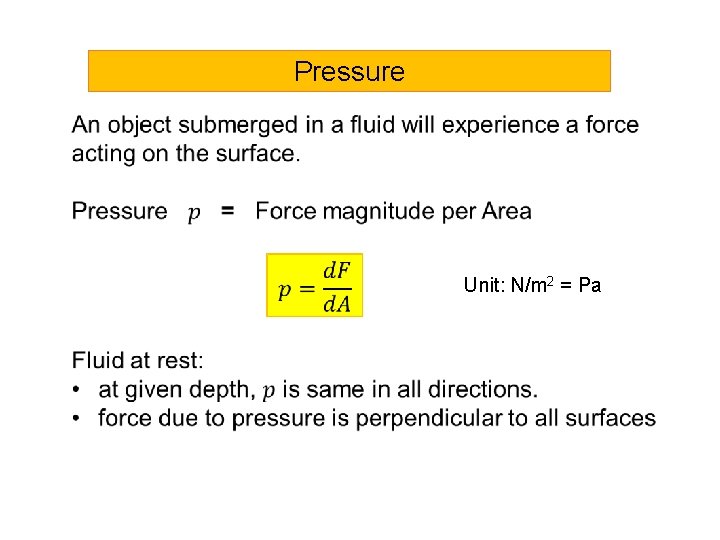
Pressure Unit: N/m 2 = Pa
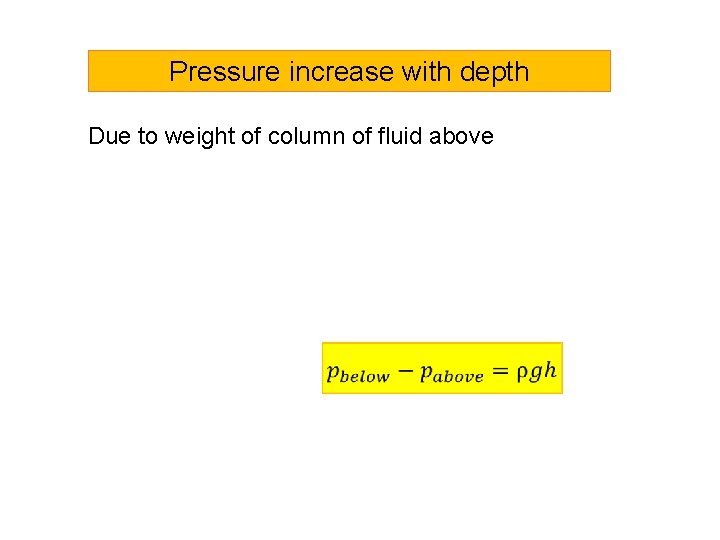
Pressure increase with depth Due to weight of column of fluid above
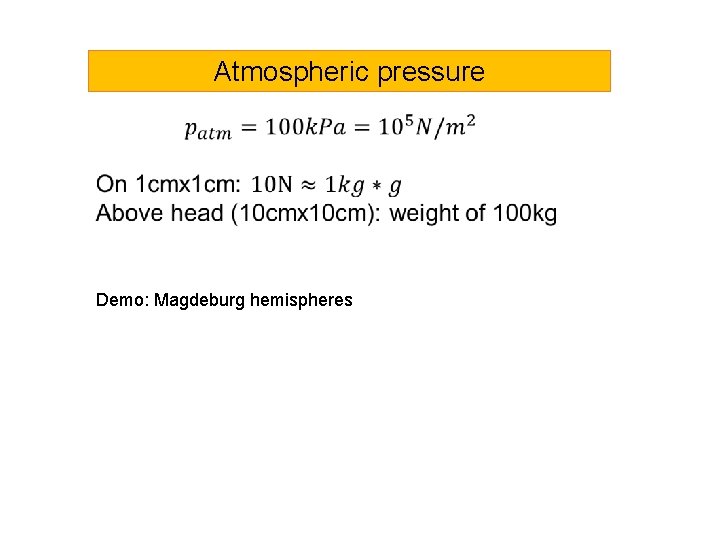
Atmospheric pressure Demo: Magdeburg hemispheres
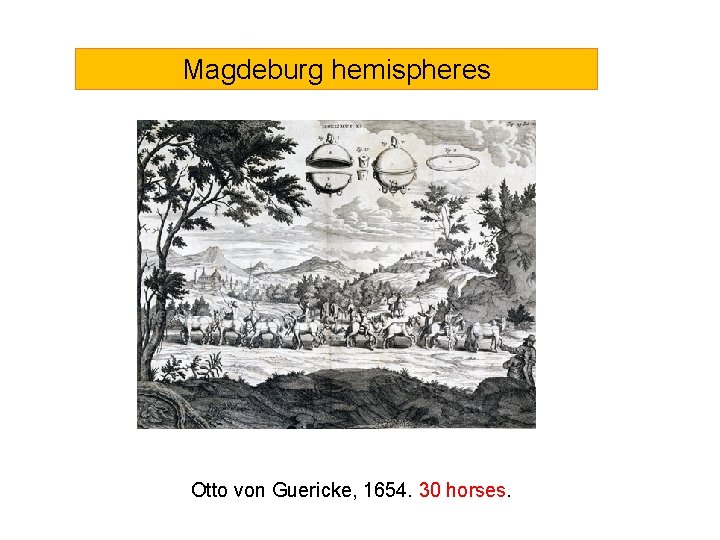
Magdeburg hemispheres Otto von Guericke, 1654. 30 horses.
Magdeburg Hemispheres
Pascal’s Principle Pressure applied to a confined fluid increases the pressure throughout the fluid by the same amount. All points at the same level in a contiguous fluid have the same pressure.
Applications of Pascal’s Principle Hydraulic lift
Demo: same water level in connected tubes of different shapes and cross sections
The longest straw… or: How high can you pump water by suction?
Example 1
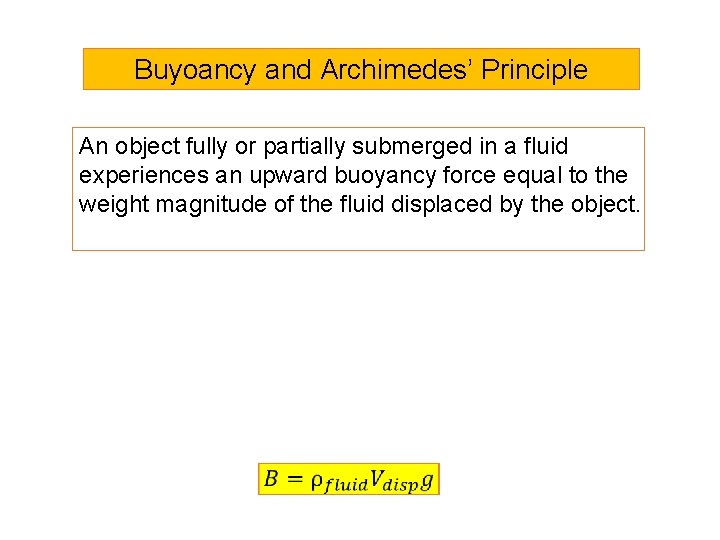
Buyoancy and Archimedes’ Principle An object fully or partially submerged in a fluid experiences an upward buoyancy force equal to the weight magnitude of the fluid displaced by the object.
Consequences of Archimedes’ Principle Density of object less than density of fluid: Object floats Density of object larger than density of fluid: Object sinks Demo: Buyoancy force

Example 2 A ball has a uniform mass density of ⅓ the density of water. What fraction of the ball’s volume is below the water line?
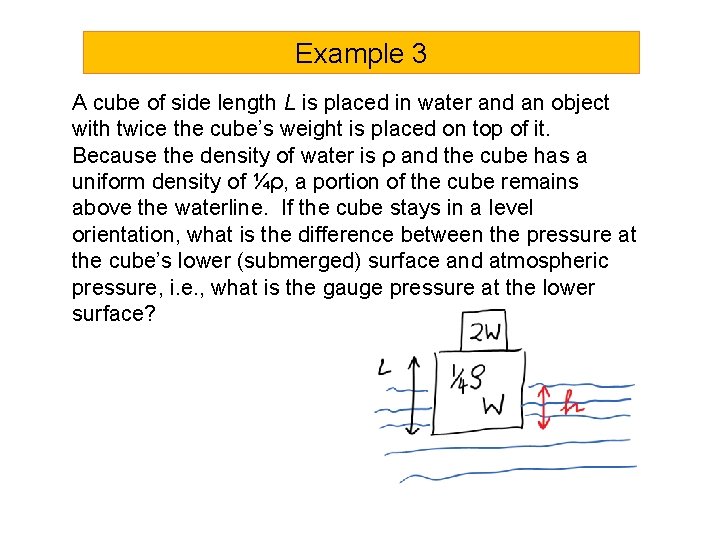
Example 3 A cube of side length L is placed in water and an object with twice the cube’s weight is placed on top of it. Because the density of water is ρ and the cube has a uniform density of ¼ρ, a portion of the cube remains above the waterline. If the cube stays in a level orientation, what is the difference between the pressure at the cube’s lower (submerged) surface and atmospheric pressure, i. e. , what is the gauge pressure at the lower surface?
- Slides: 16