
Lecture 17 HCM for TWSC Intersections 1 Text
- Slides: 21
Lecture 17 HCM for TWSC Intersections (1) Text: Highway Capacity Manual, Chapter 17
Types of Unsignalized Intersections No control Yield-controlled Two-way stop-controlled All-way stop-controlled Roundabouts Video Clip
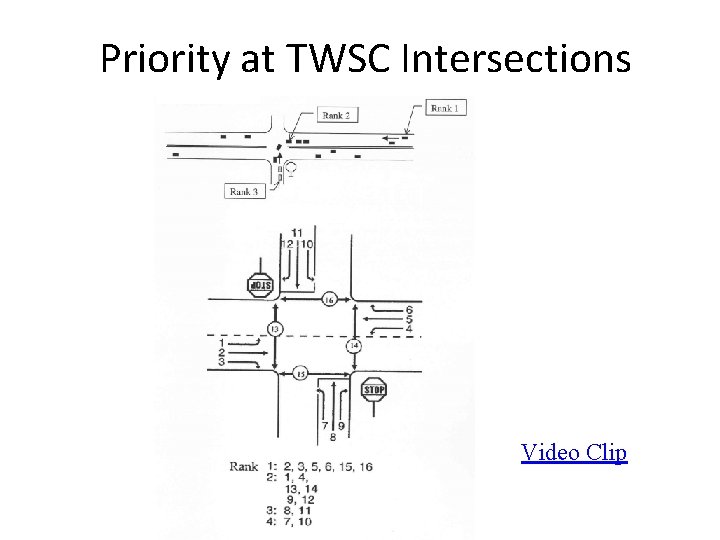
Priority at TWSC Intersections Video Clip
Capacity Calculation Capacities are calculated movement by movement in the order of movement ranks 1. Calculation of potential capacities of movements that are assumed to use separate lanes 2. Calculation of movement capacities by adjusting the movement potential capacities 3. Calculation of lane capacities
Potential Capacity A vehicle on the minor road can leave the approach if: (1)There is a sufficiently long gap between arriving priority vehicles (2)There is no queue of priority vehicles that arrived earlier and could not leave Potential capacity is estimated assuming only the first condition (no queues of priority vehicles considered)
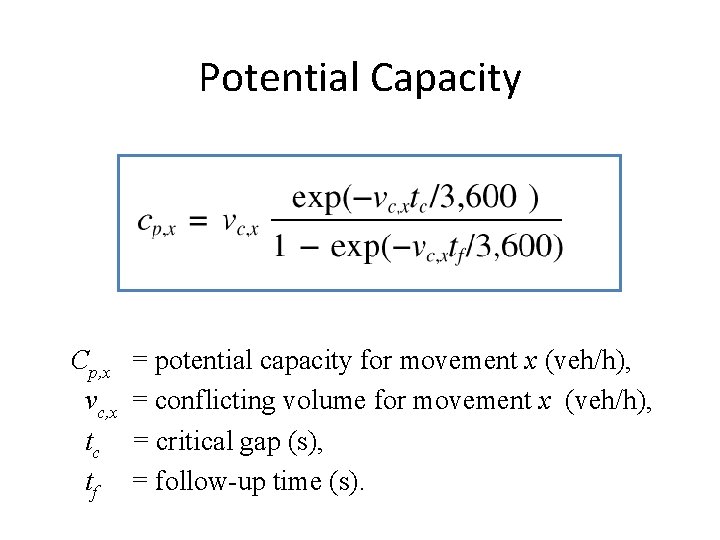
Potential Capacity • Vehicles of the priority movements arrive randomly at the rate called conflicting volume (veh/h). • An average driver on the minor street uses gaps at least tc second long called critical gap. • Vehicles need tf seconds to move from the second to the first position in the queue; this value is called follow-up time.
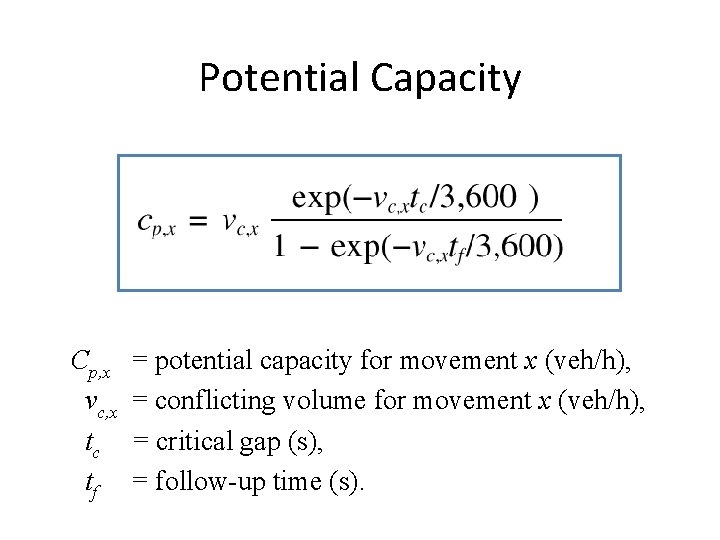
Potential Capacity Cp, x vc, x tc tf = potential capacity for movement x (veh/h), = conflicting volume for movement x (veh/h), = critical gap (s), = follow-up time (s).
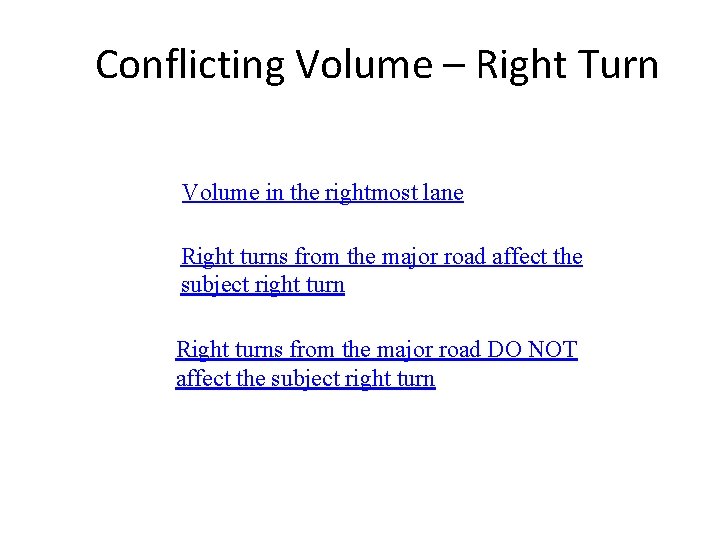
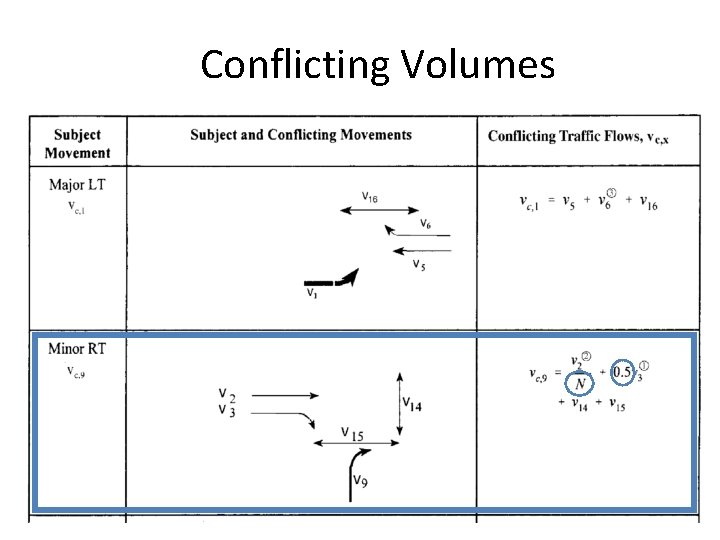
Conflicting Volume – Right Turn Volume in the rightmost lane Right turns from the major road affect the subject right turn Right turns from the major road DO NOT affect the subject right turn
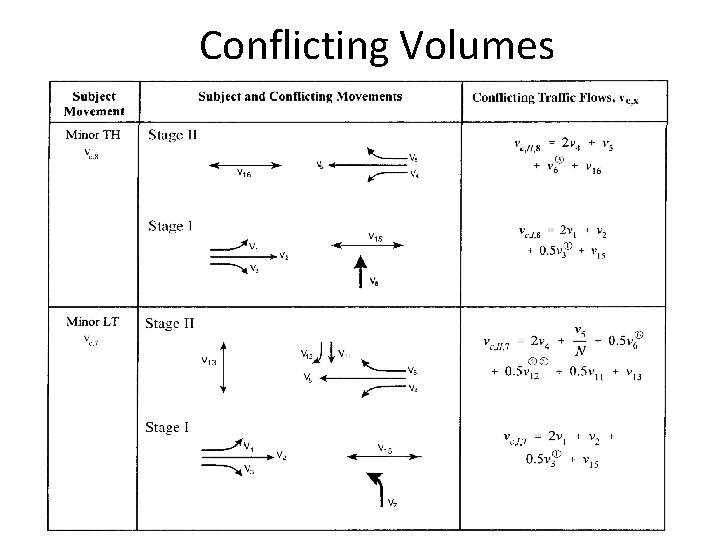
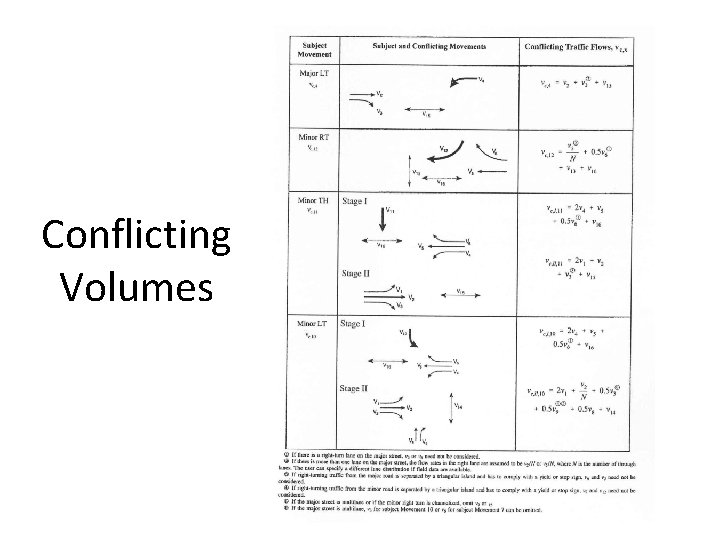
Conflicting Volumes
Conflicting Volumes
Conflicting Volumes
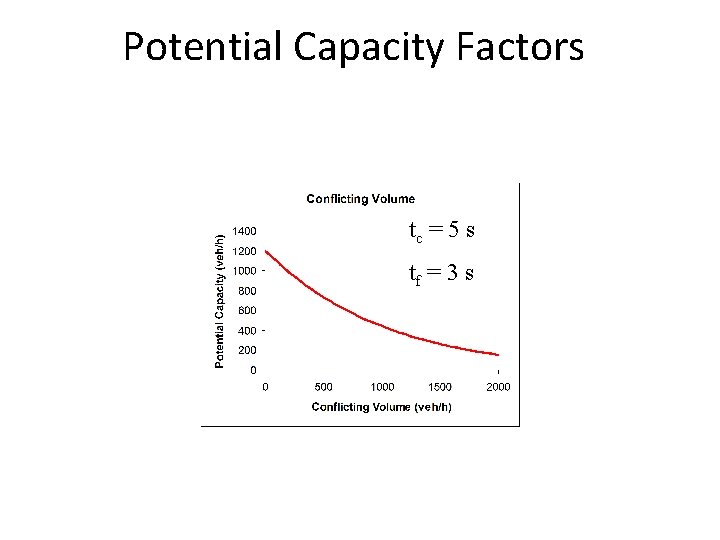
Potential Capacity Factors tc = 5 s tf = 3 s
Potential Capacity Cp, x vc, x tc tf = potential capacity for movement x (veh/h), = conflicting volume for movement x (veh/h), = critical gap (s), = follow-up time (s).
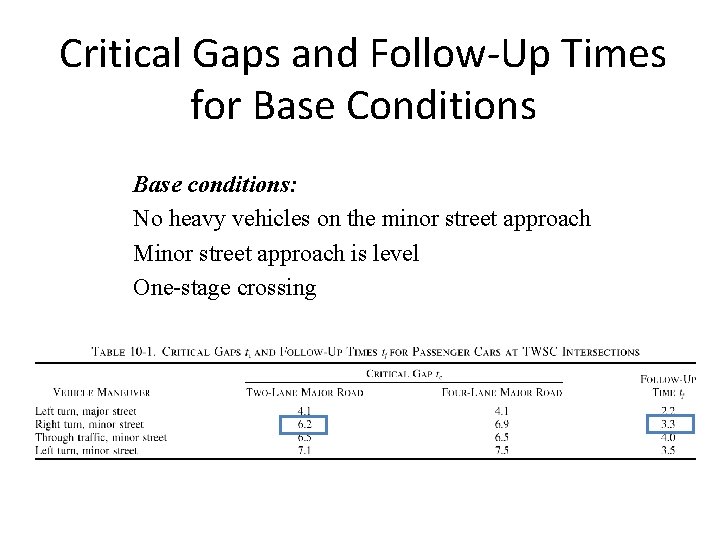
Critical Gaps and Follow-Up Times for Base Conditions Base conditions: No heavy vehicles on the minor street approach Minor street approach is level One-stage crossing
Right Turn in Base Conditions Critical Gap Follow-Up Time
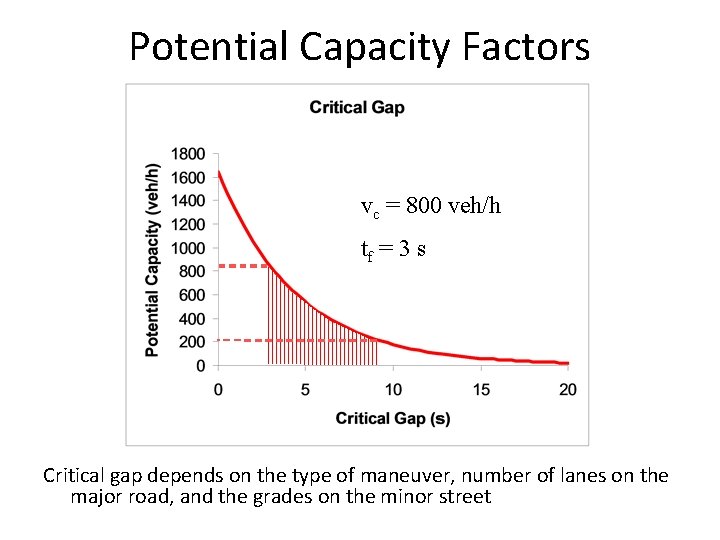
Potential Capacity Factors vc = 800 veh/h tf = 3 s Critical gap depends on the type of maneuver, number of lanes on the major road, and the grades on the minor street
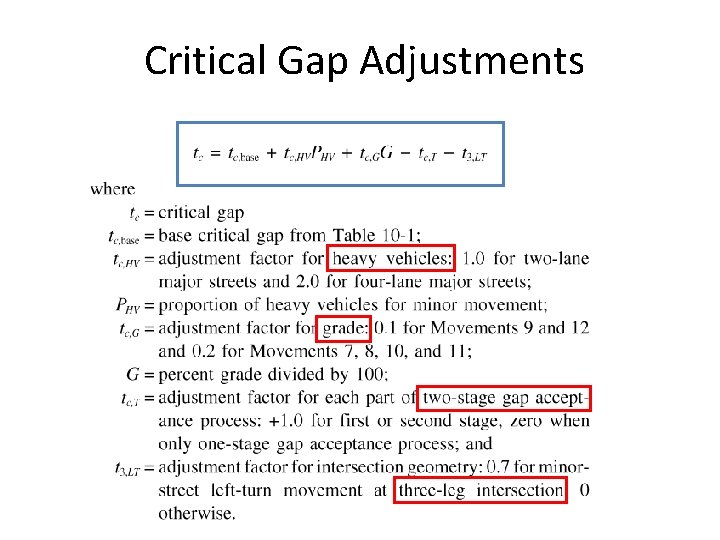
Critical Gap Adjustments
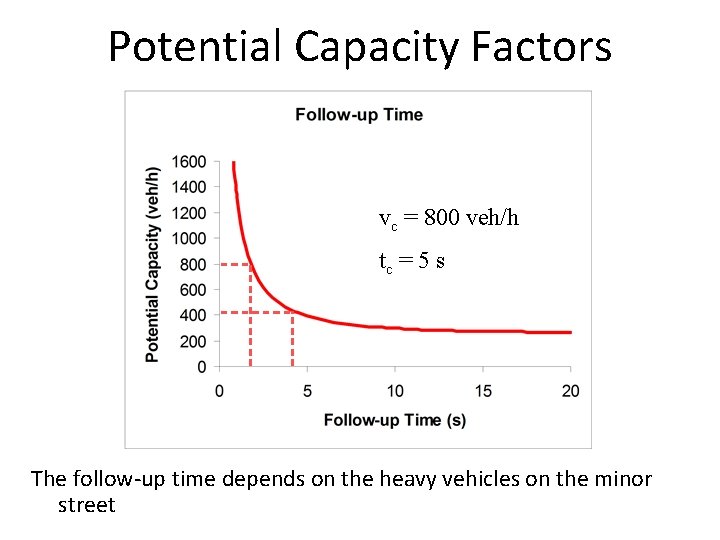
Potential Capacity Factors vc = 800 veh/h tc = 5 s The follow-up time depends on the heavy vehicles on the minor street
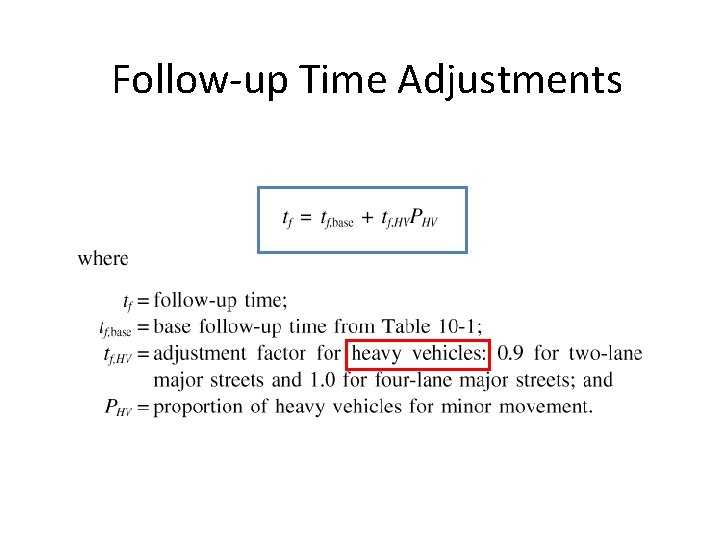
Follow-up Time Adjustments
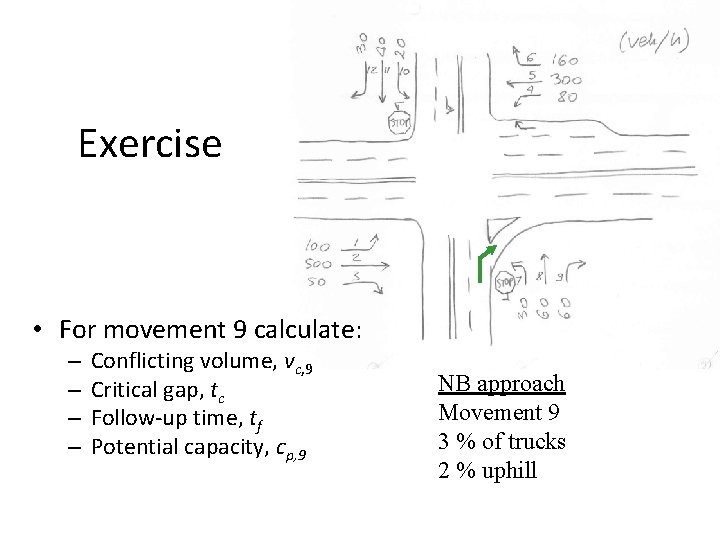
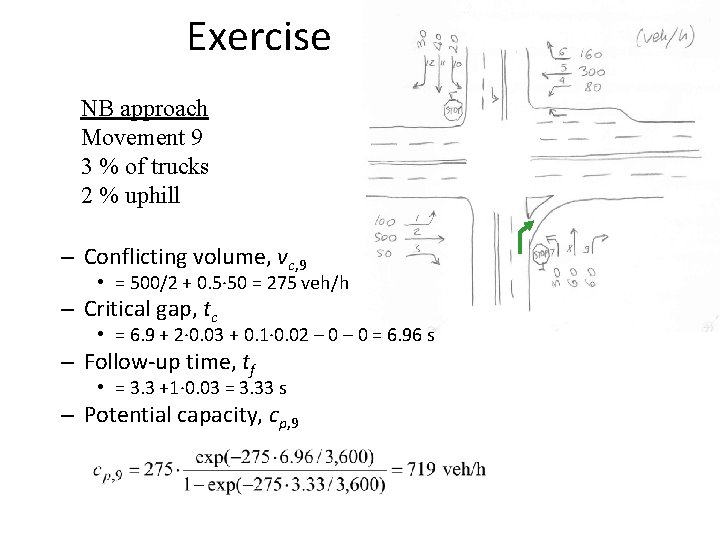
Exercise • For movement 9 calculate: – – Conflicting volume, vc, 9 Critical gap, tc Follow-up time, tf Potential capacity, cp, 9 NB approach Movement 9 3 % of trucks 2 % uphill
Exercise NB approach Movement 9 3 % of trucks 2 % uphill – Conflicting volume, vc, 9 • = 500/2 + 0. 5· 50 = 275 veh/h – Critical gap, tc • = 6. 9 + 2· 0. 03 + 0. 1· 0. 02 – 0 = 6. 96 s – Follow-up time, tf • = 3. 3 +1· 0. 03 = 3. 33 s – Potential capacity, cp, 9