
Lecture 17 Cytokines What are cytokines n n
- Slides: 36
Lecture 17 Cytokines
What are cytokines? n n A collection of polypeptides used for communications between cells Play role similar to hormones (messengers of the endocrine system) n n Hormones usually act at a distance Cytokines act locally Differ from growth factors that are produced constitutively, while cytokine production is carefully regulated Play an important role in both innate and adaptive immunity
Cytokine nomenclature Interleukins (1 -18) n Interferons (a, b, ) n Others (common names) n
Cytokine -mediated effects n n n Cell growth Cell differentiation Cell death Induce non-responsiveness to other cytokines/cells Induce secretion of other cytokines
How do cytokines tell cells what to do? Produced by cells as part of normal cellular activity and/or the result of environmental trigger n Bind to receptors on cells n Trigger signal transduction pathways n Initiate synthesis of new proteins n
Properties of cytokines n n n Proteins Low molecular weight Bind to receptor on either cell which produced it or another cell Receptor binding triggers a signal Signal results in altered pattern of gene expression
Cytokines can act in three different manners n Autocrine n n Paracrine n n Cytokine binds to receptor on cell that secreted it Cytokine binds to receptors on near by cells Endocrine n Cytokine binds cells in distant parts of the body
Cytokine Actions n Pleiotropy n n Redundancy n n More than one cytokine can do the same thing (IFNa/b and IFN ) Synergy n n Act on more than one cell type (INFa/b) Two or more cytokines cooperate to produce an effect that is different or greater than the combined effect of the two cytokines when functioning separately (IL-12 and IL-8) Antagonism n Two or more cytokines work against each other (IL-4 and IL-12)
How can non-specific cytokines act specifically? n n Only cells expressing receptors for specific cytokines can be activated by them Many cytokines have very short half-lives n n Only cells in close proximity will be activated High concentrations of cytokines are needed for activation n n Only cells in close proximity will be activated May require cell-to cell contact
Five cytokine receptor families n n Immunoglobulin superfamily receptors Class I cytokine receptor family (hematopoietin receptors) n n Binds most of the cytokines in the immune and hematopoietin systems Class II cytokine receptor family TNF receptor family Chemokine receptor family
Cytokines regulate the immune response n Cells with the appropriate receptors become activated n To differentiate n To express receptors which will make them receptive to other cytokines n To secrete other cytokines
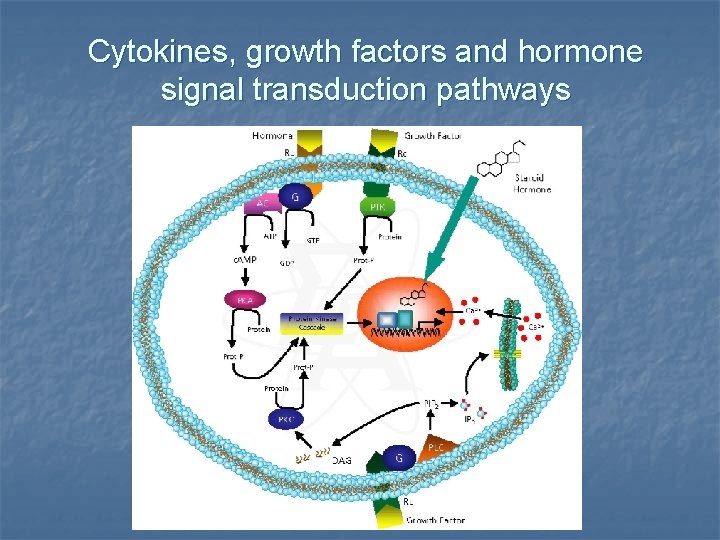
Signal Transduction by cytokine receptors n n Cytokine receptors on different cell types trigger different events How do you get the message from the outside of the cell to the machinery inside?
Cytokines, growth factors and hormone signal transduction pathways
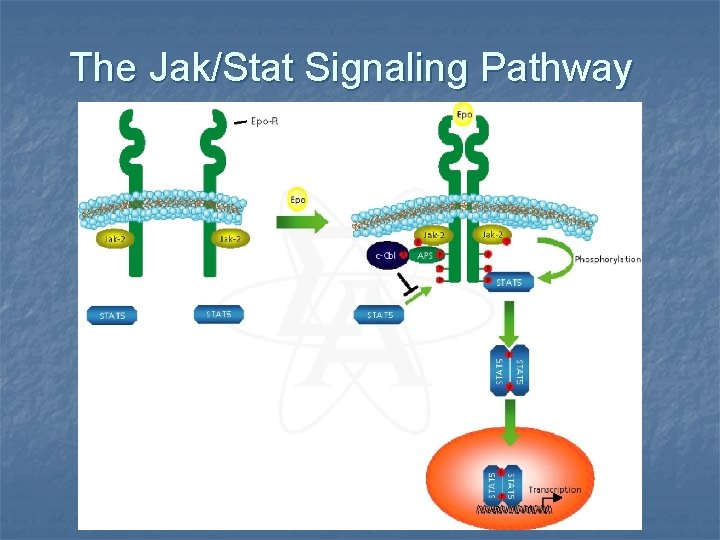
The Jak/Stat Signaling Pathway
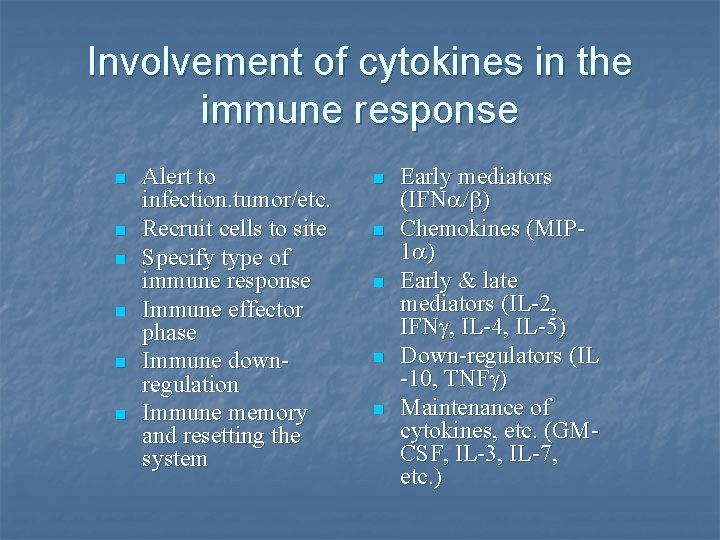
Involvement of cytokines in the immune response n n n Alert to infection. tumor/etc. Recruit cells to site Specify type of immune response Immune effector phase Immune downregulation Immune memory and resetting the system n n n Early mediators (IFNa/b) Chemokines (MIP 1 a) Early & late mediators (IL-2, IFN , IL-4, IL-5) Down-regulators (IL -10, TNF ) Maintenance of cytokines, etc. (GMCSF, IL-3, IL-7, etc. )
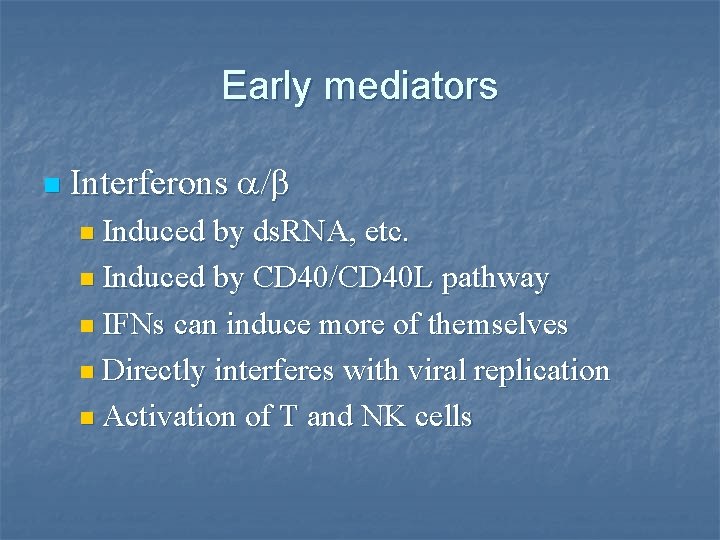
Early mediators n Interferons a/b n Induced by ds. RNA, etc. n Induced by CD 40/CD 40 L pathway n IFNs can induce more of themselves n Directly interferes with viral replication n Activation of T and NK cells
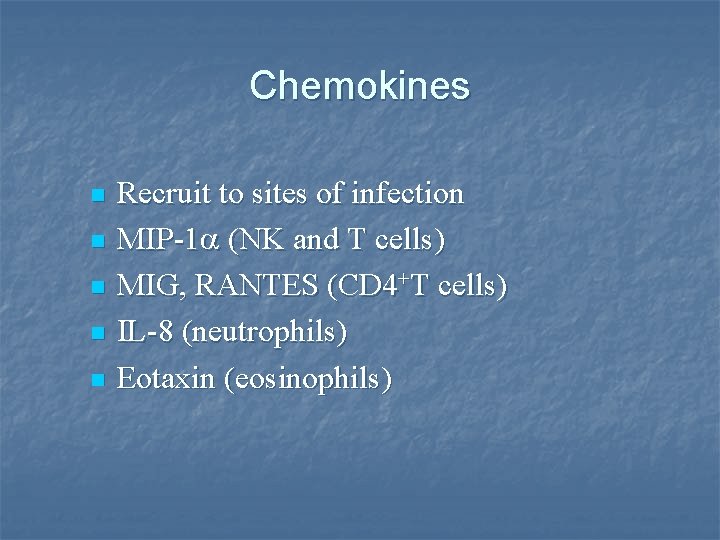
Chemokines n n n Recruit to sites of infection MIP-1 a (NK and T cells) MIG, RANTES (CD 4+T cells) IL-8 (neutrophils) Eotaxin (eosinophils)
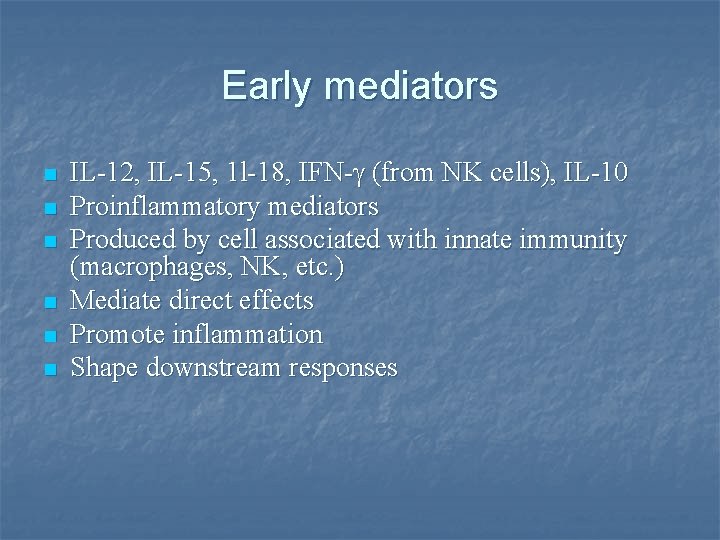
Early mediators n n n IL-12, IL-15, 1 l-18, IFN- (from NK cells), IL-10 Proinflammatory mediators Produced by cell associated with innate immunity (macrophages, NK, etc. ) Mediate direct effects Promote inflammation Shape downstream responses
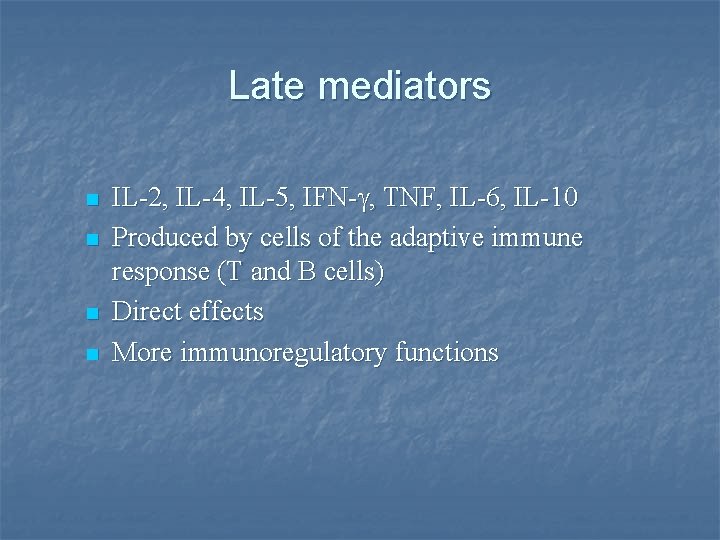
Late mediators n n IL-2, IL-4, IL-5, IFN- , TNF, IL-6, IL-10 Produced by cells of the adaptive immune response (T and B cells) Direct effects More immunoregulatory functions
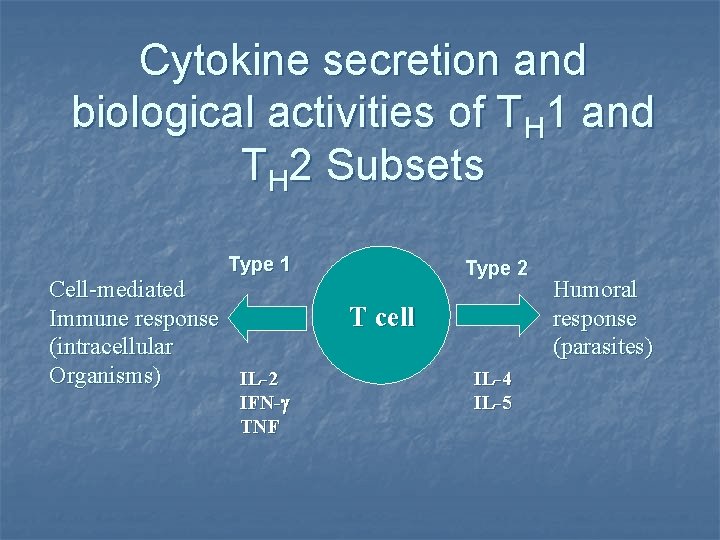
Cytokine secretion and biological activities of TH 1 and TH 2 Subsets Type 1 Cell-mediated Immune response (intracellular Organisms) IL-2 IFN- TNF Type 2 T cell IL-4 IL-5 Humoral response (parasites)
Down regulators n n n IL-10, IL-11, TGF-b Inhibit proliferation, cytokine production Produced by both innate and adaptive cells
Maintenance cytokines n n GM-CSF, IL-3, IL-7, IL-9, etc. Induce cell differentiation, cell growth
Cytokine cross-regulation n In a a given immune response, either TH 1 or TH 2 response dominates Cytokines of one response tend to down -regulate the other type of response Example: TH 1 cells secrete IFN- , which inhibits proliferation of TH 2 subset
Role of TH 1/TH 2 balance in determining disease outcomes Balance of two subset determines response to disease n Leprosy n n Tuberculoid (TH 1, CMI response, patient lives) n Lepromatous (TH 2, humoral response, patient dies)
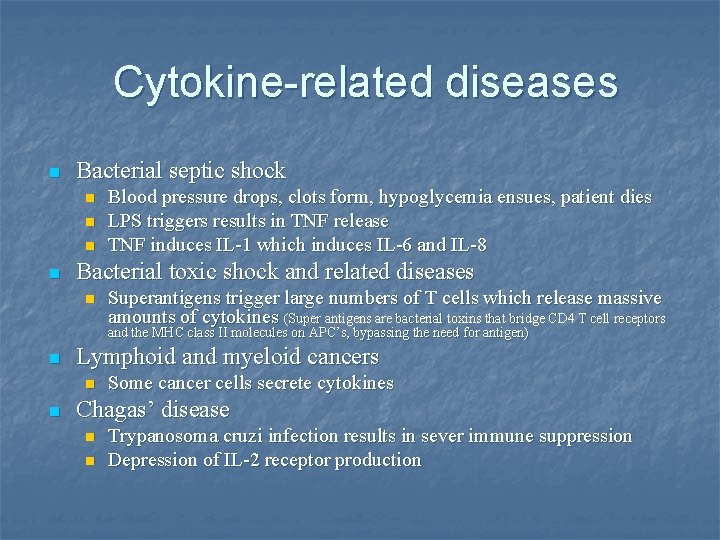
Cytokine-related diseases n Bacterial septic shock n n Blood pressure drops, clots form, hypoglycemia ensues, patient dies LPS triggers results in TNF release TNF induces IL-1 which induces IL-6 and IL-8 Bacterial toxic shock and related diseases n Superantigens trigger large numbers of T cells which release massive amounts of cytokines (Super antigens are bacterial toxins that bridge CD 4 T cell receptors and the MHC class II molecules on APC’s, bypassing the need for antigen) n Lymphoid and myeloid cancers n n Some cancer cells secrete cytokines Chagas’ disease n n Trypanosoma cruzi infection results in sever immune suppression Depression of IL-2 receptor production
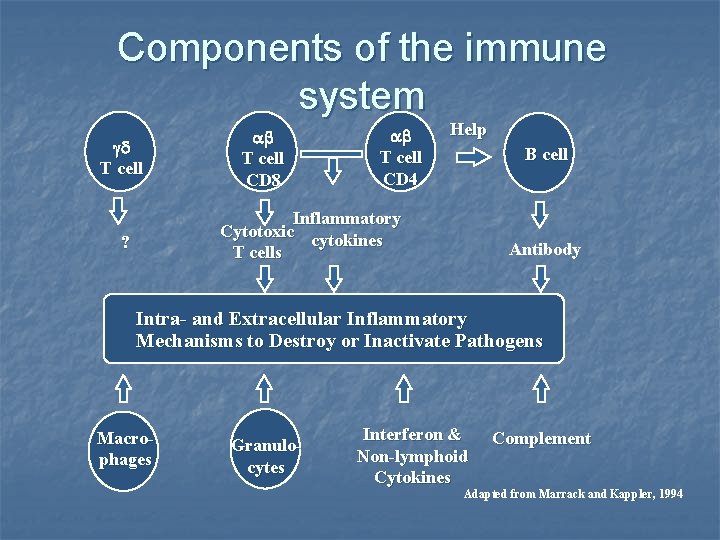
Components of the immune system T cell CD 8 T cell CD 4 Help B cell Inflammatory Cytotoxic cytokines T cells ? Antibody Intra- and Extracellular Inflammatory Mechanisms to Destroy or Inactivate Pathogens Macrophages Granulocytes Interferon & Non-lymphoid Cytokines Complement Adapted from Marrack and Kappler, 1994
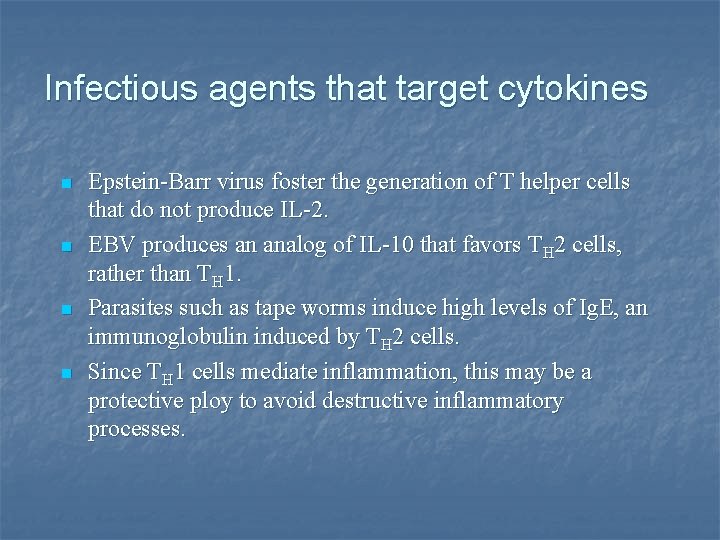
Infectious agents that target cytokines n n Epstein-Barr virus foster the generation of T helper cells that do not produce IL-2. EBV produces an analog of IL-10 that favors TH 2 cells, rather than TH 1. Parasites such as tape worms induce high levels of Ig. E, an immunoglobulin induced by TH 2 cells. Since TH 1 cells mediate inflammation, this may be a protective ploy to avoid destructive inflammatory processes.
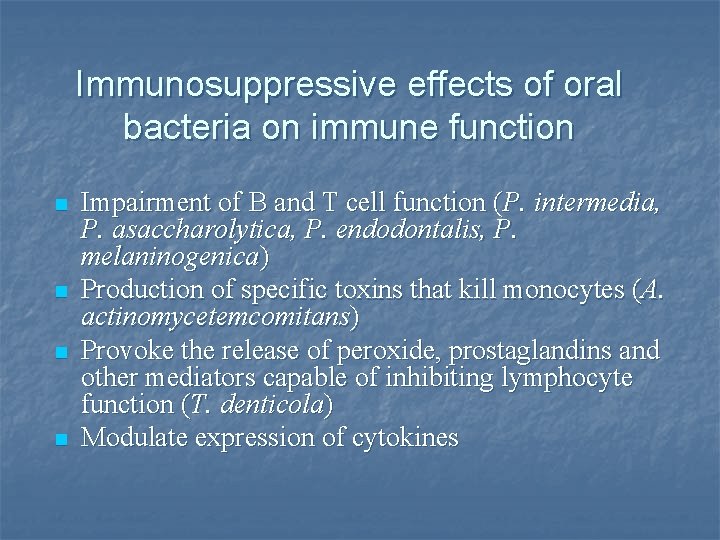
Immunosuppressive effects of oral bacteria on immune function n n Impairment of B and T cell function (P. intermedia, P. asaccharolytica, P. endodontalis, P. melaninogenica) Production of specific toxins that kill monocytes (A. actinomycetemcomitans) Provoke the release of peroxide, prostaglandins and other mediators capable of inhibiting lymphocyte function (T. denticola) Modulate expression of cytokines
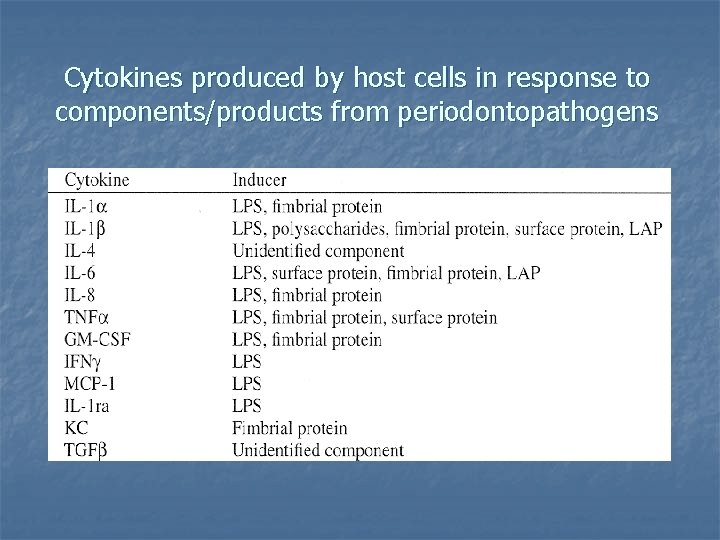
Cytokine-inducing components of Periodontopathogens n n n Taken from Wilson, M. , Reddi, K. , Henderson, B. 1996. Cytokine-inducing components of periodontopathogenic bacteria. J. Periodont. Res. 31: 393 -407. Pro-inflammatory cytokines such as interleukin (IL)-1, IL-6, IL-8 and tumor necrosis factor (TNF) are believed to be the major pathological mediators of inflammatory diseases ranging from arthritis to periodontal diseases. It is believed that components of microorganisms have the capacity to induce cytokine synthesis in host cells.
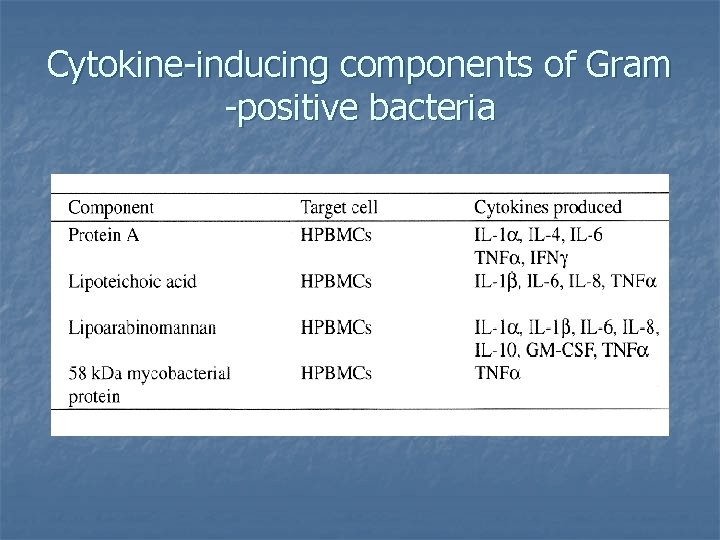
Cytokine-inducing components of Gram -positive bacteria
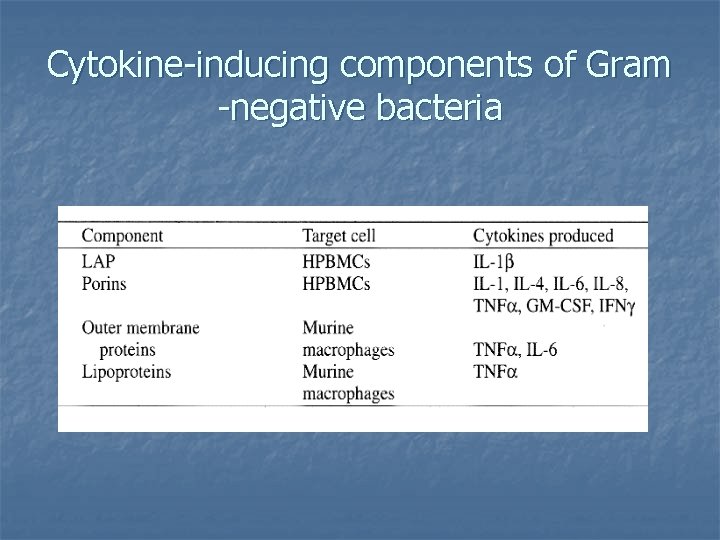
Cytokine-inducing components of Gram -negative bacteria
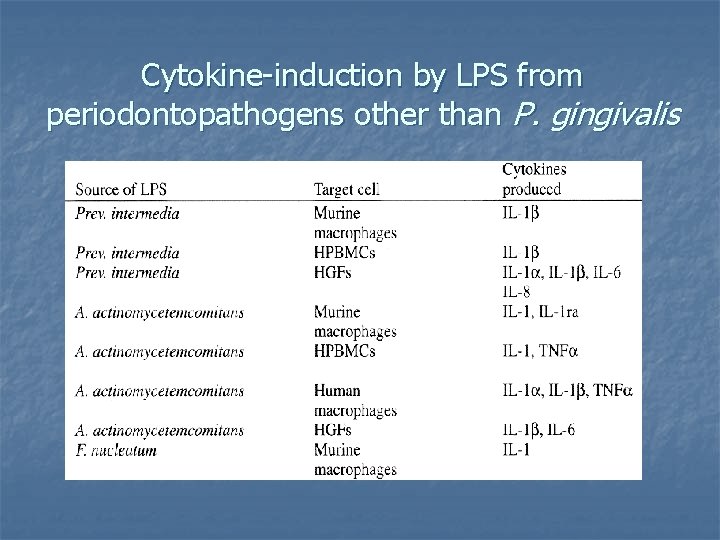
Cytokine-induction by LPS from periodontopathogens other than P. gingivalis
Cytokines produced by host cells in response to components/products from periodontopathogens
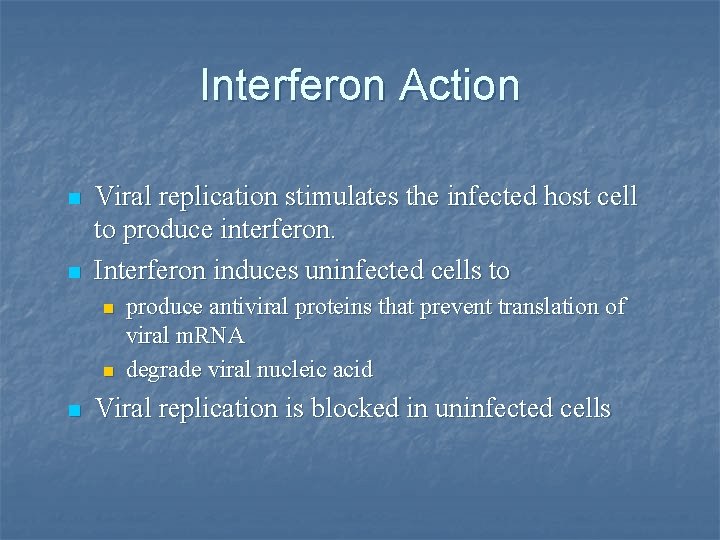
Interferon Action n n Viral replication stimulates the infected host cell to produce interferon. Interferon induces uninfected cells to n n n produce antiviral proteins that prevent translation of viral m. RNA degrade viral nucleic acid Viral replication is blocked in uninfected cells
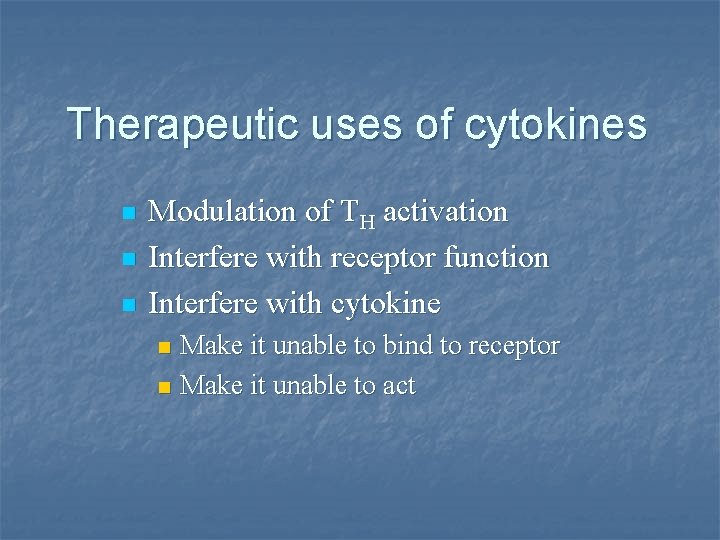
Therapeutic uses of cytokines n n n Modulation of TH activation Interfere with receptor function Interfere with cytokine Make it unable to bind to receptor n Make it unable to act n
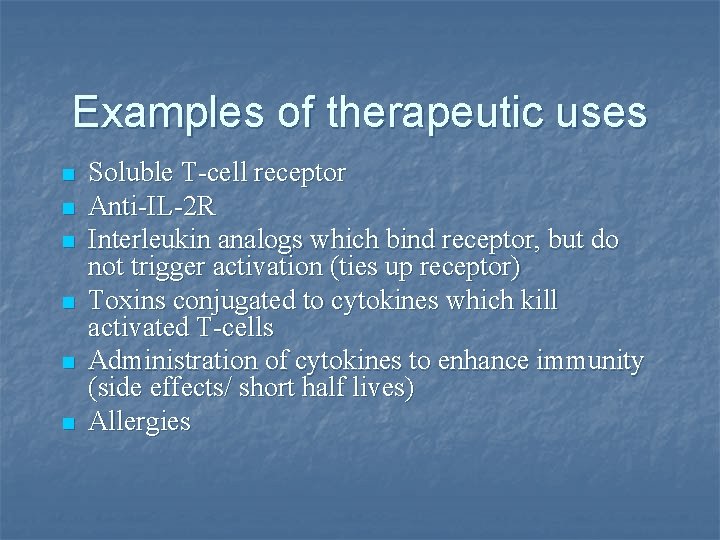
Examples of therapeutic uses n n n Soluble T-cell receptor Anti-IL-2 R Interleukin analogs which bind receptor, but do not trigger activation (ties up receptor) Toxins conjugated to cytokines which kill activated T-cells Administration of cytokines to enhance immunity (side effects/ short half lives) Allergies