
Lecture 17 AC Circuit Analysis 2 Hungyi Lee








- Slides: 74
Lecture 17 AC Circuit Analysis (2) Hung-yi Lee
Textbook • AC Circuit Analysis as Resistive Circuits • Chapter 6. 3, Chapter 6. 5 (out of the scope) • Fourier Series for Circuit Analysis • Resonance • Chapter 6. 4 (out of the scope) • Oscillator • Example 9. 7 and 6. 10
Systematic Analysis for AC Steady State
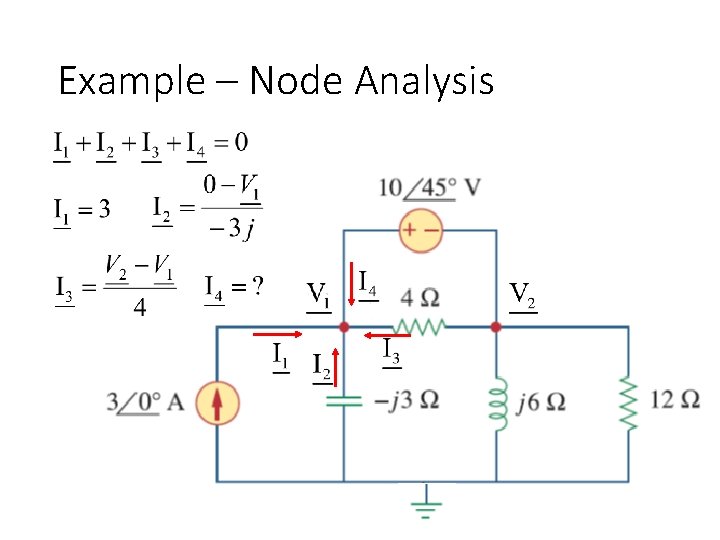
Example – Node Analysis
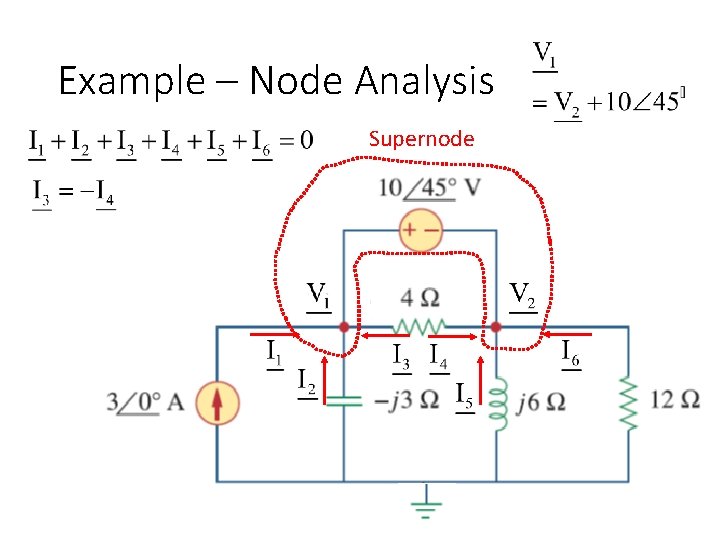
Example – Node Analysis Supernode
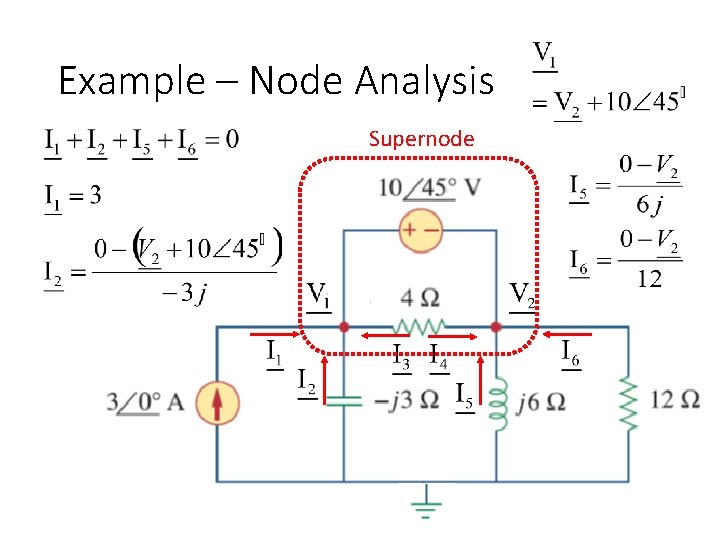
Example – Node Analysis Supernode
Thevenin and Norton Theorem for AC Steady State
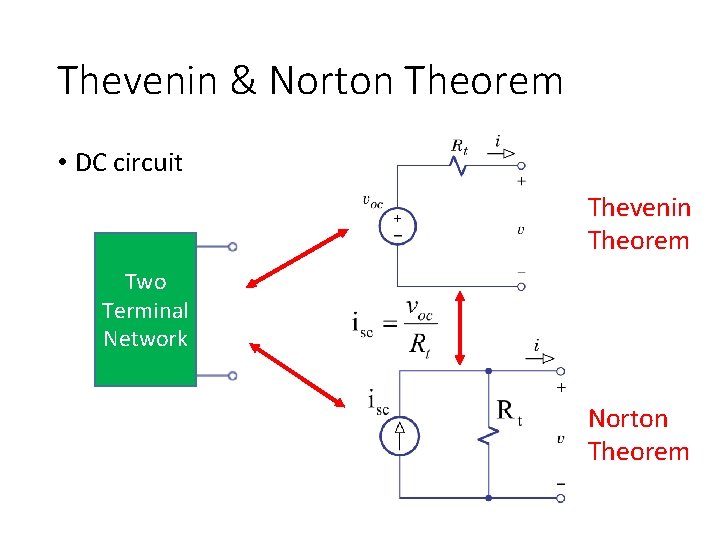
Thevenin & Norton Theorem • DC circuit Thevenin Theorem Two Terminal Network Norton Theorem
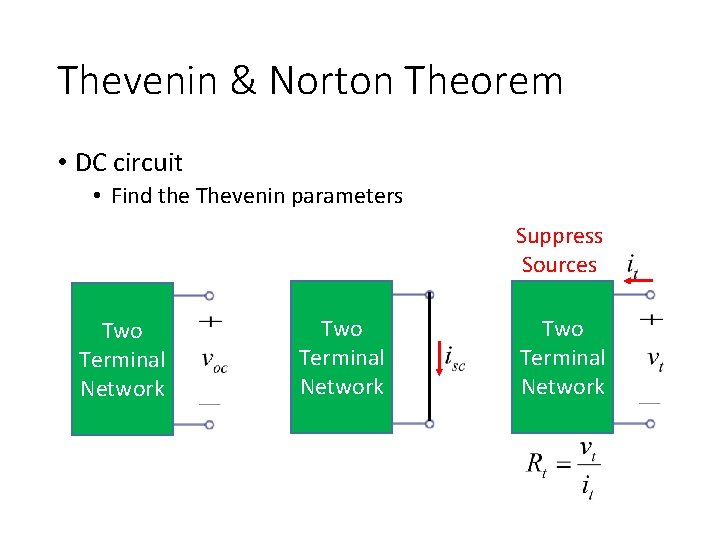
Thevenin & Norton Theorem • DC circuit • Find the Thevenin parameters Suppress Sources Two Terminal Network
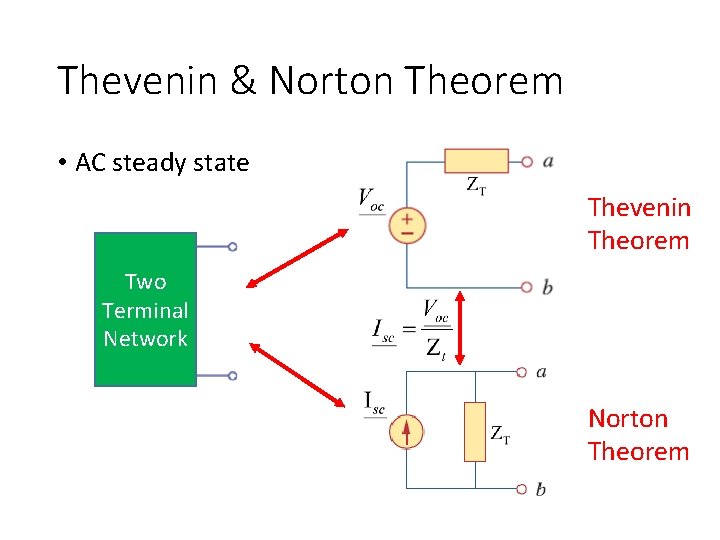
Thevenin & Norton Theorem • AC steady state Thevenin Theorem Two Terminal Network Norton Theorem
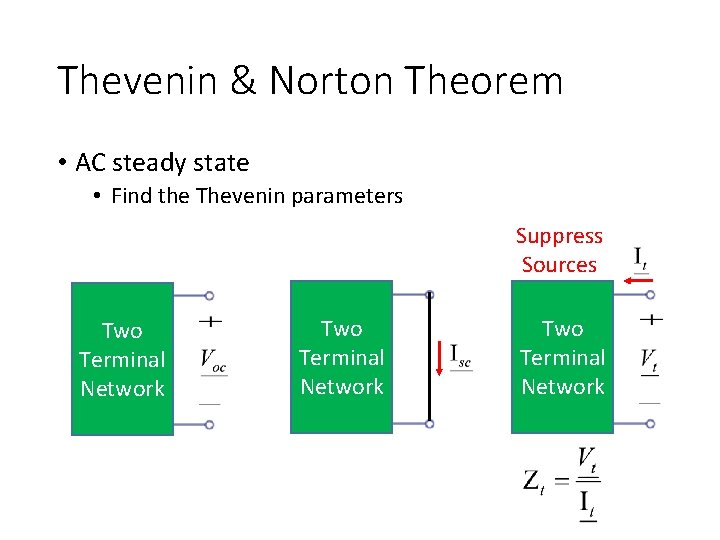
Thevenin & Norton Theorem • AC steady state • Find the Thevenin parameters Suppress Sources Two Terminal Network
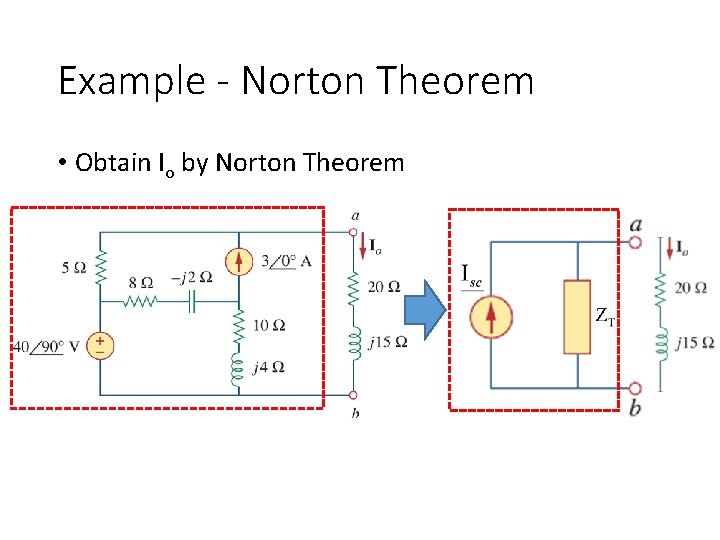
Example - Norton Theorem • Obtain Io by Norton Theorem
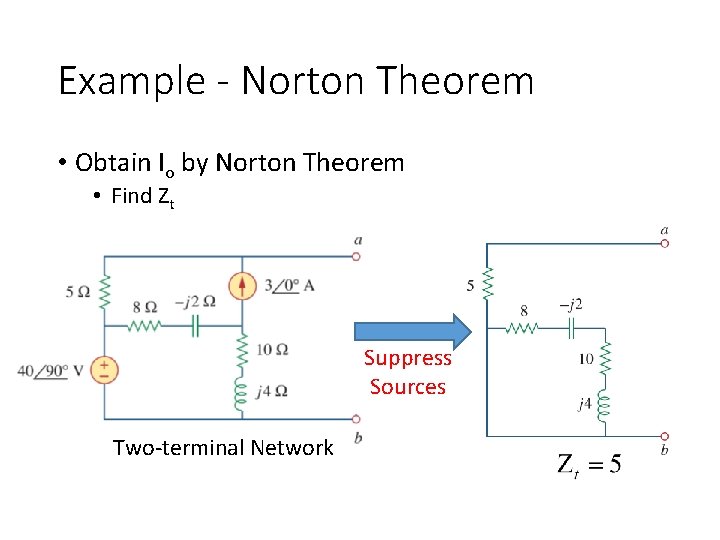
Example - Norton Theorem • Obtain Io by Norton Theorem • Find Zt Suppress Sources Two-terminal Network
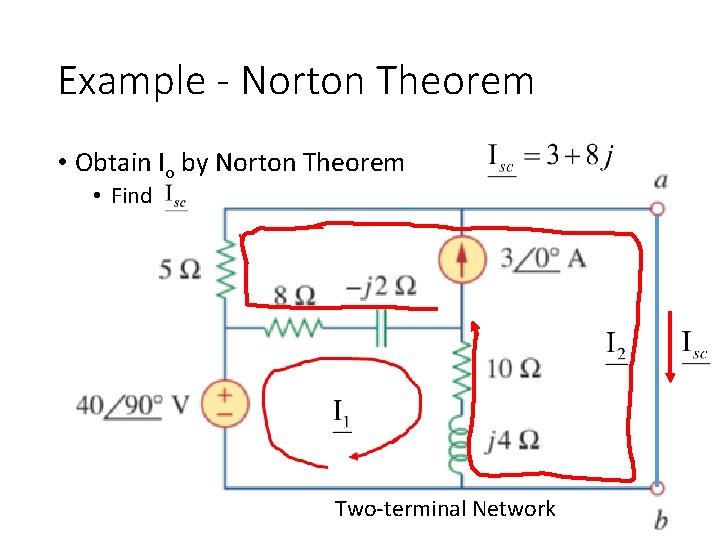
Example - Norton Theorem • Obtain Io by Norton Theorem • Find Two-terminal Network
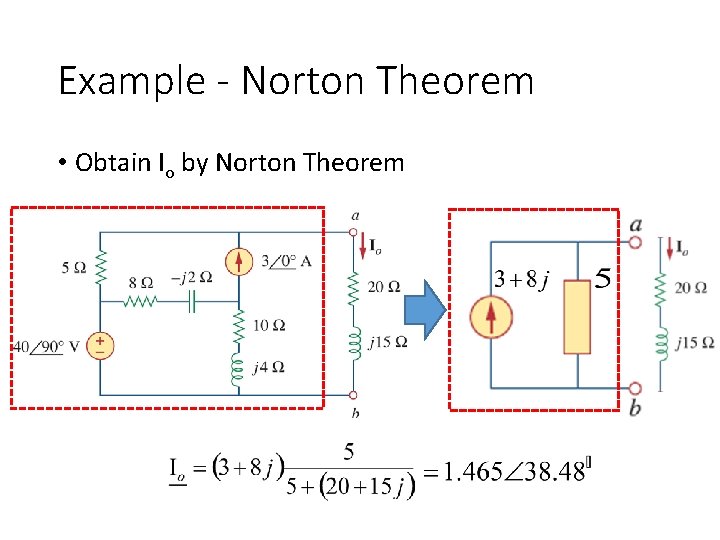
Example - Norton Theorem • Obtain Io by Norton Theorem
Superposition for AC Steady State
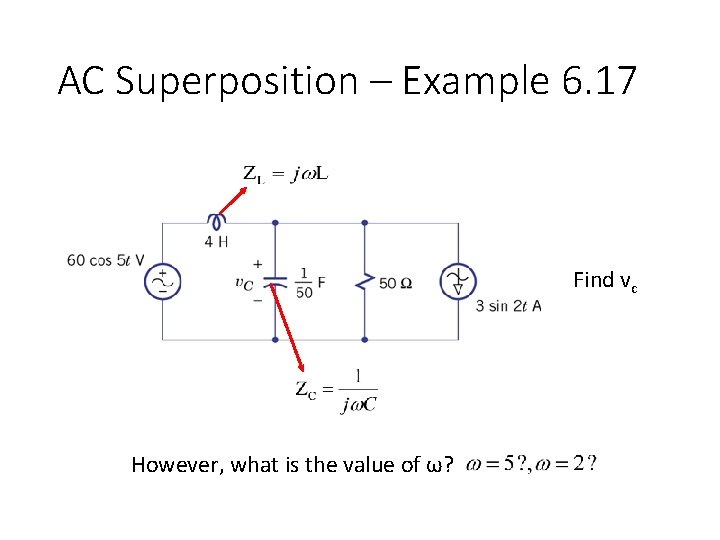
AC Superposition – Example 6. 17 Find vc However, what is the value of ω?
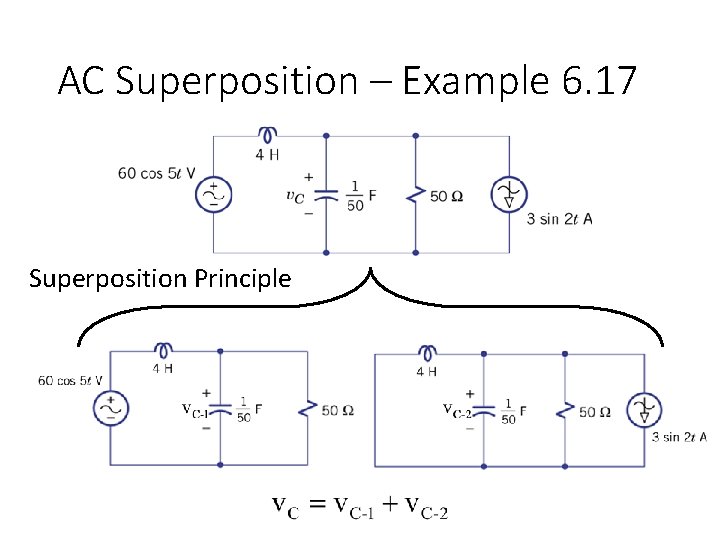
AC Superposition – Example 6. 17 Superposition Principle
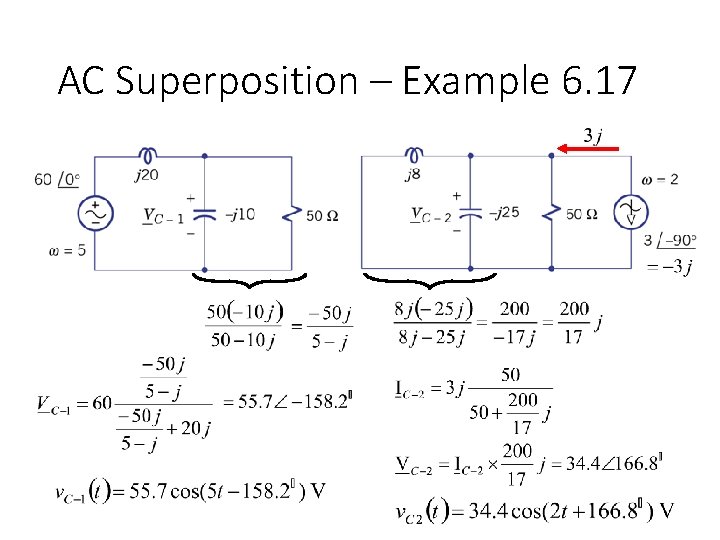
AC Superposition – Example 6. 17 The same element has different impedances.
AC Superposition – Example 6. 17
Fourier Series for Circuit Analysis
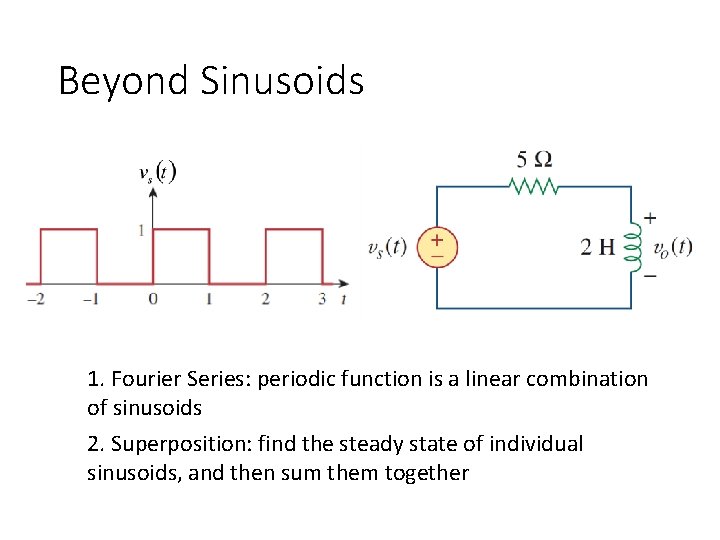
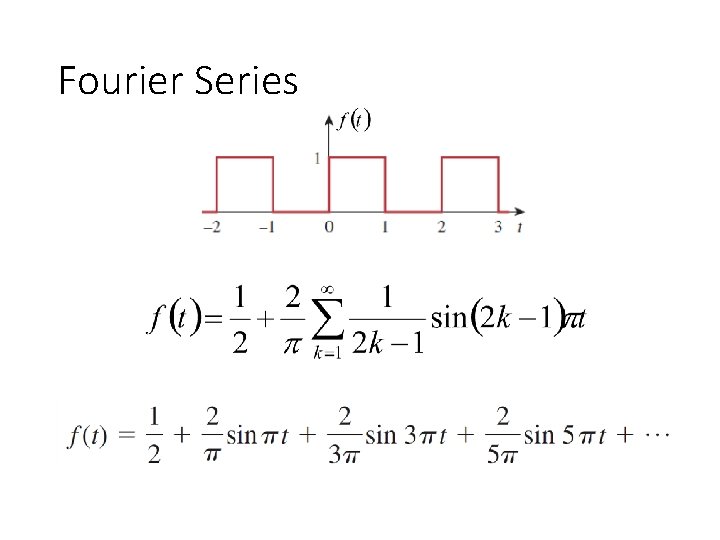
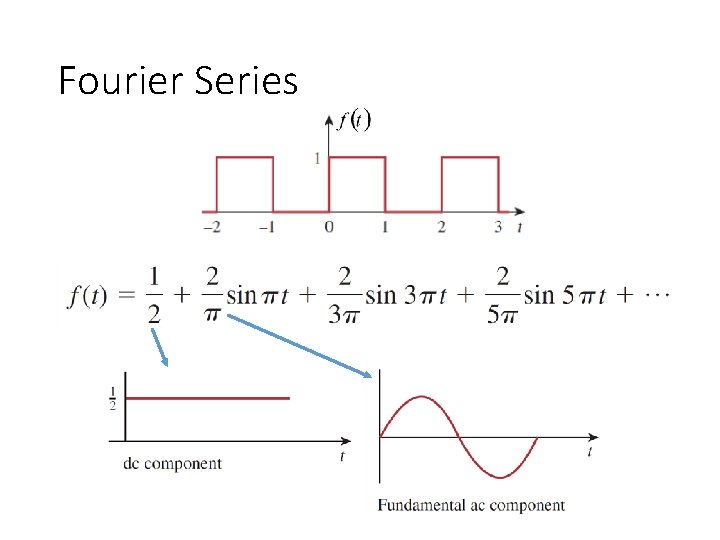
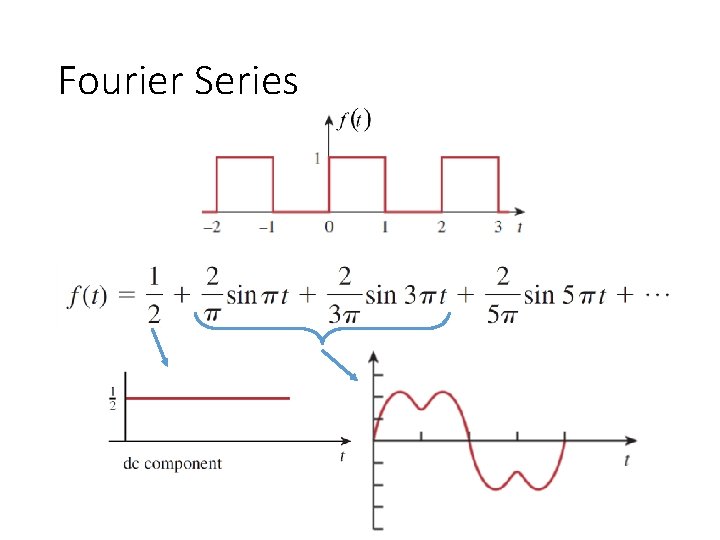
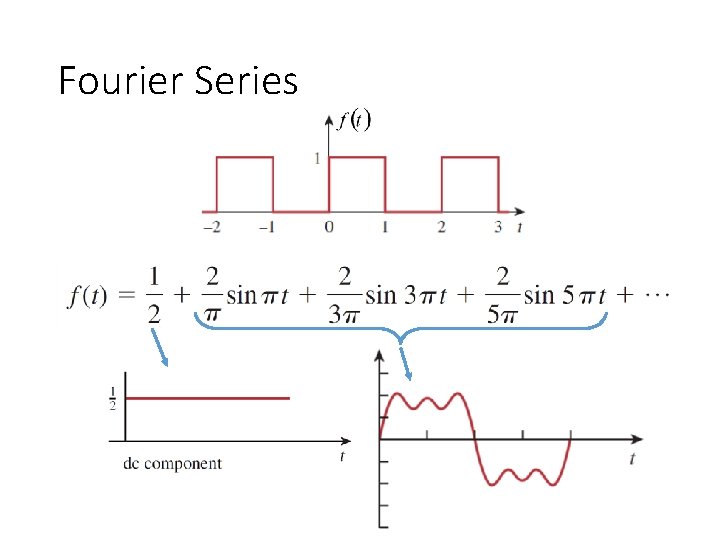
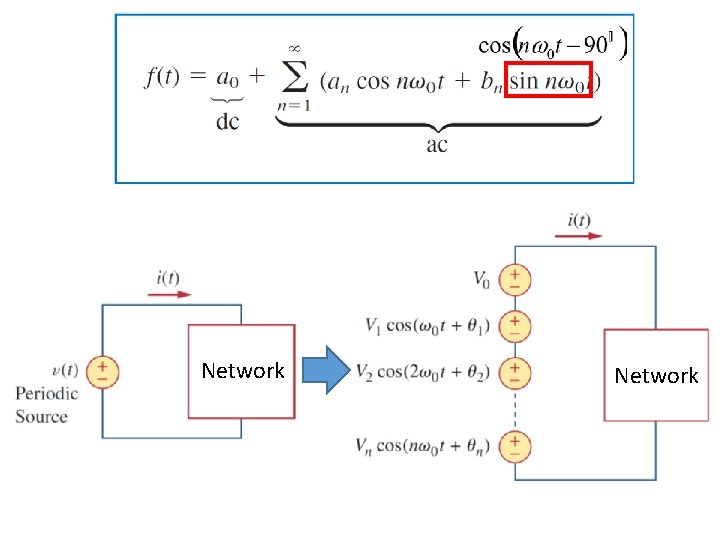
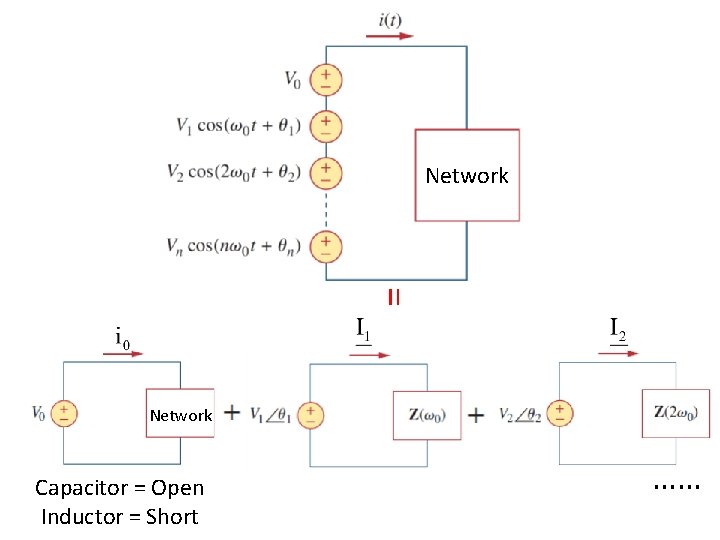
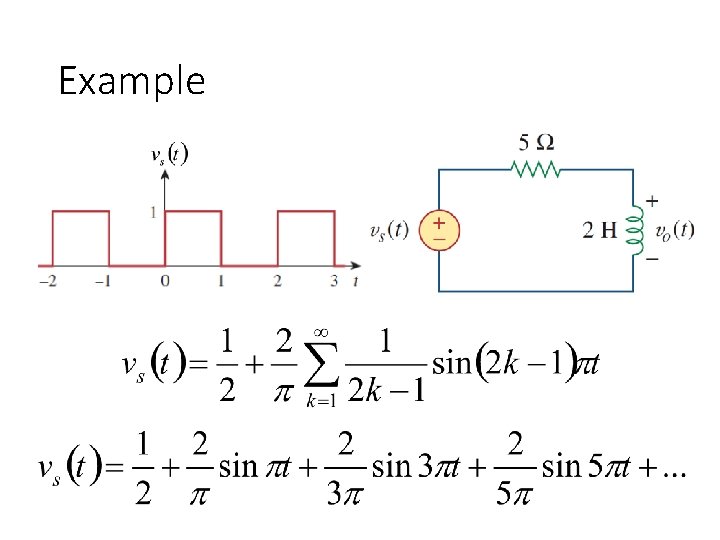
Beyond Sinusoids 1. Fourier Series: periodic function is a linear combination of sinusoids 2. Superposition: find the steady state of individual sinusoids, and then sum them together
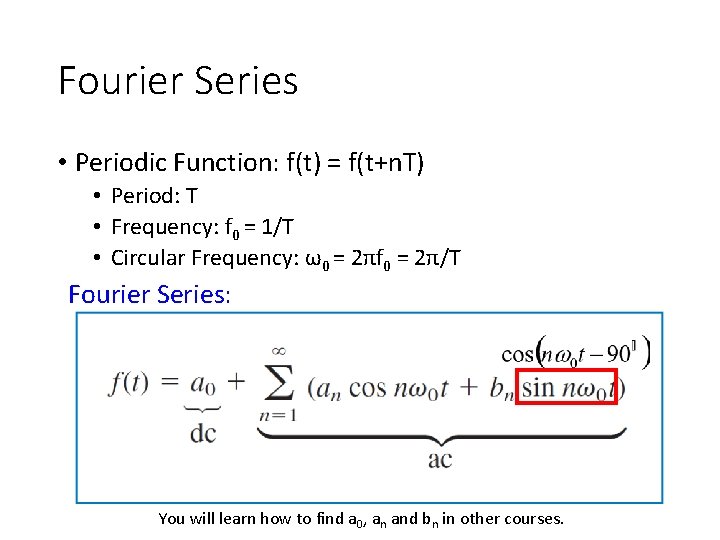
Fourier Series • Periodic Function: f(t) = f(t+n. T) • Period: T • Frequency: f 0 = 1/T • Circular Frequency: ω0 = 2πf 0 = 2π/T Fourier Series: You will learn how to find a 0, an and bn in other courses.
Fourier Series
Fourier Series
Fourier Series
Fourier Series
Network
Network = Network Capacitor = Open Inductor = Short ……
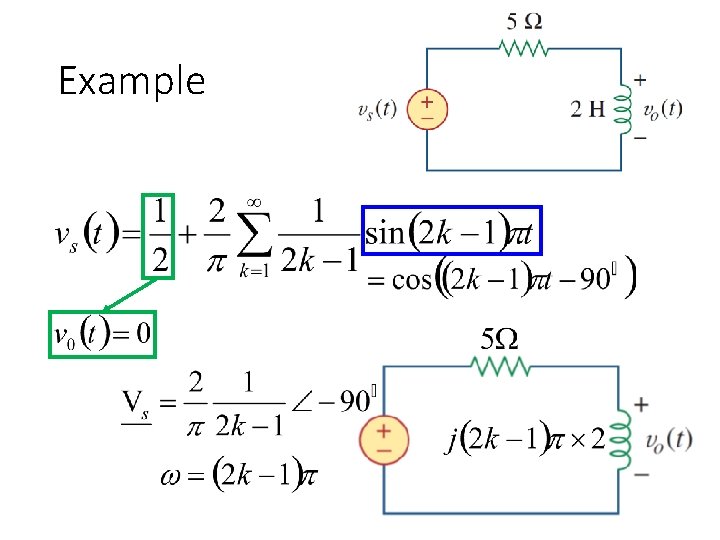
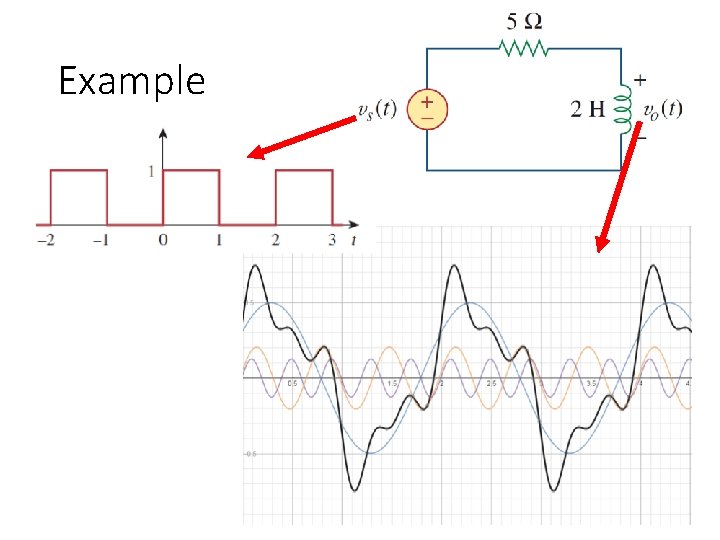
Example
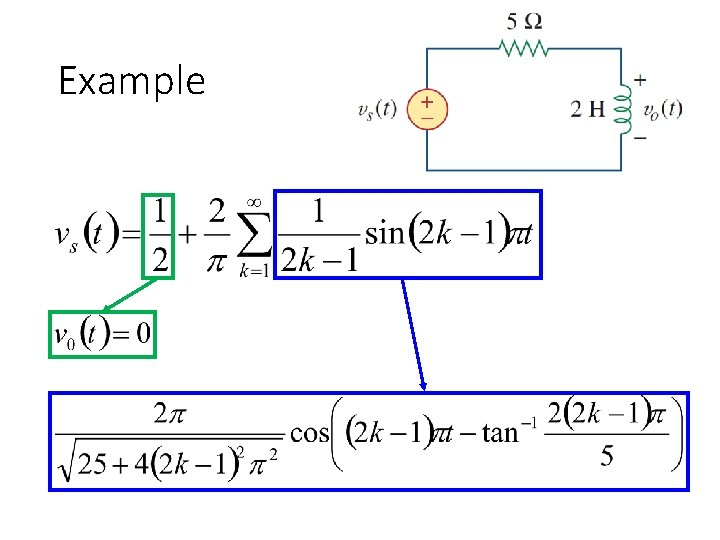
Example
Example
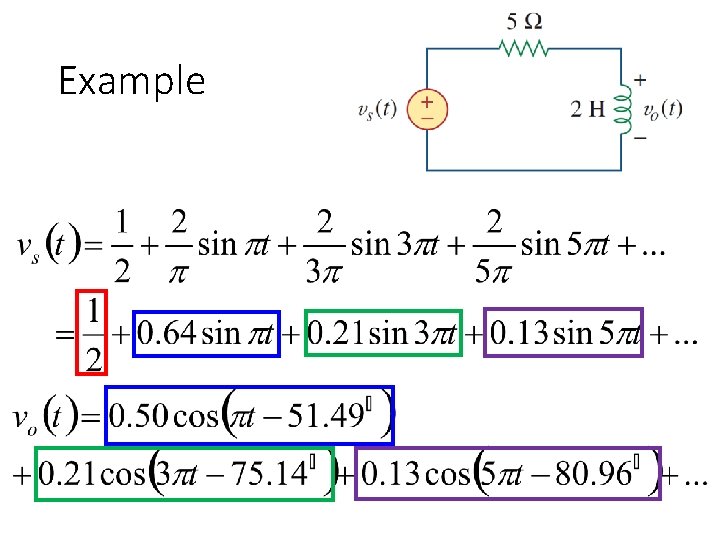
Example
Example
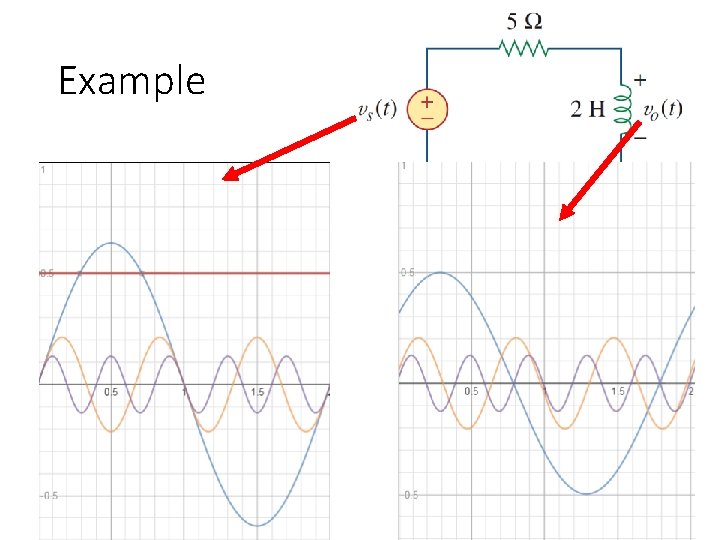
Example
Application: Resonance
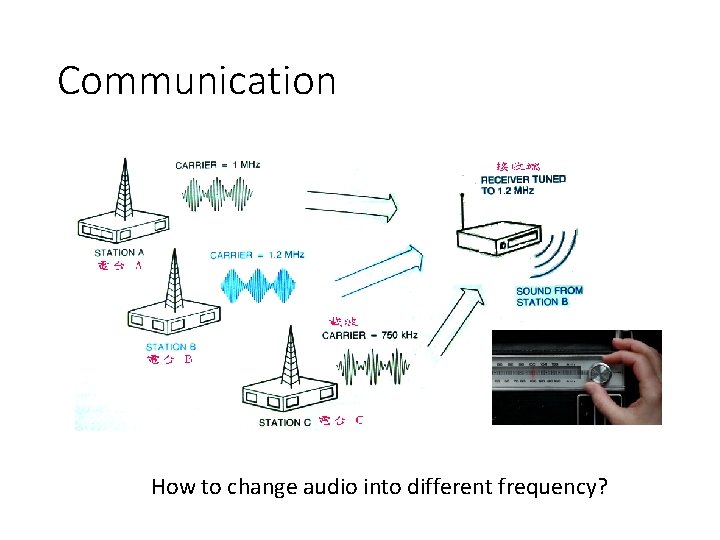
Communication How to change audio into different frequency?
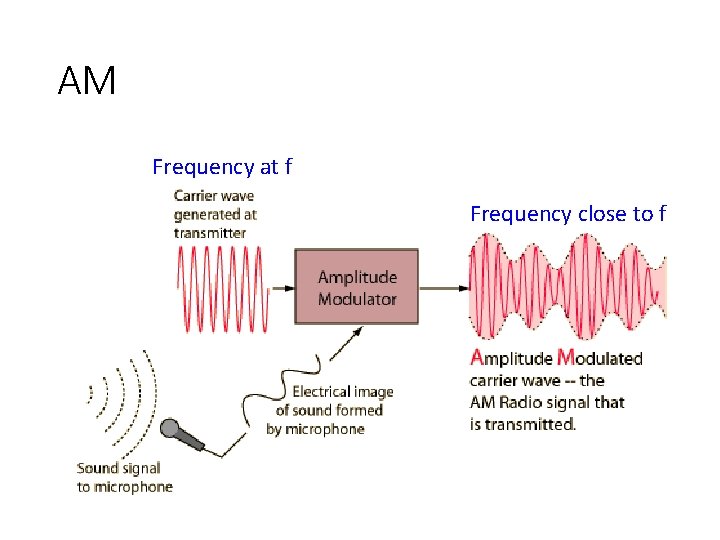
AM Frequency at f Frequency close to f
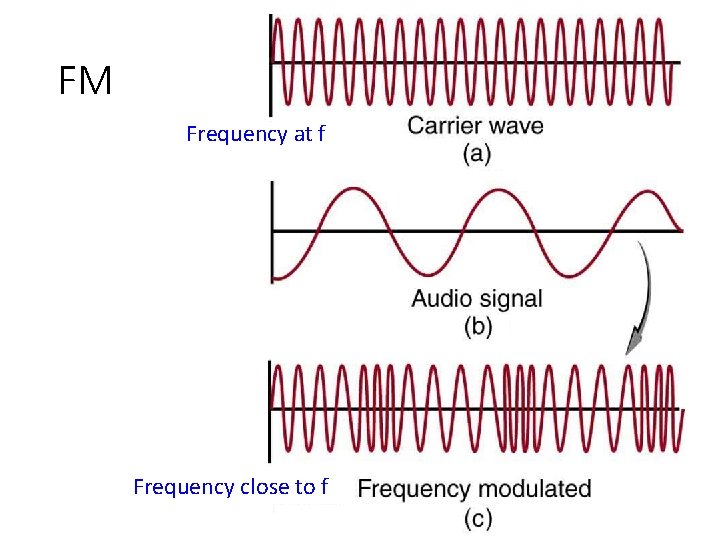
FM Frequency at f Frequency close to f
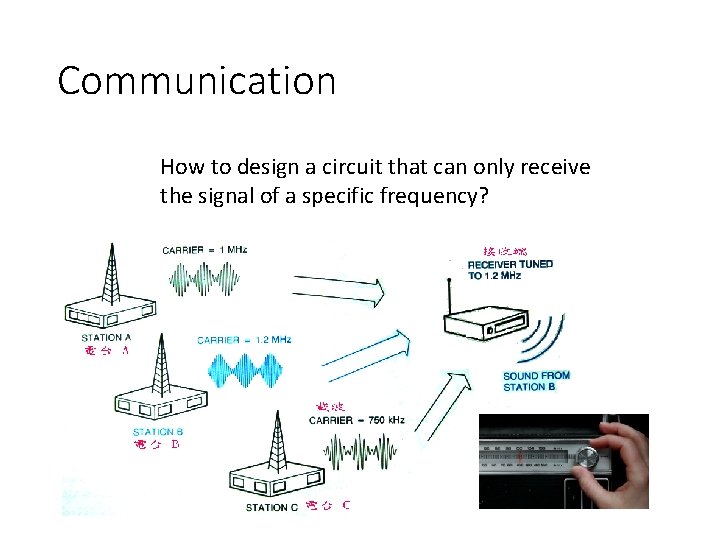
Communication How to design a circuit that can only receive the signal of a specific frequency?
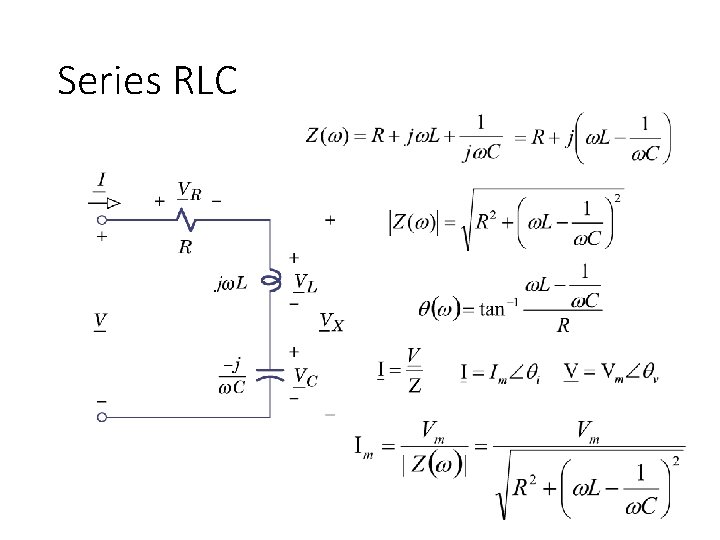
Series RLC
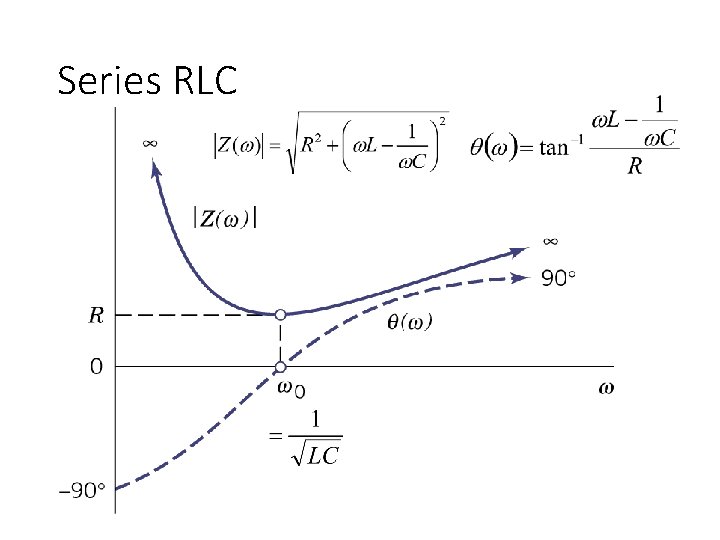
Series RLC
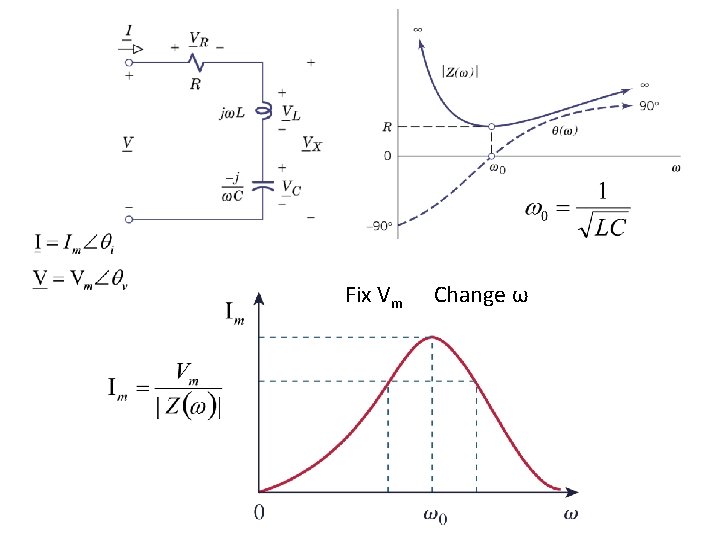
Fix Vm Change ω
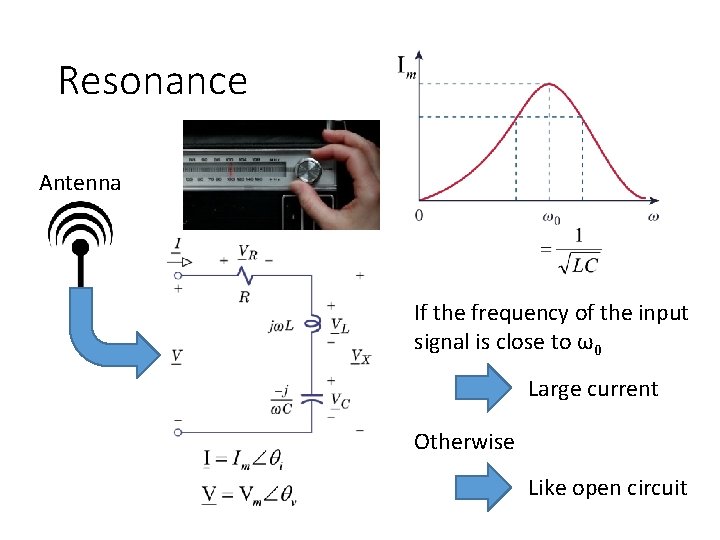
Resonance Antenna If the frequency of the input signal is close to ω0 Large current Otherwise Like open circuit
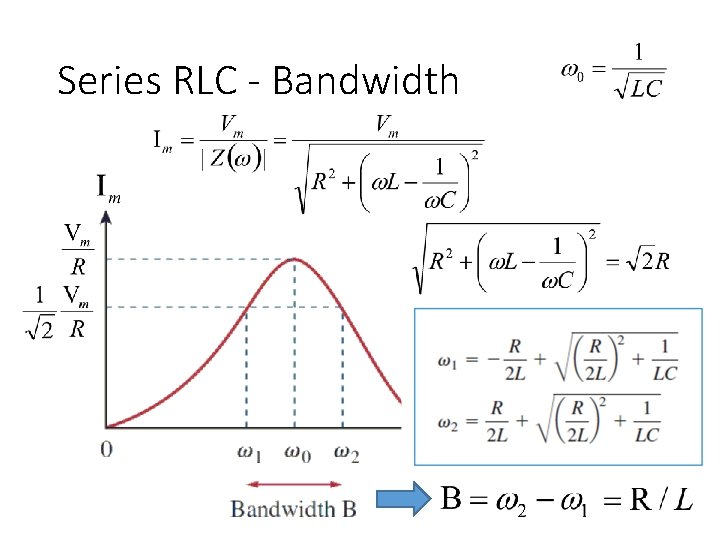
Series RLC - Bandwidth
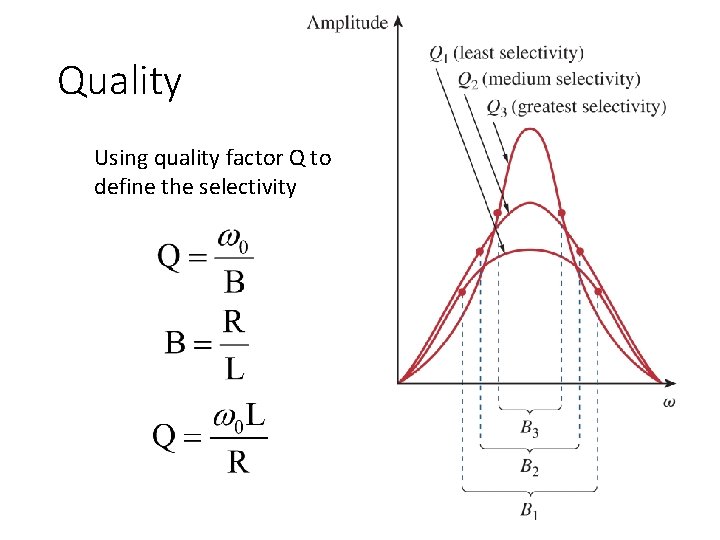
Quality Using quality factor Q to define the selectivity
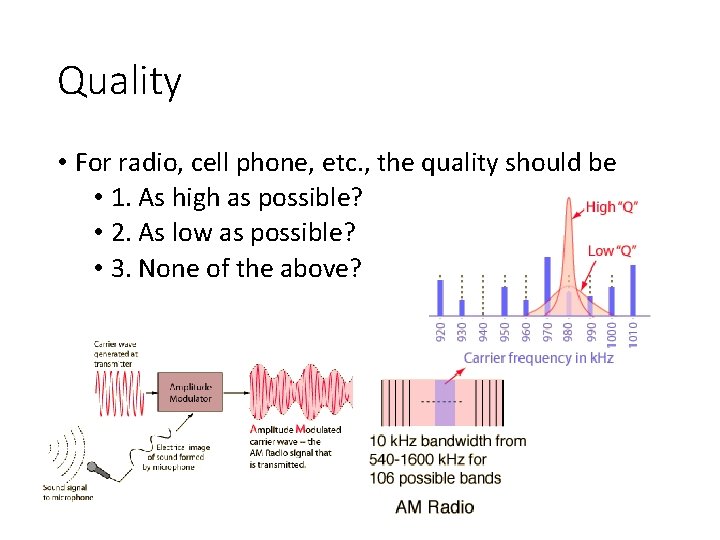
Quality • For radio, cell phone, etc. , the quality should be • 1. As high as possible? • 2. As low as possible? • 3. None of the above?
Application: Oscillator
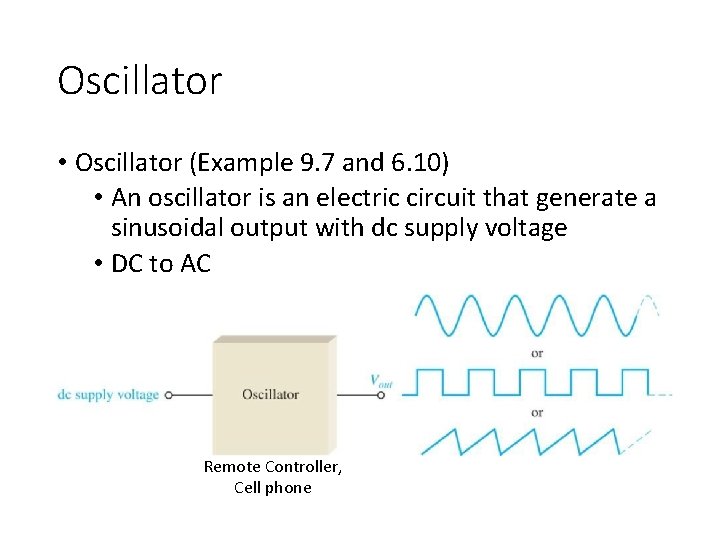
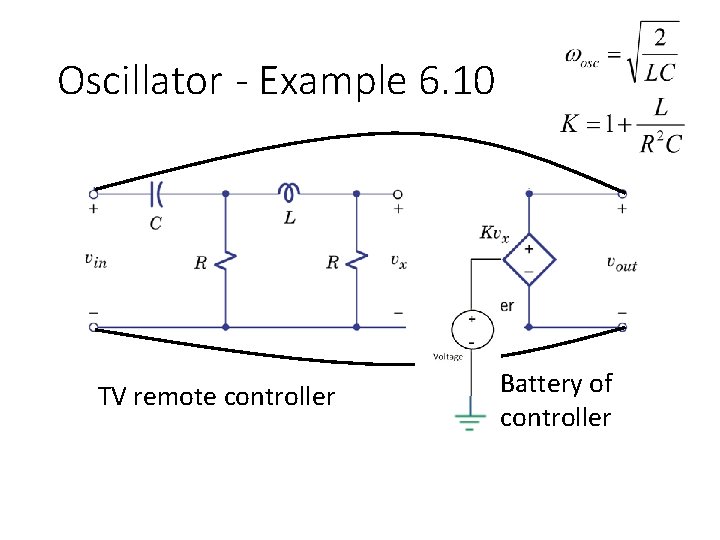
Oscillator • Oscillator (Example 9. 7 and 6. 10) • An oscillator is an electric circuit that generate a sinusoidal output with dc supply voltage • DC to AC Remote Controller, Cell phone
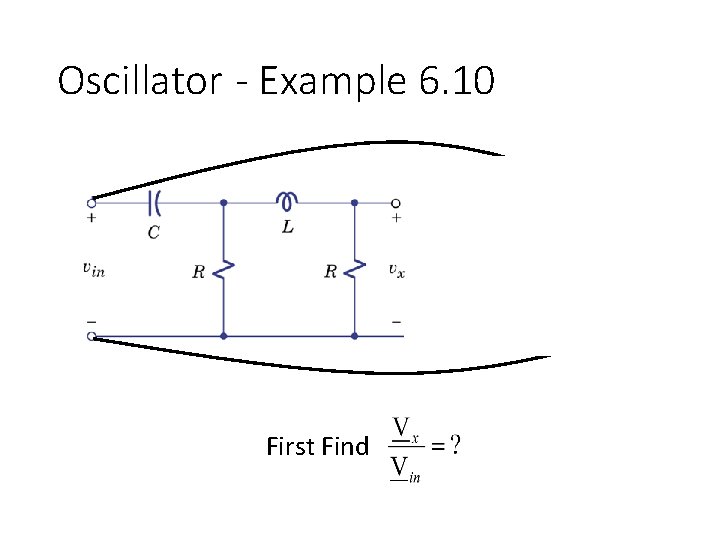
Oscillator - Example 6. 10 First Find
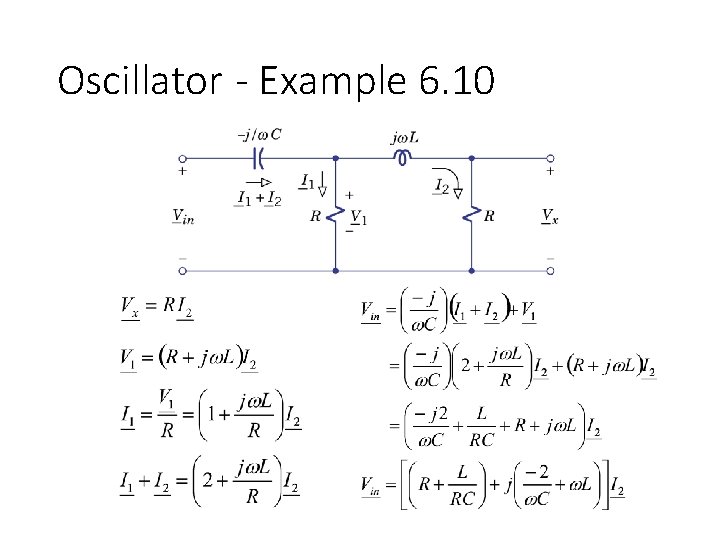
Oscillator - Example 6. 10
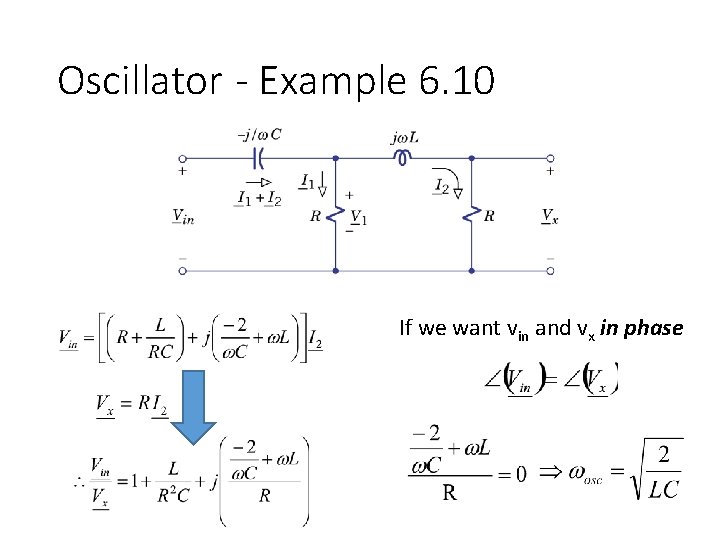
Oscillator - Example 6. 10 If we want vin and vx in phase
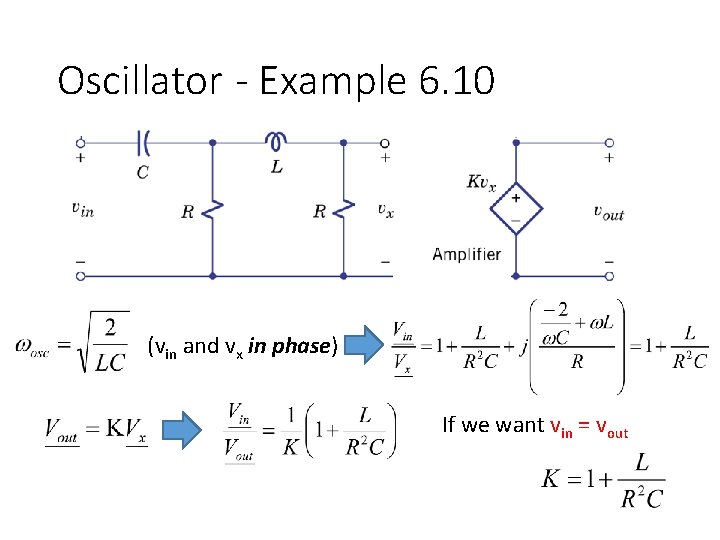
Oscillator - Example 6. 10 (vin and vx in phase) If we want vin = vout
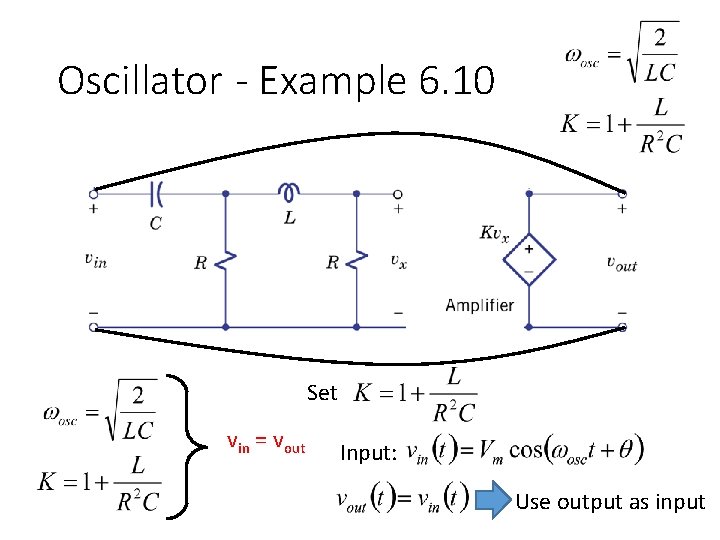
Oscillator - Example 6. 10 Set vin = vout Input: Use output as input
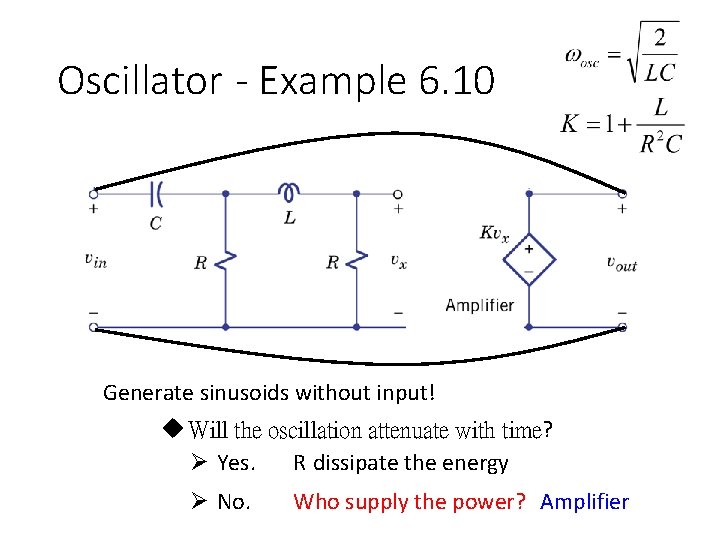
Oscillator - Example 6. 10 Generate sinusoids without input! u Will the oscillation attenuate with time? R dissipate the energy Ø Yes. Ø No. Who supply the power? Amplifier
Oscillator - Example 6. 10 TV remote controller Battery of controller
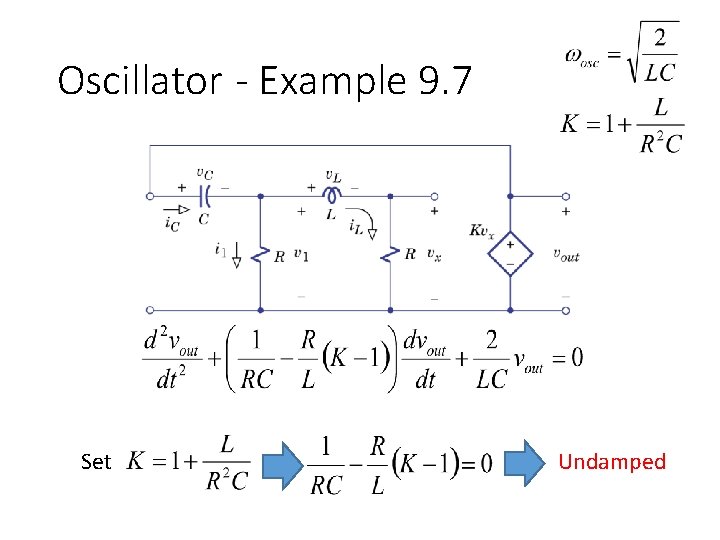
Oscillator - Example 9. 7 Set Undamped
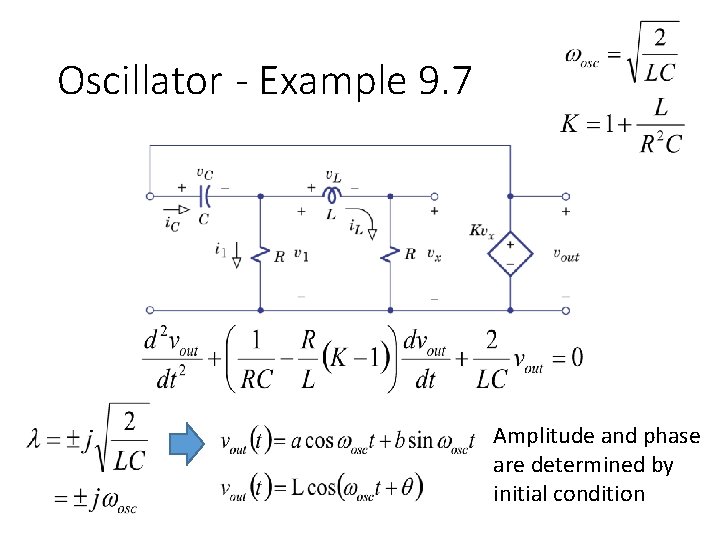
Oscillator - Example 9. 7 Amplitude and phase are determined by initial condition
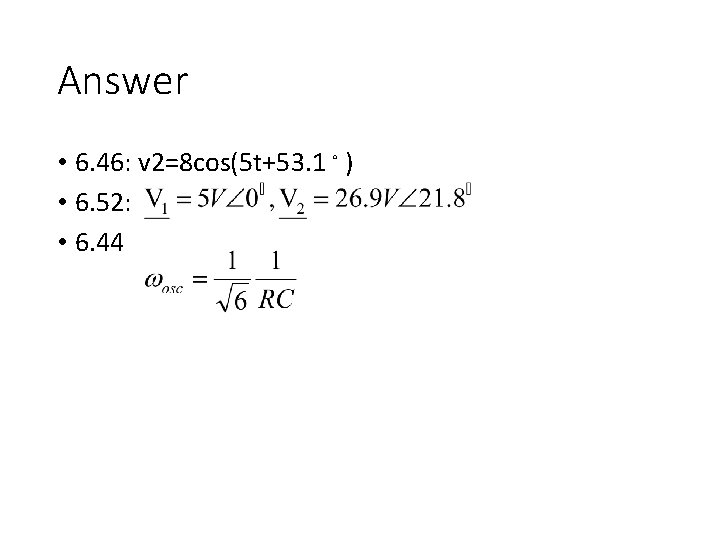
Homework • 6. 46 • 6. 52 • 6. 44
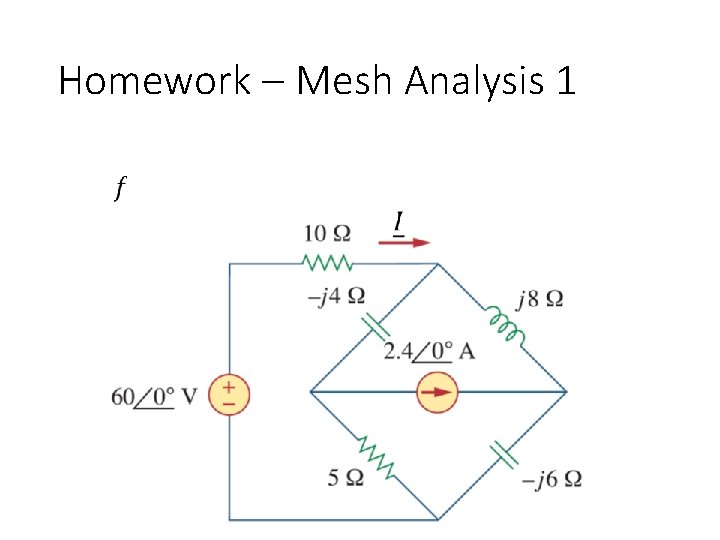
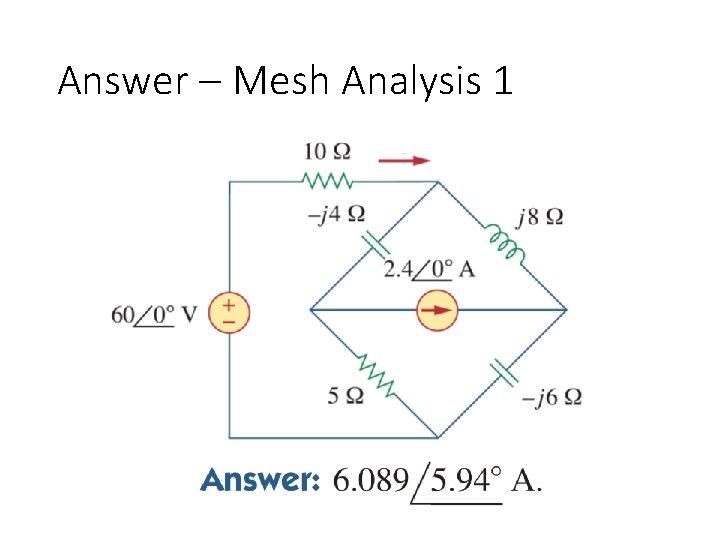
Homework – Mesh Analysis 1
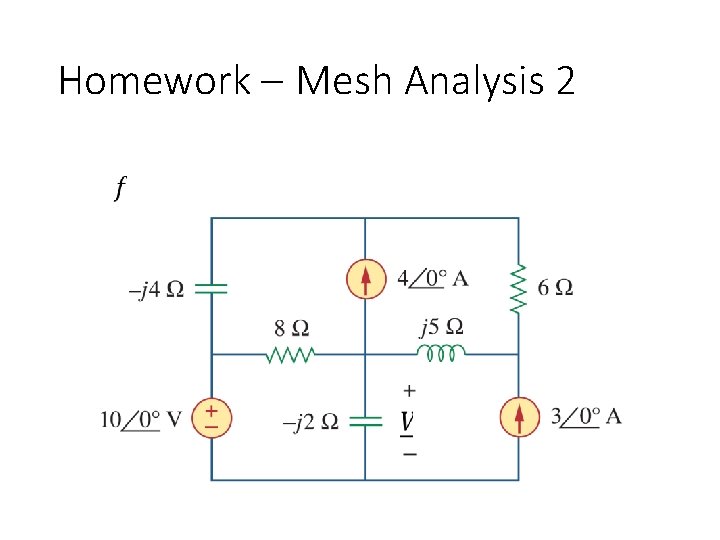
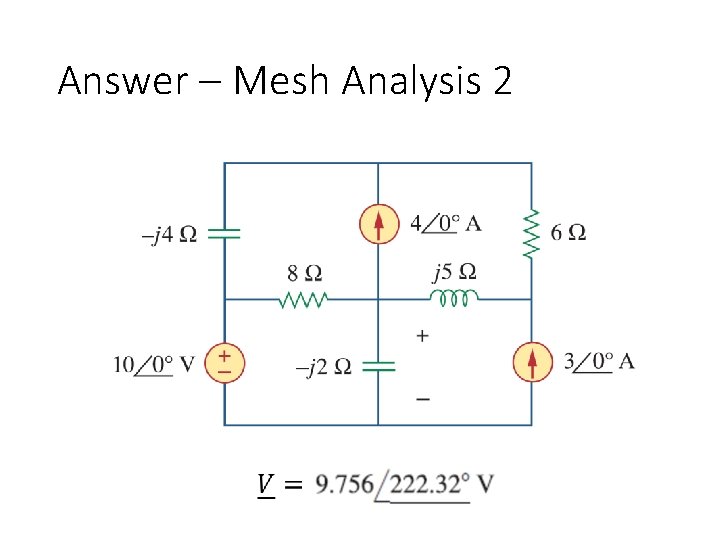
Homework – Mesh Analysis 2
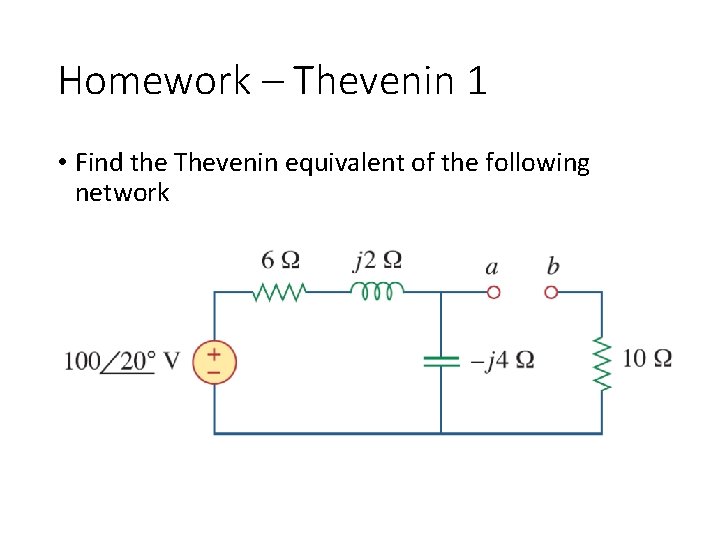
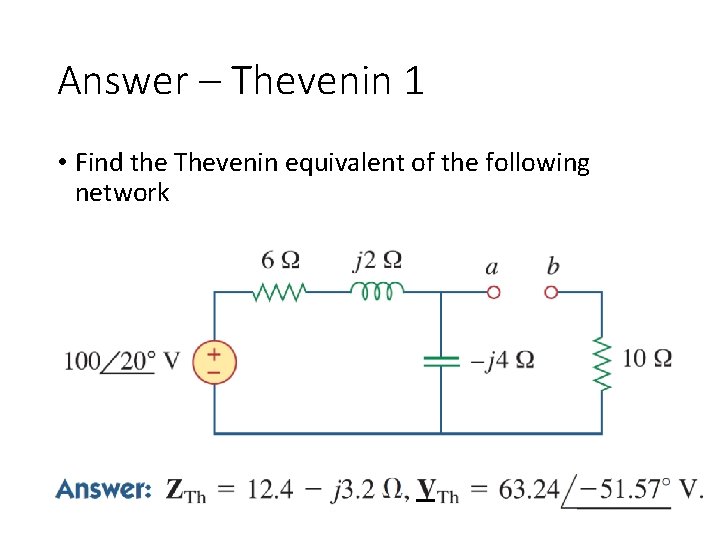
Homework – Thevenin 1 • Find the Thevenin equivalent of the following network
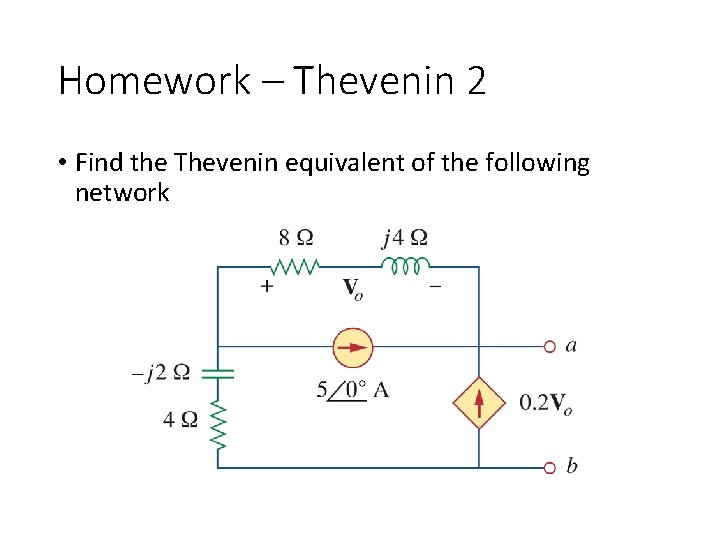
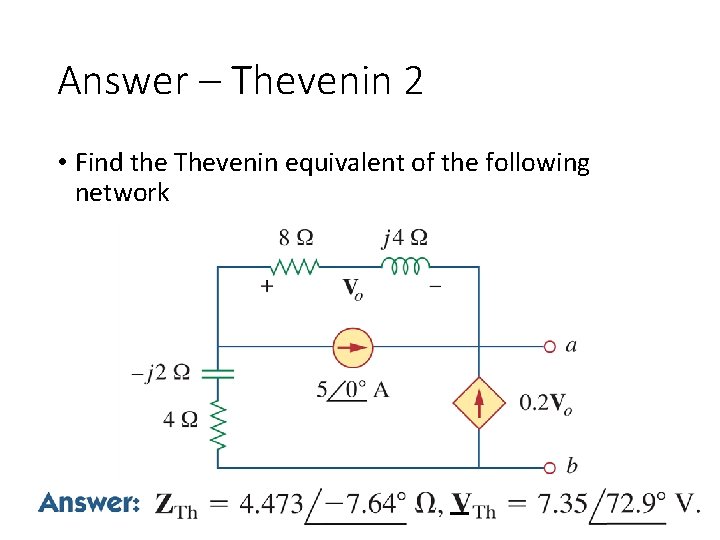
Homework – Thevenin 2 • Find the Thevenin equivalent of the following network
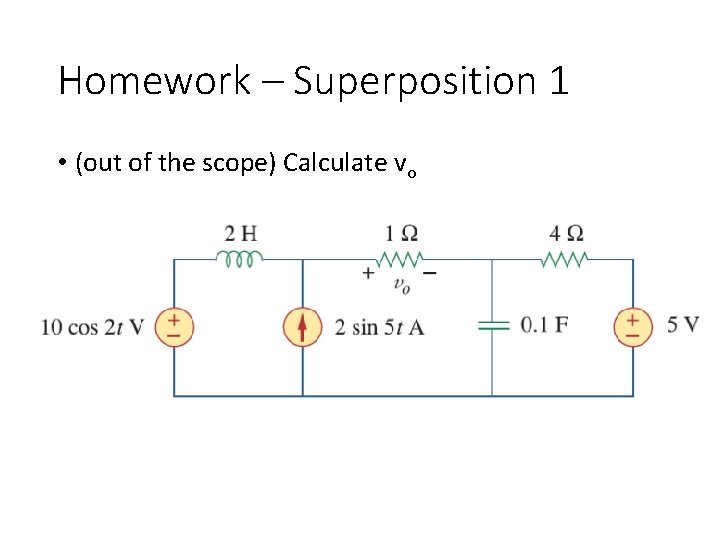
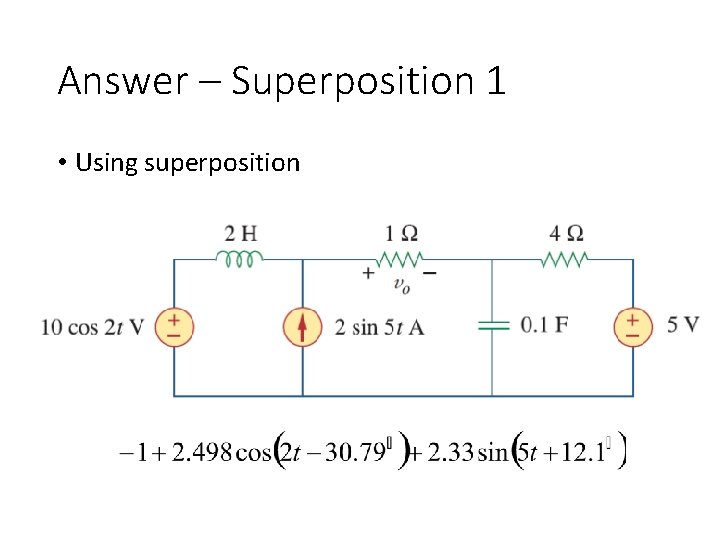
Homework – Superposition 1 • (out of the scope) Calculate vo
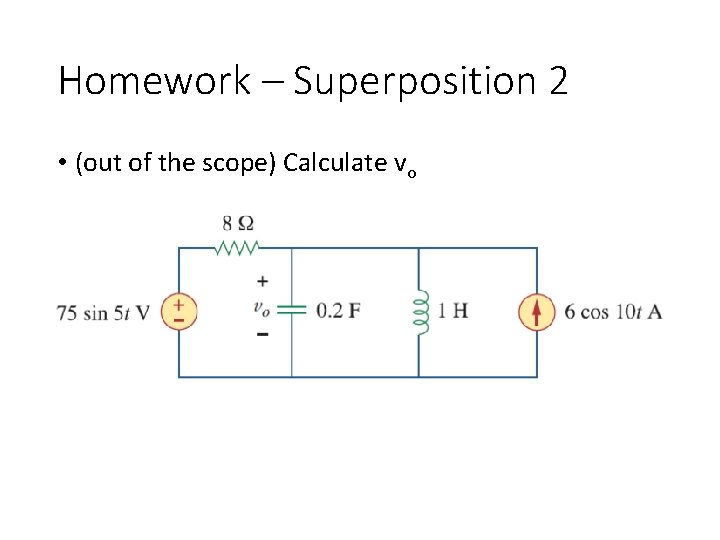
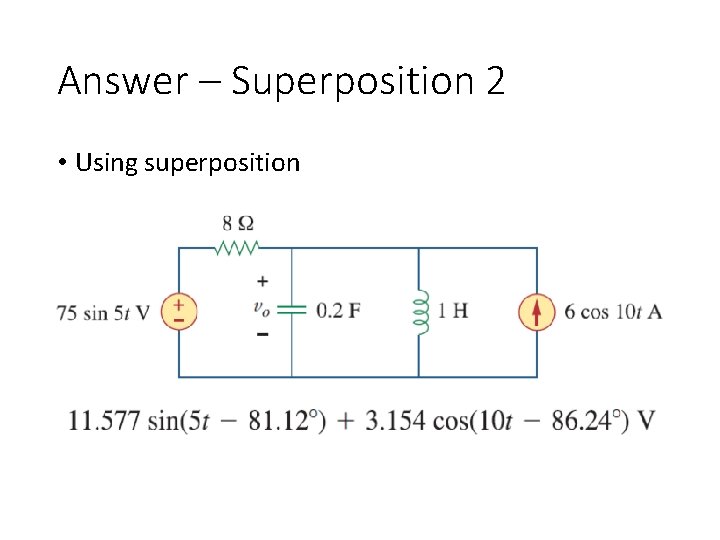
Homework – Superposition 2 • (out of the scope) Calculate vo
Thank you!
Answer • 6. 46: v 2=8 cos(5 t+53. 1。) • 6. 52: • 6. 44
Answer – Mesh Analysis 1
Answer – Mesh Analysis 2
Answer – Thevenin 1 • Find the Thevenin equivalent of the following network
Answer – Thevenin 2 • Find the Thevenin equivalent of the following network
Answer – Superposition 1 • Using superposition
Answer – Superposition 2 • Using superposition