
Lecture 16Significance of the Hertzsprung Russell Diagram Understanding

- Slides: 10
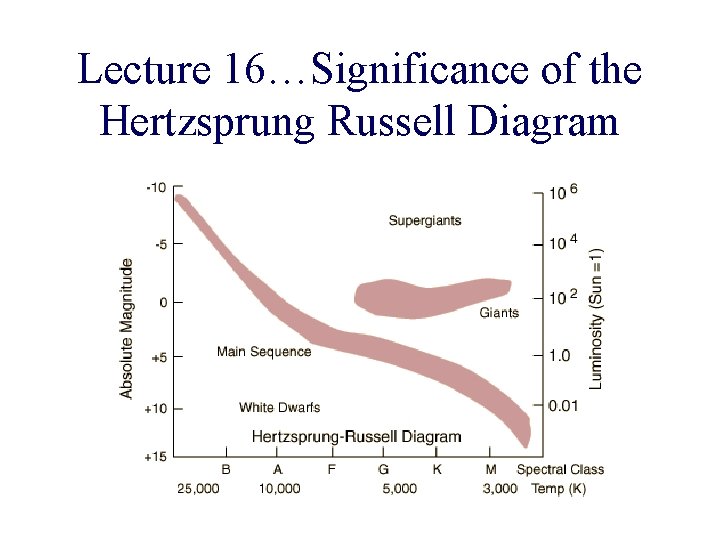
Lecture 16…Significance of the Hertzsprung Russell Diagram
Understanding the Main Sequence (stars like the Sun) • A statistical argument (no physics) • Physical argument 1: what holds stars up? • Physical argument 2: what powers the stars (where do they get their energy supply? )
The nature of the Main Sequence #1: the MS as a Cambus Stop Many more people seen on the sidewalk near a Cambus stop than a random point
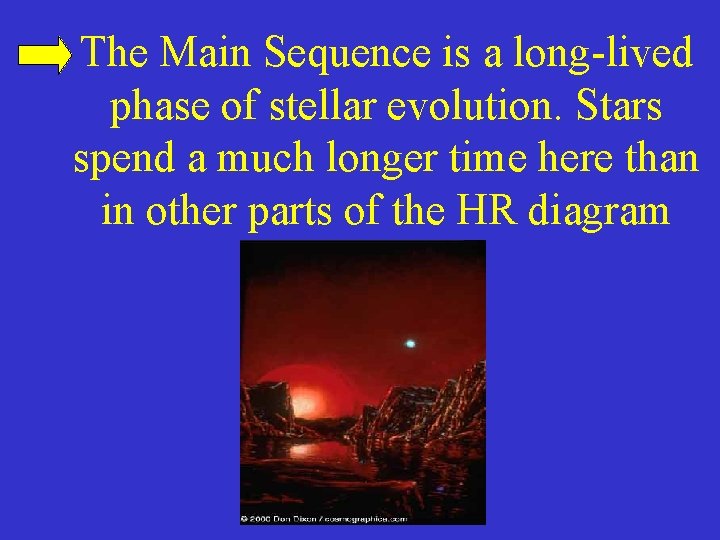
The Main Sequence is a long-lived phase of stellar evolution. Stars spend a much longer time here than in other parts of the HR diagram
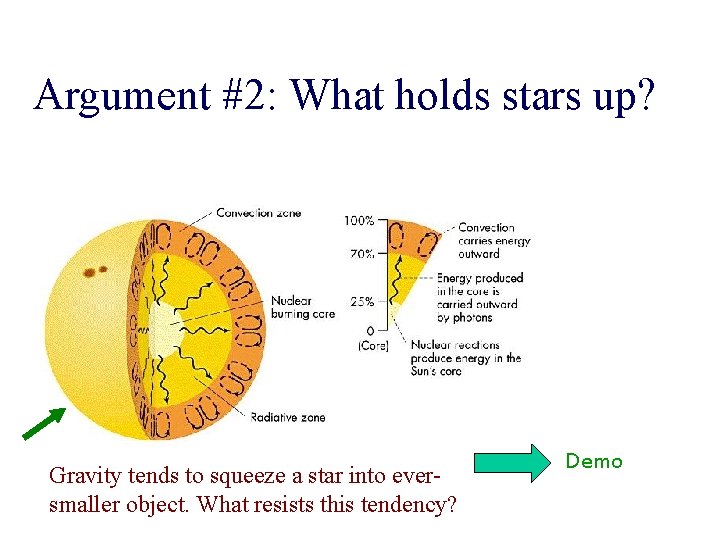
Argument #2: What holds stars up? Gravity tends to squeeze a star into eversmaller object. What resists this tendency? Demo
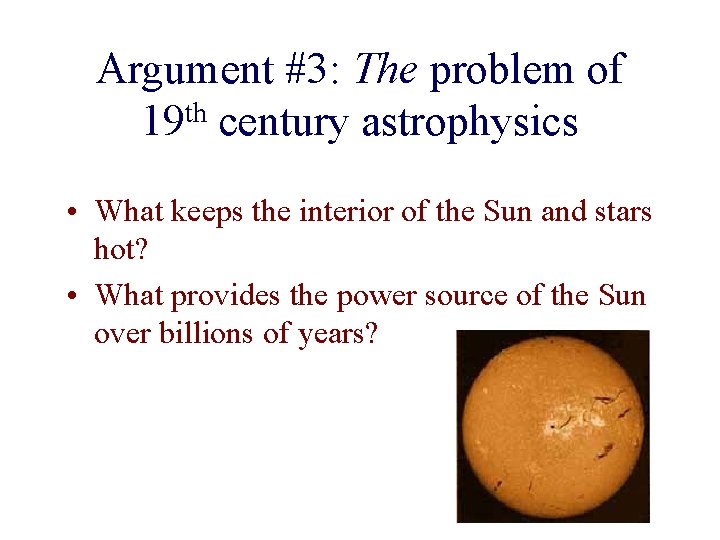
Argument #3: The problem of 19 th century astrophysics • What keeps the interior of the Sun and stars hot? • What provides the power source of the Sun over billions of years?
The problem of the solar luminosity • Luminosity = 3. 8 E+26 Watts = 3. 8 E+26 Joules/sec • Chemical reactions (gasoline, explosives) yield of order 1 E+06 Joules/kilogram • The mass of the Sun is 2 E+30 kilogram, so total “store” of energy is 2 E+36 Joules • This would keep the Sun burning for about 170 years!!!! Historical rather than geological times!!!!
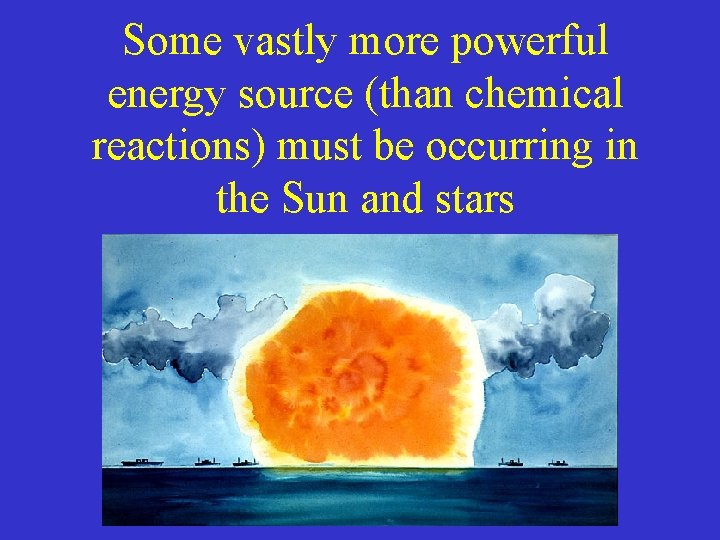
Some vastly more powerful energy source (than chemical reactions) must be occurring in the Sun and stars
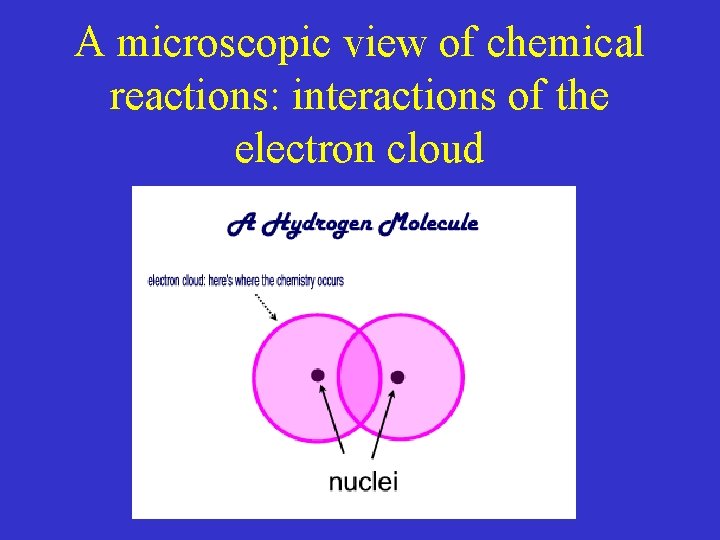
A microscopic view of chemical reactions: interactions of the electron cloud
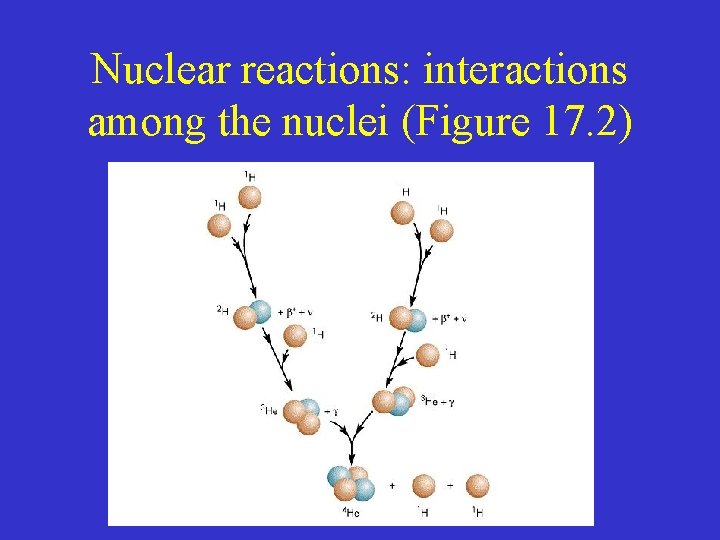
Nuclear reactions: interactions among the nuclei (Figure 17. 2)