
Lecture 16 COMMUNICATION DECISION MAKING AND NEGOTIATION For
- Slides: 17
Lecture 16 COMMUNICATION, DECISION MAKING AND NEGOTIATION For use with MARTIN, ORGANIZATIONAL BEHAVIOUR AND MANAGEMENT 3 e ISBN 1 -86152 -948 -1 Copyright © 2005 Cengage Learning 1
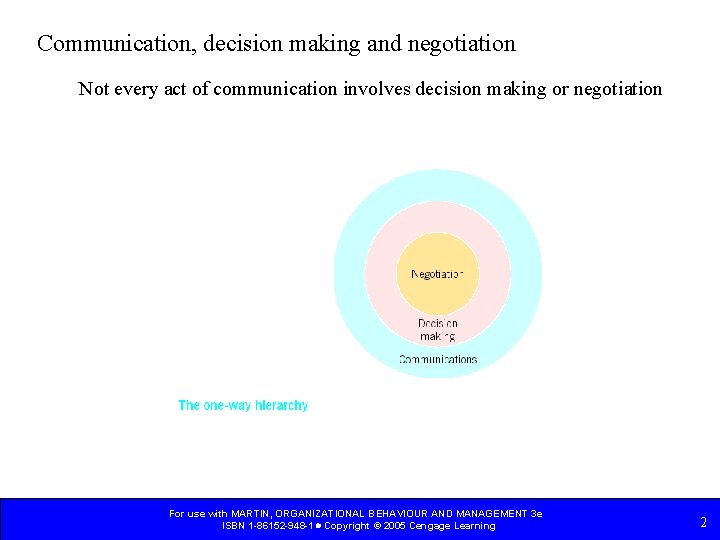
Communication, decision making and negotiation Not every act of communication involves decision making or negotiation For use with MARTIN, ORGANIZATIONAL BEHAVIOUR AND MANAGEMENT 3 e ISBN 1 -86152 -948 -1 Copyright © 2005 Cengage Learning 2
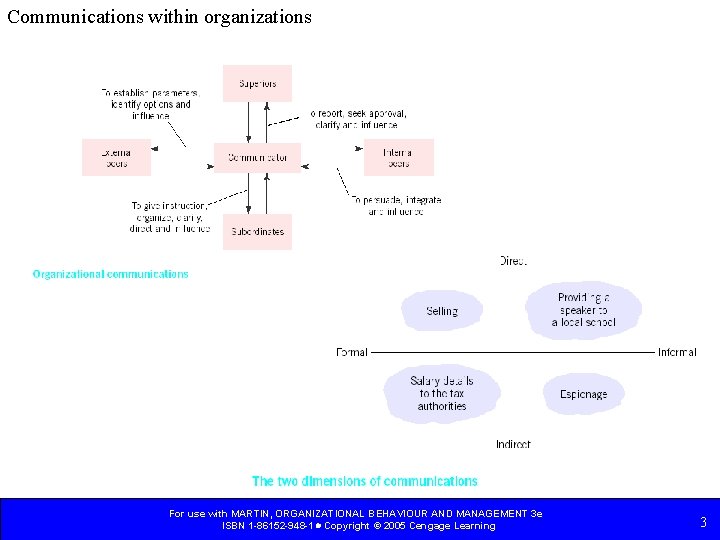
Communications within organizations For use with MARTIN, ORGANIZATIONAL BEHAVIOUR AND MANAGEMENT 3 e ISBN 1 -86152 -948 -1 Copyright © 2005 Cengage Learning 3
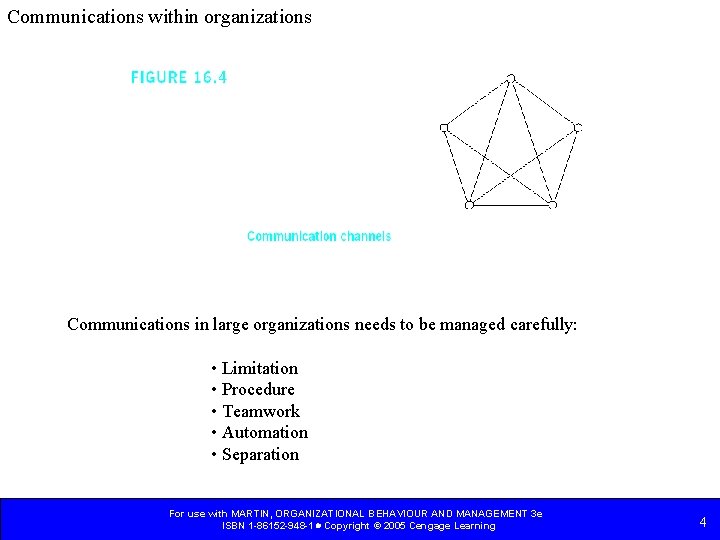
Communications within organizations Communications in large organizations needs to be managed carefully: • Limitation • Procedure • Teamwork • Automation • Separation For use with MARTIN, ORGANIZATIONAL BEHAVIOUR AND MANAGEMENT 3 e ISBN 1 -86152 -948 -1 Copyright © 2005 Cengage Learning 4
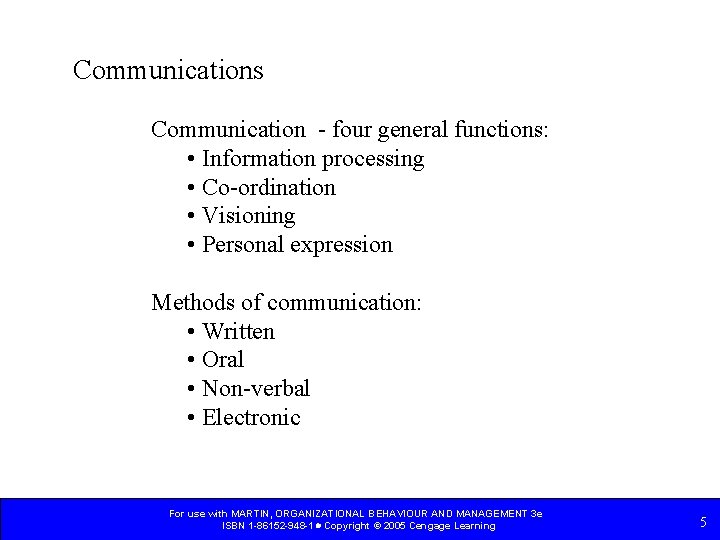
Communications Communication - four general functions: • Information processing • Co-ordination • Visioning • Personal expression Methods of communication: • Written • Oral • Non-verbal • Electronic For use with MARTIN, ORGANIZATIONAL BEHAVIOUR AND MANAGEMENT 3 e ISBN 1 -86152 -948 -1 Copyright © 2005 Cengage Learning 5
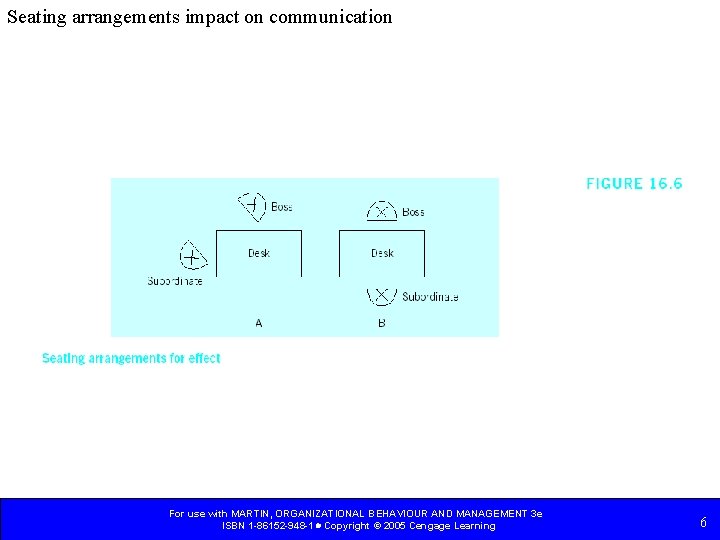
Seating arrangements impact on communication For use with MARTIN, ORGANIZATIONAL BEHAVIOUR AND MANAGEMENT 3 e ISBN 1 -86152 -948 -1 Copyright © 2005 Cengage Learning 6
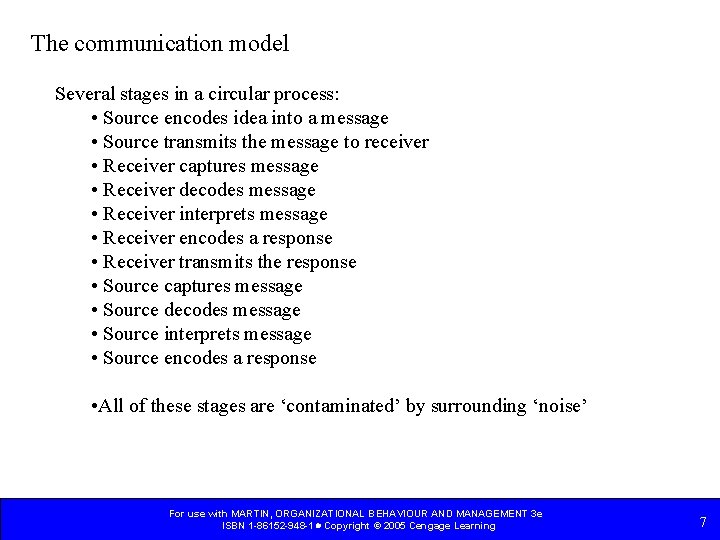
The communication model Several stages in a circular process: • Source encodes idea into a message • Source transmits the message to receiver • Receiver captures message • Receiver decodes message • Receiver interprets message • Receiver encodes a response • Receiver transmits the response • Source captures message • Source decodes message • Source interprets message • Source encodes a response • All of these stages are ‘contaminated’ by surrounding ‘noise’ For use with MARTIN, ORGANIZATIONAL BEHAVIOUR AND MANAGEMENT 3 e ISBN 1 -86152 -948 -1 Copyright © 2005 Cengage Learning 7
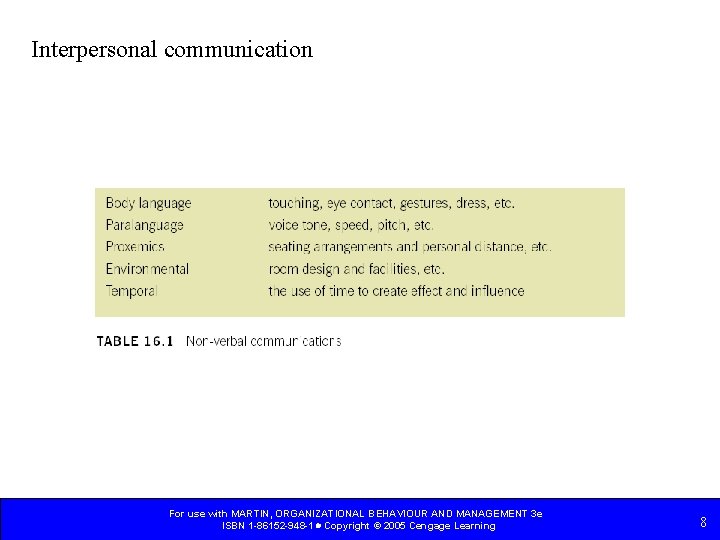
Interpersonal communication For use with MARTIN, ORGANIZATIONAL BEHAVIOUR AND MANAGEMENT 3 e ISBN 1 -86152 -948 -1 Copyright © 2005 Cengage Learning 8
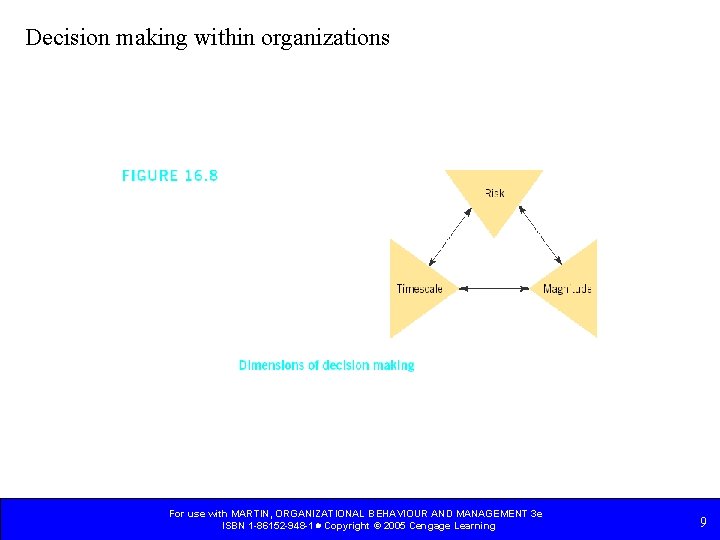
Decision making within organizations For use with MARTIN, ORGANIZATIONAL BEHAVIOUR AND MANAGEMENT 3 e ISBN 1 -86152 -948 -1 Copyright © 2005 Cengage Learning 9
Problem-solving preferences Thompson and Tuden (1959) • Preferences for outcome • Beliefs without causation For use with MARTIN, ORGANIZATIONAL BEHAVIOUR AND MANAGEMENT 3 e ISBN 1 -86152 -948 -1 Copyright © 2005 Cengage Learning 10
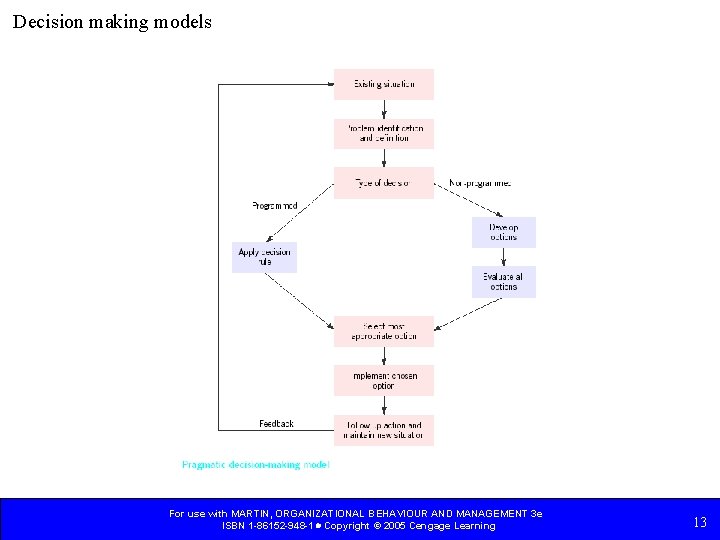
Decision making models • Rational and Restricted nationality models • Political model • Conflict model • Programmed and non-programmed decision making • Pragmatic model • Cycle model For use with MARTIN, ORGANIZATIONAL BEHAVIOUR AND MANAGEMENT 3 e ISBN 1 -86152 -948 -1 Copyright © 2005 Cengage Learning 11
Approaches to decision making Conclusions from comparing programmed and non-programmed approaches to decision making: • Risk • Cost • Performance • Variety • Employee skill • Organization design For use with MARTIN, ORGANIZATIONAL BEHAVIOUR AND MANAGEMENT 3 e ISBN 1 -86152 -948 -1 Copyright © 2005 Cengage Learning 12
Decision making models For use with MARTIN, ORGANIZATIONAL BEHAVIOUR AND MANAGEMENT 3 e ISBN 1 -86152 -948 -1 Copyright © 2005 Cengage Learning 13
Negotiating and organizations Negotiation is defined as: The resolution of difference The exchange of something mutually sought by both parties The making of agreements For use with MARTIN, ORGANIZATIONAL BEHAVIOUR AND MANAGEMENT 3 e ISBN 1 -86152 -948 -1 Copyright © 2005 Cengage Learning 14
Negotiating tactics Torrington and Hall (1987) • Avoidance • Smoothing • Forcing • Compromise • Confrontation Fisher and Ury (1981) Principled negotiations • Separate the people from the problem • Focus on interests not positions • Invent options for mutual gain • Insist on objective criteria Win-lose tactics • Probing • Get/give • Emotion • Good guy/bad guy • Poker face • Managing the minutes • Understanding not agreement • Getting upstairs • Forcing For use with MARTIN, ORGANIZATIONAL BEHAVIOUR AND MANAGEMENT 3 e ISBN 1 -86152 -948 -1 Copyright © 2005 Cengage Learning 15
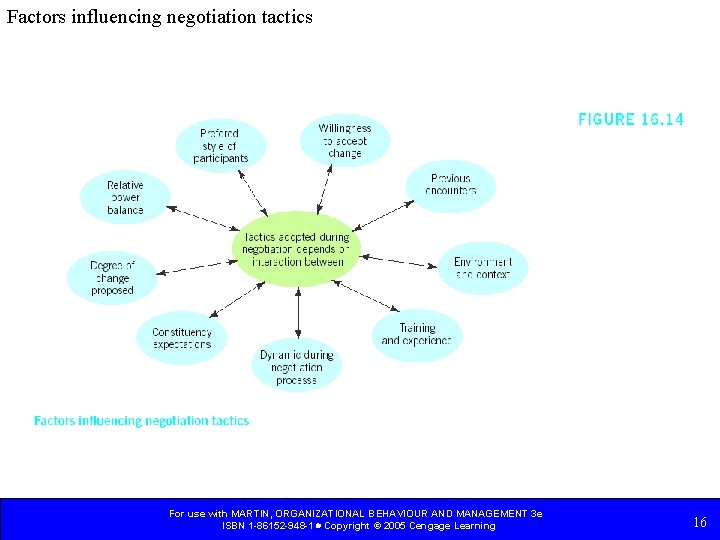
Factors influencing negotiation tactics For use with MARTIN, ORGANIZATIONAL BEHAVIOUR AND MANAGEMENT 3 e ISBN 1 -86152 -948 -1 Copyright © 2005 Cengage Learning 16
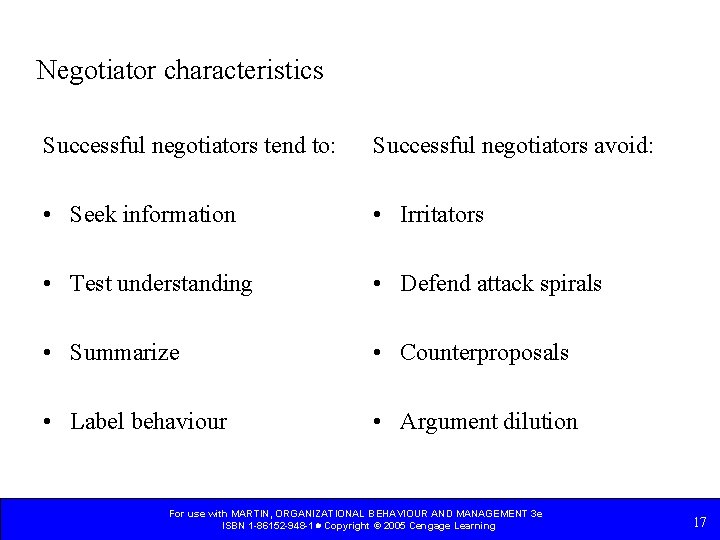
Negotiator characteristics Successful negotiators tend to: Successful negotiators avoid: • Seek information • Irritators • Test understanding • Defend attack spirals • Summarize • Counterproposals • Label behaviour • Argument dilution For use with MARTIN, ORGANIZATIONAL BEHAVIOUR AND MANAGEMENT 3 e ISBN 1 -86152 -948 -1 Copyright © 2005 Cengage Learning 17