
Lecture 16 Chemical Reaction Engineering CRE is the
- Slides: 21
Lecture 16 Chemical Reaction Engineering (CRE) is the field that studies the rates and mechanisms of chemical reactions and the design of the reactors in which they take place.
Today’s lecture �Enzyme Kinetics �Noncompetitive Inhibition �Bioreactors �Monod Equation �Yield Coefficients �Washout 2
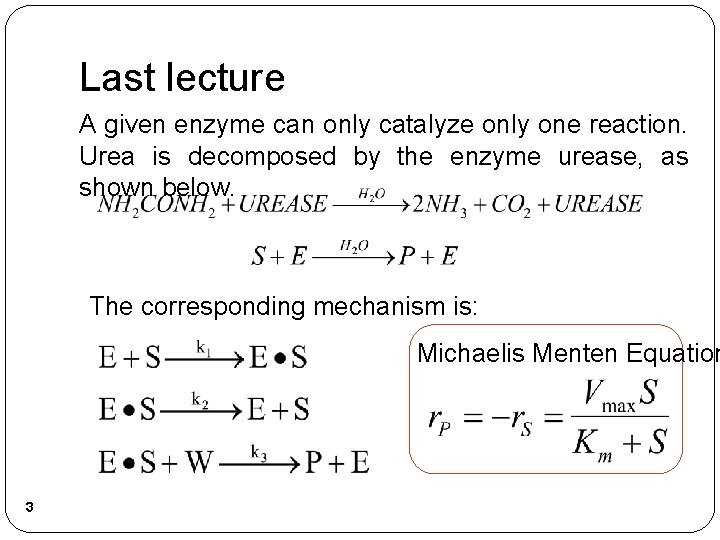
Last lecture A given enzyme can only catalyze only one reaction. Urea is decomposed by the enzyme urease, as shown below. The corresponding mechanism is: Michaelis Menten Equation 3
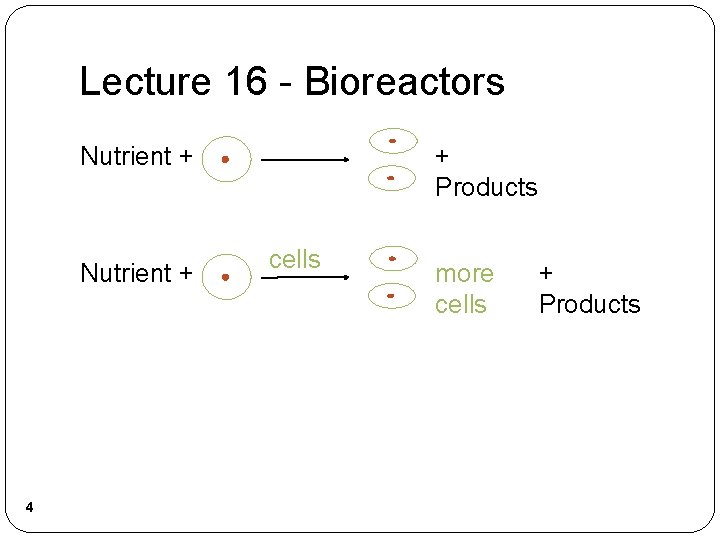
Lecture 16 - Bioreactors Nutrient + 4 + Products cells more cells + Products
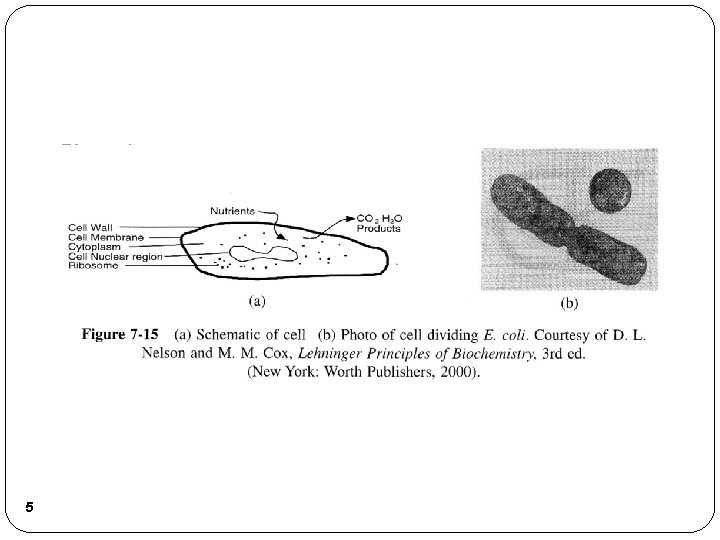
Bioreactors 5
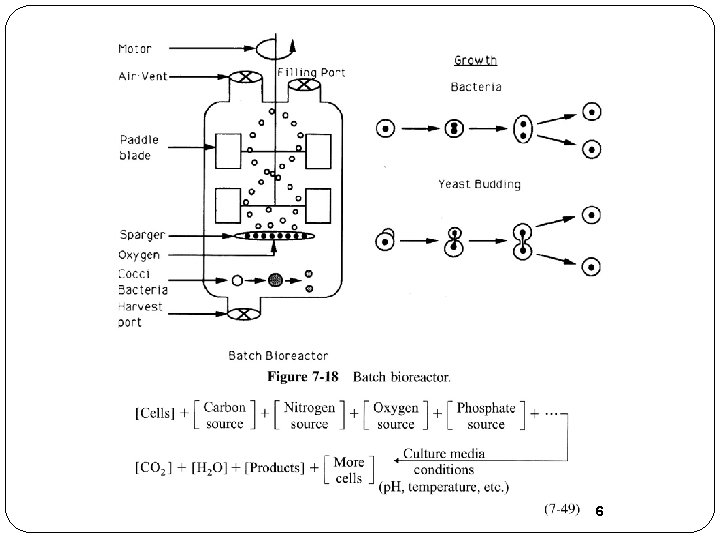
6
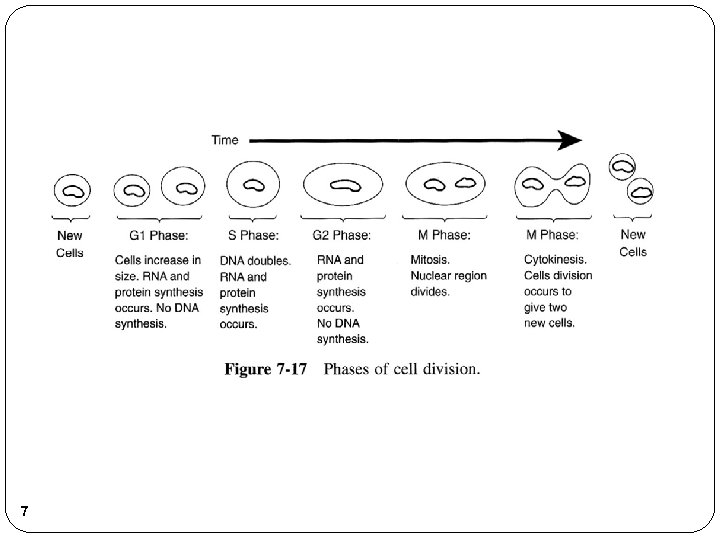
7
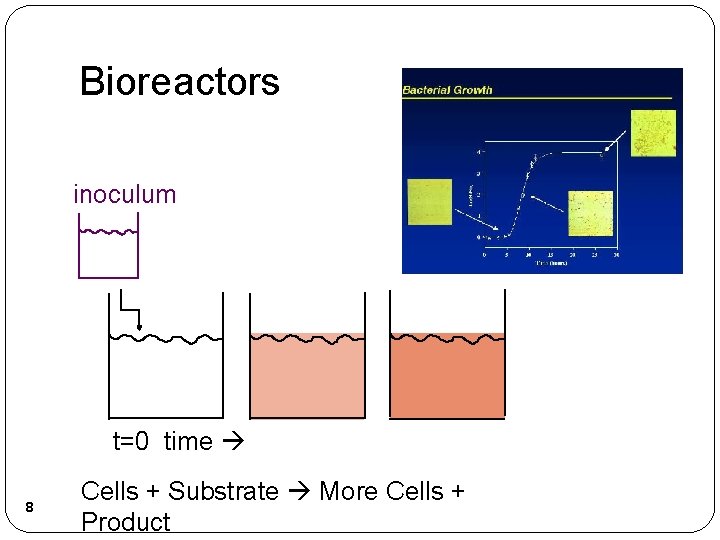
Bioreactors inoculum t=0 time 8 Cells + Substrate More Cells + Product
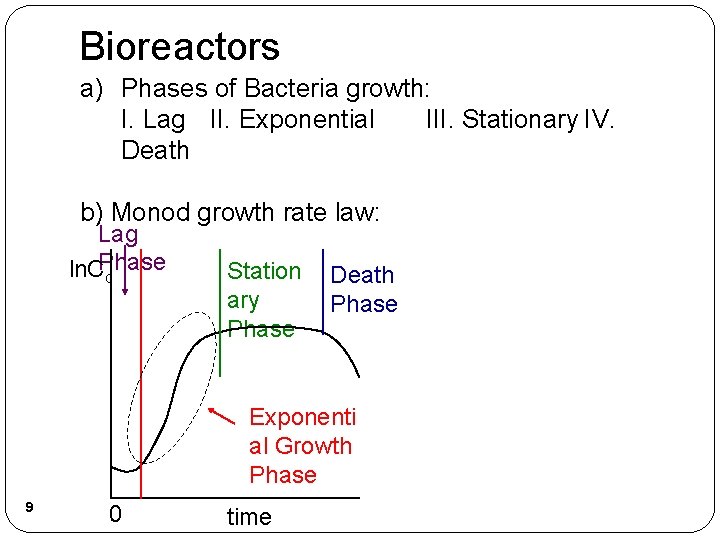
Bioreactors a) Phases of Bacteria growth: I. Lag II. Exponential III. Stationary IV. Death b) Monod growth rate law: Lag ln. CPhase c Station ary Phase Death Phase Exponenti al Growth Phase 9 0 time
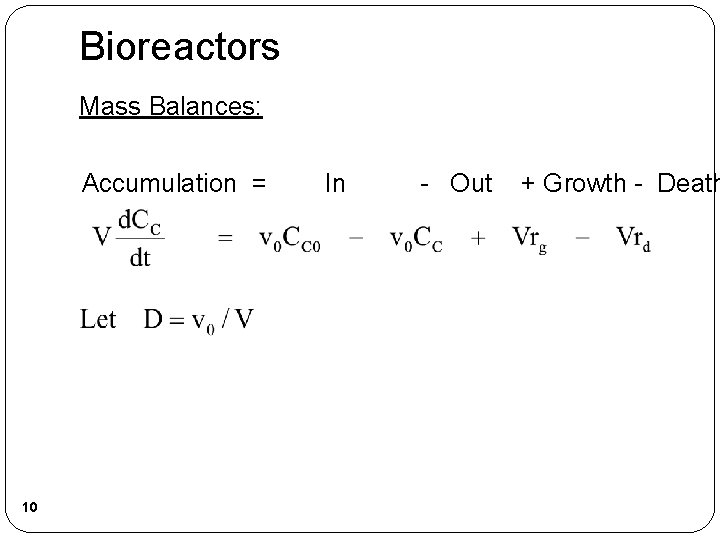
Bioreactors Mass Balances: Accumulation = 10 In - Out + Growth - Death
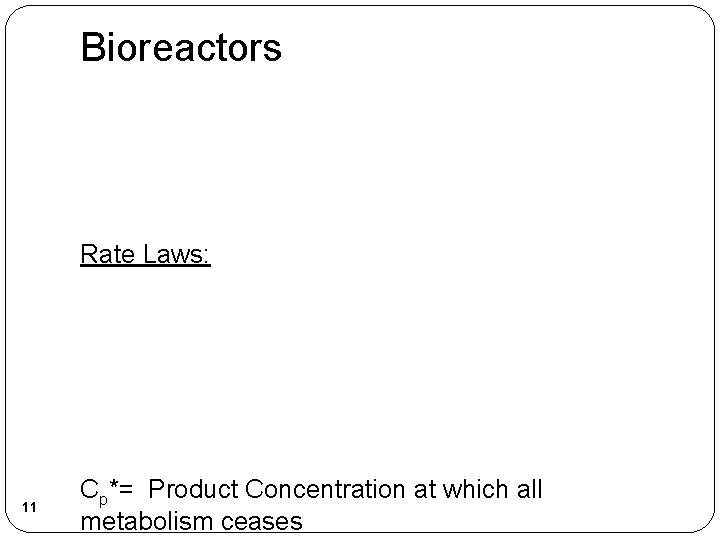
Bioreactors Rate Laws: 11 Cp*= Product Concentration at which all metabolism ceases
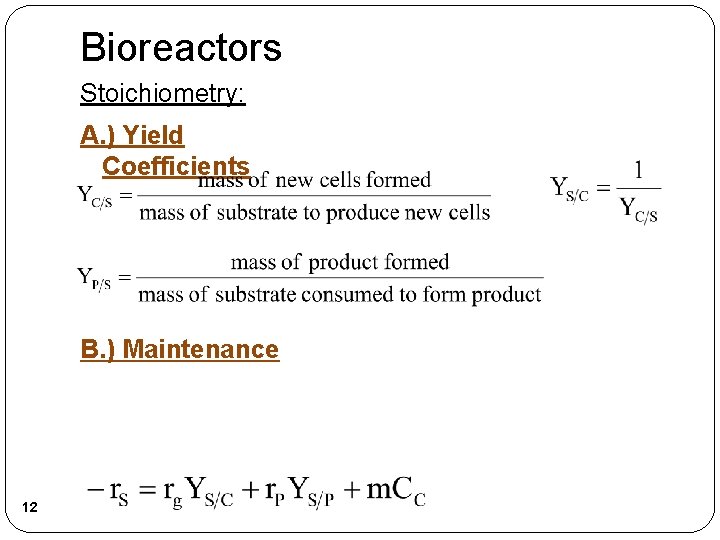
Bioreactors Stoichiometry: A. ) Yield Coefficients B. ) Maintenance 12
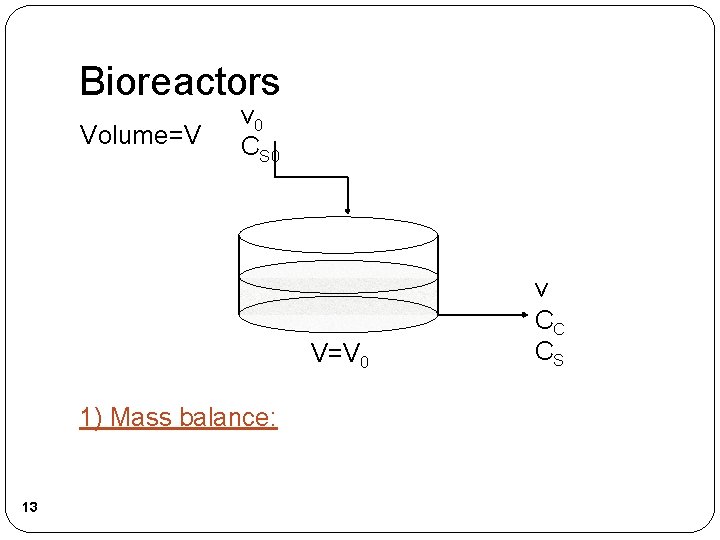
Bioreactors Volume=V v 0 CS 0 V=V 0 1) Mass balance: 13 v CC CS
Bioreactors 14
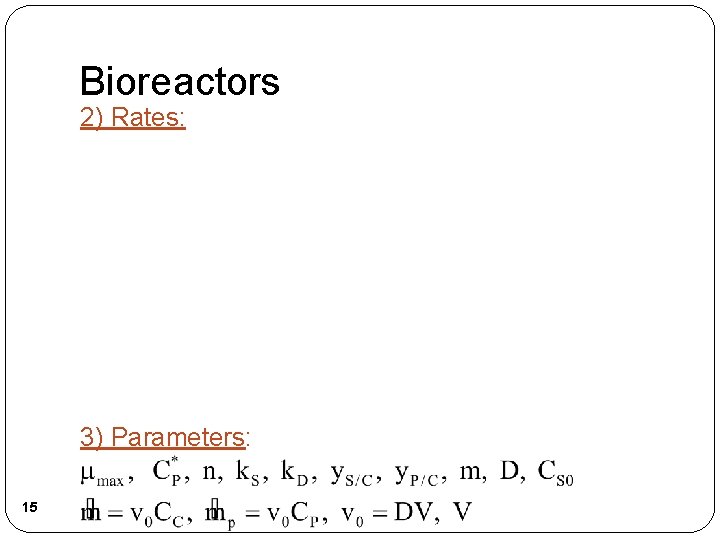
Bioreactors 2) Rates: 3) Parameters: 15
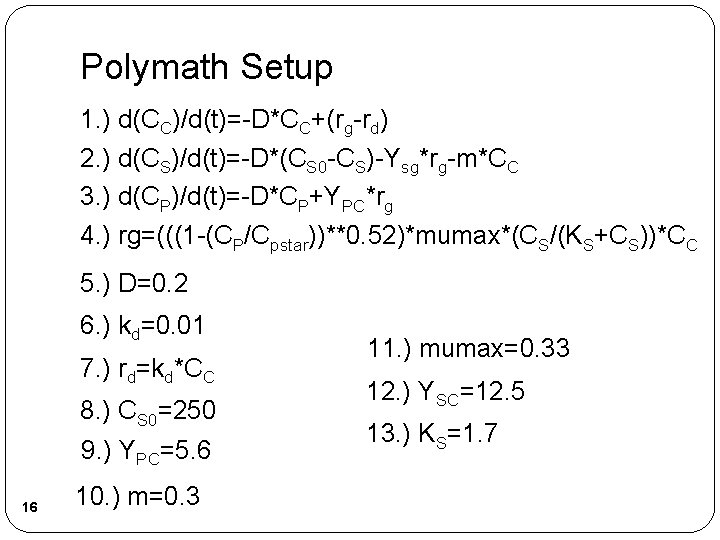
Polymath Setup 1. ) d(CC)/d(t)=-D*CC+(rg-rd) 2. ) d(CS)/d(t)=-D*(CS 0 -CS)-Ysg*rg-m*CC 3. ) d(CP)/d(t)=-D*CP+YPC*rg 4. ) rg=(((1 -(CP/Cpstar))**0. 52)*mumax*(CS/(KS+CS))*CC 5. ) D=0. 2 6. ) kd=0. 01 7. ) rd=kd*CC 8. ) CS 0=250 9. ) YPC=5. 6 16 10. ) m=0. 3 11. ) mumax=0. 33 12. ) YSC=12. 5 13. ) KS=1. 7
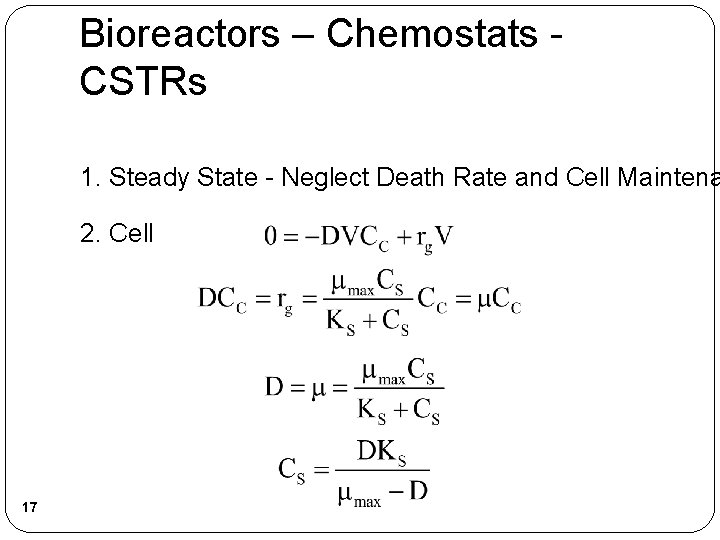
Bioreactors – Chemostats CSTRs 1. Steady State - Neglect Death Rate and Cell Maintena 2. Cell 17
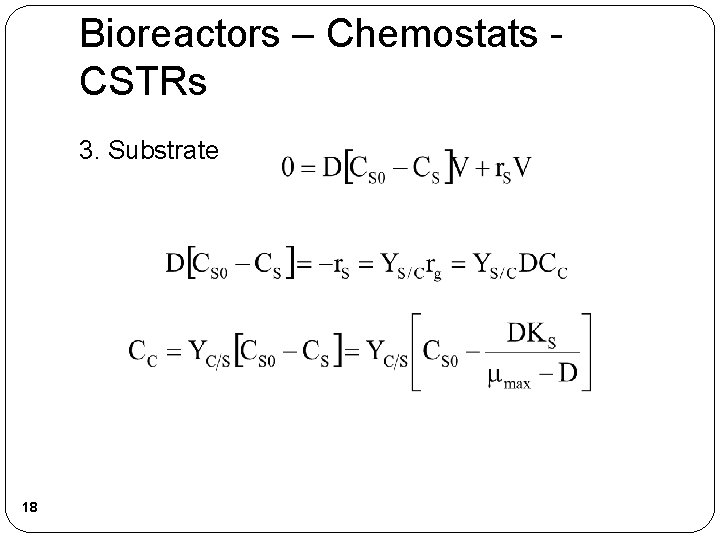
Bioreactors – Chemostats CSTRs 3. Substrate 18
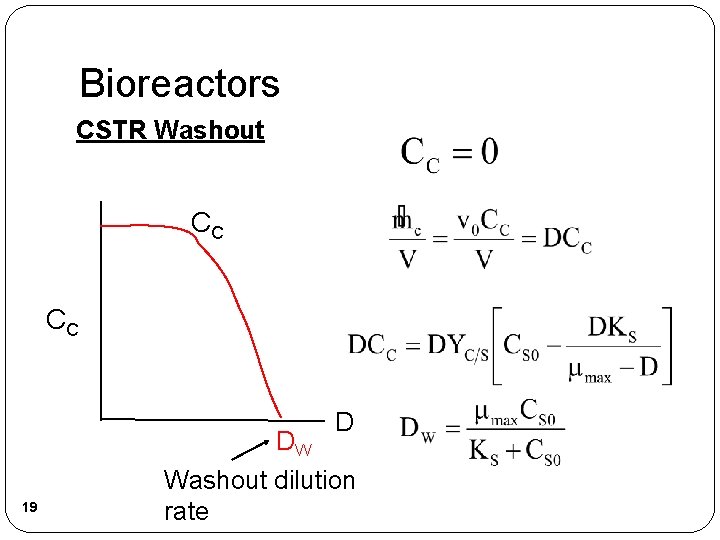
Bioreactors CSTR Washout CC CC D 19 DW Washout dilution rate
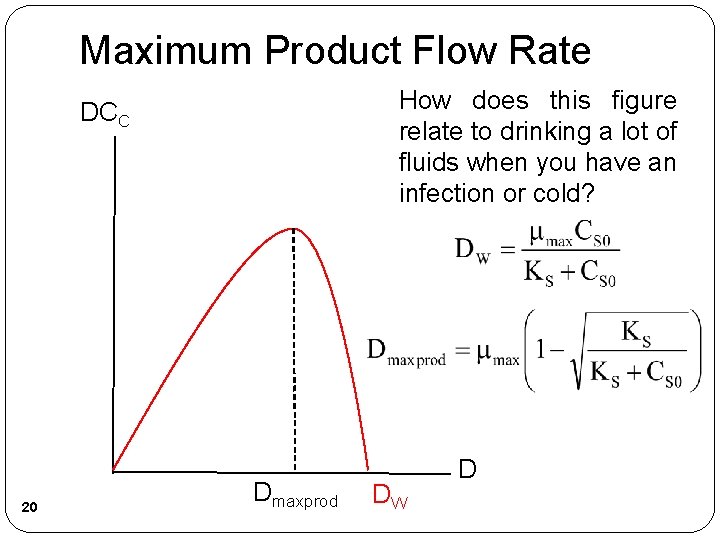
Maximum Product Flow Rate How does this figure relate to drinking a lot of fluids when you have an infection or cold? DCC 20 Dmaxprod DW D
End of Lecture 16 21