
Lecture 16 BASIS AND LINEAR TRANSFORMATIONS IN VECTOR
Lecture 16 BASIS AND LINEAR TRANSFORMATIONS IN VECTOR SPACES
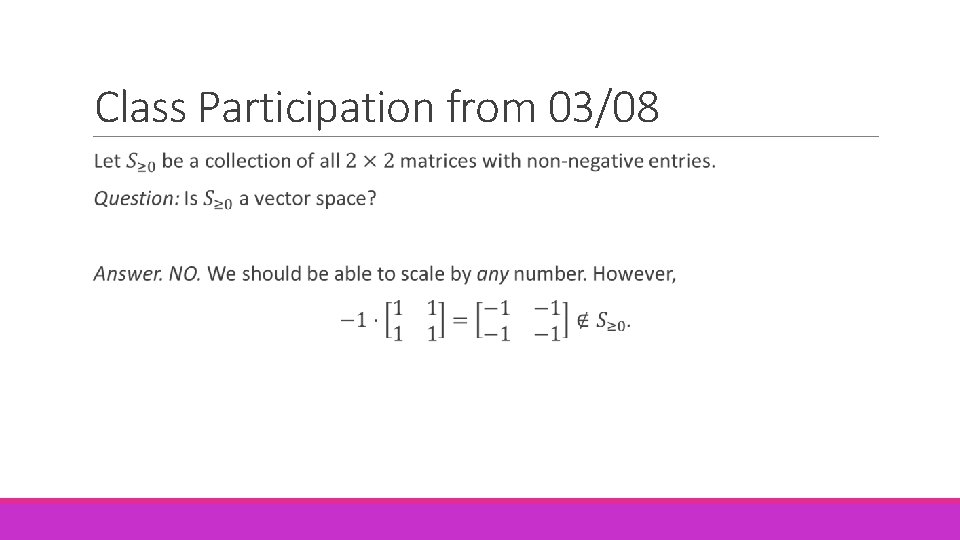
Class Participation from 03/08
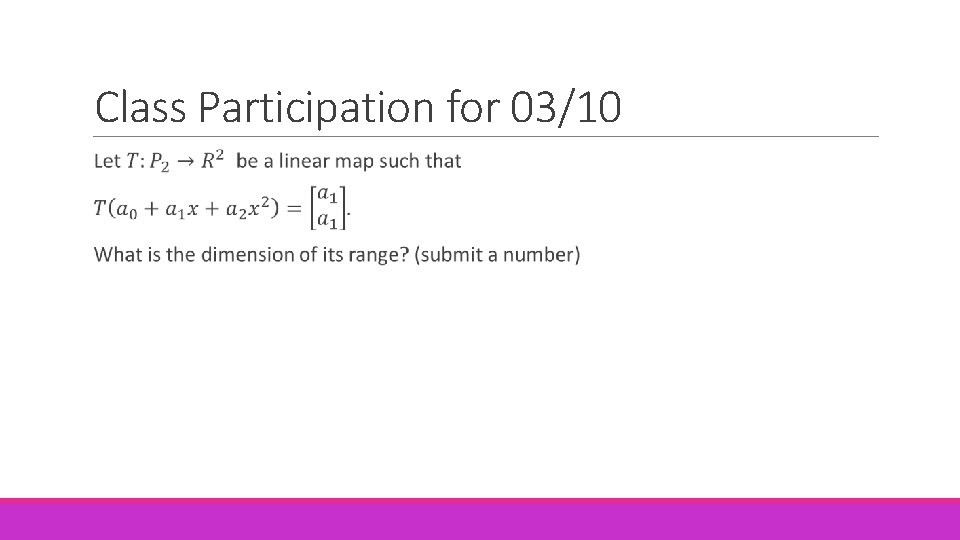
Class Participation for 03/10
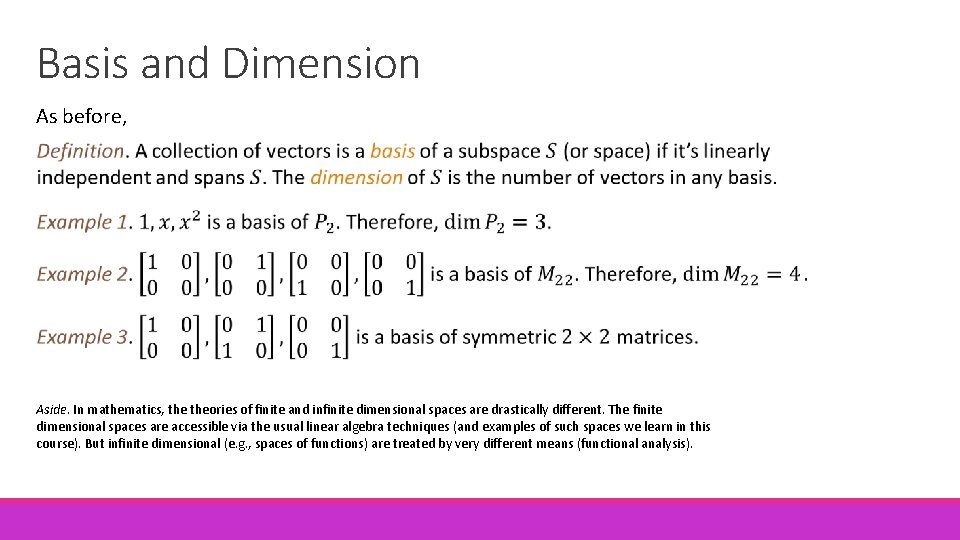
Basis and Dimension As before, Aside. In mathematics, theories of finite and infinite dimensional spaces are drastically different. The finite dimensional spaces are accessible via the usual linear algebra techniques (and examples of such spaces we learn in this course). But infinite dimensional (e. g. , spaces of functions) are treated by very different means (functional analysis).
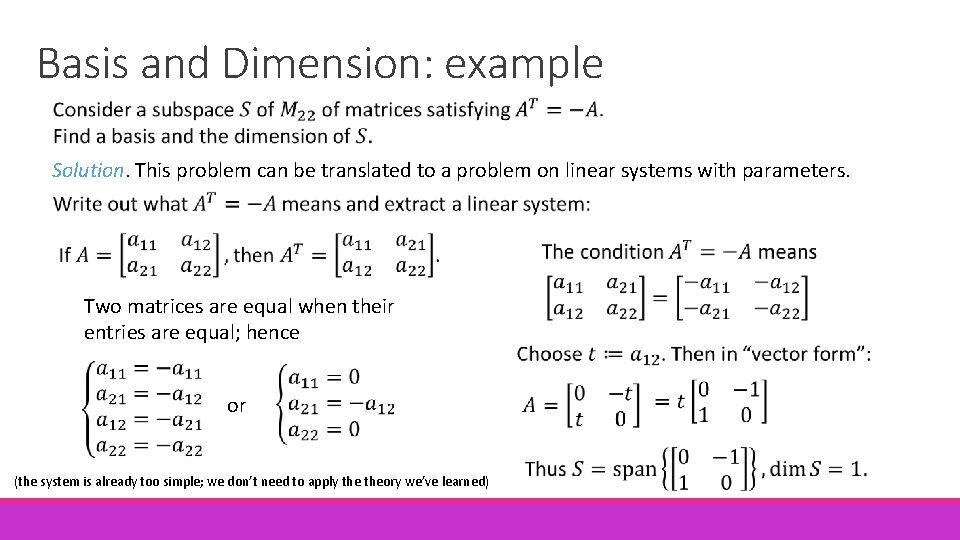
Basis and Dimension: example Solution. This problem can be translated to a problem on linear systems with parameters. Two matrices are equal when their entries are equal; hence or (the system is already too simple; we don’t need to apply theory we’ve learned)
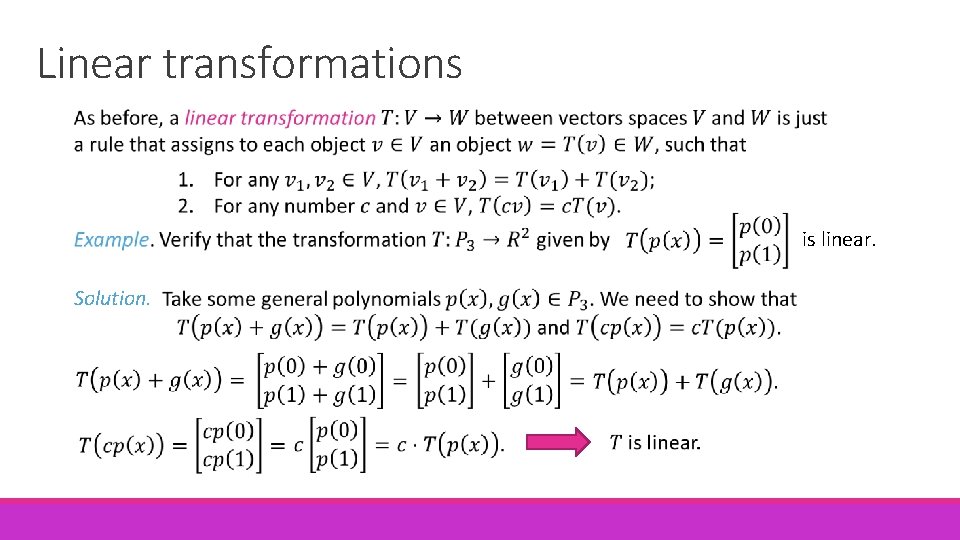
Linear transformations is linear. Solution.
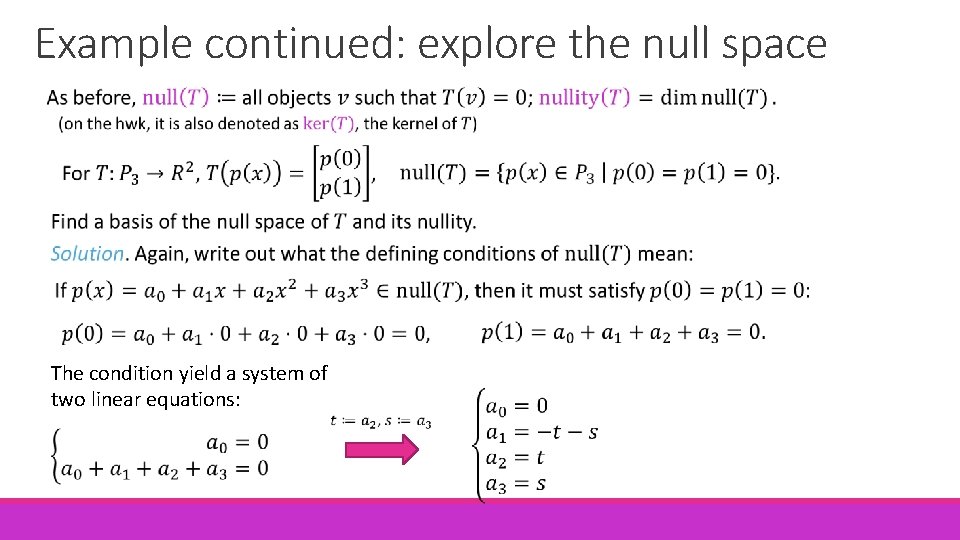
Example continued: explore the null space The condition yield a system of two linear equations:
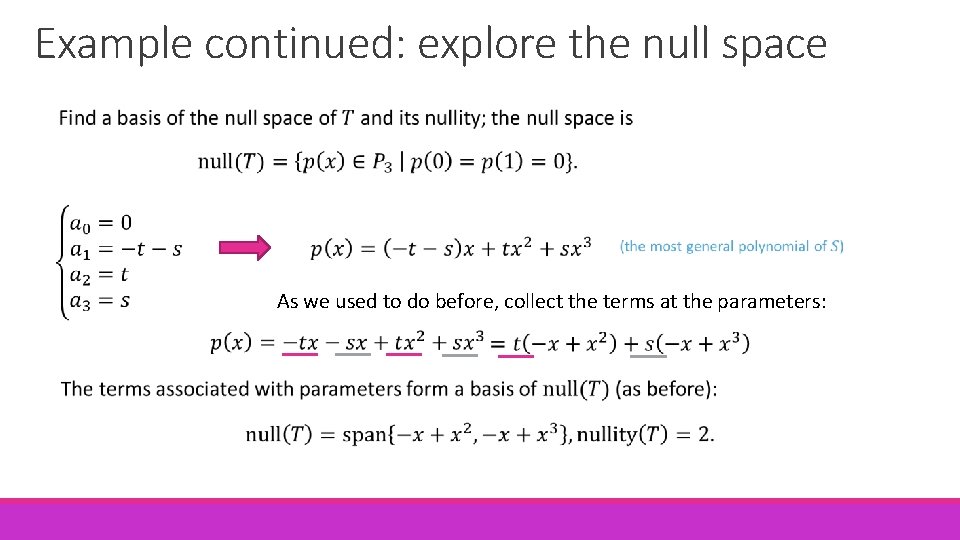
Example continued: explore the null space As we used to do before, collect the terms at the parameters:
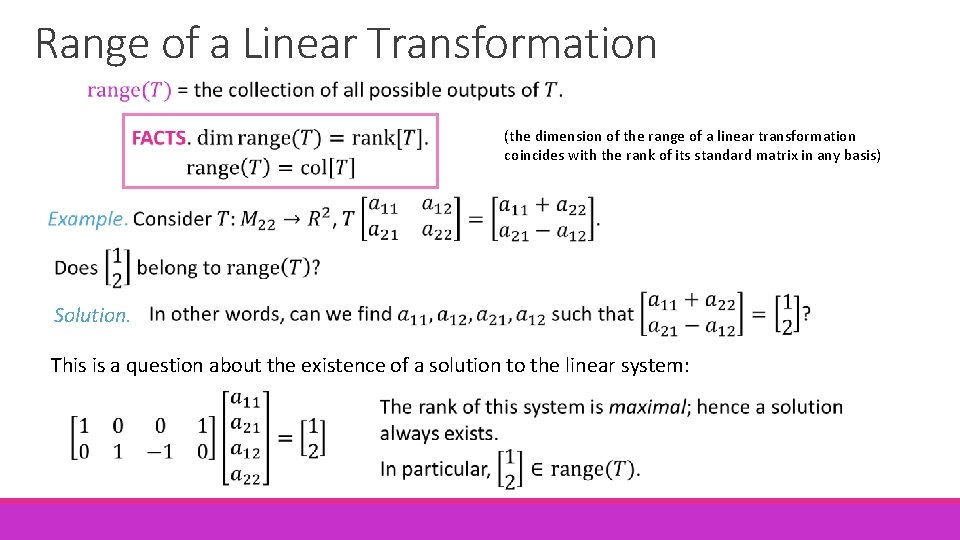
Range of a Linear Transformation (the dimension of the range of a linear transformation coincides with the rank of its standard matrix in any basis) Solution. This is a question about the existence of a solution to the linear system:
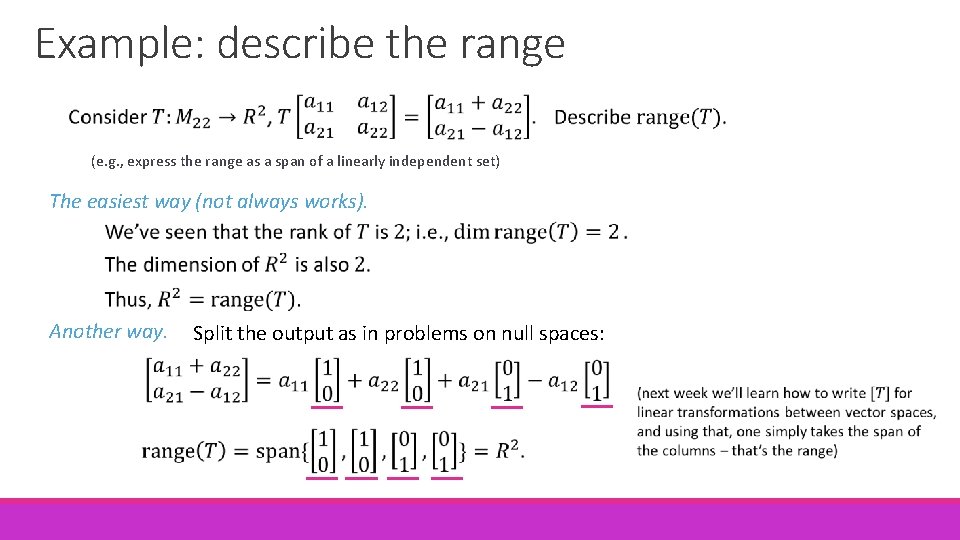
Example: describe the range (e. g. , express the range as a span of a linearly independent set) The easiest way (not always works). Another way. Split the output as in problems on null spaces:
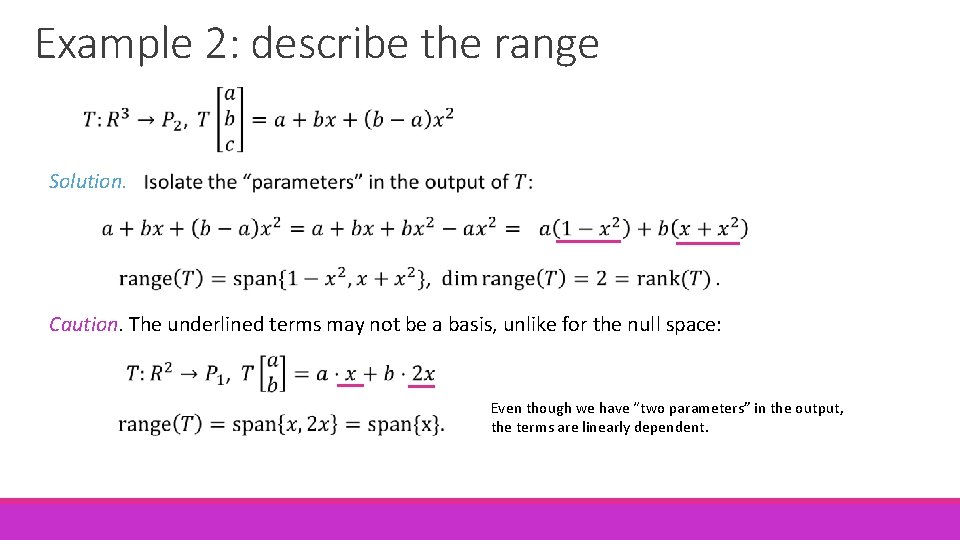
Example 2: describe the range Solution. Caution. The underlined terms may not be a basis, unlike for the null space: Even though we have “two parameters” in the output, the terms are linearly dependent.
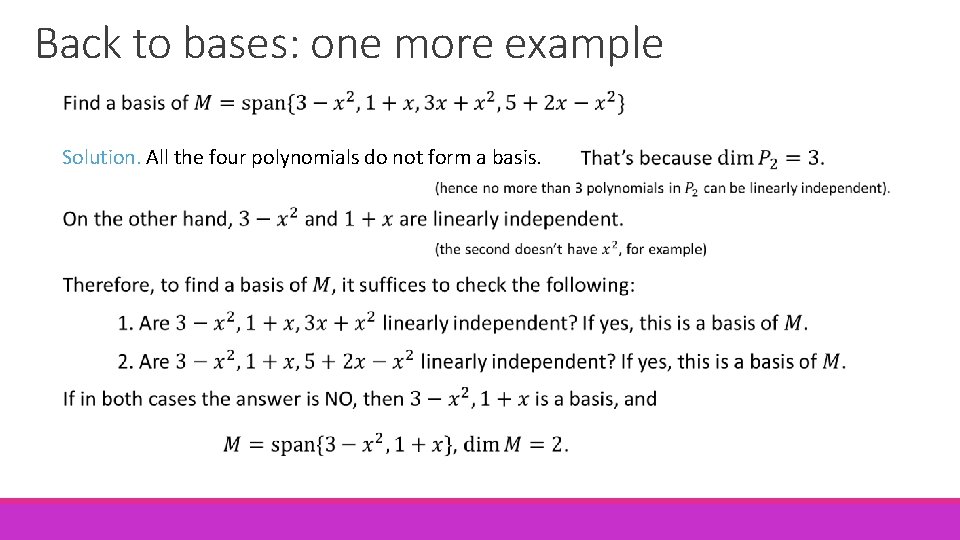
Back to bases: one more example Solution. All the four polynomials do not form a basis.
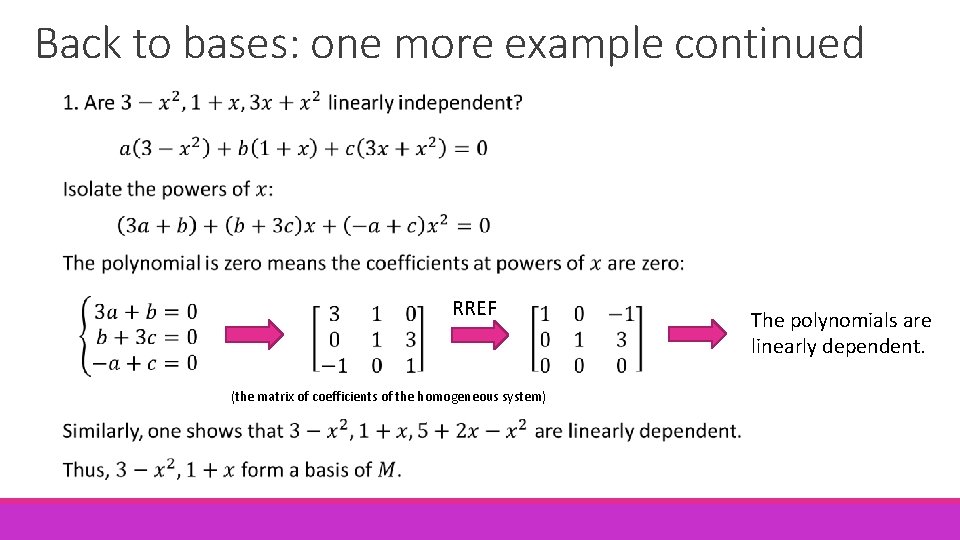
Back to bases: one more example continued RREF (the matrix of coefficients of the homogeneous system) The polynomials are linearly dependent.
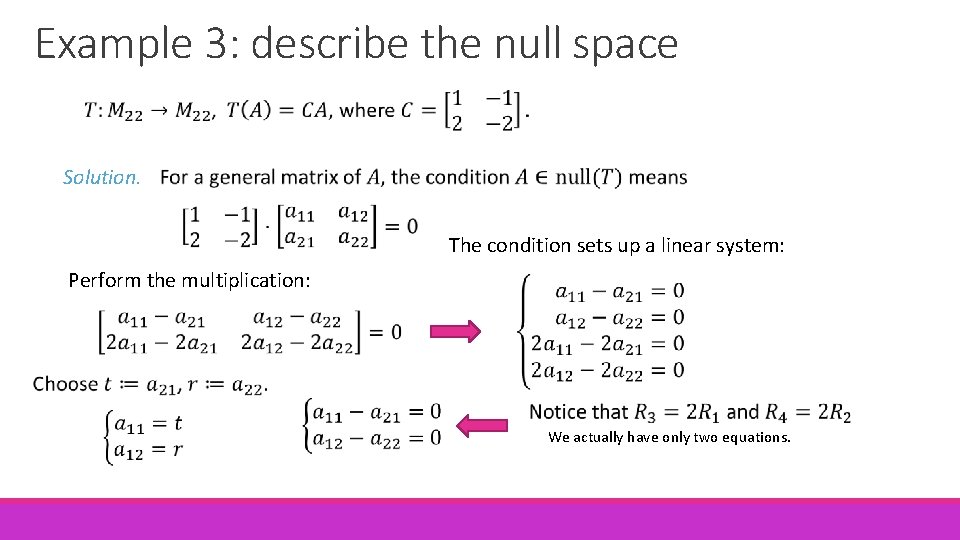
Example 3: describe the null space Solution. The condition sets up a linear system: Perform the multiplication: We actually have only two equations.
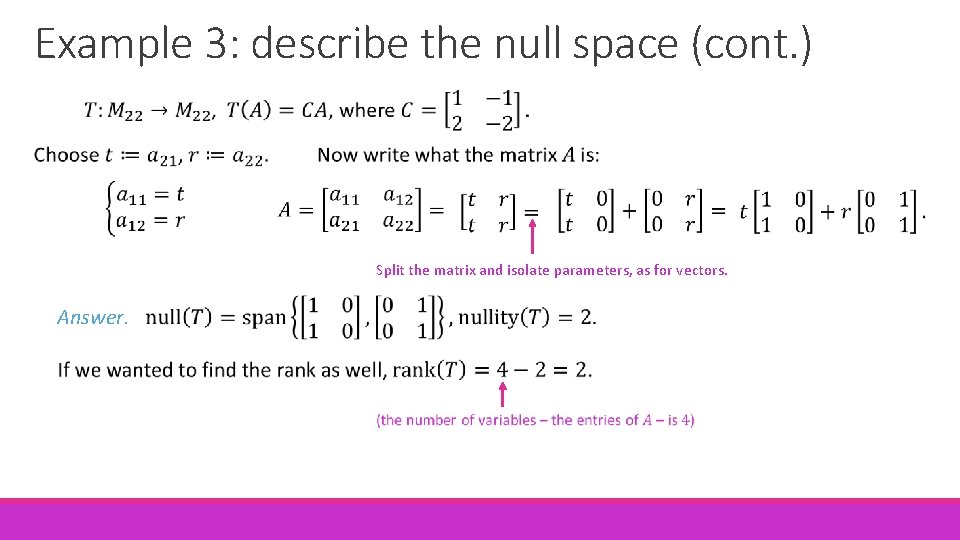
Example 3: describe the null space (cont. ) Split the matrix and isolate parameters, as for vectors. Answer.
- Slides: 15