
Lecture 15 The Force and Particle Zoo Lecture
- Slides: 12
Lecture 15: The Force and Particle Zoo Lecture 16: The Uncertainty Principle Astronomy 5: The Formation and Evolution of the Universe Sandra M. Faber Spring Quarter 2007 UC Santa Cruz
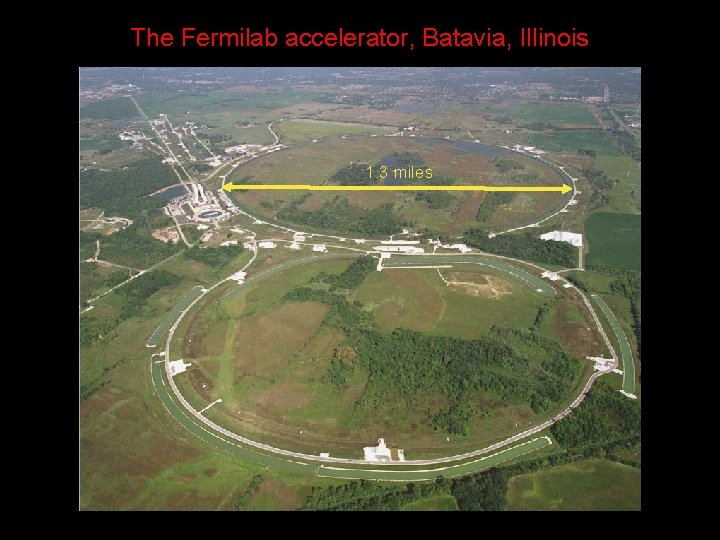
The Fermilab accelerator, Batavia, Illinois 1. 3 miles
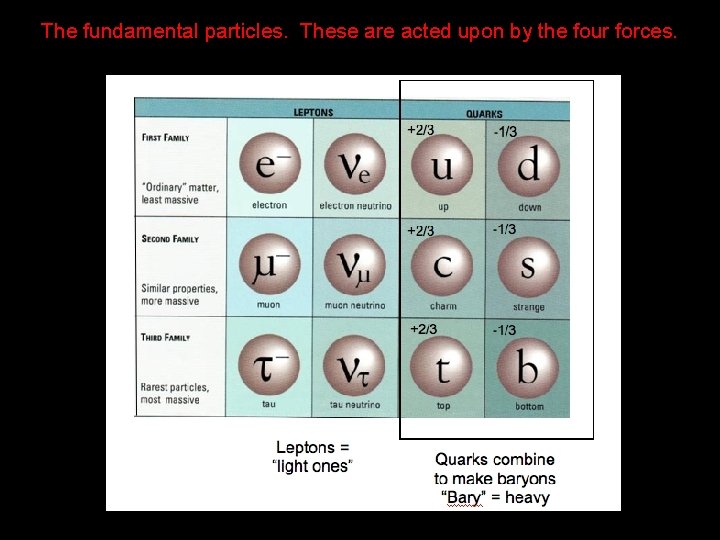
The fundamental particles. These are acted upon by the four forces.
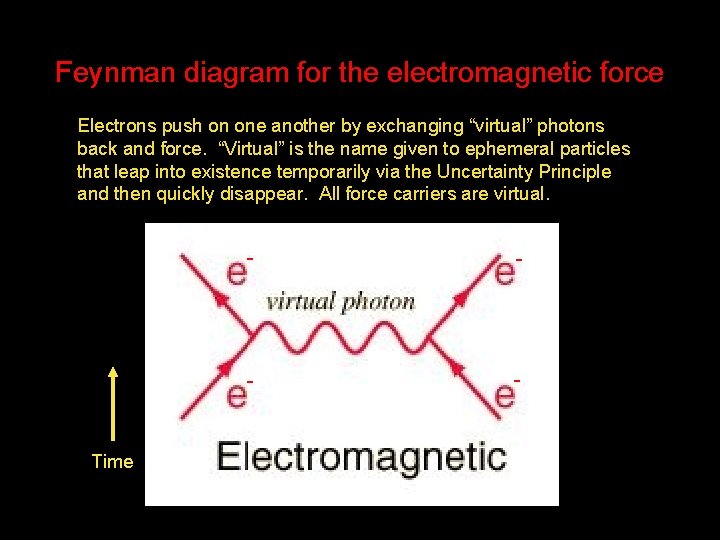
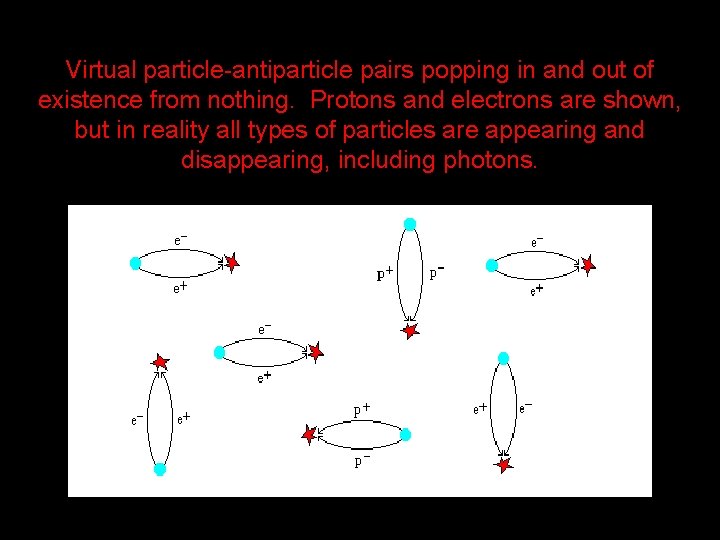
Feynman diagram for the electromagnetic force Electrons push on one another by exchanging “virtual” photons back and force. “Virtual” is the name given to ephemeral particles that leap into existence temporarily via the Uncertainty Principle and then quickly disappear. All force carriers are virtual. Time - -
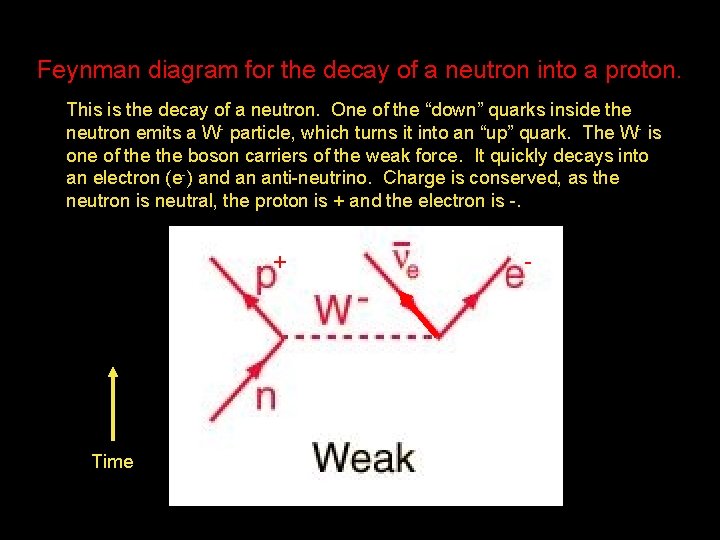
Feynman diagram for the decay of a neutron into a proton. This is the decay of a neutron. One of the “down” quarks inside the neutron emits a W- particle, which turns it into an “up” quark. The W- is one of the boson carriers of the weak force. It quickly decays into an electron (e-) and an anti-neutrino. Charge is conserved, as the neutron is neutral, the proton is + and the electron is -. + Time -
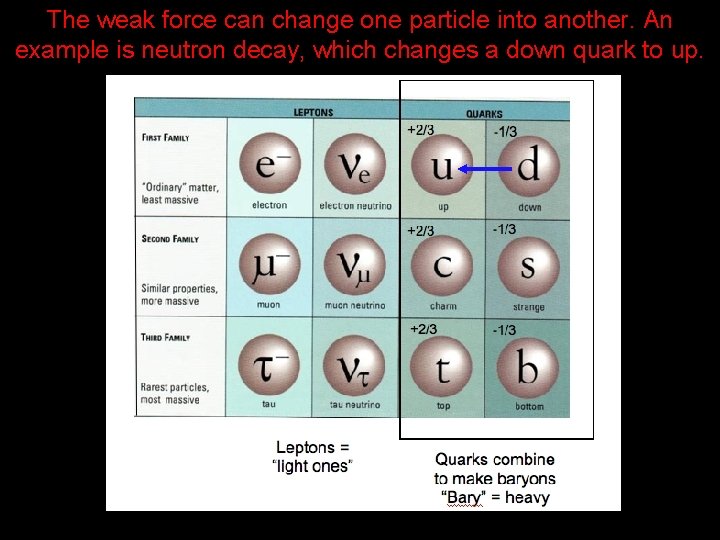
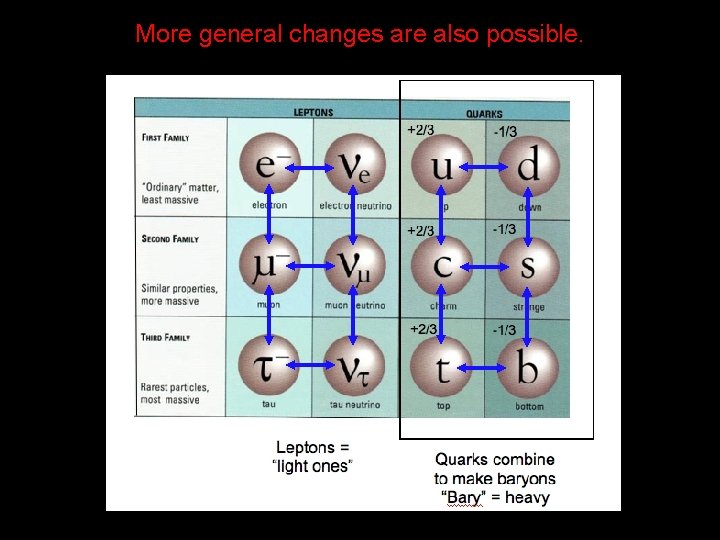
The weak force can change one particle into another. An example is neutron decay, which changes a down quark to up.
More general changes are also possible.
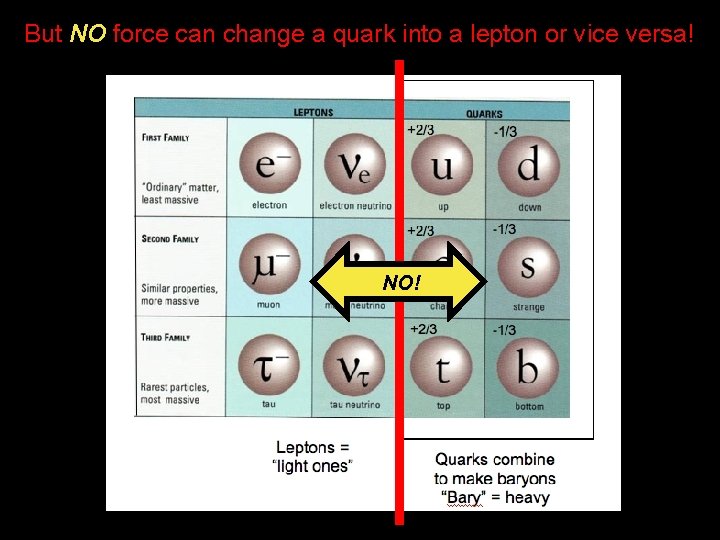
But NO force can change a quark into a lepton or vice versa! NO!
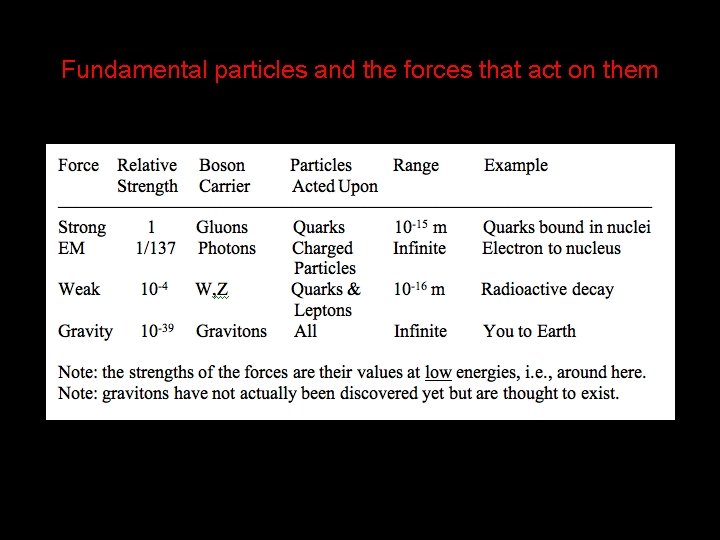
Fundamental particles and the forces that act on them
Virtual particle-antiparticle pairs popping in and out of existence from nothing. Protons and electrons are shown, but in reality all types of particles are appearing and disappearing, including photons.