
Lecture 15 ORGANIZATIONAL STRUCTURE AND DESIGN For use
- Slides: 34
Lecture 15 ORGANIZATIONAL STRUCTURE AND DESIGN For use with MARTIN, ORGANIZATIONAL BEHAVIOUR AND MANAGEMENT 3 e ISBN 1 -86152 -948 -1 Copyright © 2005 Cengage Learning 1
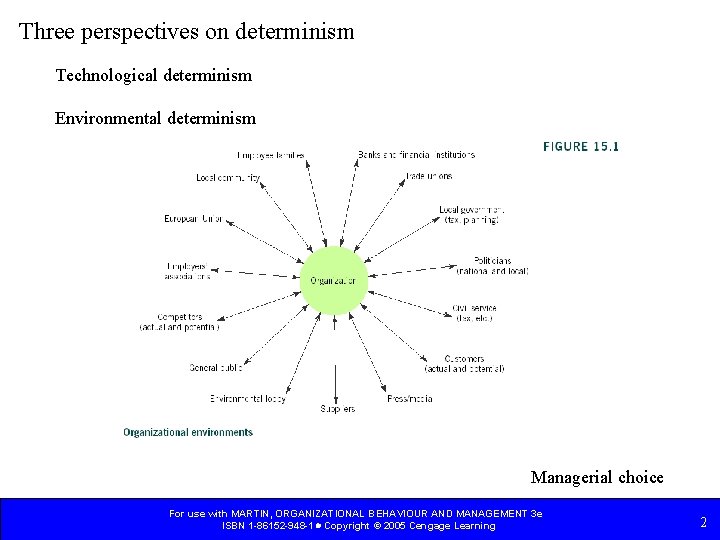
Three perspectives on determinism Technological determinism Environmental determinism Managerial choice For use with MARTIN, ORGANIZATIONAL BEHAVIOUR AND MANAGEMENT 3 e ISBN 1 -86152 -948 -1 Copyright © 2005 Cengage Learning 2
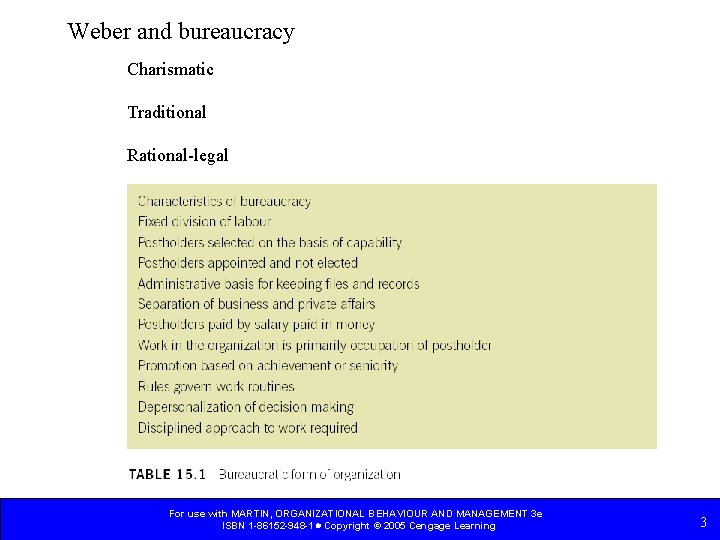
Weber and bureaucracy Charismatic Traditional Rational-legal For use with MARTIN, ORGANIZATIONAL BEHAVIOUR AND MANAGEMENT 3 e ISBN 1 -86152 -948 -1 Copyright © 2005 Cengage Learning 3
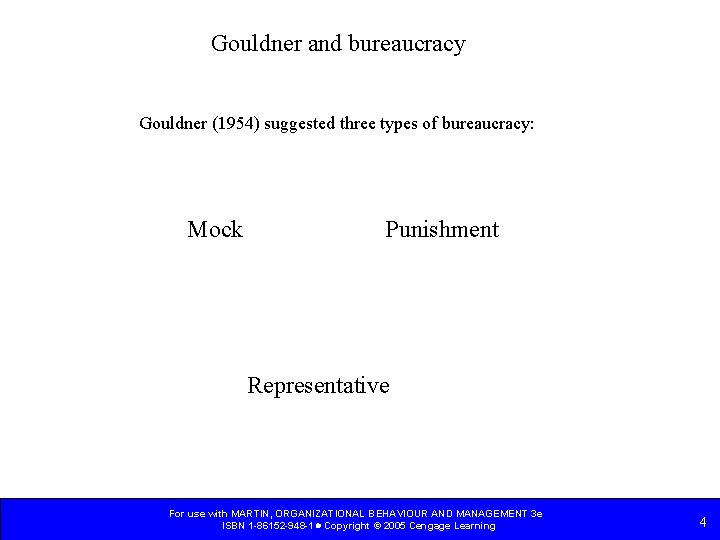
Gouldner and bureaucracy Gouldner (1954) suggested three types of bureaucracy: Mock Punishment Representative For use with MARTIN, ORGANIZATIONAL BEHAVIOUR AND MANAGEMENT 3 e ISBN 1 -86152 -948 -1 Copyright © 2005 Cengage Learning 4
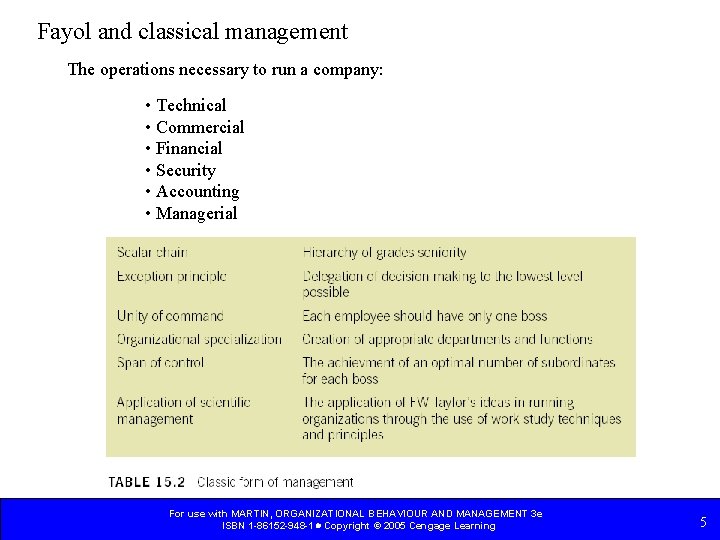
Fayol and classical management The operations necessary to run a company: • Technical • Commercial • Financial • Security • Accounting • Managerial For use with MARTIN, ORGANIZATIONAL BEHAVIOUR AND MANAGEMENT 3 e ISBN 1 -86152 -948 -1 Copyright © 2005 Cengage Learning 5
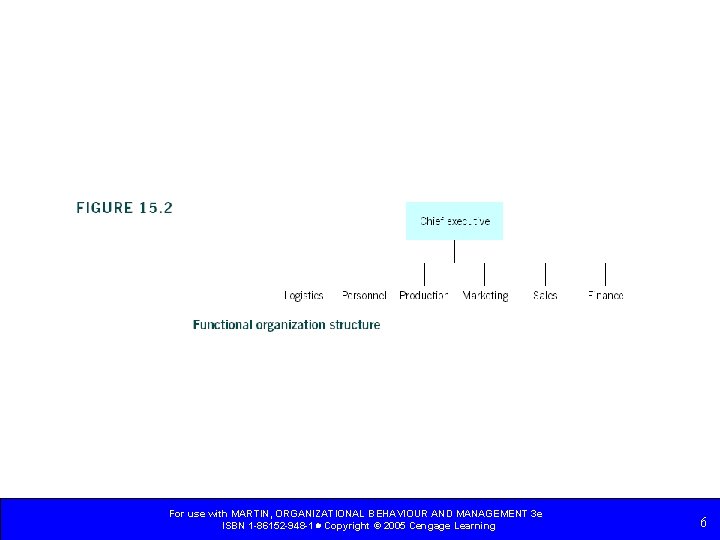
For use with MARTIN, ORGANIZATIONAL BEHAVIOUR AND MANAGEMENT 3 e ISBN 1 -86152 -948 -1 Copyright © 2005 Cengage Learning 6
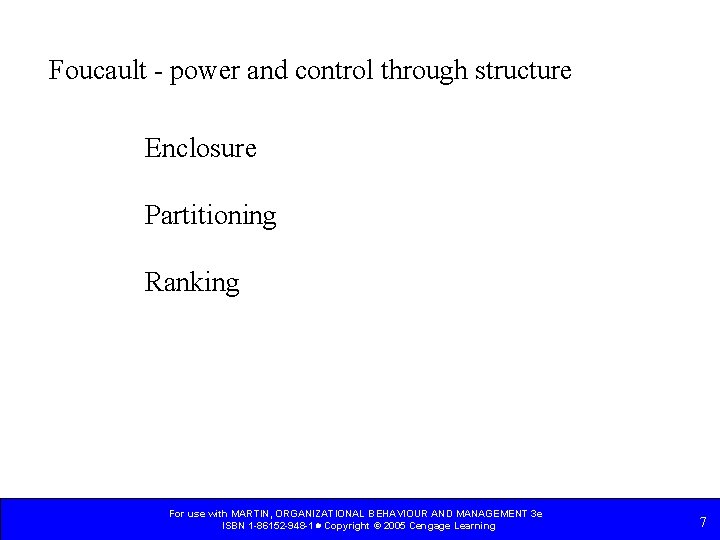
Foucault - power and control through structure Enclosure Partitioning Ranking For use with MARTIN, ORGANIZATIONAL BEHAVIOUR AND MANAGEMENT 3 e ISBN 1 -86152 -948 -1 Copyright © 2005 Cengage Learning 7
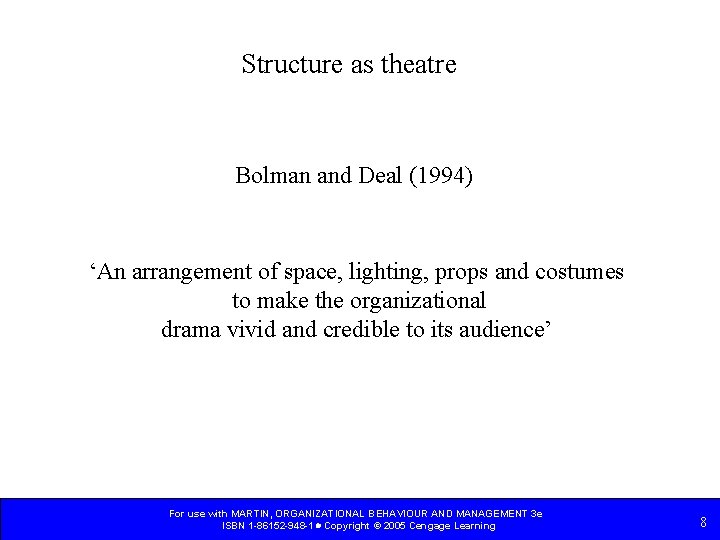
Structure as theatre Bolman and Deal (1994) ‘An arrangement of space, lighting, props and costumes to make the organizational drama vivid and credible to its audience’ For use with MARTIN, ORGANIZATIONAL BEHAVIOUR AND MANAGEMENT 3 e ISBN 1 -86152 -948 -1 Copyright © 2005 Cengage Learning 8
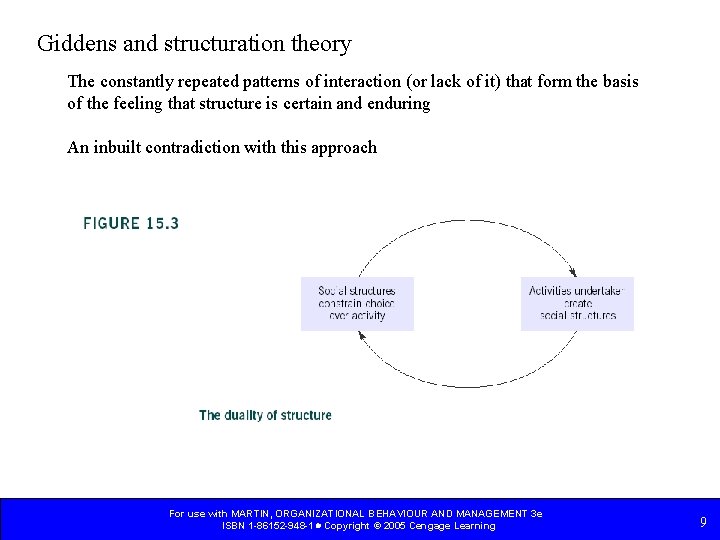
Giddens and structuration theory The constantly repeated patterns of interaction (or lack of it) that form the basis of the feeling that structure is certain and enduring An inbuilt contradiction with this approach For use with MARTIN, ORGANIZATIONAL BEHAVIOUR AND MANAGEMENT 3 e ISBN 1 -86152 -948 -1 Copyright © 2005 Cengage Learning 9
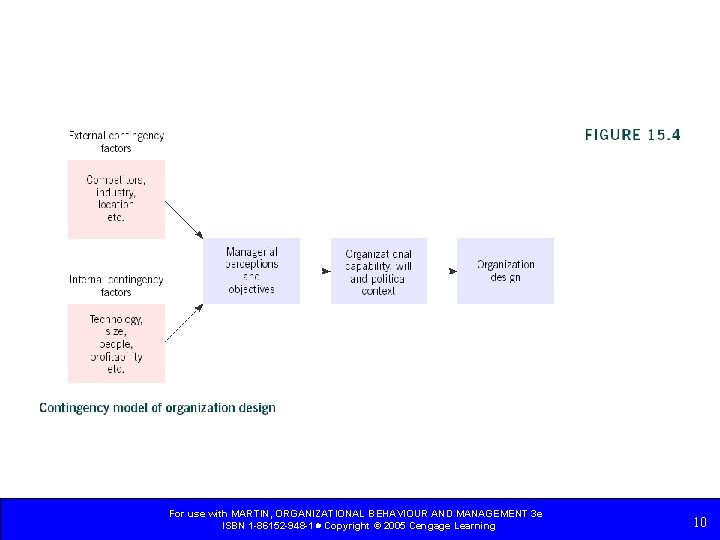
For use with MARTIN, ORGANIZATIONAL BEHAVIOUR AND MANAGEMENT 3 e ISBN 1 -86152 -948 -1 Copyright © 2005 Cengage Learning 10
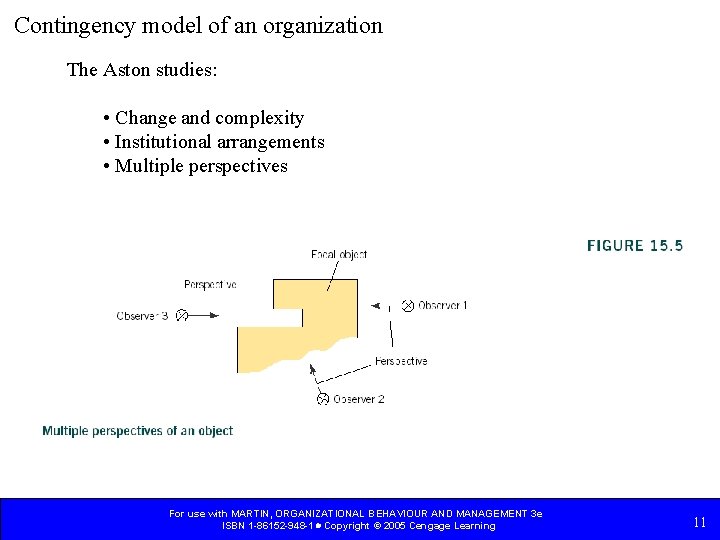
Contingency model of an organization The Aston studies: • Change and complexity • Institutional arrangements • Multiple perspectives For use with MARTIN, ORGANIZATIONAL BEHAVIOUR AND MANAGEMENT 3 e ISBN 1 -86152 -948 -1 Copyright © 2005 Cengage Learning 11
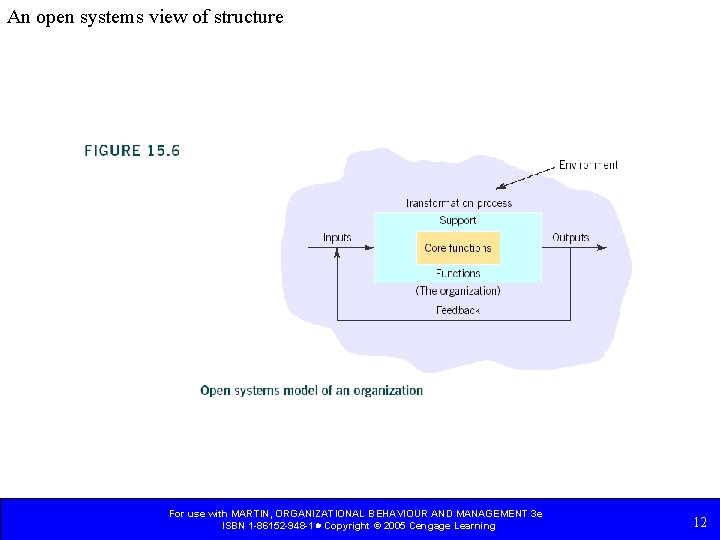
An open systems view of structure For use with MARTIN, ORGANIZATIONAL BEHAVIOUR AND MANAGEMENT 3 e ISBN 1 -86152 -948 -1 Copyright © 2005 Cengage Learning 12
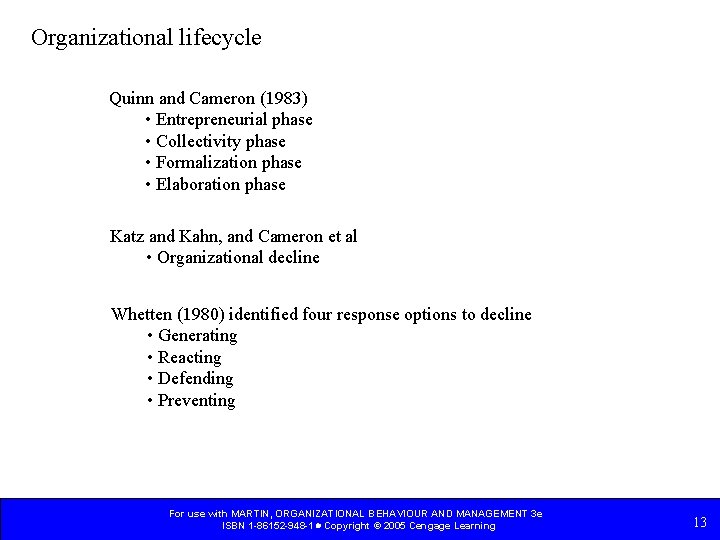
Organizational lifecycle Quinn and Cameron (1983) • Entrepreneurial phase • Collectivity phase • Formalization phase • Elaboration phase Katz and Kahn, and Cameron et al • Organizational decline Whetten (1980) identified four response options to decline • Generating • Reacting • Defending • Preventing For use with MARTIN, ORGANIZATIONAL BEHAVIOUR AND MANAGEMENT 3 e ISBN 1 -86152 -948 -1 Copyright © 2005 Cengage Learning 13
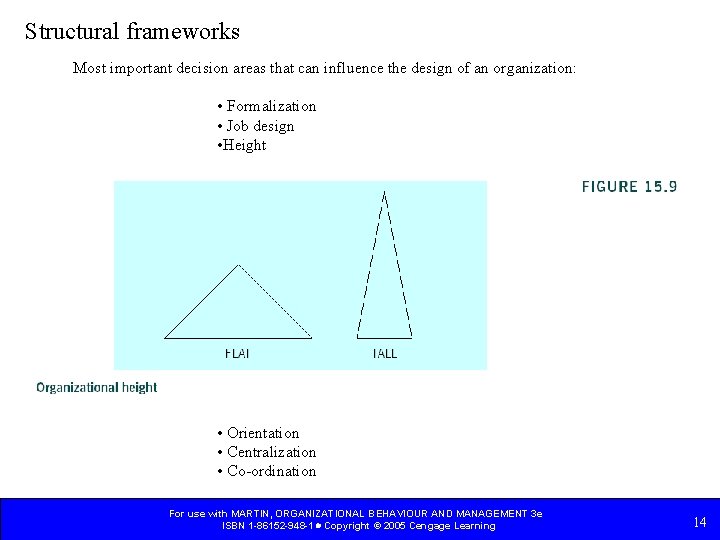
Structural frameworks Most important decision areas that can influence the design of an organization: • Formalization • Job design • Height • Orientation • Centralization • Co-ordination For use with MARTIN, ORGANIZATIONAL BEHAVIOUR AND MANAGEMENT 3 e ISBN 1 -86152 -948 -1 Copyright © 2005 Cengage Learning 14
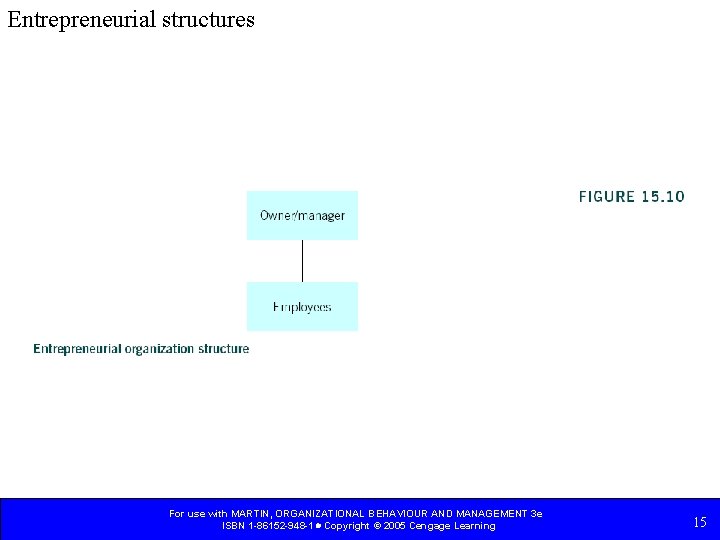
Entrepreneurial structures For use with MARTIN, ORGANIZATIONAL BEHAVIOUR AND MANAGEMENT 3 e ISBN 1 -86152 -948 -1 Copyright © 2005 Cengage Learning 15
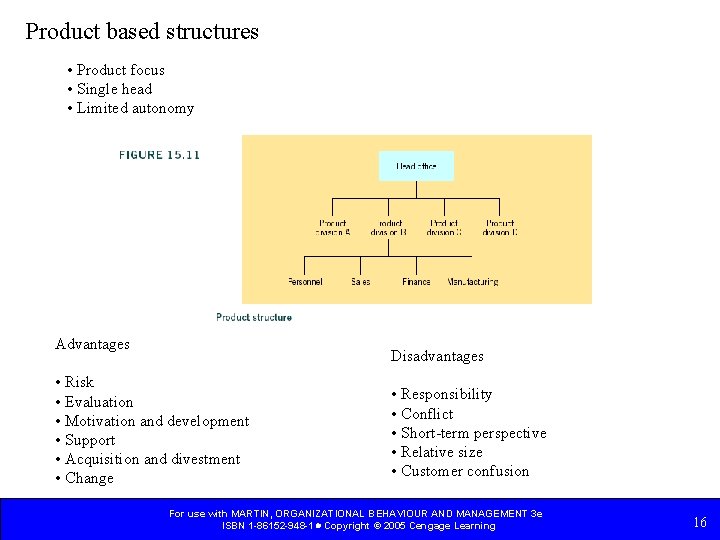
Product based structures • Product focus • Single head • Limited autonomy Advantages Disadvantages • Risk • Evaluation • Motivation and development • Support • Acquisition and divestment • Change • Responsibility • Conflict • Short-term perspective • Relative size • Customer confusion For use with MARTIN, ORGANIZATIONAL BEHAVIOUR AND MANAGEMENT 3 e ISBN 1 -86152 -948 -1 Copyright © 2005 Cengage Learning 16
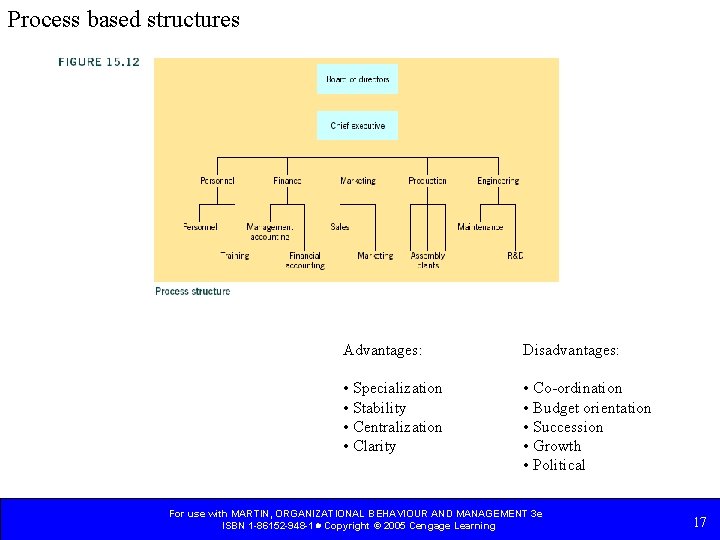
Process based structures Add Figure 15. 12 here Advantages: Disadvantages: • Specialization • Stability • Centralization • Clarity • Co-ordination • Budget orientation • Succession • Growth • Political For use with MARTIN, ORGANIZATIONAL BEHAVIOUR AND MANAGEMENT 3 e ISBN 1 -86152 -948 -1 Copyright © 2005 Cengage Learning 17
International activity – forms of: • Exporting • Agents • Licensing • Franchising • Direct investment • Multinational enterprise For use with MARTIN, ORGANIZATIONAL BEHAVIOUR AND MANAGEMENT 3 e ISBN 1 -86152 -948 -1 Copyright © 2005 Cengage Learning 18
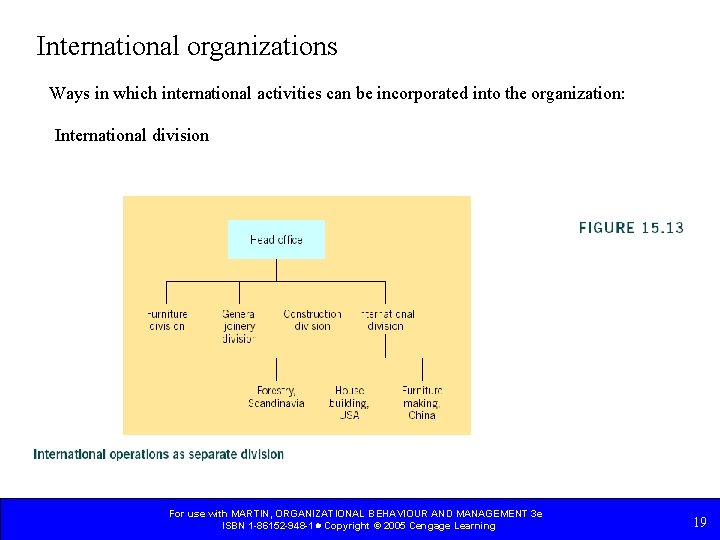
International organizations Ways in which international activities can be incorporated into the organization: International division For use with MARTIN, ORGANIZATIONAL BEHAVIOUR AND MANAGEMENT 3 e ISBN 1 -86152 -948 -1 Copyright © 2005 Cengage Learning 19
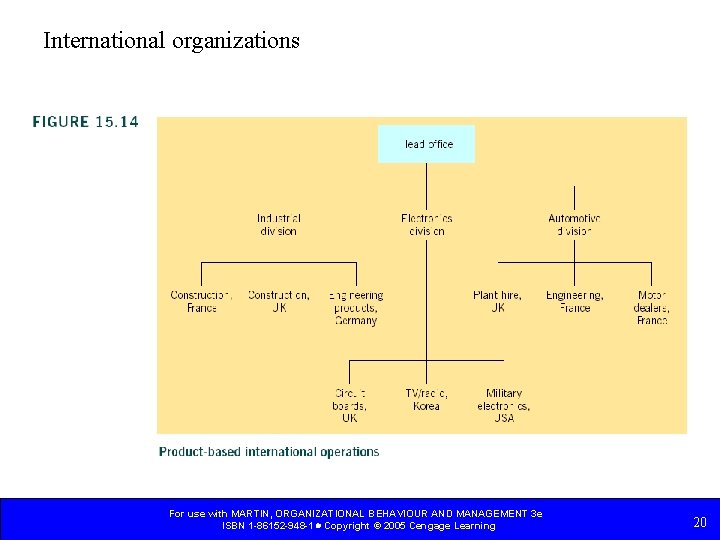
International organizations For use with MARTIN, ORGANIZATIONAL BEHAVIOUR AND MANAGEMENT 3 e ISBN 1 -86152 -948 -1 Copyright © 2005 Cengage Learning 20
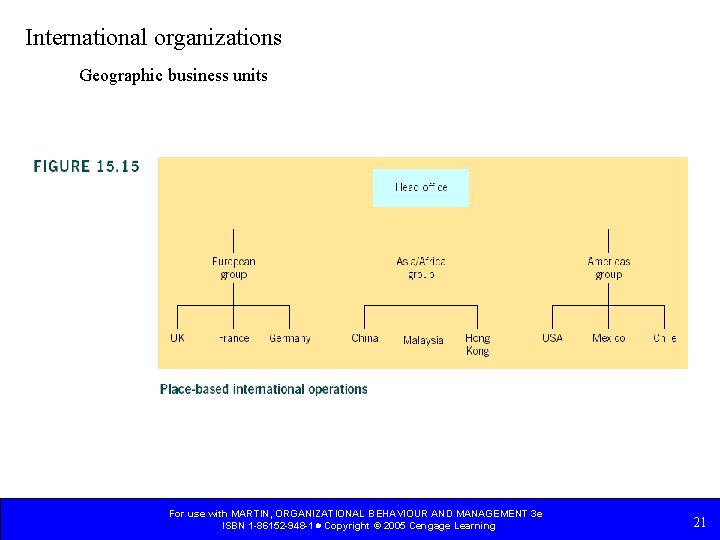
International organizations Geographic business units For use with MARTIN, ORGANIZATIONAL BEHAVIOUR AND MANAGEMENT 3 e ISBN 1 -86152 -948 -1 Copyright © 2005 Cengage Learning 21
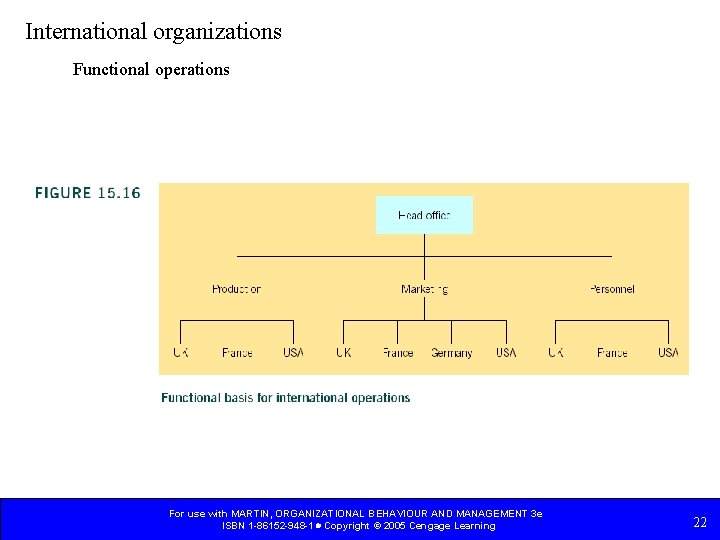
International organizations Functional operations For use with MARTIN, ORGANIZATIONAL BEHAVIOUR AND MANAGEMENT 3 e ISBN 1 -86152 -948 -1 Copyright © 2005 Cengage Learning 22
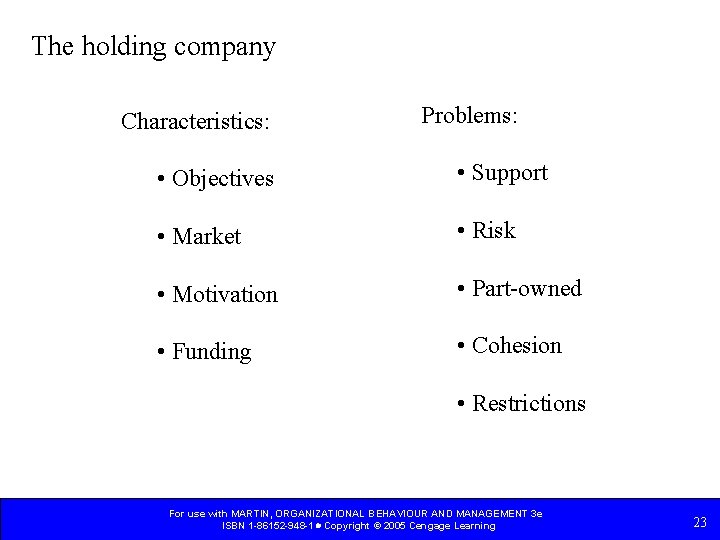
The holding company Characteristics: Problems: • Objectives • Support • Market • Risk • Motivation • Part-owned • Funding • Cohesion • Restrictions For use with MARTIN, ORGANIZATIONAL BEHAVIOUR AND MANAGEMENT 3 e ISBN 1 -86152 -948 -1 Copyright © 2005 Cengage Learning 23
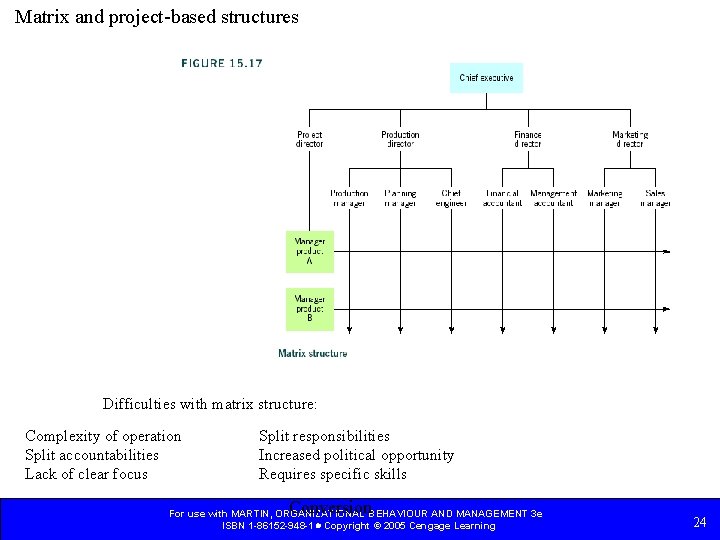
Matrix and project-based structures Difficulties with matrix structure: Complexity of operation Split accountabilities Lack of clear focus Split responsibilities Increased political opportunity Requires specific skills Conversion For use with MARTIN, ORGANIZATIONAL BEHAVIOUR AND MANAGEMENT 3 e ISBN 1 -86152 -948 -1 Copyright © 2005 Cengage Learning 24
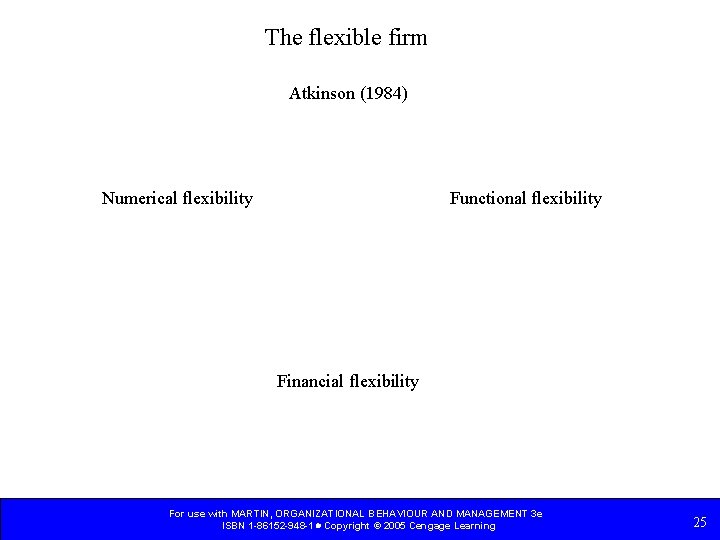
The flexible firm Atkinson (1984) Numerical flexibility Functional flexibility Financial flexibility For use with MARTIN, ORGANIZATIONAL BEHAVIOUR AND MANAGEMENT 3 e ISBN 1 -86152 -948 -1 Copyright © 2005 Cengage Learning 25
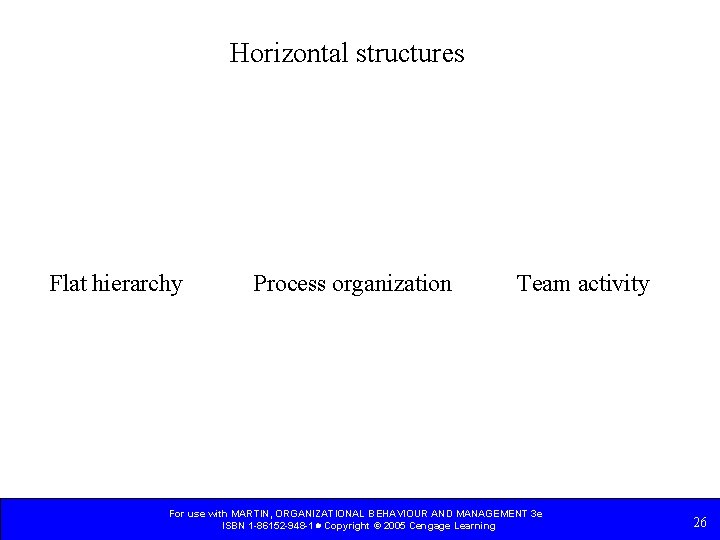
Horizontal structures Flat hierarchy Process organization Team activity For use with MARTIN, ORGANIZATIONAL BEHAVIOUR AND MANAGEMENT 3 e ISBN 1 -86152 -948 -1 Copyright © 2005 Cengage Learning 26
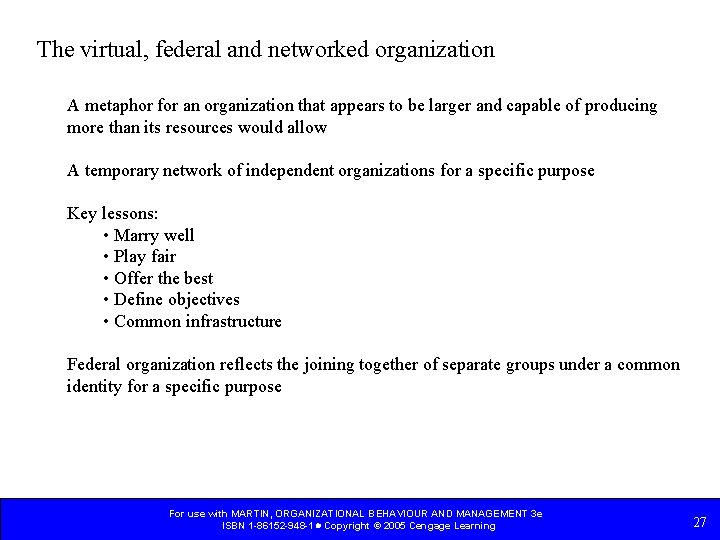
The virtual, federal and networked organization A metaphor for an organization that appears to be larger and capable of producing more than its resources would allow A temporary network of independent organizations for a specific purpose Key lessons: • Marry well • Play fair • Offer the best • Define objectives • Common infrastructure Federal organization reflects the joining together of separate groups under a common identity for a specific purpose For use with MARTIN, ORGANIZATIONAL BEHAVIOUR AND MANAGEMENT 3 e ISBN 1 -86152 -948 -1 Copyright © 2005 Cengage Learning 27
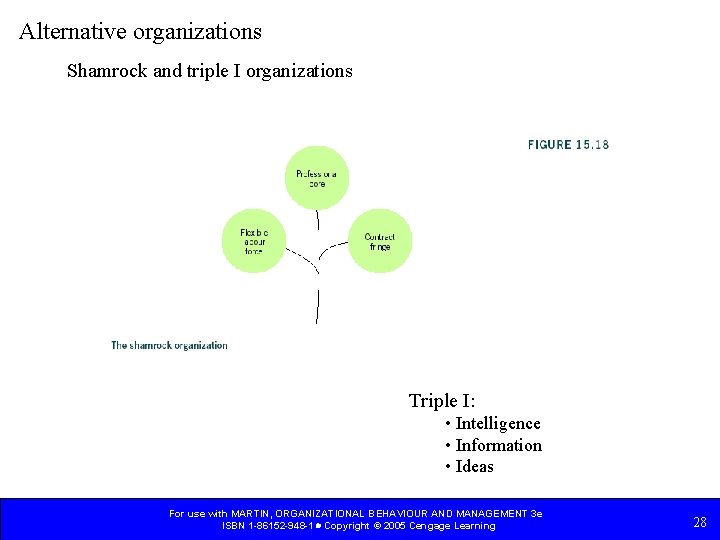
Alternative organizations Shamrock and triple I organizations Triple I: • Intelligence • Information • Ideas For use with MARTIN, ORGANIZATIONAL BEHAVIOUR AND MANAGEMENT 3 e ISBN 1 -86152 -948 -1 Copyright © 2005 Cengage Learning 28
Alternative organizations • The human service organization • The co-operative and kibbutz For use with MARTIN, ORGANIZATIONAL BEHAVIOUR AND MANAGEMENT 3 e ISBN 1 -86152 -948 -1 Copyright © 2005 Cengage Learning 29
Factors influencing organization design There a number of departments, functions, activities or components to be fitted together within a framework Integration processes are needed to support a particular organizational design Mintzberg’s structural components: • Senior management • Middle management • Functional core employees • Technical support staff • Administrative support staff For use with MARTIN, ORGANIZATIONAL BEHAVIOUR AND MANAGEMENT 3 e ISBN 1 -86152 -948 -1 Copyright © 2005 Cengage Learning 30
Factors influencing organization design Handy (1993) - categories of organizational activity • Policy • Innovation • Steady state • Crisis Child (1988) - six components • Task • Reporting relationships • Clustering • Procedures • Delegation • Motivation For use with MARTIN, ORGANIZATIONAL BEHAVIOUR AND MANAGEMENT 3 e ISBN 1 -86152 -948 -1 Copyright © 2005 Cengage Learning 31
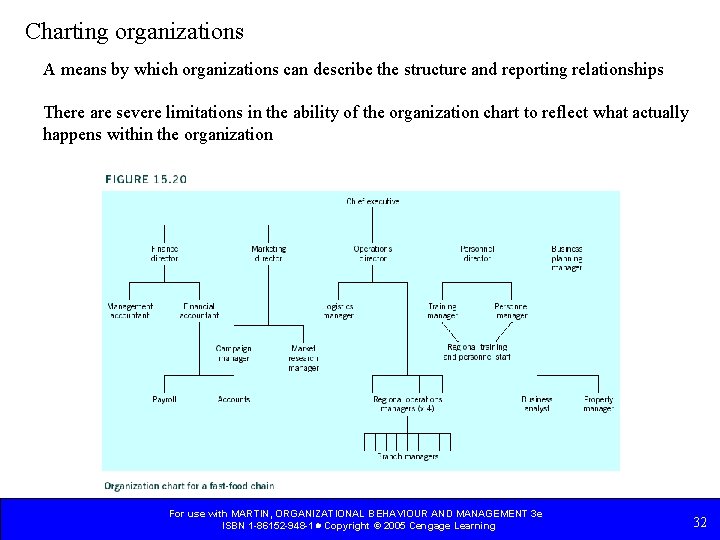
Charting organizations A means by which organizations can describe the structure and reporting relationships There are severe limitations in the ability of the organization chart to reflect what actually happens within the organization For use with MARTIN, ORGANIZATIONAL BEHAVIOUR AND MANAGEMENT 3 e ISBN 1 -86152 -948 -1 Copyright © 2005 Cengage Learning 32
Charting organizations There are other ways of reflecting how an organization functions Rich picture Influence diagram For use with MARTIN, ORGANIZATIONAL BEHAVIOUR AND MANAGEMENT 3 e ISBN 1 -86152 -948 -1 Copyright © 2005 Cengage Learning 33
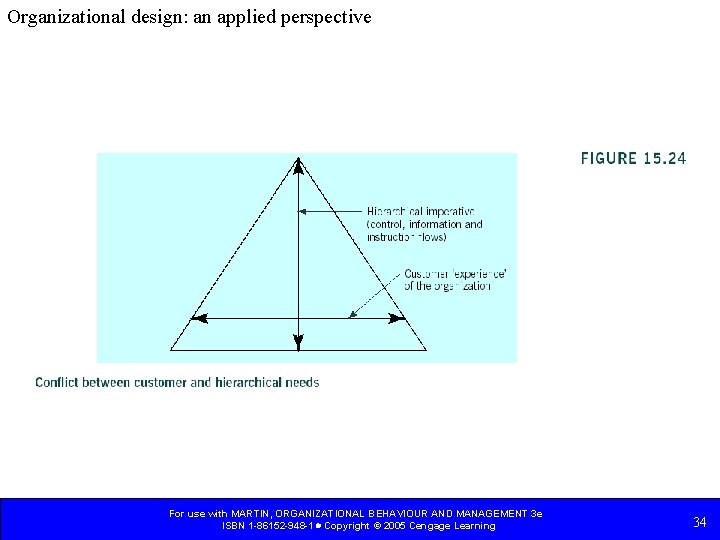
Organizational design: an applied perspective For use with MARTIN, ORGANIZATIONAL BEHAVIOUR AND MANAGEMENT 3 e ISBN 1 -86152 -948 -1 Copyright © 2005 Cengage Learning 34