
Lecture 15 Kingdom Animalia INVERTEBRATES 4 Phylum Nematoda
Lecture 15: Kingdom: Animalia INVERTEBRATES ( ﺍﻟﻼﻓﻘﺮﻳﺎﺕ )ﻟﻴﺲ ﻟﻬﺎ ﻋﻤﻮﺩ ﺭﻱ

4 - Phylum: Nematoda (Round worm) Example: Ascaris sp. Roundworms are found in most aquatic habitats, wet soil, moist tissues of plants, and the body fluids and tissues of animals. Some species parasitize animals. They range in length from less than 1 mm to more than a meter. The body of Nematode is covered with a tough exoskeleton, the cuticle. They have a complete digestive tract ﻗﻨﺎﺓ ﻫﻀﻤﻴﺔ ﻛﺎﻣﻠﺔ. Nematodes usually engage in sexual reproduction ﺍﻟﺘﻜﺎﺛﺮ ﺍﻟﺠﻨﺴﻲ
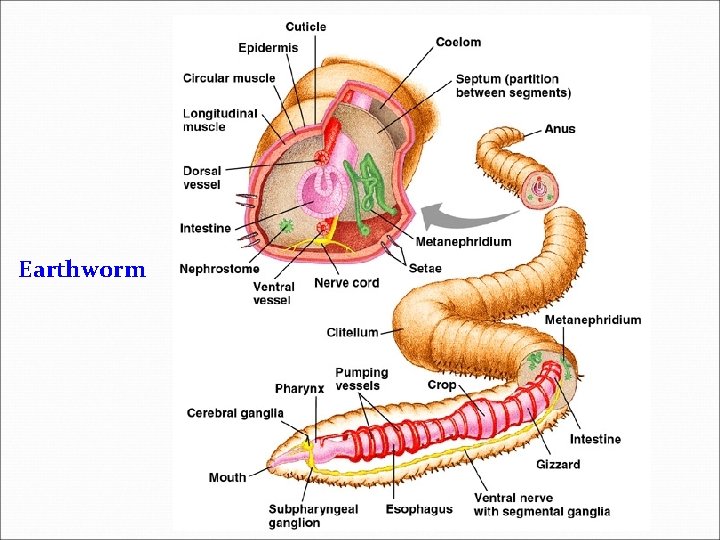
5 - Phylum: Annelida (Segmented worms) Class: Oligochaeta ﻗﻠﻴﻠﺔ ﺍﻷﺸﻮﺍﻙ Example: Earthworms ﺩﻳﺪﺍﻥ ﺍﻷﺮﺽ All annelids (“little rings”) have segmented bodies. Annelids live in the sea, most freshwater habitats, and wet soil. The coelom of the earthworm is partitioned by septa ﺑﻔﻮﺍﺻﻞ , but the digestive tract, longitudinal blood vessels, and nerve cords penetrate the septa and run the animal’s length. Most annelids, including earthworms, burrow in sand silt.
Earthworms: The digestive system consists of a pharynx ﺑﻠﻌﻮﻡ , an esophagus ﻣﺮﺉ , crop ﺣﻮﺻﻠﺔ , gizzard ﻗﺎﻧﺼﺔ , and intestine ﺃﻤﻌﺎﺀ. The closed circulatory system carries blood with oxygen- carrying hemoglobin through dorsal and ventral vessels connected by segmental vessels. In each segment is a pair of excretory tubes, metanephridia, ﻛﻠﻴﺔ ﺑﺪﺍﺋﻴﺔ that remove wastes from the blood and coelomic fluid. Earthworms are cross-fertilizing hermaphrodites. Some earthworms can also reproduce fragmentation ﺑﺎﻟﺘﻘﻄﻴﻊ followed by regeneration. asexually by
Earthworm
6 - Phylum: Mollusca • Mollusca includes snails ﺍﻟﻘﻮﺍﻗﻊ and slugs ﺍﻟﺒﺰﺍﻗﺎﺕ , octopus ﺍﻷﺨﻄﺒﻮﻁ and squid ﺍﻟﺤﺒﺎﺭ. • Most mollusks are marine, some inhabit fresh water, and some snails and slugs live on land. • Mollusks are soft-bodied animals, but most are protected by a hard shell ﺻﺪﻓﺔ ﻗﻮﻳﺔ of calcium carbonate. • All mollusks have a muscular foot for locomotion, and a mantle ﺍﻟﺭﺱ. • Most mollusks have separate sexes, with gonads, and some are hermaphrodites.
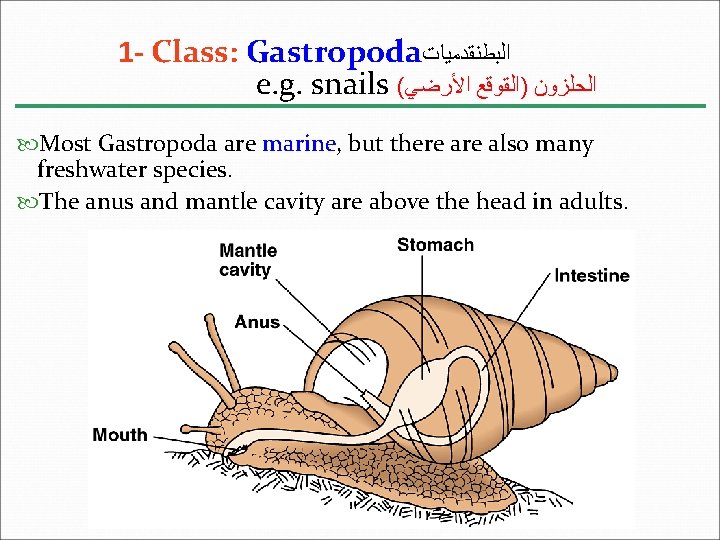
1 - Class: Gastropoda ﺍﻟﺒﻄﻨﻘﺪﻣﻴﺎﺕ e. g. snails ( ﺍﻟﺤﻠﺰﻭﻥ )ﺍﻟﻘﻮﻗﻊ ﺍﻷﺮﺿﻲ Most Gastropoda are marine, but there also many freshwater species. The anus and mantle cavity are above the head in adults.
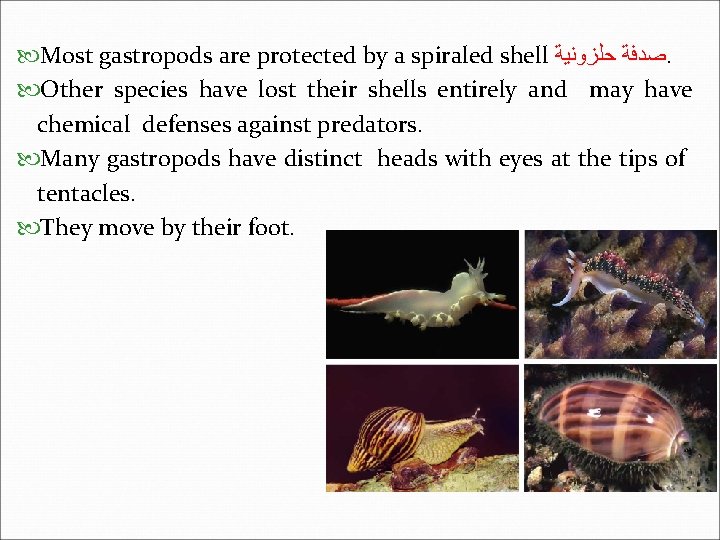
Most gastropods are protected by a spiraled shell ﺻﺪﻓﺔ ﺣﻠﺰﻭﻧﻴﺔ. Other species have lost their shells entirely and may have chemical defenses against predators. Many gastropods have distinct heads with eyes at the tips of tentacles. They move by their foot.
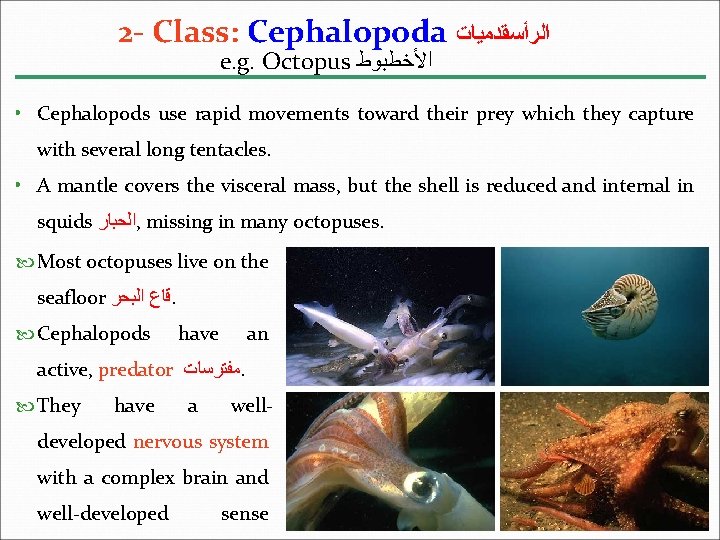
2 - Class: Cephalopoda ﺍﻟﺮﺃﺴﻘﺪﻣﻴﺎﺕ e. g. Octopus ﺍﻷﺨﻄﺒﻮﻁ • Cephalopods use rapid movements toward their prey which they capture with several long tentacles. • A mantle covers the visceral mass, but the shell is reduced and internal in squids ﺍﻟﺤﺒﺎﺭ , missing in many octopuses. Most octopuses live on the seafloor ﻗﺎﻉ ﺍﻟﺒﺤﺮ. Cephalopods have an active, predator ﻣﻔﺘﺮﺳﺎﺕ. They have a well- developed nervous system with a complex brain and well-developed sense
- Slides: 9