
Lecture 15 Defining climate climate controls Climate classification
- Slides: 28
Lecture 15 Defining climate, climate controls Climate classification Past climates Historical climate paleoclimate Data and mechanism for change
Climate, the collective state of the atmosphere for a given location and over a specified time interval • Location, regional or global scale climate • Time • Averages and extremes of variables – Temperature – Precipitation – winds
Climate controls • • • Latitude Elevation Topography Proximity to large bodies of water Prevailing atmospheric circulation
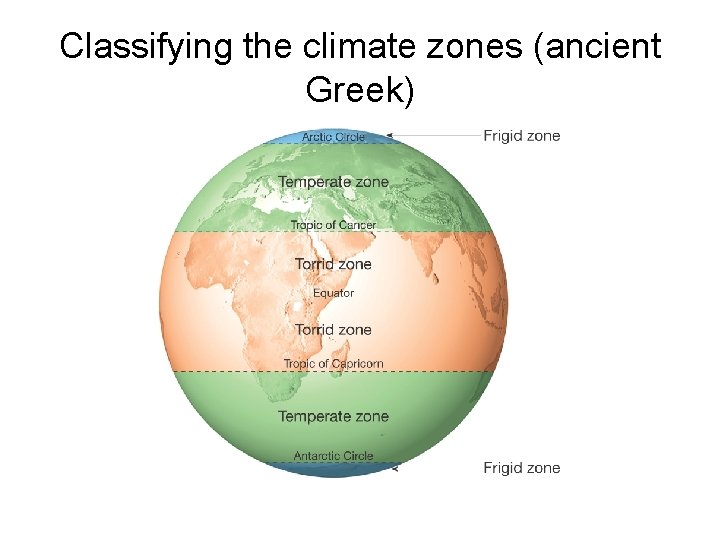
Classifying the climate zones (ancient Greek)
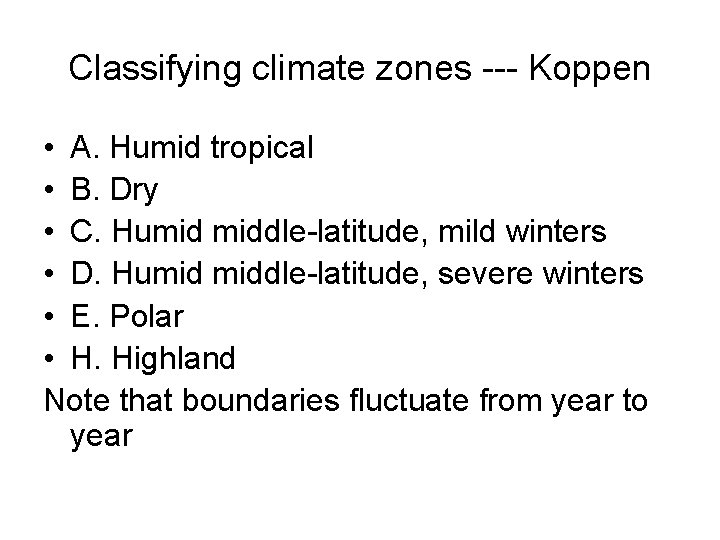
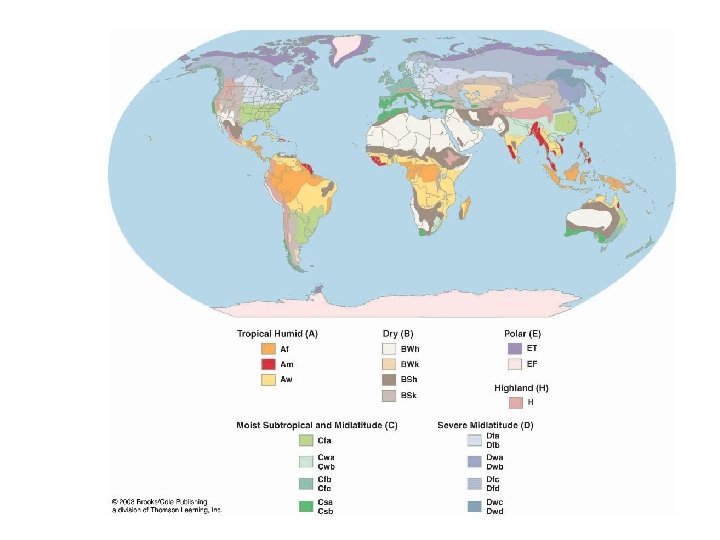
Classifying climate zones --- Koppen • A. Humid tropical • B. Dry • C. Humid middle-latitude, mild winters • D. Humid middle-latitude, severe winters • E. Polar • H. Highland Note that boundaries fluctuate from year to year
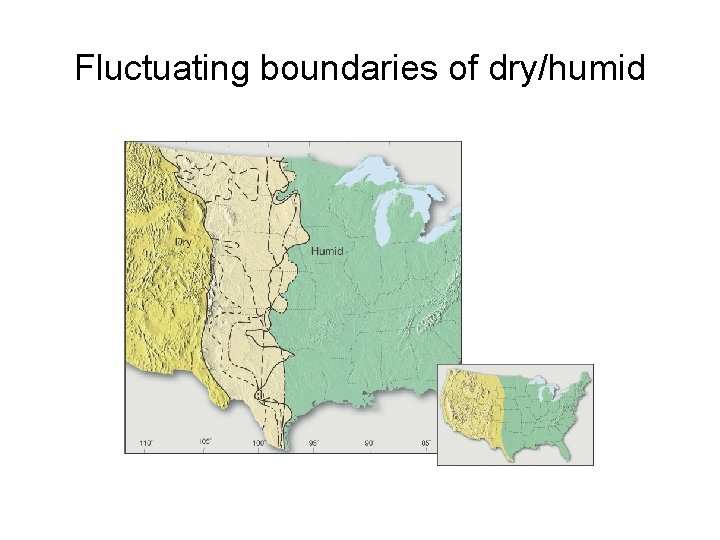
Fluctuating boundaries of dry/humid
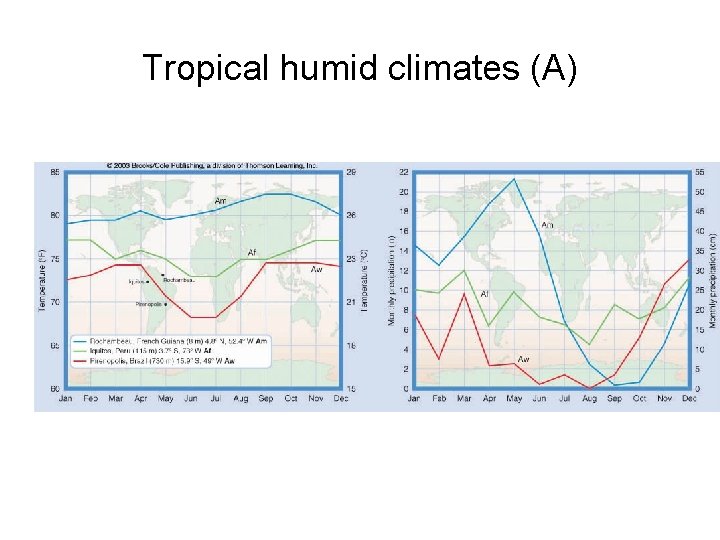
Tropical humid climates (A)
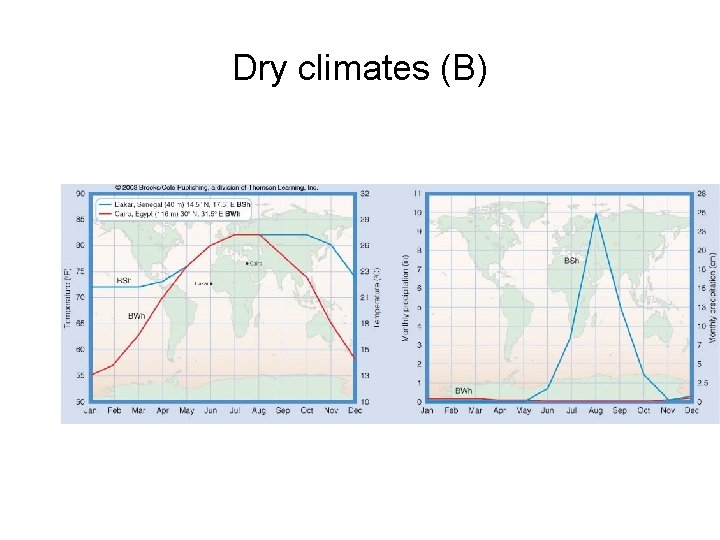
Dry climates (B)
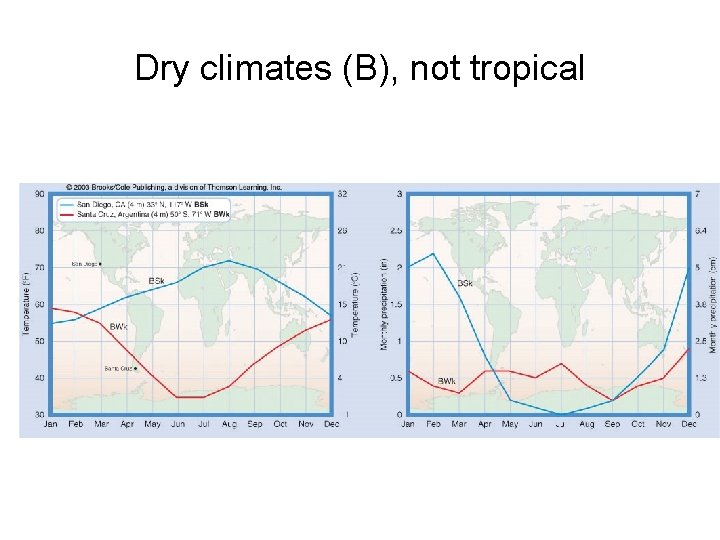
Dry climates (B), not tropical
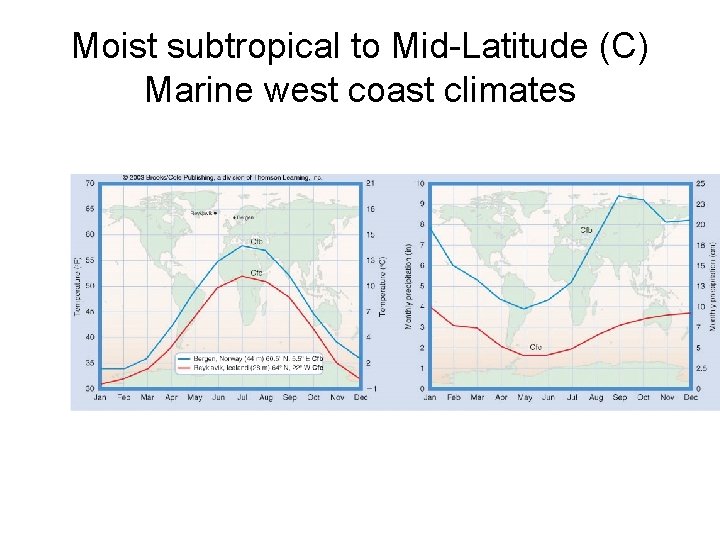
Moist subtropical to Mid-Latitude (C) Marine west coast climates
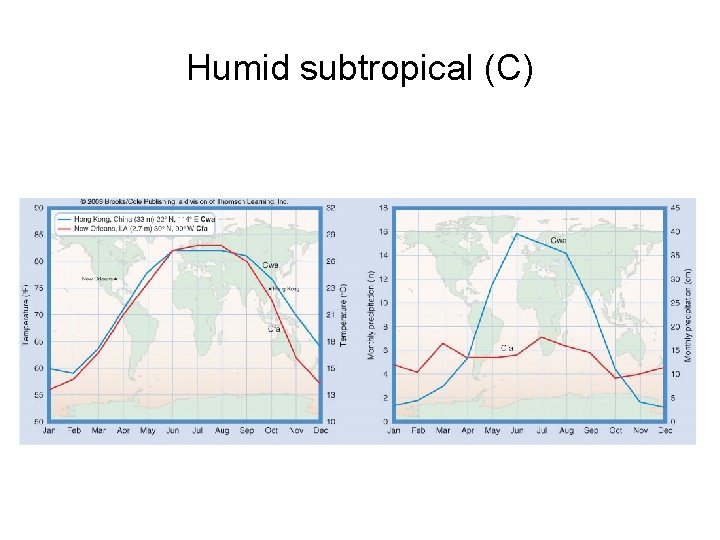
Humid subtropical (C)
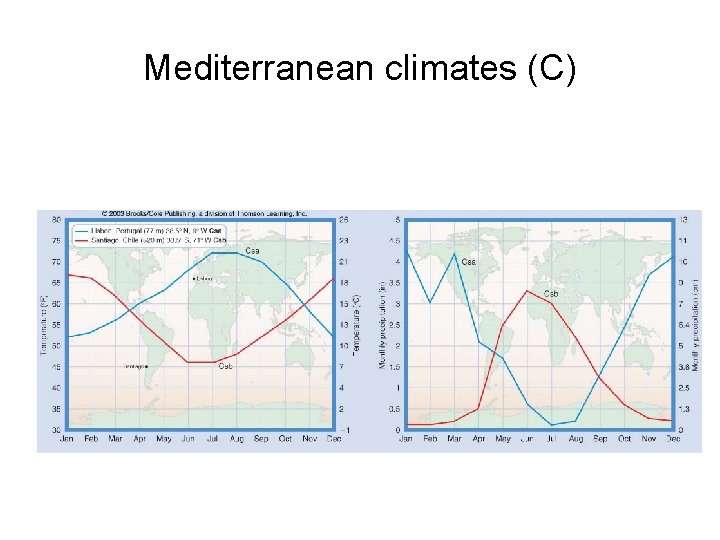
Mediterranean climates (C)
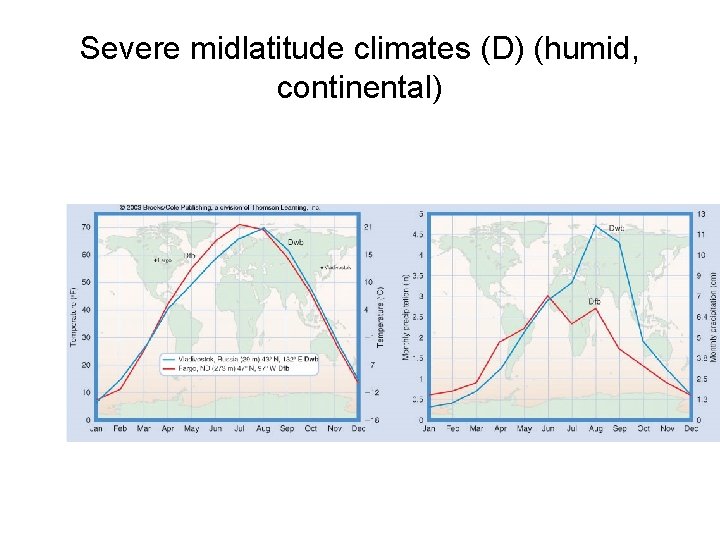
Severe midlatitude climates (D) (humid, continental)
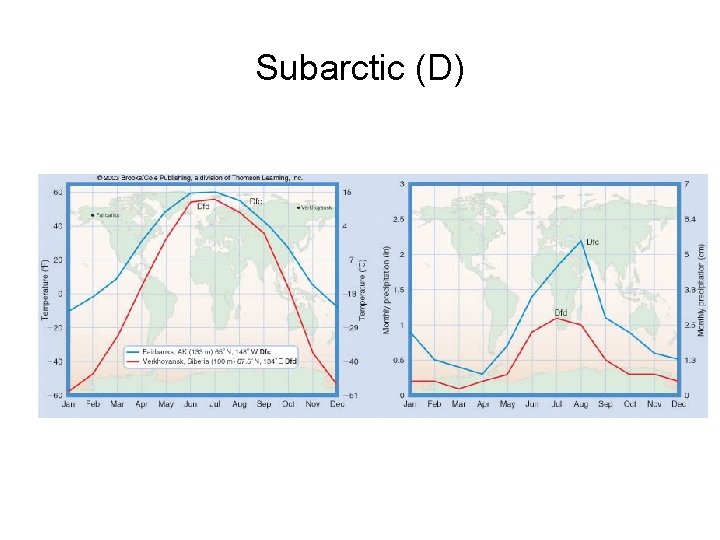
Subarctic (D)
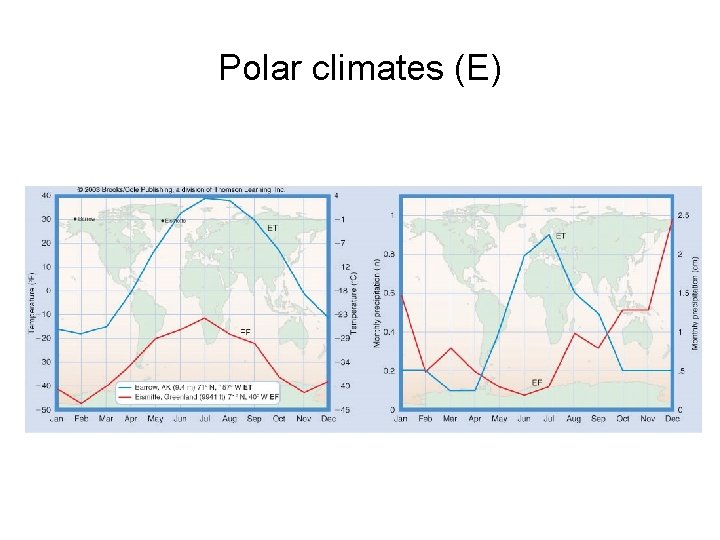
Polar climates (E)
Past climates • Historical climate (past several K years) – Instrumental record (measurements) – Historical data (for example diaries, ship logs) • Paleoclimate, study of climate of the distant past – Use environmental records, such as – Tree rings – Pollen records – Air bubbles and dust in ice – Marine sediments – Fossil record
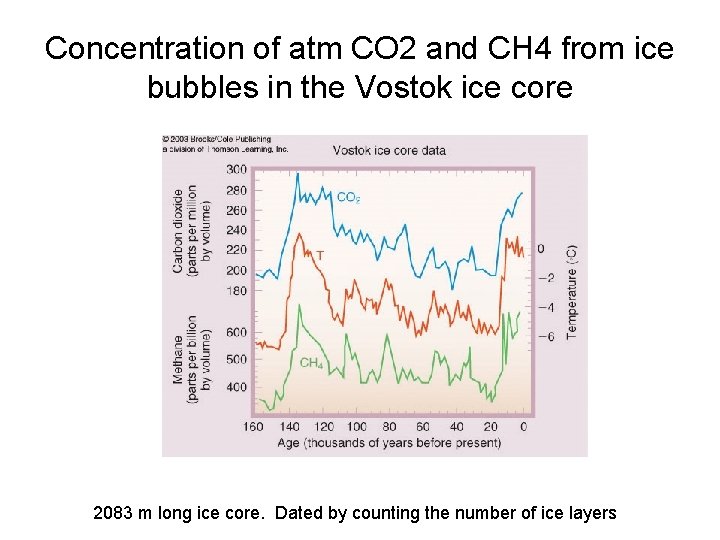
Concentration of atm CO 2 and CH 4 from ice bubbles in the Vostok ice core 2083 m long ice core. Dated by counting the number of ice layers
Ice cores • Dust in ice sheets can be caused by volcanoes • Or by dry windy conditions that lead to soil erosion • Colder periods in Earth’s history are usually much dustier • Did the dust block the sun or did the colder temperatures cause drier conditions?
Past climates, the change mechanisms • • Volcanic eruptions Asteroid impacts Solar variability Variations in Earth’s orbit: Milankovitch cycles – Precession – Obliquity – Eccentricity • Plate tectonics
Volcanic activity and climate change • Explosive eruptions emit huge quantities of gases and fine grained debris into the atmosphere • The greatest eruptions at low latitudes are powerful enough to inject the material into stratosphere where it will filter out a portion of the incoming solar radiation – Mount St Helens – El Chichon – Mount Pinatubo
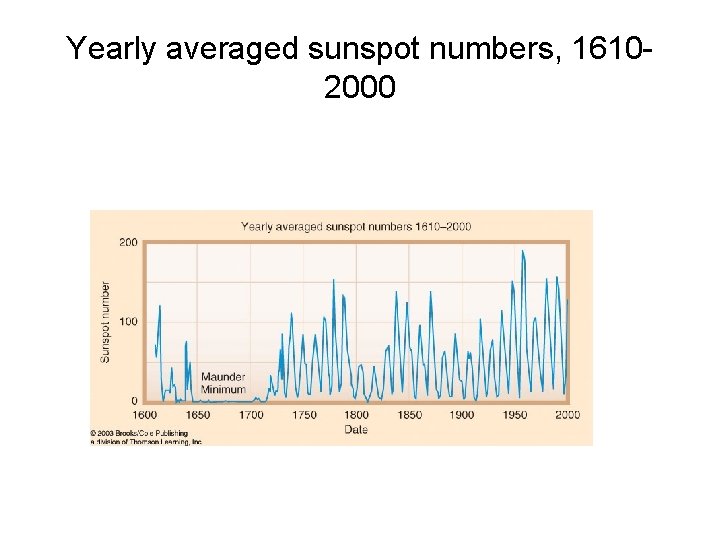
Solar variability • Variations in the amount of energy from the sun • Variations in number of sunspots follow an 11 year cycle • Maunder minimum– some believe that a reduction in output of the sun during this time cooled Earth • Little Ice Age, 1400 --1850
Yearly averaged sunspot numbers, 16102000
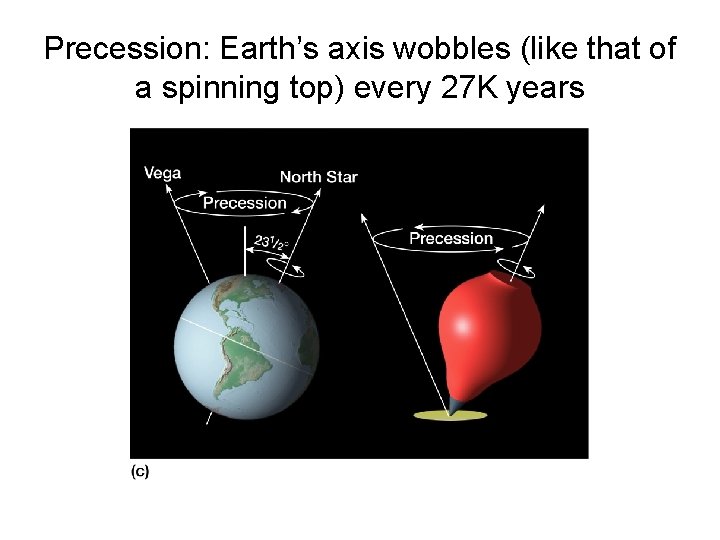
Precession: Earth’s axis wobbles (like that of a spinning top) every 27 K years
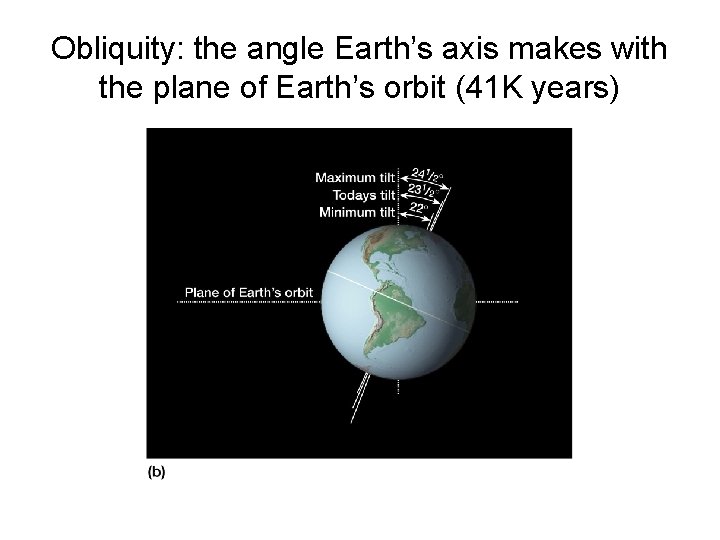
Obliquity: the angle Earth’s axis makes with the plane of Earth’s orbit (41 K years)
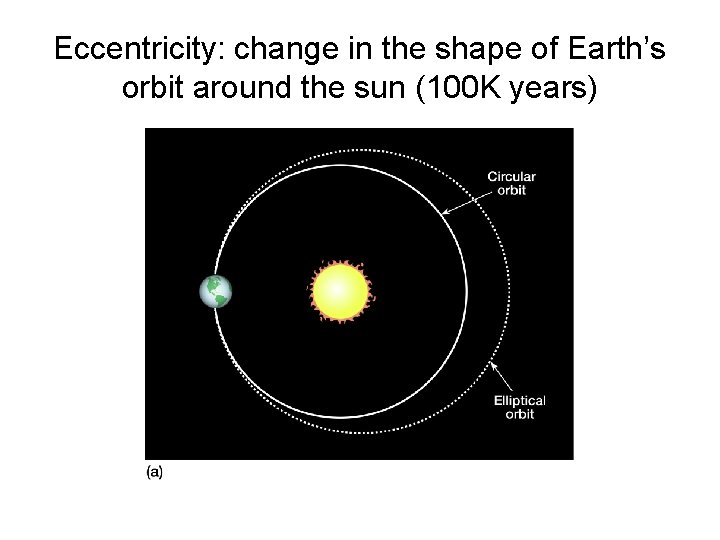
Eccentricity: change in the shape of Earth’s orbit around the sun (100 K years)
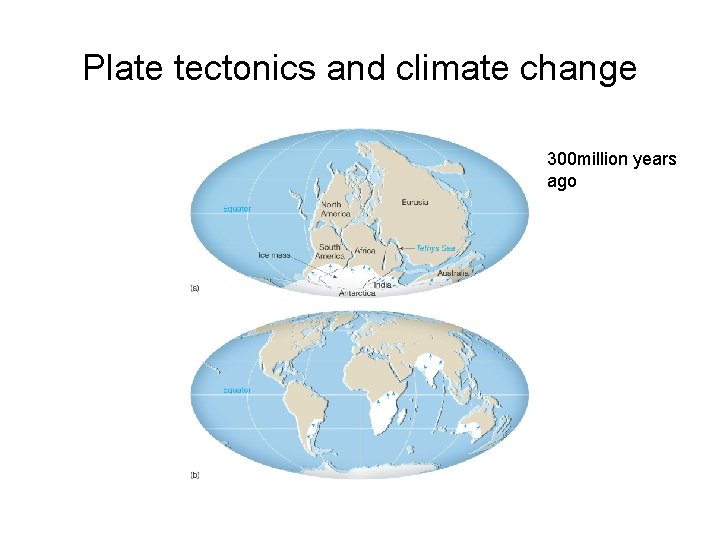
Plate tectonics and climate change 300 million years ago
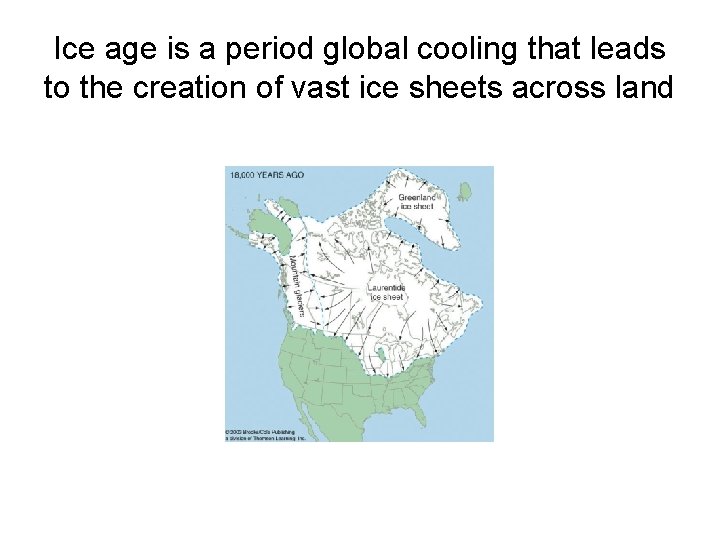
Ice age is a period global cooling that leads to the creation of vast ice sheets across land