
Lecture 15 Chemical Reaction Engineering CRE is the



- Slides: 31
Lecture 15 Chemical Reaction Engineering (CRE) is the field that studies the rates and mechanisms of chemical reactions and the design of the reactors in which they take place.
Today’s lecture �Enzymes �Michealis-Menten Kinetics �Lineweaver-Burk Plot �Enzyme Inhibition �Competitive � Uncompetitive 2
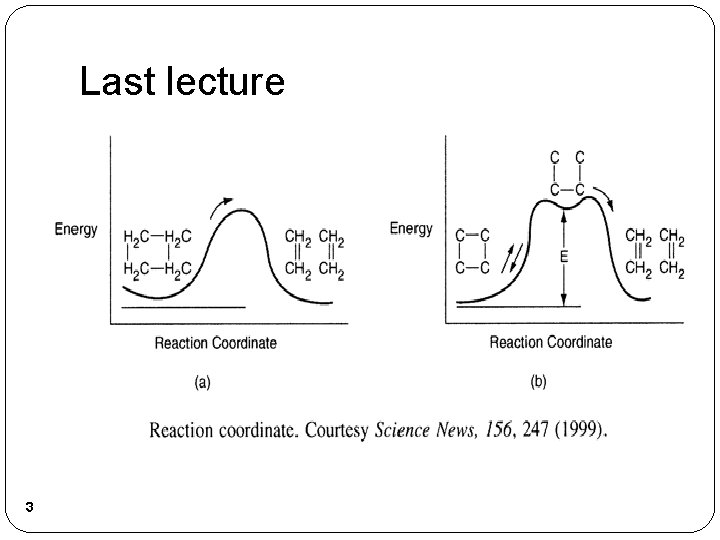
Last lecture 3
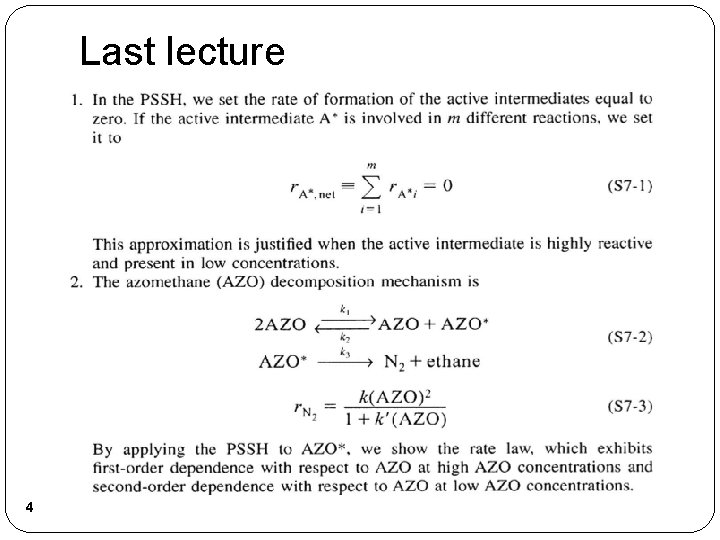
Last lecture 4
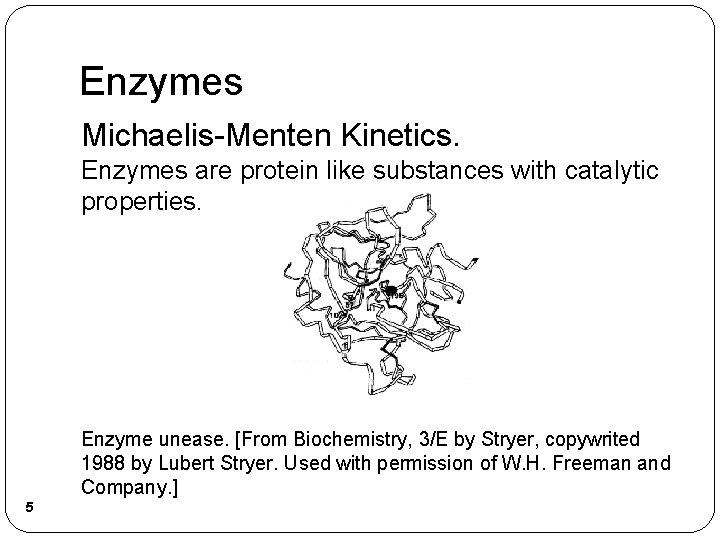
Enzymes Michaelis-Menten Kinetics. Enzymes are protein like substances with catalytic properties. Enzyme unease. [From Biochemistry, 3/E by Stryer, copywrited 1988 by Lubert Stryer. Used with permission of W. H. Freeman and Company. ] 5
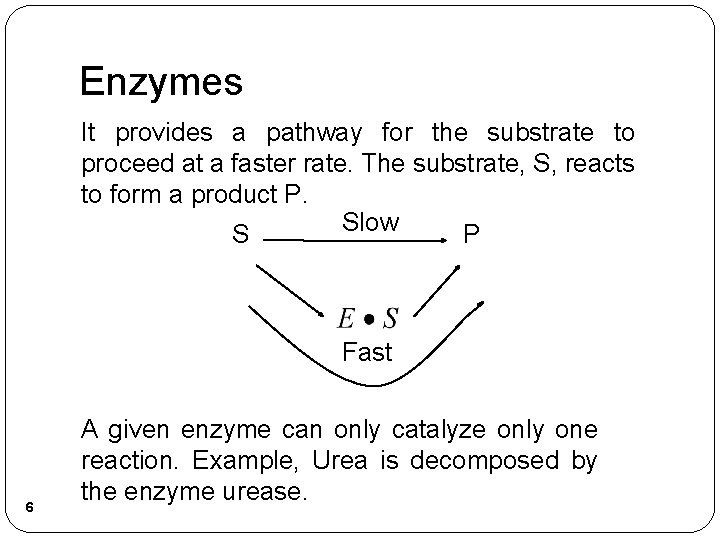
Enzymes It provides a pathway for the substrate to proceed at a faster rate. The substrate, S, reacts to form a product P. Slow S P Fast 6 A given enzyme can only catalyze only one reaction. Example, Urea is decomposed by the enzyme urease.
7
8
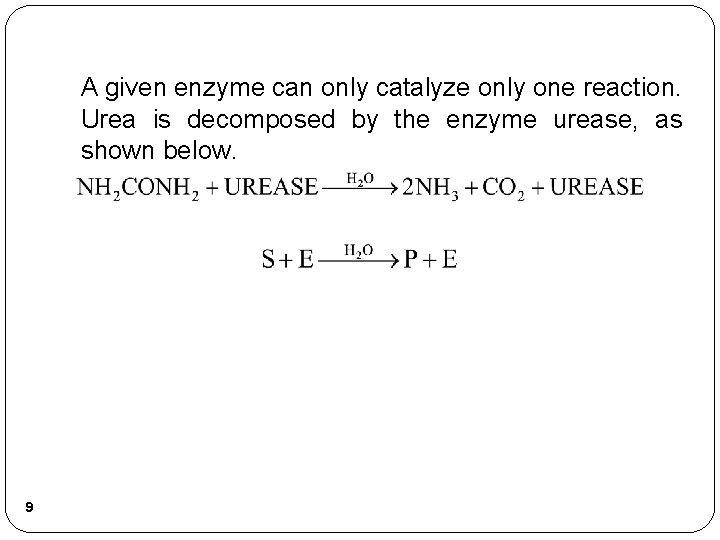
A given enzyme can only catalyze only one reaction. Urea is decomposed by the enzyme urease, as shown below. 9
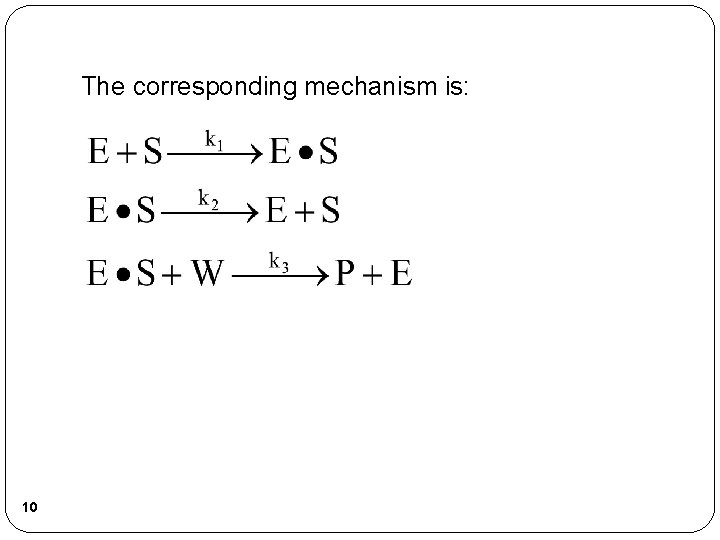
The corresponding mechanism is: 10
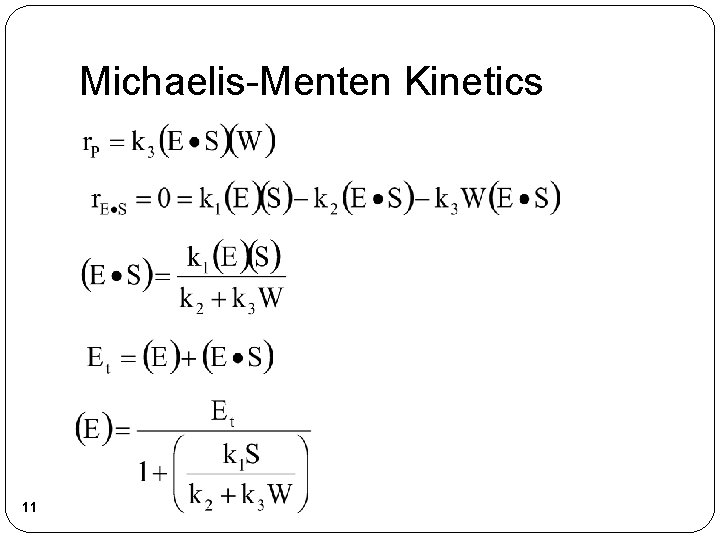
Michaelis-Menten Kinetics 11
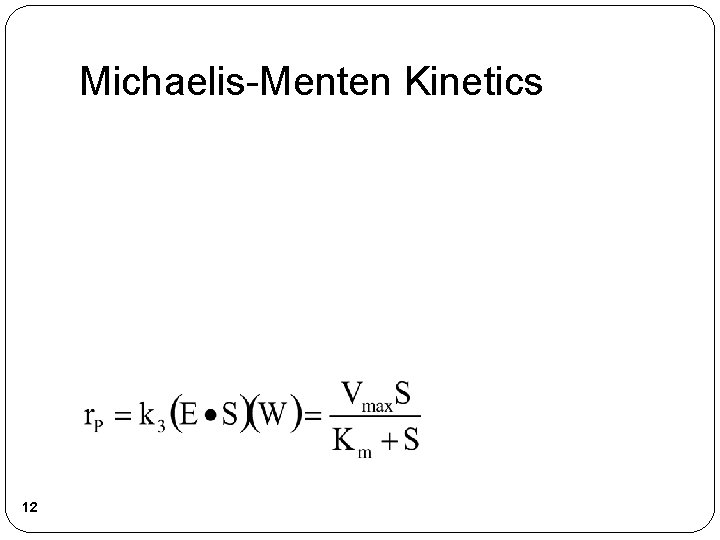
Michaelis-Menten Kinetics 12
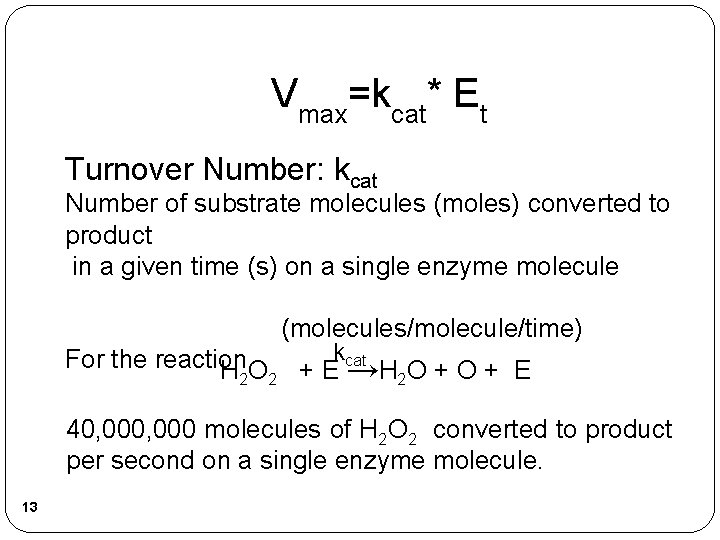
Vmax=kcat* Et Turnover Number: kcat Number of substrate molecules (moles) converted to product in a given time (s) on a single enzyme molecule (molecules/molecule/time) For the reaction HO 2 kcat 2 + E →H 2 O + E 40, 000 molecules of H 2 O 2 converted to product per second on a single enzyme molecule. 13
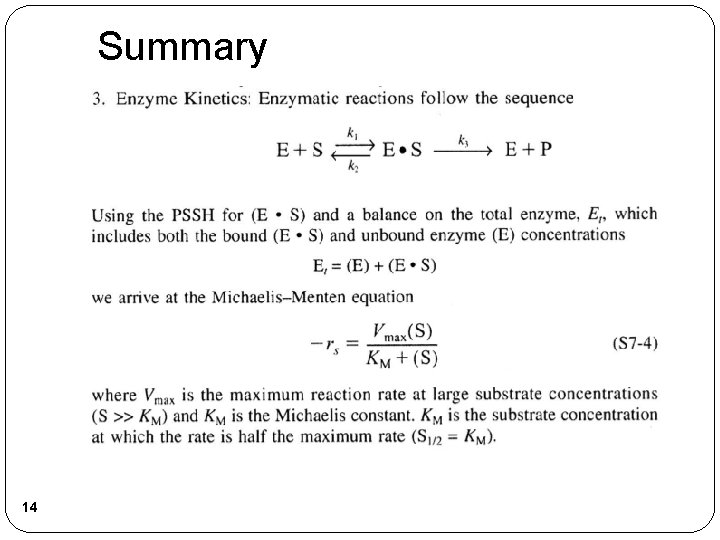
Summary 14
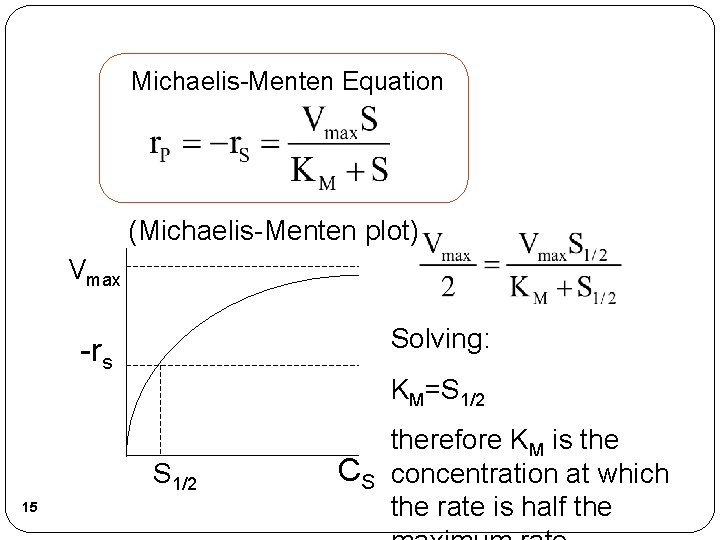
Michaelis-Menten Equation (Michaelis-Menten plot) Vmax Solving: -rs KM=S 1/2 15 CS therefore KM is the concentration at which the rate is half the
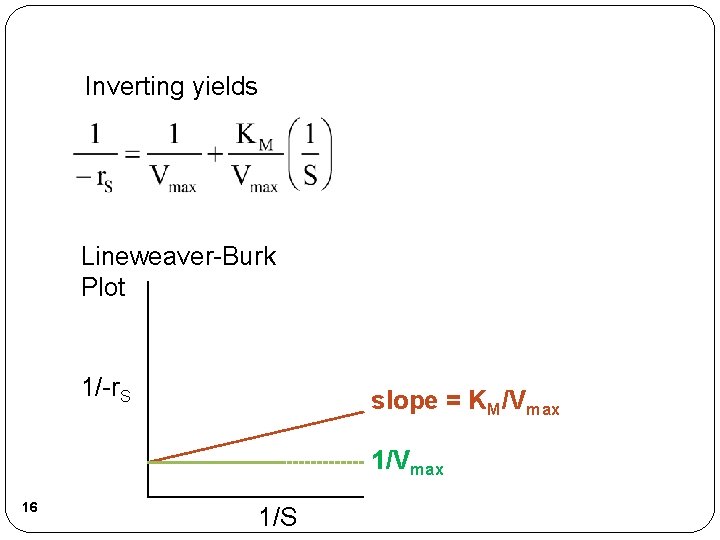
Inverting yields Lineweaver-Burk Plot 1/-r. S slope = KM/Vmax 16 1/S
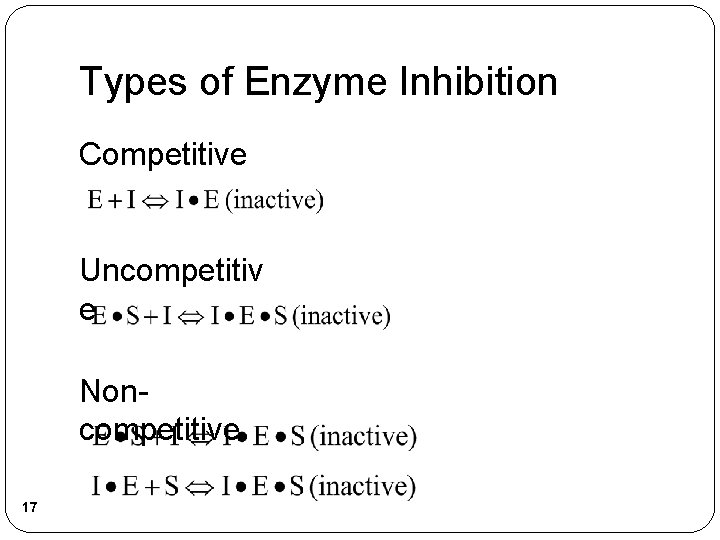
Types of Enzyme Inhibition Competitive Uncompetitiv e Noncompetitive 17
Competitive Inhibition 18
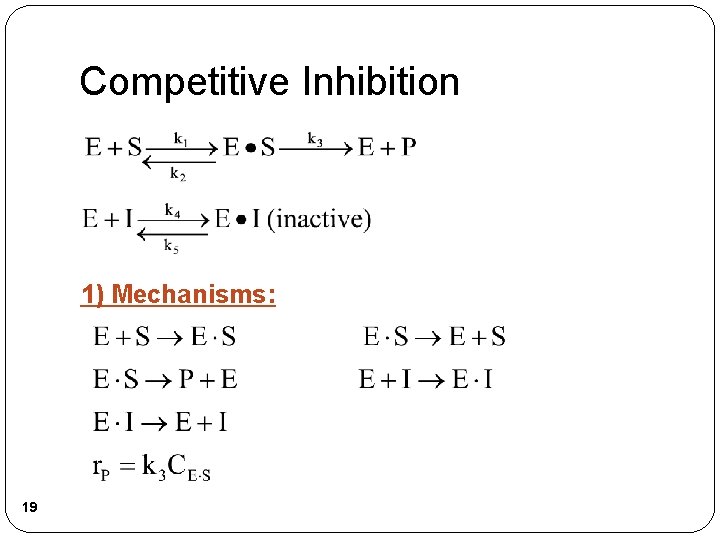
Competitive Inhibition 1) Mechanisms: 19
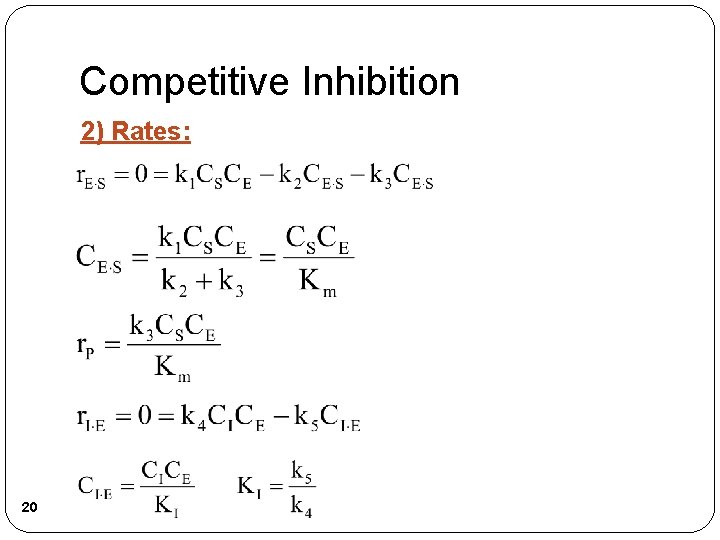
Competitive Inhibition 2) Rates: 20
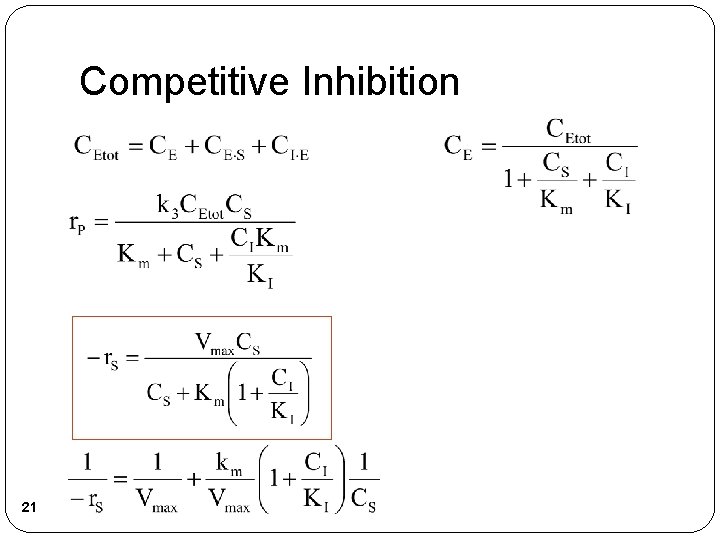
Competitive Inhibition 21
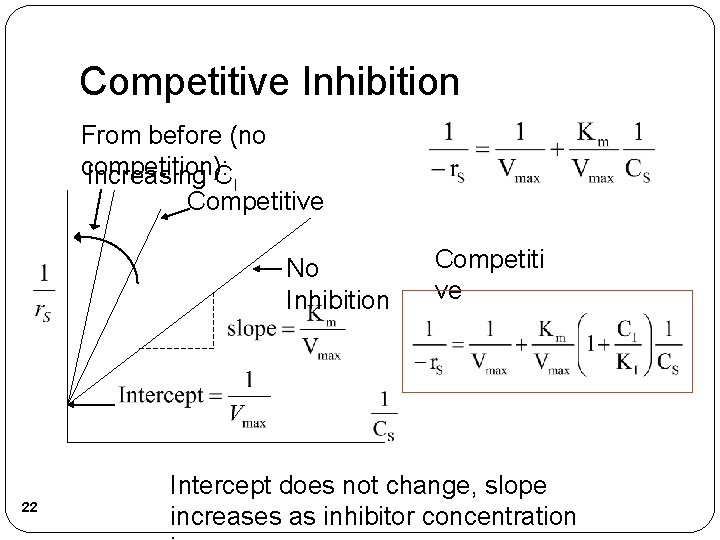
Competitive Inhibition From before (no competition): Increasing CI Competitive No Inhibition 22 Competiti ve Intercept does not change, slope increases as inhibitor concentration
23
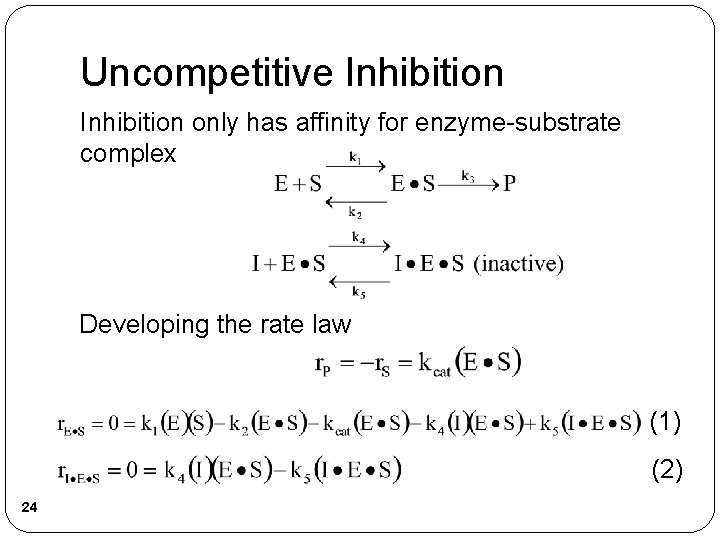
Uncompetitive Inhibition only has affinity for enzyme-substrate complex Developing the rate law (1) (2) 24
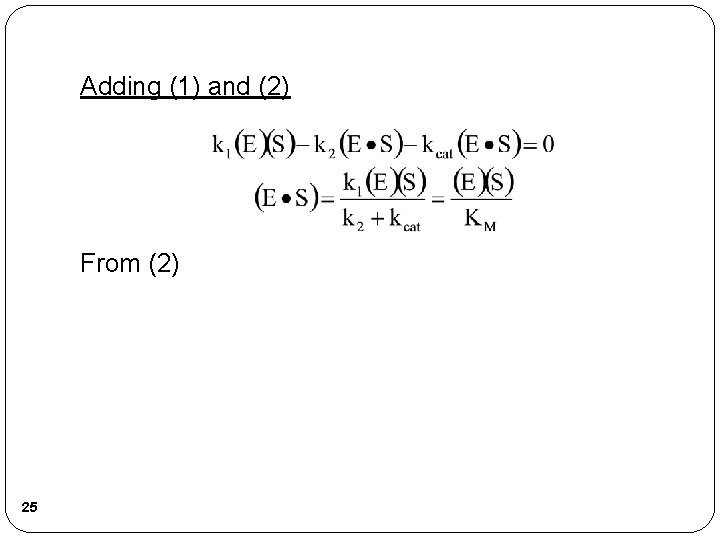
Adding (1) and (2) From (2) 25
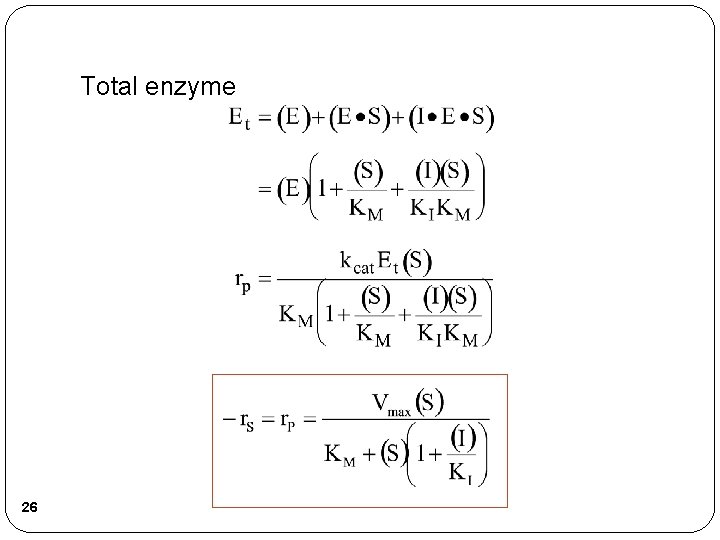
Total enzyme 26
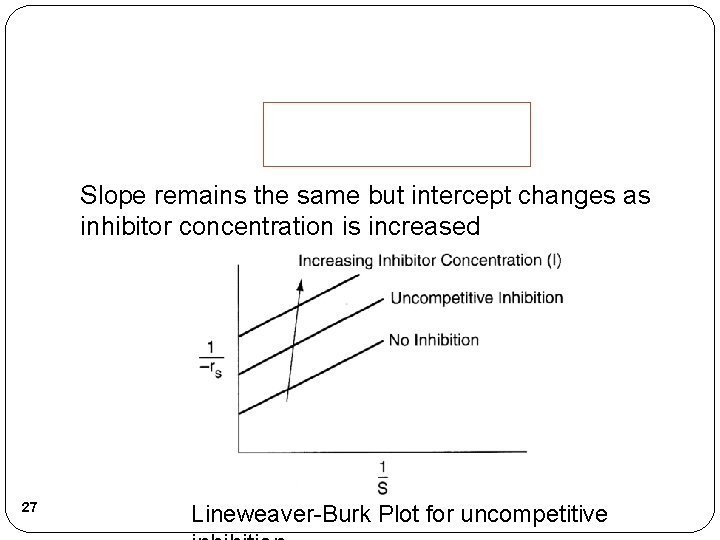
Slope remains the same but intercept changes as inhibitor concentration is increased 27 Lineweaver-Burk Plot for uncompetitive
28
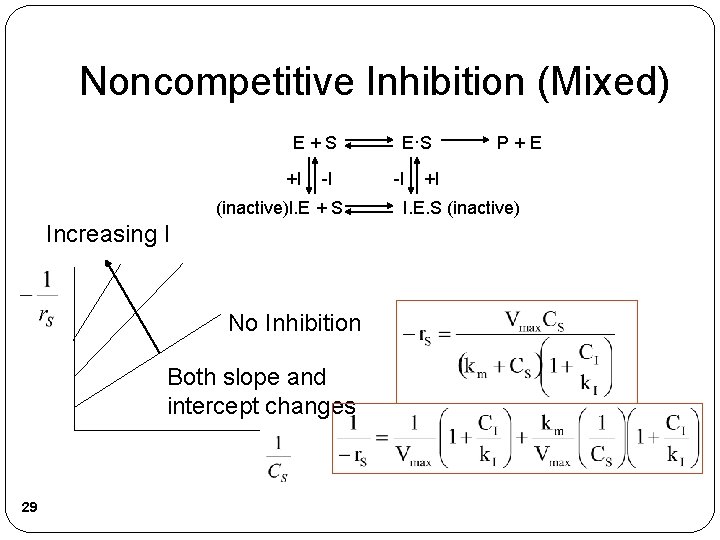
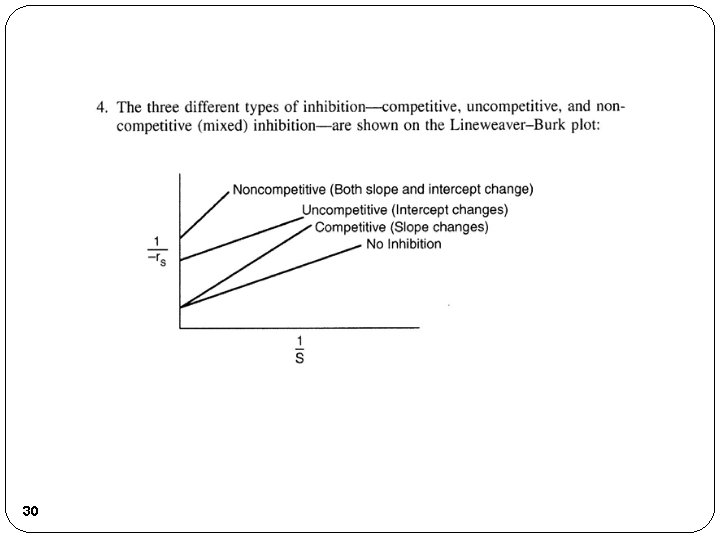
Noncompetitive Inhibition (Mixed) E+S +I -I (inactive)I. E + S Increasing I No Inhibition Both slope and intercept changes 29 E·S -I P+E +I I. E. S (inactive)
30
End of Lecture 15 31