
Lecture 14 The Hydrologic Cycle and Groundwater About

Lecture 14 The Hydrologic Cycle and Groundwater
About the Hydrologic Cycle • Hydrology is the study of movements and characteristics of groundwater. • The hydrologic cycle has a profound effect upon climate prediction. • Water is vital so we must understand where to find water and how water supplies cycle through Earth.
1. The Geologic Cycling of Water ● Flows into a reservoir include inflows and outflows ● Reservoirs include all the places that water is stored in and on Earth.
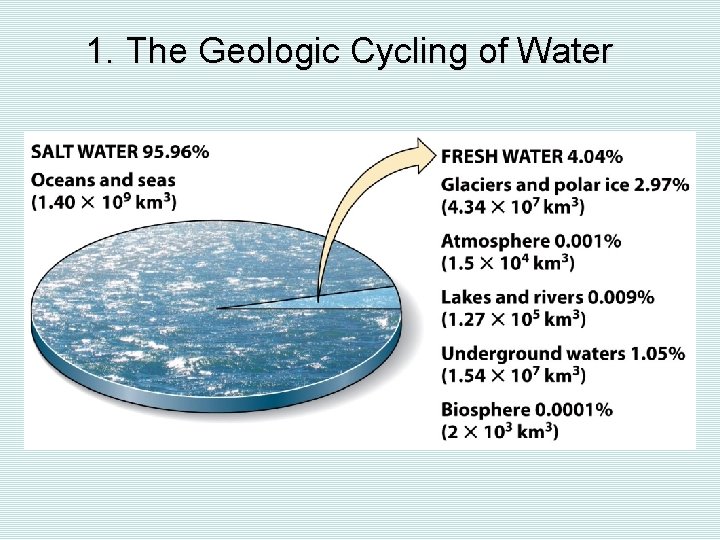
1. The Geologic Cycling of Water
1. The Geologic Cycling of Water ● The hydrologic cycle ● precipitation ● infiltration and runoff ● evaporation, transpiration ● groundwater flow
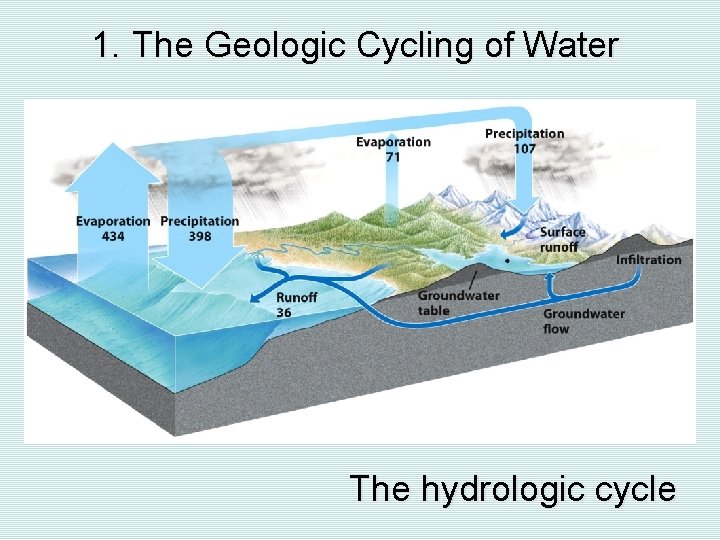
1. The Geologic Cycling of Water The hydrologic cycle
2. Hydrology and Climate ● Key climatic factors ● relative humidity ● rainfall ● landscape
2. Hydrology and Climate ● Key tectonic factors ● ocean-land relationships ● mountain rain shadows
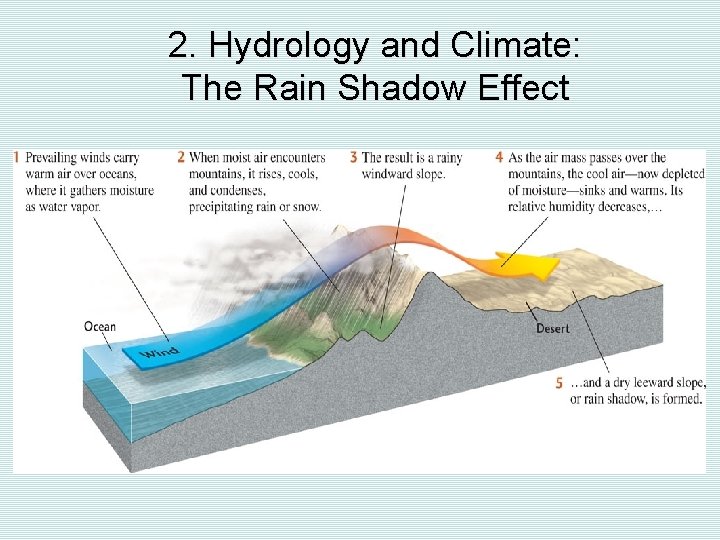
2. Hydrology and Climate: The Rain Shadow Effect
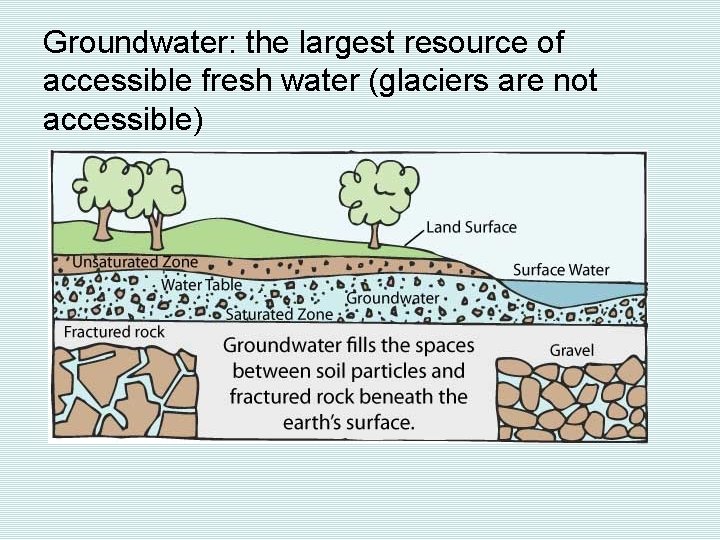
Groundwater: the largest resource of accessible fresh water (glaciers are not accessible)
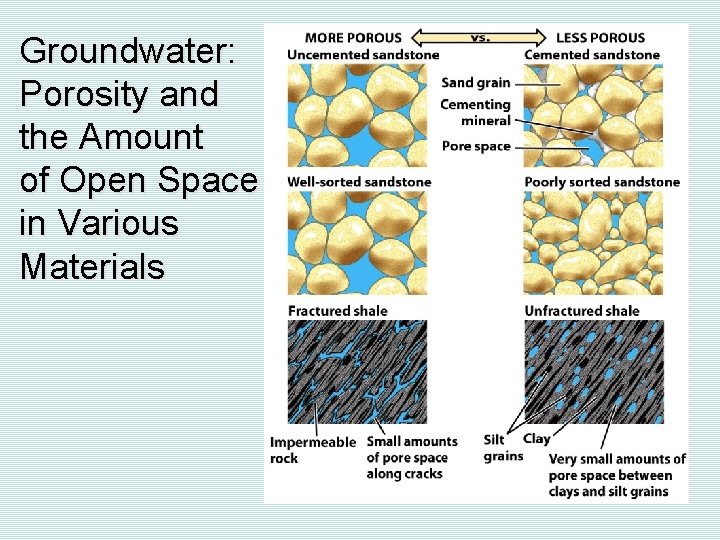
Groundwater: Porosity and the Amount of Open Space in Various Materials
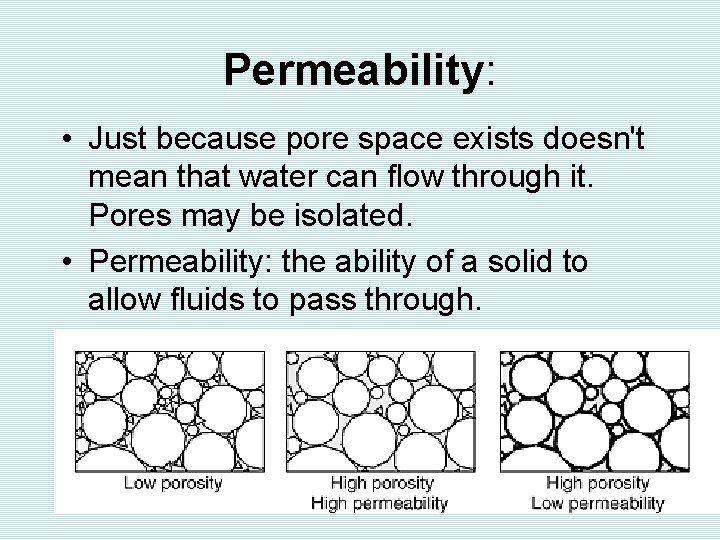
Permeability: • Just because pore space exists doesn't mean that water can flow through it. Pores may be isolated. • Permeability: the ability of a solid to allow fluids to pass through.
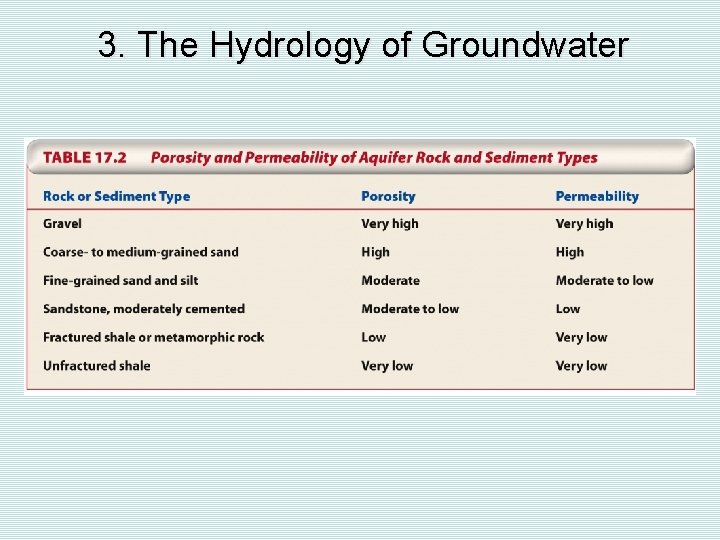
3. The Hydrology of Groundwater
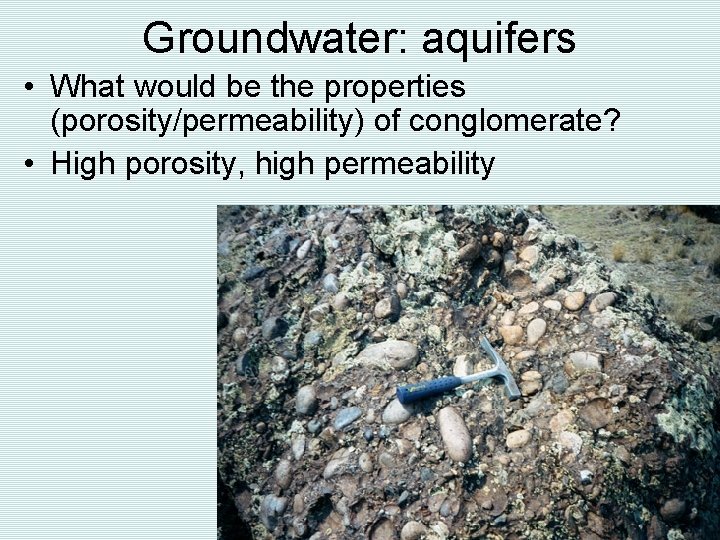
Groundwater: aquifers • What would be the properties (porosity/permeability) of conglomerate? • High porosity, high permeability
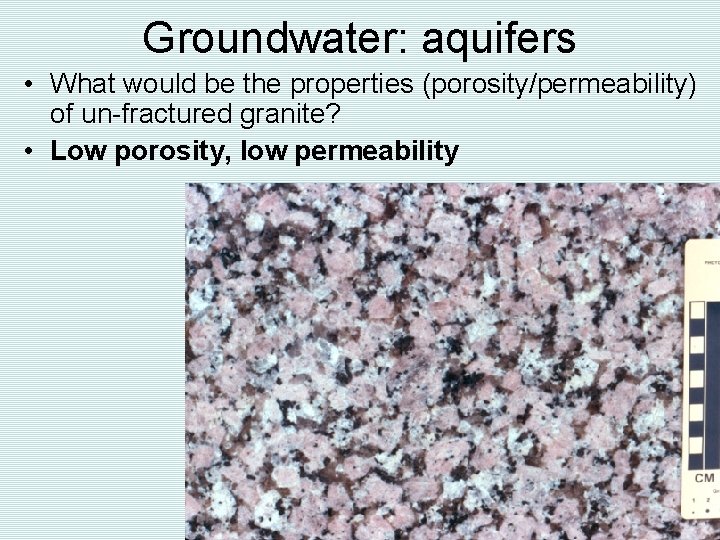
Groundwater: aquifers • What would be the properties (porosity/permeability) of un-fractured granite? • Low porosity, low permeability
Big concept I: • The Water Table is the basic description of how groundwater interacts with rocks. • If I pour water into a bucket of unconsolidated sand, the water won't spread evenly through the bucket. It will collect at the bottom. As a result, we will have two hydrologic zones in the bucket
3. The Hydrology of Groundwater ● Above and below the groundwater table ● unsaturated (vadose) zone ● saturated (phreatic) zone
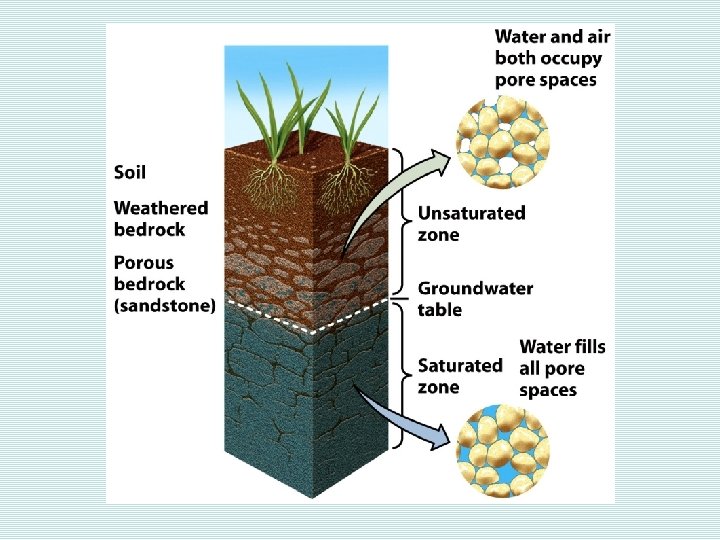
Groundwater Basics Beds of rock, sediment, and regolith with high porosity (% of pore space) are better suited to holding groundwater. • Aquifers: Beds that hold large amounts of groundwater.
Opposite of an aquifer? • Aquitard / aquiclude – retards the flow of groundwater (it’s almost never really zero
Big concept II: • Equilibrium: Same amount of water enters and leaves saturated zone. o Recharge: process by which water enters. (e. g. stream flows over rock fractures, allowing water to percolate in. ) o Influent stream: a stream that recharges groundwater. o Discharge: Process by which water leaves. (e. g through a spring) • Effluent stream: A stream which picks up water from saturated zone.

Aquifers are permeable layers of rock and sediment that have groundwater in enough quantity to supply wells.
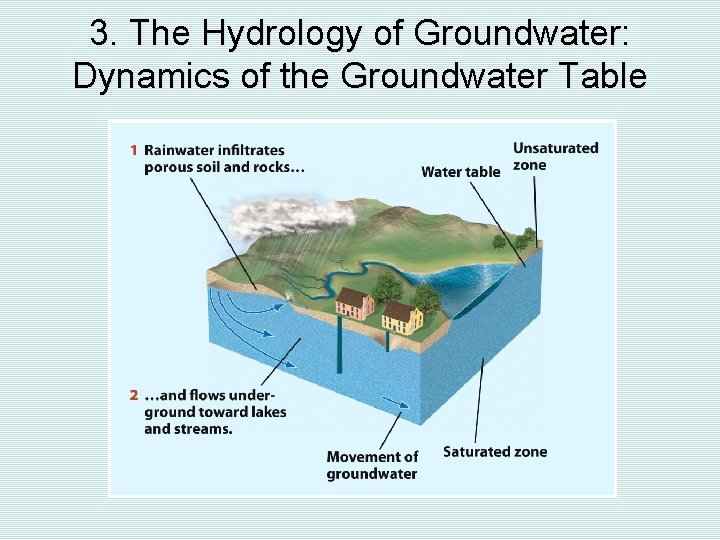
3. The Hydrology of Groundwater: Dynamics of the Groundwater Table
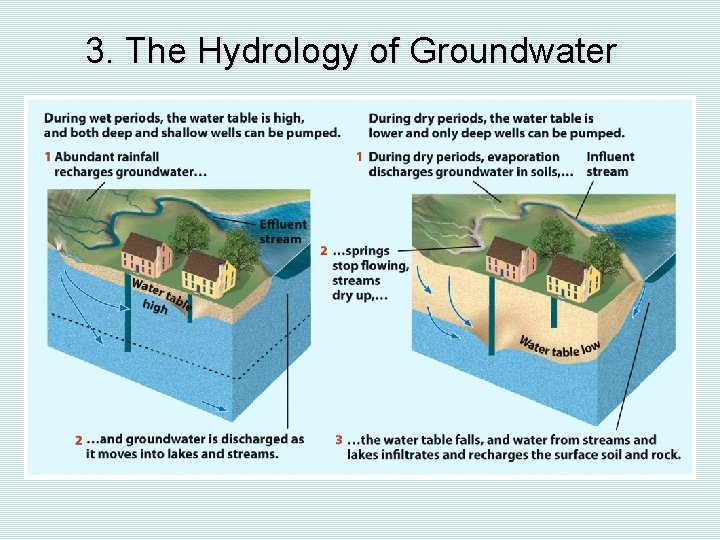
3. The Hydrology of Groundwater
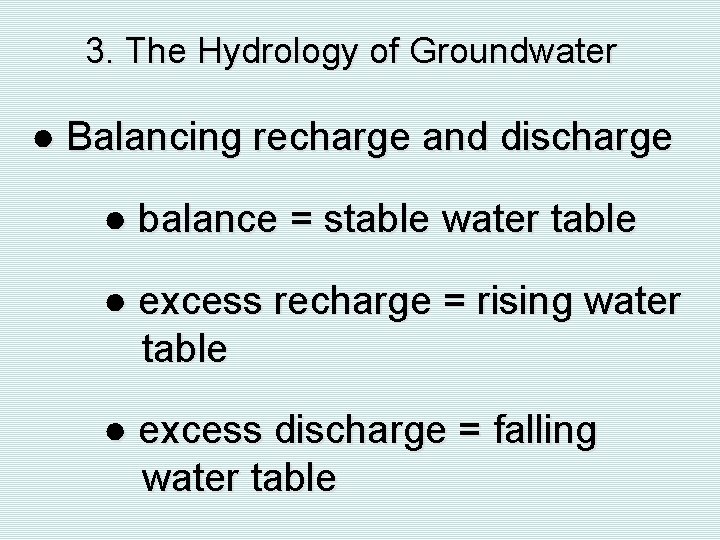
3. The Hydrology of Groundwater ● Balancing recharge and discharge ● balance = stable water table ● excess recharge = rising water table ● excess discharge = falling water table
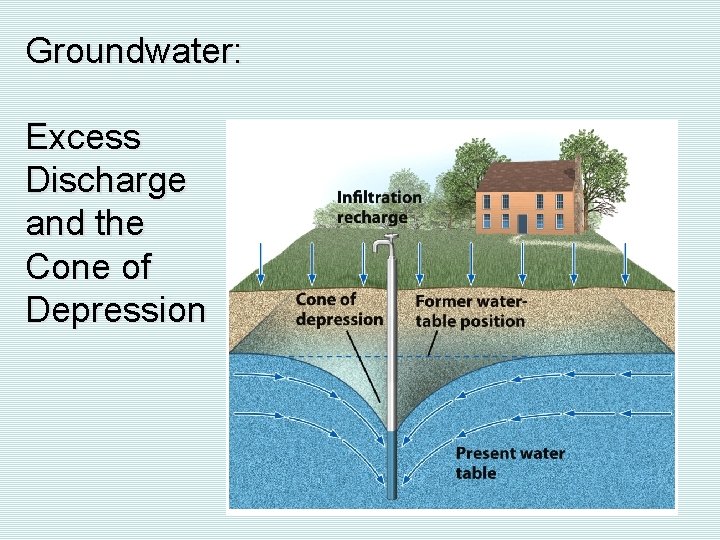
Groundwater: Excess Discharge and the Cone of Depression
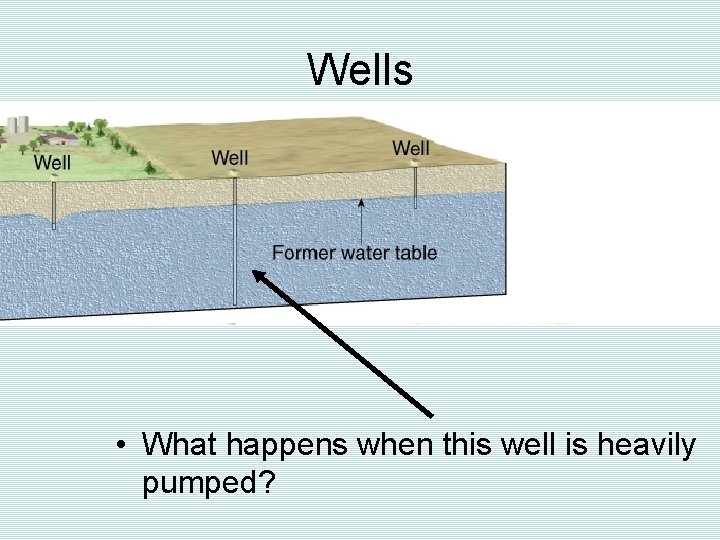
Wells • What happens when this well is heavily pumped?
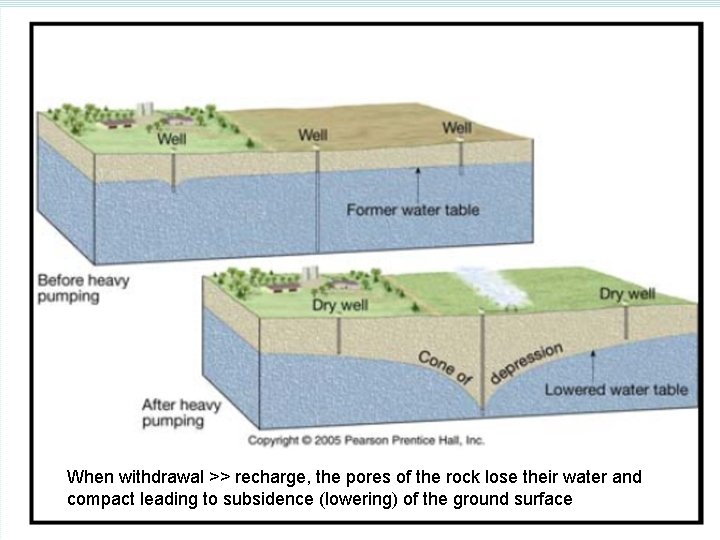
When withdrawal >> recharge, the pores of the rock lose their water and compact leading to subsidence (lowering) of the ground surface
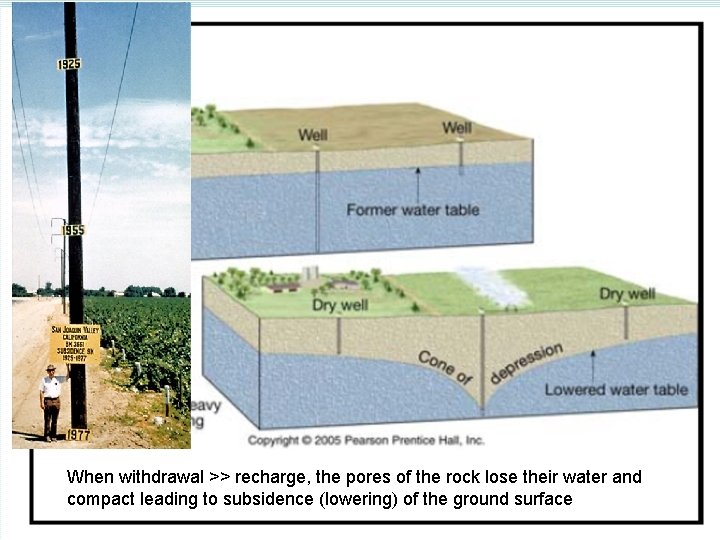
When withdrawal >> recharge, the pores of the rock lose their water and compact leading to subsidence (lowering) of the ground surface
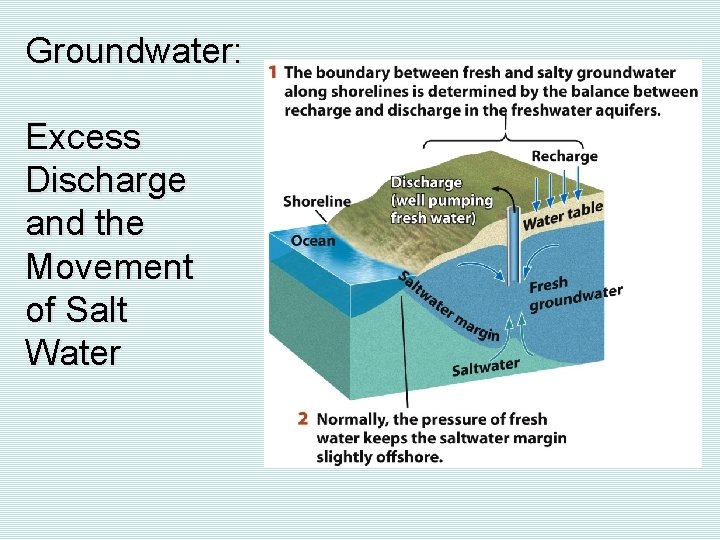
Groundwater: Excess Discharge and the Movement of Salt Water
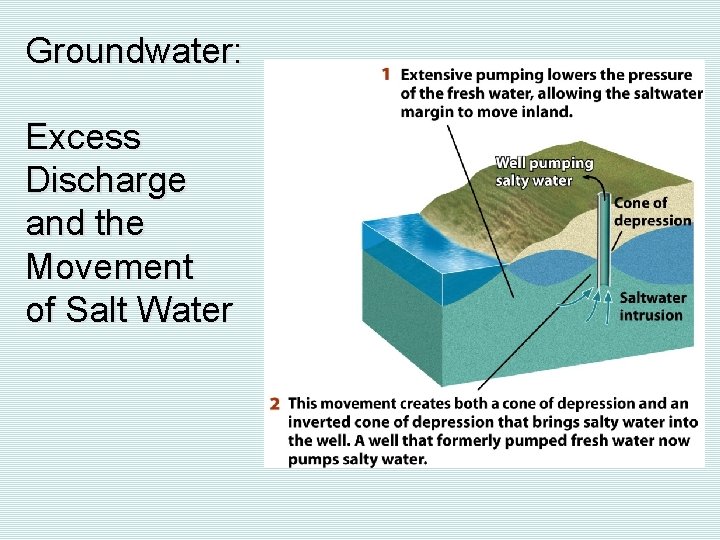
Groundwater: Excess Discharge and the Movement of Salt Water
![Groundwater: Darcy’s Law Q = A [K ( ha – hb )] l Darcy's](http://slidetodoc.com/presentation_image_h/d606c00a493e6a3e4288b776d2254b07/image-32.jpg "Groundwater: Darcy’s Law Q = A [K ( ha – hb )] l Darcy's")
Groundwater: Darcy’s Law Q = A [K ( ha – hb )] l Darcy's Law is a generalized relationship for flow in porous media. It shows the volumetric flow rate is a function of the flow area, elevation, fluid pressure and a proportionality constant.
- Slides: 32