
Lecture 14 LPC speech synthesis and autocorrelationbased pitch
Lecture 14: LPC speech synthesis and autocorrelationbased pitch tracking ECE 417, Multimedia Signal Processing October 10, 2019
Outline • The LPC-10 speech synthesis model • Autocorrelation-based pitch tracking • Inter-frame interpolation of pitch and energy contours • The LPC-10 excitation model: white noise, pulse train • Linear predictive coding: how to find the coefficients • Linear predictive coding: how to make sure the coefficients are stable
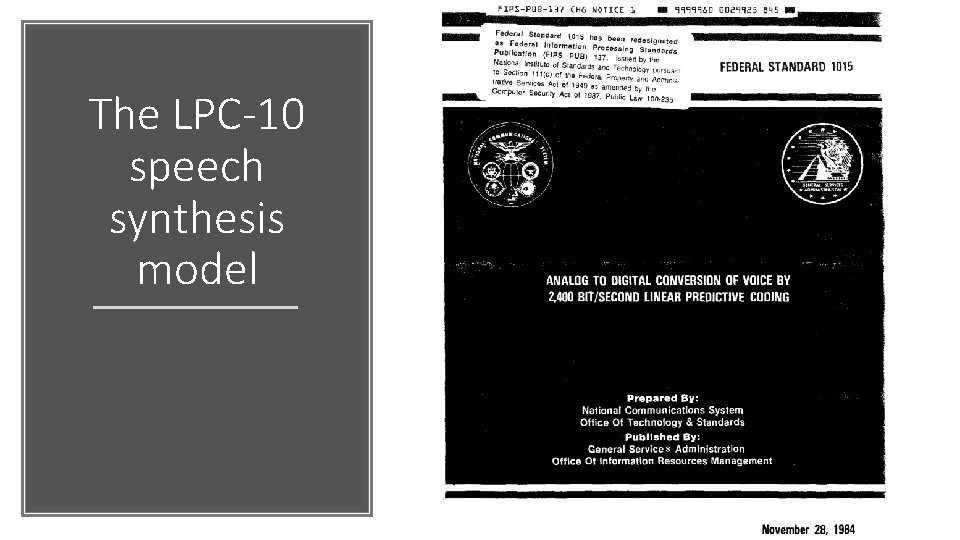
The LPC-10 speech synthesis model
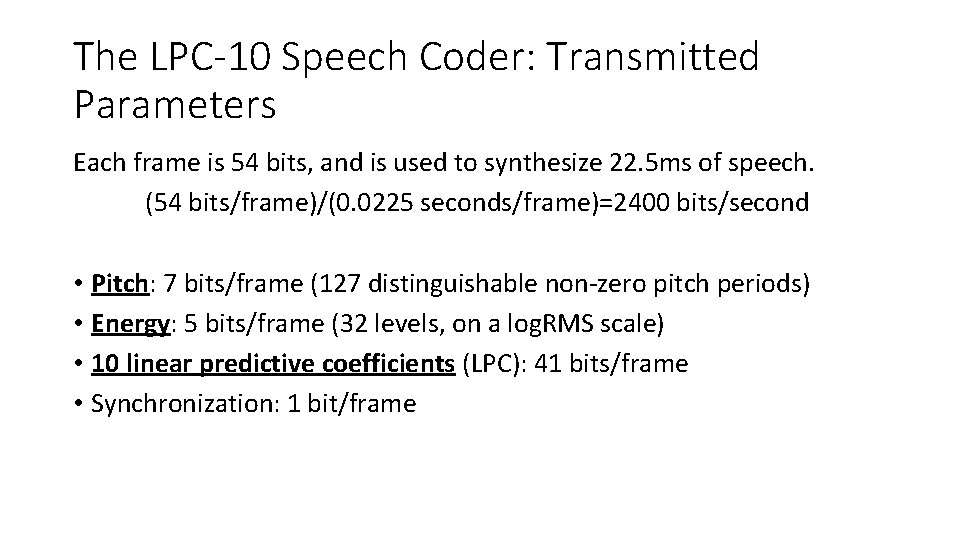
The LPC-10 Speech Coder: Transmitted Parameters Each frame is 54 bits, and is used to synthesize 22. 5 ms of speech. (54 bits/frame)/(0. 0225 seconds/frame)=2400 bits/second • Pitch: 7 bits/frame (127 distinguishable non-zero pitch periods) • Energy: 5 bits/frame (32 levels, on a log. RMS scale) • 10 linear predictive coefficients (LPC): 41 bits/frame • Synchronization: 1 bit/frame
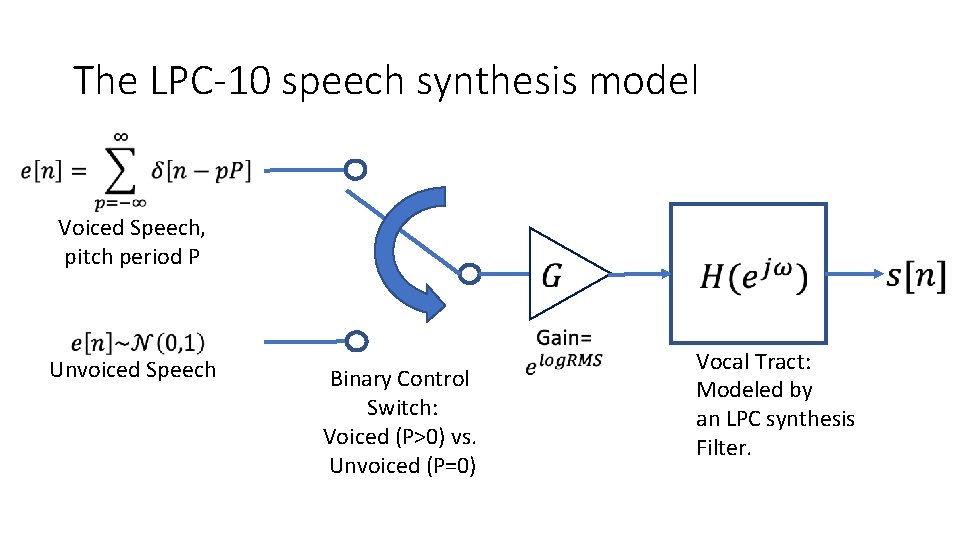
The LPC-10 speech synthesis model Unvoiced Speech G Voiced Speech, pitch period P Binary Control Switch: Voiced (P>0) vs. Unvoiced (P=0) Vocal Tract: Modeled by an LPC synthesis Filter.
Outline • The LPC-10 speech synthesis model • Autocorrelation-based pitch tracking • Inter-frame interpolation of pitch and energy contours • The LPC-10 excitation model: white noise, pulse train • Linear predictive coding: how to find the coefficients • Linear predictive coding: how to make sure the coefficients are stable
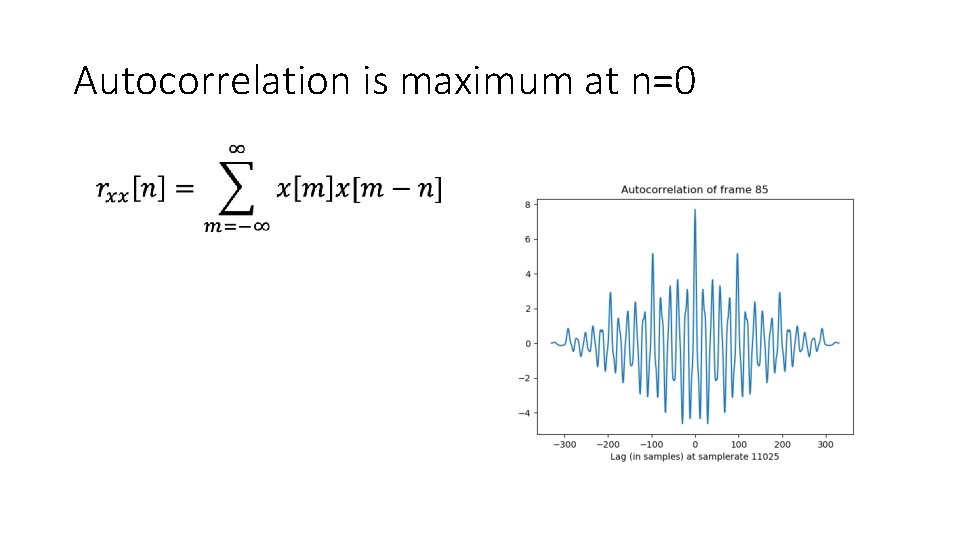
Autocorrelation is maximum at n=0 •
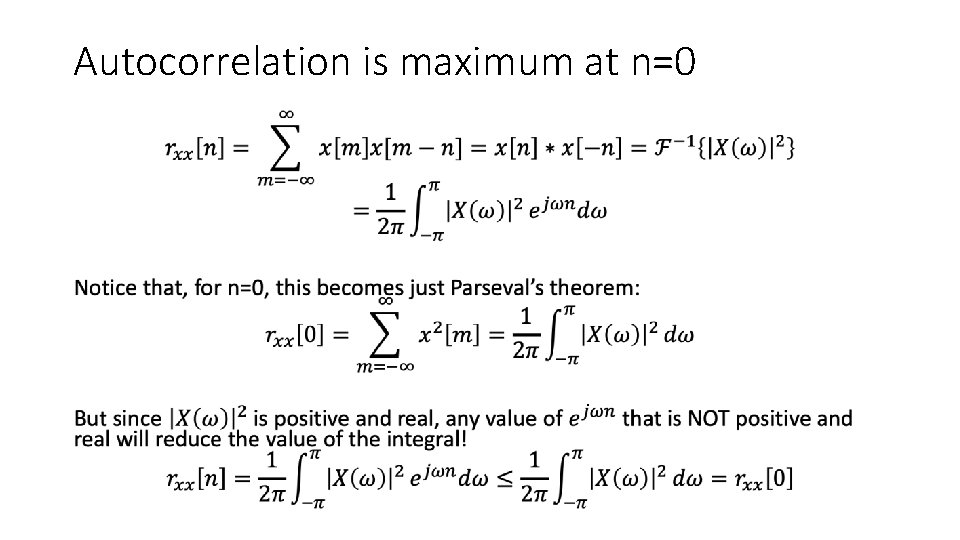
Autocorrelation is maximum at n=0 •
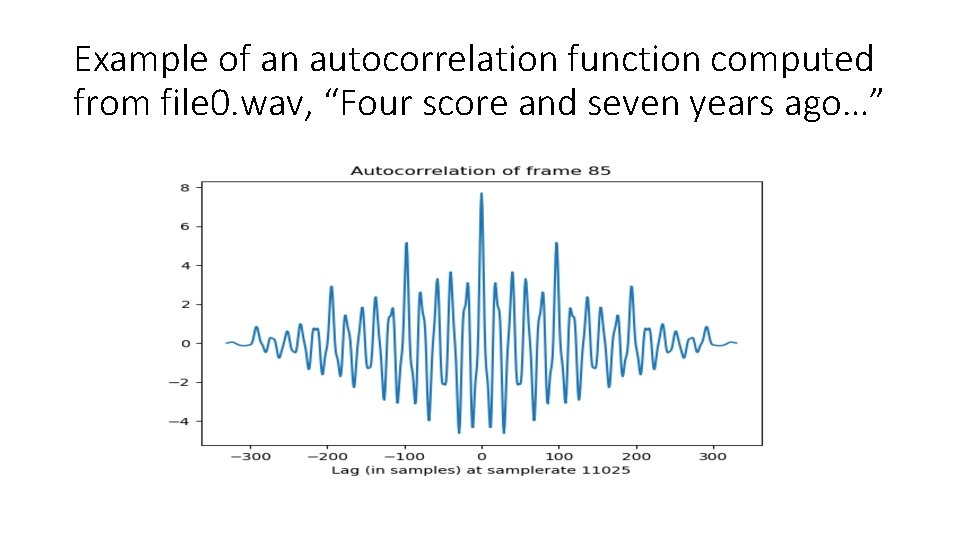
Example of an autocorrelation function computed from file 0. wav, “Four score and seven years ago…”
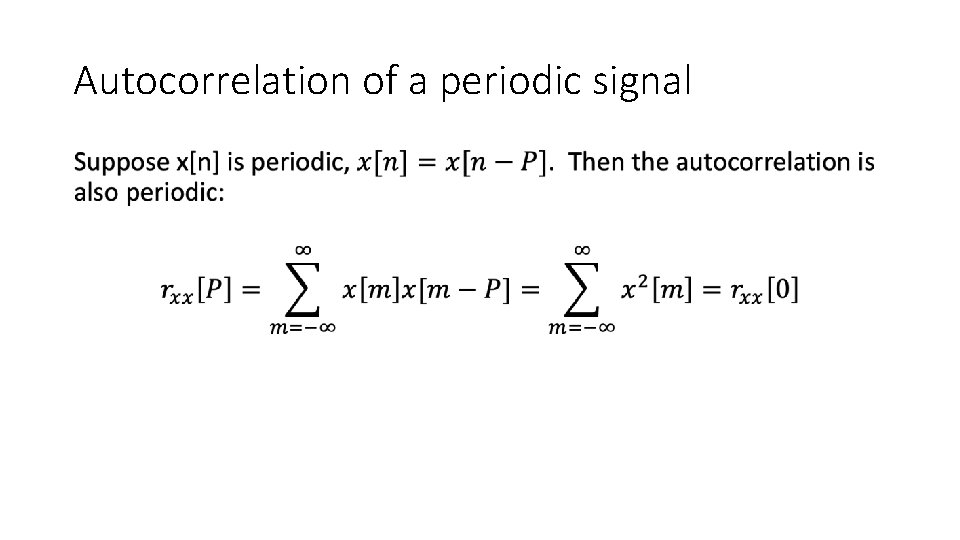
Autocorrelation of a periodic signal •
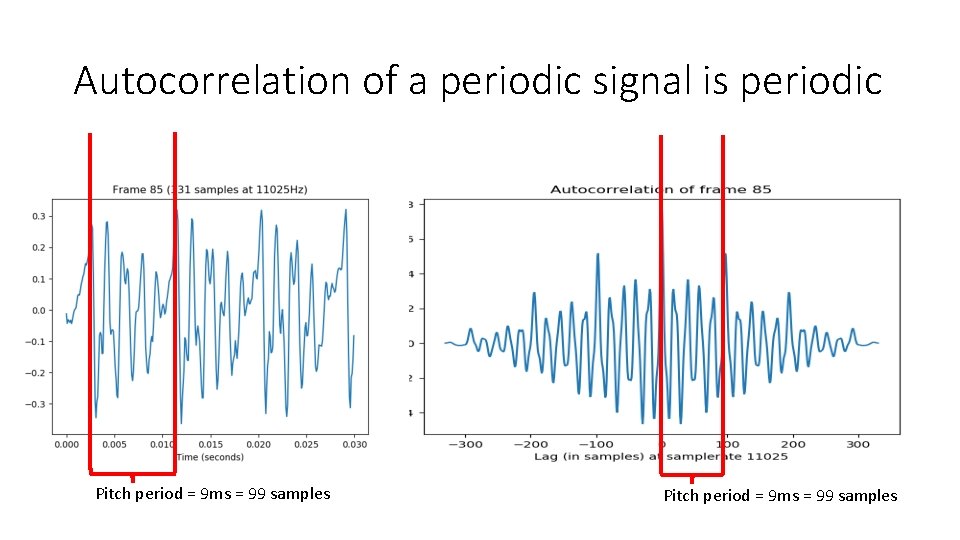
Autocorrelation of a periodic signal is periodic Pitch period = 9 ms = 99 samples
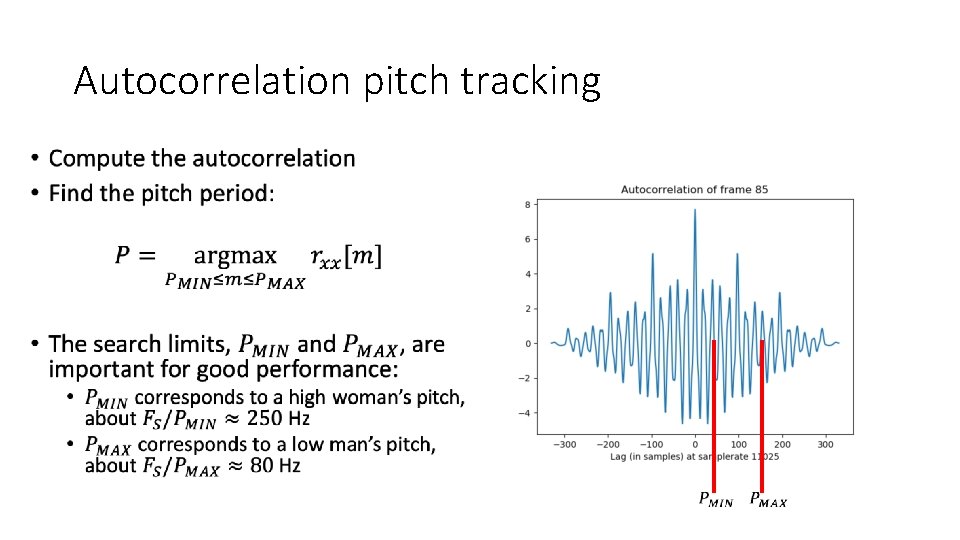
Autocorrelation pitch tracking •
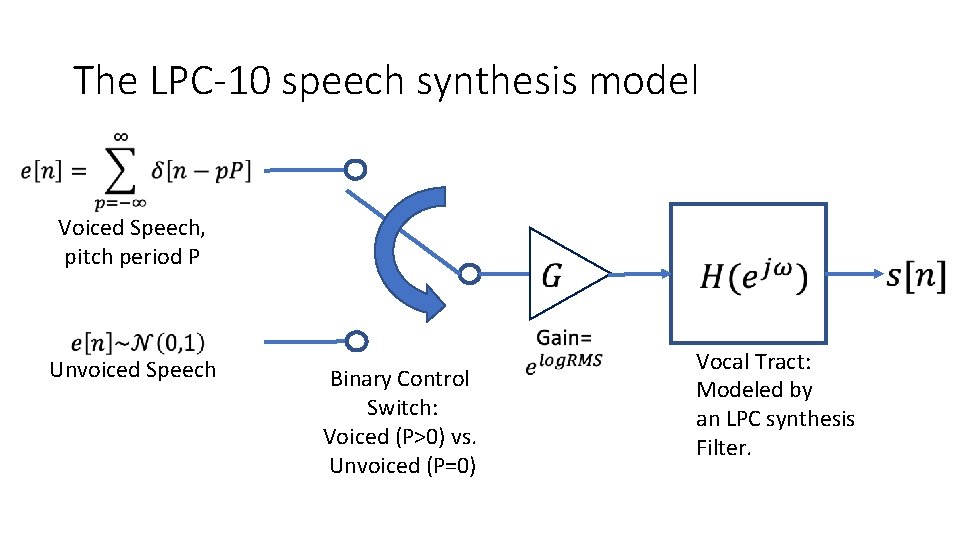
The LPC-10 speech synthesis model Unvoiced Speech G Voiced Speech, pitch period P Binary Control Switch: Voiced (P>0) vs. Unvoiced (P=0) Vocal Tract: Modeled by an LPC synthesis Filter.
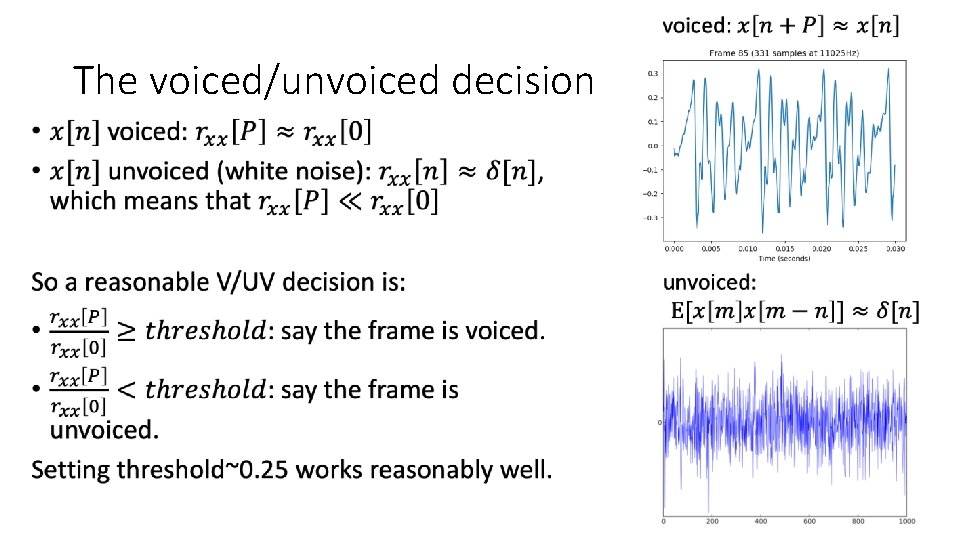
The voiced/unvoiced decision •
Outline • The LPC-10 speech synthesis model • Autocorrelation-based pitch tracking • Inter-frame interpolation of pitch and energy contours • The LPC-10 excitation model: white noise, pulse train • Linear predictive coding: how to find the coefficients • Linear predictive coding: how to make sure the coefficients are stable
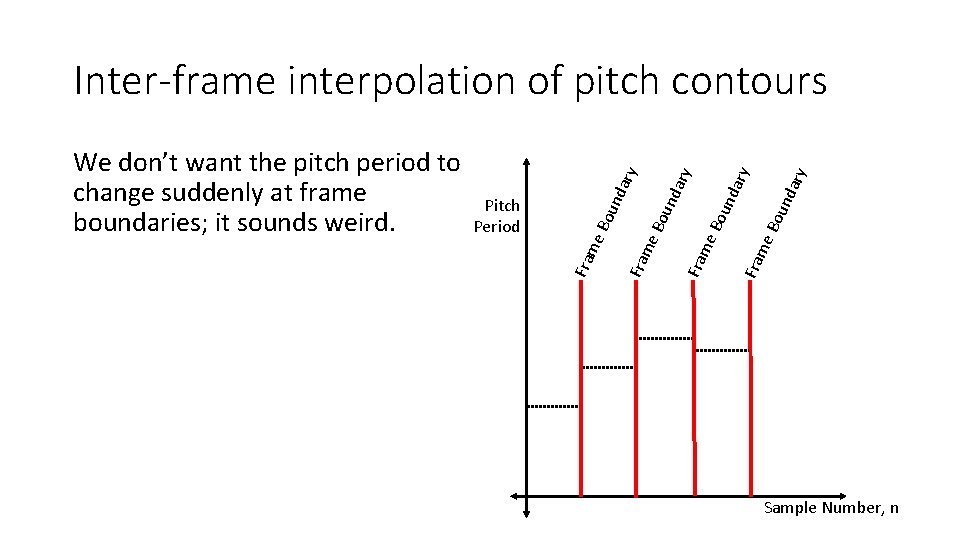
ry ry nda Bou me Fra me Bou nda ry Fra me Bou nda Bou me Pitch Period Fra We don’t want the pitch period to change suddenly at frame boundaries; it sounds weird. ry Inter-frame interpolation of pitch contours Sample Number, n
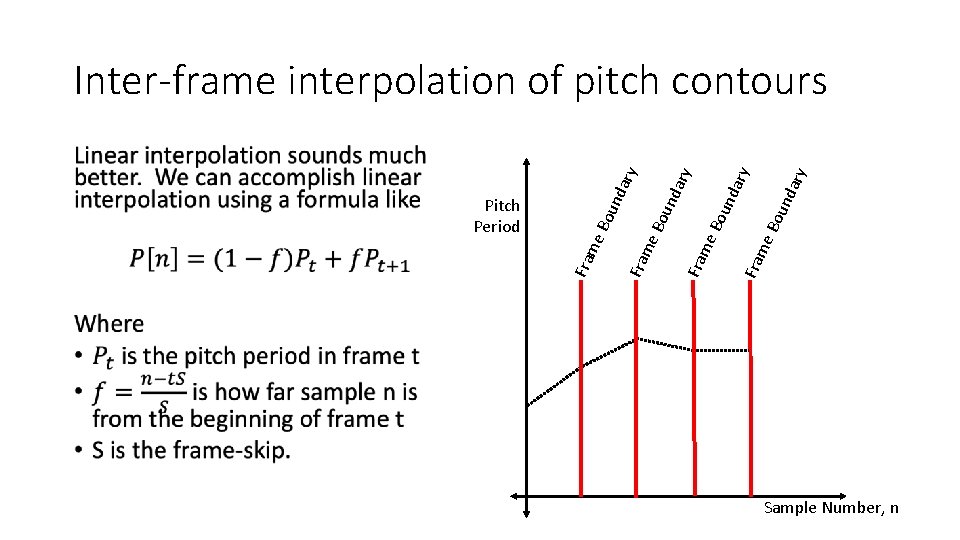
ry Fra me Bou nda nda Bou me Fra Pitch Period ry ry • ry Inter-frame interpolation of pitch contours Sample Number, n
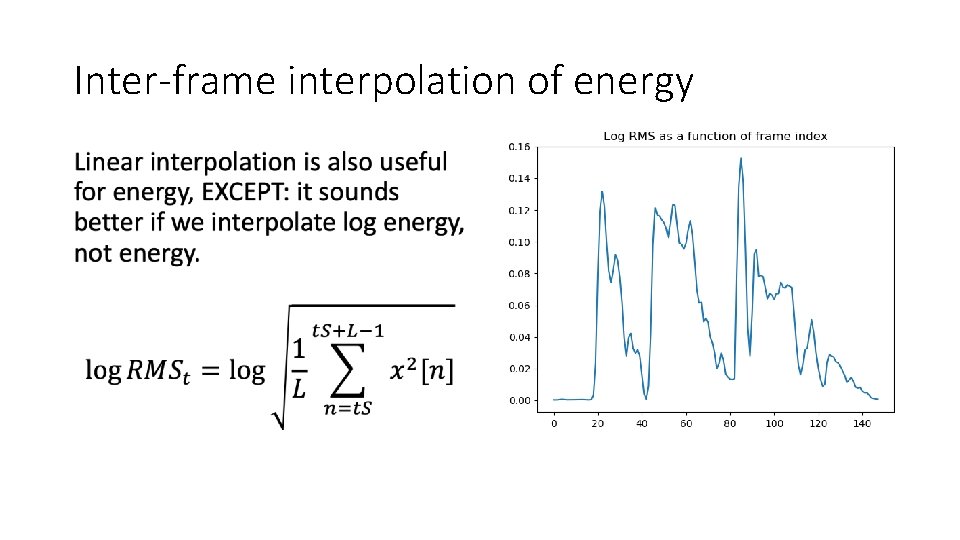
Inter-frame interpolation of energy •
Outline • The LPC-10 speech synthesis model • Autocorrelation-based pitch tracking • Inter-frame interpolation of pitch and energy contours • The LPC-10 excitation model: white noise, pulse train • Linear predictive coding: how to find the coefficients • Linear predictive coding: how to make sure the coefficients are stable
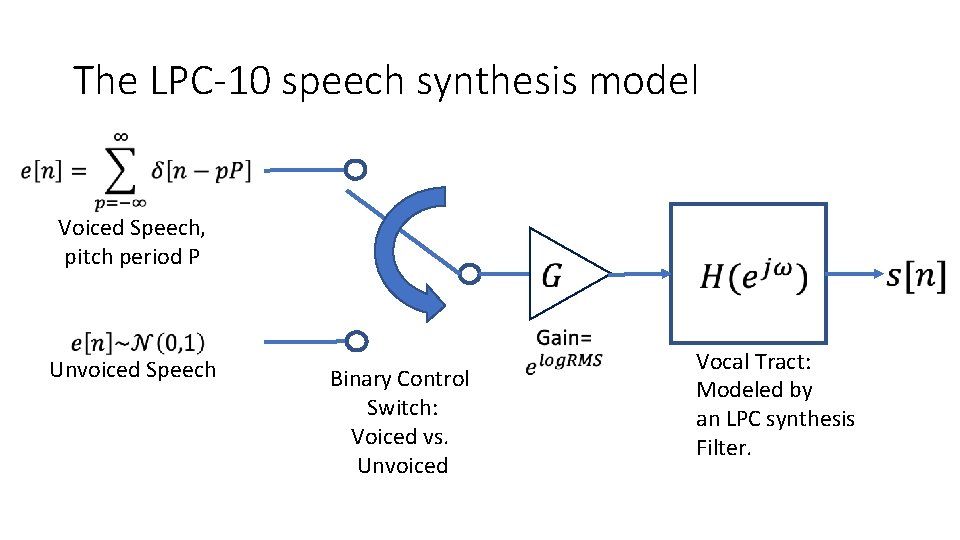
The LPC-10 speech synthesis model Unvoiced Speech G Voiced Speech, pitch period P Binary Control Switch: Voiced vs. Unvoiced Vocal Tract: Modeled by an LPC synthesis Filter.
![Unvoiced speech: e[n]=white noise • Use zero-mean, unit-variance Gaussian white noise • The choice,](http://slidetodoc.com/presentation_image_h2/c04c9687767bc1a136bdb99481539fe5/image-21.jpg "Unvoiced speech: e[n]=white noise • Use zero-mean, unit-variance Gaussian white noise • The choice,")
Unvoiced speech: e[n]=white noise • Use zero-mean, unit-variance Gaussian white noise • The choice, to use “unvoiced speech, ” is communicated by the special code word “P=0” By Morn - Own work, CC BY-SA 3. 0, https: //commons. wikimedia. org/w/index. php? curid=24084756
![Voiced speech: e[n]=pulse train •](http://slidetodoc.com/presentation_image_h2/c04c9687767bc1a136bdb99481539fe5/image-22.jpg "Voiced speech: e[n]=pulse train •")
Voiced speech: e[n]=pulse train •
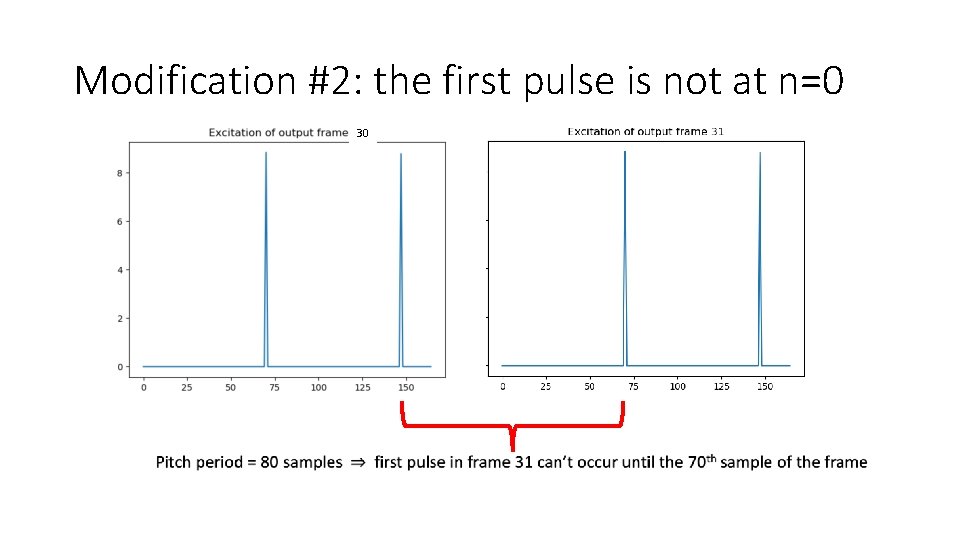
Modification #2: the first pulse is not at n=0 30
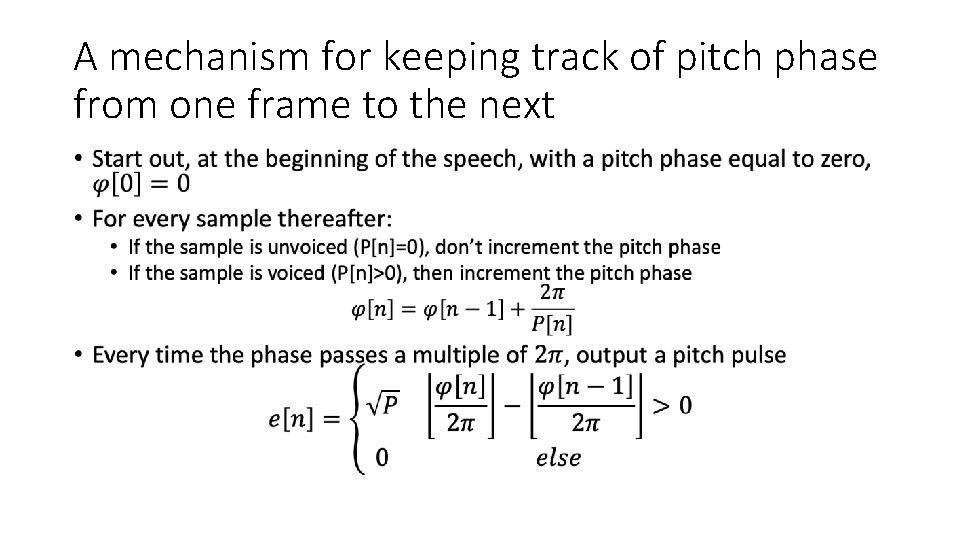
A mechanism for keeping track of pitch phase from one frame to the next •
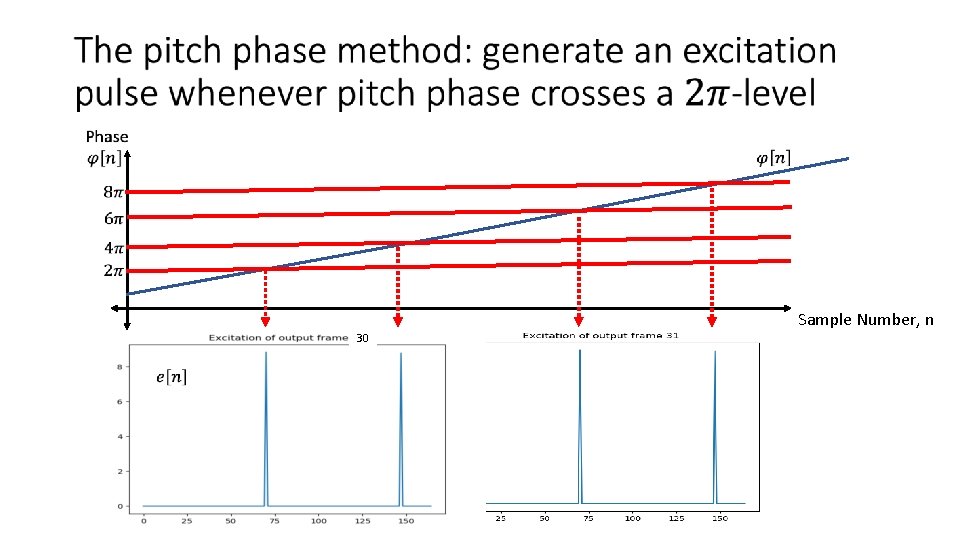
Sample Number, n 30
Outline • The LPC-10 speech synthesis model • Autocorrelation-based pitch tracking • Inter-frame interpolation of pitch and energy contours • The LPC-10 excitation model: white noise, pulse train • Linear predictive coding: how to find the coefficients • Linear predictive coding: how to make sure the coefficients are stable
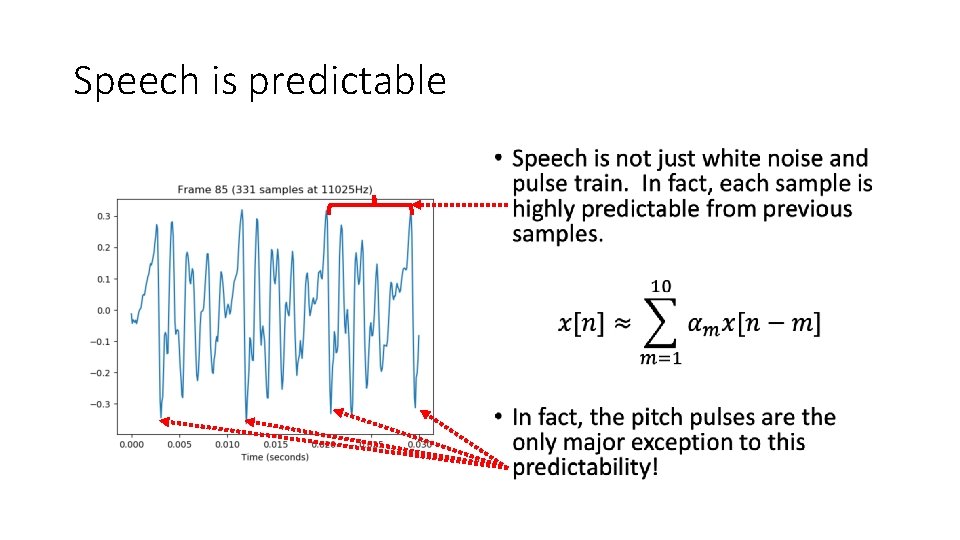
Speech is predictable •
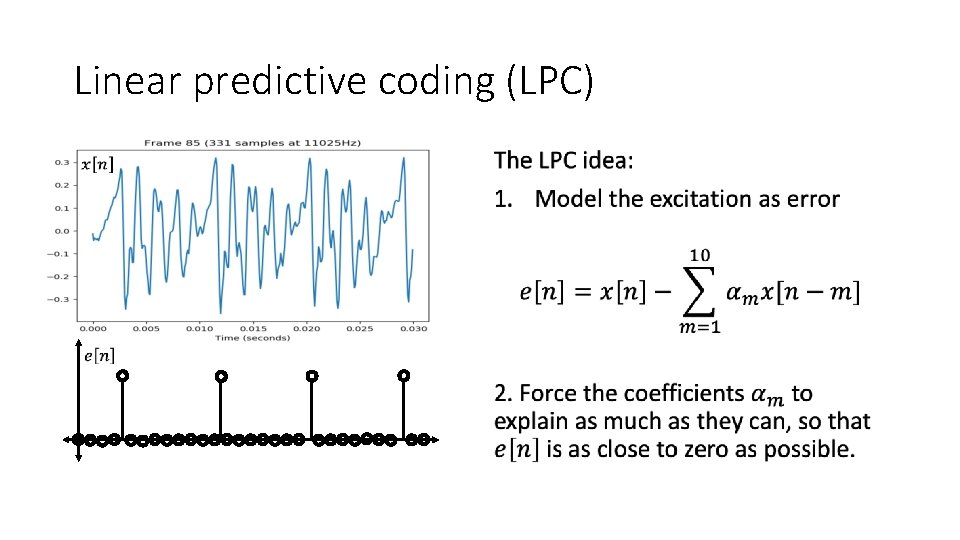
Linear predictive coding (LPC) •
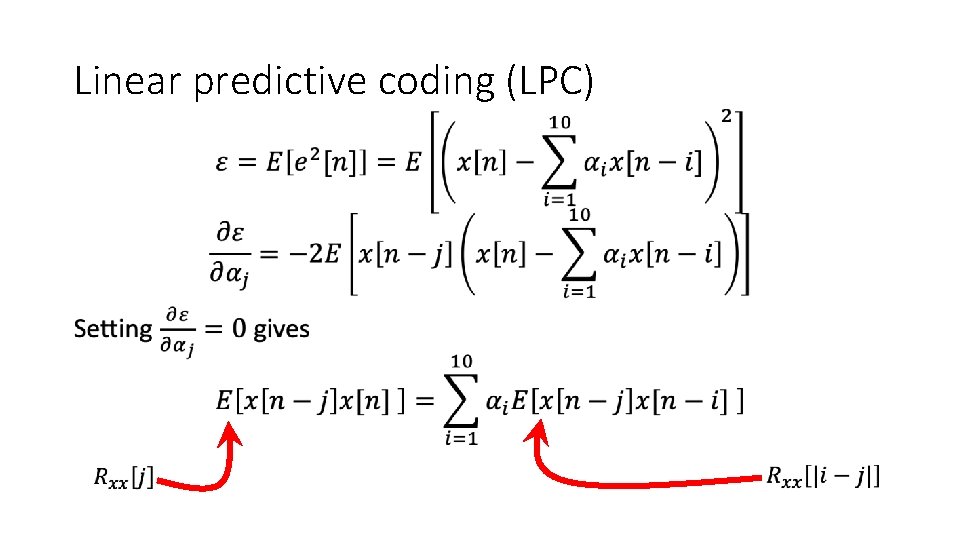
Linear predictive coding (LPC) •
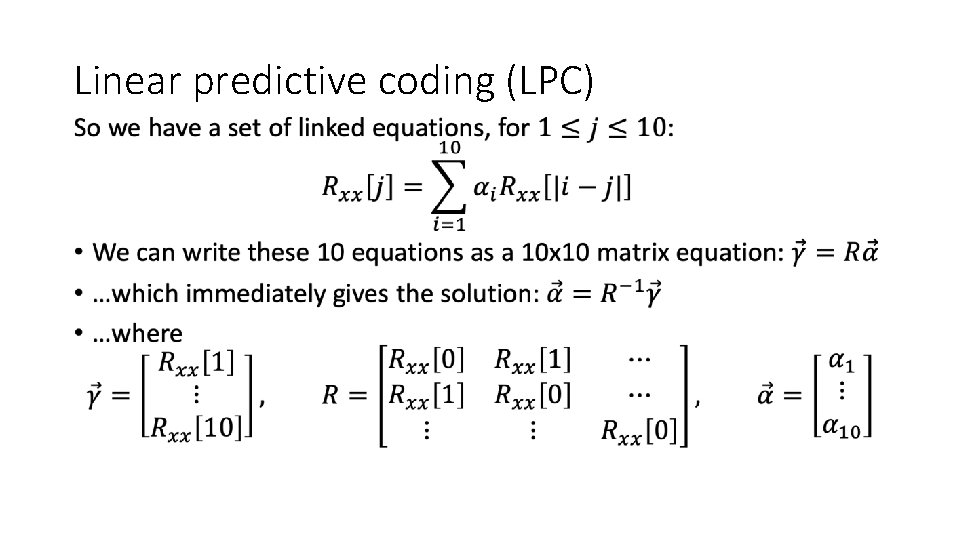
Linear predictive coding (LPC) •
Outline • The LPC-10 speech synthesis model • Autocorrelation-based pitch tracking • Inter-frame interpolation of pitch and energy contours • The LPC-10 excitation model: white noise, pulse train • Linear predictive coding: how to find the coefficients • Linear predictive coding: how to make sure the coefficients are stable
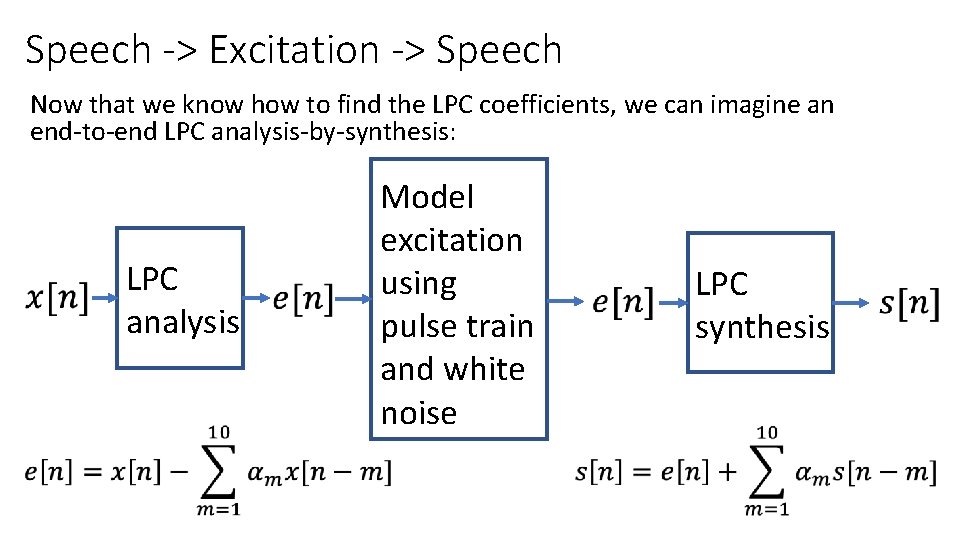
Speech -> Excitation -> Speech Now that we know how to find the LPC coefficients, we can imagine an end-to-end LPC analysis-by-synthesis: LPC analysis Model excitation using pulse train and white noise LPC synthesis
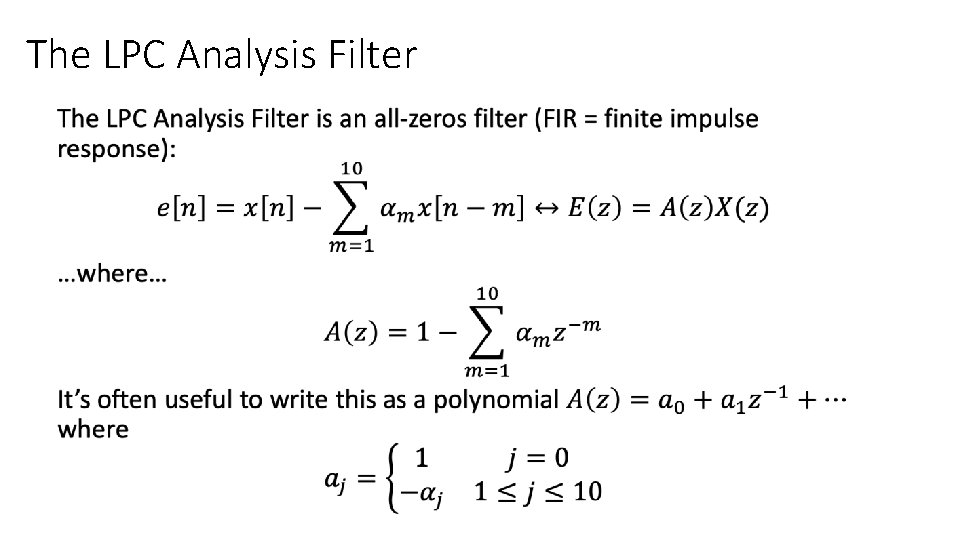
The LPC Analysis Filter •
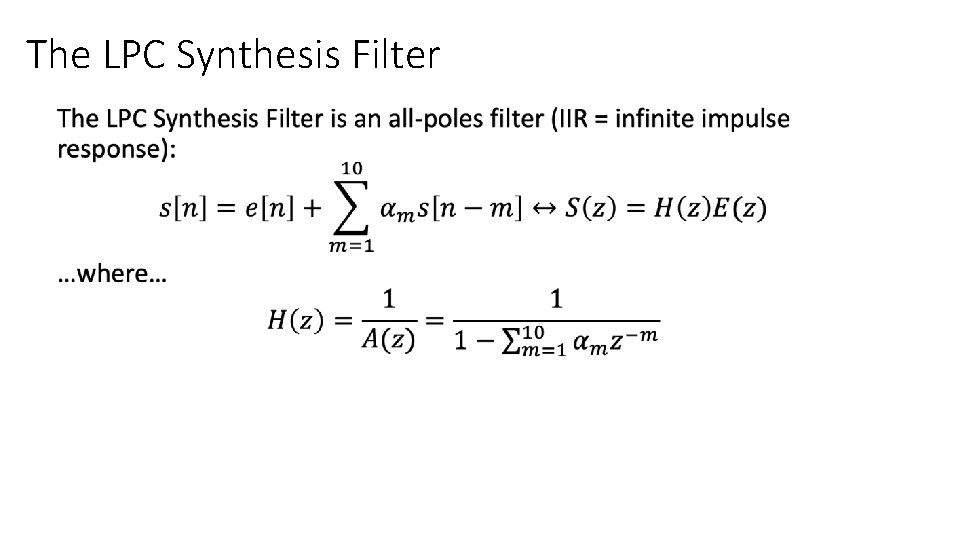
The LPC Synthesis Filter •
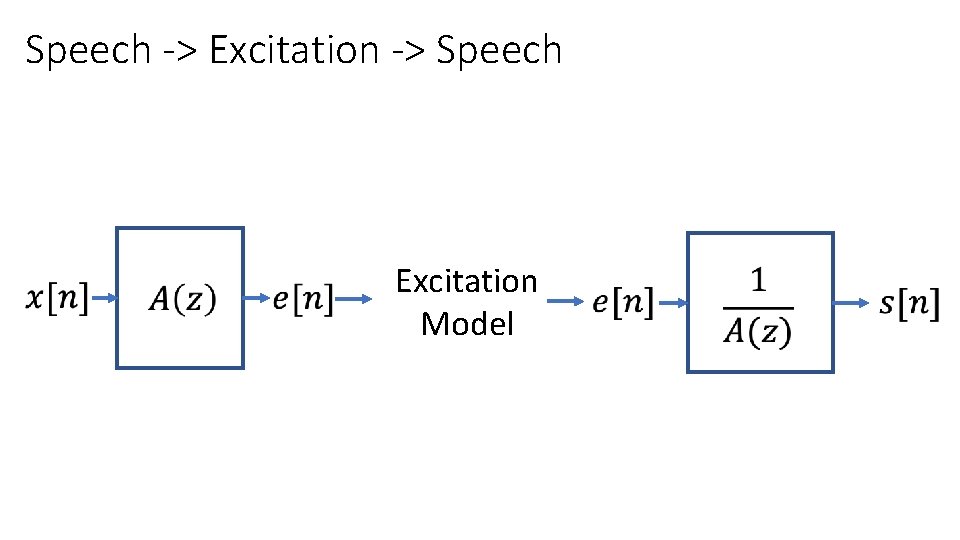
Speech -> Excitation -> Speech Excitation Model
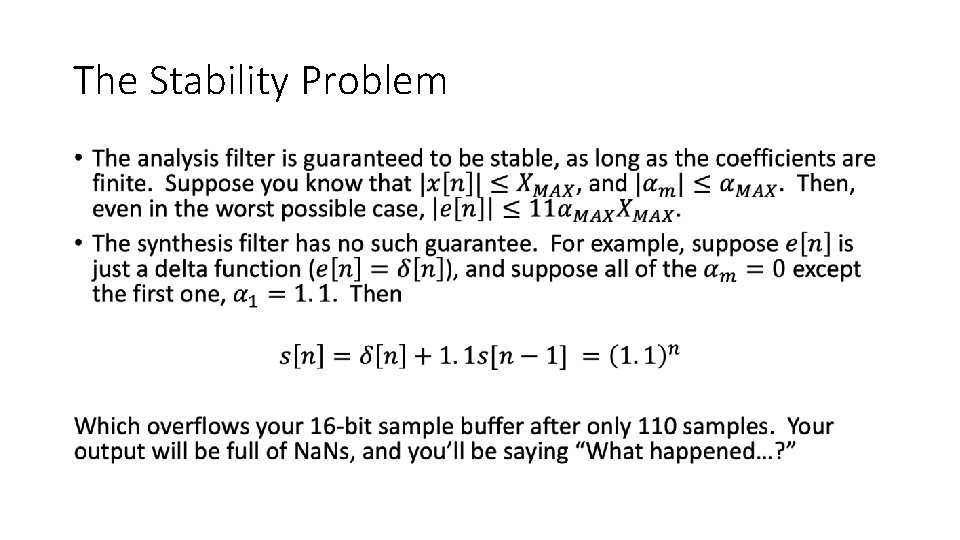
The Stability Problem •
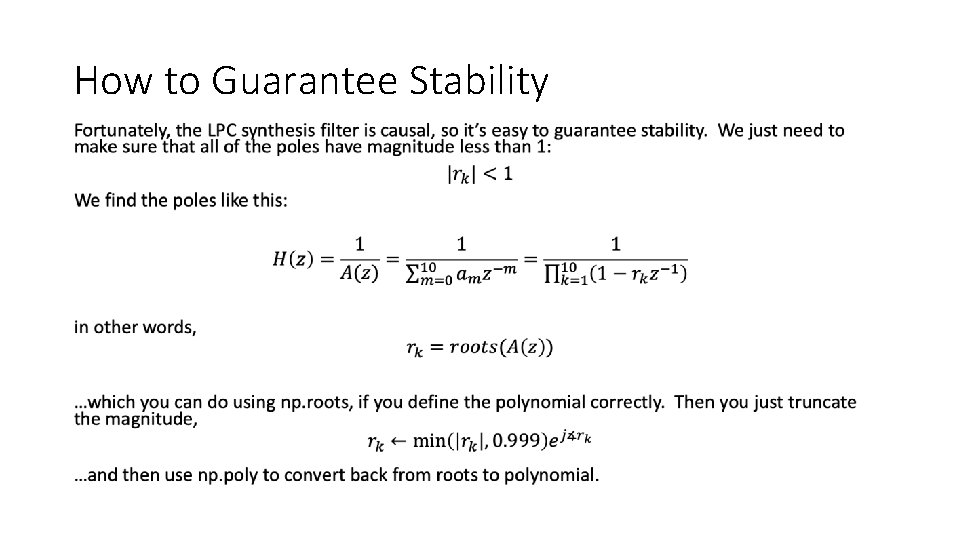
How to Guarantee Stability •
- Slides: 37