
Lecture 14 Conservative force potential energy potential and
- Slides: 25
Lecture 14 Conservative force, potential energy, potential and field (Chpt 14)
Summary from the previous lecture • Work leads to kinetic energy change • Work can be calculated for many examples of forces • The result can be expressed in term of energy conservation. • Is this always possible?
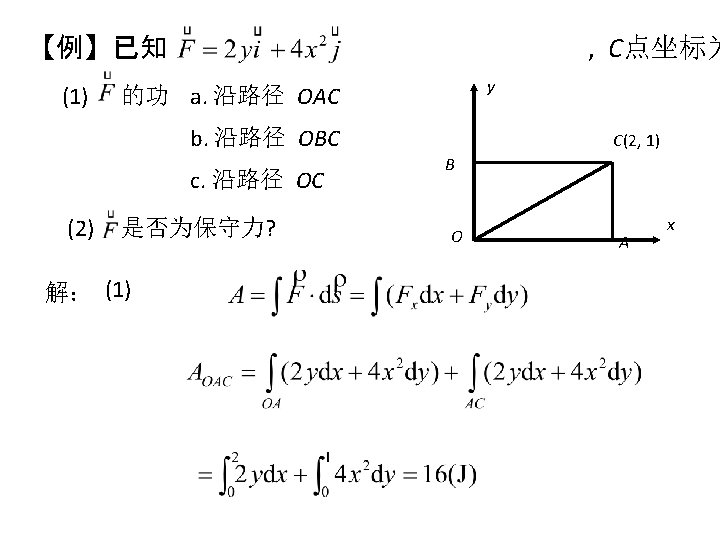
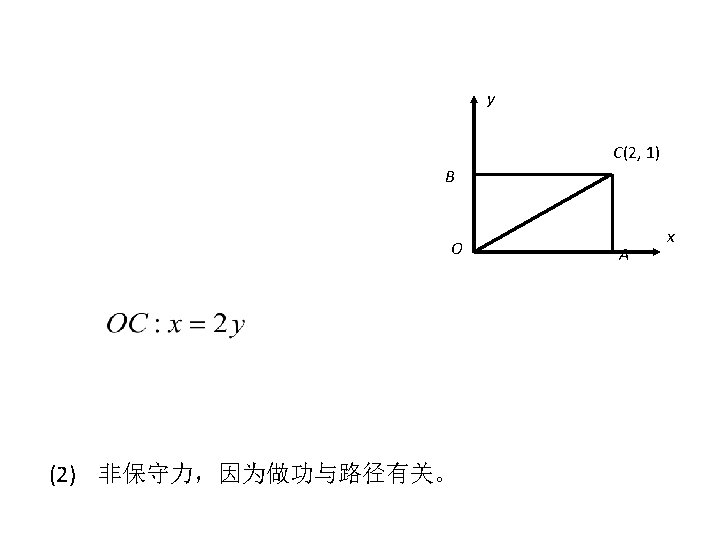
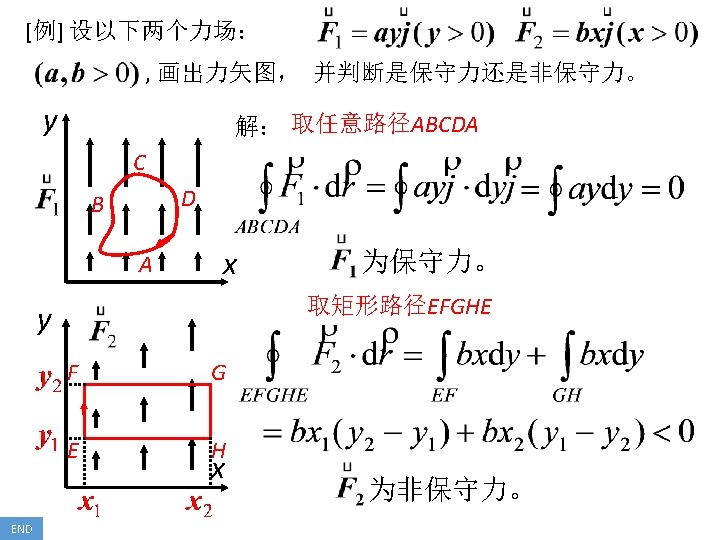
Conservative force • A conservative force is a force with the property that the work done in moving a particle between two points is independent of the taken path. • Spring, gravitational force, central force • Nonconservative forces, such as friction, do not have this property. • Nonconservative forces other than friction include other contact forces, tension, compression, and drag.
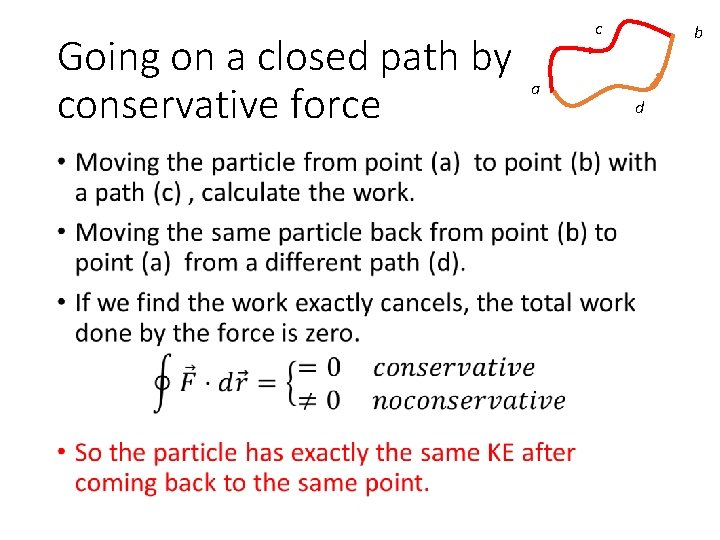
Going on a closed path by conservative force • c a b d
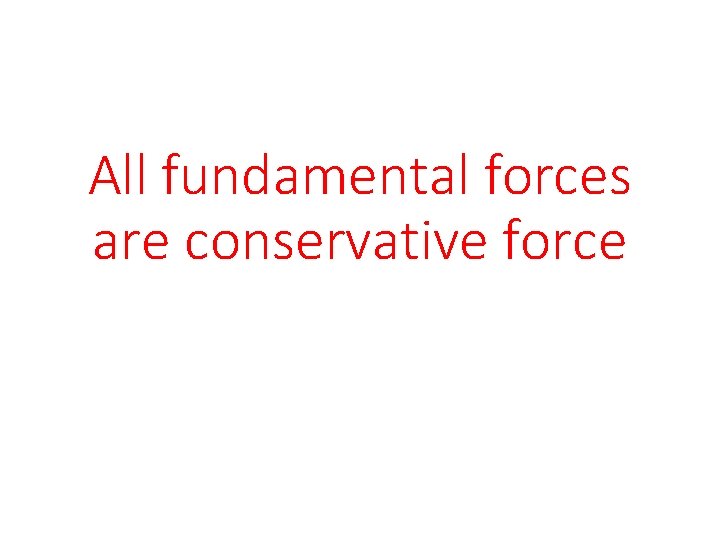
All fundamental forces are conservative force
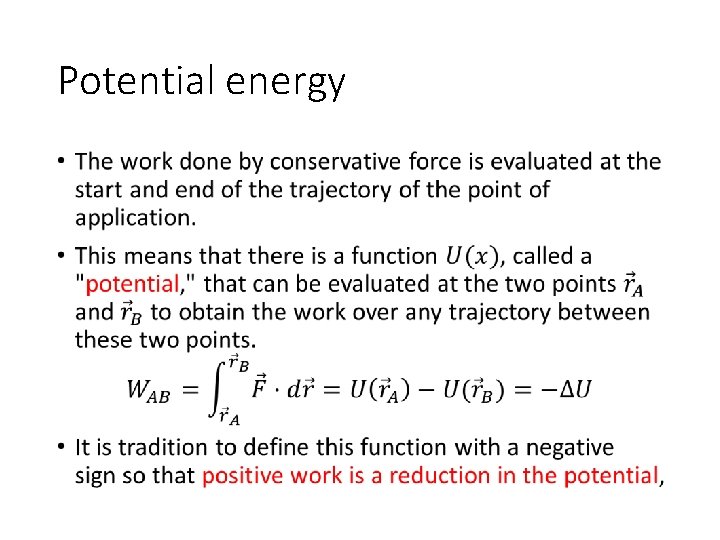
Potential energy •
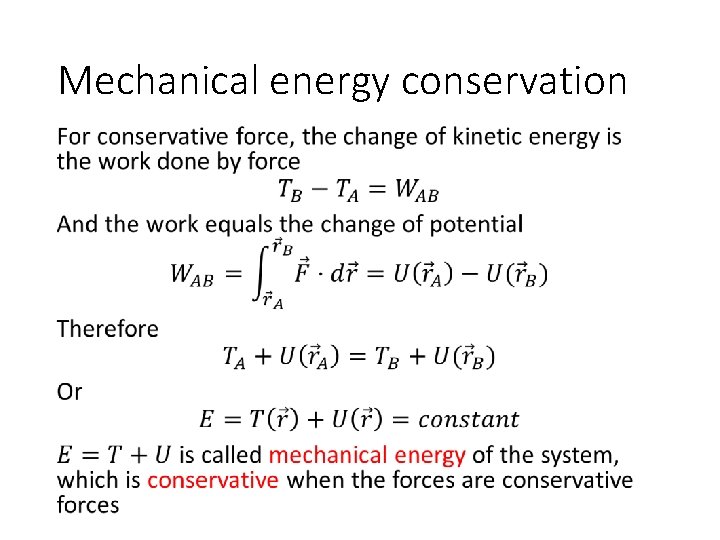
Mechanical energy conservation •
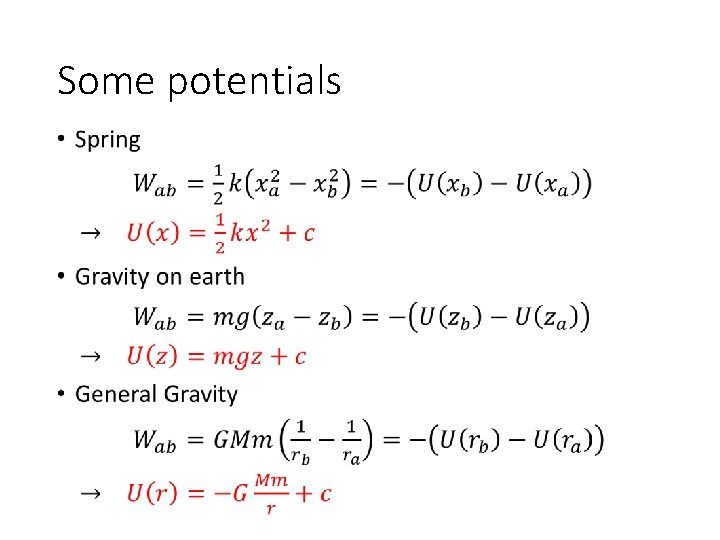
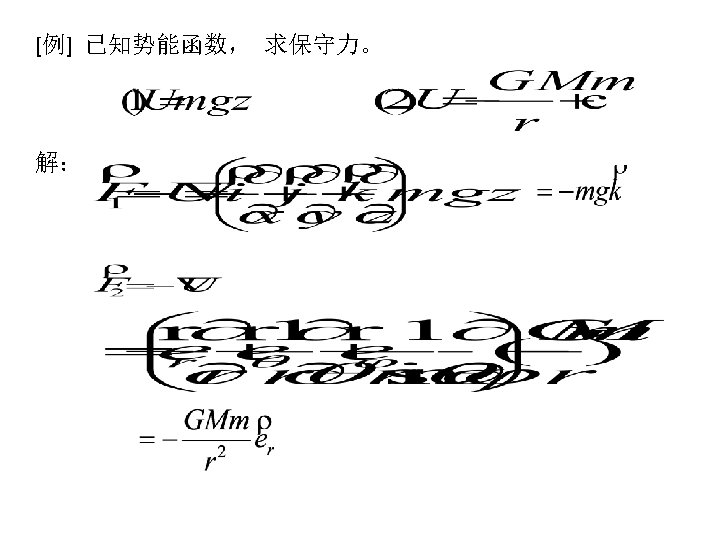
Some potentials •
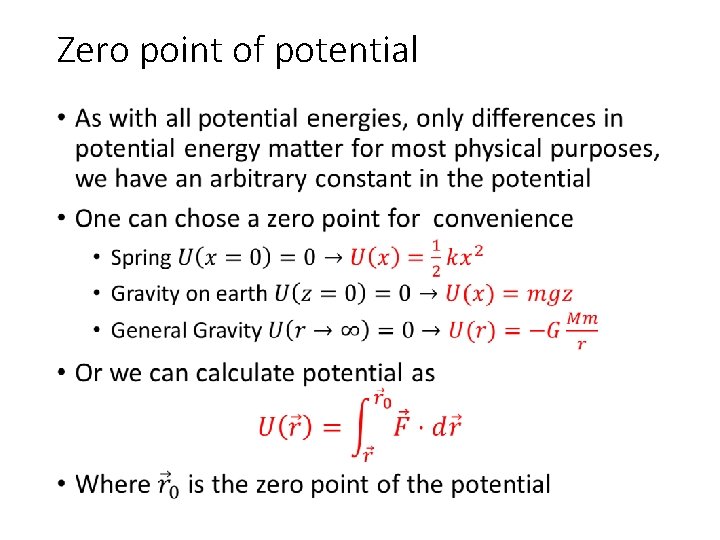
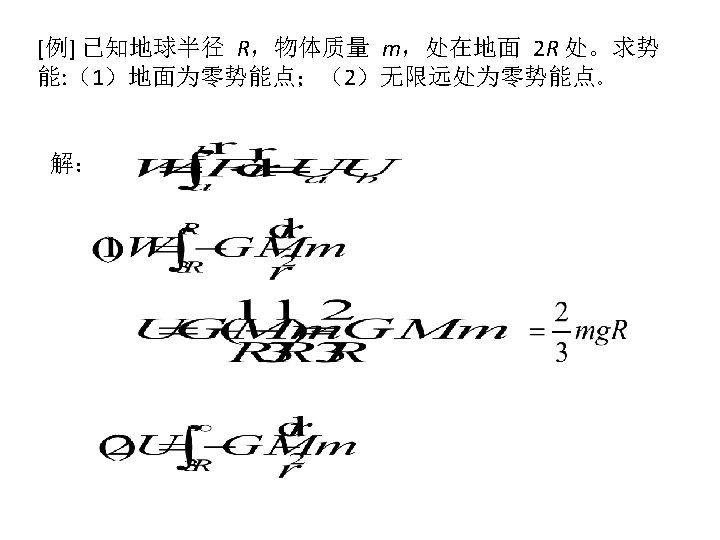
Zero point of potential •
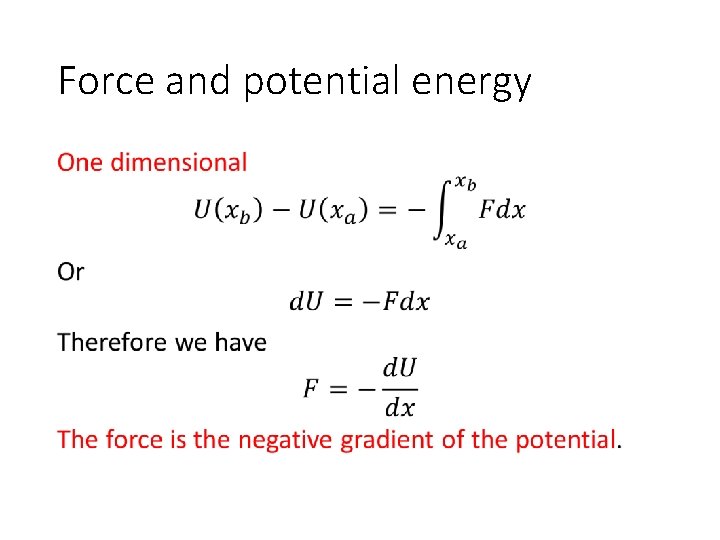
Force and potential energy •
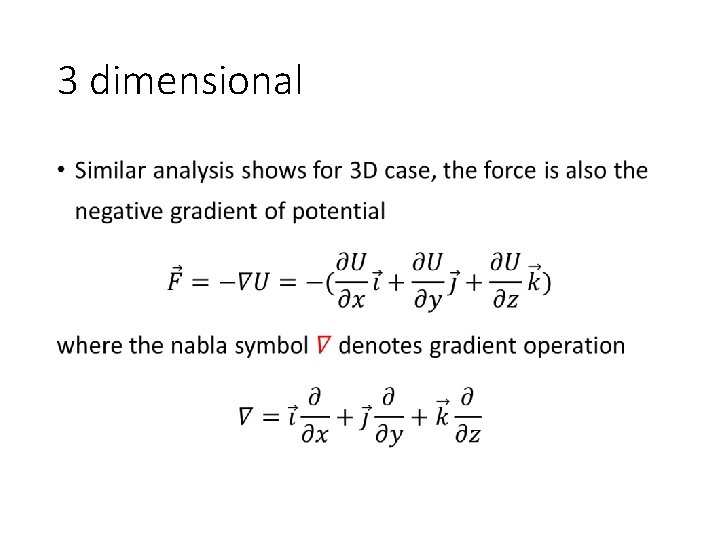
3 dimensional •
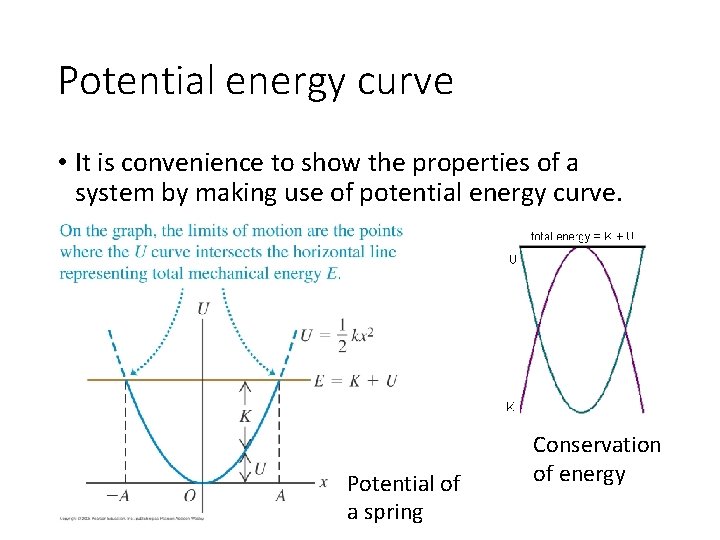
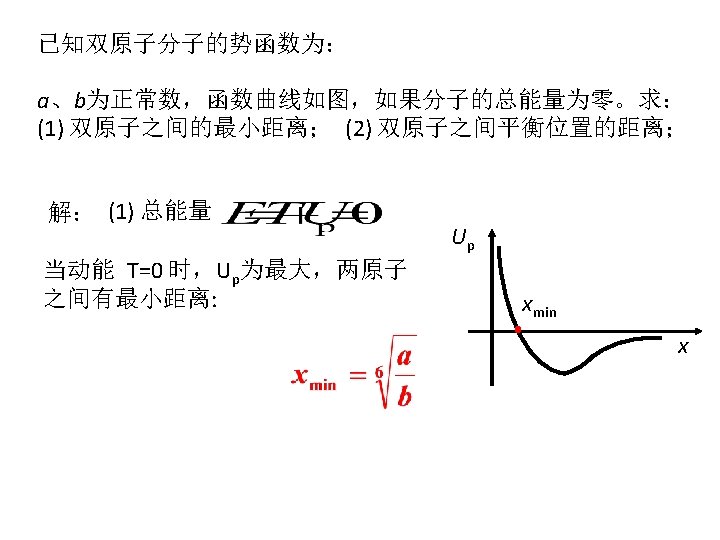
Potential energy curve • It is convenience to show the properties of a system by making use of potential energy curve. Potential of a spring Conservation of energy
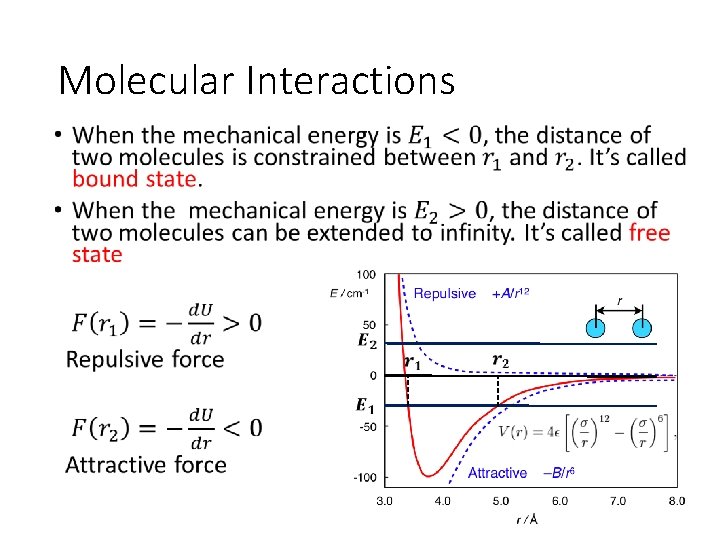
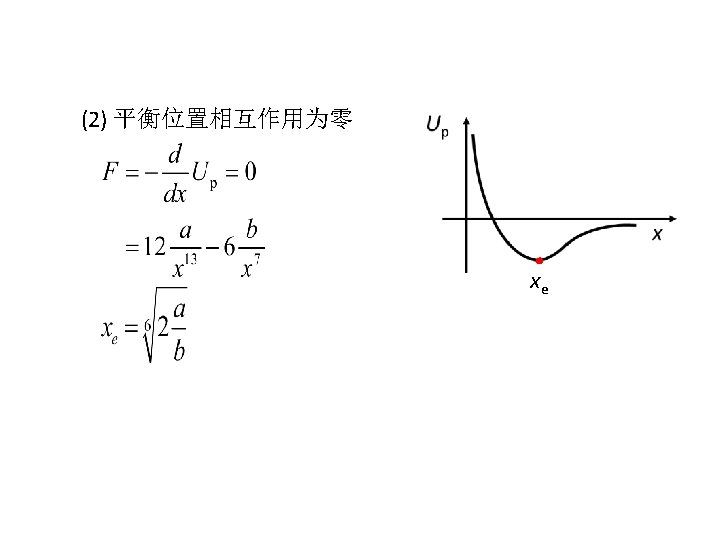
Molecular Interactions •
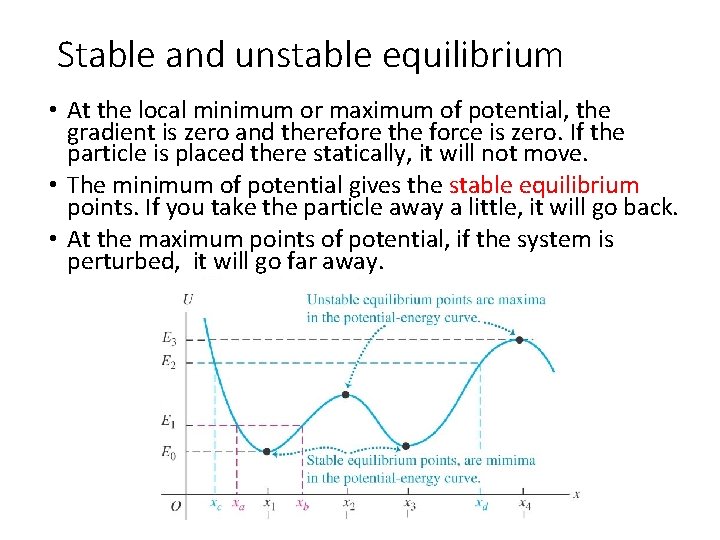
Stable and unstable equilibrium • At the local minimum or maximum of potential, the gradient is zero and therefore the force is zero. If the particle is placed there statically, it will not move. • The minimum of potential gives the stable equilibrium points. If you take the particle away a little, it will go back. • At the maximum points of potential, if the system is perturbed, it will go far away.
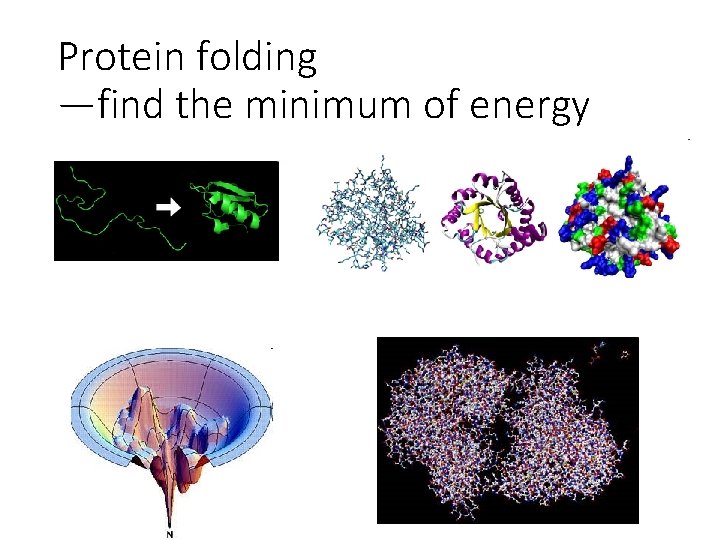
Protein folding —find the minimum of energy