
Lecture 14 Animal Classification 2 Kingdom Protista Eukaryotic
- Slides: 15
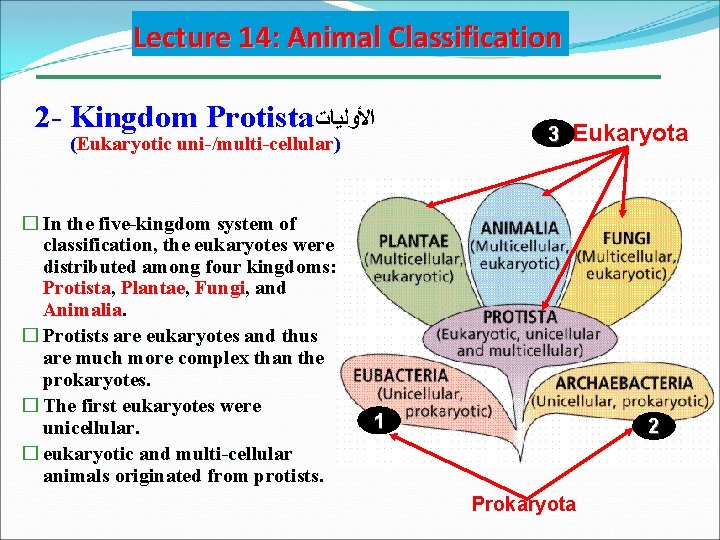
Lecture 14: Animal Classification 2 - Kingdom Protista ﺍﻷﻮﻟﻴﺎﺕ (Eukaryotic uni-/multi-cellular) � In the five-kingdom system of classification, the eukaryotes were distributed among four kingdoms: Protista, Plantae, Fungi, and Animalia. � Protists are eukaryotes and thus are much more complex than the prokaryotes. � The first eukaryotes were unicellular. � eukaryotic and multi-cellular animals originated from protists. 3 Eukaryota 1 2 Prokaryota
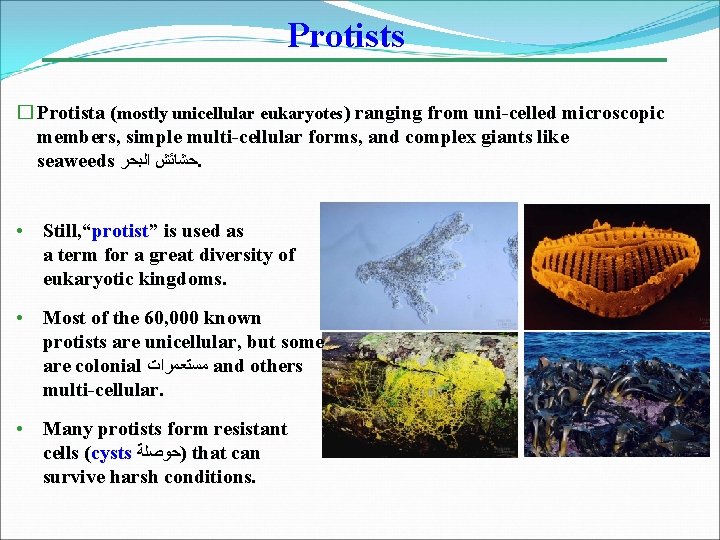
Protists � Protista (mostly unicellular eukaryotes) ranging from uni-celled microscopic members, simple multi-cellular forms, and complex giants like seaweeds ﺣﺸﺎﺋﺶ ﺍﻟﺒﺤﺮ. • Still, “protist” is used as a term for a great diversity of eukaryotic kingdoms. • Most of the 60, 000 known protists are unicellular, but some are colonial ﻣﺴﺘﻌﻤﺮﺍﺕ and others multi-cellular. • Many protists form resistant cells (cysts )ﺣﻮﺻﻠﺔ that can survive harsh conditions.
Characters of Protists ﺻﻔﺎﺕ ﺍﻷﻮﻟﻴﺎﺕ A)- Nutrition ﺍﻟﺘﻐﺬﻳﺔ : �Most protists are aerobic ﻫﻮﺍﺋﻴﺔ ﺍﻟﺘﻨﻔﺲ , with mitochondria for cellular respiration. �Some protists are photoautotrophs with chloroplasts. �Still others are heterotrophs that absorb organic molecules or ingest larger food particles. �A few are mixotrophs, combining photosynthesis and heterotrophic nutrition. �Protists may include photosynthetic species, heterotrophic species, and mixotrophic species.
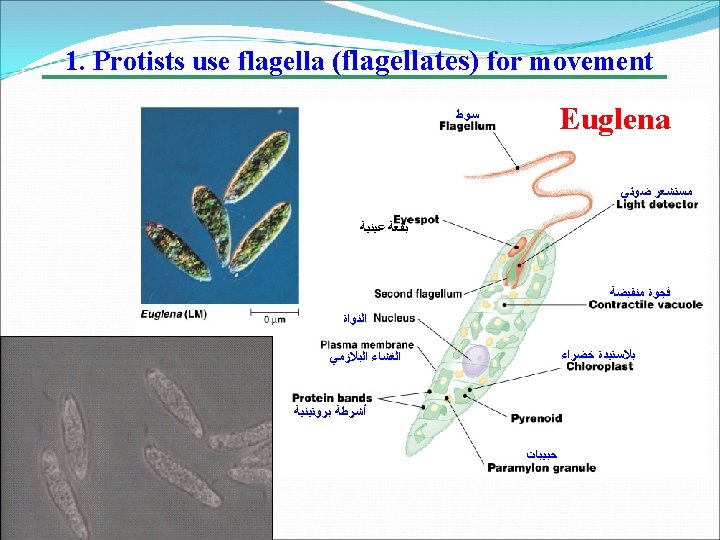
Protists B)- Movement ﺍﻟﺤﺮﻛﺔ : - Most protists move with flagella ﺍﻷﺴﻮﺍﻁ or cilia ﺍﻷﻬﺪﺍﺏ during some time in their life cycles. - The eukaryotic flagella are not homologous to those of prokaryotes. � The eukaryotic flagella are extensions of the cytoplasm with a support of the 9 + 2 microtubule system. � Cilia are shorter and more numerous than flagella. � Cilia and flagella move the cell with rhythmic power strokes, analogous to the oars of a boat. C)- Reproduction ﺍﻟﺘﻜﺎﺛﺮ : - Reproduction and life cycles are highly varied ﻣﺘﻨﻮﻉ among protists. Mitosis occurs in almost all protists. - Some protists are asexual ﻻﺟﻨﺴﻴﺔ. - Others are primarily asexual but can also reproduce sexually occasionally.
Protists F)- Importance ﺍﻷﻬﻤﻴﺔ : �Many protists are symbionts ﻣﺘﻄﻔﻠﺔ that inhabit the body fluids, tissues, or cells of hosts ﺍﻟﻌﺎﺋﻞ. �These symbiotic relationships span the continuum from mutualism to parasitism. �Some parasitic protists are important pathogens of animals ﻣﻤﺮﺿﺎﺕ ﻟﻠﺤﻴﻮﺍﻥ , including those that cause potentially fatal diseases in humans.
Protists (e. g. Euglena) G)- Example of Protista: Systematic Position ﺍﻟﻮﺿﻊ ﺍﻟﺘﻘﺴﻴﻤﻲ Kingdom: Protista ﺍﻷﻮﻟﻴﺎﺕ Subkingdom: Protozoa ﺗﺤﺖ ﻣﻤﻠﻜﺔ )ﻋﻮﻳﻠﻢ( ﺍﻷﻮﻟﻴﺎﺕ ﺍﻟﺤﻴﻮﺍﻧﻴﺔ Phylum: Protozoa ﺷﻌﺒﺔ ﺍﻷﻮﻟﻴﺎﺕ ﺍﻟﺤﻴﻮﺍﻧﻴﺔ Subphylum: Mastigophora ﺗﺤﺖ ﺷﻌﺒﺔ )ﺷﻌﻴﺒﺔ( ﺍﻟﺴﻮﻃﻴﺎﺕ example: Euglena ﺍﻟﻴﻮﺟﻠﻴﻨﺎ � a single-celled mixotrophic ﻣﺘﻌﺪﺩ ﺍﻟﻐﺬﺍﺀ protist, � can use chloroplasts to undergo photosynthesis if light is available � or live as a heterotroph by absorbing organic nutrients from the environment. � Reproduce asexually by “binary fission”. � Sometimes form resistant cells (cysts) that can survive harsh conditions.
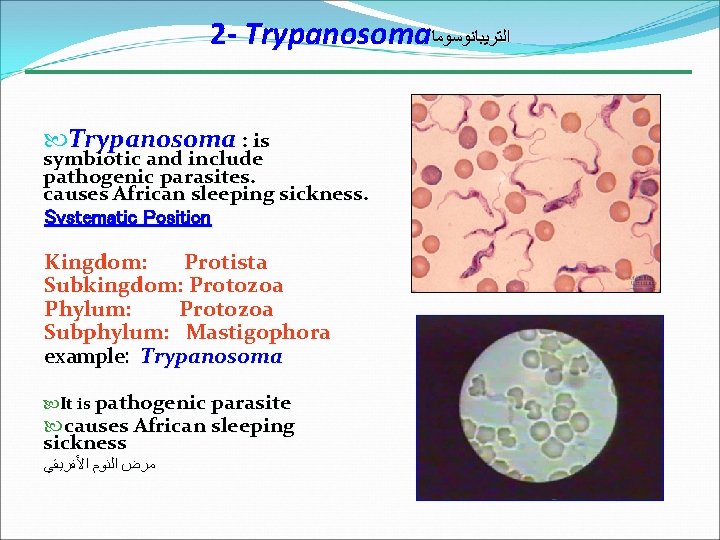
2 - Trypanosoma ﺍﻟﺘﺮﻳﺒﺎﻧﻮﺳﻮﻣﺎ Trypanosoma : is symbiotic and include pathogenic parasites. causes African sleeping sickness. Systematic Position Kingdom: Protista Subkingdom: Protozoa Phylum: Protozoa Subphylum: Mastigophora example: Trypanosoma It is pathogenic parasite causes African sleeping sickness ﻣﺮﺽ ﺍﻟﻨﻮﻡ ﺍﻷﻔﺮﻳﻘﻲ
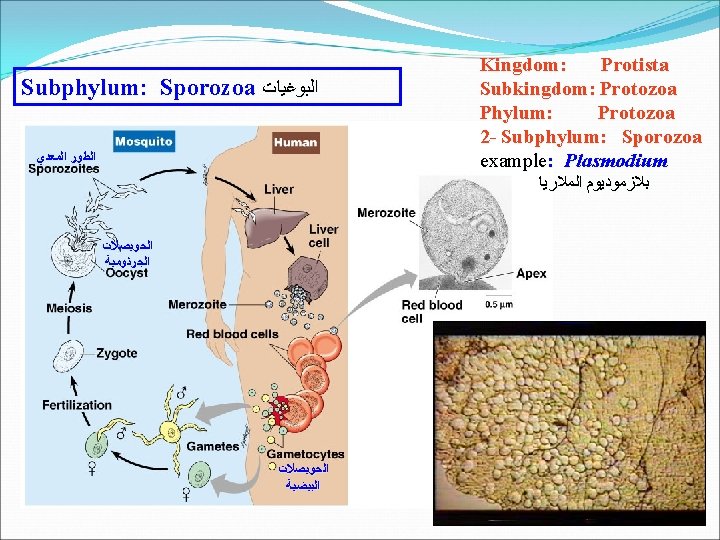
3. Parasitic Protists: Apicomplexans ﻣﻌﻘﺪﺓ ﺍﻟﻘﻤﺔ �All apicomplexans are parasites of animals and some cause serious human diseases. �The parasites are tiny infectious cells ﺧﻼﻳﺎ ﺻﻐﻴﺮﺓ ﻣﻤﺮﺿﺔ (sporozoites) with a complex of organelles specialized for penetrating ﺍﺧﺘﺮﺍﻕ host cells and tissues at the apex ﻗﻤﺔ of the sporozoite cell. �Most apicomplexans have life cycles with both sexual and asexual stages and often require two or more different host species for completion. �Plasmodium, the parasite that causes malaria, spends part of its life in mosquitoes and part in humans.
Subphylum: Ciliophora ﺍﻟﻬﺪﺑﻴﺎﺕ , Protists use cilia ﺃﻬﺪﺍﺏ for movement �The Ciliophora (ciliates), a diverse protist group, is named for their use of cilia to move and feed. �Most ciliates live in freshwater. �Their cilia coordinate movement. �Some ciliates are completely covered by rows of cilia, whereas others have cilia clustered into fewer rows. �The specific arrangement of cilia adapts the ciliates for their lifestyles.
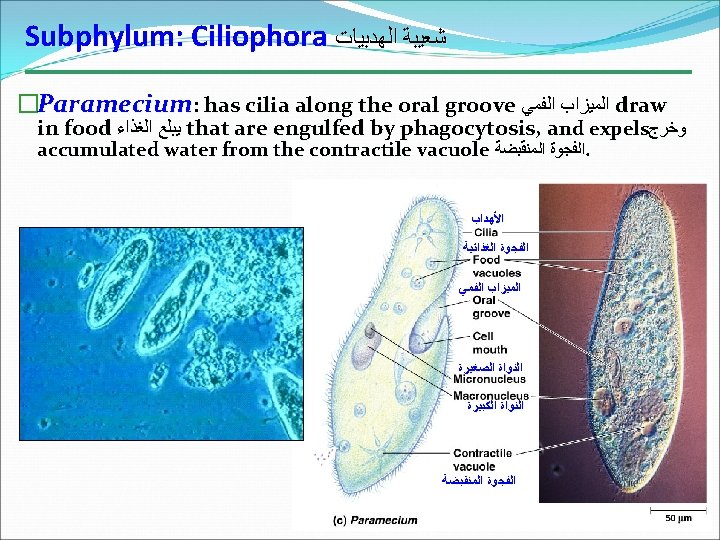
Paramecium �Paramecium has two types of nuclei, a large macronucleus and usually several tiny micronuclei. �Paramecium generally reproduce asexually by binary fission of the macronucleus, rather than mitotic division. �The micronuclei (with between 1 and 80 copies) are required for sexual processes that generate genetic variation.
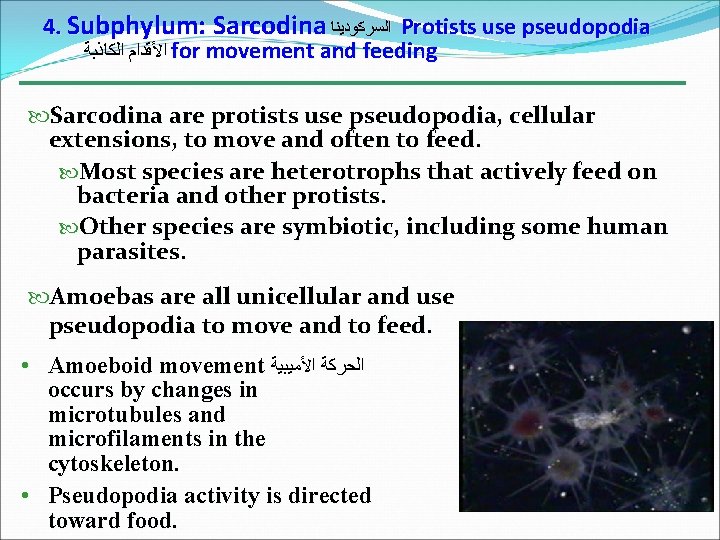
4. Subphylum: Sarcodina ﺍﻟﺴﺮﻛﻮﺩﻳﻨﺎ Protists use pseudopodia ﺍﻷﻘﺪﺍﻡ ﺍﻟﻜﺎﺫﺑﺔ for movement and feeding Sarcodina are protists use pseudopodia, cellular extensions, to move and often to feed. Most species are heterotrophs that actively feed on bacteria and other protists. Other species are symbiotic, including some human parasites. Amoebas are all unicellular and use pseudopodia to move and to feed. • Amoeboid movement ﺍﻟﺤﺮﻛﺔ ﺍﻷﻤﻴﺒﻴﺔ occurs by changes in microtubules and microfilaments in the cytoskeleton. • Pseudopodia activity is directed toward food.
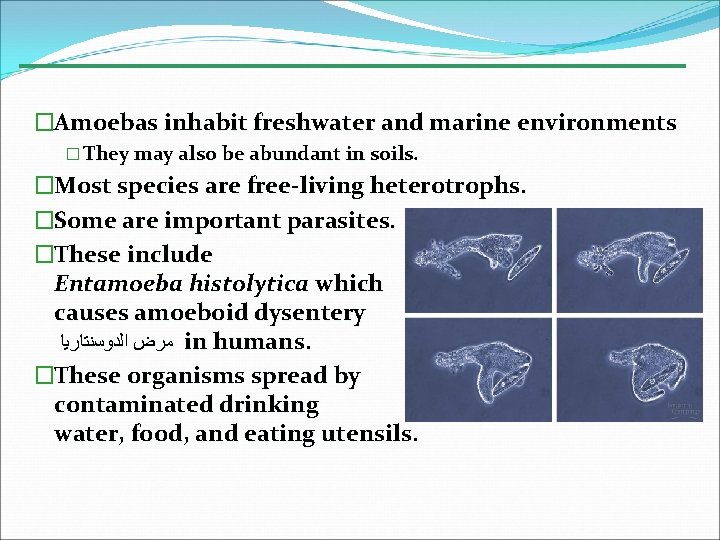
�Amoebas inhabit freshwater and marine environments � They may also be abundant in soils. �Most species are free-living heterotrophs. �Some are important parasites. �These include Entamoeba histolytica which causes amoeboid dysentery ﻣﺮﺽ ﺍﻟﺪﻭﺳﻨﺘﺎﺭﻳﺎ in humans. �These organisms spread by contaminated drinking water, food, and eating utensils.