
Lecture 13 CRISIS PHASES 1 The 6 Phases

- Slides: 29
Lecture 13 CRISIS PHASES 1
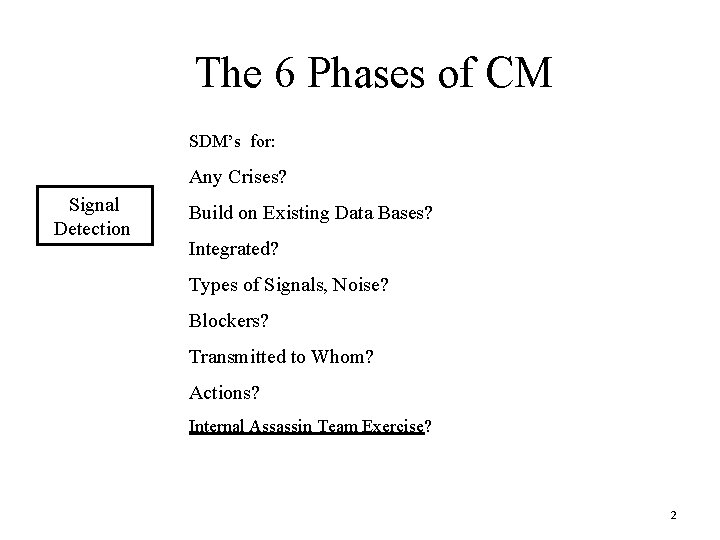
The 6 Phases of CM SDM’s for: Any Crises? Signal Detection Build on Existing Data Bases? Integrated? Types of Signals, Noise? Blockers? Transmitted to Whom? Actions? Internal Assassin Team Exercise? 2
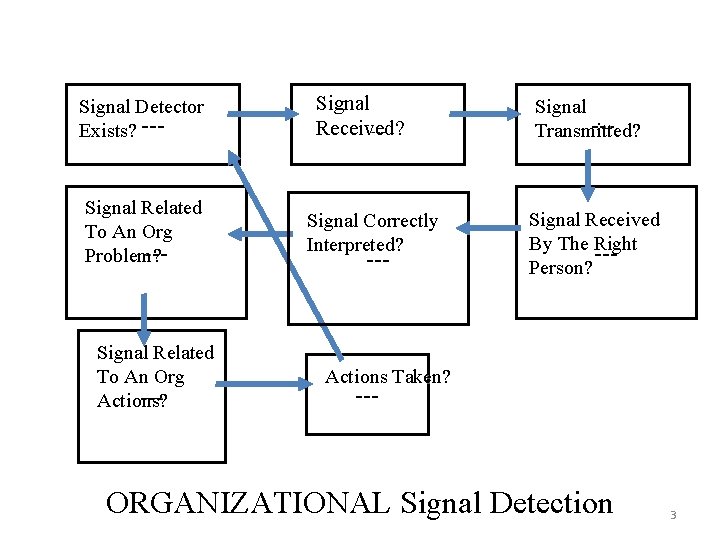
Signal Detector Exists? --- Signal Related To An Org --Problem? Signal Related To An Org --Actions? Signal Received? --- Signal Correctly Interpreted? --- Signal --Transmitted? Signal Received By The Right --Person? Actions Taken? --- ORGANIZATIONAL Signal Detection 3
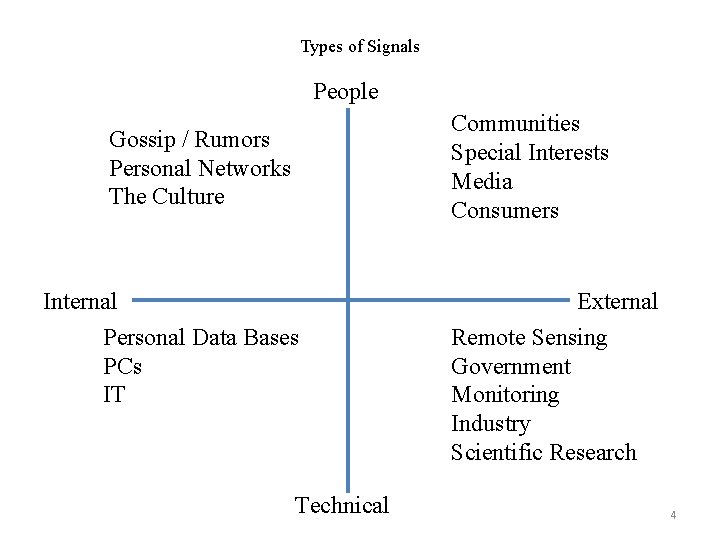
Types of Signals People Communities Special Interests Media Consumers Gossip / Rumors Personal Networks The Culture Internal Personal Data Bases PCs IT Technical External Remote Sensing Government Monitoring Industry Scientific Research 4
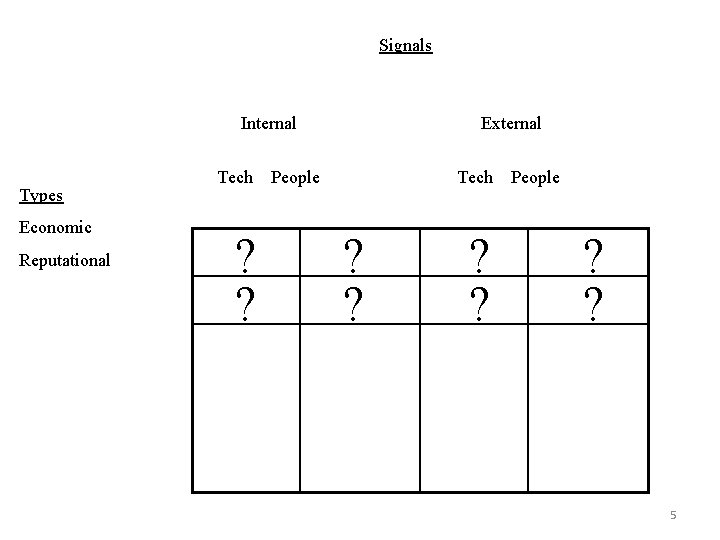
Signals Types Economic Reputational Internal External Tech People ? ? 5
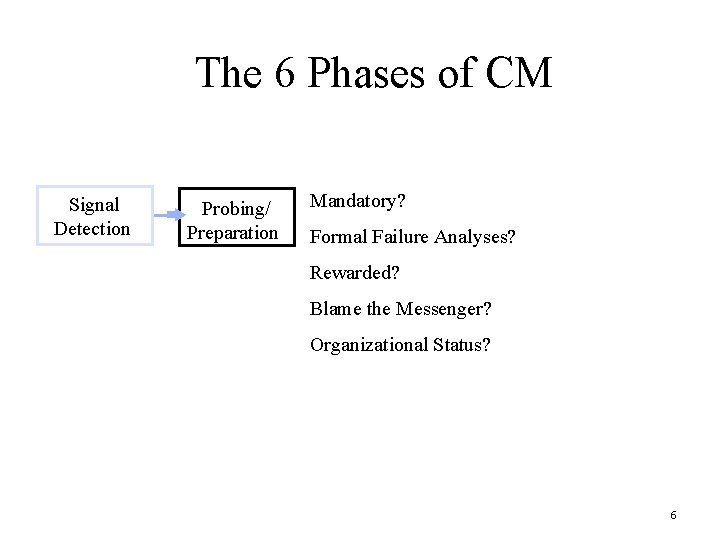
The 6 Phases of CM Signal Detection Probing/ Preparation Mandatory? Formal Failure Analyses? Rewarded? Blame the Messenger? Organizational Status? 6
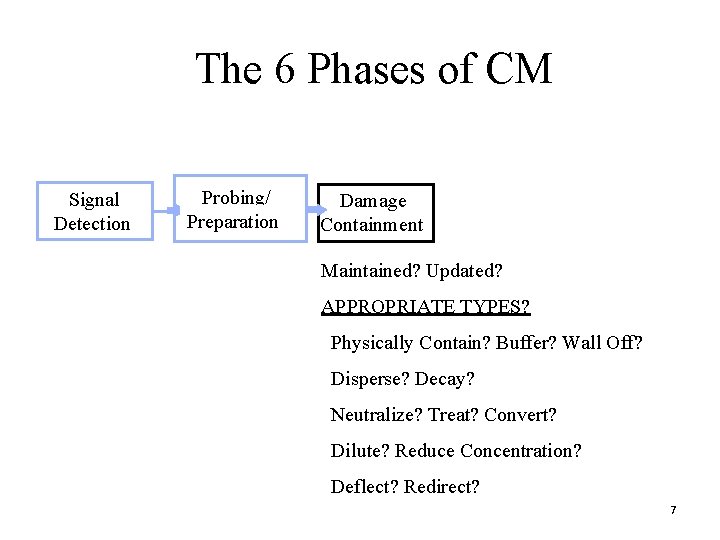
The 6 Phases of CM Signal Detection Probing/ Preparation Damage Containment Maintained? Updated? APPROPRIATE TYPES? Physically Contain? Buffer? Wall Off? Disperse? Decay? Neutralize? Treat? Convert? Dilute? Reduce Concentration? Deflect? Redirect? 7
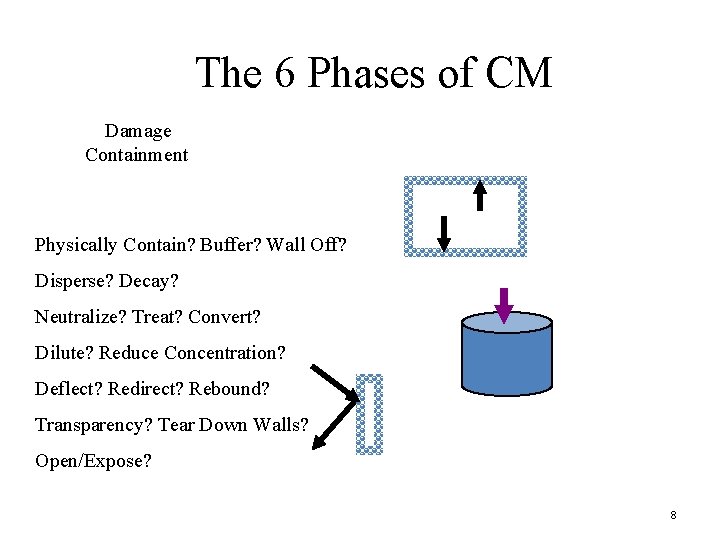
The 6 Phases of CM Damage Containment Physically Contain? Buffer? Wall Off? Disperse? Decay? Neutralize? Treat? Convert? Dilute? Reduce Concentration? Deflect? Redirect? Rebound? Transparency? Tear Down Walls? Open/Expose? 8
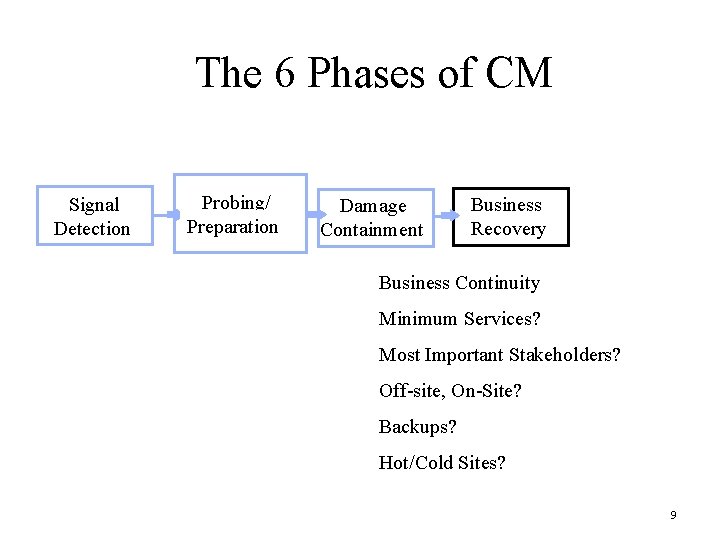
The 6 Phases of CM Signal Detection Probing/ Preparation Damage Containment Business Recovery Business Continuity Minimum Services? Most Important Stakeholders? Off-site, On-Site? Backups? Hot/Cold Sites? 9
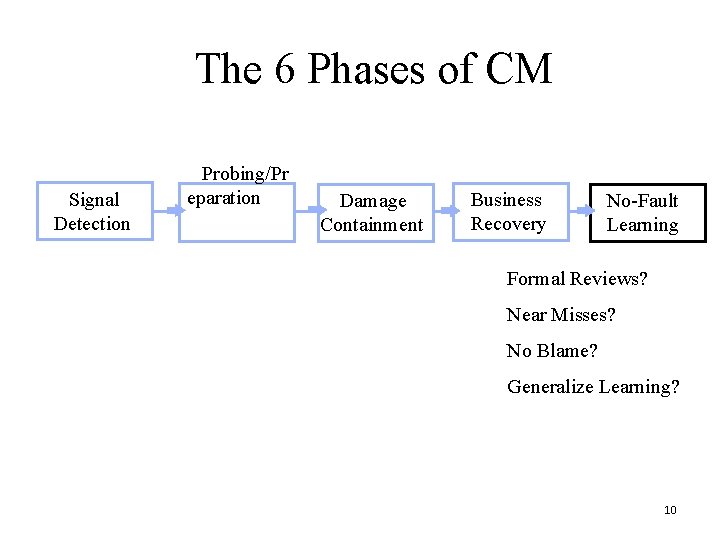
The 6 Phases of CM Signal Detection Probing/Pr eparation Damage Containment Business Recovery No-Fault Learning Formal Reviews? Near Misses? No Blame? Generalize Learning? 10
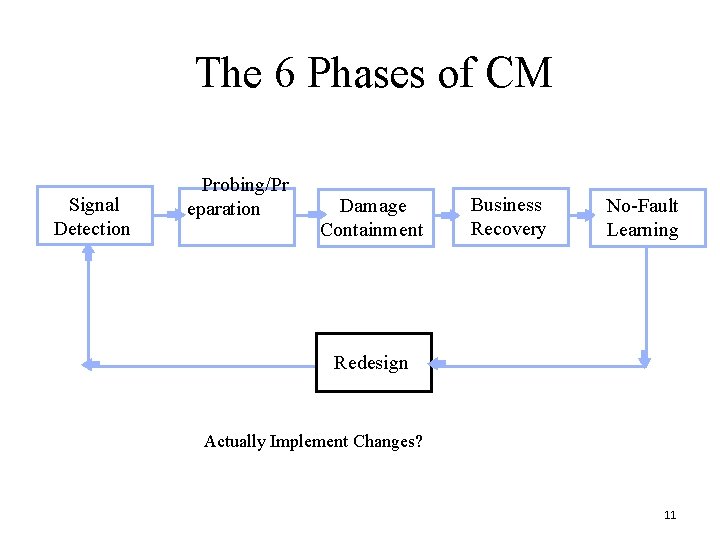
The 6 Phases of CM Signal Detection Probing/Pr eparation Damage Containment Business Recovery No-Fault Learning Redesign Actually Implement Changes? 11
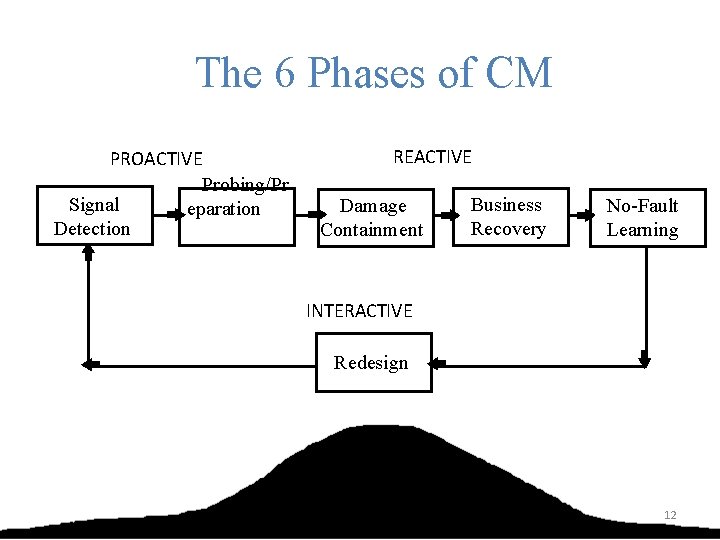
The 6 Phases of CM PROACTIVE Probing/Pr Signal eparation Detection REACTIVE Damage Containment Business Recovery No-Fault Learning INTERACTIVE Redesign 12
Root Causes Crisis system 3. CRISIS YSTEMS 13
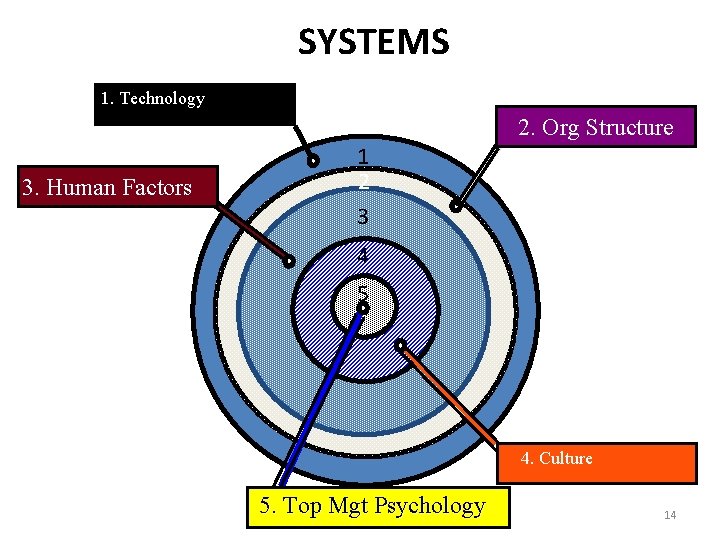
SYSTEMS 1. Technology 2. Org Structure 3. Human Factors 1 2 3 4 5 4. Culture 5. Top Mgt Psychology 14
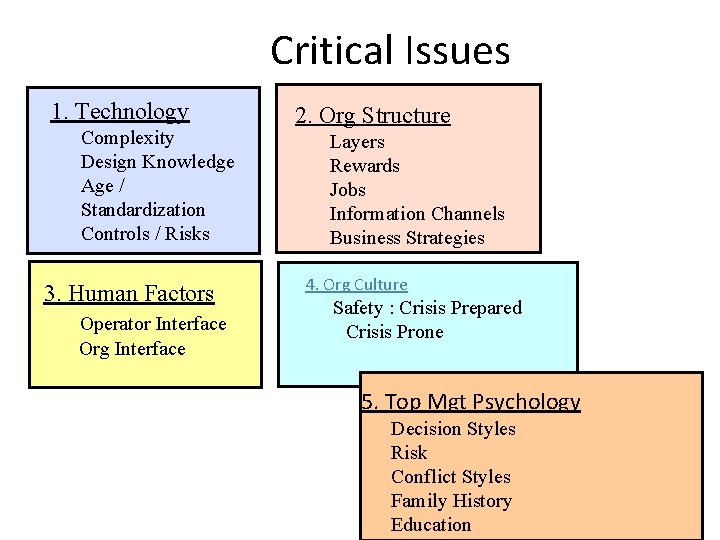
Critical Issues 1. Technology Complexity Design Knowledge Age / Standardization Controls / Risks 3. Human Factors Operator Interface Org Interface 2. Org Structure Layers Rewards Jobs Information Channels Business Strategies 4. Org Culture Safety : Crisis Prepared Crisis Prone 5. Top Mgt Psychology Decision Styles Risk Conflict Styles Family History Education 15
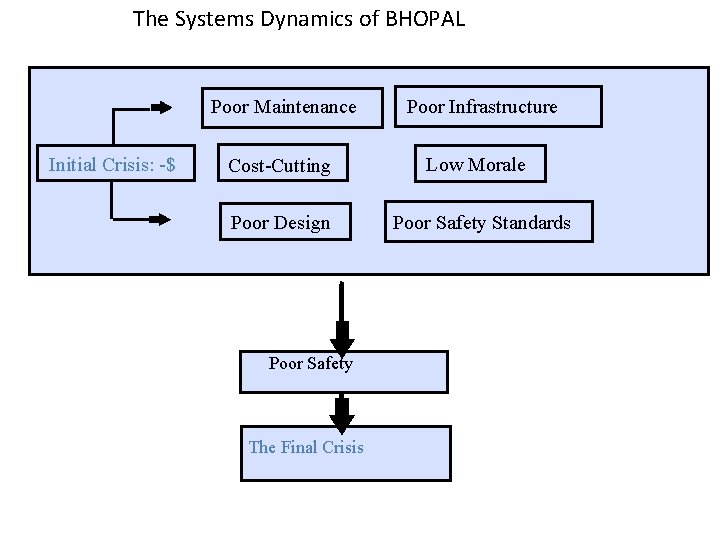
The Systems Dynamics of BHOPAL Poor Maintenance Initial Crisis: -$ Cost-Cutting Poor Design Poor Safety The Final Crisis Poor Infrastructure Low Morale Poor Safety Standards
Organizational Issues Well-Trained CM Team? Appropriate Functions? Facilitate? Conflict Management? Org Flexibility? Share Resources? 17
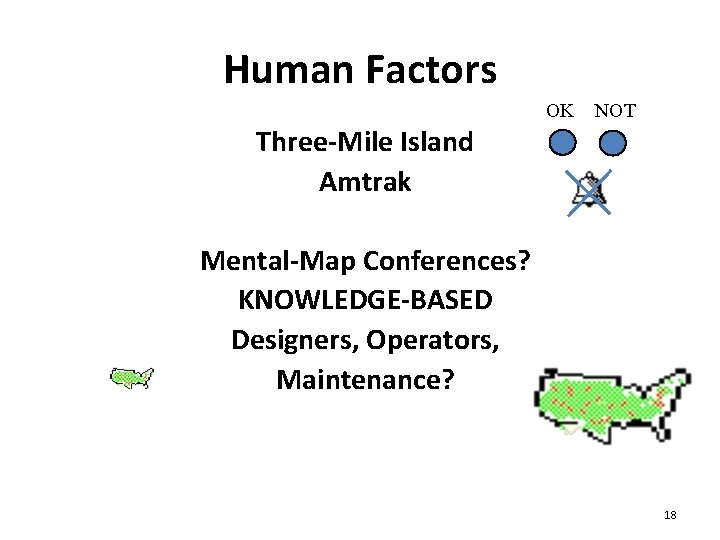
Human Factors OK NOT Three-Mile Island Amtrak Mental-Map Conferences? KNOWLEDGE-BASED Designers, Operators, Maintenance? 18
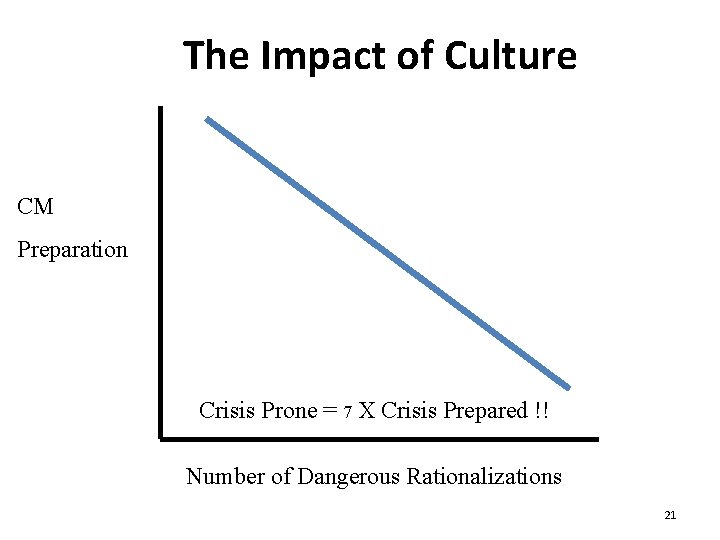
ORGANIZATIONAL CULTURE Dangerous Rationalizations Our size will protect us. Excellent companies don’t have crises. Our location will protect us. Certain crises only happen to others. If a crisis happens, someone will rescue us. CM is someone else’s responsibility. Each crisis is so unique that it is pointless to prepare. OVER 30 KEY RATIONALIZATIONS!!! 19
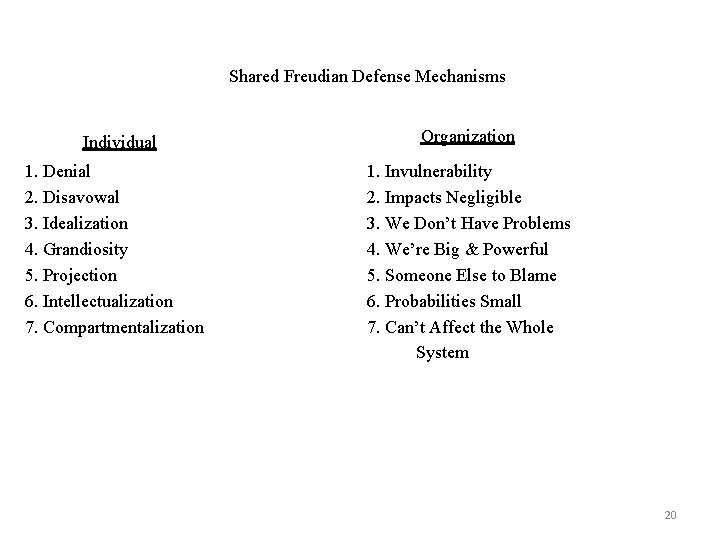
Shared Freudian Defense Mechanisms Individual Organization 1. Denial 2. Disavowal 3. Idealization 4. Grandiosity 5. Projection 6. Intellectualization 7. Compartmentalization 1. Invulnerability 2. Impacts Negligible 3. We Don’t Have Problems 4. We’re Big & Powerful 5. Someone Else to Blame 6. Probabilities Small 7. Can’t Affect the Whole System 20
The Impact of Culture CM Preparation Crisis Prone = 7 X Crisis Prepared !! Number of Dangerous Rationalizations 21
Affected Parties Stakeholders 22
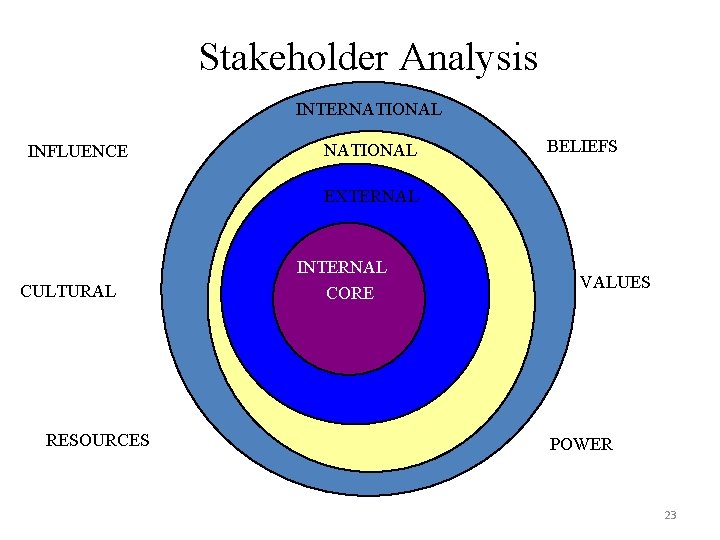
Stakeholder Analysis INTERNATIONAL INFLUENCE NATIONAL BELIEFS EXTERNAL CULTURAL INTERNAL CORE VALUES I RESOURCES POWER 23
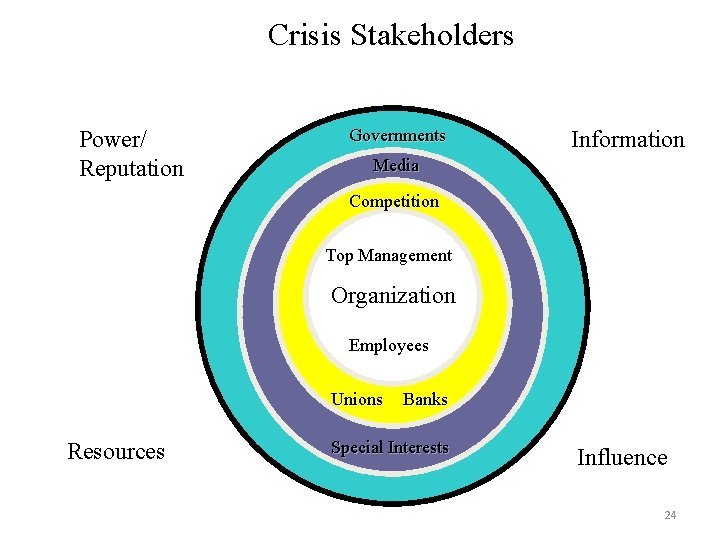
Crisis Stakeholders Power/ Reputation Governments Information Media Competition Top Management Organization Employees Unions Resources Banks Special Interests Influence 24
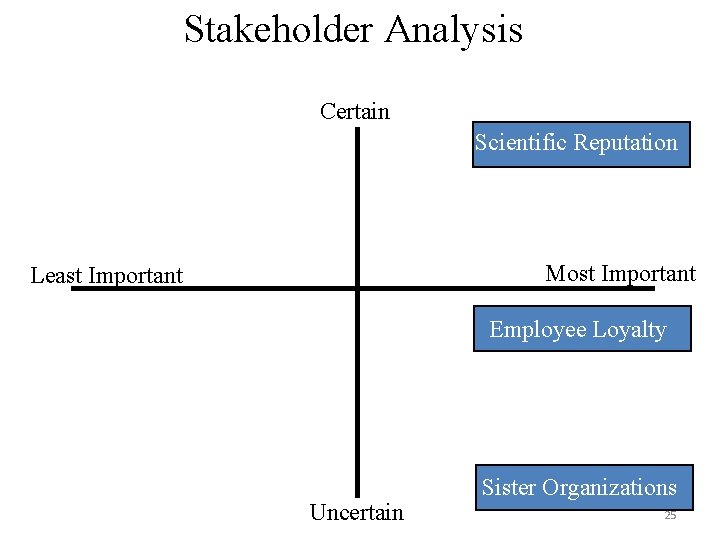
Stakeholder Analysis Certain Scientific Reputation Most Important Least Important Employee Loyalty Uncertain Sister Organizations 25
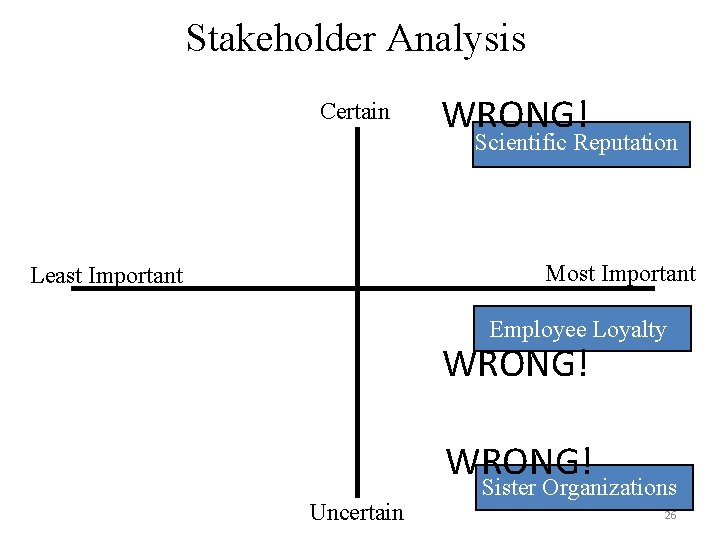
Stakeholder Analysis Certain WRONG! Scientific Reputation Most Important Least Important Employee Loyalty WRONG! Uncertain Sister Organizations 26
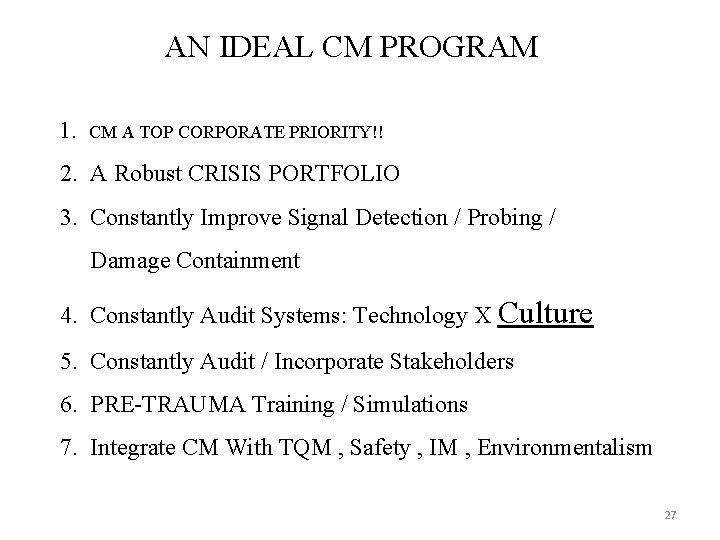
AN IDEAL CM PROGRAM 1. CM A TOP CORPORATE PRIORITY!! 2. A Robust CRISIS PORTFOLIO 3. Constantly Improve Signal Detection / Probing / Damage Containment 4. Constantly Audit Systems: Technology X Culture 5. Constantly Audit / Incorporate Stakeholders 6. PRE-TRAUMA Training / Simulations 7. Integrate CM With TQM , Safety , IM , Environmentalism 27
Summary • • • The 6 phases of CM Types of signals Crises system The impact of culture Stakeholder Analysis 28
Thank You 29