
Lecture 12 Quantum computers Shors algorithm postquantum cryptography
- Slides: 29
Lecture 12 – Quantum computers, Shor’s algorithm, post-quantum cryptography TEK 4500 10. 11. 2020 Håkon Jacobsen hakon. jacobsen@its. uio. no
2
Quantum computing – the starting point 3
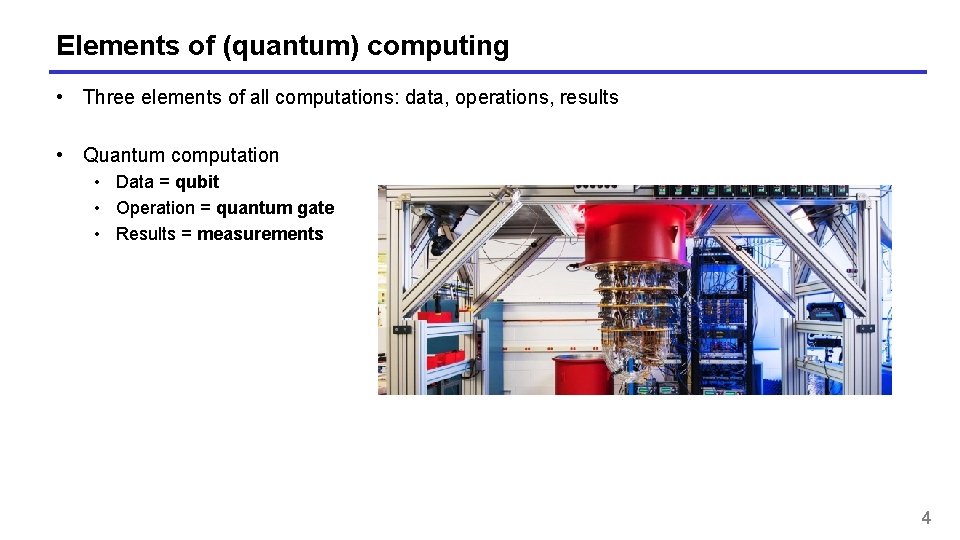
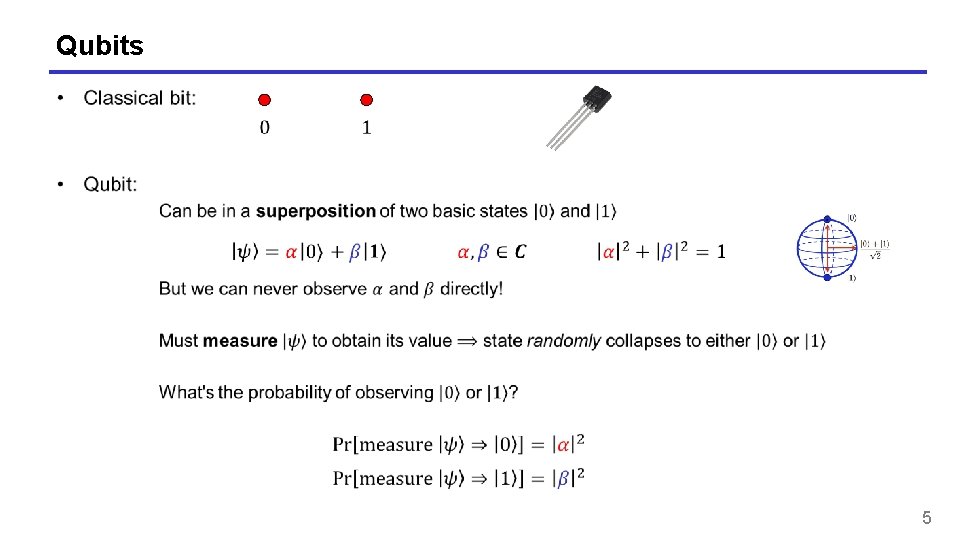
Elements of (quantum) computing • Three elements of all computations: data, operations, results • Quantum computation • Data = qubit • Operation = quantum gate • Results = measurements 4
Qubits 5
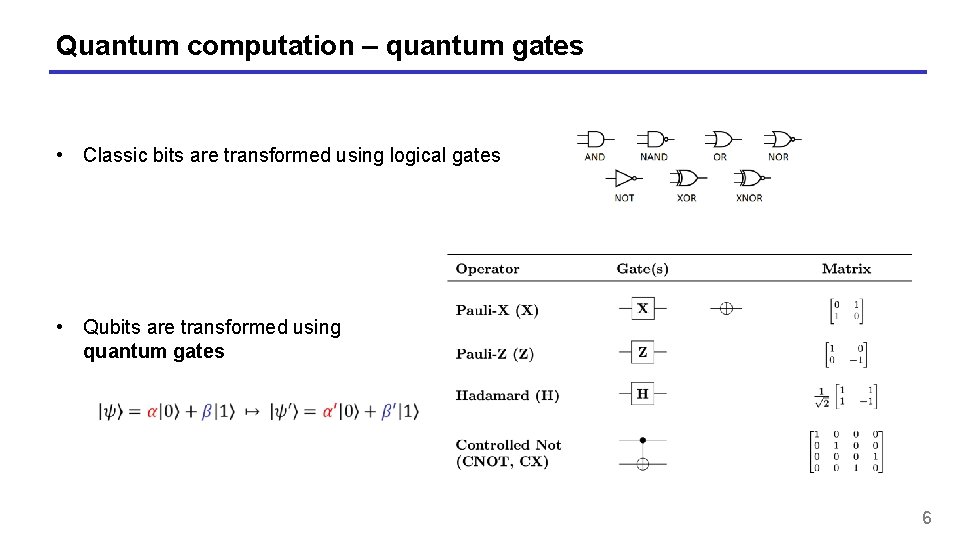
Quantum computation – quantum gates • Classic bits are transformed using logical gates • Qubits are transformed using quantum gates 6
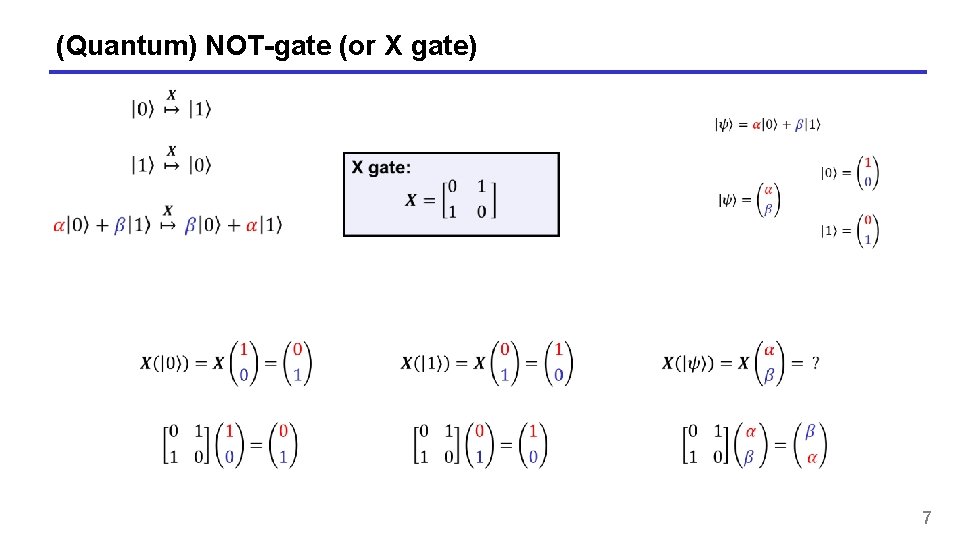
(Quantum) NOT-gate (or X gate) 7
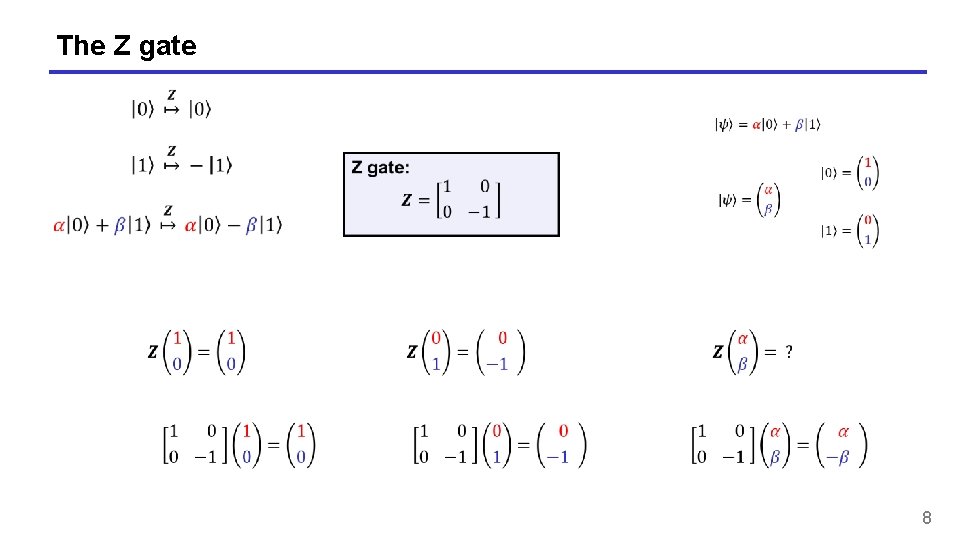
The Z gate 8
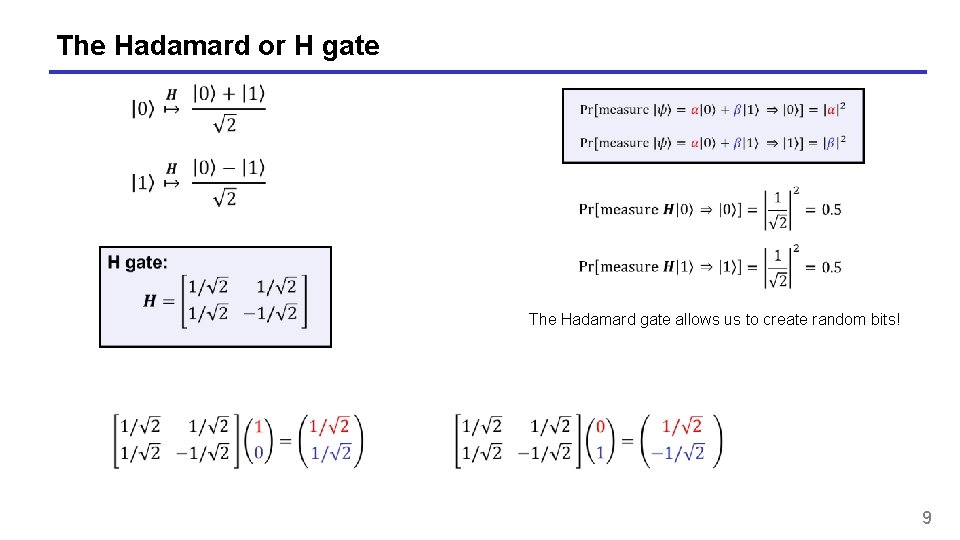
The Hadamard or H gate The Hadamard gate allows us to create random bits! 9
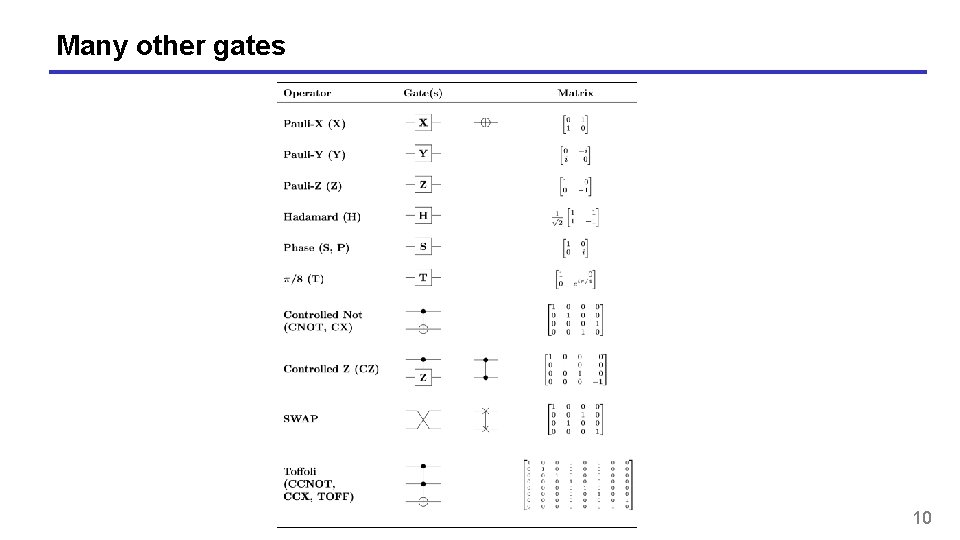
Many other gates 10
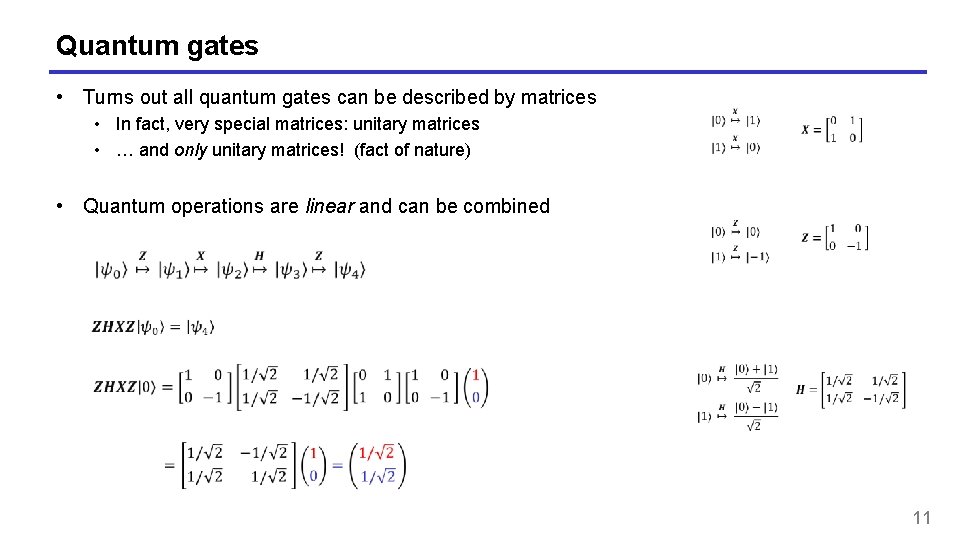
Quantum gates • Turns out all quantum gates can be described by matrices • In fact, very special matrices: unitary matrices • … and only unitary matrices! (fact of nature) • Quantum operations are linear and can be combined 11
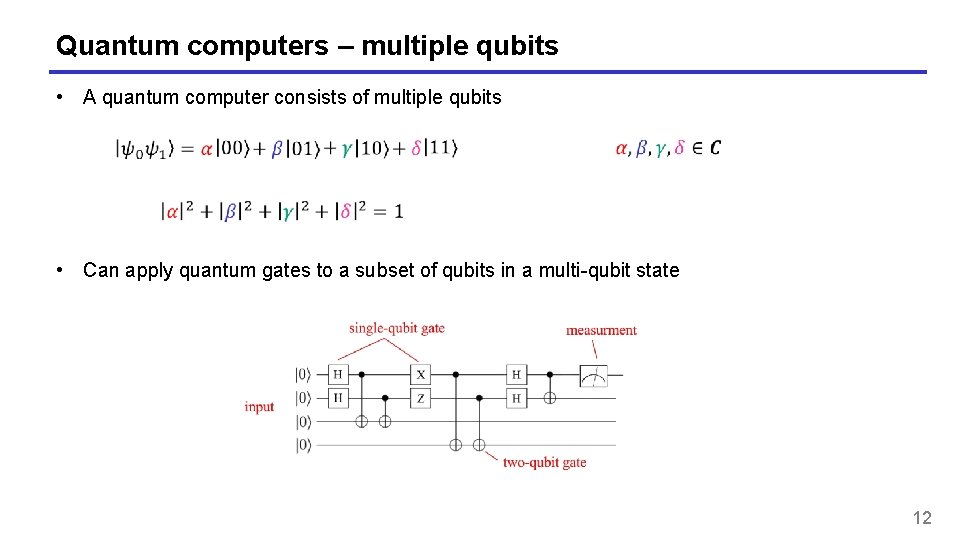
Quantum computers – multiple qubits • A quantum computer consists of multiple qubits • Can apply quantum gates to a subset of qubits in a multi-qubit state 12
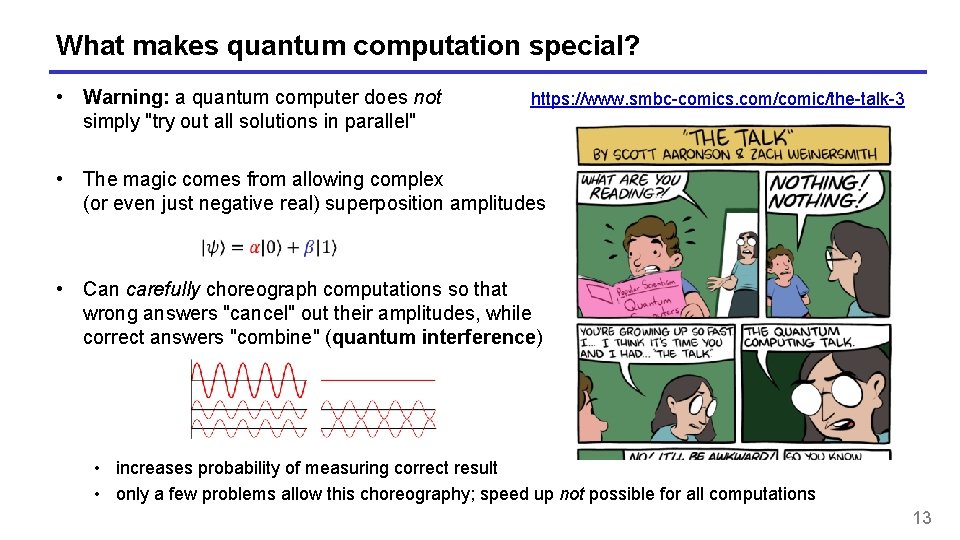
What makes quantum computation special? • Warning: a quantum computer does not simply "try out all solutions in parallel" https: //www. smbc-comics. com/comic/the-talk-3 • The magic comes from allowing complex (or even just negative real) superposition amplitudes • Can carefully choreograph computations so that wrong answers "cancel" out their amplitudes, while correct answers "combine" (quantum interference) • increases probability of measuring correct result • only a few problems allow this choreography; speed up not possible for all computations 13
Shor's algorithm 4 9 19 14
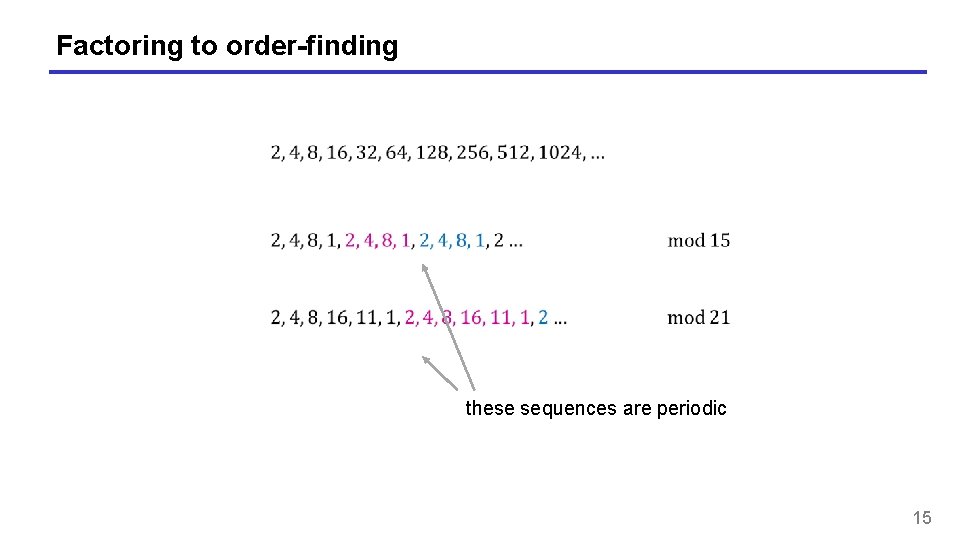
Factoring to order-finding these sequences are periodic 15
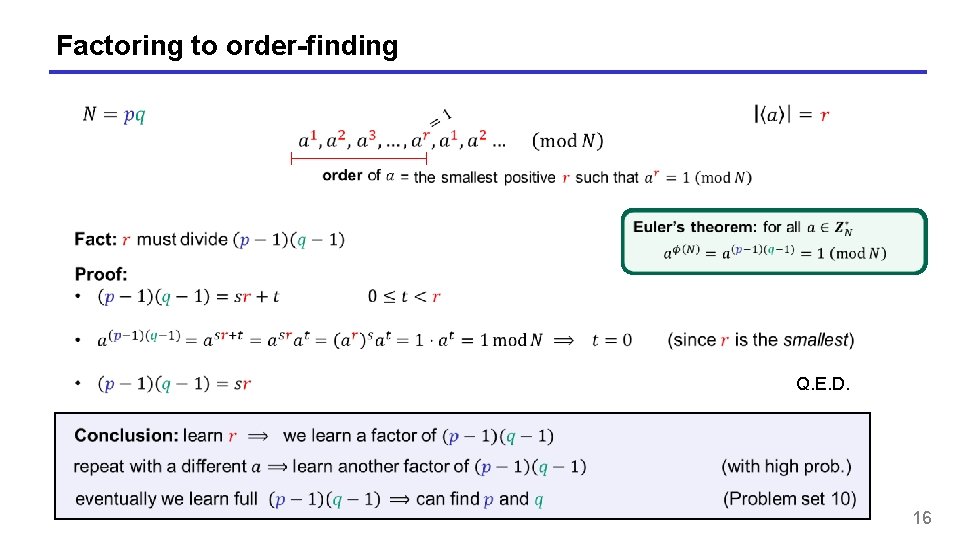
Factoring to order-finding Q. E. D. 16
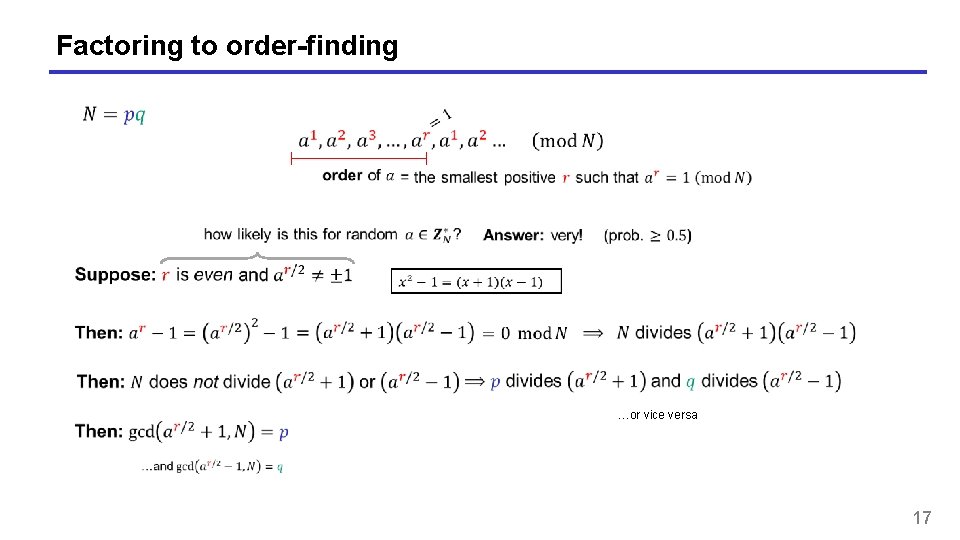
Factoring to order-finding …or vice versa 17
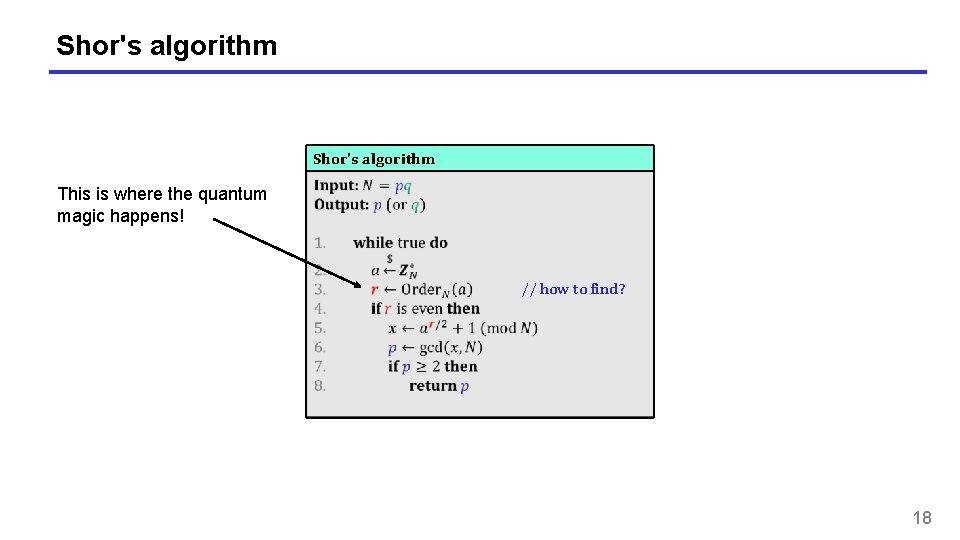
Shor's algorithm This is where the quantum magic happens! // how to find? 18
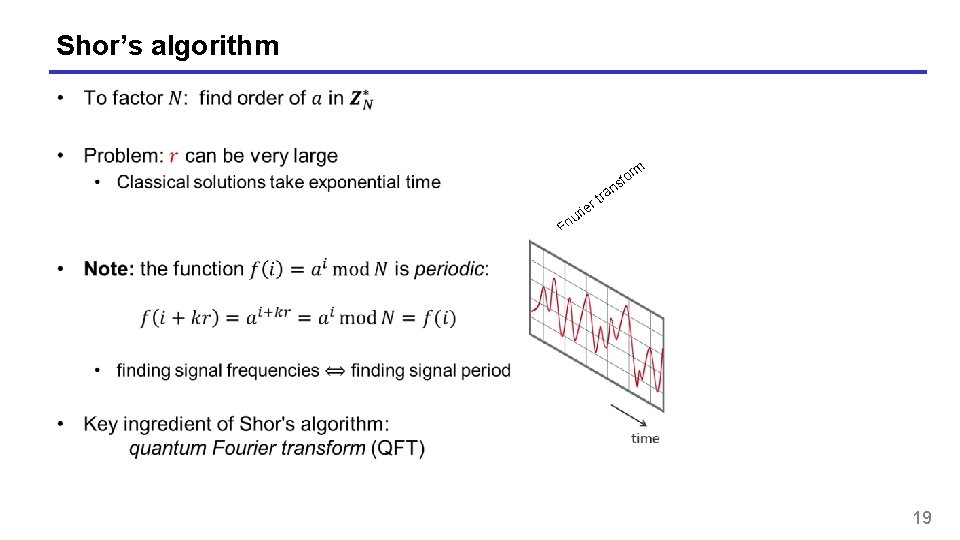
Shor’s algorithm rm ra rt sfo n rie u Fo 19
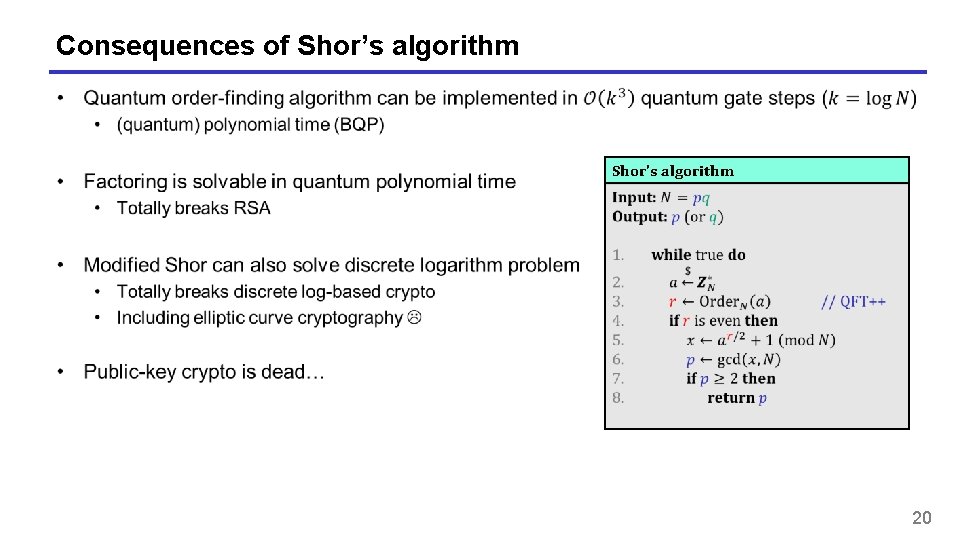
Consequences of Shor’s algorithm Shor's algorithm 20
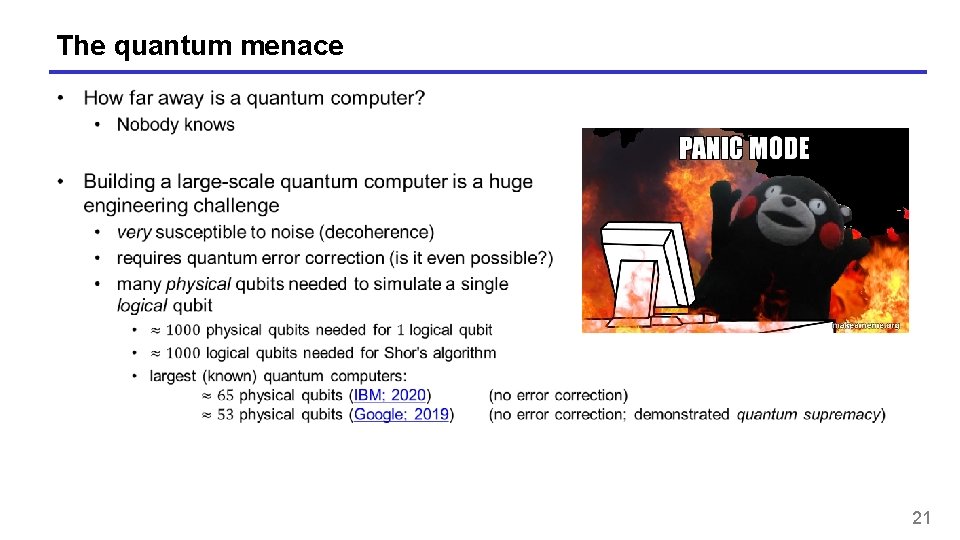
The quantum menace 21
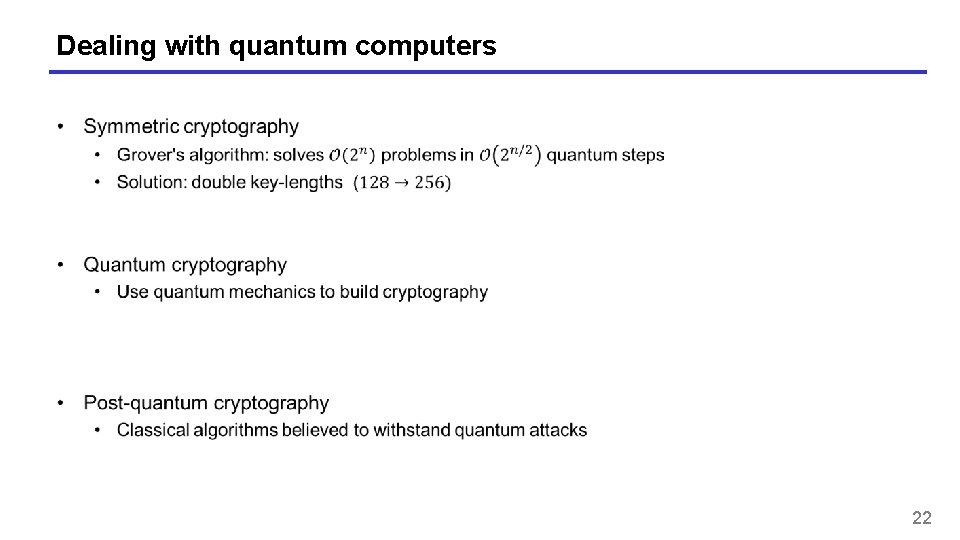
Dealing with quantum computers 22
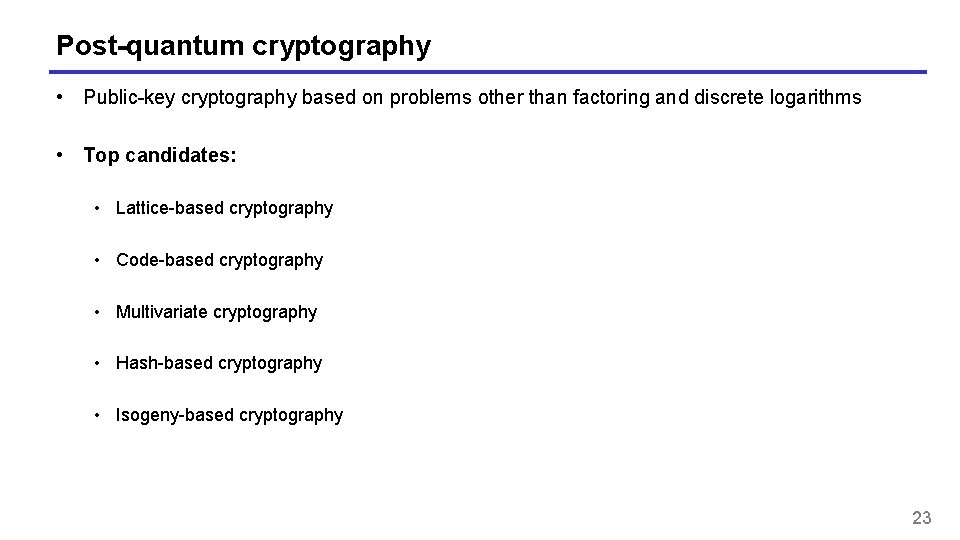
Post-quantum cryptography • Public-key cryptography based on problems other than factoring and discrete logarithms • Top candidates: • Lattice-based cryptography • Code-based cryptography • Multivariate cryptography • Hash-based cryptography • Isogeny-based cryptography 23
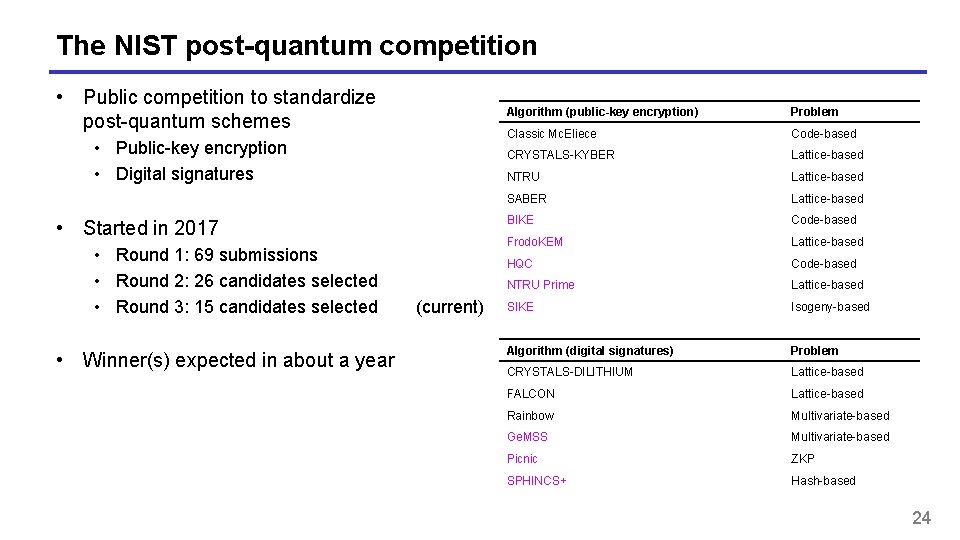
The NIST post-quantum competition • Public competition to standardize post-quantum schemes • Public-key encryption • Digital signatures • Started in 2017 • Round 1: 69 submissions • Round 2: 26 candidates selected • Round 3: 15 candidates selected • Winner(s) expected in about a year (current) Algorithm (public-key encryption) Problem Classic Mc. Eliece Code-based CRYSTALS-KYBER Lattice-based NTRU Lattice-based SABER Lattice-based BIKE Code-based Frodo. KEM Lattice-based HQC Code-based NTRU Prime Lattice-based SIKE Isogeny-based Algorithm (digital signatures) Problem CRYSTALS-DILITHIUM Lattice-based FALCON Lattice-based Rainbow Multivariate-based Ge. MSS Multivariate-based Picnic ZKP SPHINCS+ Hash-based 24
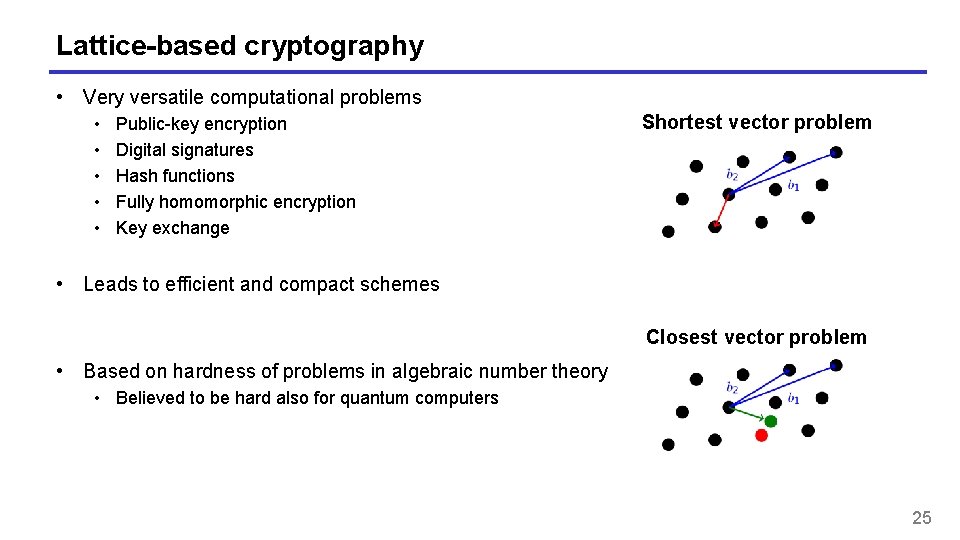
Lattice-based cryptography • Very versatile computational problems • • • Public-key encryption Digital signatures Hash functions Fully homomorphic encryption Key exchange Shortest vector problem • Leads to efficient and compact schemes Closest vector problem • Based on hardness of problems in algebraic number theory • Believed to be hard also for quantum computers 25
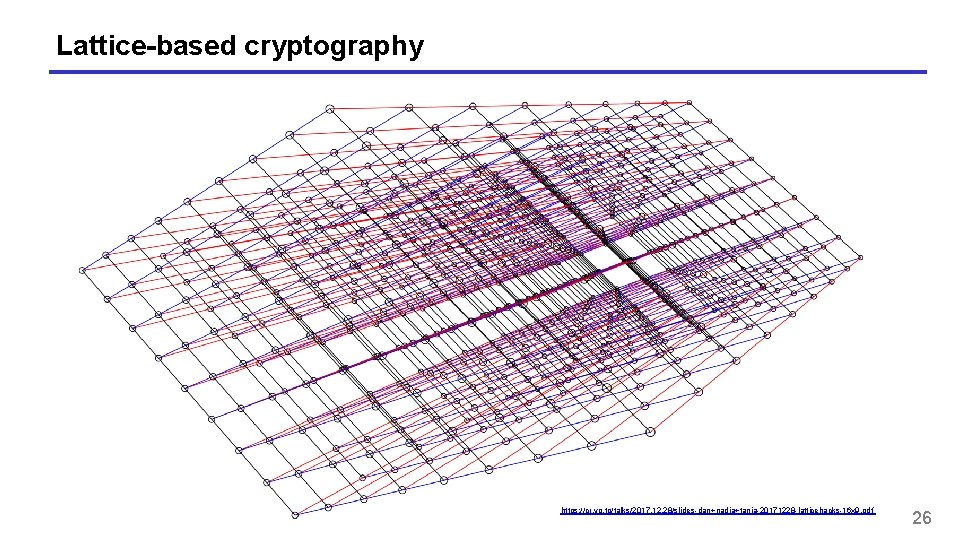
Lattice-based cryptography https: //cr. yp. to/talks/2017. 12. 28/slides-dan+nadia+tanja-20171228 -latticehacks-16 x 9. pdf 26
Learn more about post-quantum cryptography? • Want to learn more about post-quantum cryptography? • Sign up for TEK 5550 - Advanced Topics in Cryptology next spring! 40
End of course 41
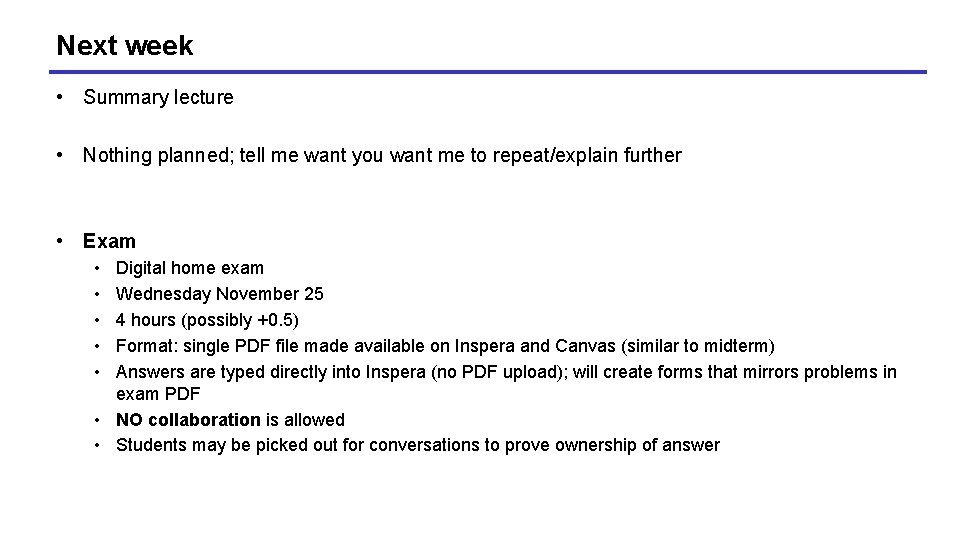
Next week • Summary lecture • Nothing planned; tell me want you want me to repeat/explain further • Exam • • • Digital home exam Wednesday November 25 4 hours (possibly +0. 5) Format: single PDF file made available on Inspera and Canvas (similar to midterm) Answers are typed directly into Inspera (no PDF upload); will create forms that mirrors problems in exam PDF • NO collaboration is allowed • Students may be picked out for conversations to prove ownership of answer