
Lecture 12 Firstorder Circuits 2 Hungyi Lee Outline

- Slides: 31
Lecture 12 First-order Circuits (2) Hung-yi Lee
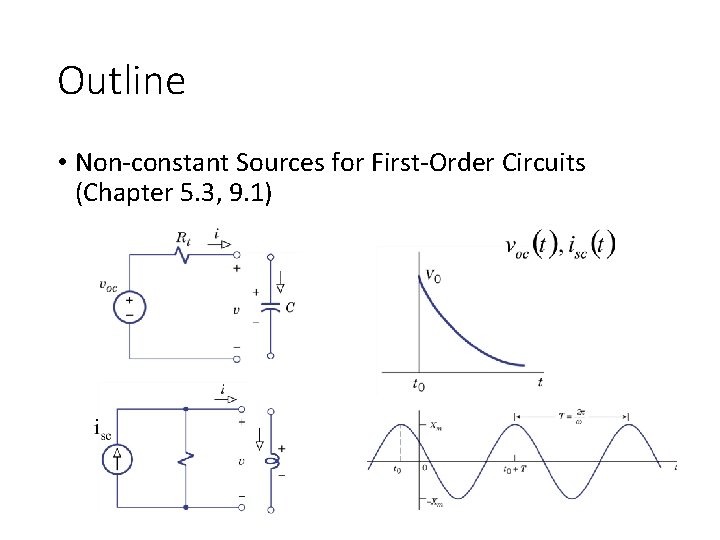
Outline • Non-constant Sources for First-Order Circuits (Chapter 5. 3, 9. 1)
Outline • Examples 5. 12 and 5. 11 • Solved by Differential Equation • Solved by Superposition and State
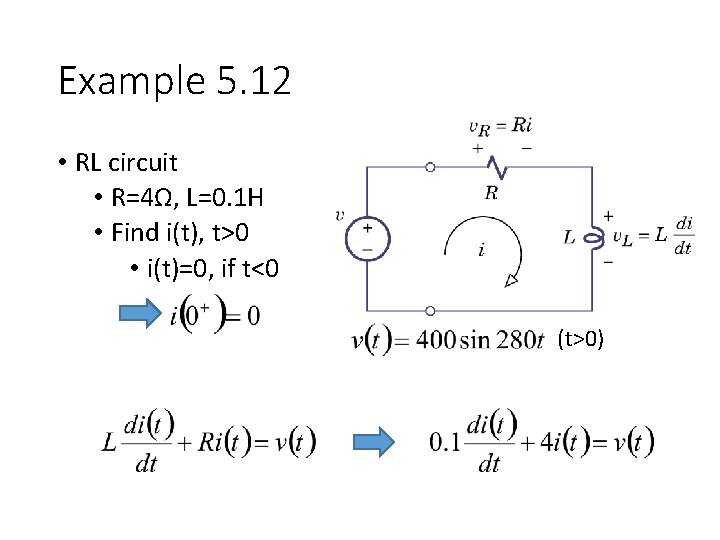
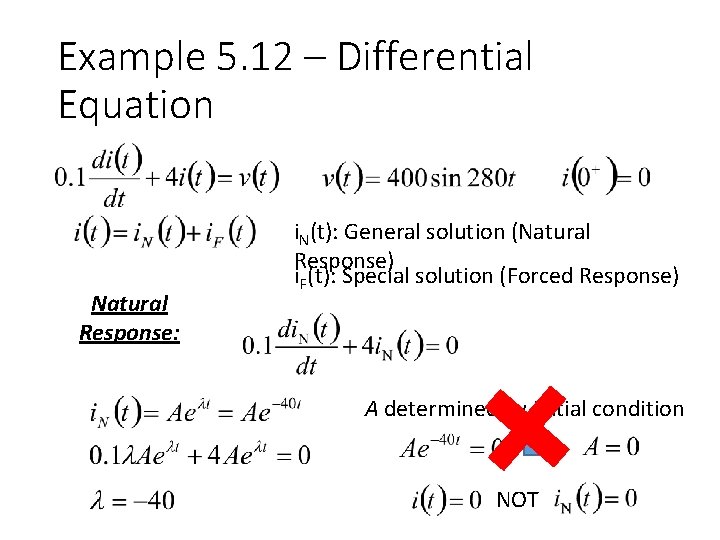
Example 5. 12 • RL circuit • R=4Ω, L=0. 1 H • Find i(t), t>0 • i(t)=0, if t<0 (t>0)
Example 5. 12 – Differential Equation Natural Response: i. N(t): General solution (Natural Response) i. F(t): Special solution (Forced Response) A determined by initial condition NOT
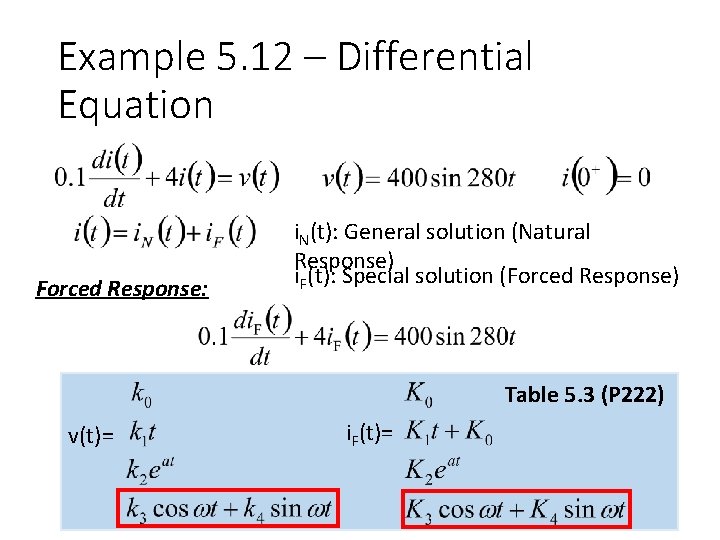
Example 5. 12 – Differential Equation Forced Response: i. N(t): General solution (Natural Response) i. F(t): Special solution (Forced Response) Table 5. 3 (P 222) v(t)= i. F(t)=
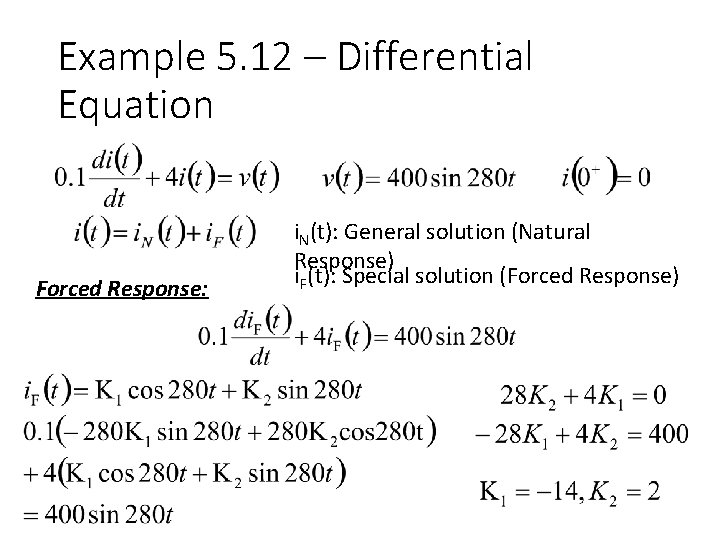
Example 5. 12 – Differential Equation Forced Response: i. N(t): General solution (Natural Response) i. F(t): Special solution (Forced Response)
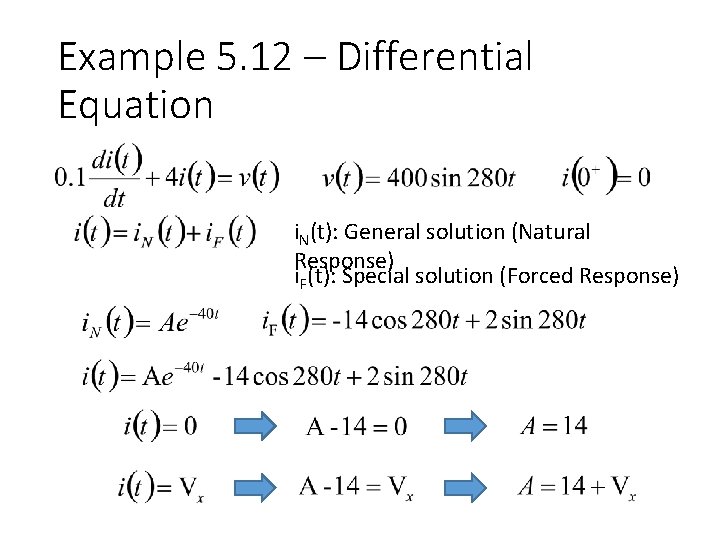
Example 5. 12 – Differential Equation i. N(t): General solution (Natural Response) i. F(t): Special solution (Forced Response)
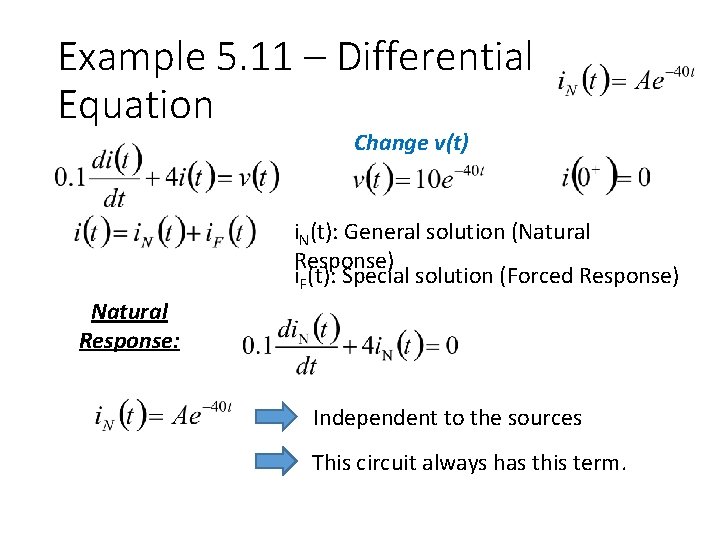
Example 5. 11 – Differential Equation Change v(t) i. N(t): General solution (Natural Response) i. F(t): Special solution (Forced Response) Natural Response: Independent to the sources This circuit always has this term.
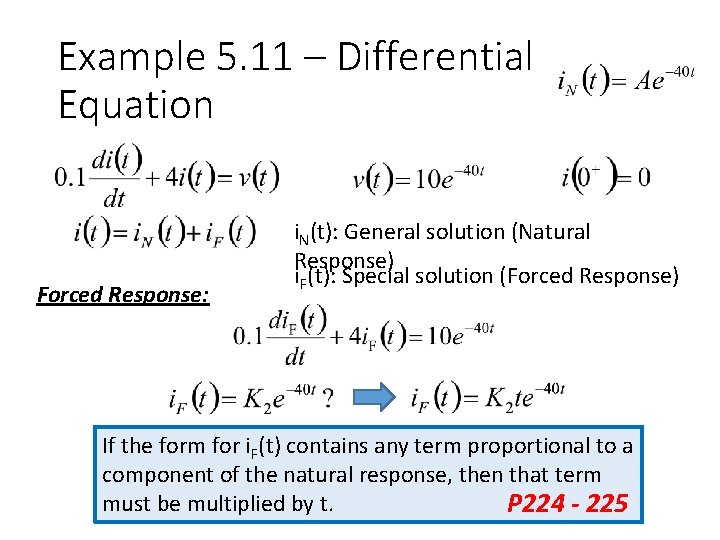
Example 5. 11 – Differential Equation Forced Response: i. N(t): General solution (Natural Response) i. F(t): Special solution (Forced Response) If the form for i. F(t) contains any term proportional to a component of the natural response, then that term must be multiplied by t. P 224 - 225
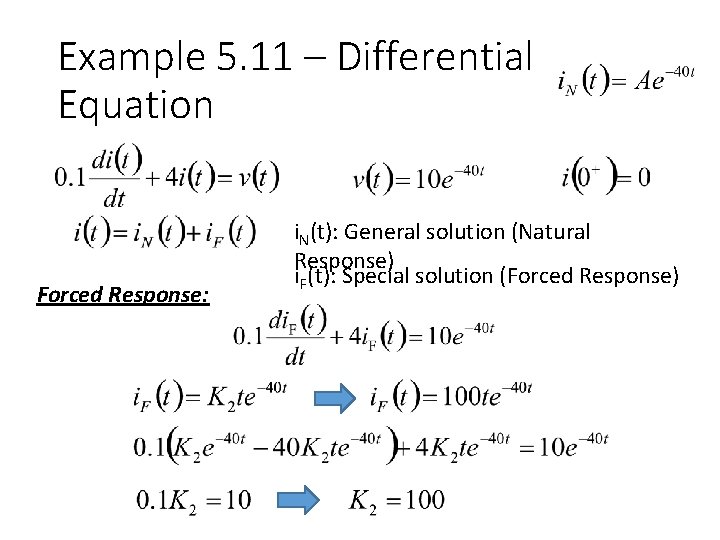
Example 5. 11 – Differential Equation Forced Response: i. N(t): General solution (Natural Response) i. F(t): Special solution (Forced Response)
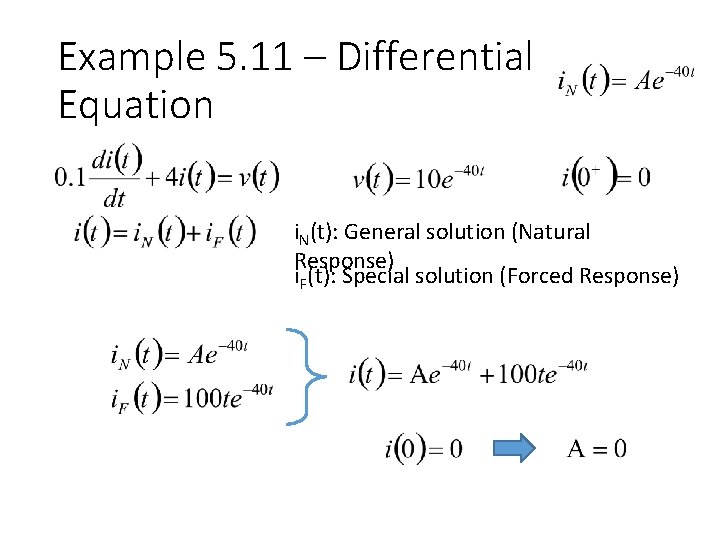
Example 5. 11 – Differential Equation i. N(t): General solution (Natural Response) i. F(t): Special solution (Forced Response)
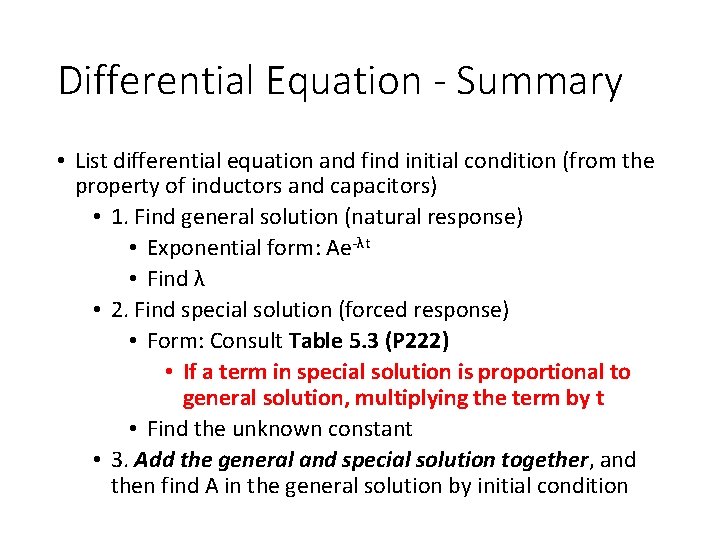
Differential Equation - Summary • List differential equation and find initial condition (from the property of inductors and capacitors) • 1. Find general solution (natural response) • Exponential form: Ae-λt • Find λ • 2. Find special solution (forced response) • Form: Consult Table 5. 3 (P 222) • If a term in special solution is proportional to general solution, multiplying the term by t • Find the unknown constant • 3. Add the general and special solution together, and then find A in the general solution by initial condition
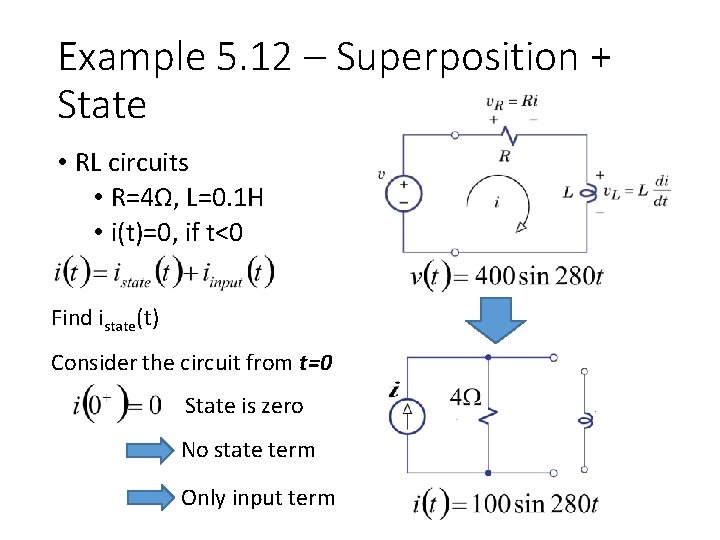
Example 5. 12 – Superposition + State • RL circuits • R=4Ω, L=0. 1 H • i(t)=0, if t<0 Find istate(t) Consider the circuit from t=0 State is zero No state term Only input term
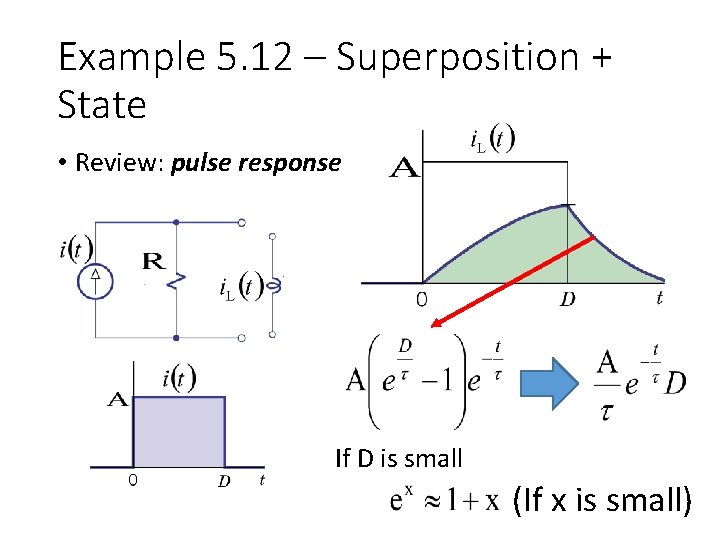
Example 5. 12 – Superposition + State • Review: pulse response If D is small (If x is small)
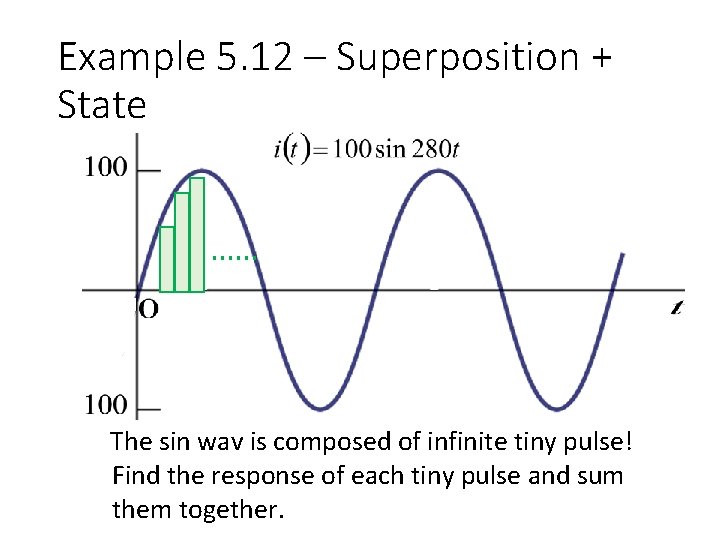
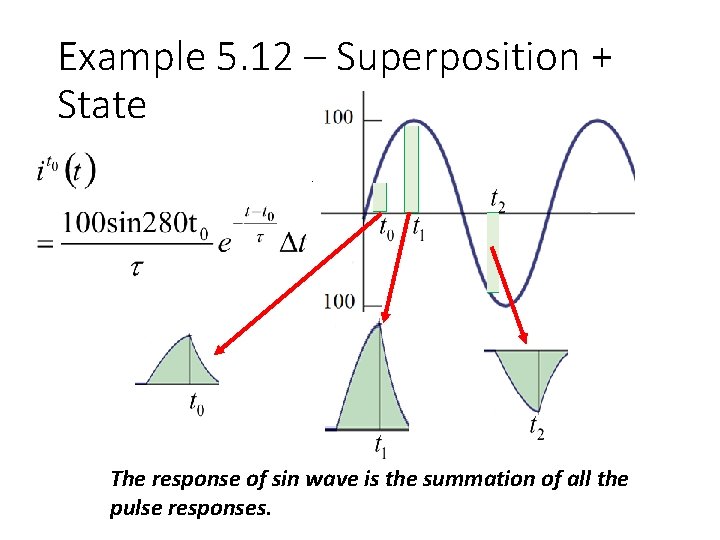
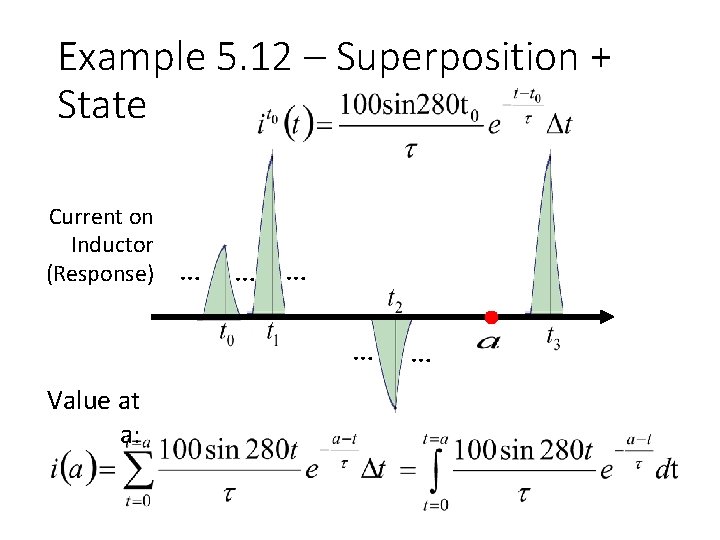
Example 5. 12 – Superposition + State …… The sin wav is composed of infinite tiny pulse! Find the response of each tiny pulse and sum them together.
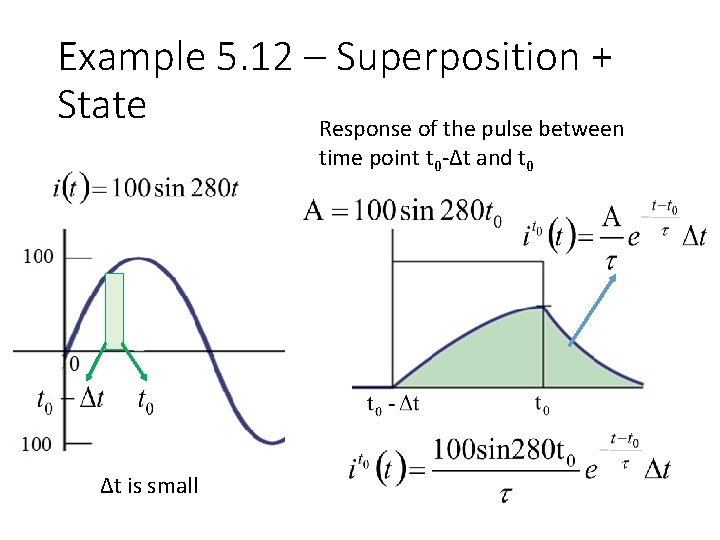
Example 5. 12 – Superposition + State Response of the pulse between time point t 0 -Δt and t 0 Δt is small
Example 5. 12 – Superposition + State The response of sin wave is the summation of all the pulse responses.
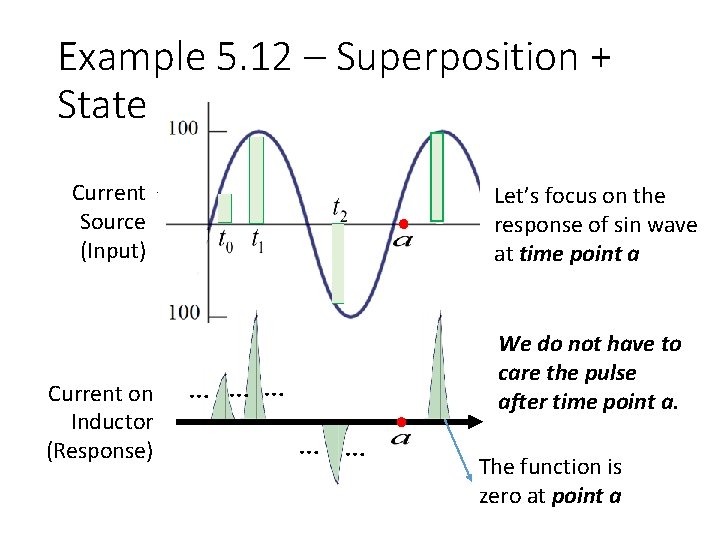
Example 5. 12 – Superposition + State Current Source (Input) Current on Inductor (Response) Let’s focus on the response of sin wave at time point a We do not have to care the pulse after time point a. … …… … … The function is zero at point a
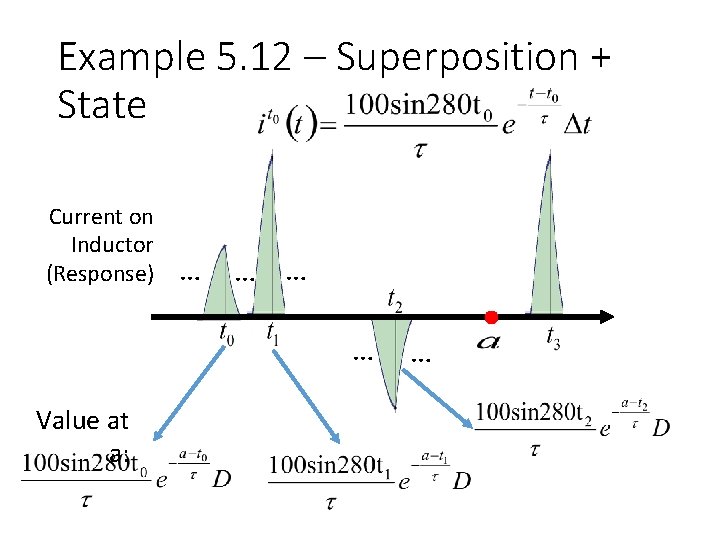
Example 5. 12 – Superposition + State Current on Inductor (Response) … … Value at a: …
Example 5. 12 – Superposition + State Current on Inductor (Response) … … Value at a: …
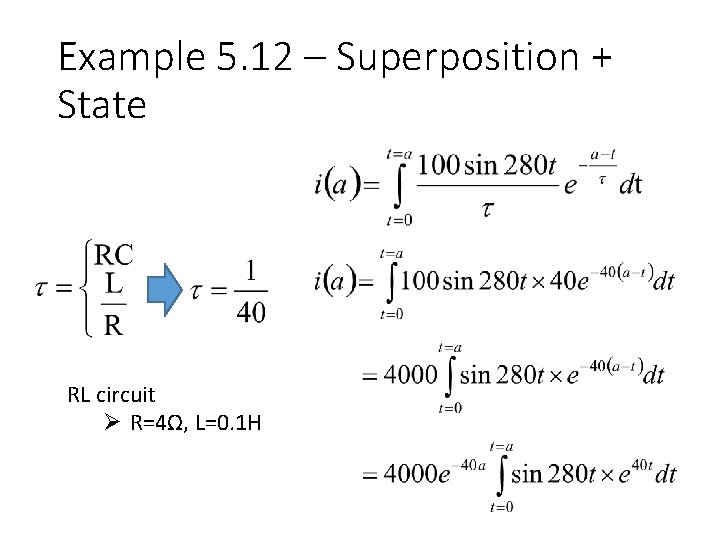
Example 5. 12 – Superposition + State RL circuit Ø R=4Ω, L=0. 1 H
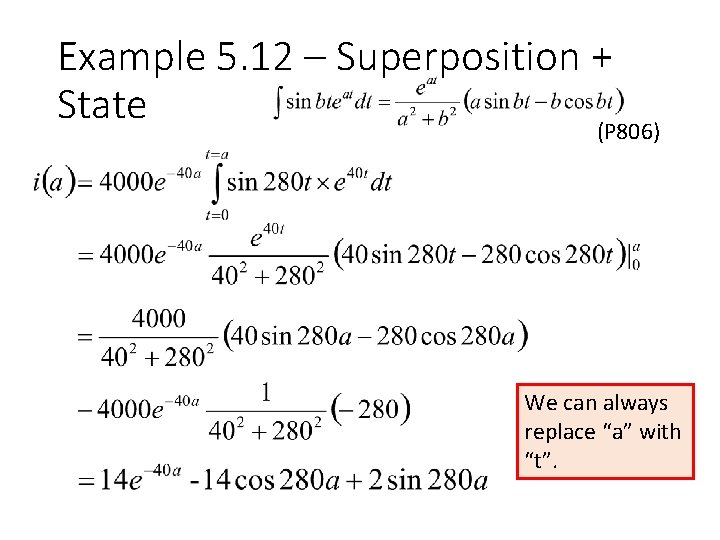
Example 5. 12 – Superposition + State (P 806) We can always replace “a” with “t”.
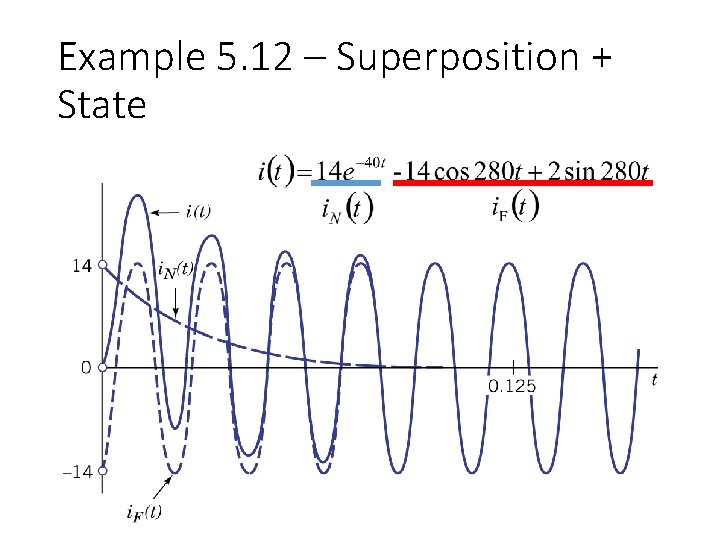
Example 5. 12 – Superposition + State
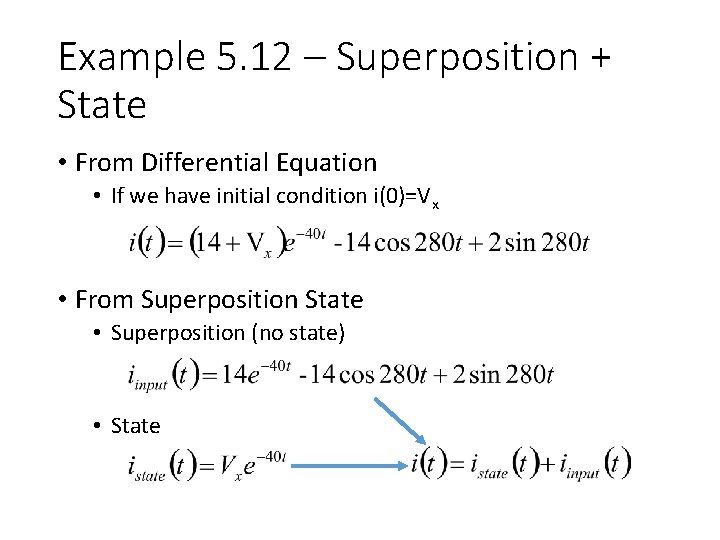
Example 5. 12 – Superposition + State • From Differential Equation • If we have initial condition i(0)=Vx • From Superposition State • Superposition (no state) • State
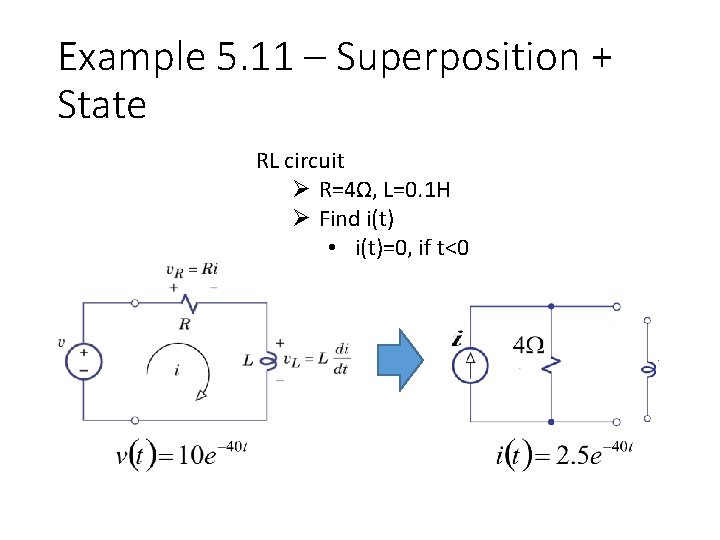
Example 5. 11 – Superposition + State RL circuit Ø R=4Ω, L=0. 1 H Ø Find i(t) • i(t)=0, if t<0
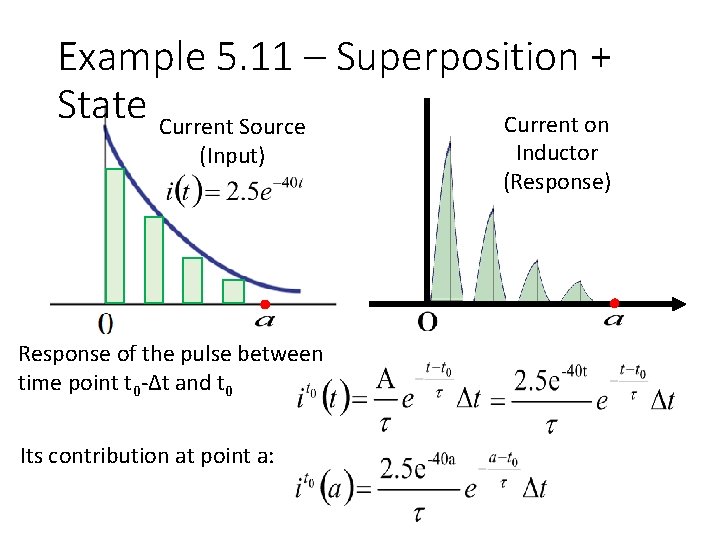
Example 5. 11 – Superposition + State Current Source Current on (Input) Response of the pulse between time point t 0 -Δt and t 0 Its contribution at point a: Inductor (Response)
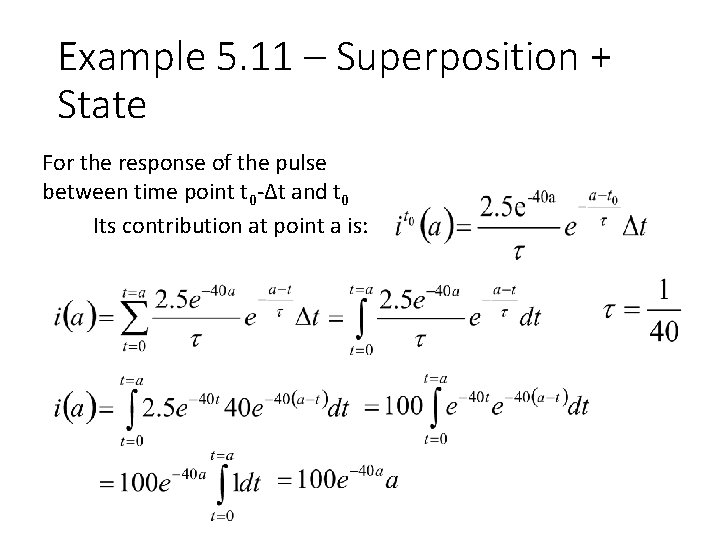
Example 5. 11 – Superposition + State For the response of the pulse between time point t 0 -Δt and t 0 Its contribution at point a is:
Homework • 5. 56 • 5. 60 • 5. 64
Thank you!
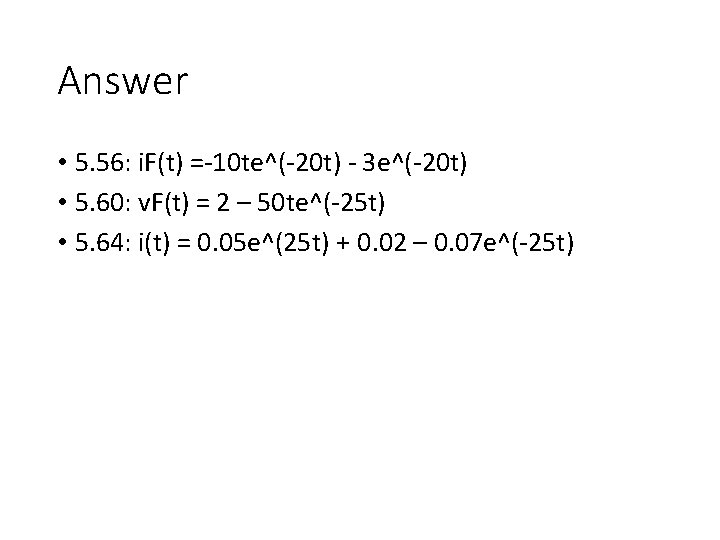
Answer • 5. 56: i. F(t) =-10 te^(-20 t) - 3 e^(-20 t) • 5. 60: v. F(t) = 2 – 50 te^(-25 t) • 5. 64: i(t) = 0. 05 e^(25 t) + 0. 02 – 0. 07 e^(-25 t)