
Lecture 11 Tuesday October 9 High Road Capitalism
Lecture 11 Tuesday, October 9 High Road Capitalism Announcements for the exam: 1. The exam will be in the regular Bascom room from 11 -12: 45, Thursday. 2. Review session: Wednesday, 12: 00 - 1: 15 pm in Soc. Sci 5208
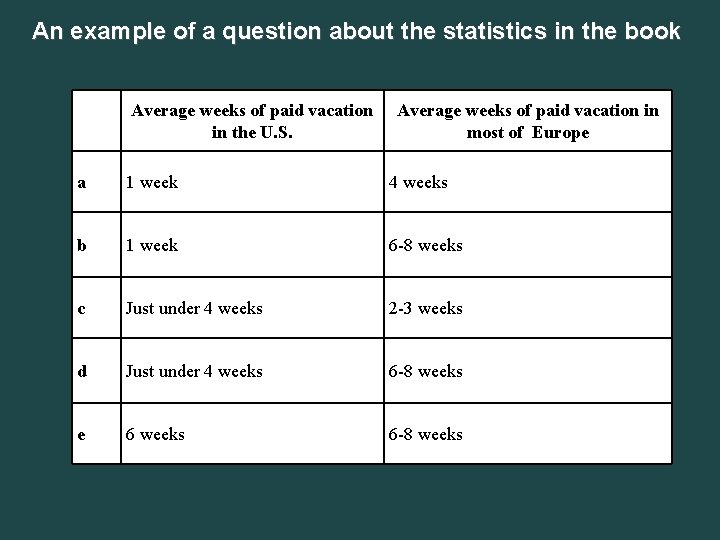
An example of a question about the statistics in the book Average weeks of paid vacation in the U. S. Average weeks of paid vacation in most of Europe a 1 week 4 weeks b 1 week 6 -8 weeks c Just under 4 weeks 2 -3 weeks d Just under 4 weeks 6 -8 weeks e 6 weeks 6 -8 weeks

A Economic Balance sheet for the United States at the beginning of the 21 st Century
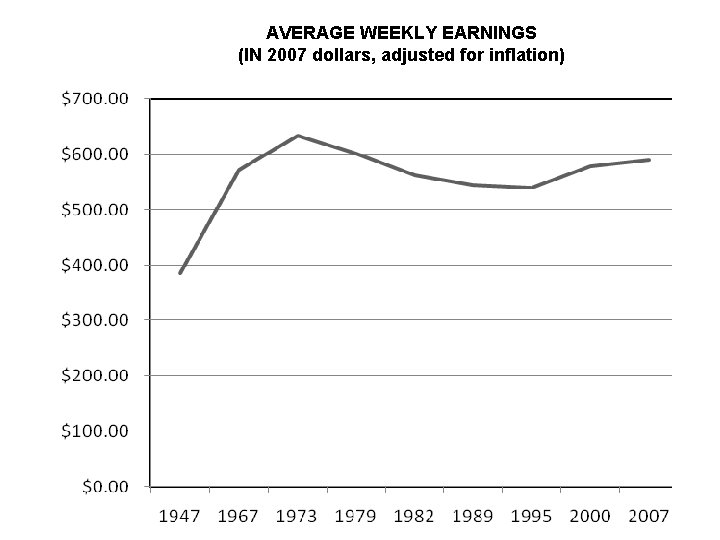
AVERAGE WEEKLY EARNINGS (IN 2007 dollars, adjusted for inflation)
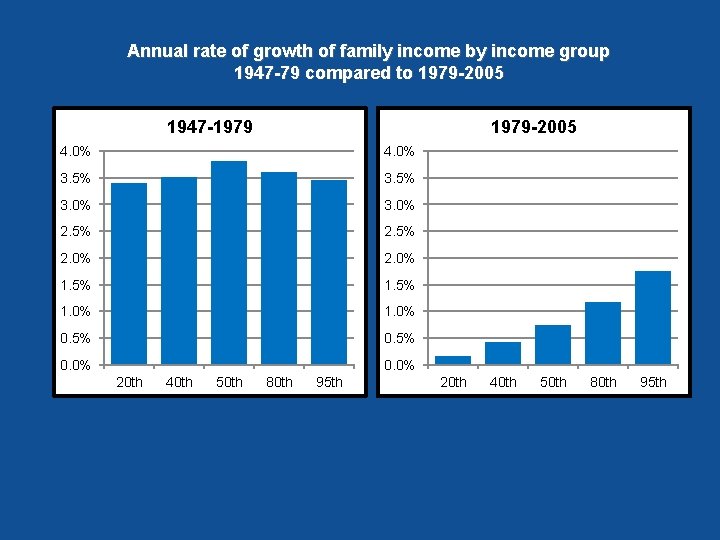
Annual rate of growth of family income by income group 1947 -79 compared to 1979 -2005 1947 -1979 -2005 4. 0% 3. 5% 3. 0% 2. 5% 2. 0% 1. 5% 1. 0% 0. 5% 0. 0% 20 th 40 th 50 th 80 th 95 th
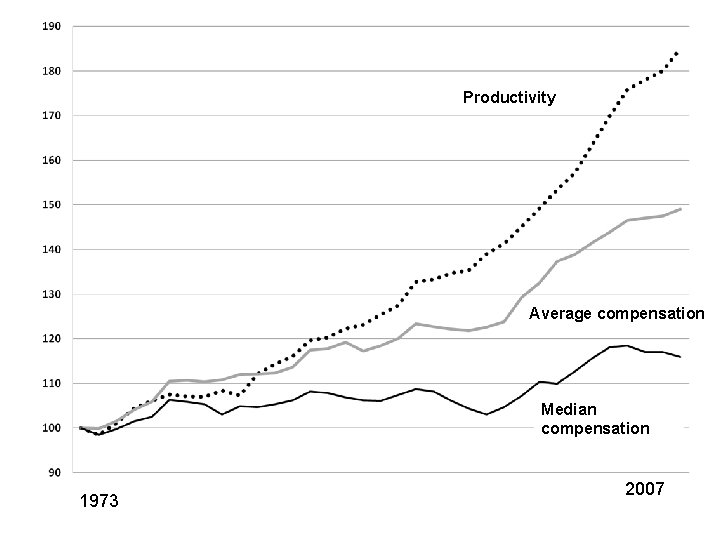
Productivity Average compensation Median compensation 1973 2007
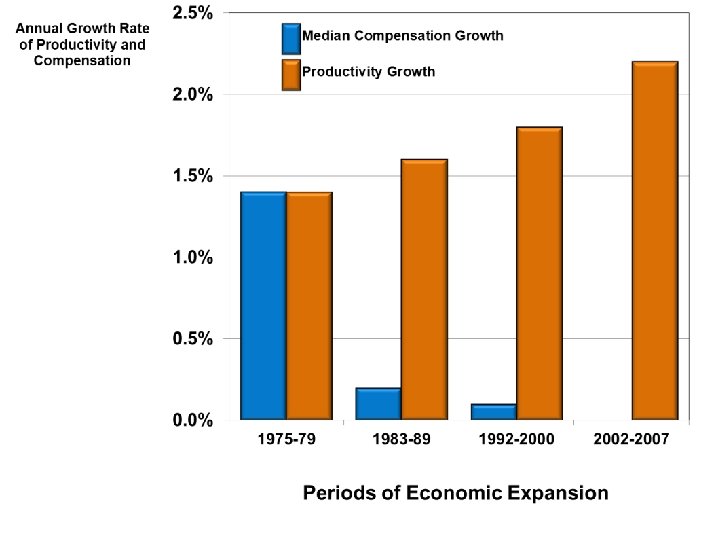
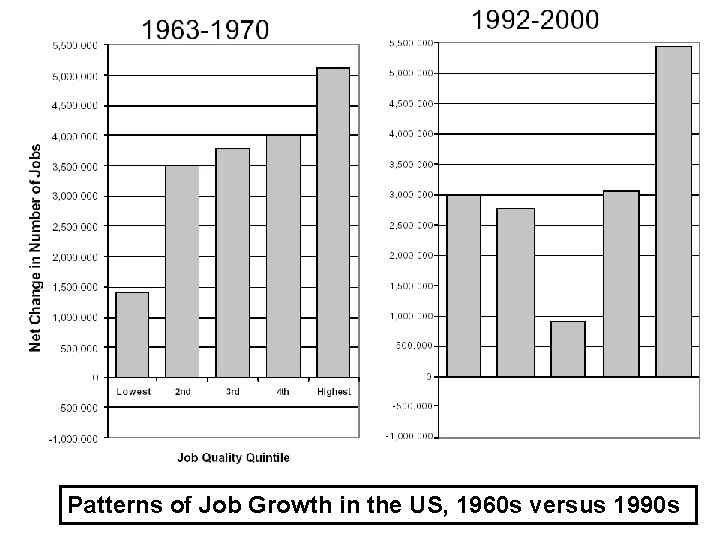
Patterns of Job Growth in the US, 1960 s versus 1990 s
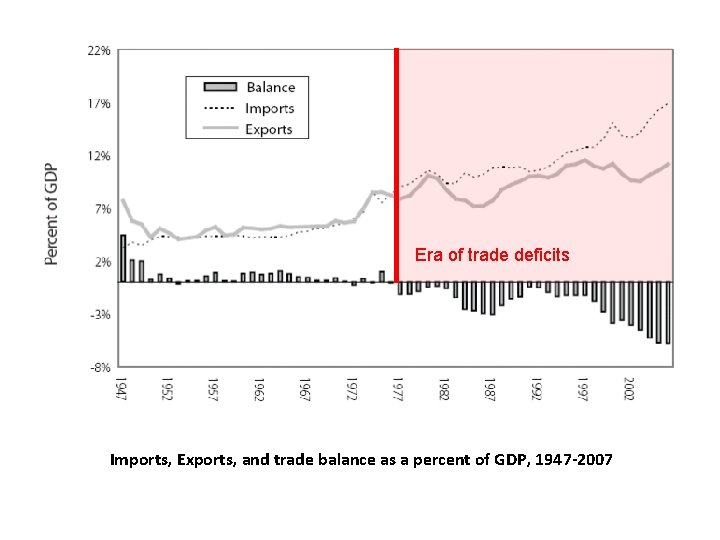
Era of trade deficits Imports, Exports, and trade balance as a percent of GDP, 1947 -2007
What should be done? “Close off the low road, pave the high road, and help firms and workers move from the first to the second. ”
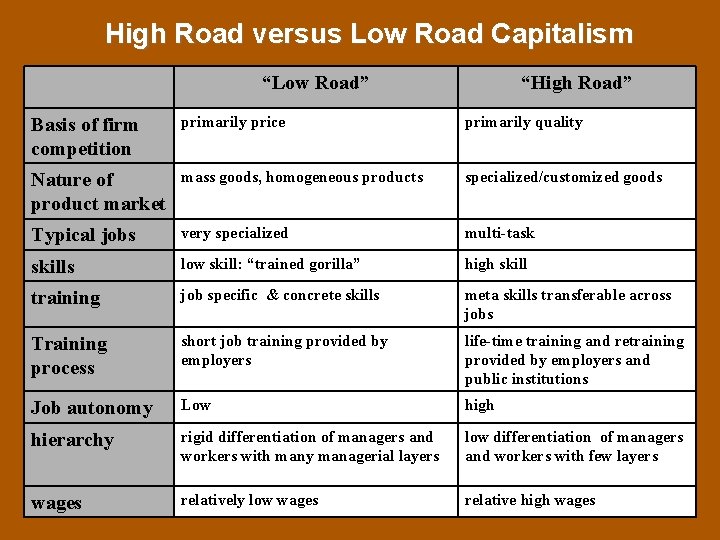
High Road versus Low Road Capitalism “Low Road” “High Road” Basis of firm competition primarily price primarily quality Nature of product market mass goods, homogeneous products specialized/customized goods Typical jobs very specialized multi-task skills low skill: “trained gorilla” high skill training job specific & concrete skills meta skills transferable across jobs Training process short job training provided by employers life-time training and retraining provided by employers and public institutions Job autonomy Low high hierarchy rigid differentiation of managers and workers with many managerial layers low differentiation of managers and workers with few layers wages relatively low wages relative high wages

Problems moving from the low road to the high road
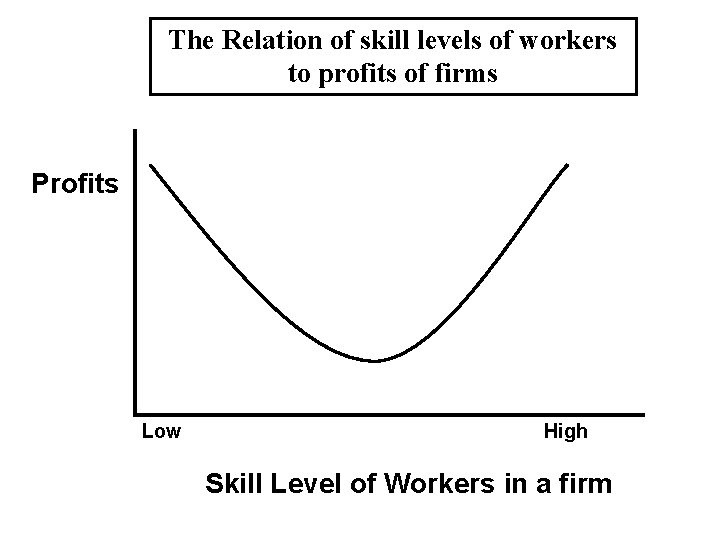
The Relation of skill levels of workers to profits of firms Profits Low High Skill Level of Workers in a firm
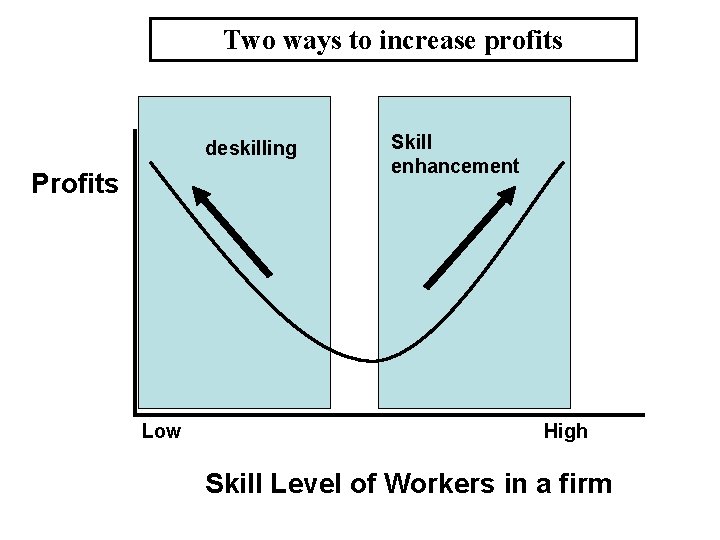
Two ways to increase profits deskilling Profits Low Skill enhancement High Skill Level of Workers in a firm
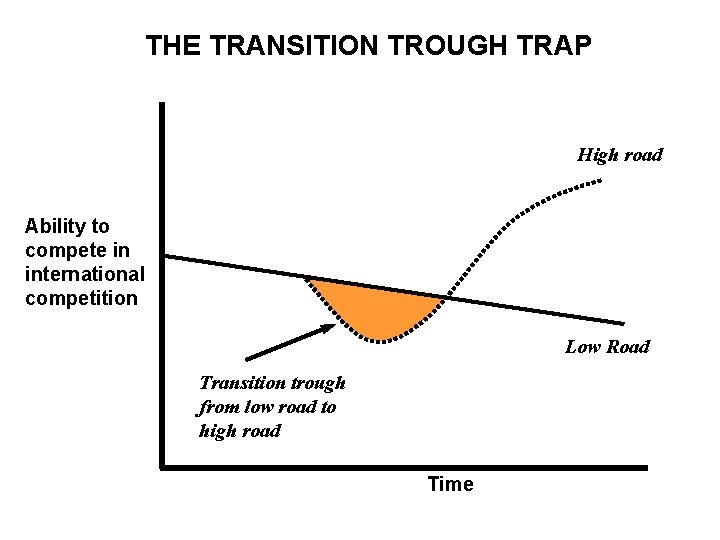
THE TRANSITION TROUGH TRAP High road Ability to compete in international competition Low Road Transition trough from low road to high road Time
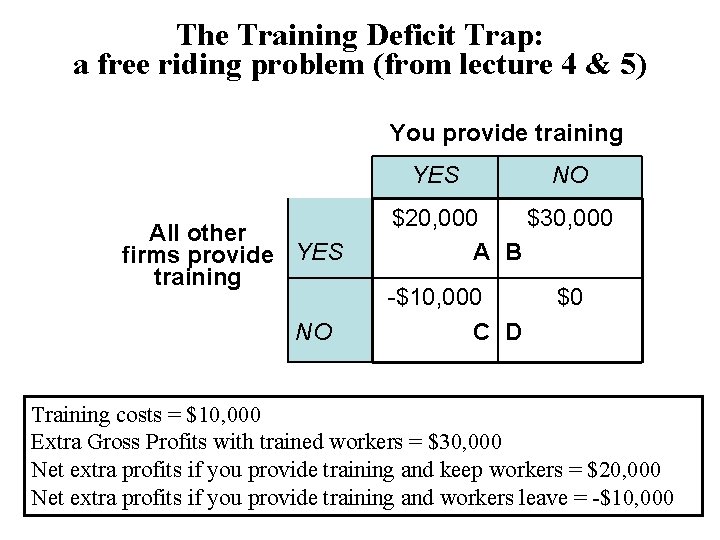
The Training Deficit Trap: a free riding problem (from lecture 4 & 5) You provide training YES All other firms provide YES training NO NO $20, 000 $30, 000 A B -$10, 000 C D $0 Training costs = $10, 000 Extra Gross Profits with trained workers = $30, 000 Net extra profits if you provide training and keep workers = $20, 000 Net extra profits if you provide training and workers leave = -$10, 000
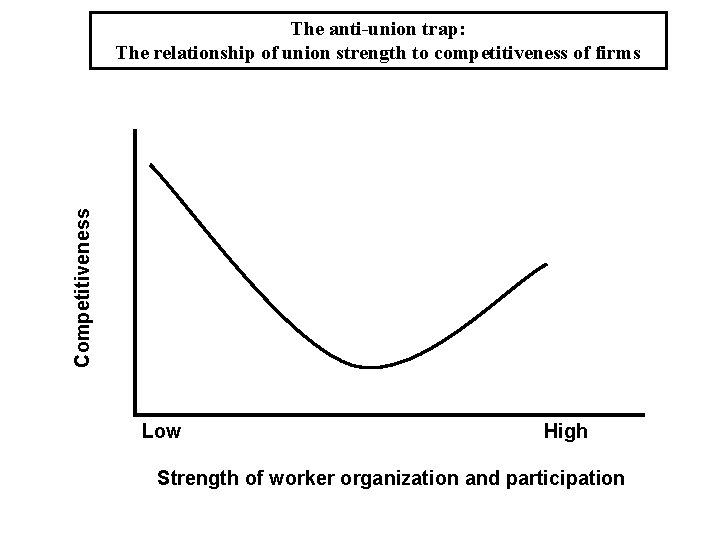
Competitiveness The anti-union trap: The relationship of union strength to competitiveness of firms Low High Strength of worker organization and participation
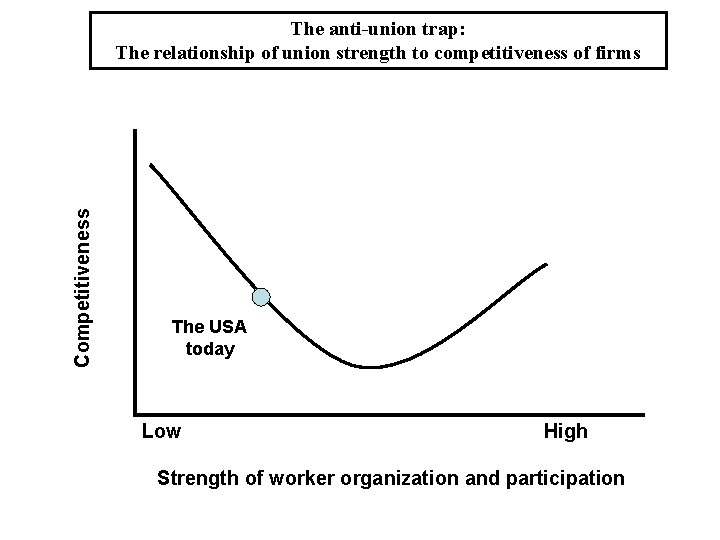
Competitiveness The anti-union trap: The relationship of union strength to competitiveness of firms The USA today Low High Strength of worker organization and participation
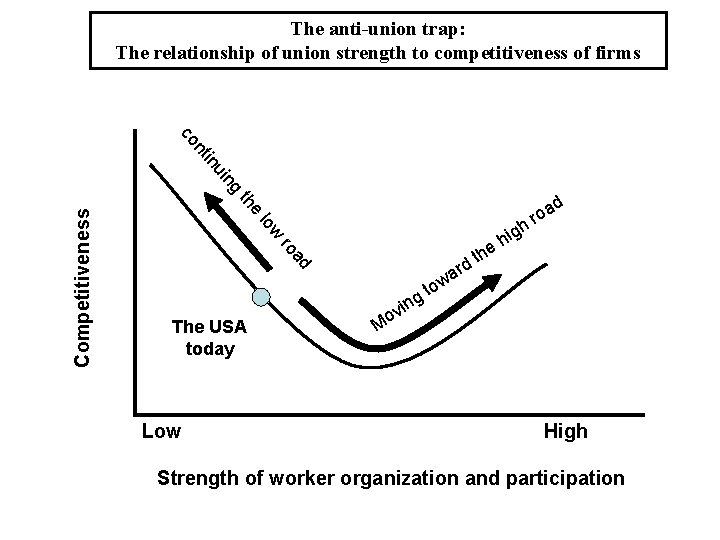
The anti-union trap: The relationship of union strength to competitiveness of firms e th h w lo ro rd a w ad Competitiveness g in u in nt co d ig h the roa o The USA today Low t g n i v Mo High Strength of worker organization and participation
- Slides: 22