
Lecture 11 The zTransform and LTI systems Instructor
- Slides: 29
Lecture 11: The z-Transform and LTI systems Instructor: Dr. Ghazi Al Sukkar Dept. of Electrical Engineering The University of Jordan Email: ghazi. alsukkar@ju. edu. jo Spring 2014 1
Outline Ø System function Ø System properties: Ø Causality Ø Stability Ø LCCDE systems representation Ø Unilateral z-Transform Spring 2014 2
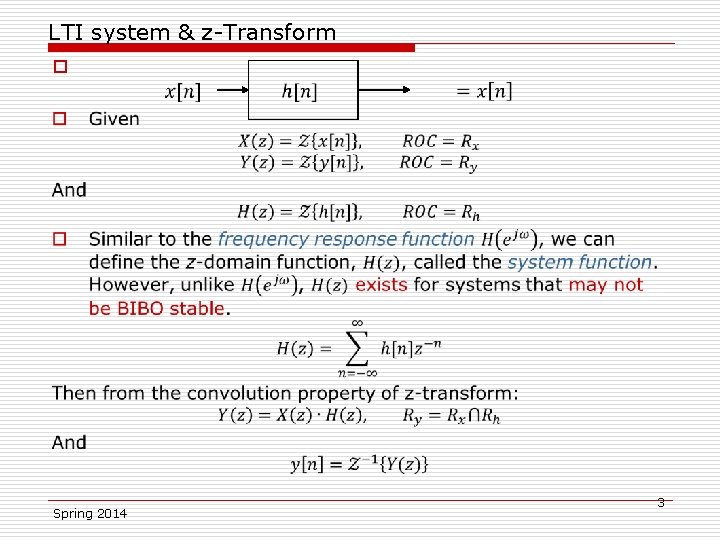
LTI system & z-Transform o Spring 2014 3
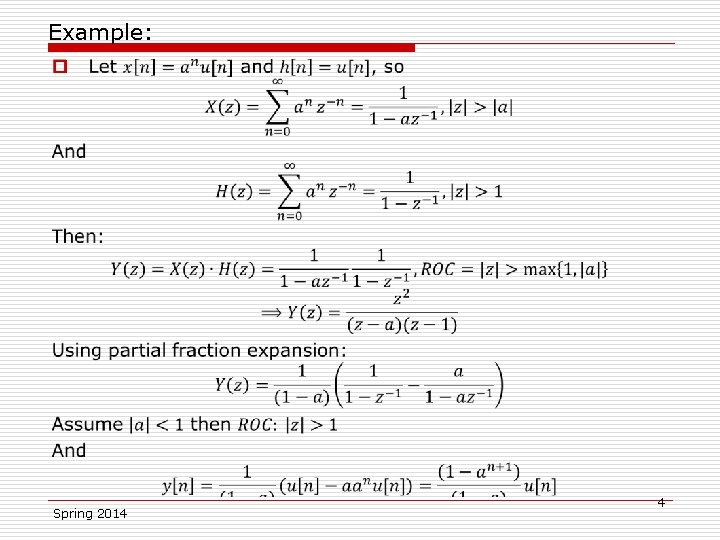
Example: o Spring 2014 4
Outline Ø System function Ø System properties: Ø Causality Ø Stability Ø LCCDE systems representation Ø Unilateral z-Transform Spring 2014 5
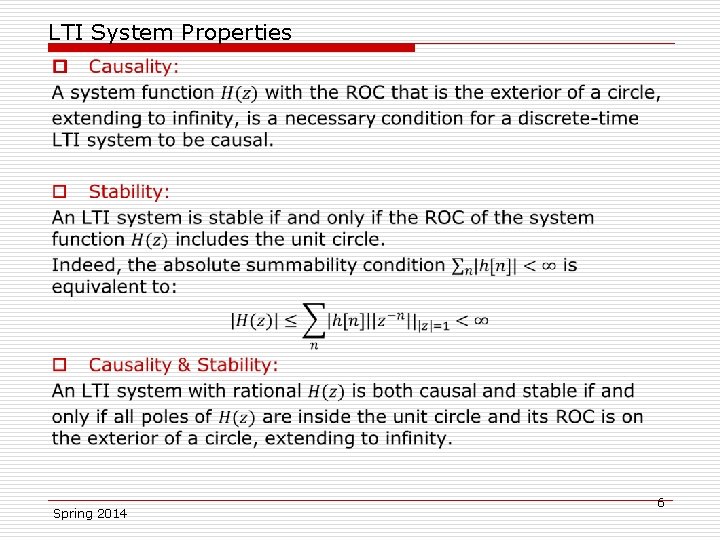
LTI System Properties o Spring 2014 6
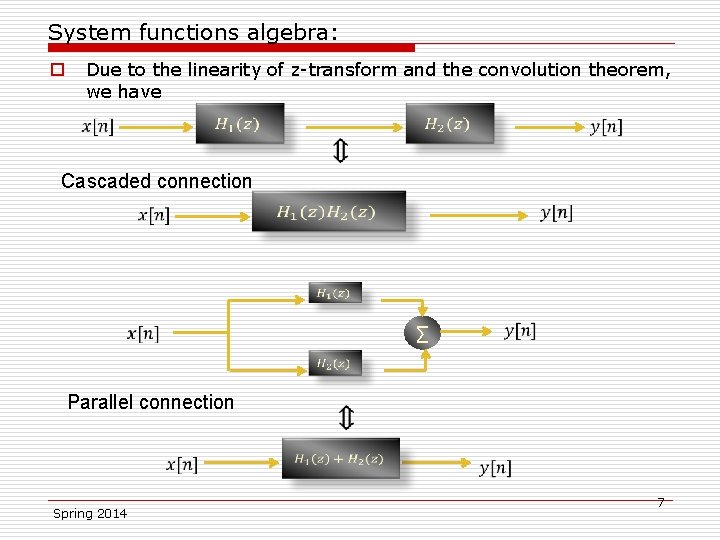
System functions algebra: o Due to the linearity of z-transform and the convolution theorem, we have Cascaded connection ∑ Parallel connection Spring 2014 7
Outline Ø System function Ø System properties: Ø Causality Ø Stability Ø LCCDE systems representation Ø Unilateral z-Transform Spring 2014 8
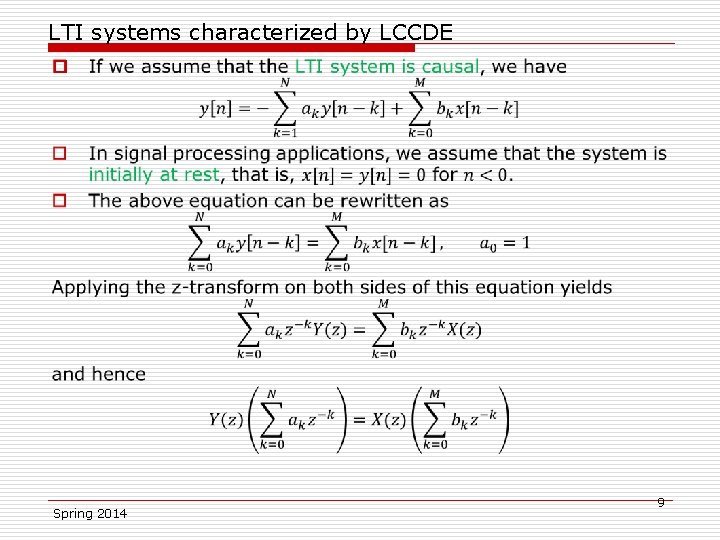
LTI systems characterized by LCCDE o Spring 2014 9
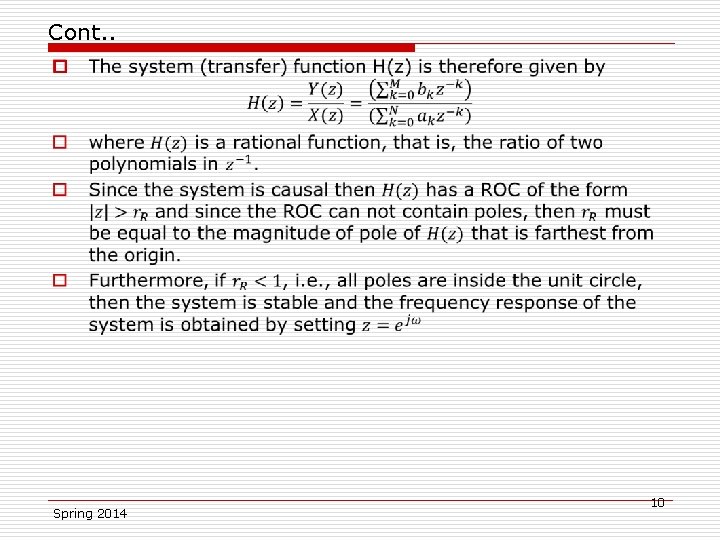
Cont. . o Spring 2014 10
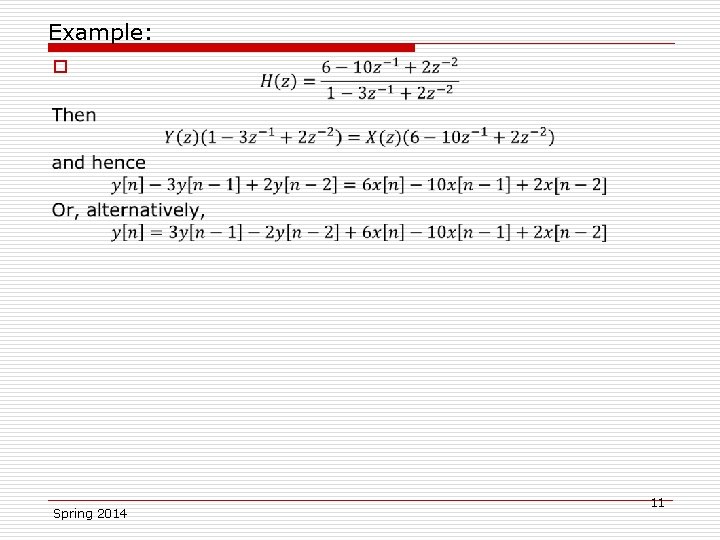
Example: o Spring 2014 11
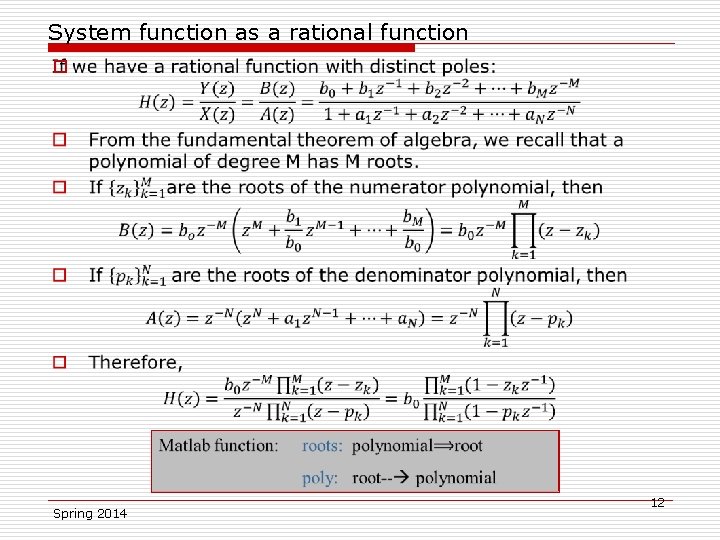
System function as a rational function o Spring 2014 12
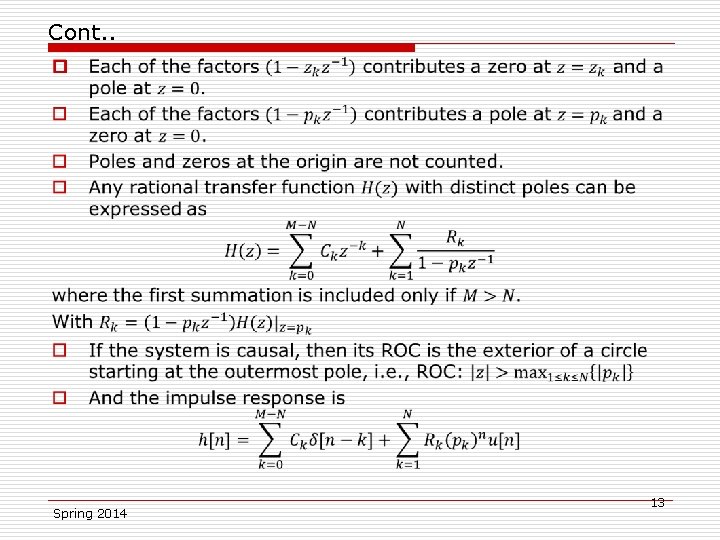
Cont. . o Spring 2014 13
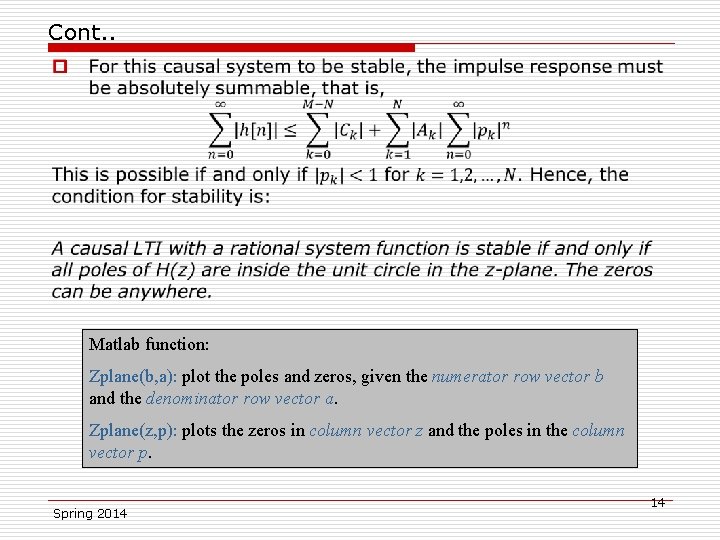
Cont. . o Matlab function: Zplane(b, a): plot the poles and zeros, given the numerator row vector b and the denominator row vector a. Zplane(z, p): plots the zeros in column vector z and the poles in the column vector p. Spring 2014 14
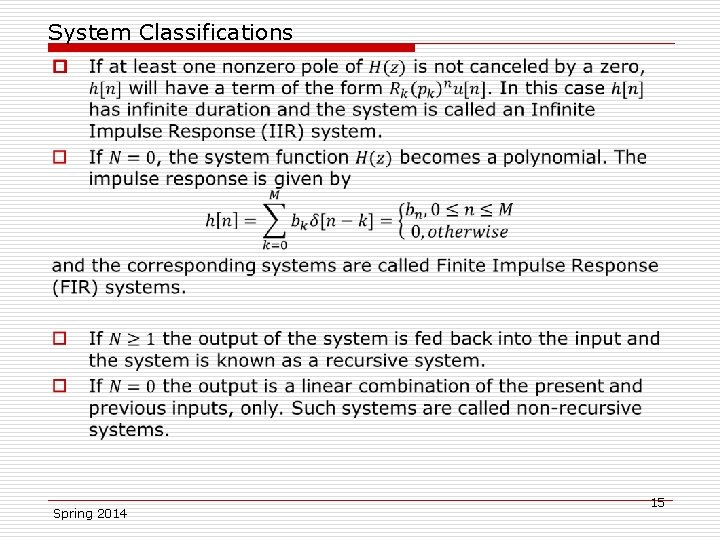
System Classifications o Spring 2014 15
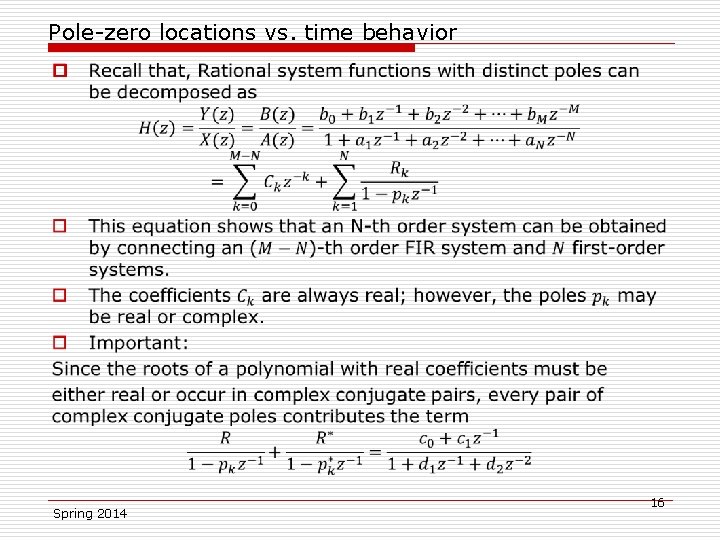
Pole-zero locations vs. time behavior o Spring 2014 16
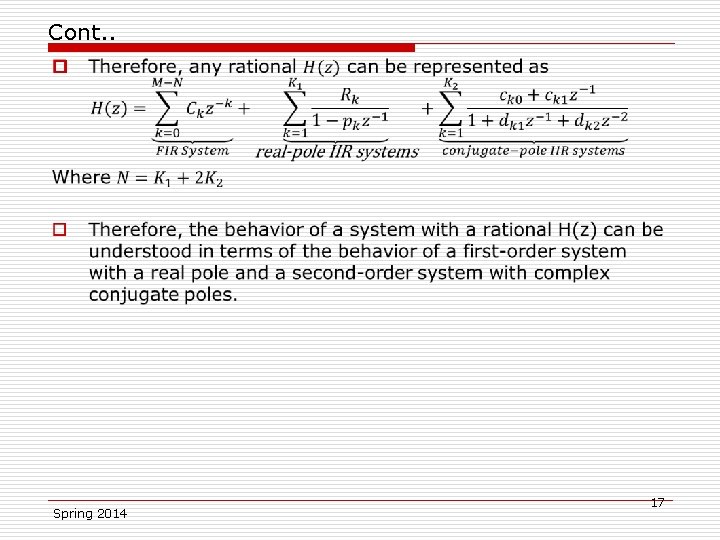
Cont. . o Spring 2014 17
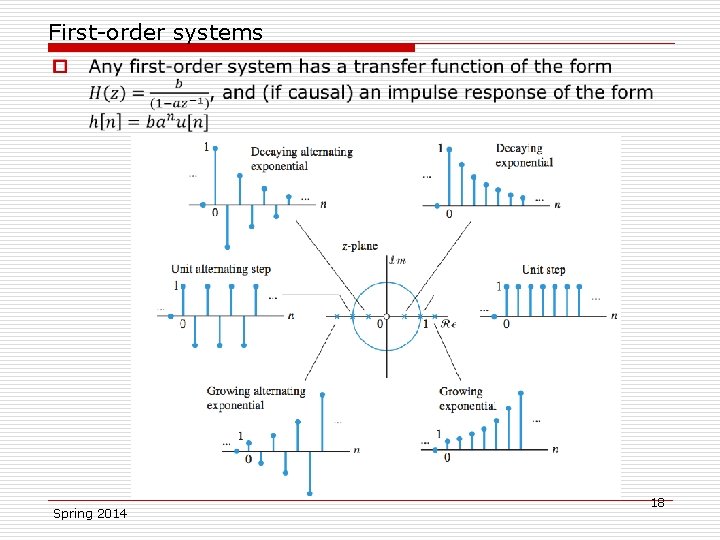
First-order systems o Spring 2014 18
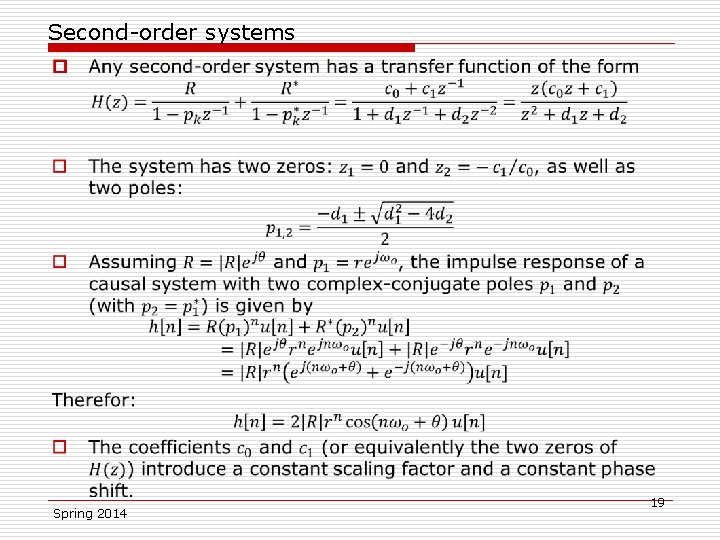
Second-order systems o Spring 2014 19
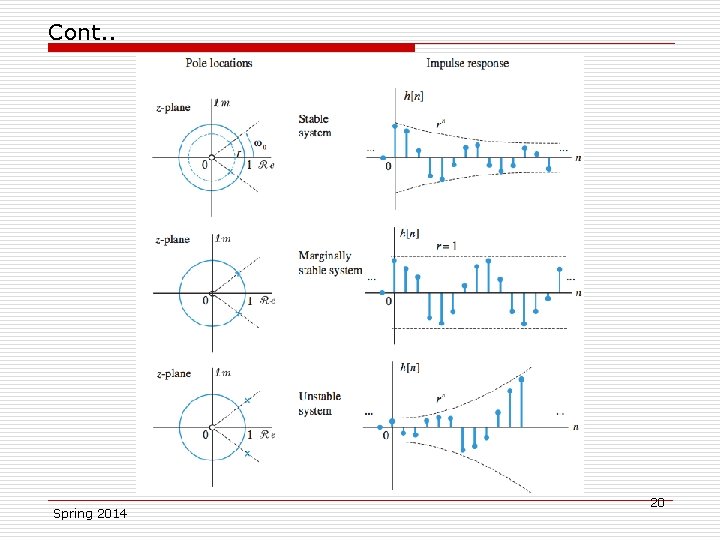
Cont. . Spring 2014 20
Outline Ø System function Ø System properties: Ø Causality Ø Stability Ø LCCDE systems representation Ø Unilateral z-Transform Spring 2014 21
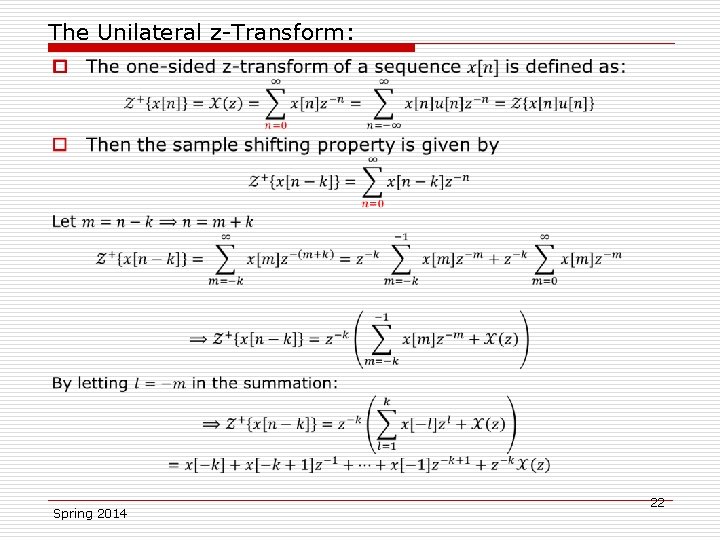
The Unilateral z-Transform: o Spring 2014 22
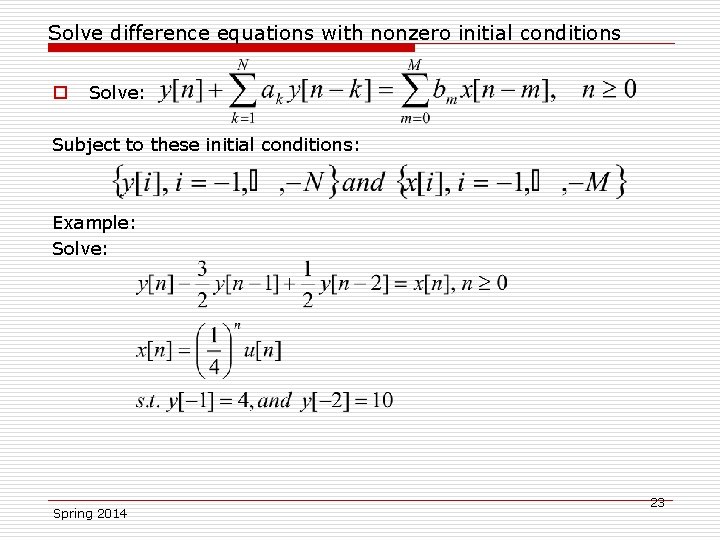
Solve difference equations with nonzero initial conditions o Solve: Subject to these initial conditions: Example: Solve: Spring 2014 23
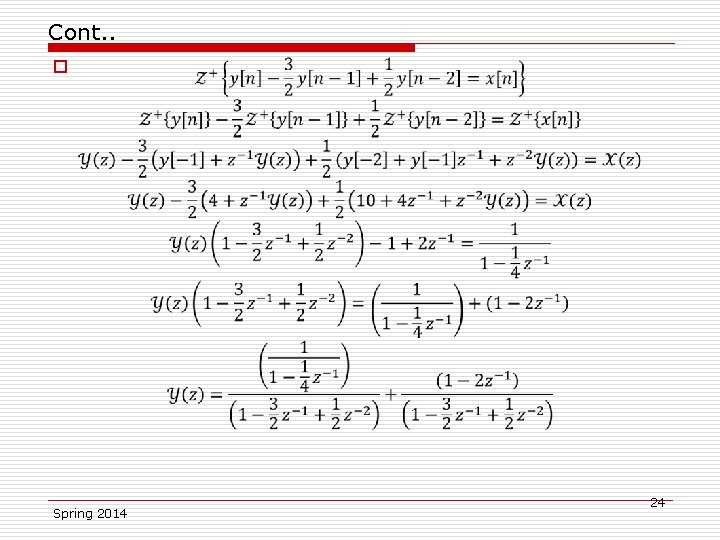
Cont. . o Spring 2014 24
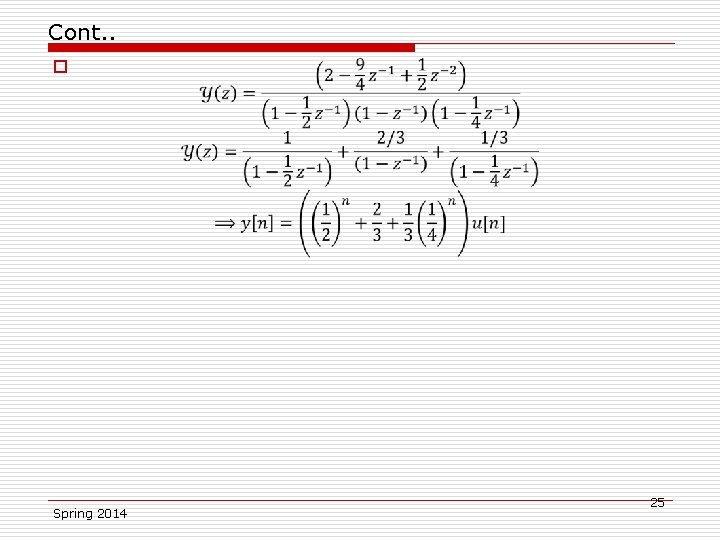
Cont. . o Spring 2014 25
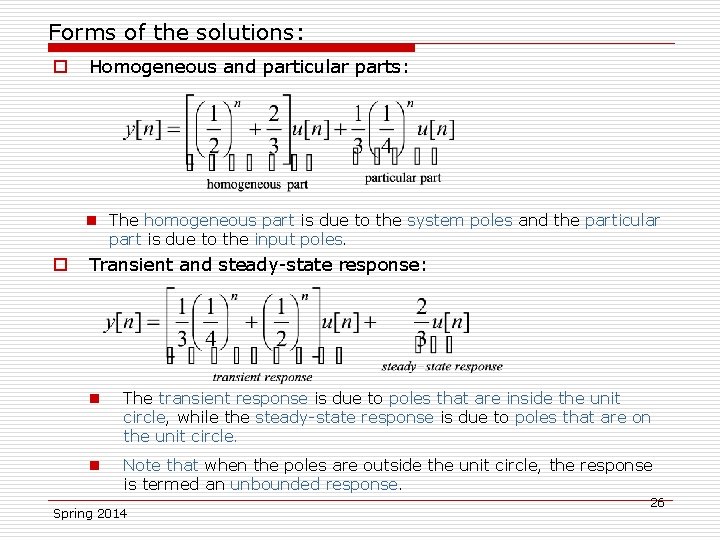
Forms of the solutions: o Homogeneous and particular parts: n The homogeneous part is due to the system poles and the particular part is due to the input poles. o Transient and steady-state response: n The transient response is due to poles that are inside the unit circle, while the steady-state response is due to poles that are on the unit circle. n Note that when the poles are outside the unit circle, the response is termed an unbounded response. Spring 2014 26
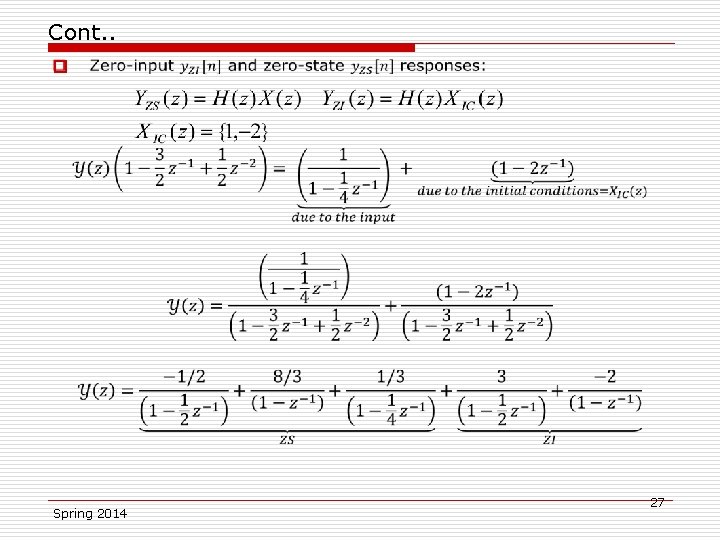
Cont. . o Spring 2014 27
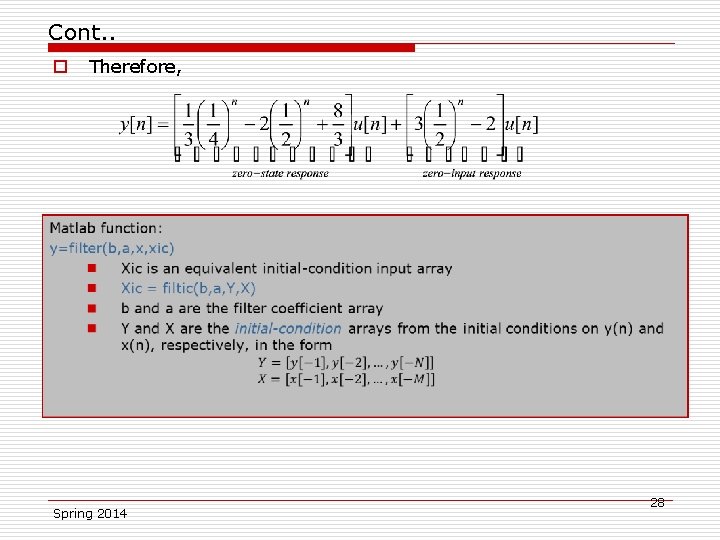
Cont. . o Therefore, Spring 2014 28
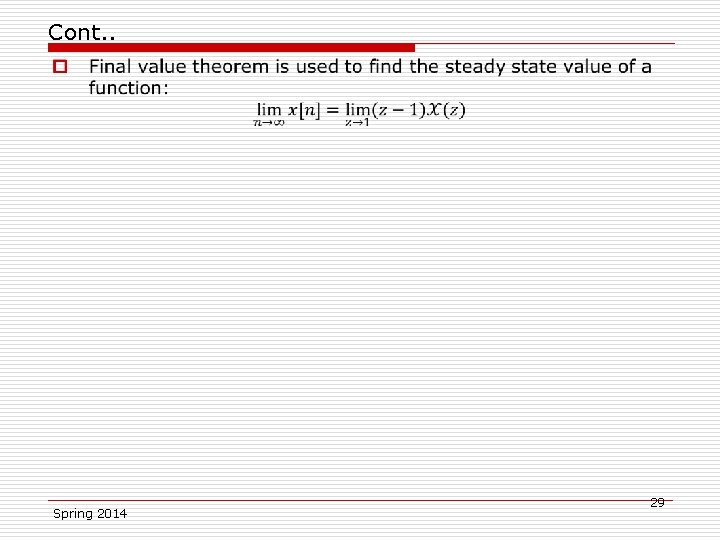
Cont. . o Spring 2014 29