
Lecture 11 SingleJoint Movements Why study singlejoint movements
- Slides: 22
Lecture 11: Single-Joint Movements Why study single-joint movements? § The trade-off of studying a natural action versus controlling the experiment well § Progress in science from simple to complex § In clinical studies, some patients limited to nearly single-joint actions § Testing theoretical frameworks for motor control
Task Parameters and Performance Variables § Task parameters: What the subject is expected to do (distance to the target, target size, required movement time, etc. ) § Performance variables: What the subject actually does (movement amplitude, scatter in the final position, movement time, etc. )
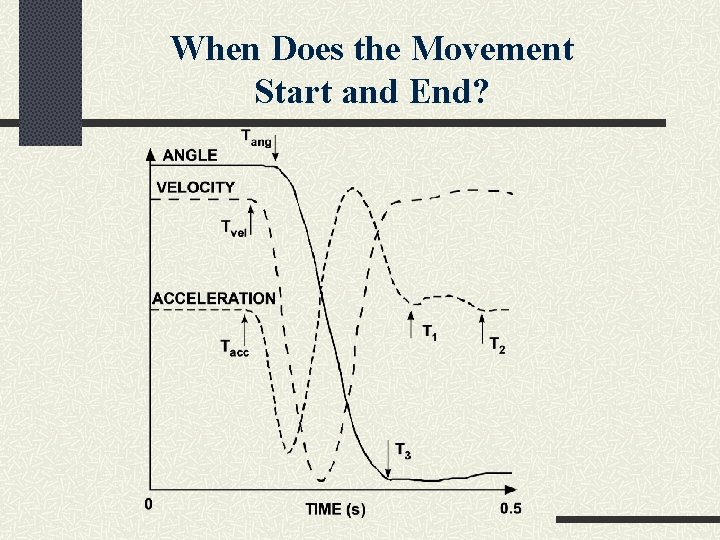
When Does the Movement Start and End?
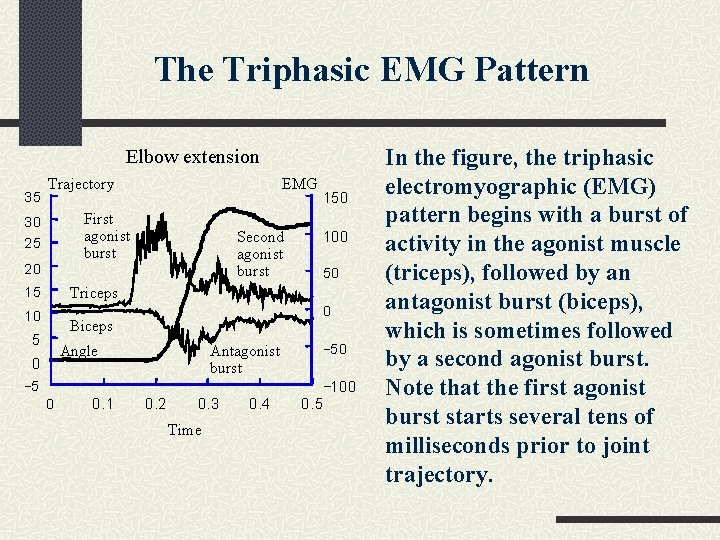
The Triphasic EMG Pattern Elbow extension 35 Trajectory EMG First agonist burst 30 25 20 Second agonist burst 150 100 50 Triceps 15 10 0 Biceps 5 Antagonist burst Angle 0 − 5 0 0. 1 0. 2 0. 3 Time 0. 4 − 50 − 100 0. 5 In the figure, the triphasic electromyographic (EMG) pattern begins with a burst of activity in the agonist muscle (triceps), followed by an antagonist burst (biceps), which is sometimes followed by a second agonist burst. Note that the first agonist burst starts several tens of milliseconds prior to joint trajectory.
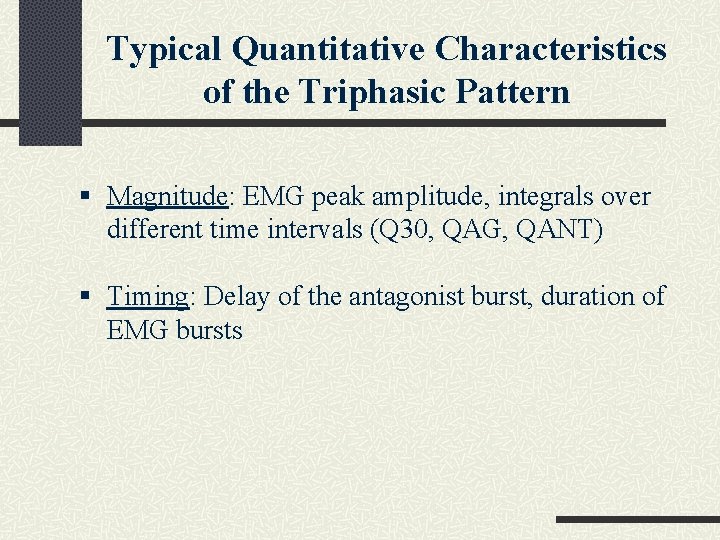
Typical Quantitative Characteristics of the Triphasic Pattern § Magnitude: EMG peak amplitude, integrals over different time intervals (Q 30, QAG, QANT) § Timing: Delay of the antagonist burst, duration of EMG bursts
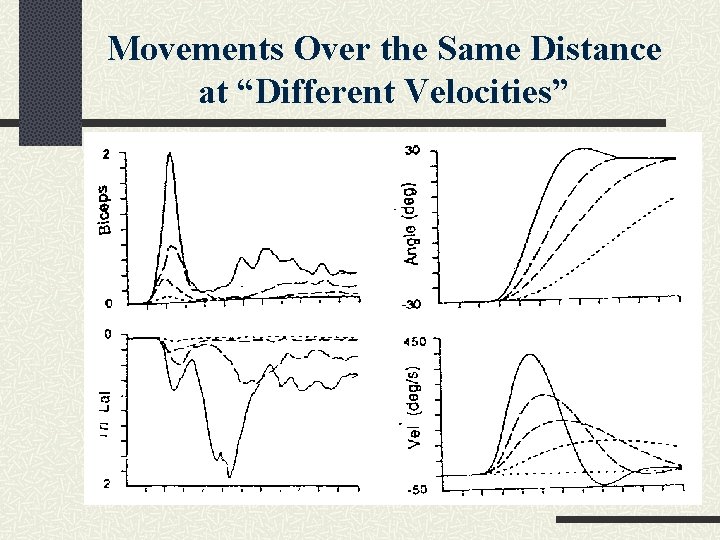
Movements Over the Same Distance at “Different Velocities”
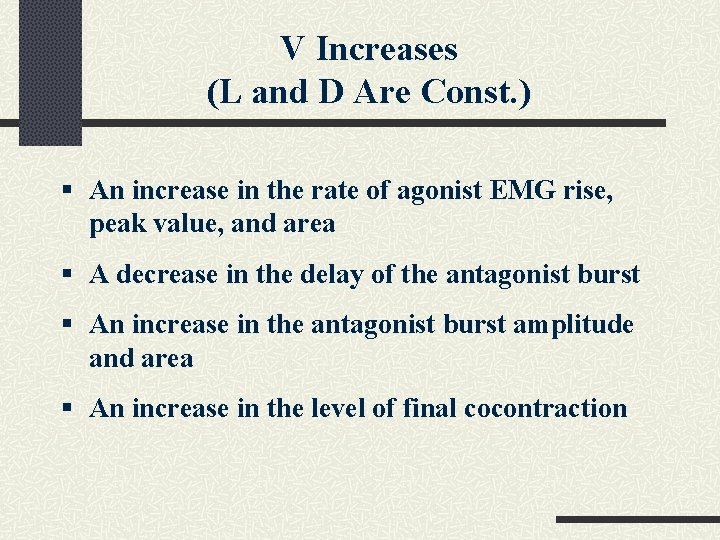
V Increases (L and D Are Const. ) § An increase in the rate of agonist EMG rise, peak value, and area § A decrease in the delay of the antagonist burst § An increase in the antagonist burst amplitude and area § An increase in the level of final cocontraction
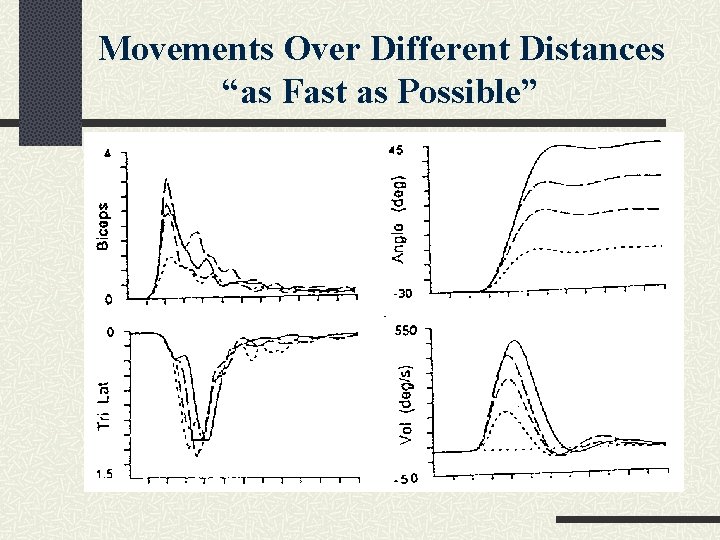
Movements Over Different Distances “as Fast as Possible”
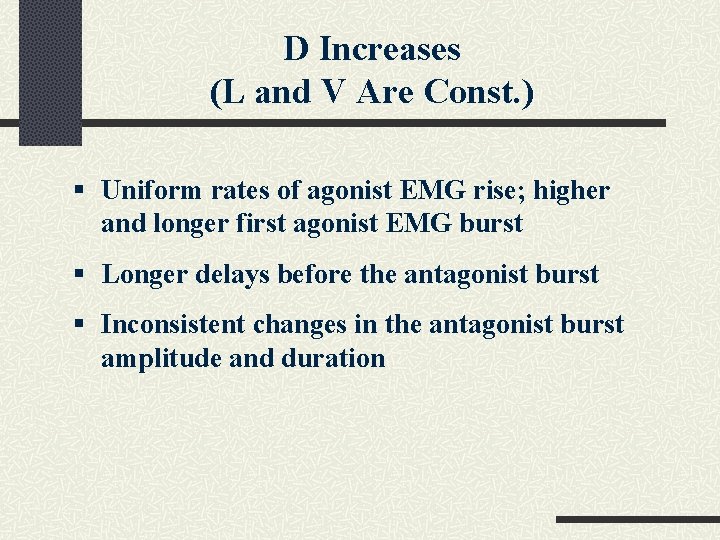
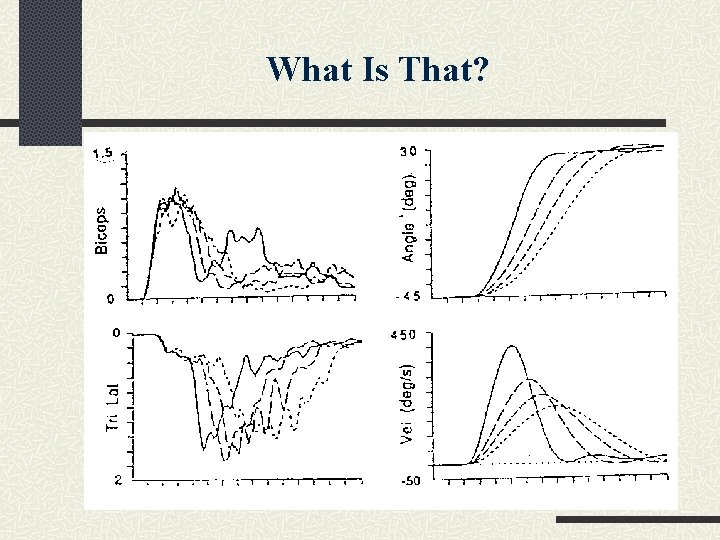
D Increases (L and V Are Const. ) § Uniform rates of agonist EMG rise; higher and longer first agonist EMG burst § Longer delays before the antagonist burst § Inconsistent changes in the antagonist burst amplitude and duration
What Is That?
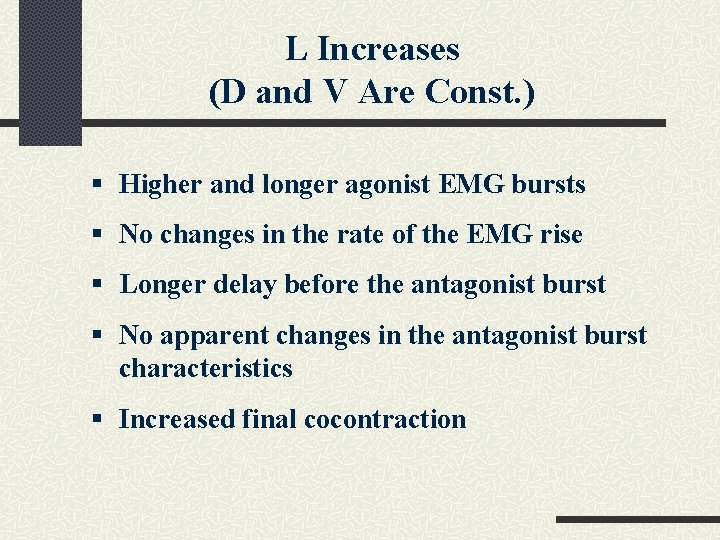
L Increases (D and V Are Const. ) § Higher and longer agonist EMG bursts § No changes in the rate of the EMG rise § Longer delay before the antagonist burst § No apparent changes in the antagonist burst characteristics § Increased final cocontraction
Isometric Step Contractions at Different Rates
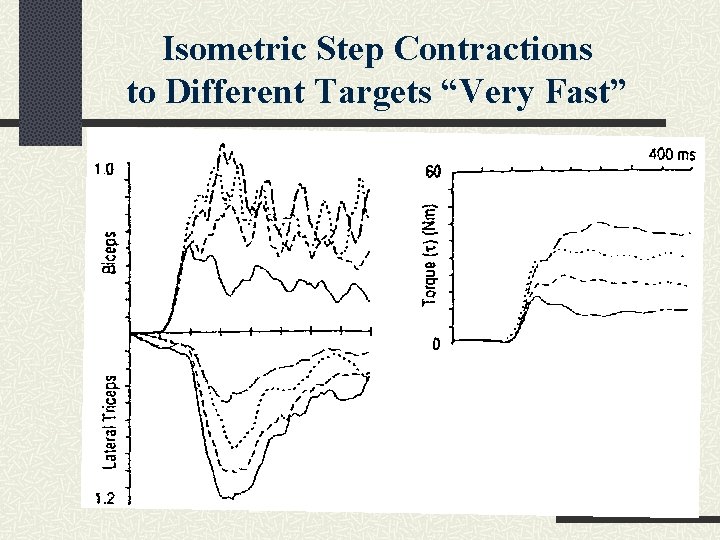
Isometric Step Contractions to Different Targets “Very Fast”
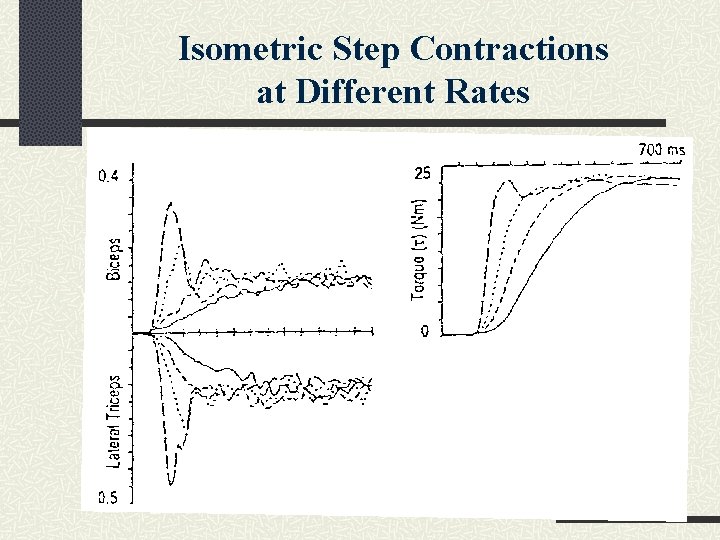
Isometric Step Contractions Same target, faster increase in torque: § Increased rate of rise of the first agonist EMG burst § Increased peak EMG of the first agonist burst § Very small delay of the antagonist burst § Increased rate of rise of the antagonist burst Same rate, increase in the target torque: § Longer first agonist burst, same rate of rise § Delayed antagonist burst
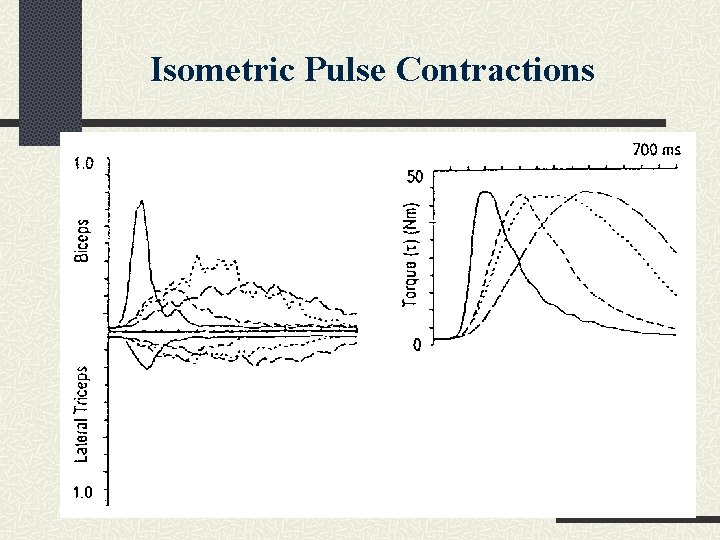
Isometric Pulse Contractions
Isometric Pulse Contractions Same target, faster increase in torque: § Increased rate of rise of the first agonist EMG burst § Increased rate of rise of the antagonist burst Same rate, increase in the target torque: § Longer first agonist burst, same rate of rise § Delayed antagonist burst
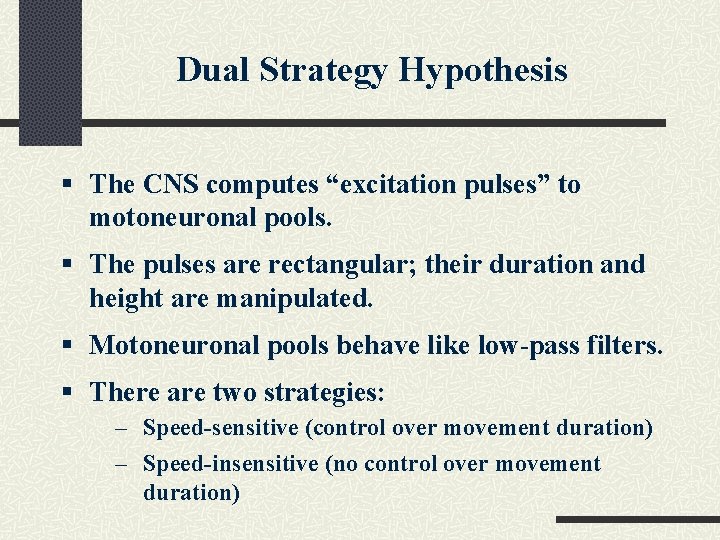
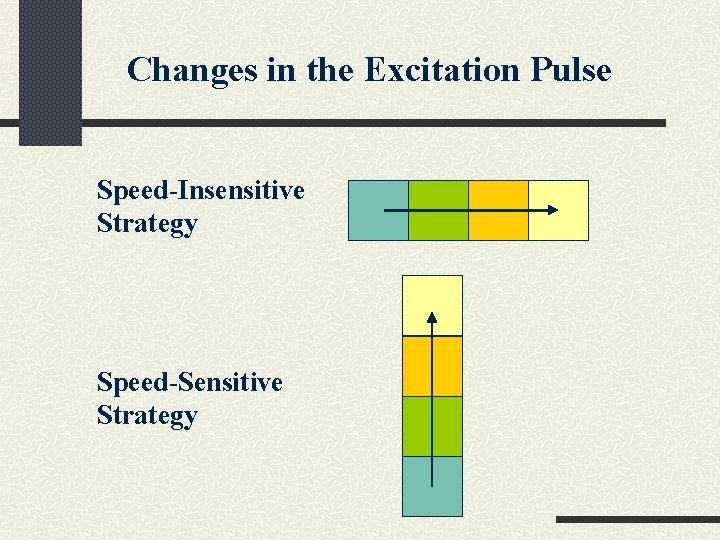
Dual Strategy Hypothesis § The CNS computes “excitation pulses” to motoneuronal pools. § The pulses are rectangular; their duration and height are manipulated. § Motoneuronal pools behave like low-pass filters. § There are two strategies: – Speed-sensitive (control over movement duration) – Speed-insensitive (no control over movement duration)
Changes in the Excitation Pulse Speed-Insensitive Strategy Speed-Sensitive Strategy
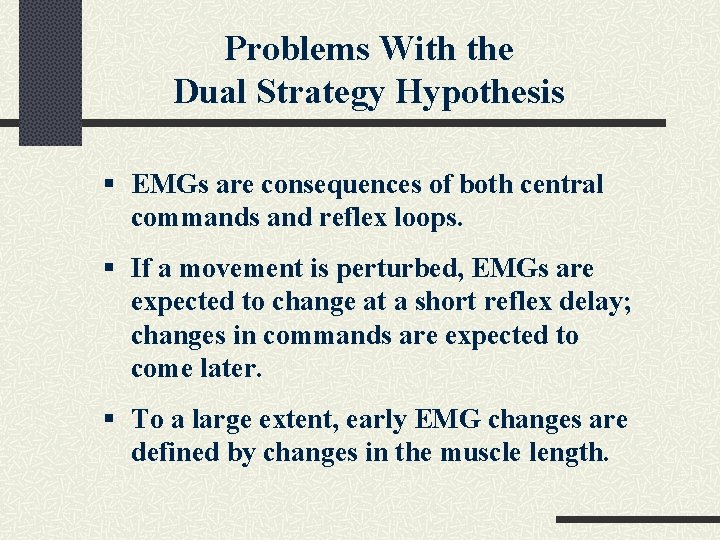
Problems With the Dual Strategy Hypothesis § EMGs are consequences of both central commands and reflex loops. § If a movement is perturbed, EMGs are expected to change at a short reflex delay; changes in commands are expected to come later. § To a large extent, early EMG changes are defined by changes in the muscle length.
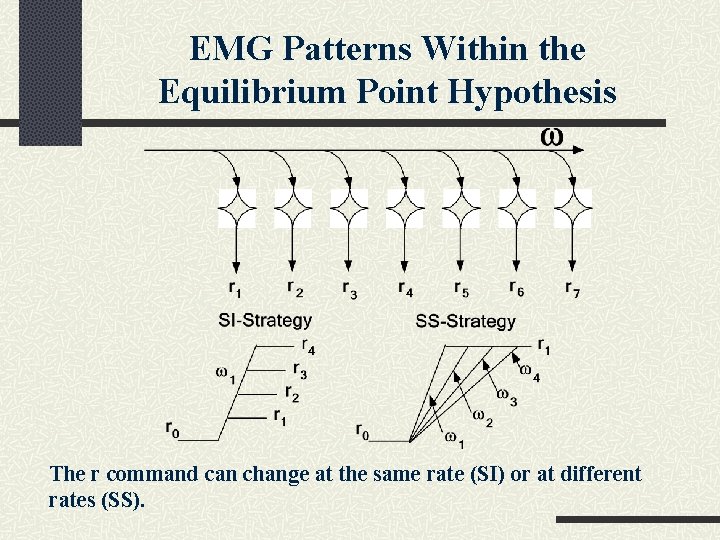
EMG Patterns Within the Equilibrium Point Hypothesis The r command can change at the same rate (SI) or at different rates (SS).
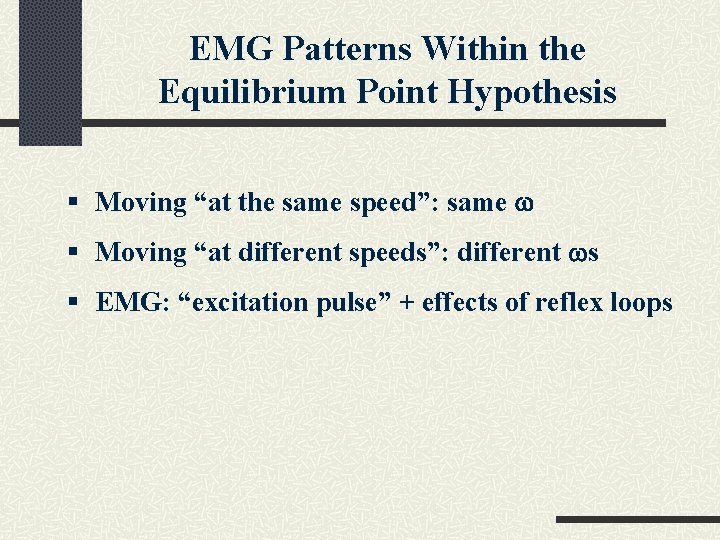
EMG Patterns Within the Equilibrium Point Hypothesis § Moving “at the same speed”: same w § Moving “at different speeds”: different ws § EMG: “excitation pulse” + effects of reflex loops
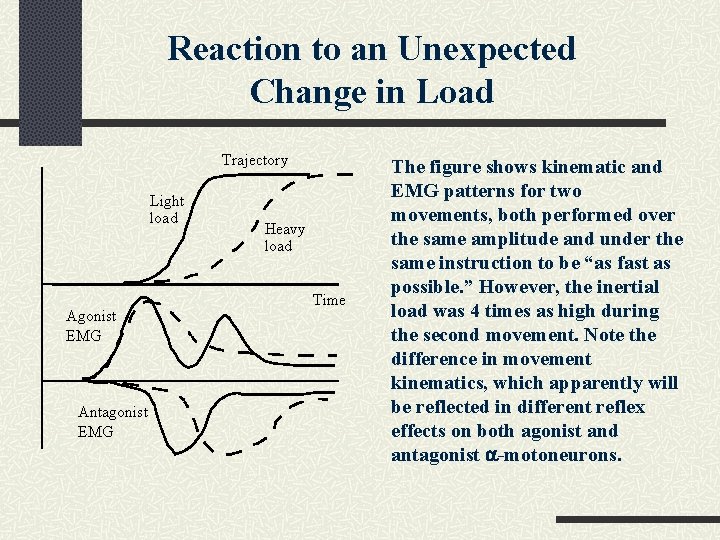
Reaction to an Unexpected Change in Load Trajectory Light load Agonist EMG Antagonist EMG Heavy load Time The figure shows kinematic and EMG patterns for two movements, both performed over the same amplitude and under the same instruction to be “as fast as possible. ” However, the inertial load was 4 times as high during the second movement. Note the difference in movement kinematics, which apparently will be reflected in different reflex effects on both agonist and antagonist a-motoneurons.