
Lecture 10 Radiography of the shoulder Girdle Shoulder
- Slides: 11
Lecture (10 )
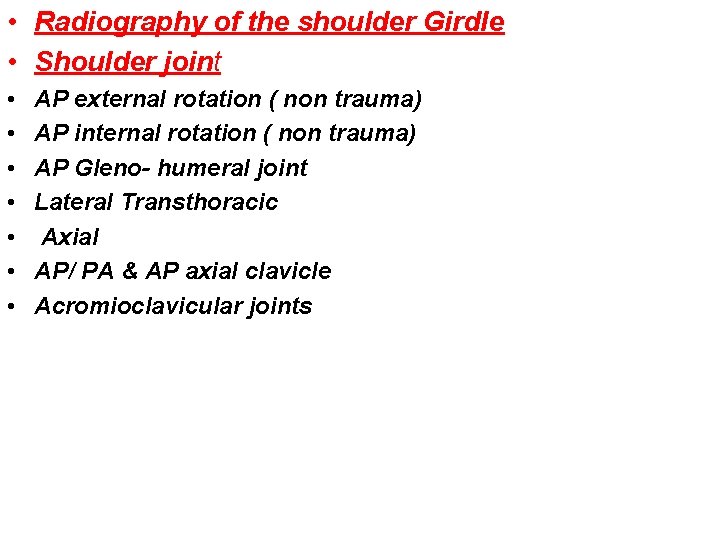
• Radiography of the shoulder Girdle • Shoulder joint • • AP external rotation ( non trauma) AP internal rotation ( non trauma) AP Gleno- humeral joint Lateral Transthoracic Axial AP/ PA & AP axial clavicle Acromioclavicular joints
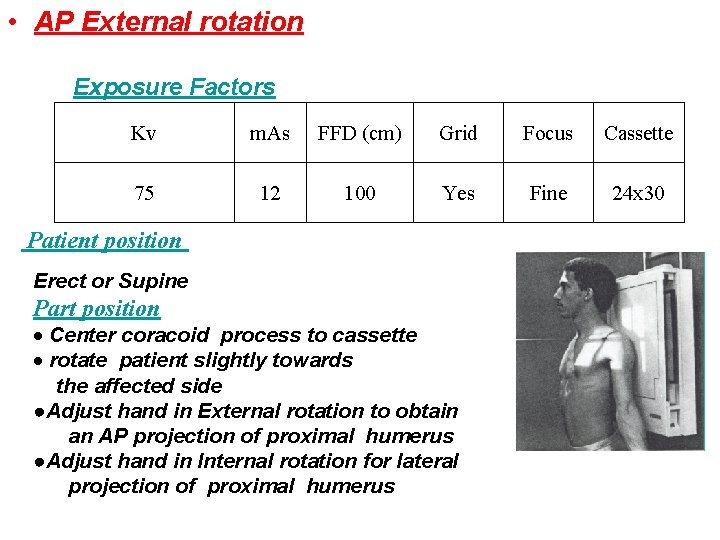
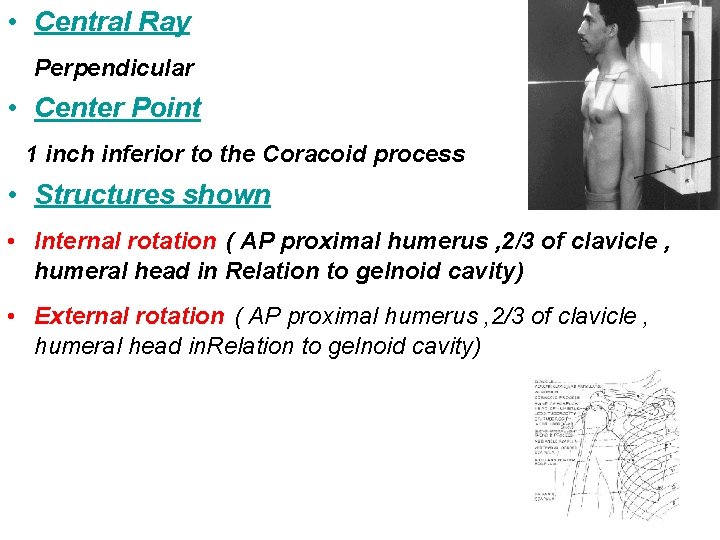
• AP External rotation Exposure Factors Kv m. As FFD (cm) Grid Focus Cassette 75 12 100 Yes Fine 24 x 30 Patient position Erect or Supine Part position Center coracoid process to cassette rotate patient slightly towards the affected side ●Adjust hand in External rotation to obtain an AP projection of proximal humerus ●Adjust hand in Internal rotation for lateral projection of proximal humerus
• Central Ray Perpendicular • Center Point 1 inch inferior to the Coracoid process • Structures shown • Internal rotation ( AP proximal humerus , 2/3 of clavicle , humeral head in Relation to gelnoid cavity) • External rotation ( AP proximal humerus , 2/3 of clavicle , humeral head in. Relation to gelnoid cavity)
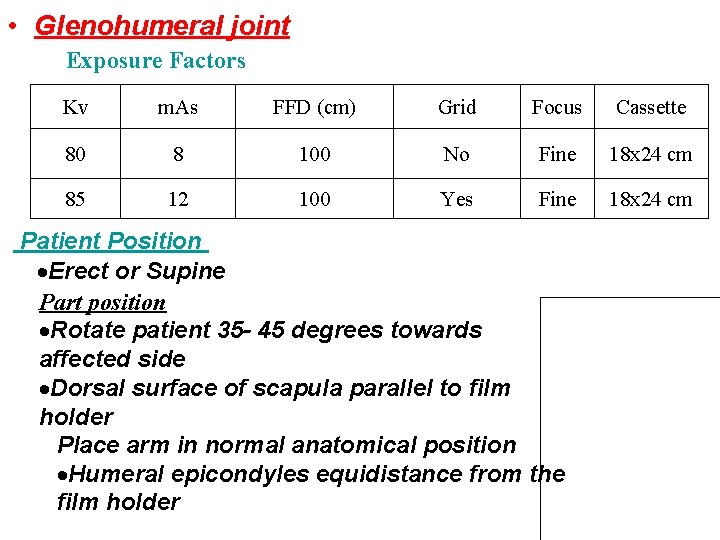
• Glenohumeral joint Exposure Factors Kv m. As FFD (cm) Grid Focus Cassette 80 8 100 No Fine 18 x 24 cm 85 12 100 Yes Fine 18 x 24 cm Patient Position Erect or Supine Part position Rotate patient 35 - 45 degrees towards affected side Dorsal surface of scapula parallel to film holder Place arm in normal anatomical position Humeral epicondyles equidistance from the film holder
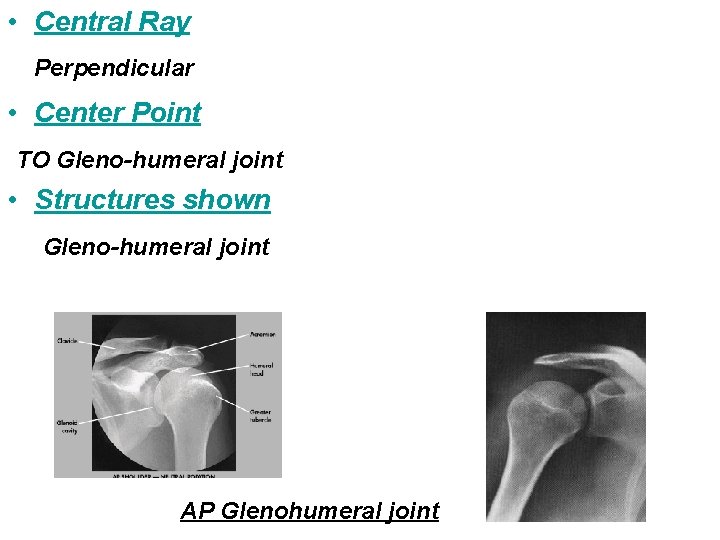
• Central Ray Perpendicular • Center Point TO Gleno-humeral joint • Structures shown Gleno-humeral joint AP Glenohumeral joint
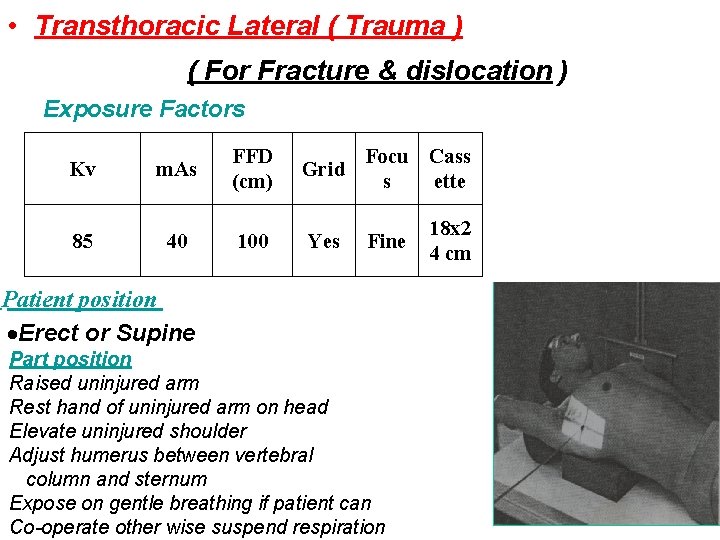
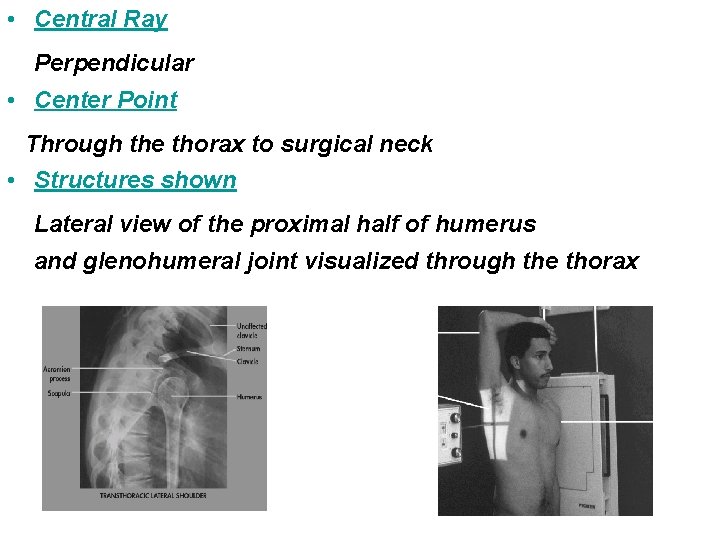
• Transthoracic Lateral ( Trauma ) ( For Fracture & dislocation ) Exposure Factors Kv m. As FFD (cm) Grid Focu Cass s ette 85 40 100 Yes Fine Patient position Erect or Supine Part position Raised uninjured arm Rest hand of uninjured arm on head Elevate uninjured shoulder Adjust humerus between vertebral column and sternum Expose on gentle breathing if patient can Co-operate other wise suspend respiration 18 x 2 4 cm
• Central Ray Perpendicular • Center Point Through the thorax to surgical neck • Structures shown Lateral view of the proximal half of humerus and glenohumeral joint visualized through the thorax
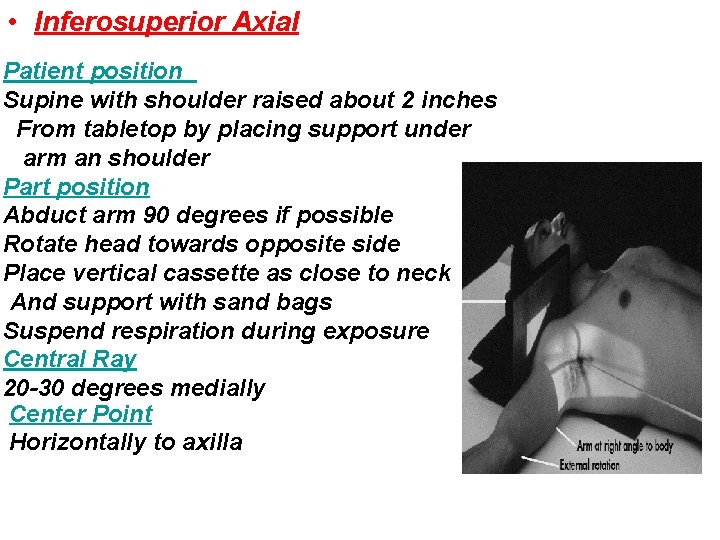
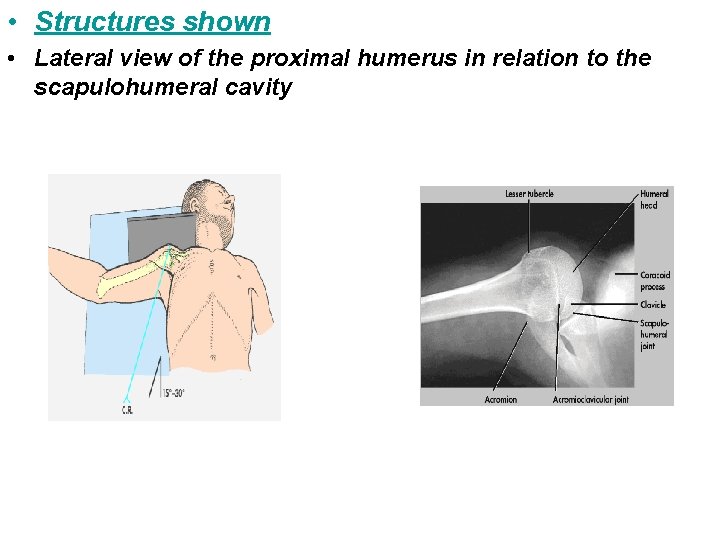
• Inferosuperior Axial Patient position Supine with shoulder raised about 2 inches From tabletop by placing support under arm an shoulder Part position Abduct arm 90 degrees if possible Rotate head towards opposite side Place vertical cassette as close to neck And support with sand bags Suspend respiration during exposure Central Ray 20 -30 degrees medially Center Point Horizontally to axilla
• Structures shown • Lateral view of the proximal humerus in relation to the scapulohumeral cavity