
Lecture 10 Potential Energy l Potential Energy Definition
- Slides: 10
Lecture 10 Potential Energy l Potential Energy ØDefinition ØConservative Forces l Conservation l Power of Energy
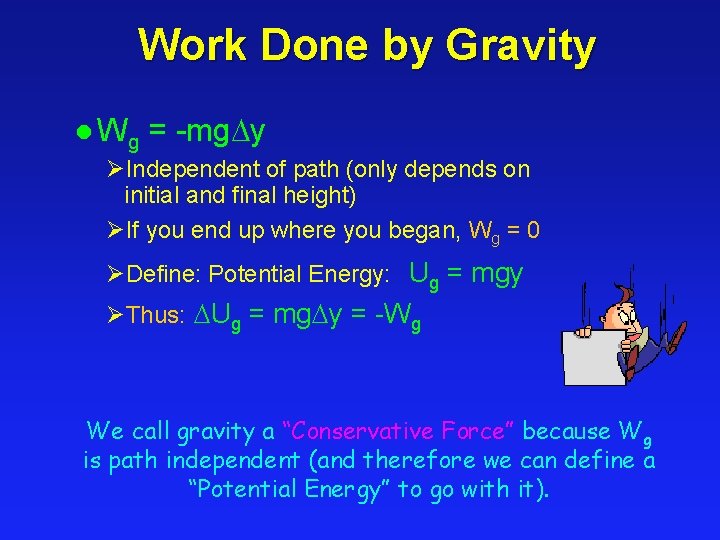
Work Done by Gravity l Wg = -mg y ØIndependent of path (only depends on initial and final height) ØIf you end up where you began, Wg = 0 ØDefine: Potential Energy: Ug = mgy ØThus: Ug = mg y = -Wg We call gravity a “Conservative Force” because Wg is path independent (and therefore we can define a “Potential Energy” to go with it).
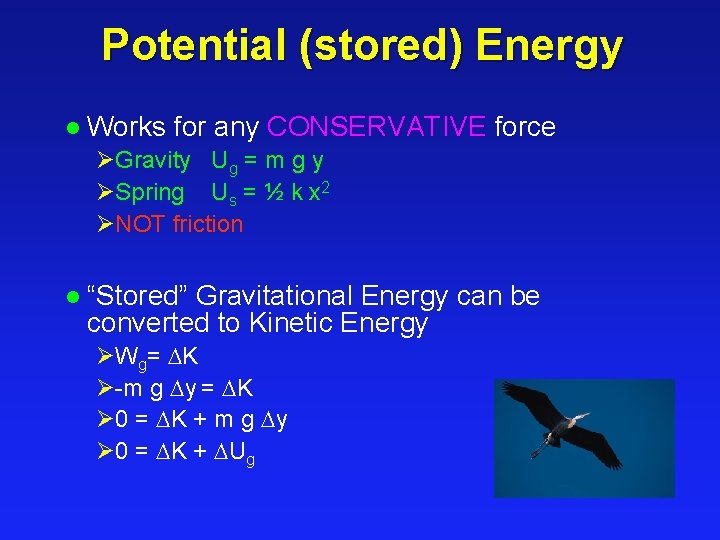
Potential (stored) Energy l Works for any CONSERVATIVE force ØGravity Ug = m g y ØSpring Us = ½ k x 2 ØNOT friction l “Stored” Gravitational Energy can be converted to Kinetic Energy ØWg= K Ø-m g y = K Ø 0 = K + m g y Ø 0 = K + Ug
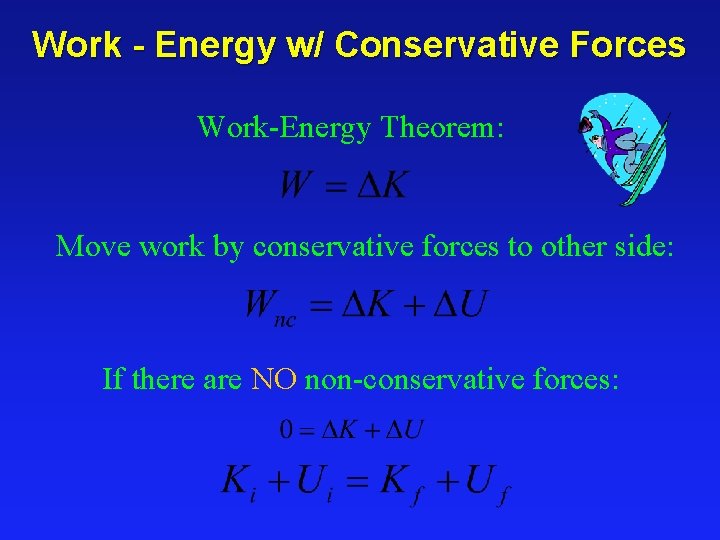
Work - Energy w/ Conservative Forces Work-Energy Theorem: Move work by conservative forces to other side: If there are NO non-conservative forces:
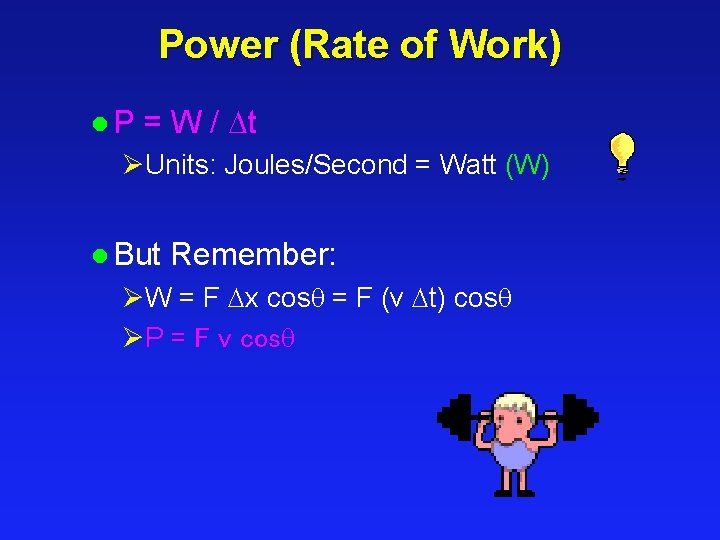
Power (Rate of Work) l. P = W / t ØUnits: Joules/Second = Watt (W) l But Remember: ØW = F x cosq = F (v t) cosq ØP = F v cosq
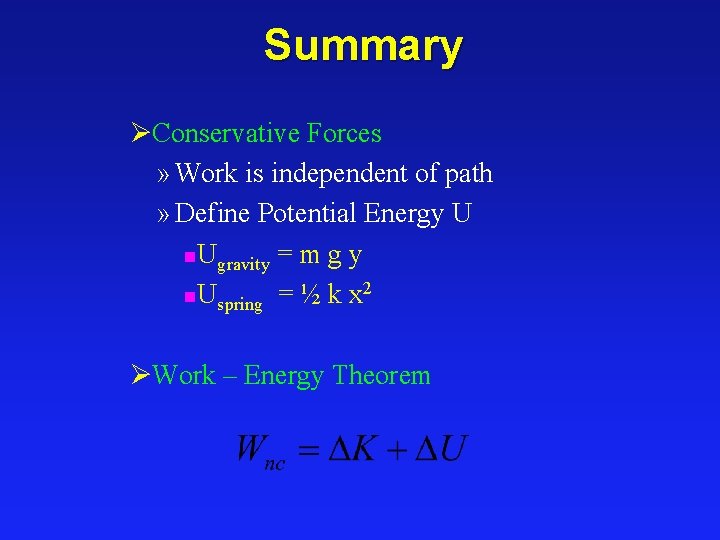
Summary ØConservative Forces » Work is independent of path » Define Potential Energy U n Ugravity = m g y n Uspring = ½ k x 2 ØWork – Energy Theorem
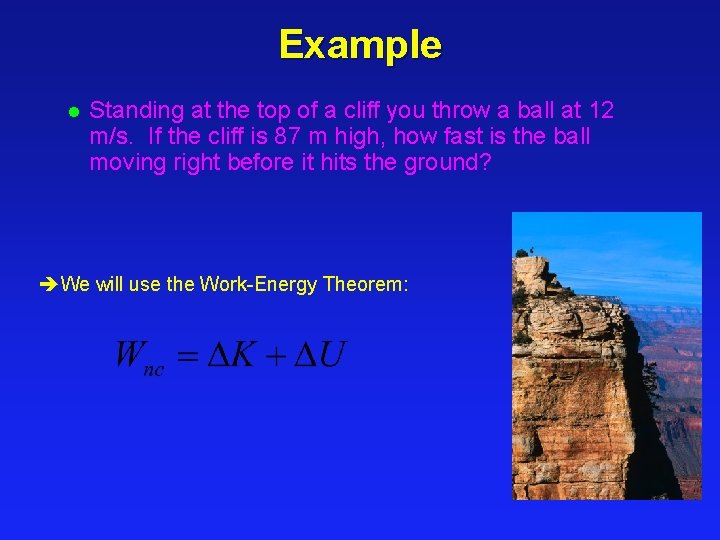
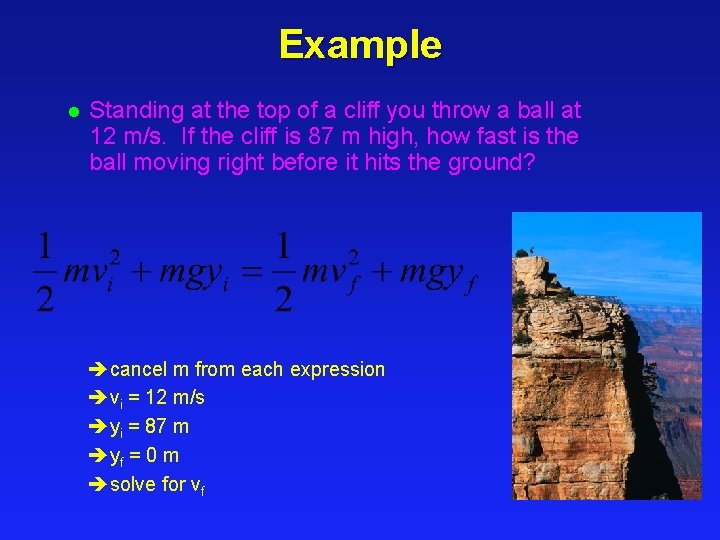
Example l Standing at the top of a cliff you throw a ball at 12 m/s. If the cliff is 87 m high, how fast is the ball moving right before it hits the ground? èWe will use the Work-Energy Theorem:
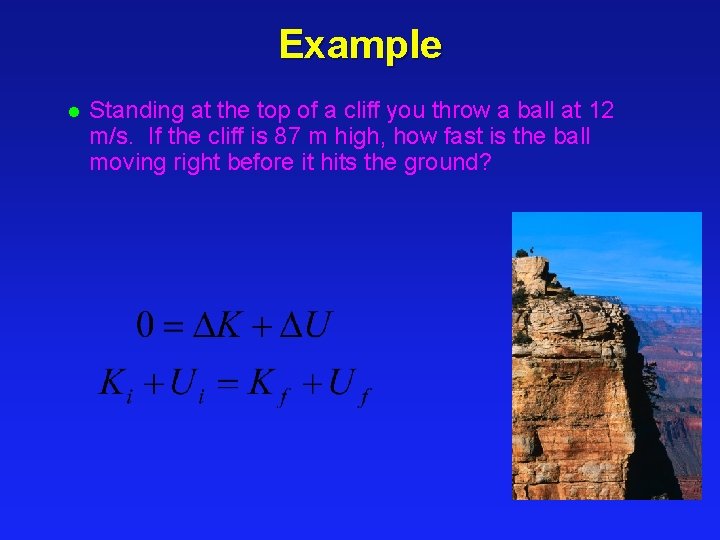
Example l Standing at the top of a cliff you throw a ball at 12 m/s. If the cliff is 87 m high, how fast is the ball moving right before it hits the ground?
Example l Standing at the top of a cliff you throw a ball at 12 m/s. If the cliff is 87 m high, how fast is the ball moving right before it hits the ground? ècancel m from each expression èvi = 12 m/s èyi = 87 m èyf = 0 m èsolve for vf
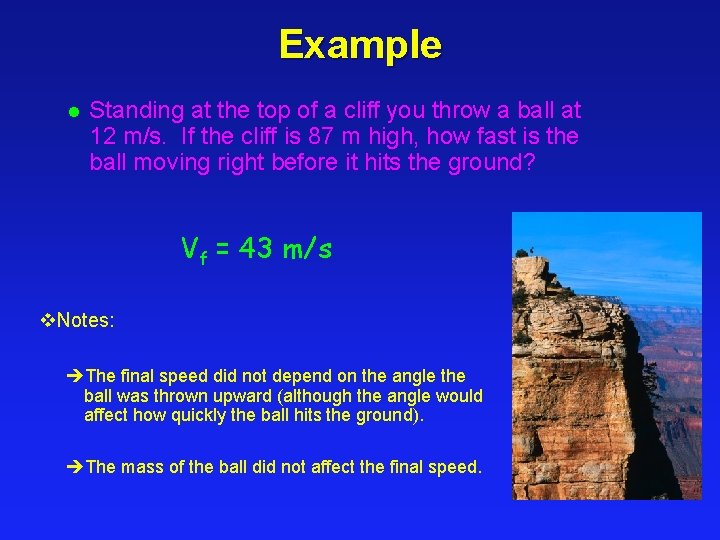
Example l Standing at the top of a cliff you throw a ball at 12 m/s. If the cliff is 87 m high, how fast is the ball moving right before it hits the ground? Vf = 43 m/s v. Notes: èThe final speed did not depend on the angle the ball was thrown upward (although the angle would affect how quickly the ball hits the ground). èThe mass of the ball did not affect the final speed.