
Lecture 10 Populations What is a population members
Lecture 10 Populations
What is a population? • ‘members of a particular species that inhabit a particular area’ • Various aspects: • • • Range and distribution Size Density Age structure Growth Genetic uniqueness subpopulations (ecotype)

Population growth rate: • Discrete-time – Geometric growth • Species which have discrete breeding seasons • Continuous time – Exponential growth
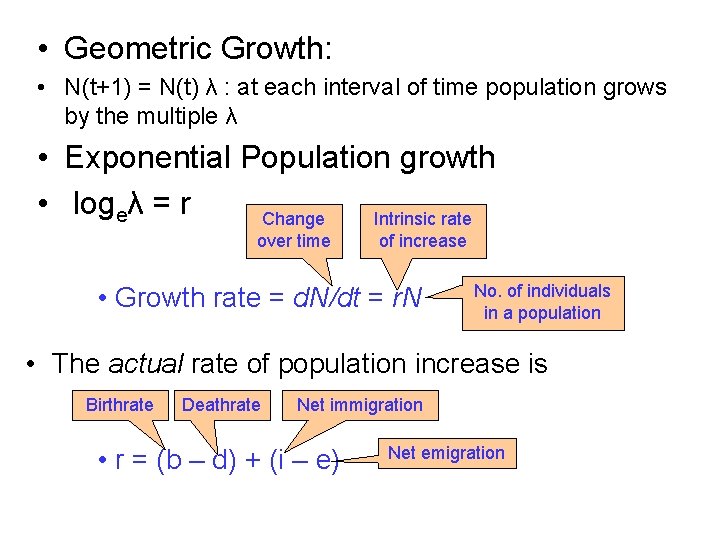
• Geometric Growth: • N(t+1) = N(t) λ : at each interval of time population grows by the multiple λ • Exponential Population growth • logeλ = r Change Intrinsic rate over time of increase • Growth rate = d. N/dt = r. N No. of individuals in a population • The actual rate of population increase is Birthrate Deathrate Net immigration • r = (b – d) + (i – e) Net emigration
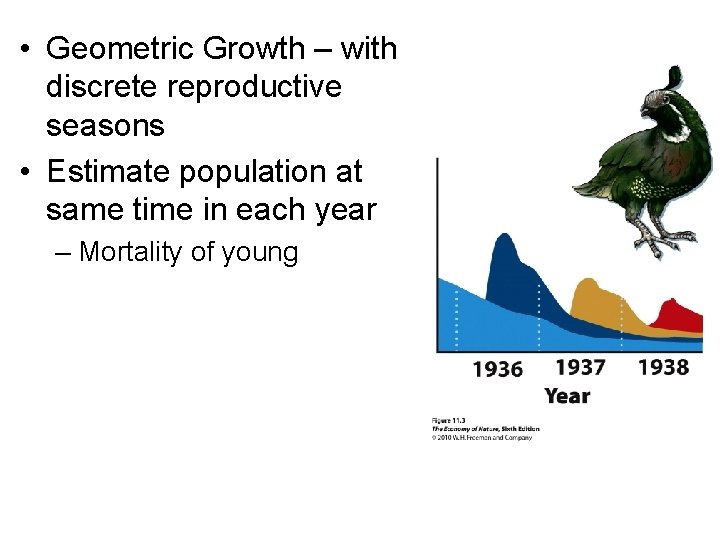
• Geometric Growth – with discrete reproductive seasons • Estimate population at same time in each year – Mortality of young

Log population size increasing exponential against time produces straight line Slope (at any point) = d. N/dt = r. N
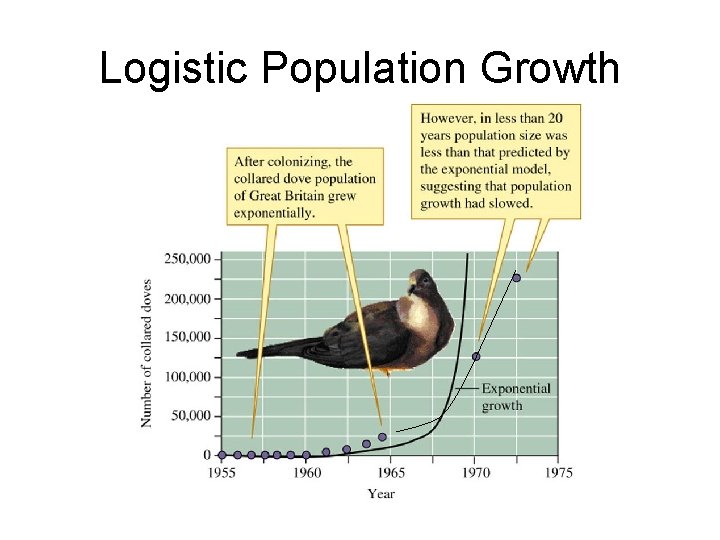
Logistic Population Growth
Carrying Capacity • No matter how fast populations grow, they eventually reach a limit – This is imposed by shortages of important environmental factors • Nutrients, water, space, light • The carrying capacity is the maximum number of individuals that an area can support – It is symbolized by k
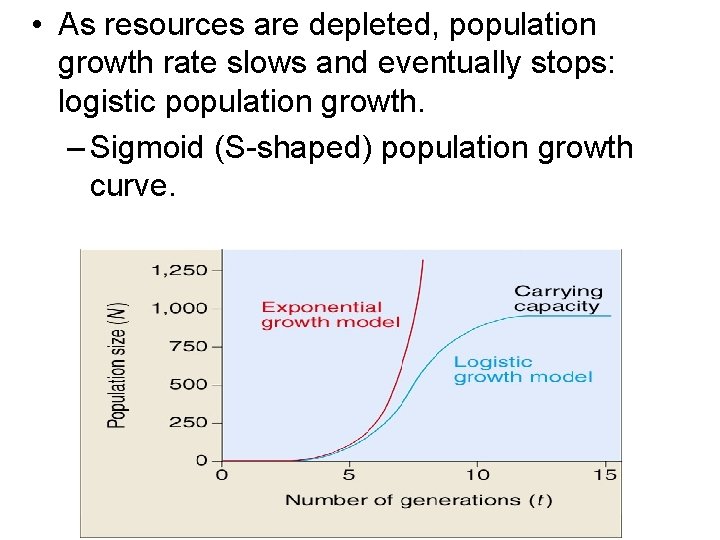
• As resources are depleted, population growth rate slows and eventually stops: logistic population growth. – Sigmoid (S-shaped) population growth curve.
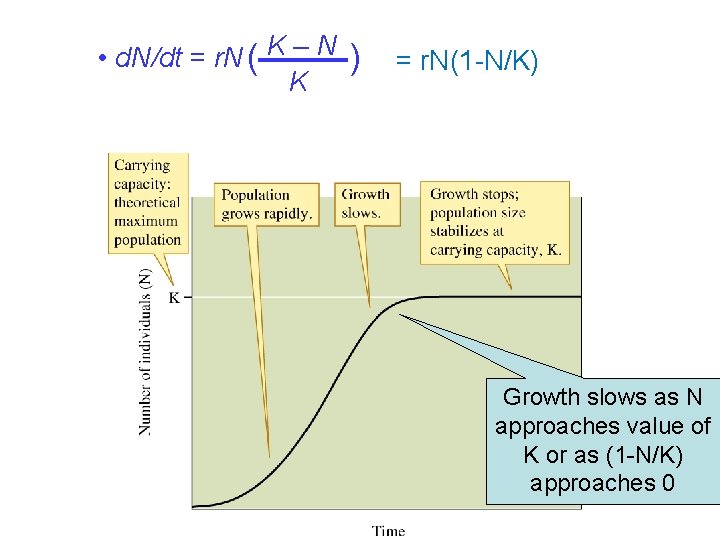
• d. N/dt = r. N ( K – N K ) = r. N(1 -N/K) Growth slows as N approaches value of K or as (1 -N/K) approaches 0
Limits to Population Growth • Environment limits population growth by altering birth and death rates. – Density-dependent factors • Disease, Resource competition – Density-independent factors • Natural disasters
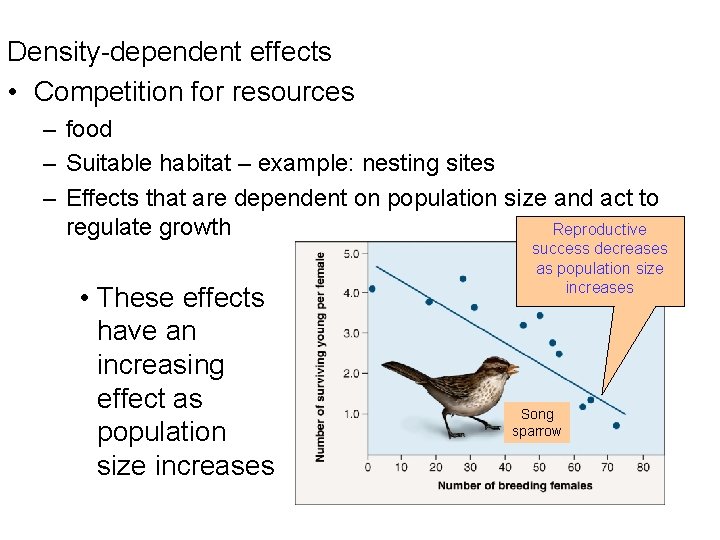
Density-dependent effects • Competition for resources – food – Suitable habitat – example: nesting sites – Effects that are dependent on population size and act to regulate growth Reproductive • These effects have an increasing effect as population size increases success decreases as population size increases Song sparrow
• Density-independent effects – Effects that are independent of population size but still regulate growth • Most are aspects of the external environment – Weather » Droughts, storms, floods – Physical disruptions » Fire, road construction
Size of Populations • Abundance: number of individuals within a specified area • Abundance/area = Density • How do we determine how many individuals there are?
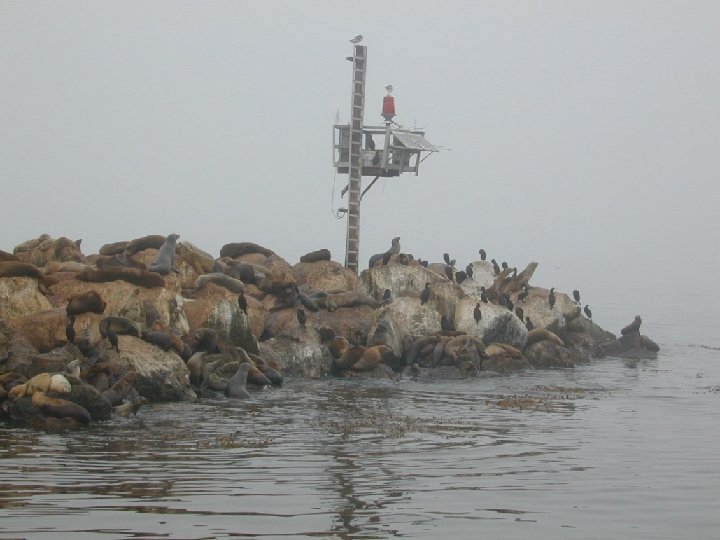
• Estimation of population sizes • Choice of technique depends on – – – motility of target species Nature of habitat Resources Resolution required Generally rely on statistical sampling /various assumptions • Examples of techniques – – • Capture-mark-recapture Christmas Bird Counts Aerial surveys Acoustic monitoring http: //www. pwrc. usgs. gov/monmanual/approaches/popsize. htm
Survivorship and Age structure • Age structure: Proportion of individuals in various age classes • Survivorship is the percentage of an original population that survives to a given age – Involves study development of life table • Cohort – Example: Cactus finch • Static – Example: Dall sheep
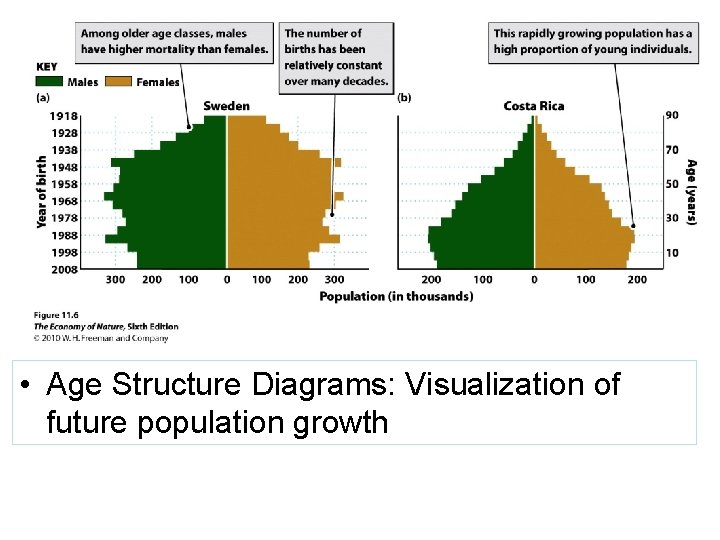
• Age Structure Diagrams: Visualization of future population growth
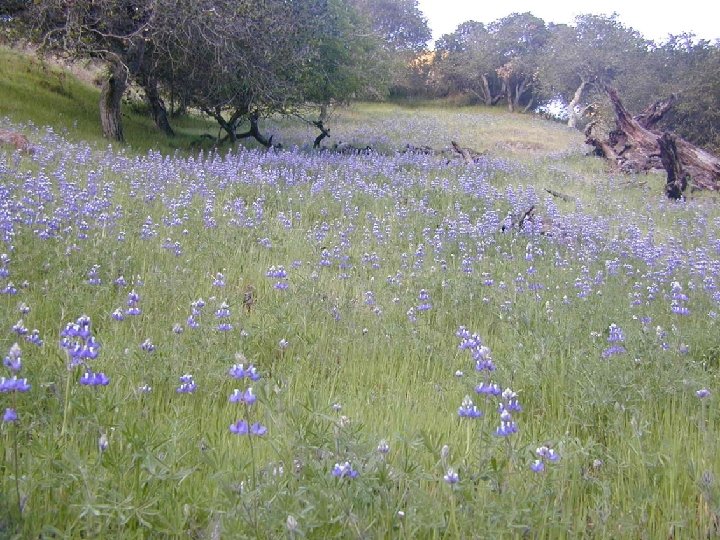
Where is a species found? • Range: Geographical boundaries a species occupies – Determined by basic ecological parameters – No indication of distribution or abundance • Fundamental niche: – Indication of parts of habitat in which a species may be found – Typically patchy locally aggregated) w/i range • Realized niche: – Portion of fundamental niche in which species is actually found
Factors which impact range: • Physiological adaptations • Available food, nesting sites, etc. – factors which define suitable habitat • Predators • Competition – competitive exclusion principle – to be discussed later • Chance – past climatic and physiological events – Species could/does survive elsewhere, has not been introduced • Current and past climate influences all these things
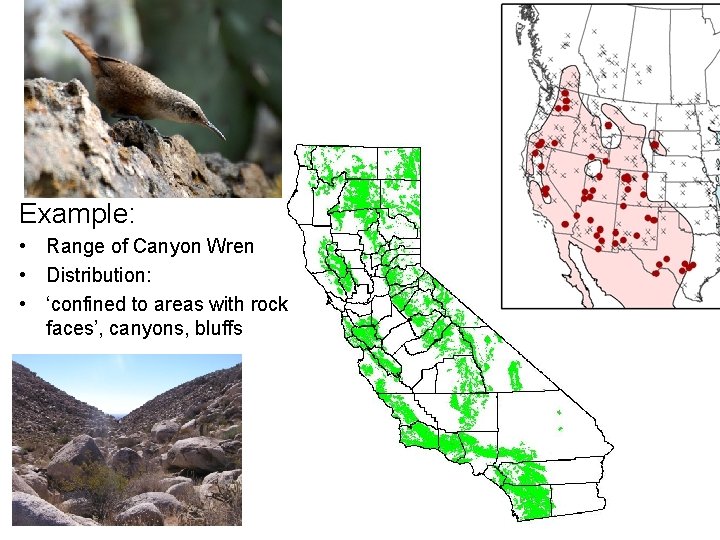
Example: • Range of Canyon Wren • Distribution: • ‘confined to areas with rock faces’, canyons, bluffs
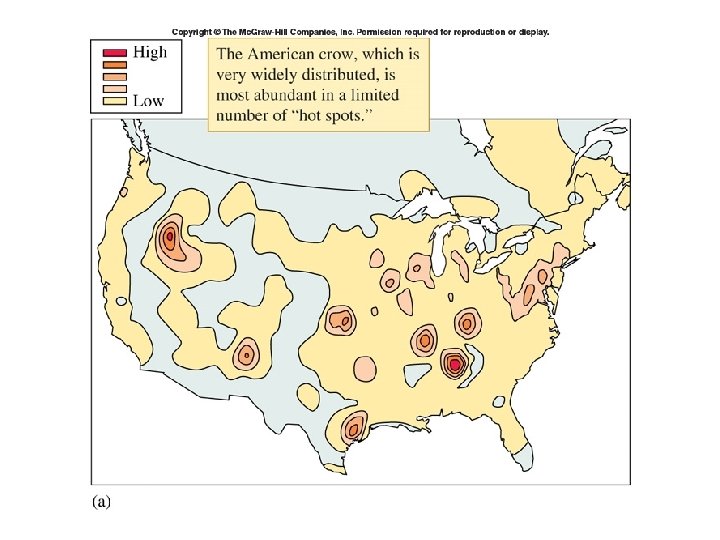
• Fundamental niche: – Indication of parts of habitat in which a species may be found – Typically patchy locally aggregated) w/i range • Realized niche: – Portion of fundamental niche in which species is actually found
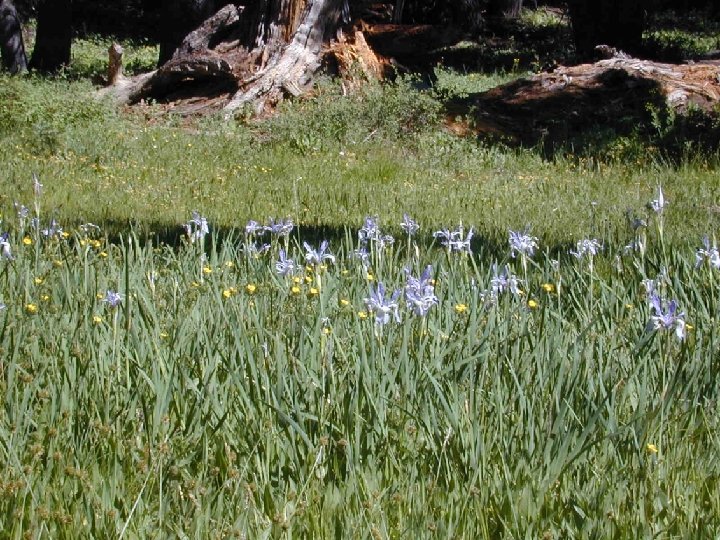
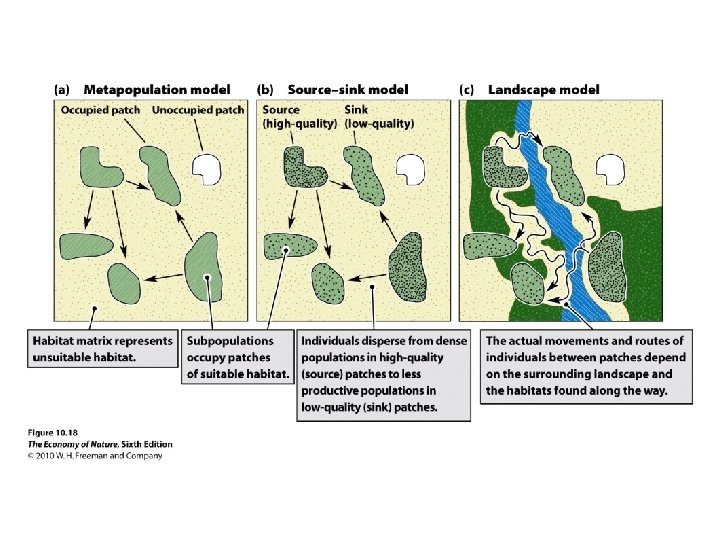
Patchiness and Subpopulations • Metapopulations – Local Populations (demes) in suitable habitat isolated in matrix of unsuitable habitat • Source/Sink Populations – source population over -reproduces, sink absorbs population • Landscape – Metapopulations linked in matrix of varied quality
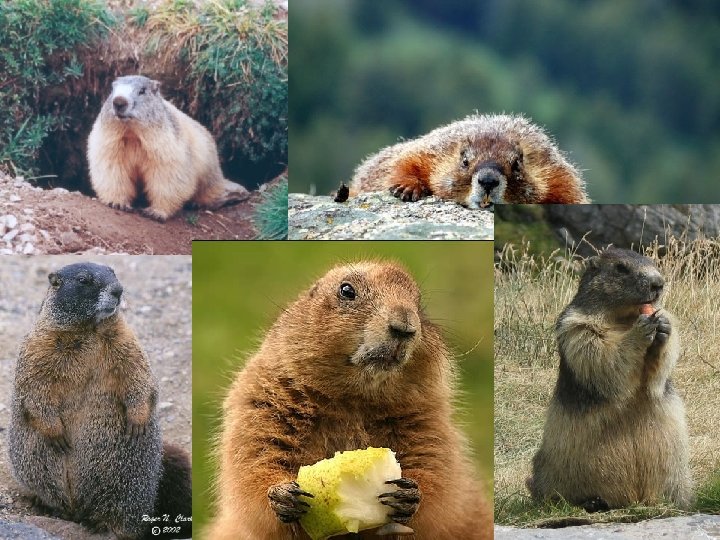
• Marmots on Vancouver Island • Unique species – isolated populations in cleared areas – impacted by fire/forestry practices • Loss of local populations results in fewer ‘stepping stones’ – genetically isolated metapopulations – Loss in genetic diversity – Movement between populations maintains variability within species – Important to continued viability of species • From: http: //www. marmots. org/notes_vim. html
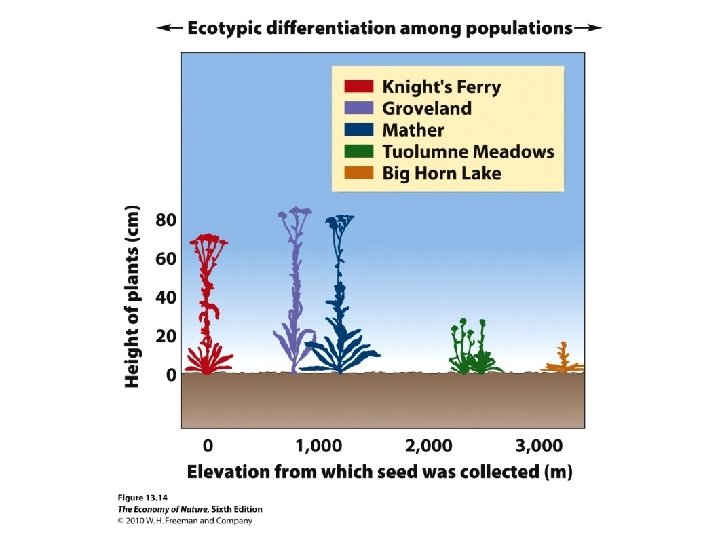
Ecotypes • Sub-populations adapted to particular local environments – Unique genetic make-up? – Same species • Common Garden Experiment – Seed collected from plants of same species growing in different environments grow in same location(s) (p 282) – Isolation may lead to differentiation into different species – uniquely adapted to specific environments –( see p 200) restricted range
- Slides: 31