
Lecture 10 Film Theory Professor Aaron Baker Last
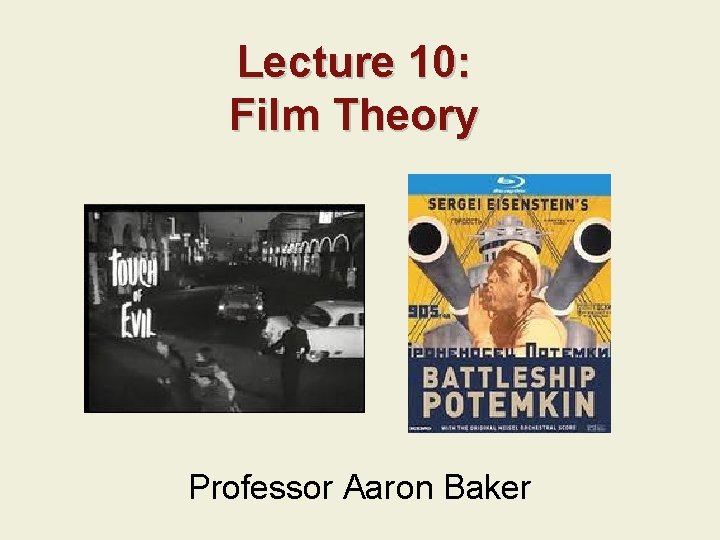
Lecture 10: Film Theory Professor Aaron Baker
Last Time: Stars • Movie Stars, Their Images • What They Are • Why They Matter to Us • George Clooney 2
Today: Film Theory • What is it? • Different Uses for Film • Realism • Formalism 3
What is Film Theory? Lesson 10: Part I 4
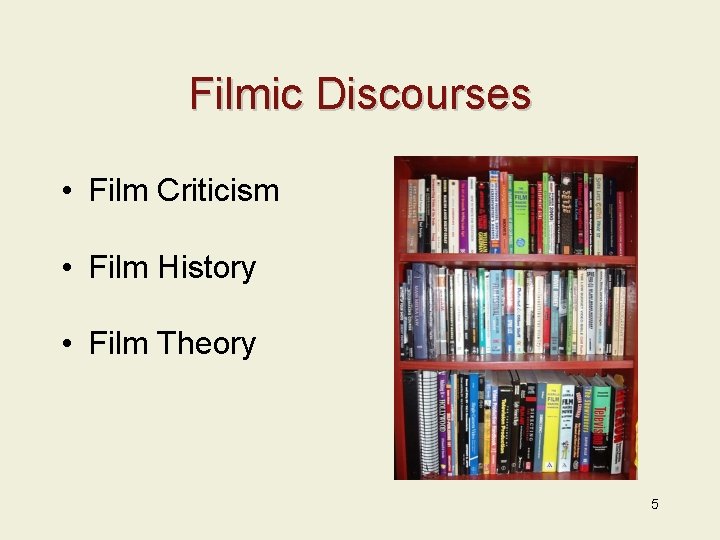
Filmic Discourses • Film Criticism • Film History • Film Theory 5
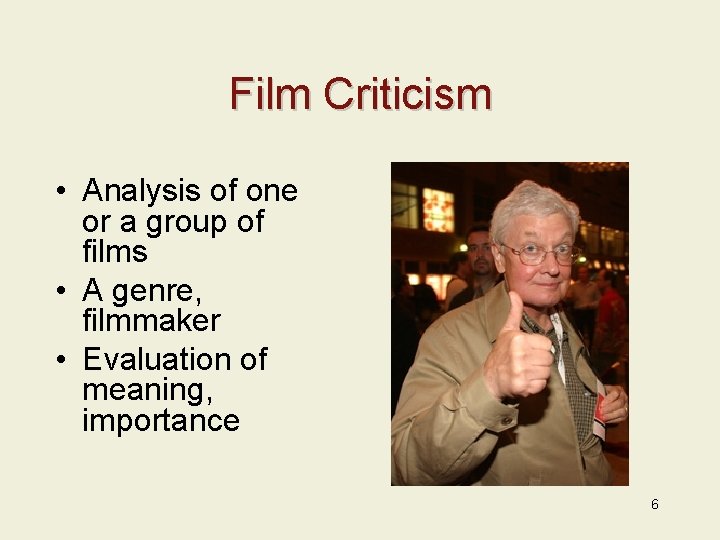
Film Criticism • Analysis of one or a group of films • A genre, filmmaker • Evaluation of meaning, importance 6
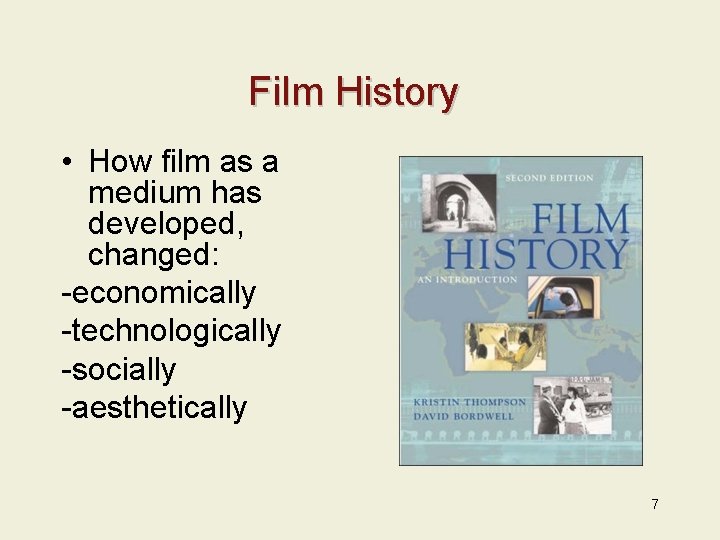
Film History • How film as a medium has developed, changed: -economically -technologically -socially -aesthetically 7
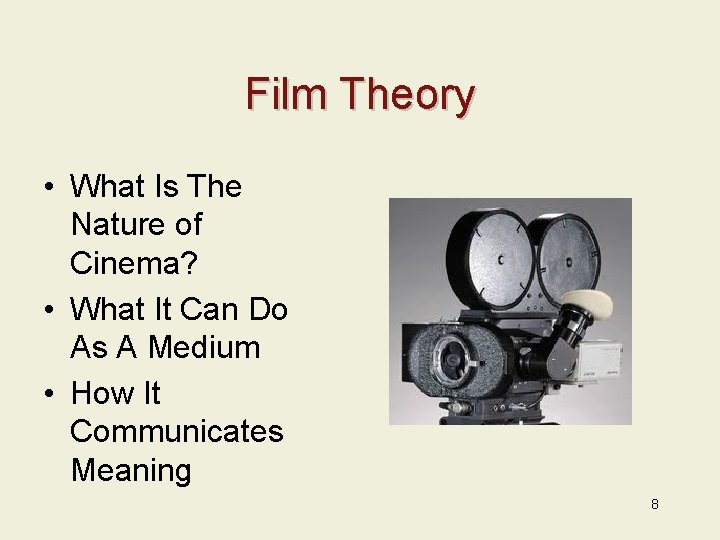
Film Theory • What Is The Nature of Cinema? • What It Can Do As A Medium • How It Communicates Meaning 8
Six Models 1. Realist (Formalist) 2. Auteurist 3. Psychoanalytic 4. Ideological 5. Feminist 6. Cognitive 9
Each Different Viewpoint • Realism/Formalist – How films show world • Auteurist – Who creates film • Psychoanalytic – How film represents, impacts human development 10
Each Different Viewpoint • Ideological – How film represents, impacts viewers’ beliefs and values • Feminist – How film represents women • Cognitive – What is the experience of film viewers 11
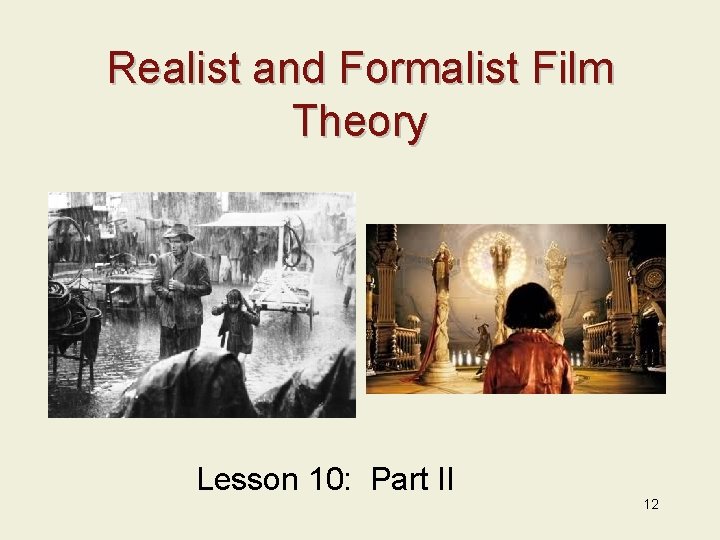
Realist and Formalist Film Theory Lesson 10: Part II 12

Focus Today: Realism and Formalism • What is a film’s ability to show the world? • Realism: Film documents reality. • Limited filmmaker manipulation of what is shown. • Formalism: Filmmaker has to interpret reality, manipulation of film form allows communication of that interpretation. 13
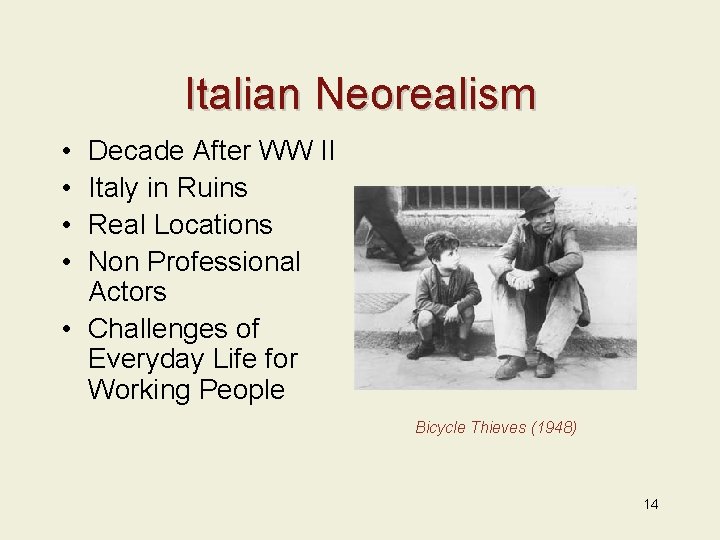
Italian Neorealism • • Decade After WW II Italy in Ruins Real Locations Non Professional Actors • Challenges of Everyday Life for Working People Bicycle Thieves (1948) 14
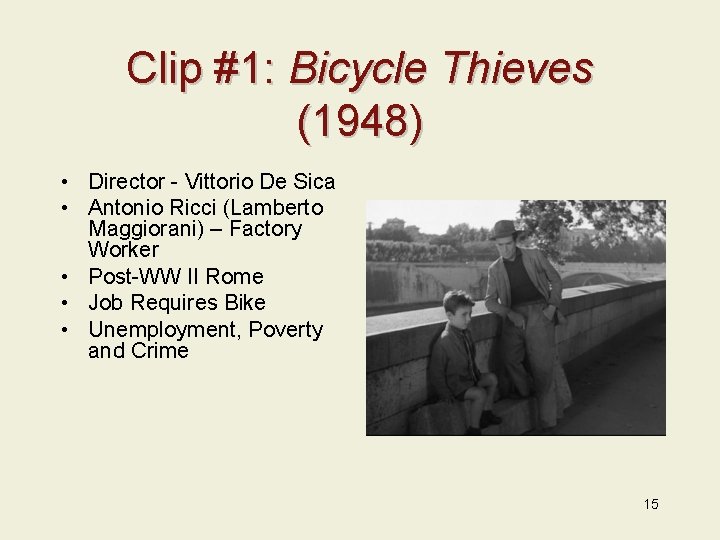
Clip #1: Bicycle Thieves (1948) • Director - Vittorio De Sica • Antonio Ricci (Lamberto Maggiorani) – Factory Worker • Post-WW II Rome • Job Requires Bike • Unemployment, Poverty and Crime 15
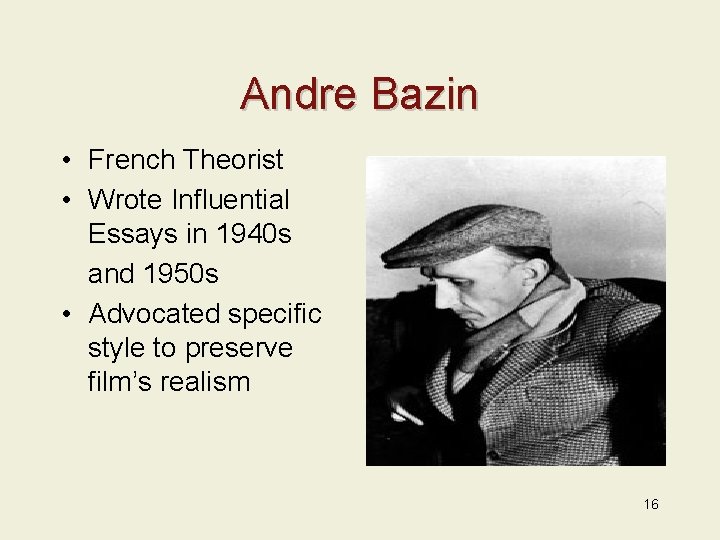
Andre Bazin • French Theorist • Wrote Influential Essays in 1940 s and 1950 s • Advocated specific style to preserve film’s realism 16
Preserve Viewer’s Experience of Reality • • Don’t Control Spectator Keep Ambiguity in the Image Deep Focus Photography The Long Take 17
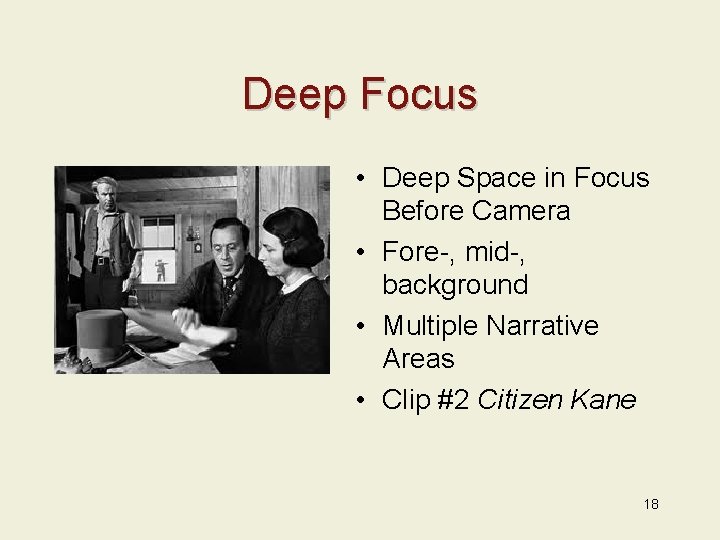
Deep Focus • Deep Space in Focus Before Camera • Fore-, mid-, background • Multiple Narrative Areas • Clip #2 Citizen Kane 18
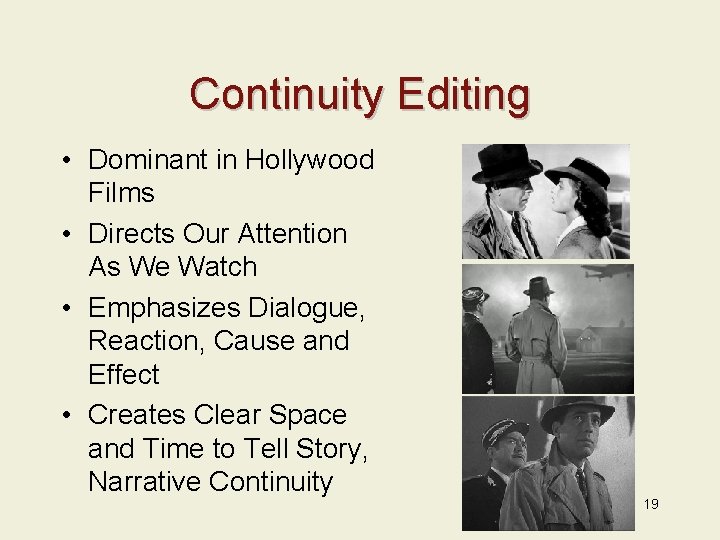
Continuity Editing • Dominant in Hollywood Films • Directs Our Attention As We Watch • Emphasizes Dialogue, Reaction, Cause and Effect • Creates Clear Space and Time to Tell Story, Narrative Continuity 19
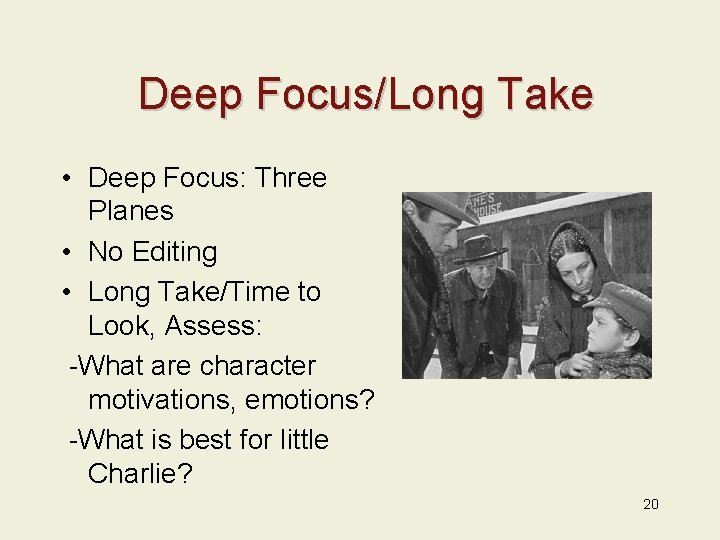
Deep Focus/Long Take • Deep Focus: Three Planes • No Editing • Long Take/Time to Look, Assess: -What are character motivations, emotions? -What is best for little Charlie? 20
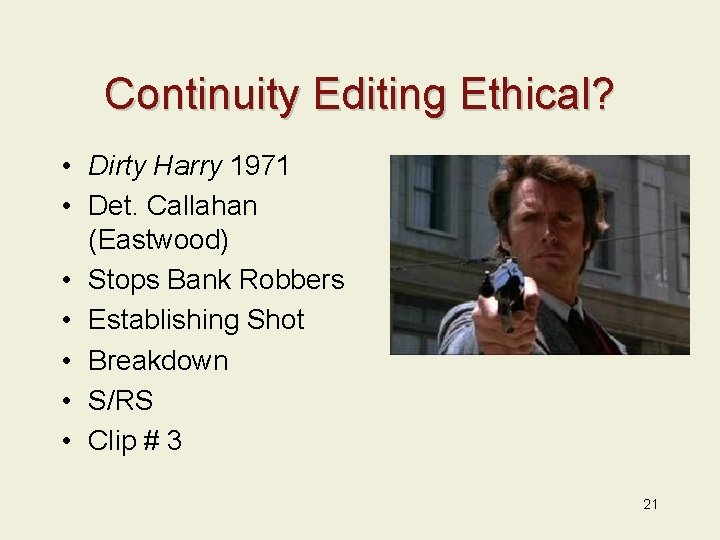
Continuity Editing Ethical? • Dirty Harry 1971 • Det. Callahan (Eastwood) • Stops Bank Robbers • Establishing Shot • Breakdown • S/RS • Clip # 3 21
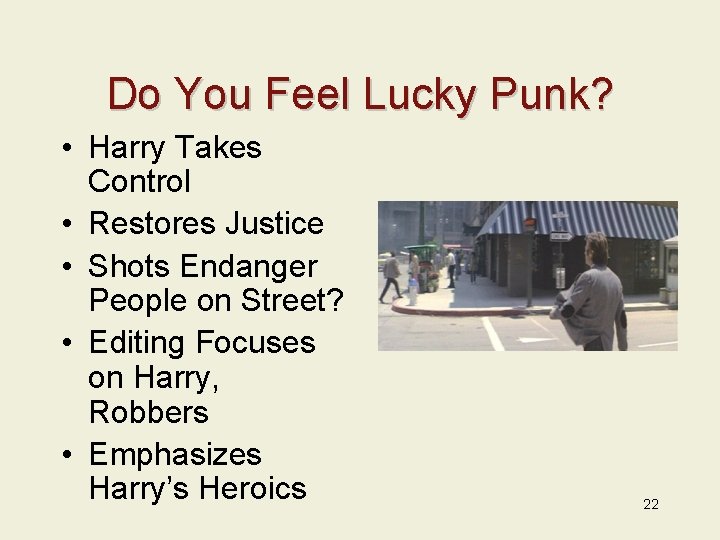
Do You Feel Lucky Punk? • Harry Takes Control • Restores Justice • Shots Endanger People on Street? • Editing Focuses on Harry, Robbers • Emphasizes Harry’s Heroics 22
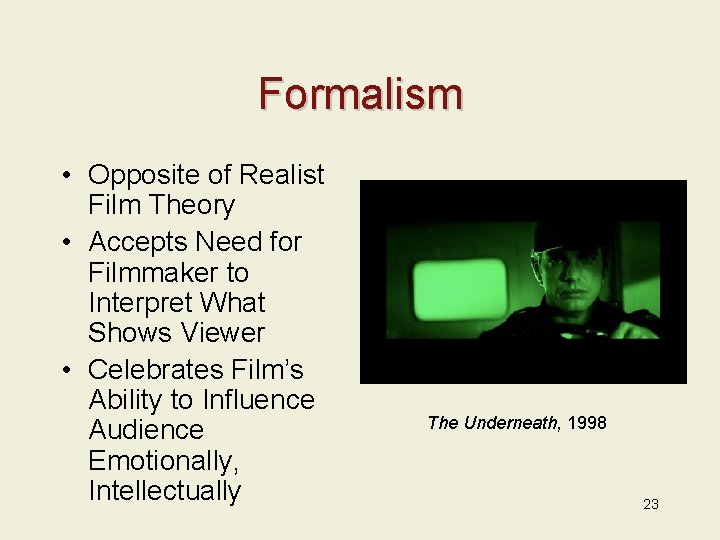
Formalism • Opposite of Realist Film Theory • Accepts Need for Filmmaker to Interpret What Shows Viewer • Celebrates Film’s Ability to Influence Audience Emotionally, Intellectually The Underneath, 1998 23
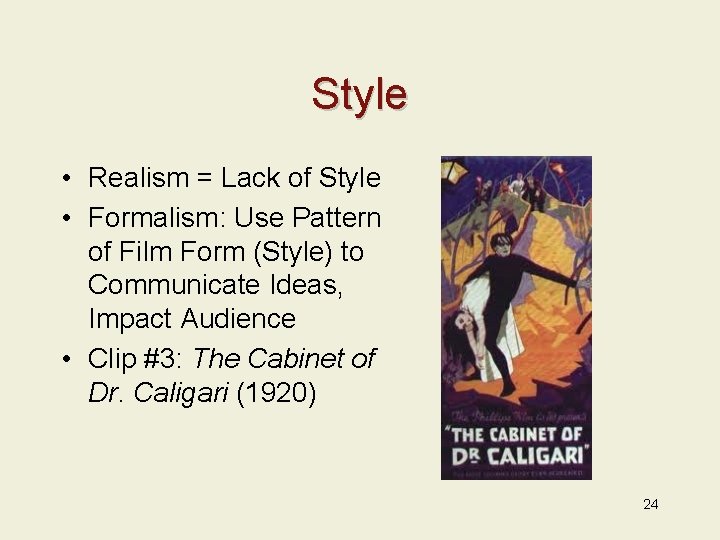
Style • Realism = Lack of Style • Formalism: Use Pattern of Film Form (Style) to Communicate Ideas, Impact Audience • Clip #3: The Cabinet of Dr. Caligari (1920) 24
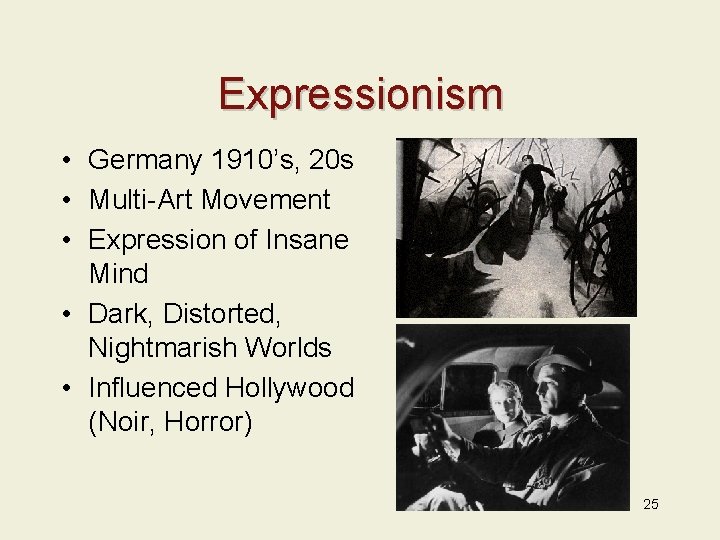
Expressionism • Germany 1910’s, 20 s • Multi-Art Movement • Expression of Insane Mind • Dark, Distorted, Nightmarish Worlds • Influenced Hollywood (Noir, Horror) 25
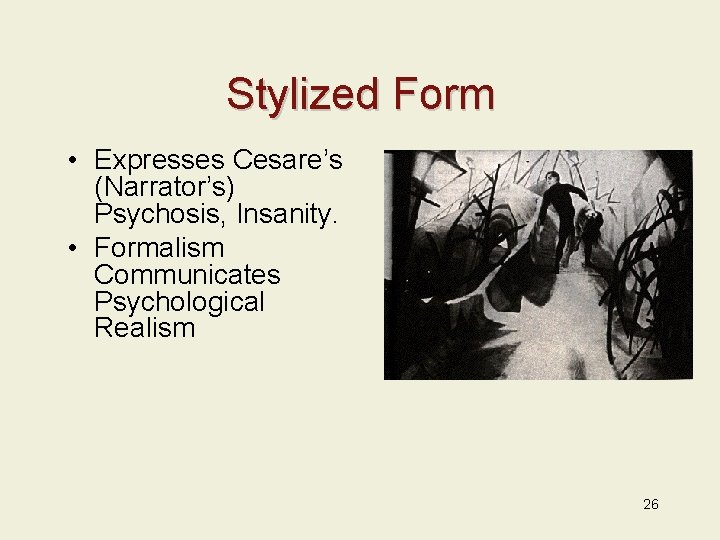
Stylized Form • Expresses Cesare’s (Narrator’s) Psychosis, Insanity. • Formalism Communicates Psychological Realism 26
Summary: Realism and Formalism • Same Objective: Communicate Insight About the World • Different Methods: -Realism/Give Audience Direct Access to That World Vs. -Formalism/Present an Interpretation of It • Both Emphasize Ambiguity, Complexity • Both Require Viewer Interpretation 27
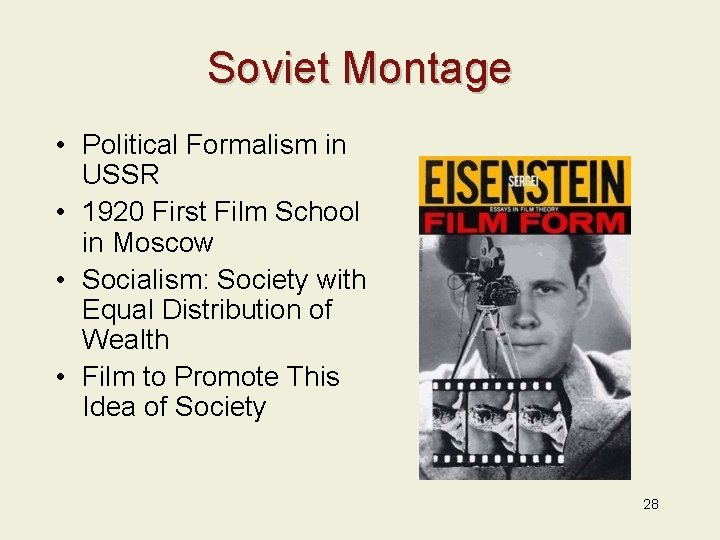
Soviet Montage • Political Formalism in USSR • 1920 First Film School in Moscow • Socialism: Society with Equal Distribution of Wealth • Film to Promote This Idea of Society 28
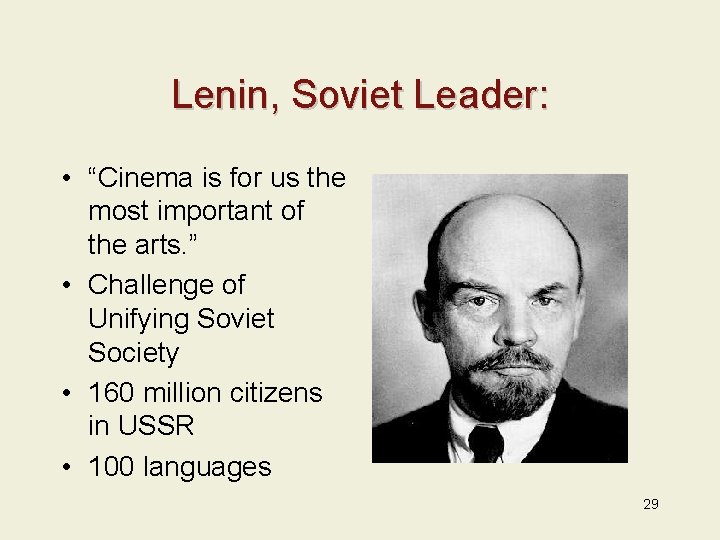
Lenin, Soviet Leader: • “Cinema is for us the most important of the arts. ” • Challenge of Unifying Soviet Society • 160 million citizens in USSR • 100 languages 29
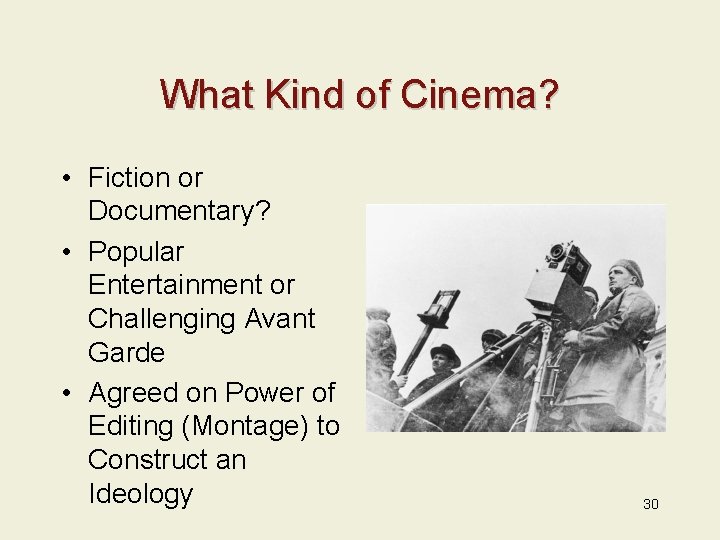
What Kind of Cinema? • Fiction or Documentary? • Popular Entertainment or Challenging Avant Garde • Agreed on Power of Editing (Montage) to Construct an Ideology 30
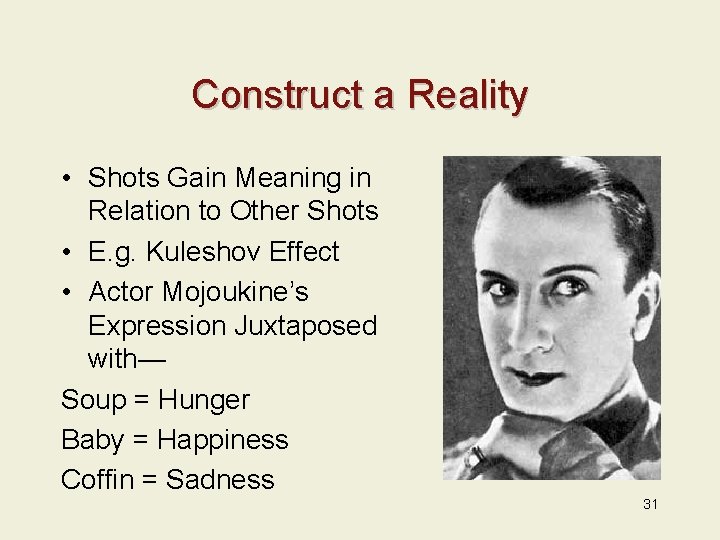
Construct a Reality • Shots Gain Meaning in Relation to Other Shots • E. g. Kuleshov Effect • Actor Mojoukine’s Expression Juxtaposed with— Soup = Hunger Baby = Happiness Coffin = Sadness 31
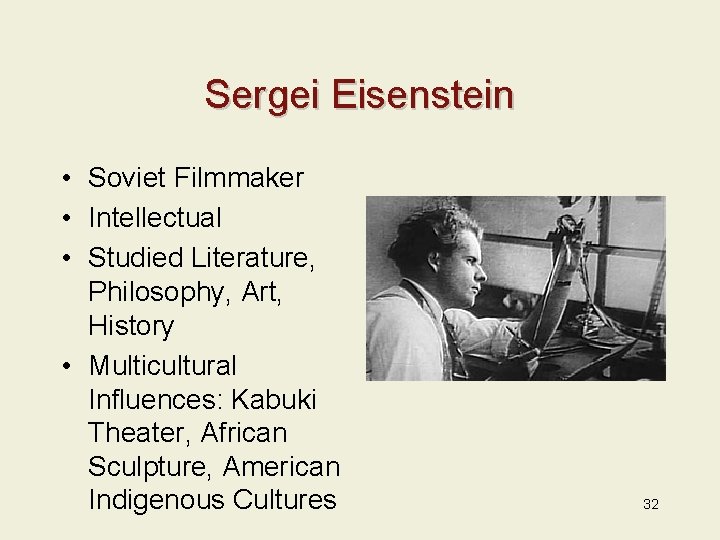
Sergei Eisenstein • Soviet Filmmaker • Intellectual • Studied Literature, Philosophy, Art, History • Multicultural Influences: Kabuki Theater, African Sculpture, American Indigenous Cultures 32
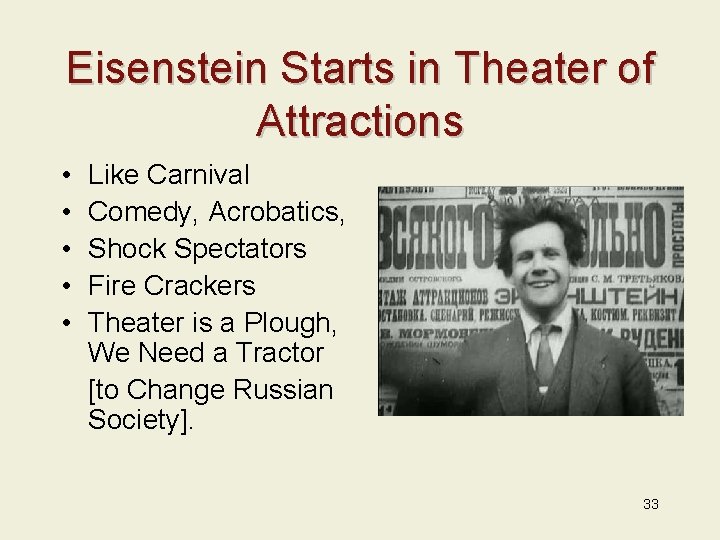
Eisenstein Starts in Theater of Attractions • • • Like Carnival Comedy, Acrobatics, Shock Spectators Fire Crackers Theater is a Plough, We Need a Tractor [to Change Russian Society]. 33
Eisenstein’s Dialectical Montage (Editing) • Discontinuity Editing • Shots Not Fit Together to Tell Story • Shots in Conflict • Based on Dialectic: -Thesis/Antithesis = Synthesis • Karl Marx’s Principle of History -Workers/Owners = Revolution 34
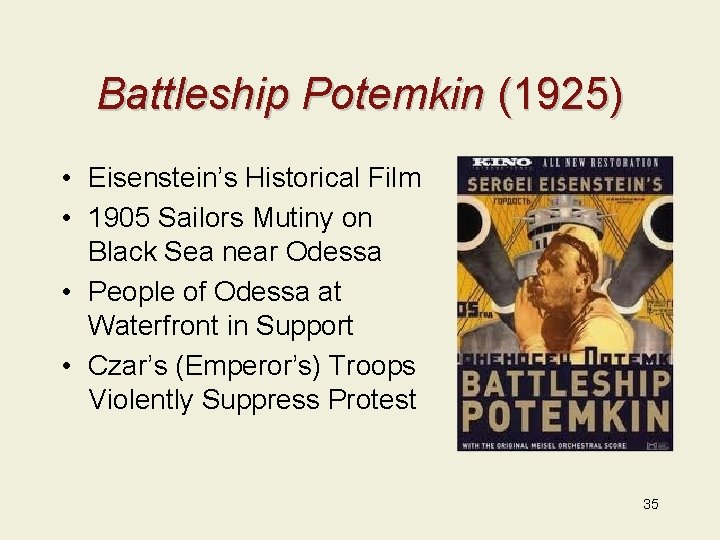
Battleship Potemkin (1925) • Eisenstein’s Historical Film • 1905 Sailors Mutiny on Black Sea near Odessa • People of Odessa at Waterfront in Support • Czar’s (Emperor’s) Troops Violently Suppress Protest 35
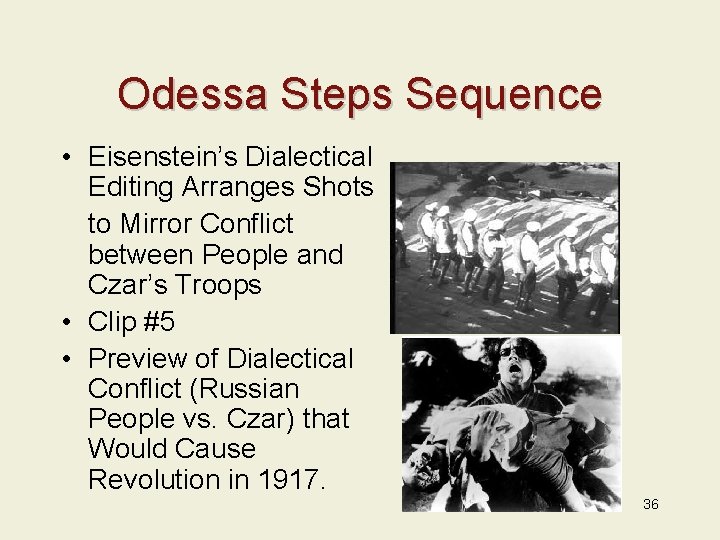
Odessa Steps Sequence • Eisenstein’s Dialectical Editing Arranges Shots to Mirror Conflict between People and Czar’s Troops • Clip #5 • Preview of Dialectical Conflict (Russian People vs. Czar) that Would Cause Revolution in 1917. 36
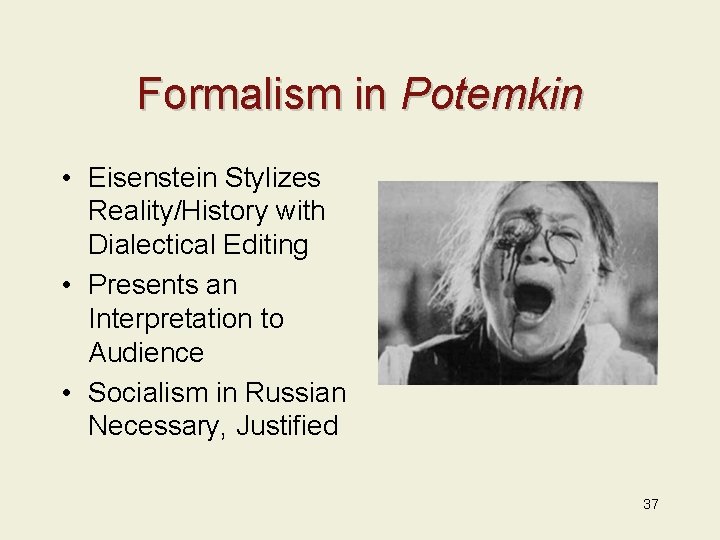
Formalism in Potemkin • Eisenstein Stylizes Reality/History with Dialectical Editing • Presents an Interpretation to Audience • Socialism in Russian Necessary, Justified 37
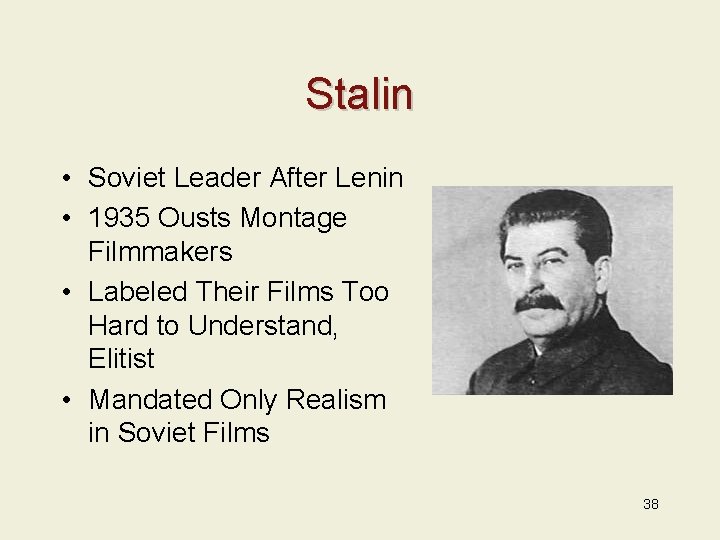
Stalin • Soviet Leader After Lenin • 1935 Ousts Montage Filmmakers • Labeled Their Films Too Hard to Understand, Elitist • Mandated Only Realism in Soviet Films 38
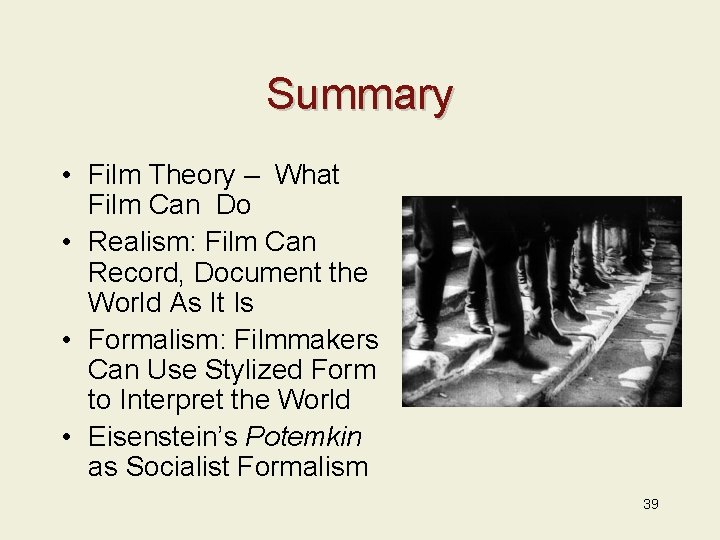
Summary • Film Theory – What Film Can Do • Realism: Film Can Record, Document the World As It Is • Formalism: Filmmakers Can Use Stylized Form to Interpret the World • Eisenstein’s Potemkin as Socialist Formalism 39
End of Lecture 10 Next Time: Film Genre 40
- Slides: 40