
Lecture 10 DC Motors 2 Transmitting and converting
- Slides: 14
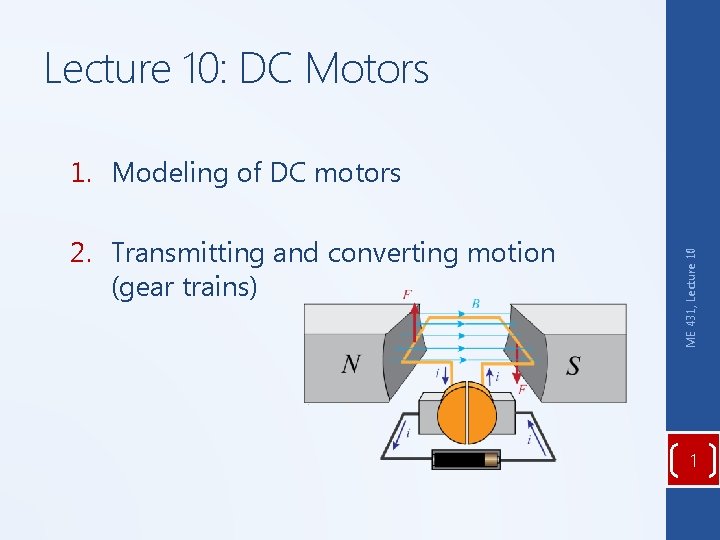
Lecture 10: DC Motors 2. Transmitting and converting motion (gear trains) ME 431, Lecture 10 1. Modeling of DC motors 1
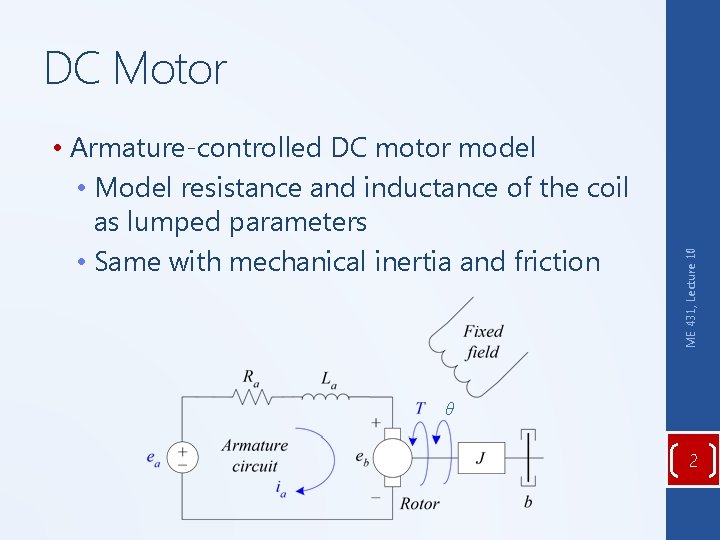
• Armature-controlled DC motor model • Model resistance and inductance of the coil as lumped parameters • Same with mechanical inertia and friction ME 431, Lecture 10 DC Motor θ 2
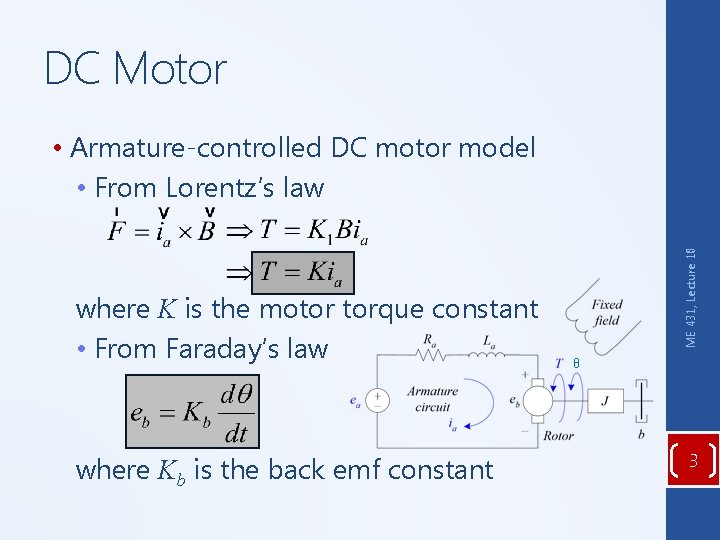
DC Motor where K is the motor torque constant • From Faraday’s law where Kb is the back emf constant ME 431, Lecture 10 • Armature-controlled DC motor model • From Lorentz’s law θ 3
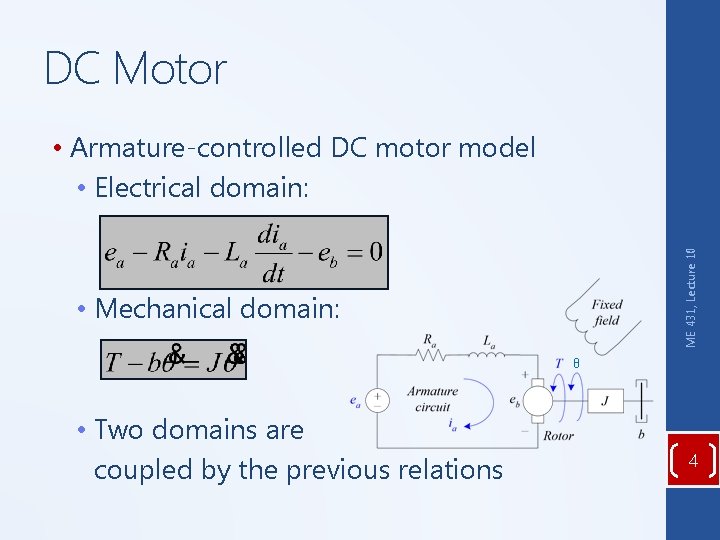
DC Motor ME 431, Lecture 10 • Armature-controlled DC motor model • Electrical domain: • Mechanical domain: θ • Two domains are coupled by the previous relations 4
Example • Find the transfer function Θ(s)/Ea(s)
Example (continued)
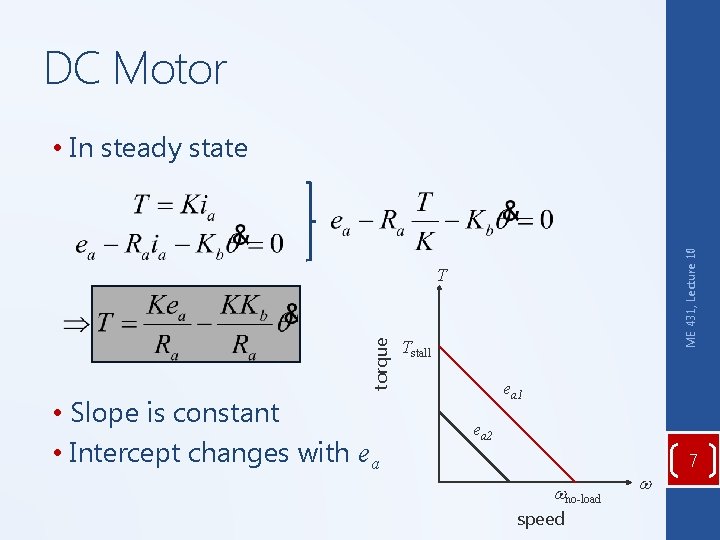
DC Motor ME 431, Lecture 10 • In steady state torque T • Slope is constant • Intercept changes with ea Tstall ea 1 ea 2 wno-load speed w 7
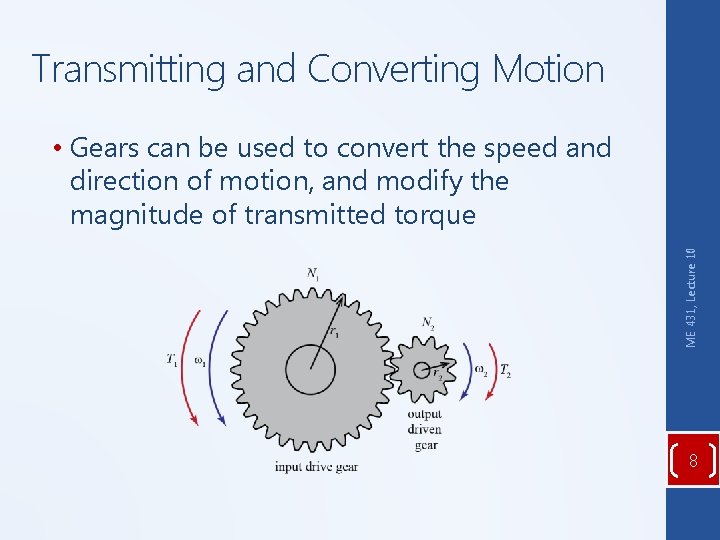
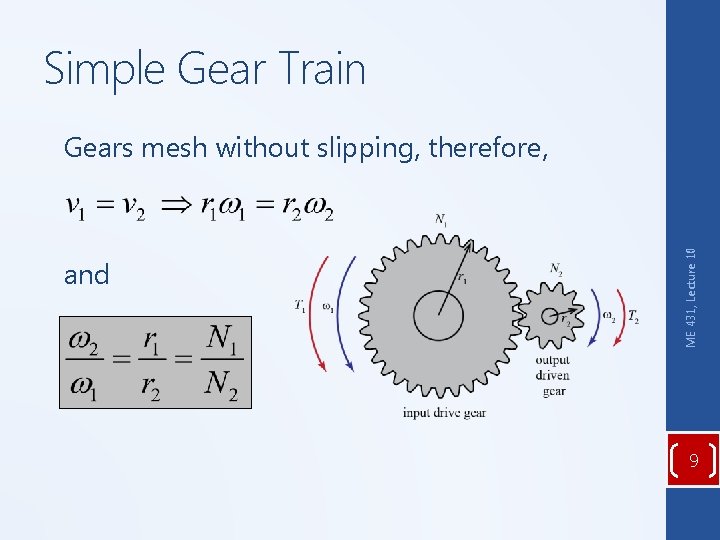
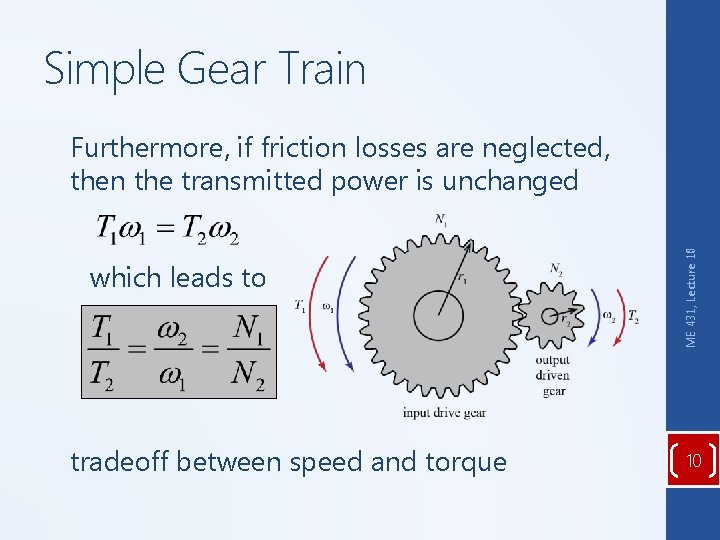
Transmitting and Converting Motion ME 431, Lecture 10 • Gears can be used to convert the speed and direction of motion, and modify the magnitude of transmitted torque 8
Simple Gear Train and ME 431, Lecture 10 Gears mesh without slipping, therefore, 9
Simple Gear Train which leads to tradeoff between speed and torque ME 431, Lecture 10 Furthermore, if friction losses are neglected, then the transmitted power is unchanged 10
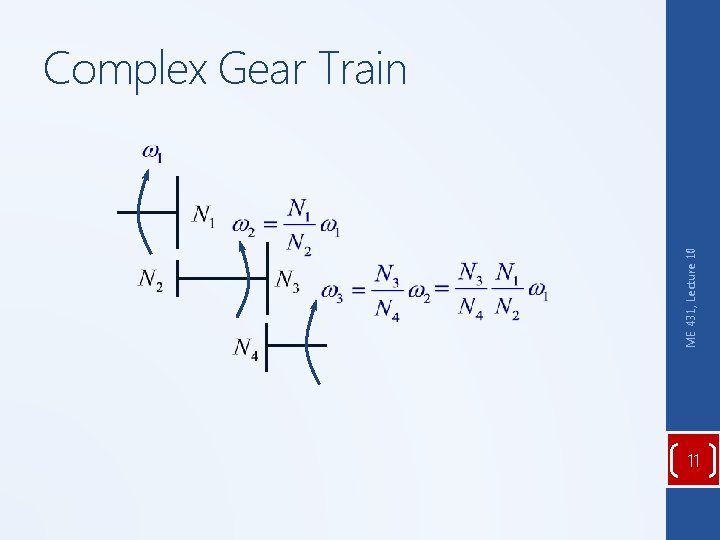
ME 431, Lecture 10 Complex Gear Train 11
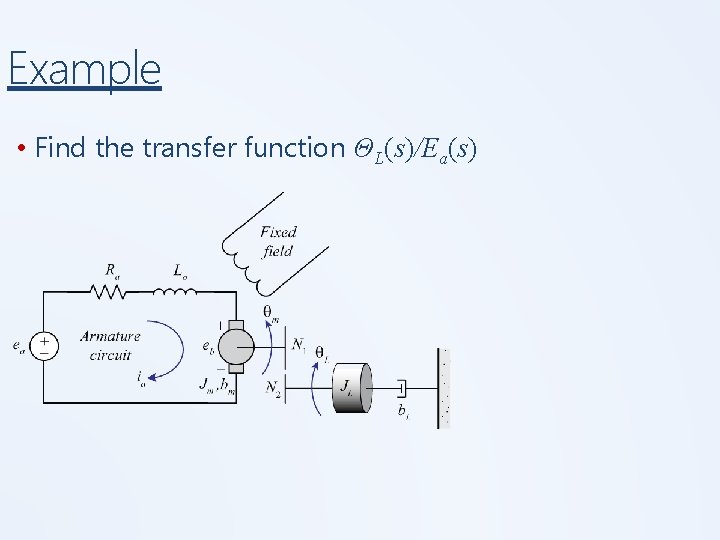
Example • Find the transfer function ΘL(s)/Ea(s)
Example (continued)
Example (continued)