
Lecture 10 Chemical Reaction Engineering CRE is the
![Semibatch Reactors 1) Mole Balance on Species A: [in] – [out] + [gen] =](https://slidetodoc.com/presentation_image/5acef31bef3e5ac6a296836d608bf203/image-7.jpg "Semibatch Reactors 1) Mole Balance on Species A: [in] – [out] + [gen] =")
- Slides: 28
Lecture 10 Chemical Reaction Engineering (CRE) is the field that studies the rates and mechanisms of chemical reactions and the design of the reactors in which they take place.
Lecture 10 – Tuesday 2/12/2013 �Block 1: 2: 3: 4: Mole Balances Rate Laws Stoichiometry Combine �Definition of Selectivity �Semibatch Reactors 2
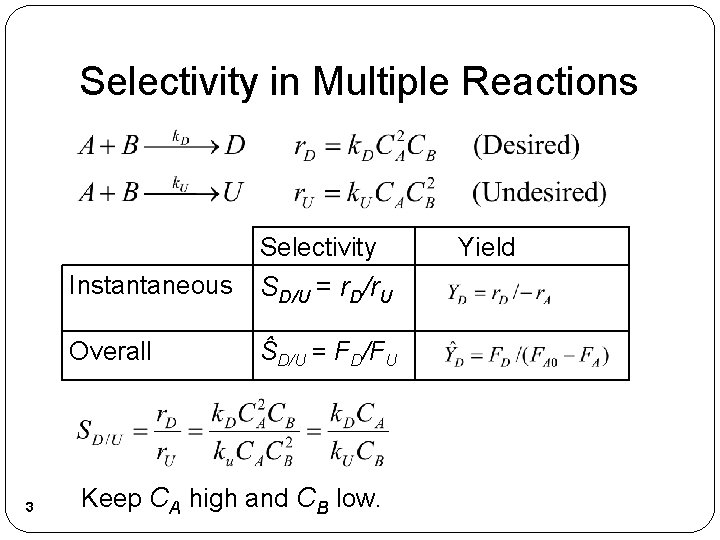
Selectivity in Multiple Reactions Selectivity 3 Instantaneous SD/U = r. D/r. U Overall ŜD/U = FD/FU Keep CA high and CB low. Yield
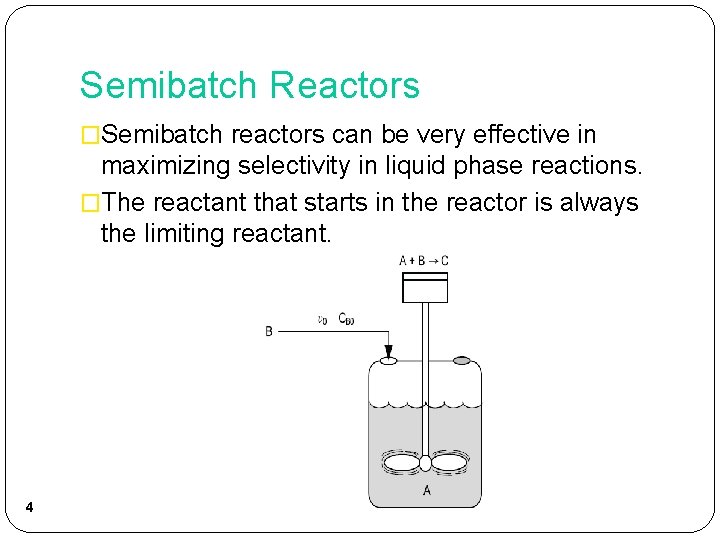
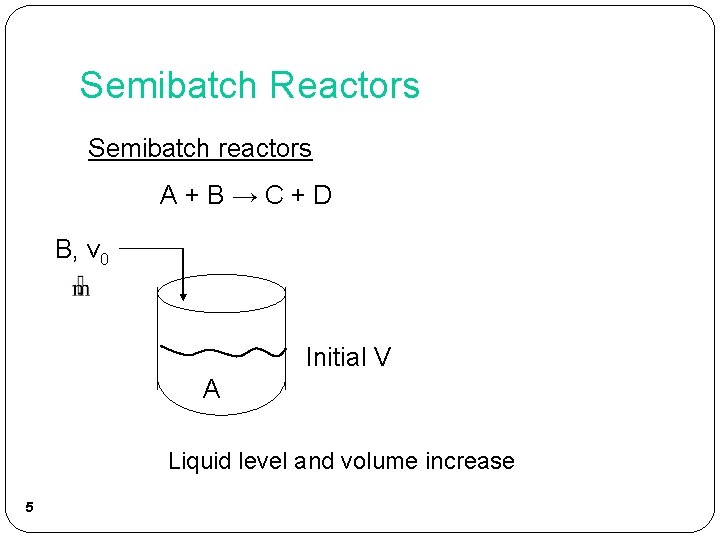
Semibatch Reactors �Semibatch reactors can be very effective in maximizing selectivity in liquid phase reactions. �The reactant that starts in the reactor is always the limiting reactant. 4
Semibatch Reactors Semibatch reactors A+B→C+D B, v 0 Initial V A Liquid level and volume increase 5
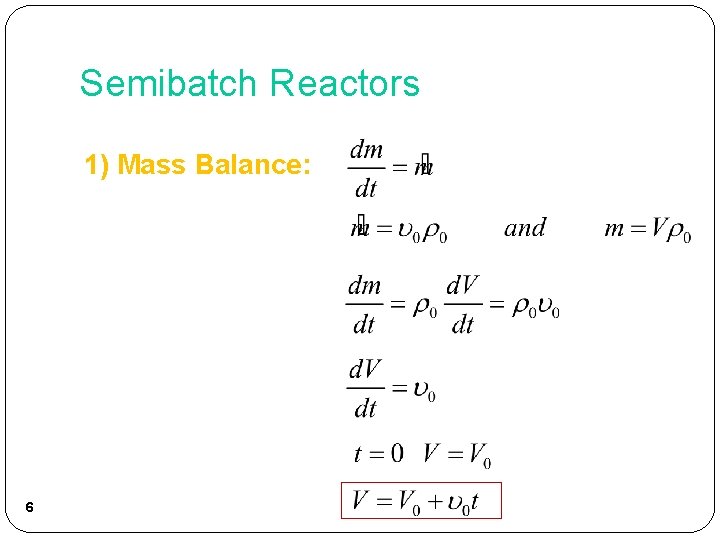
Semibatch Reactors 1) Mass Balance: 6
Semibatch Reactors 1) Mole Balance on Species A: [in] – [out] + [gen] = [acc] 7
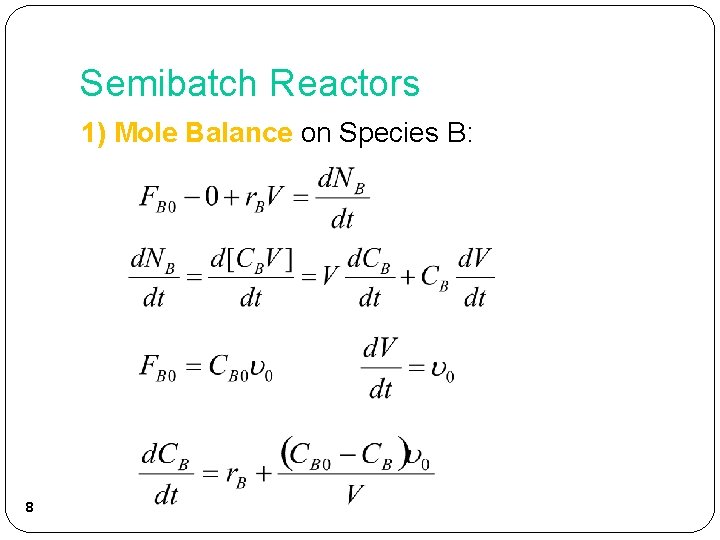
Semibatch Reactors 1) Mole Balance on Species B: 8
Semibatch Reactors 1) Mass and Mole Balance Summary 9
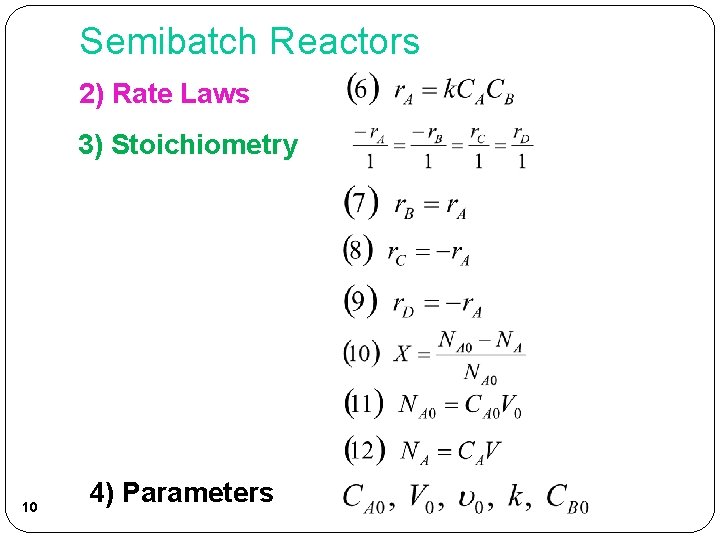
Semibatch Reactors 2) Rate Laws 3) Stoichiometry 10 4) Parameters
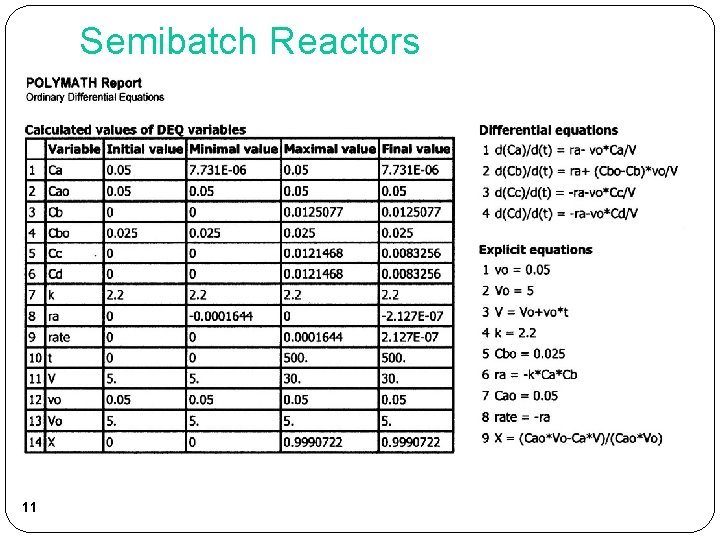
Semibatch Reactors 11
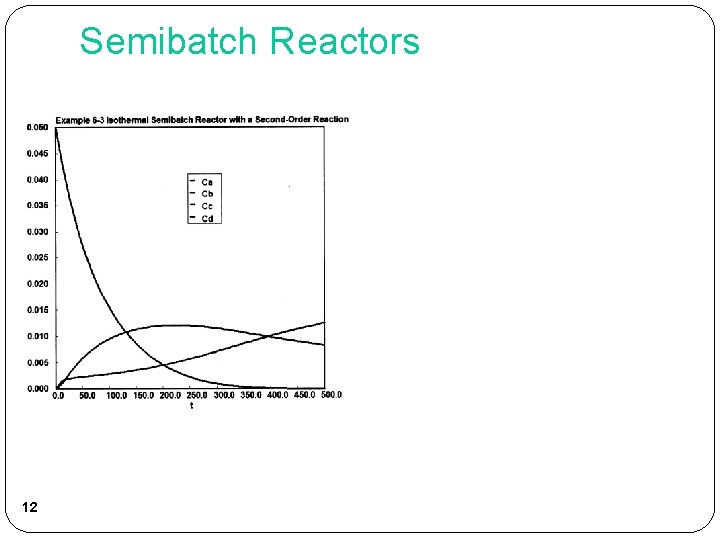
Semibatch Reactors 12
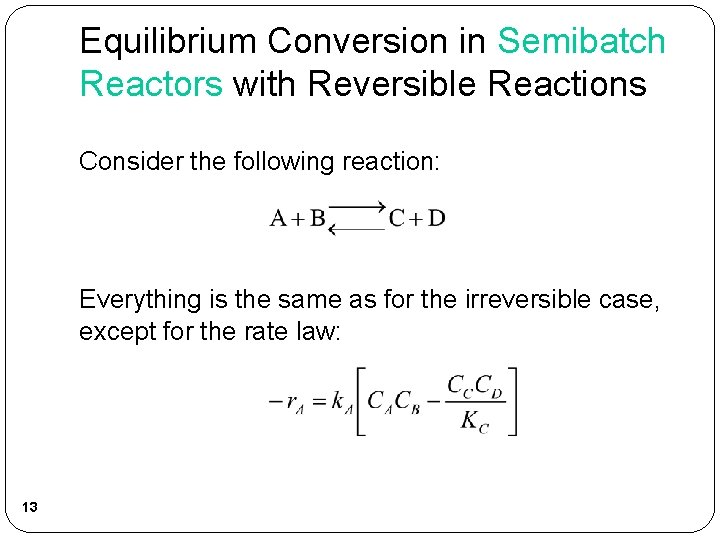
Equilibrium Conversion in Semibatch Reactors with Reversible Reactions Consider the following reaction: Everything is the same as for the irreversible case, except for the rate law: 13
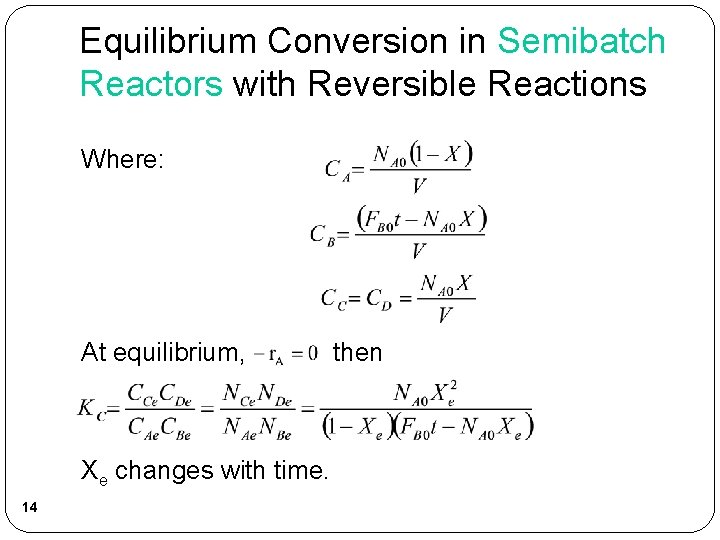
Equilibrium Conversion in Semibatch Reactors with Reversible Reactions Where: At equilibrium, Xe changes with time. 14 then
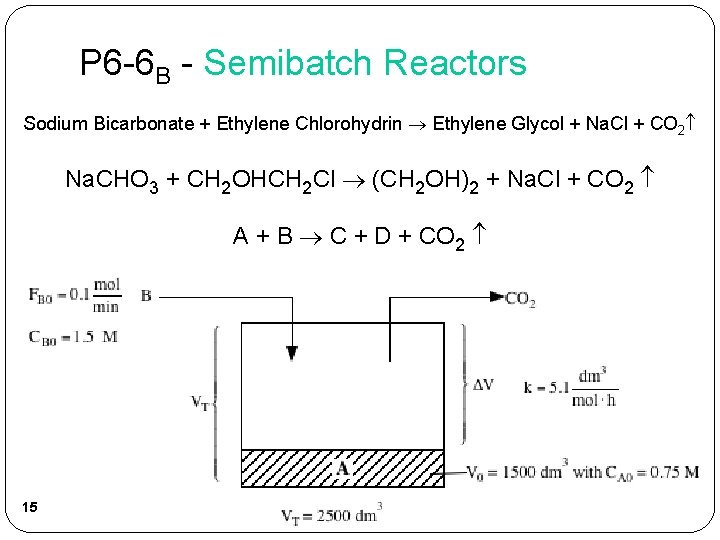
P 6 -6 B - Semibatch Reactors Sodium Bicarbonate + Ethylene Chlorohydrin Ethylene Glycol + Na. Cl + CO 2 Na. CHO 3 + CH 2 OHCH 2 Cl (CH 2 OH)2 + Na. Cl + CO 2 A + B C + D + CO 2 15
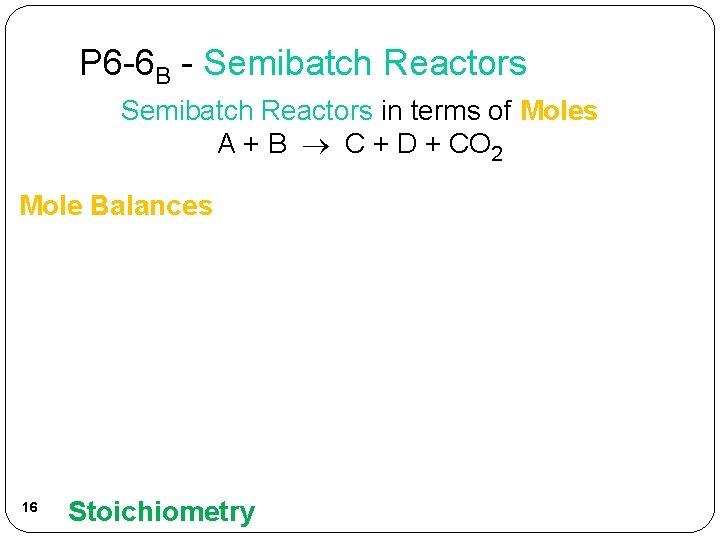
P 6 -6 B - Semibatch Reactors in terms of Moles A + B C + D + CO 2 Mole Balances 16 Stoichiometry
Rate Laws 17 Rest of the Polymath Statements Similar to Concentration Program
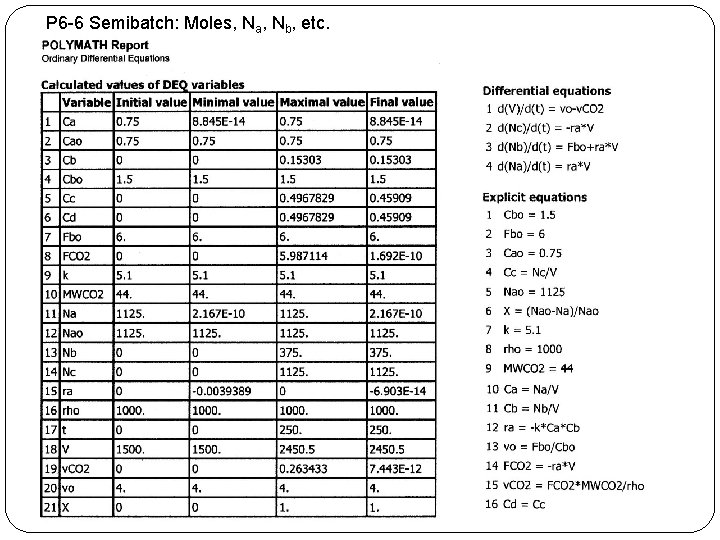
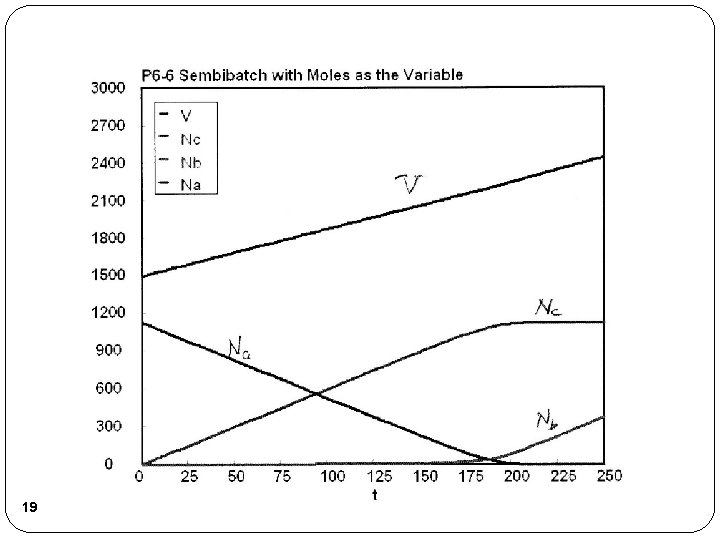
P 6 -6 Semibatch: Moles, Na, Nb, etc.
19
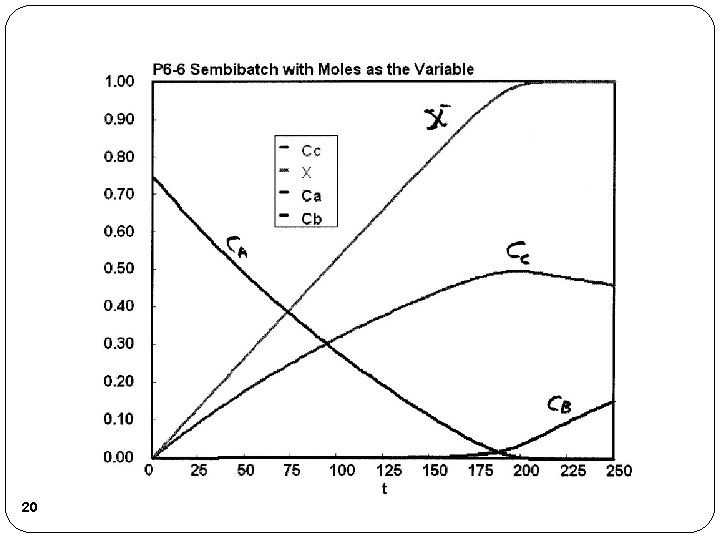
20
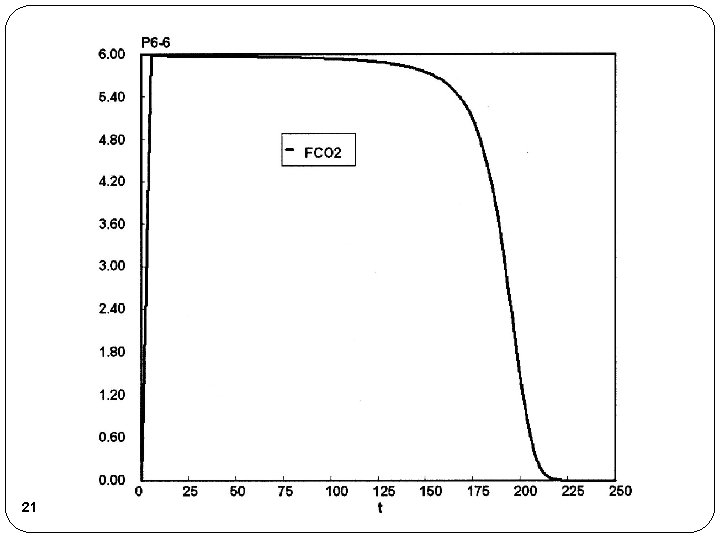
21
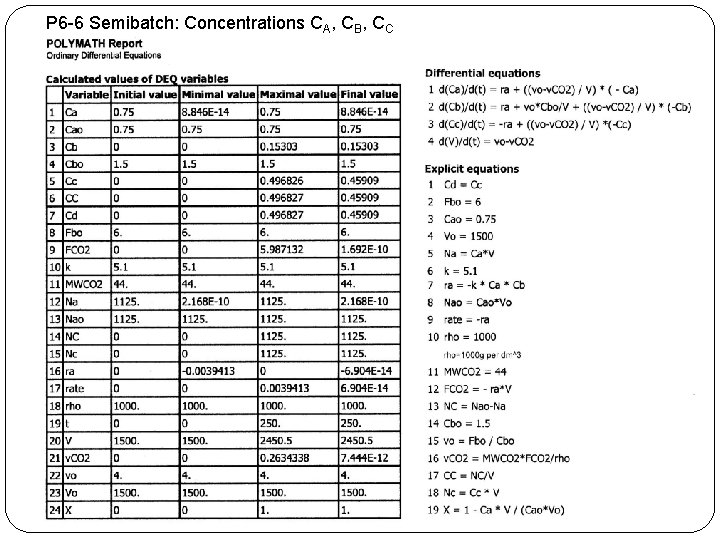
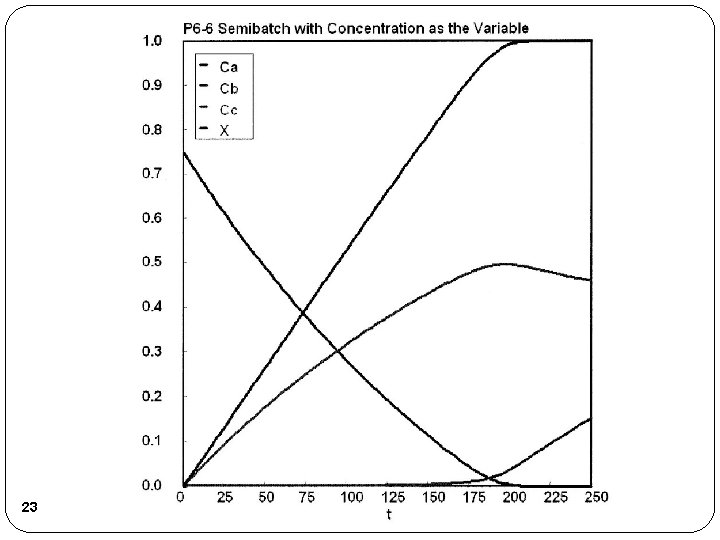
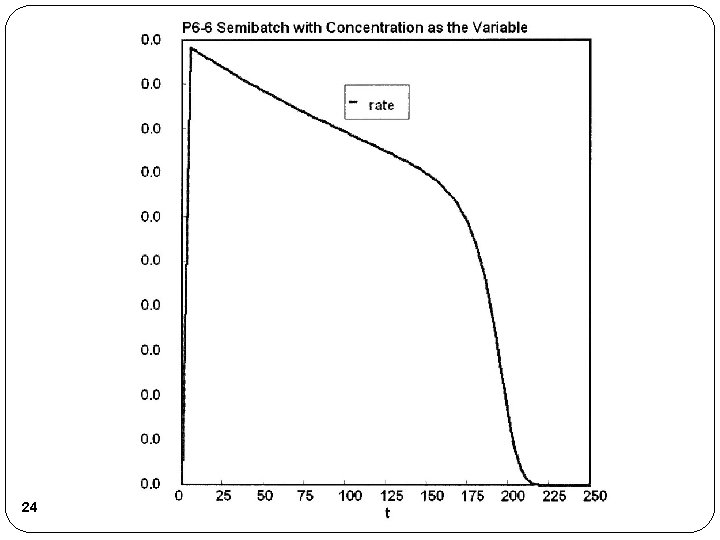
P 6 -6 Semibatch: Concentrations CA, CB, CC
23
24
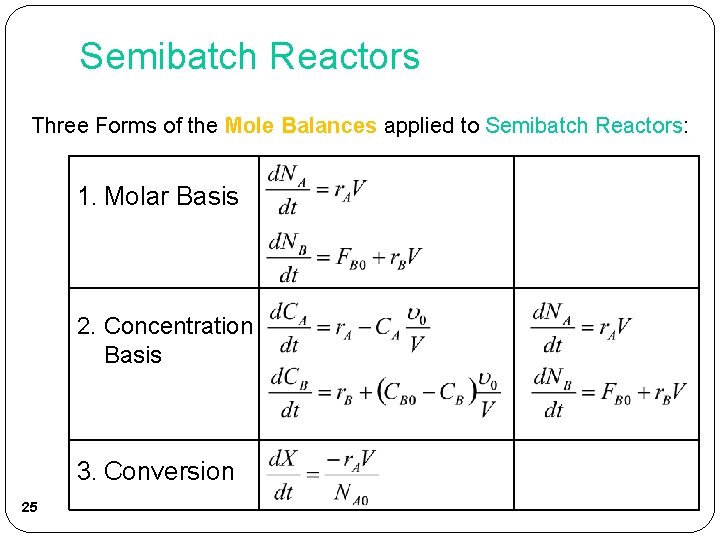
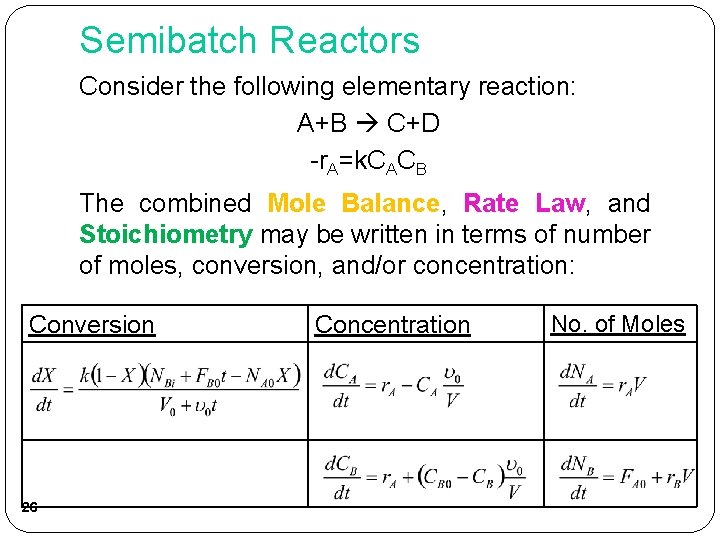
Semibatch Reactors Three Forms of the Mole Balances applied to Semibatch Reactors: 1. Molar Basis 2. Concentration Basis 3. Conversion 25
Semibatch Reactors Consider the following elementary reaction: A+B C+D -r. A=k. CACB The combined Mole Balance, Rate Law, and Stoichiometry may be written in terms of number of moles, conversion, and/or concentration: Conversion 26 Concentration No. of Moles
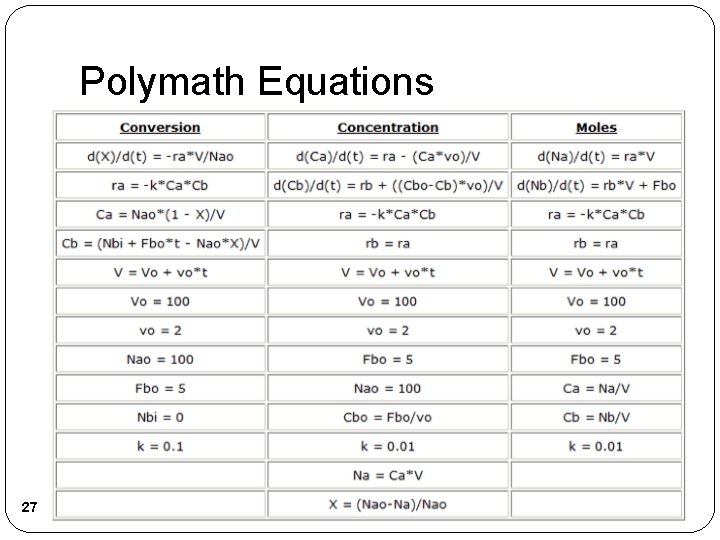
Polymath Equations 27
End of Lecture 10 28