
Lecture 10 Chemical Engineering for MicroNano Fabrication Ch

Lecture 10 Chemical Engineering for Micro/Nano Fabrication Ch. E 384 T / 323
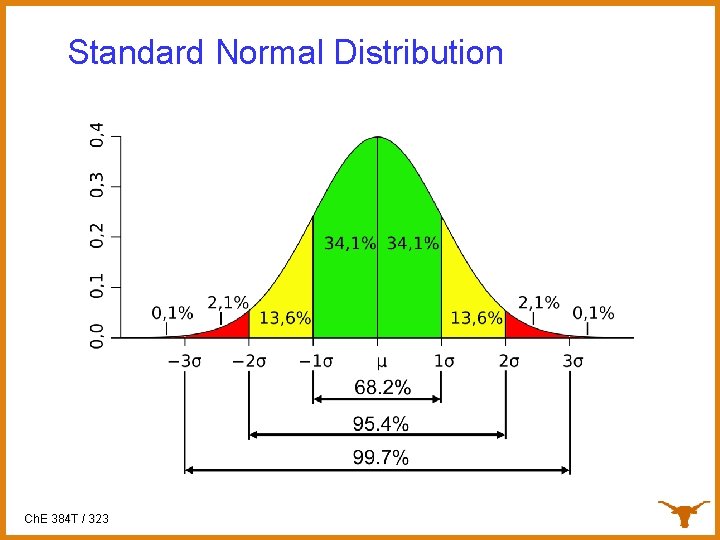
Standard Normal Distribution Ch. E 384 T / 323
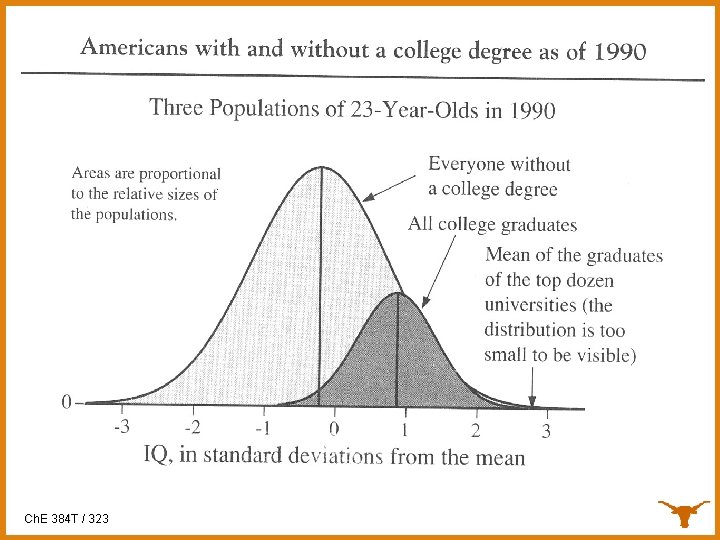
IQ score distribution Ch. E 384 T / 323
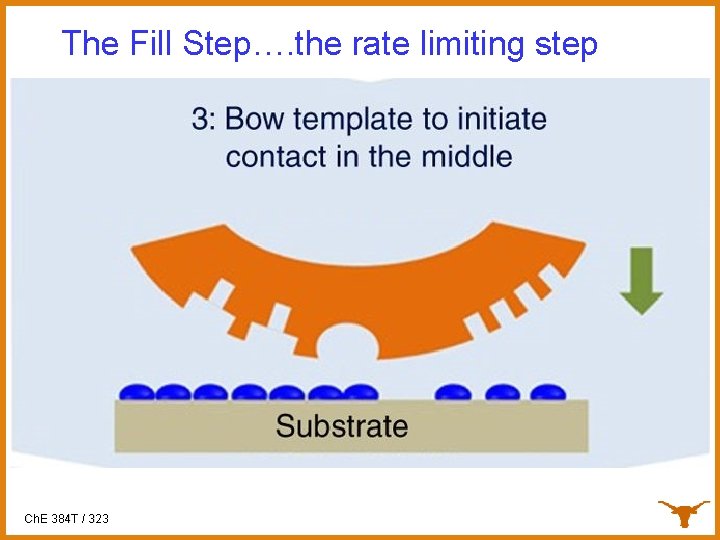
The Fill Step…. the rate limiting step Ch. E 384 T / 323
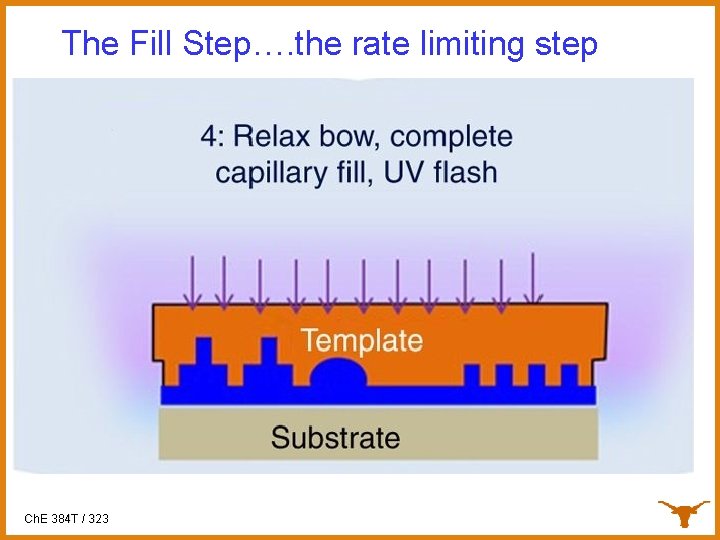
The Fill Step…. the rate limiting step Ch. E 384 T / 323

The Fill Step Ch. E 384 T / 323
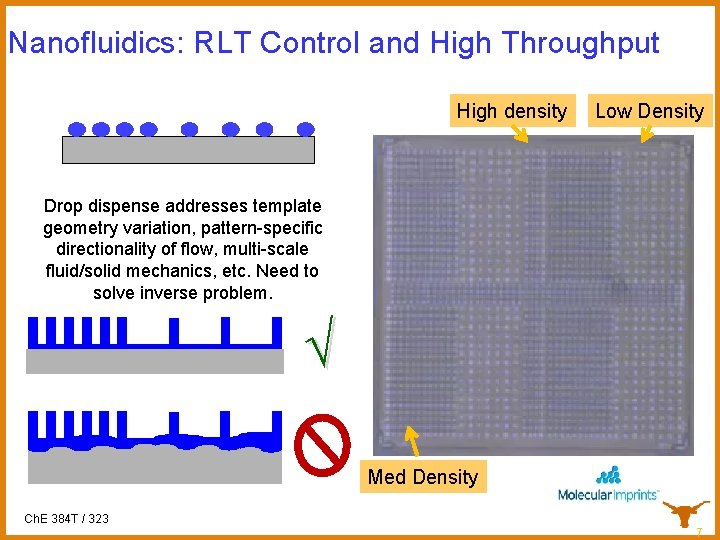
Nanofluidics: RLT Control and High Throughput High density Low Density Drop dispense addresses template geometry variation, pattern-specific directionality of flow, multi-scale fluid/solid mechanics, etc. Need to solve inverse problem. √ Med Density Ch. E 384 T / 323 7
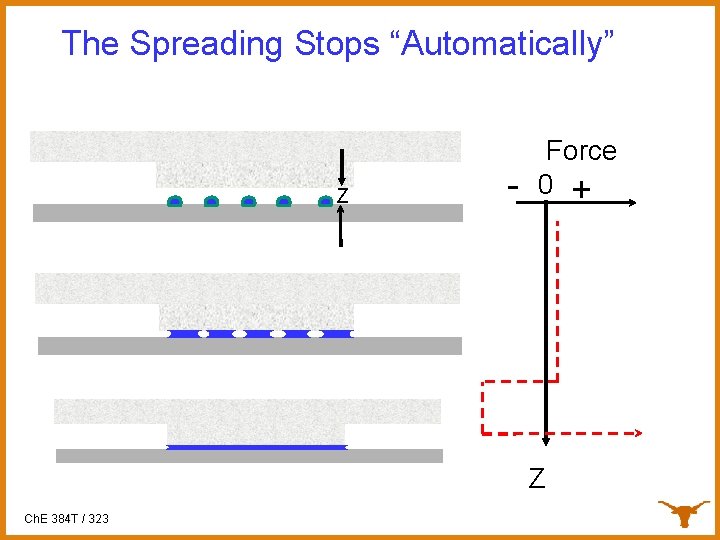
The Spreading Stops “Automatically” Z - Force 0 + Z Ch. E 384 T / 323
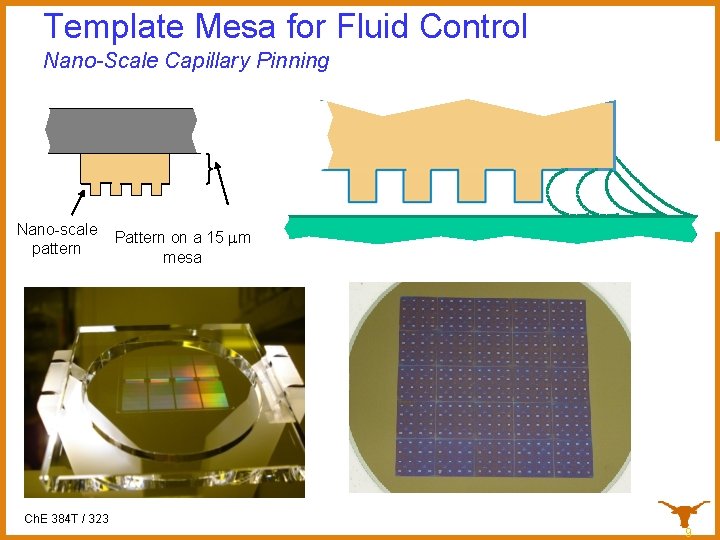
Template Mesa for Fluid Control Nano-Scale Capillary Pinning Nano-scale Pattern on a 15 m pattern mesa Ch. E 384 T / 323 9
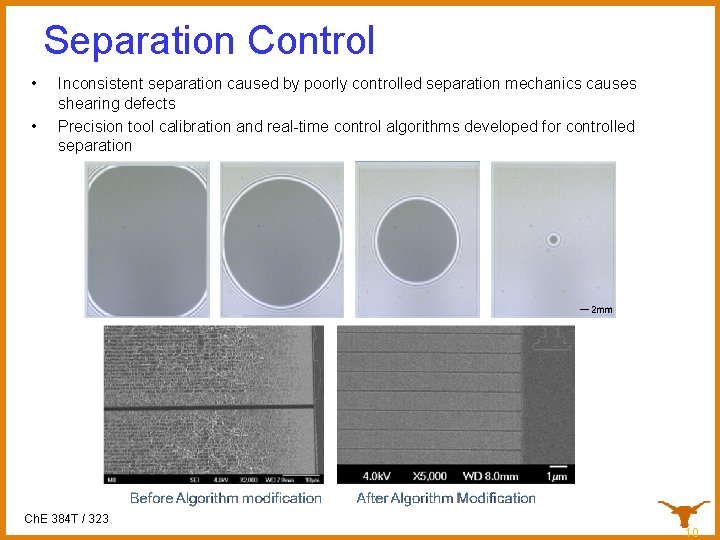
Separation Control • • Inconsistent separation caused by poorly controlled separation mechanics causes shearing defects Precision tool calibration and real-time control algorithms developed for controlled separation Ch. E 384 T / 323 10
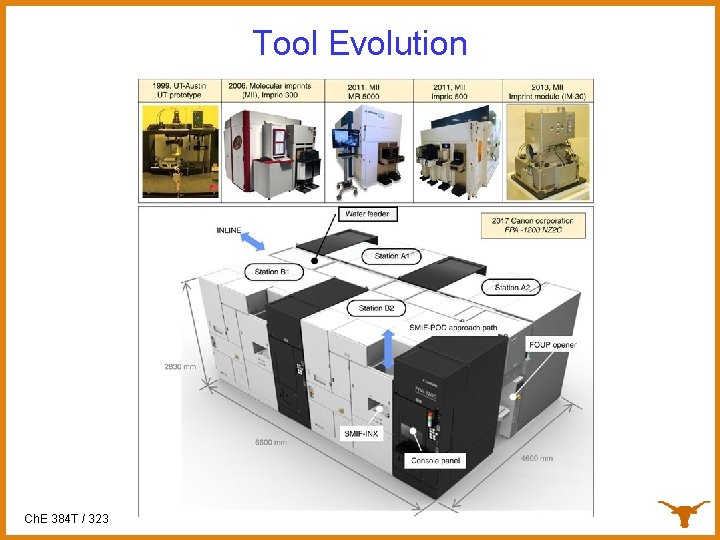
Tool Evolution Ch. E 384 T / 323
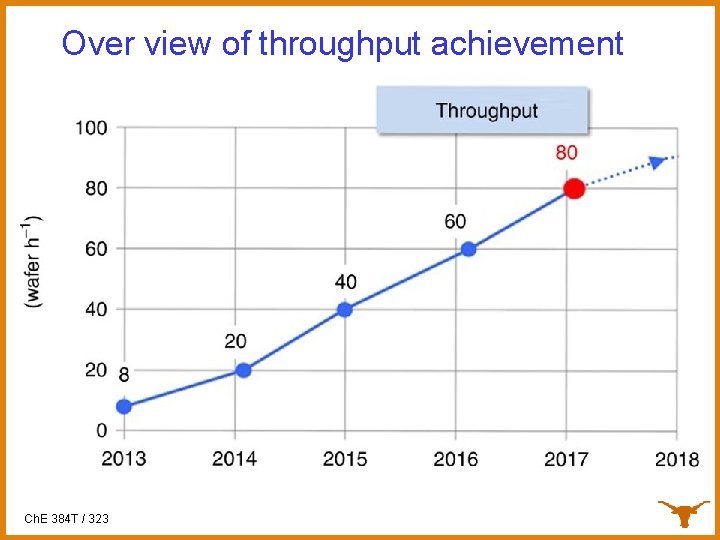
Over view of throughput achievement Ch. E 384 T / 323
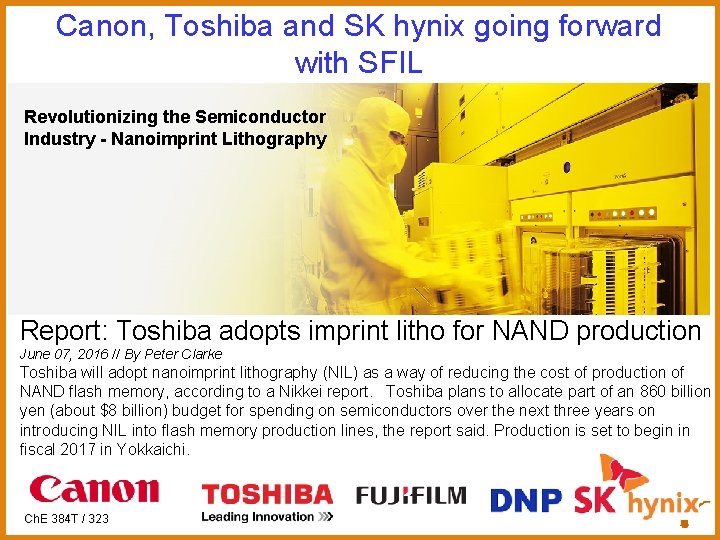
Canon, Toshiba and SK hynix going forward with SFIL Revolutionizing the Semiconductor Industry - Nanoimprint Lithography Report: Toshiba adopts imprint litho for NAND production June 07, 2016 // By Peter Clarke Toshiba will adopt nanoimprint lithography (NIL) as a way of reducing the cost of production of NAND flash memory, according to a Nikkei report. Toshiba plans to allocate part of an 860 billion yen (about $8 billion) budget for spending on semiconductors over the next three years on introducing NIL into flash memory production lines, the report said. Production is set to begin in fiscal 2017 in Yokkaichi. Ch. E 384 T / 323
News Release Canon provides nanoimprint lithography manufacturing equipment to Toshiba Memory's Yokkaichi Operations plant TOKYO, July 20, 2017—Canon Inc. announced today that the company has provided the FPA-1200 NZ 2 C, semiconductor lithography equipment that utilizes nanoimprint lithography (NIL) technology which Canon has been continuously developing since 2004, to leading provider of semiconductor memory solutions Toshiba Memory Corporation's Yokkaichi Operations plant. The provision of this equipment represents significant progress toward semiconductor device mass production that employs nanoimprint technology. Ch. E 384 T / 323
What Happened To Nanoimprint Litho? Next-gen lithography technology resurfaces for a variety of tasks. MARCH 29 TH, 2018 - BY: MARK LAPEDUS Nanoimprint lithography (NIL) is re-emerging amid an explosion of new applications in the market………. . Toshiba installed Canon’s latest NIL system in a fab in Japan. If all goes well, Toshiba plans to use Canon’s system to pattern some of the features for its 3 D NAND devices, as well as next-generation memory types in the future. Production is slated for later this year. “We hope nanoimprint will be ready for production soon, ” said Tatsuhiko Higashiki, senior fellow https: //semiengineering. com/what-happened-to-nanoimprint-litho/ Ch. E 384 T / 323
- Slides: 15