
Lecture 1 What is a virus We live

- Slides: 39
Lecture 1 What is a virus?
We live and prosper in a cloud of viruses • Viruses infect all living things • We eat and breathe billions of virions regularly • We carry viral genomes as part of our own genetic material
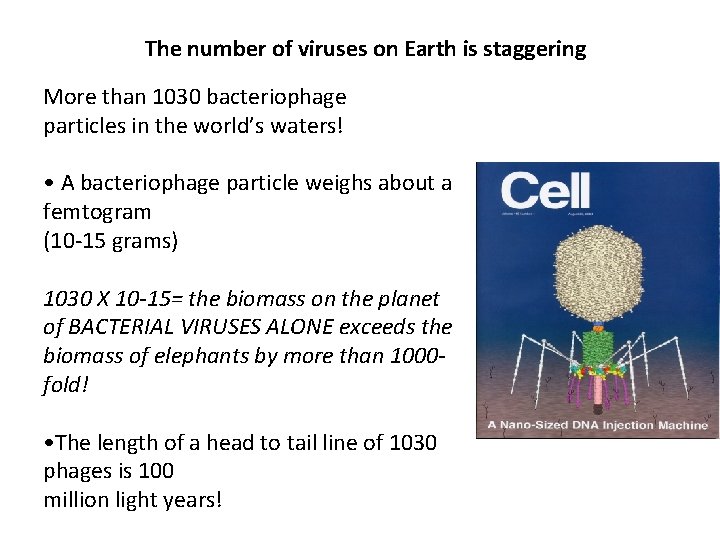
The number of viruses on Earth is staggering More than 1030 bacteriophage particles in the world’s waters! • A bacteriophage particle weighs about a femtogram (10 -15 grams) 1030 X 10 -15= the biomass on the planet of BACTERIAL VIRUSES ALONE exceeds the biomass of elephants by more than 1000 fold! • The length of a head to tail line of 1030 phages is 100 million light years!
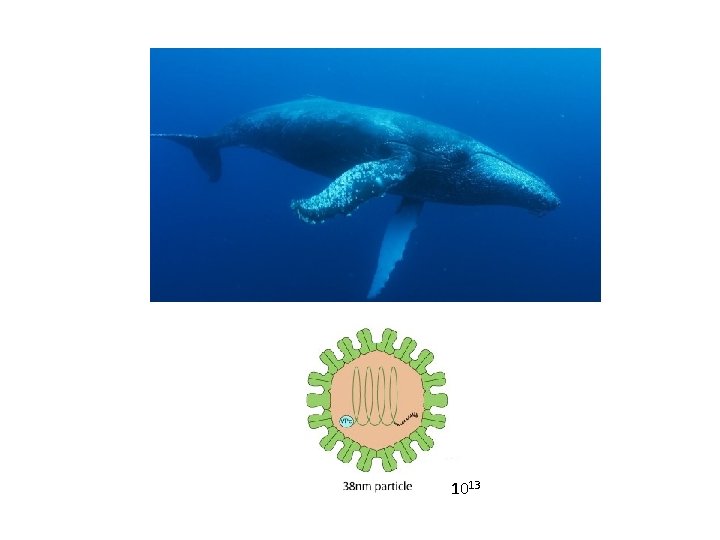
1013
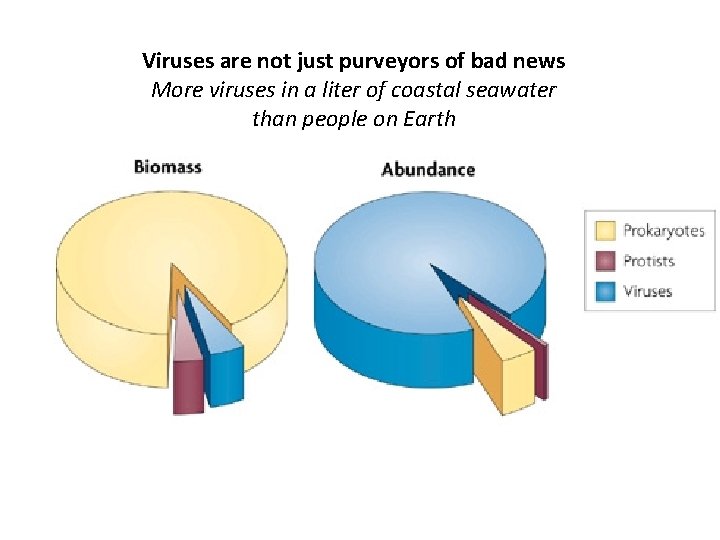
Viruses are not just purveyors of bad news More viruses in a liter of coastal seawater than people on Earth
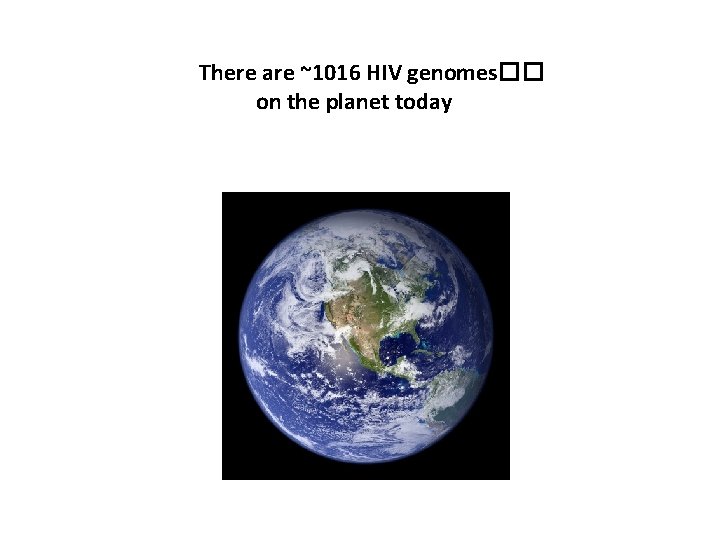
There are ~1016 HIV genomes�� on the planet today
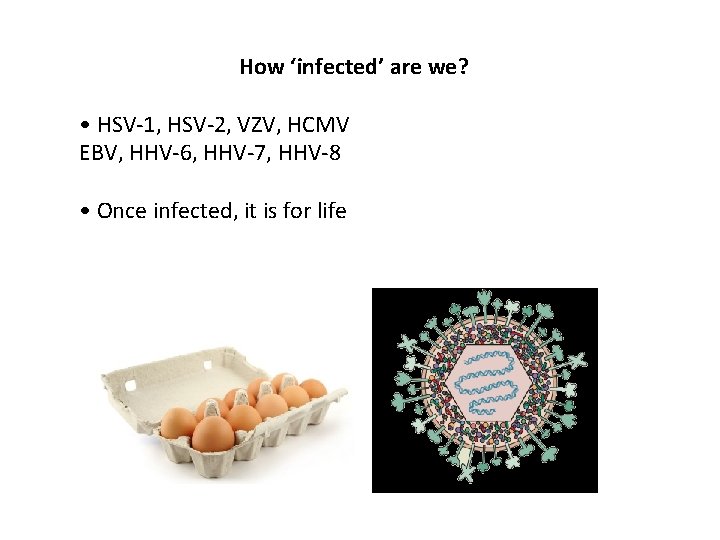
How ‘infected’ are we? • HSV-1, HSV-2, VZV, HCMV EBV, HHV-6, HHV-7, HHV-8 • Once infected, it is for life
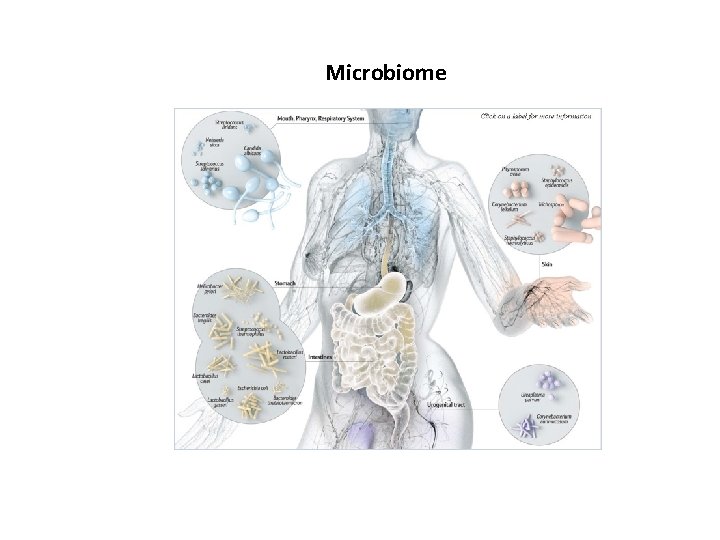
Microbiome
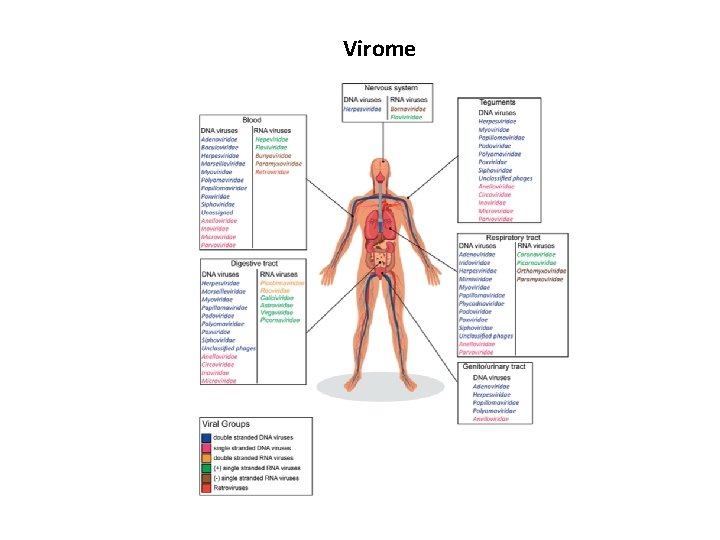
Virome
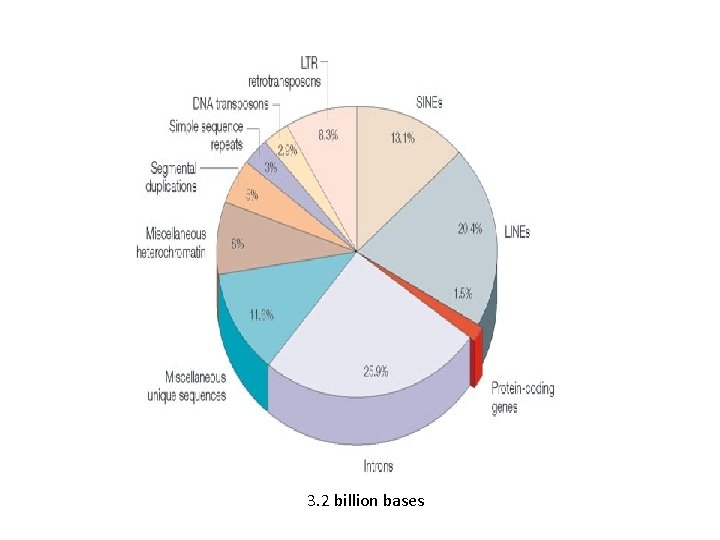
3. 2 billion bases
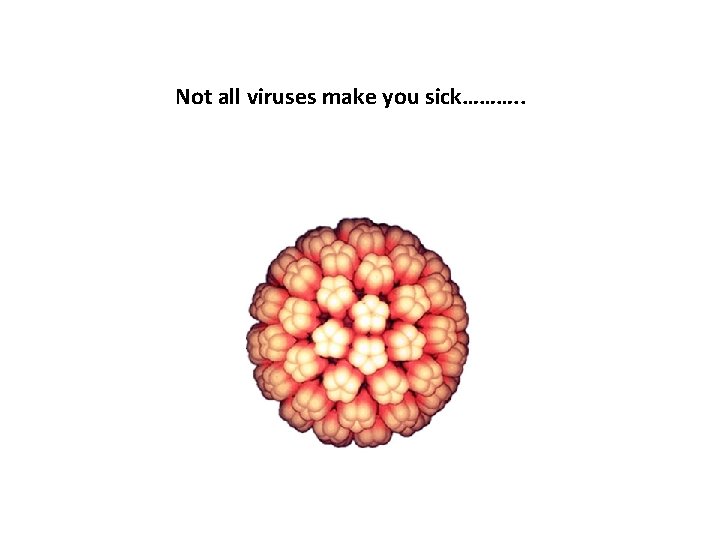
Not all viruses make you sick………. .
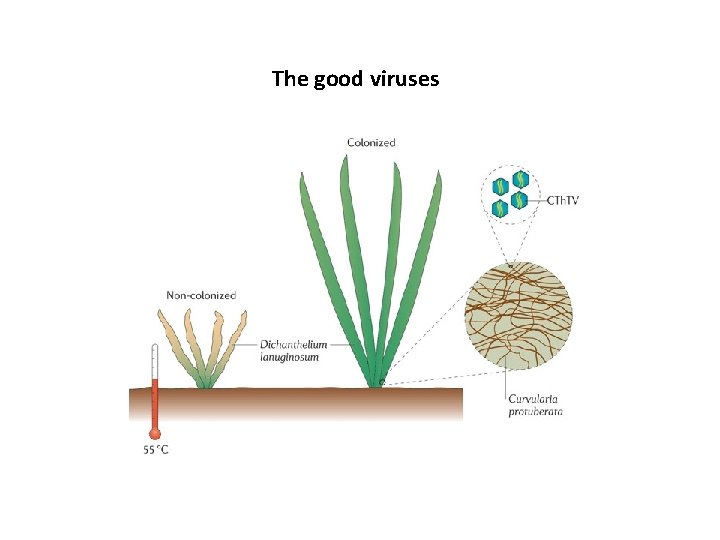
The good viruses
An enteric virus can replace the beneficial function of commensal bacteria
Course goals • This course is designed to help you see the ‘big picture’ of virology • I’ll show you how to think about virology as an integrative discipline, not an isolated collection of viruses, diseases, or genes • You will learn the fundamentals about these molecular wizards that amaze the informed and frighten the uninformed
Which statement is true? 1. All viruses make us sick and can be lethal 2. Our immune system can manage most viral infections 3. Humans are usually infected with one virus at a time 4. The press is usually correct in their virology reporting 5. Our immune system cannot handle most viral infections
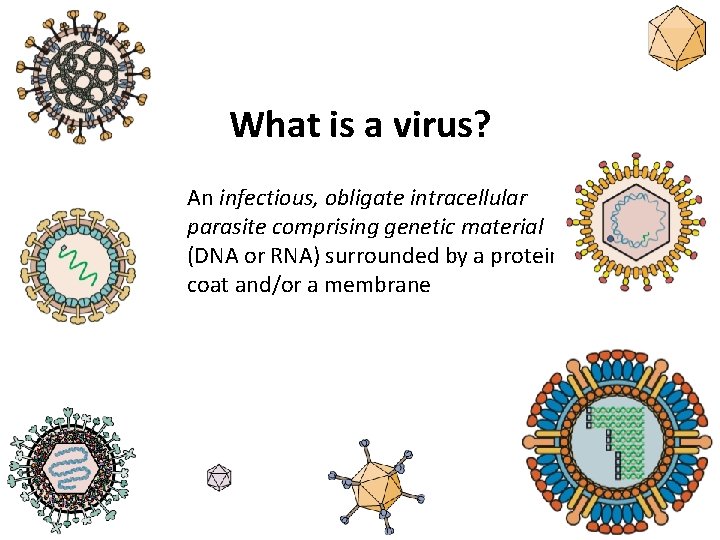
What is a virus? An infectious, obligate intracellular parasite comprising genetic material (DNA or RNA) surrounded by a protein coat and/or a membrane
As virions are obligate molecular parasites, every solution must reveal something about the host as well as the virus Are viruses alive?
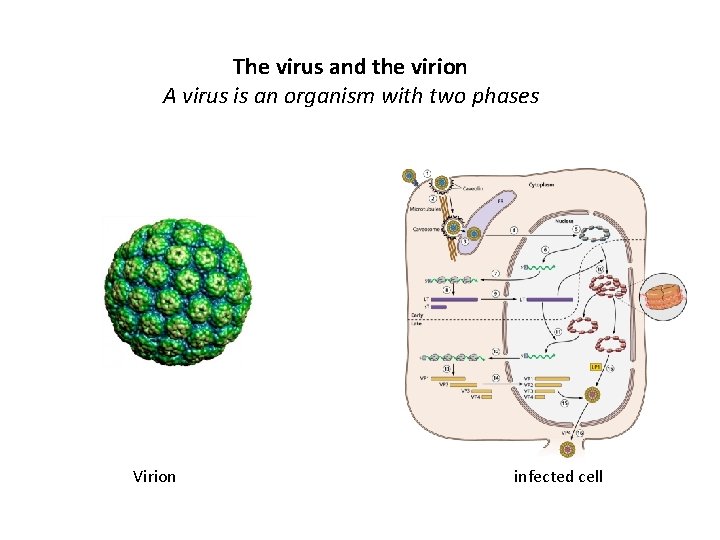
The virus and the virion A virus is an organism with two phases Virion infected cell
Viruses do NOT think! (or employ, ensure, exhibit, display, etc. . . ) They do not achieve their goals in a humancentered manner Viruses are passive agents!
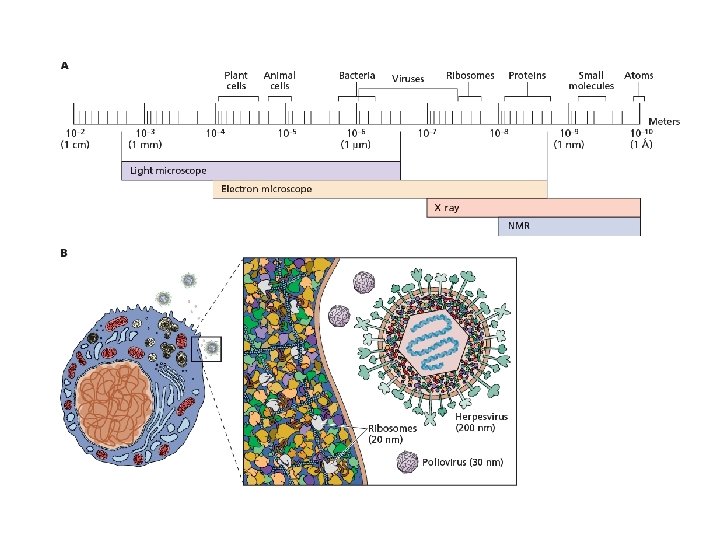
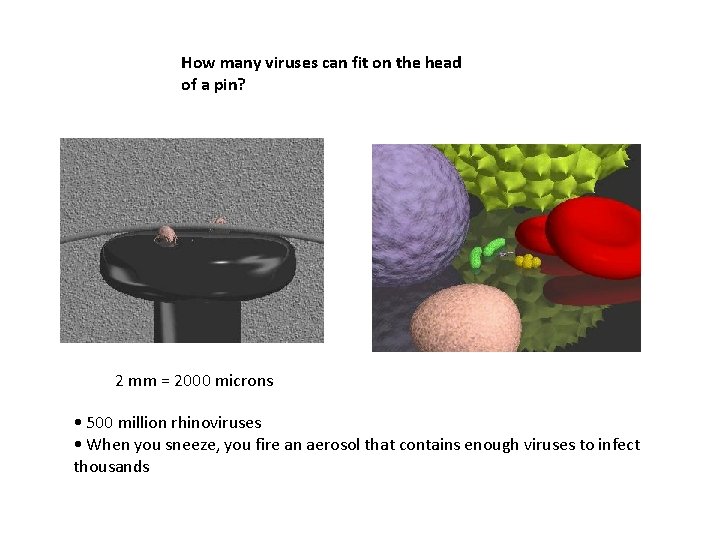
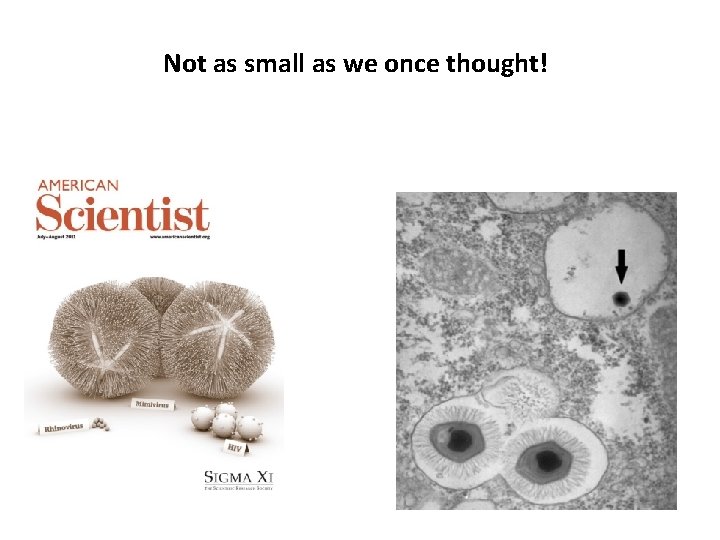
How many viruses can fit on the head of a pin? 2 mm = 2000 microns • 500 million rhinoviruses • When you sneeze, you fire an aerosol that contains enough viruses to infect thousands
Not as small as we once thought!
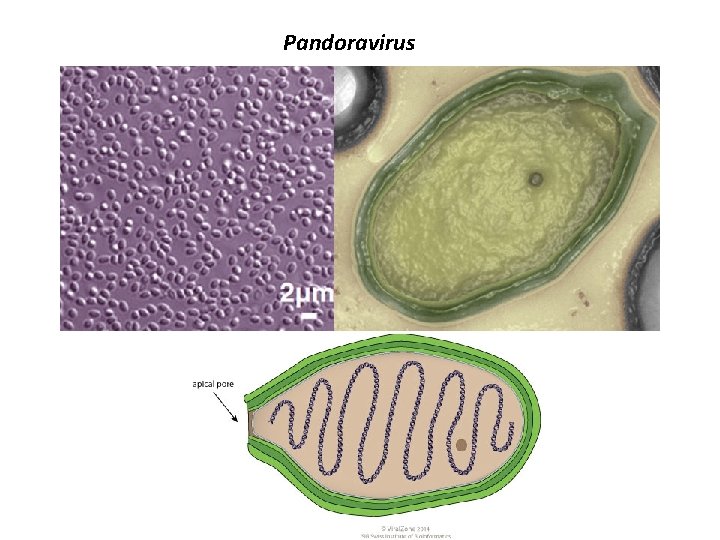
Pandoravirus
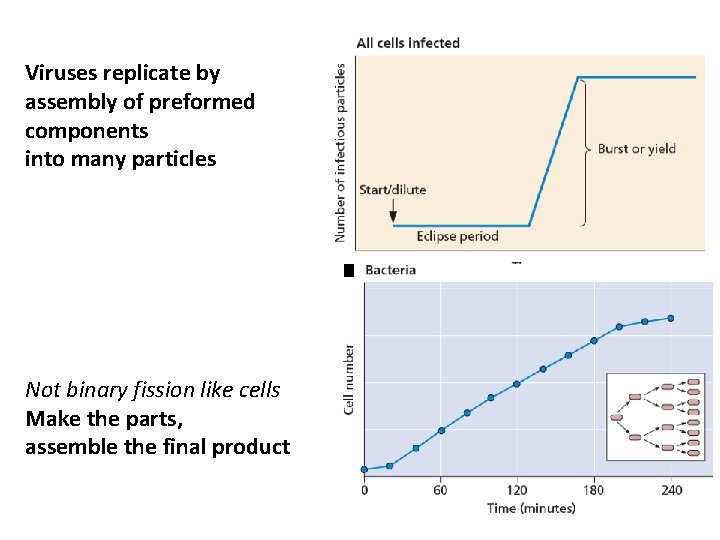
Viruses replicate by assembly of preformed components into many particles Not binary fission like cells Make the parts, assemble the final product
Which of the following is true concerning bacterial vs. viral replication? 1. Viruses must assemble using pre-formed components 2. Bacteria do not replicate via binary fission as viruses do 3. Bacteria must assemble using pre-formed components 4. Viruses do not have an "eclipse" period 5. Viruses replicate by binary fission
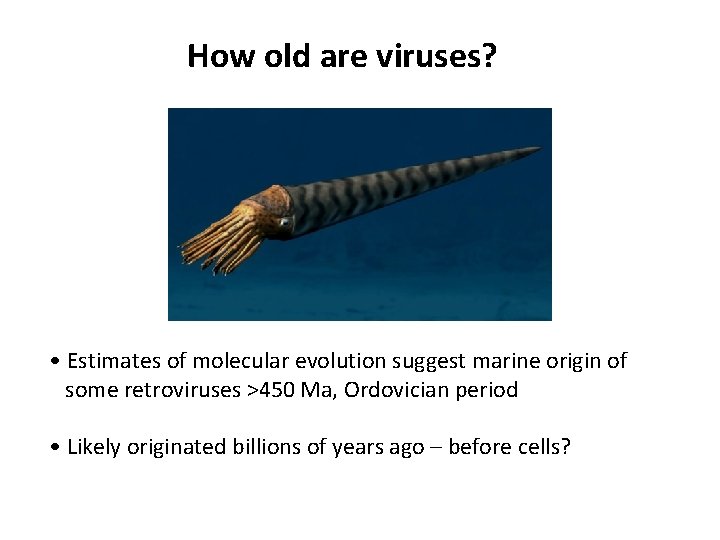
How old are viruses? • Estimates of molecular evolution suggest marine origin of some retroviruses >450 Ma, Ordovician period • Likely originated billions of years ago – before cells?
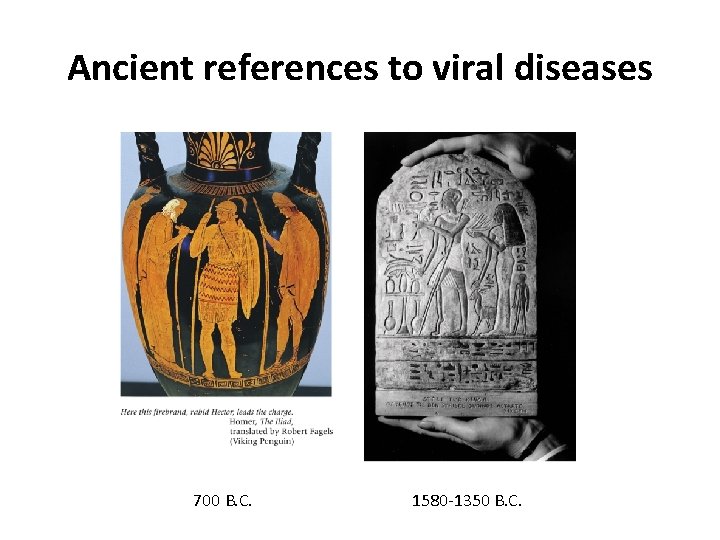
Ancient references to viral diseases 700 B. C. 1580 -1350 B. C.
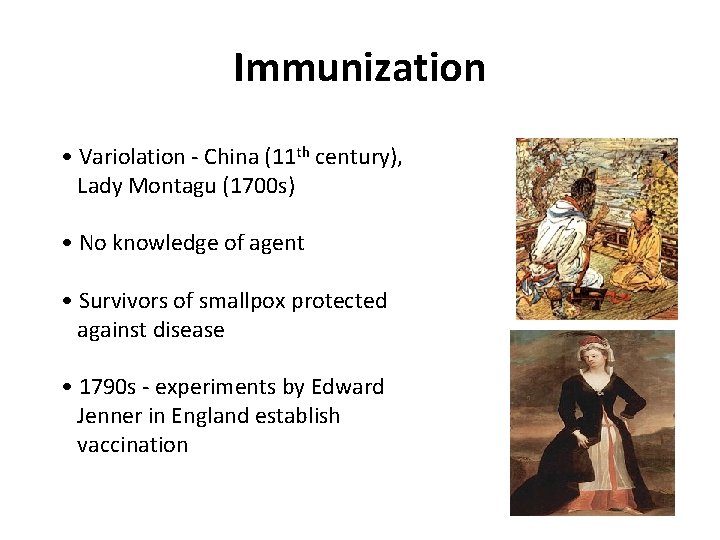
Immunization • Variolation - China (11 th century), Lady Montagu (1700 s) • No knowledge of agent • Survivors of smallpox protected against disease • 1790 s - experiments by Edward Jenner in England establish vaccination
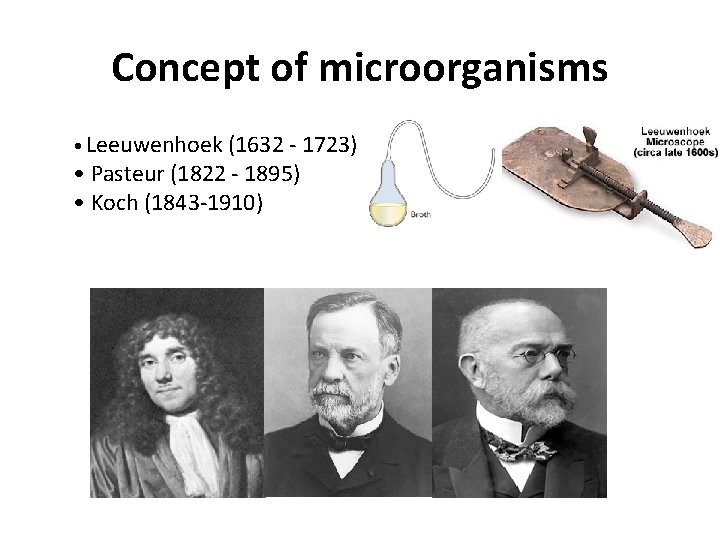
Concept of microorganisms • Leeuwenhoek (1632 - 1723) • Pasteur (1822 - 1895) • Koch (1843 -1910)
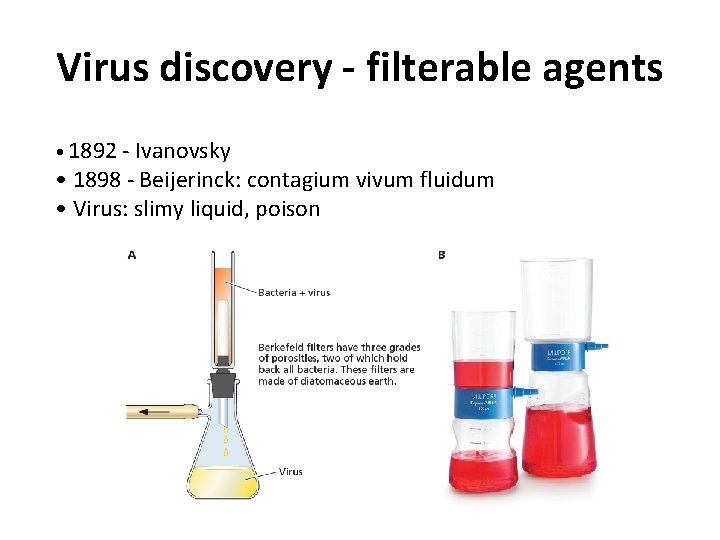
Virus discovery - filterable agents • 1892 - Ivanovsky • 1898 - Beijerinck: contagium vivum fluidum • Virus: slimy liquid, poison
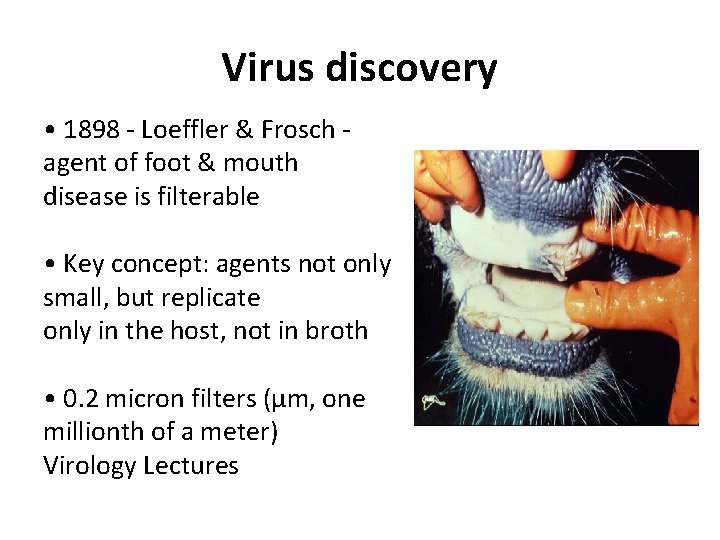
Virus discovery • 1898 - Loeffler & Frosch agent of foot & mouth disease is filterable • Key concept: agents not only small, but replicate only in the host, not in broth • 0. 2 micron filters (μm, one millionth of a meter) Virology Lectures
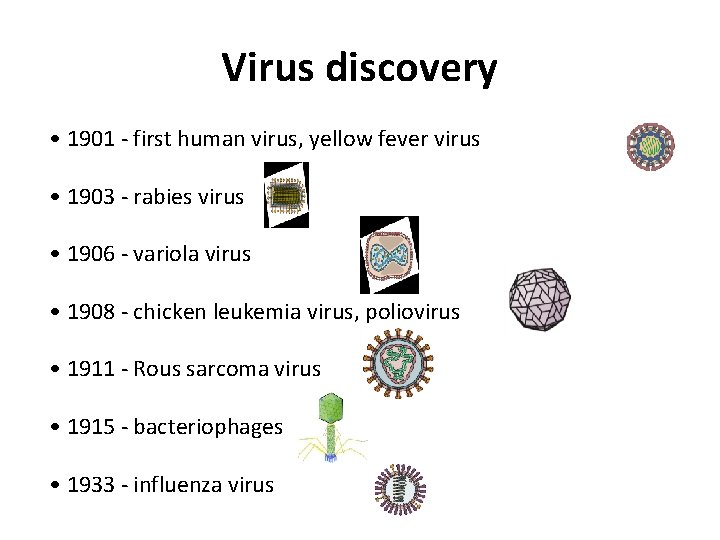
Virus discovery • 1901 - first human virus, yellow fever virus • 1903 - rabies virus • 1906 - variola virus • 1908 - chicken leukemia virus, poliovirus • 1911 - Rous sarcoma virus • 1915 - bacteriophages • 1933 - influenza virus
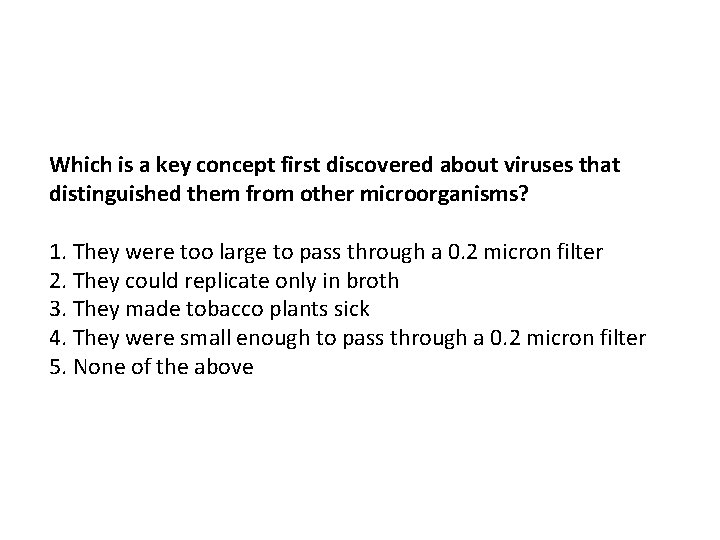
Which is a key concept first discovered about viruses that distinguished them from other microorganisms? 1. They were too large to pass through a 0. 2 micron filter 2. They could replicate only in broth 3. They made tobacco plants sick 4. They were small enough to pass through a 0. 2 micron filter 5. None of the above
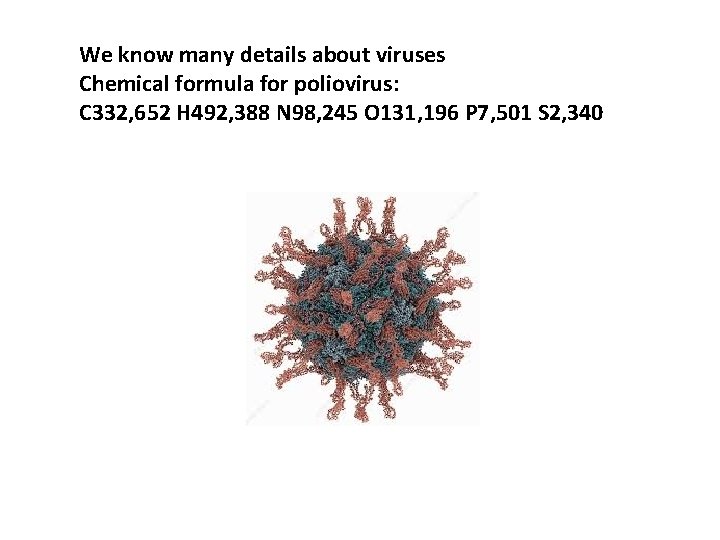
We know many details about viruses Chemical formula for poliovirus: C 332, 652 H 492, 388 N 98, 245 O 131, 196 P 7, 501 S 2, 340
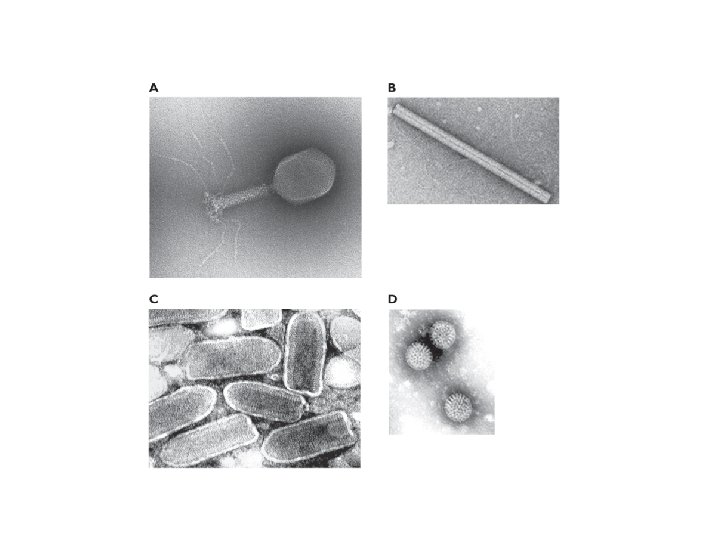
Virus classification • Nature and sequence of nucleic acid in virion • Symmetry of protein shell (capsid) • Presence or absence of lipid membrane (envelope) • Dimensions of virion & capsid
Classical hierarchical system: Kingdom Phylum Class Order (-virales) Family (-viridae) Genus (-virus) Species
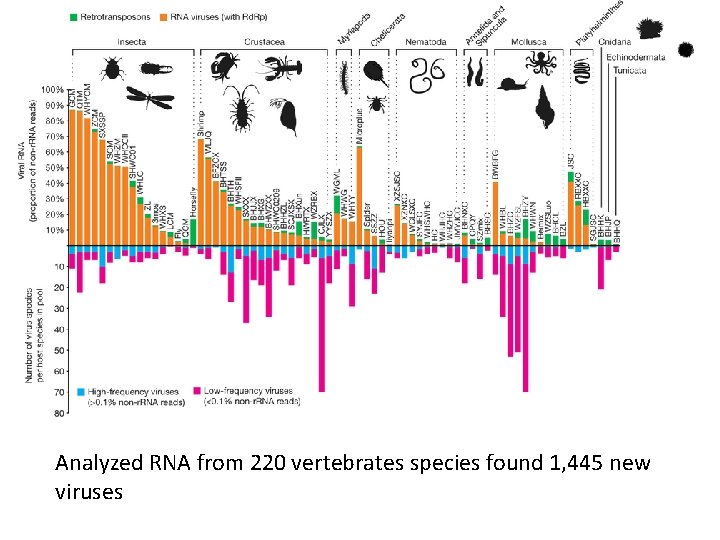
Analyzed RNA from 220 vertebrates species found 1, 445 new viruses
Why do we care? • Viruses outnumber cellular life by at least 10: 1 the greatest biodiversity on Earth • Viruses drive global cycles • Beneficial • Sources of new pathogens?