
LECTURE 1 The subject of epidemiology The doctrine
LECTURE 1 �The subject of epidemiology. The doctrine of the epidemic process. Control of communicable diseases � Gafarova M. T.
� Epidemiology is the science of infectious diseases, their primary sources, distribution, and prevention. In a more narrow sense of epidemiology deals with the epidemic of infectious disease manifestations (K. Stallibrass, 1936).
EPIDEMIOLOGY - an independent science that studies the objective laws of the occurrence, distribution and termination of infectious diseases in the community and develops measures for their prevention and elimination (I. I. Elkin. 1973). - to study the mechanism of the formation and development of the epidemic process, the development and application of methods of prevention and control of these diseases (N. D. Yuschuk et al. 1993).
EPIDEMIOLOGY �- is one of the most rapidly developing science. One century of its development it has evolved as the science that studies the laws for the prevention of the epidemic process, it studied the causes, conditions and mechanisms of diseases of the population in certain areas, among different groups at different times, etc. The data was used to develop methods of prevention and for surveillance.

� The purpose of modern infectious disease epidemiology - the study of the mechanism of formation and development of the epidemic process, the development and application of methods of prevention and control of these diseases.
� A special merit in the detailed development of the doctrine of the epidemic process belongs to our compatriot L. V. Gromashevski (1941), who first introduced this concept and classically developed understanding of the mechanism of transmission. � � According L. V. Gromashevski epidemic process - a chain of successive specific infectious conditions. From the point of view of I. I. Elkin (1968), the epidemic process - a series of interconnected and emerging from one another epidemic outbreaks. Currently used definition is that the epidemic process - the process of the spread of infectious diseases among people (1993).
EPIDEMIOLOGY STUDIES THE RELATIVELY NARROW RANGE OF HUMAN DISEASES CALLED INFECTIOUS (OVER 2 THOUSAND MORE). THE MAIN FEATURES OF THIS CLASS IS DISTINGUISHED FROM OTHER DISEASES: 1. The presence of a specific pathogen, but the penetration of the pathogen may occur for example: R. prowazekii – louse-borne typhus, Shigella - dysentery, cholera vibrio - cholera. � 2. Сontagiousness- this is the main feature distinguishing from other infectious diseases, as a man can be a source of infection to others. These features define the specific laws of epidemiology.
� 3. For many infectious disease characterized by mass destruction of the population, leading to huge economic losses, especially in the case of epidemics and pandemics. � 4. For any characteristic of severe infectious disease recurrence (the incubation period, prodromal period, during the height of the clinical, convalescence and outcome). Infectiousness of the patient may depend on the stage of the disease.
� � 3. For many infectious disease characterized by mass destruction of the population, leading to huge economic losses, especially in the case of epidemics and pandemics. 4. For any characteristic of severe infectious disease recurrence (the incubation period, prodromal period, during the height of the clinical, convalescence and outcome). Infectiousness of the patient may depend on the stage of the disease.

EPIDEMIC PROCESS �- is a complex socio-biological phenomenon, it is a chain of continuous, following each other infectious conditions, from asymptomatic carriage to manifest forms of disease caused by the pathogen circulating in the collective. � The biological basis of epidemic process is reacting 3 parts or units, namely, the source of infectious agents, the specific mechanism of transmission and susceptible populations. � Let us consider the main elements of the epidemic process:
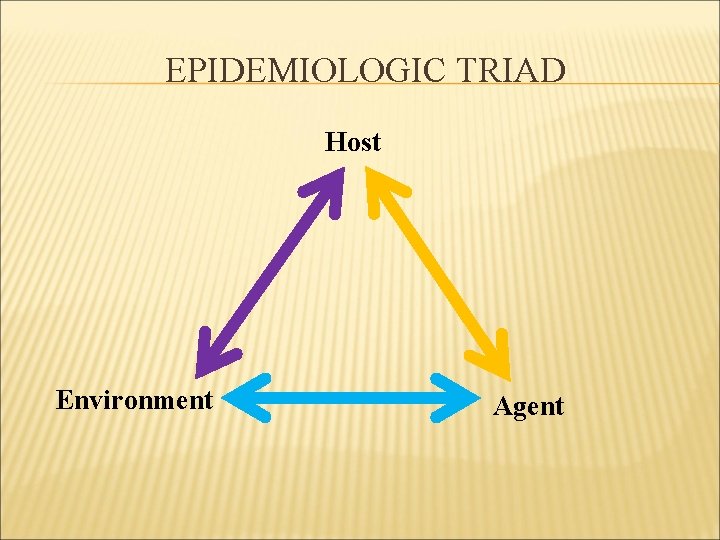
EPIDEMIOLOGIC TRIAD Host Environment Agent
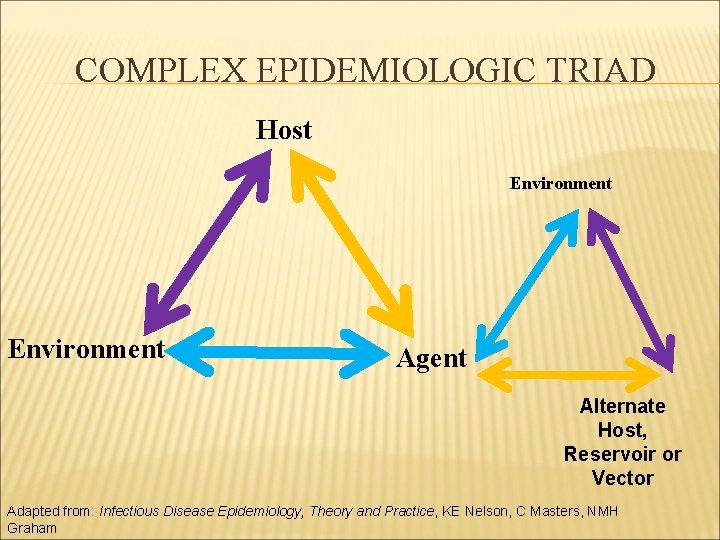
COMPLEX EPIDEMIOLOGIC TRIAD Host Environment Agent Alternate Host, Reservoir or Vector Adapted from: Infectious Disease Epidemiology, Theory and Practice, KE Nelson, C Masters, NMH Graham
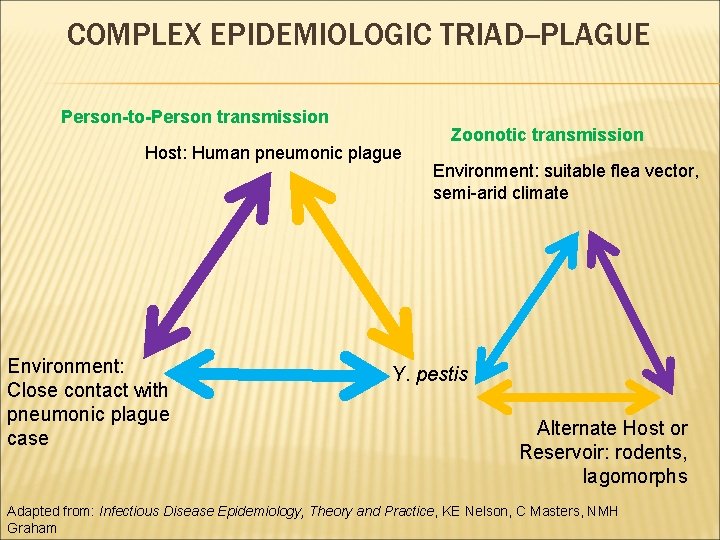
COMPLEX EPIDEMIOLOGIC TRIAD--PLAGUE Person-to-Person transmission Host: Human pneumonic plague Environment: Close contact with pneumonic plague case Zoonotic transmission Environment: suitable flea vector, semi-arid climate Y. pestis Alternate Host or Reservoir: rodents, lagomorphs Adapted from: Infectious Disease Epidemiology, Theory and Practice, KE Nelson, C Masters, NMH Graham
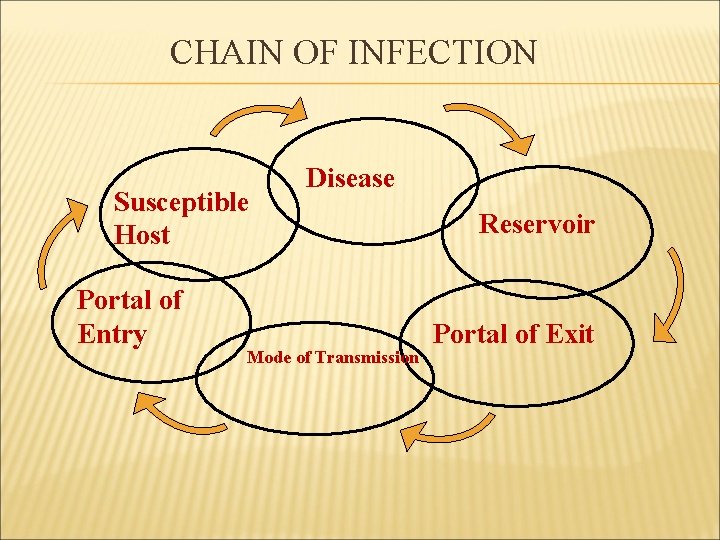
CHAIN OF INFECTION Susceptible Host Portal of Entry Disease Mode of Transmission Reservoir Portal of Exit
SOURCE OF INFECTION �- infection or epidemic occurs only when there is a team in the sick person or vector from which infects healthy. Some diseases can arise when dealing with sick animals. That is a sick person or a sick animal is a source of infection for healthy people. As pointed out by L. V. Gromashevsky, a source of infection should be understood that the object that serves as a natural host and multiplication of pathogens, which is in the process of natural accumulation of infectious beginning from which the agent can in some way actively released and infect healthy people.
THE MECHANISM OF TRANSMISSION �- a set of evolutionarily formed ways to ensure the movement of live pathogen from an infected organism to another, healthy body. The transmission mechanism is implemented through three stages: � a) the step of isolating the pathogen from infected organism; � b) the stage of stay in the environment; � c) the stage of implementation in a susceptible host.
� As mentioned above, the transmission factors these are the elements of the environment in which dwells contagion, and with their help, the pathogen is transmitted from the source of infection to healthy and ensure the continuity of the epidemic process. These include (six basic): a) air, g) the ground b) the food e) household goods and production conditions, and c) water, e) live vectors.
� The specific elements of the environment or a combination of factors gear help to transfer the pathogen from one organism to another, in a particular epidemiological situation called transmission routes. Consequently, the concept the mechanism of transmission and transfer factor, are generalized, abstract. Localization of pathogens in the body and the specific manifestations of the infection process identified several types and kinds of the mechanism of transmission of pathogens from source to susceptible persons.
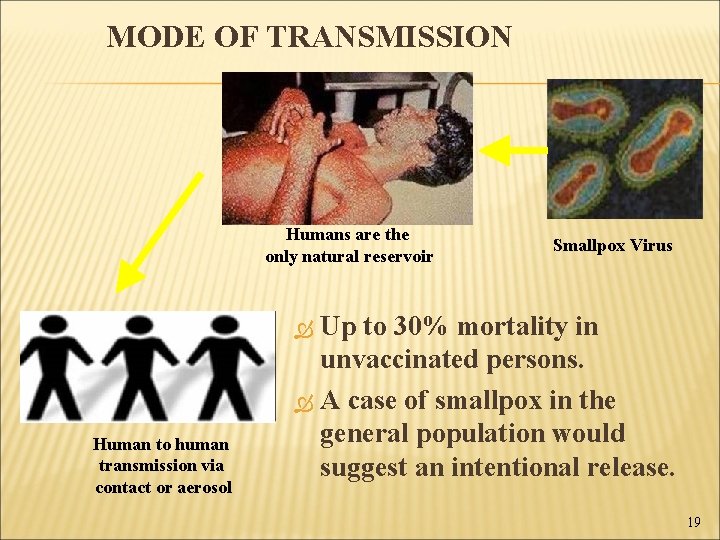
MODE OF TRANSMISSION Humans are the only natural reservoir Smallpox Virus Up to 30% mortality in unvaccinated persons. A case of smallpox in the general population would suggest an intentional release. Human to human transmission via contact or aerosol 19
The horizontal type:
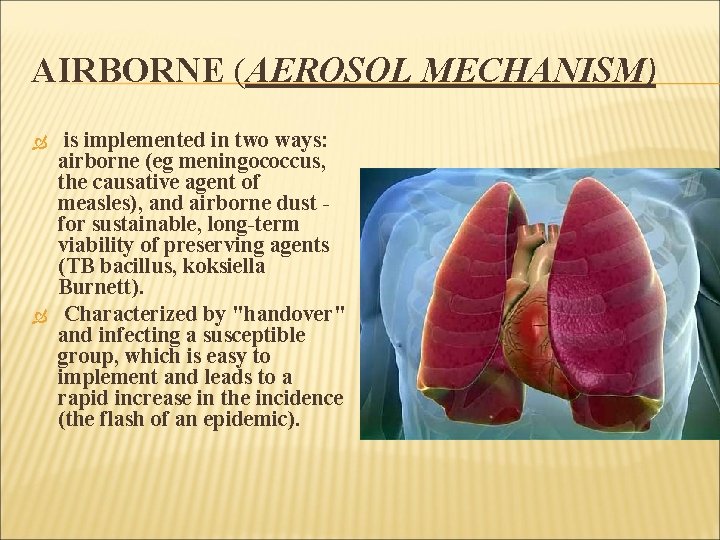
AIRBORNE (AEROSOL MECHANISM) is implemented in two ways: airborne (eg meningococcus, the causative agent of measles), and airborne dust for sustainable, long-term viability of preserving agents (TB bacillus, koksiella Burnett). Characterized by "handover" and infecting a susceptible group, which is easy to implement and leads to a rapid increase in the incidence (the flash of an epidemic).
FECAL-ORAL TRANSMISSION characteristic for intestinal infections, which are pathogens in the gastrointestinal tract of humans. Path of the pathogen isolated from the feces of sick or media to the mouth of a susceptible person can be long. Transmission is possible through contaminated water (bathing, drinking, washing dishes, etc. ), milk, meat products, as well as by mechanical vectors (flies - Fly's factor). Low level of health awareness of the population contributes to the transfer agent using the contact pathway (hands, toys, towels, dishes, etc. ).
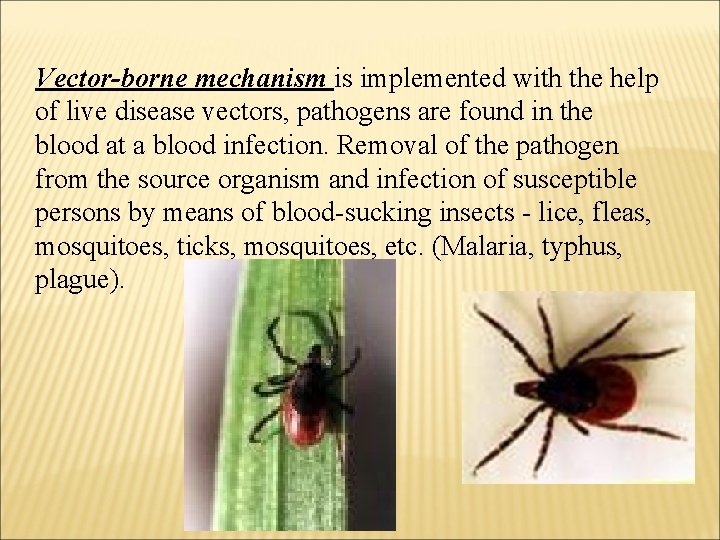
Vector-borne mechanism is implemented with the help of live disease vectors, pathogens are found in the blood at a blood infection. Removal of the pathogen from the source organism and infection of susceptible persons by means of blood-sucking insects - lice, fleas, mosquitoes, ticks, mosquitoes, etc. (Malaria, typhus, plague).
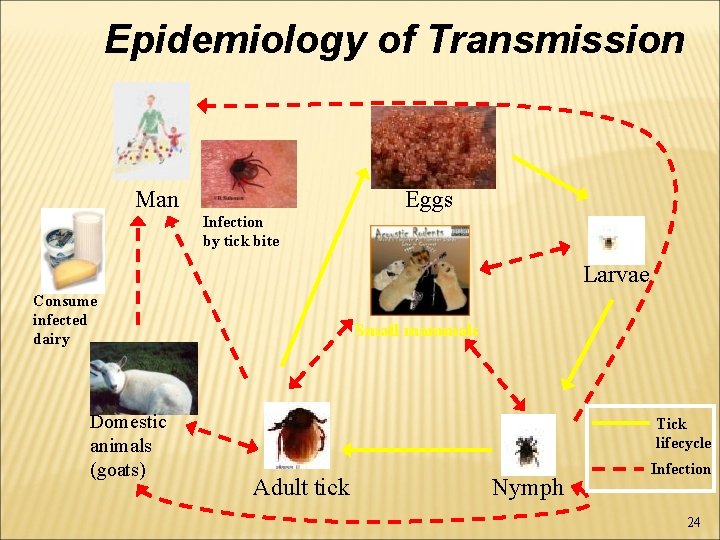
Epidemiology of Transmission Man Eggs Infection by tick bite Larvae Consume infected dairy Domestic animals (goats) Small mammals Tick lifecycle Adult tick Nymph Infection 24
CONTACT mechanism is possible with direct contact and penetration of pathogens through the skin or mucous membranes (sexually transmitted disease, antrax) infection.
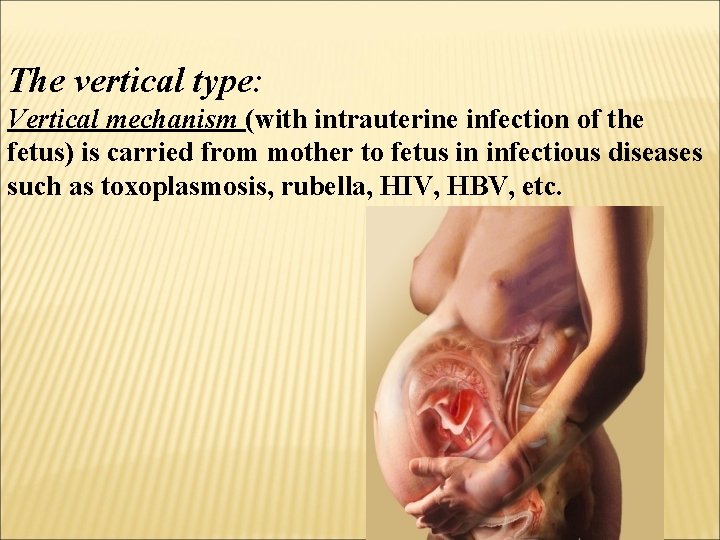
The vertical type: Vertical mechanism (with intrauterine infection of the fetus) is carried from mother to fetus in infectious diseases such as toxoplasmosis, rubella, HIV, HBV, etc.
Artificial mechanism - is associated with transfusions, punctures, catheter, operations, transplantation of organs and tissues, inhalation, intubation, etc. (Nosocomial infections)
SUSCEPTIBLE COLLECTIVE - THE THIRD LINK OF THE EPIDEMIC PROCESS � Susceptibility - property of the organism responsible for infection of a meeting with the agent. This property is essential for the maintenance of the epidemic process. State susceptibility depends on the number of factors that determine the specific and nonspecific resistance. The protective function of the skin, excretory organs, inflammation, phagocytosis, humoral products (complement, lysozyme, interferon, prostaglandins).
Thus, the epidemic process occurs and is only supported with a combination of actions source of pathogen-specific mechanism of transfer and the susceptible group - one of the laws of Epidemiology.
GENERALIZATION OF EPIDEMIOLOGICAL STUDIES AND EXPERIENCE IN THE FIELD INFECTOLOGII ALLOWED TO DEDUCE THE 6 LAWS OF EPIDEMIOLOGY: 1. The source of the infectious agent is infected (the patient, and sometimes healthy) human or animal; � 2. The localization of the infectious agent in the body and the transmission mechanism - interdependent phenomena; � 3. The specific localization of the infectious agent in the body and the corresponding transmission mechanism can be used as the basis of a rational classification of human infectious diseases (intestinal, respiratory, blood infections and integument). �
4. Epidemic process and is maintained only when the interaction between the three driving forces: the source of the pathogen, the mechanism of transfer and the susceptible population (collective). � 5. Environmental and social factors influence the quality and quantity of manifestation Epidemic process. � 6. The epidemiology of any infectious disease can be changed under the influence of social change (factors) that can stimulate or suppress the driving force Epidemic process. �
THE MANIFESTATION OF THE EPIDEMIOLOGICAL PROCESS 4 known intensity of the epidemic process: � 1. Sporadic incidence - is the level of disease in which a given area and the specific infection there is minimal (normal) number of cases. Sporadic preceded by a sharp increase in the incidence of Epidemiological disadvantage and vice versa - slow down and eliminate the epidemic process. There is no epidemiological link between a disease and there is no common source or a common factor for infection.
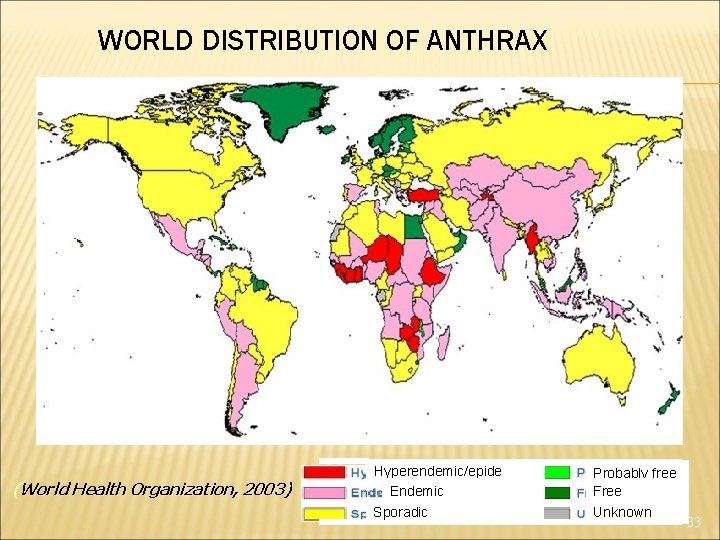
WORLD DISTRIBUTION OF ANTHRAX (World Health Organization, 2003) Hyperendemic/epidemic Endemic Sporadic Probably free Free Unknown 33
� 2. The epidemic is a level of morbidity, when the incidence higher than in sporadic disease to the area several times (eg, 3, 5, 10 or more times). The massive spread of infectious diseases covering the city, the country, but there is a connection between the sick, as a common source of infection, a common factor in the transfer.
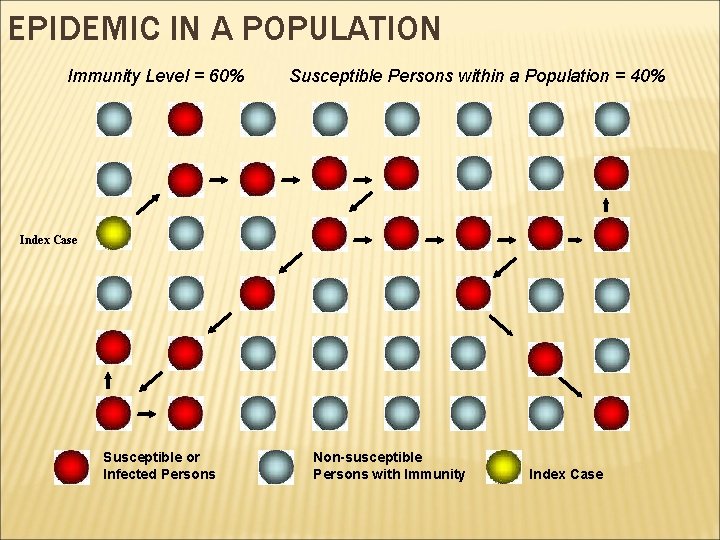
EPIDEMIC IN A POPULATION Immunity Level = 60% Susceptible Persons within a Population = 40% Index Case Susceptible or Infected Persons Non-susceptible Persons with Immunity Index Case
� Endemic (local) - systematically occurring among the population of disease among the people living in a particular area over a long period of time. � Endemicity often depends on the epizootic process, the development of which depends on natural conditions. Diseases resulting from their importation from other countries and do not sign up for what - or territories referred to as exotic.
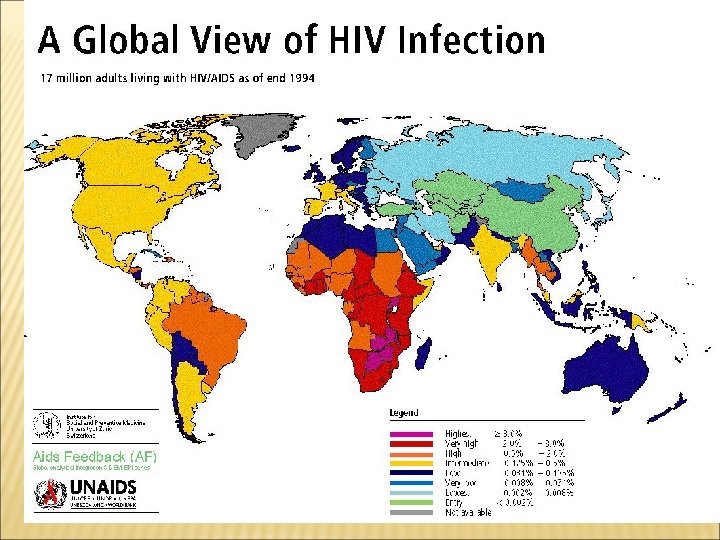
4. Pandemic: an epidemic that is geographically widespread; crossing international boundaries or occurring worldwide (Pan = all). Pandemic - the spread of infectious diseases out of the country, a continent that covered the globe (smallpox, plague, cholera, influenza). � Areas of communicable diseases According to the "Regulations of the State Sanitary and Epidemiological Surveillance" is an epidemiological surveillance of infectious diseases. The complex sanitary, medical and administrative and economic measures aimed at preventing the occurrence of outbreaks of infectious diseases is called prevention activities. �
Activities aimed at defusing the source of infection: clinical-diagnostic, isolation, treatment and regimerestrictive (quarantine, observation) - at anthroponoses. Sanitary Veterinary and exterminating - with zoonoses. Events for shutdown (rupture) of the mechanism of transmission: hygiene, disinfection and disinfestational.
Measures to create specific immunity in the population, ie, susceptible of collective immunoprophylaxis, immunotherapy and emergency prevention. � When anthroponoses - early and complete identification of patients, hospitalization and effective treatment, the examination had been ill, but it depends on the skills and training of medical personnel, medical supplies and other means of treatment. � When zoonoses - if pets are sources of infection (brucellosis, anthrax), depending on their economic value and the degree of epidemiological threat applies a range of animal health activities - from treatment prior to slaughter. �
Recommended in References: 1. Volovskaya M. L. Epidemiology and Fundamentals of Infectious Diseases, 1999. 2. Muniver T. Gafarova General «Epidemiology of Infectious Diseases (manual)» , 2010. 3. Yushchuk ND, Zhogova MA, VV Bushueva «Epidemiology» Moscow, Medicine, 1993. 4. Pokrovsky VI «Infectious diseases and epidemiology. » M: GEOTAR, Medicine, 2000. 5. Gromashevsky L. V. Selected Works. (In those volumes) Kiev, 1987.
- Slides: 41