
Lecture 1 Sport Event Management Summer School By
Lecture 1 Sport Event Management Summer School By Kedge Business School « SPORT EVENT MARKETING » Lionel Maltese Maitre de Conférences Aix Marseille University – CERGAM IAE Aix-en-Provence Associate Professor Sport Event Management Kedge Business School Business Manager ATP – WTA Events Twitter : @lionelmaltese

• STAN • OM
Sport & you ? • University / Country ? • Experience (scholar and/or professional) ? • Practice ? • Fan (teams / athletes)?
Sport & me ? • University / Country : Iae Aix en Provence / France • Experience (scholar and/or professional) : Phd / ATPWTA World Tour / Ligue 1 (Soccer) / Top 14 (Rugby) / Tour de France (Cycling) • Practice : Tennis/Basket-Ball/Soccer/Paddleboard • Fan (teams / athletes) : – Teams : OM/Juve/RCT/Celtics/Warriors/Duke/Seahawks – Federer/Wilkinson/Zidane/Bird-Magic. Johnson/Grant Hill/Ray Allen/Stephen Curry/Kelly Slater
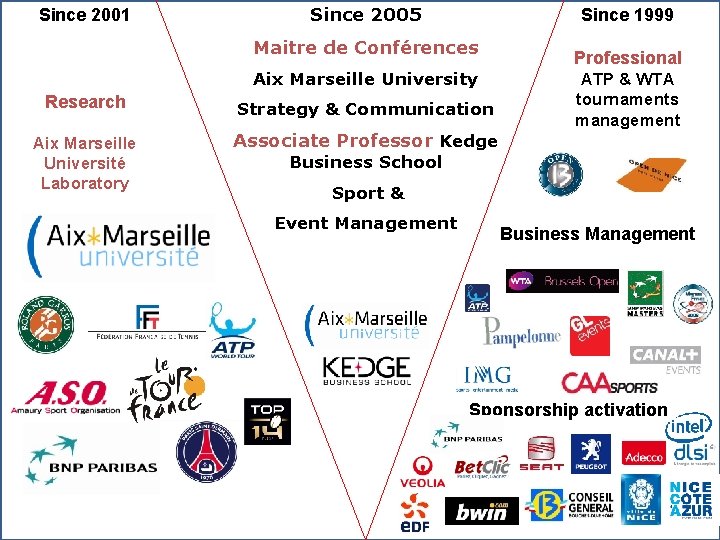
Since 2001 Since 2005 Since 1999 Maitre de Conférences Aix Marseille University Research Strategy & Communication Aix Marseille Université Laboratory Associate Professor Kedge Business School Professional ATP & WTA tournaments management Manager Sport & Event Management Business Management Sponsorship activation
Business and Fans studies : « Sport Fans Institue ? » Servicing / Expérience / Hospitality / Business Models
To penetrate sport business sectors : networks and networking
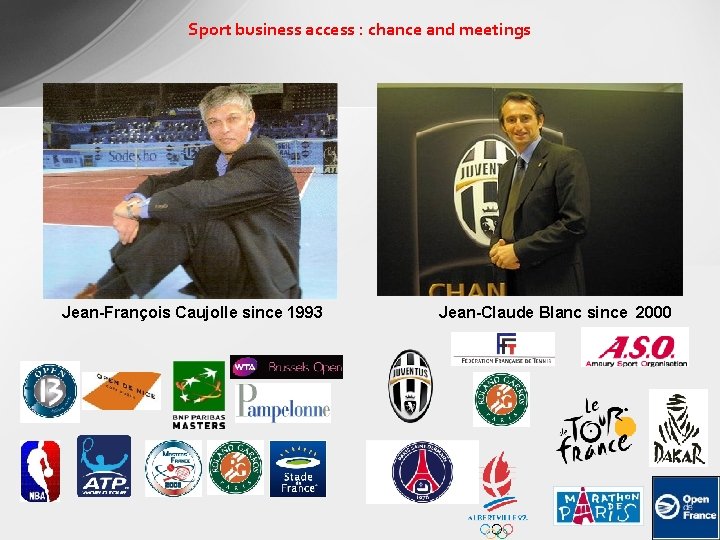
Sport business access : chance and meetings Jean-François Caujolle since 1993 Jean-Claude Blanc since 2000
Personal reflexions… q Sport Business = SME Market q Business comes from Media for mega event and championships q Stock of resources are often important but competencies not… q Sport = unique communication platform but we can define it as a moment and a place q Unicity in sports = Emotion as a marketing tool to attract customers and stakeholders q Your Job : understand the offer and help to sell or market sport event products then be a sport manager
Marshall Glickman CEO G 2 Strategic, former president of the NBA’s Portland Trail Blazers Over the last four decades, sports in North America has evolved from pure competition to business…from game to entertainment. Although the quality of competition has remained the centerpiece, North American sports culture is primarily motivated by money. In France, as in most European countries, the sports culture has historically been driven by the competitions themselves, so consumption trends are not comparable. That said, there is no question that economic reality is driving French sports organizations to become more professional and oriented to business and profits. From the perspective of an American who has extensive experience working with European and French sports organizations, finding the right balance between economics and culture is precisely the right recipe for success.
SPORTAIMENT PLACE & MOMENT FOR FANS
SEMINAR Schedule: 30 H Day 1 : Tuesday 16 th • Lecture 1 (am) : Sport Business Ecosystem • Lecture 2 (pm) : Sport Organization Business Models Day 2 : Wednesday 17 th • Lecture 3 (am) : Public Relations & Relational Business Modelwith ATP Case Studies) Day 3 : Thursday 18 th • Lecture 4 (am) : Sponsorship Activations & Cause Marketing • Lecture 5 (pm) : Group Workshop on Sponsorship Activation + Stadium Velodrome visiting Day 4 : Wednesday 24 th • Lecture 6 (am) : Reputation Management Day 5 : Wednesday 1 st • Lecture 7 : Business Plan / Group Workshop + Visit Oreca The Motor. Sport Company / 24 H Le Mans Day 6 : Thursday 2 h • Lecture 10 (pm) : Group Oral / Business Plan / Activation

Fans support for the system : the business of sports – a perspective from Harvard (Stephen A. Greyser) « Fans are the fundation of the business of sports world. They support the entire apparatus : with thier bodies at games ; with their eyeballs wathing on TV ; and with their wallets for tickets, for cable and pay-per-view fees, and for merchandise, publications, videos, fantasy leagues fees, and equipement, as well as the sponsors’ products and services » .
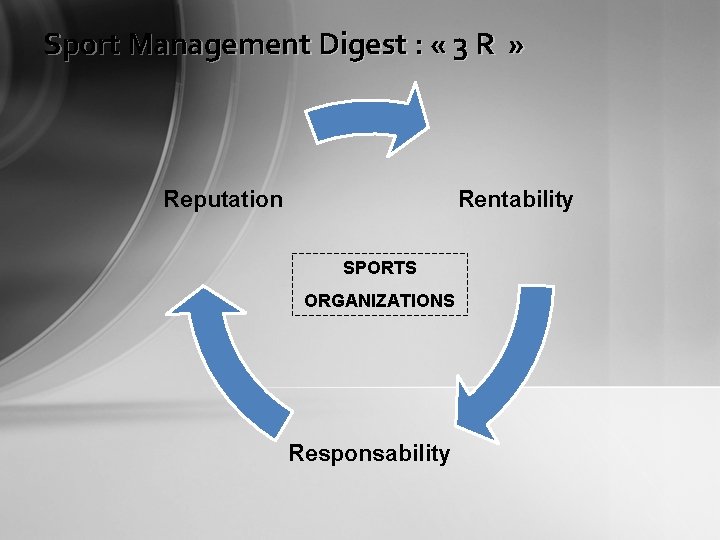
Sport Management Digest : « 3 R » Reputation Rentability SPORTS ORGANIZATIONS Responsability
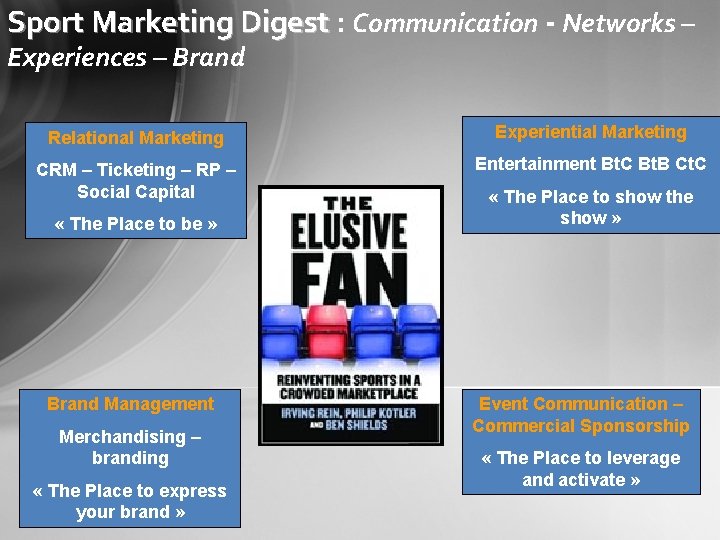
Sport Marketing Digest : Sport Marketing Digest Communication - Networks – Experiences – Brand Relational Marketing Experiential Marketing CRM – Ticketing – RP – Social Capital Entertainment Bt. C Bt. B Ct. C « The Place to be » Brand Management Merchandising – branding « The Place to express your brand » « The Place to show the show » Event Communication – Commercial Sponsorship « The Place to leverage and activate »
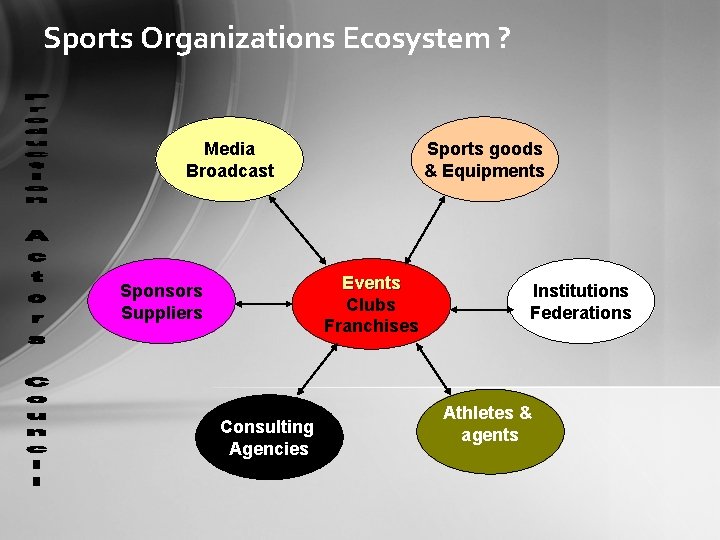
Sports Organizations Ecosystem ? Sports goods & Equipments Media Broadcast Events Clubs Franchises Sponsors Suppliers Consulting Agencies Institutions Federations Athletes & agents
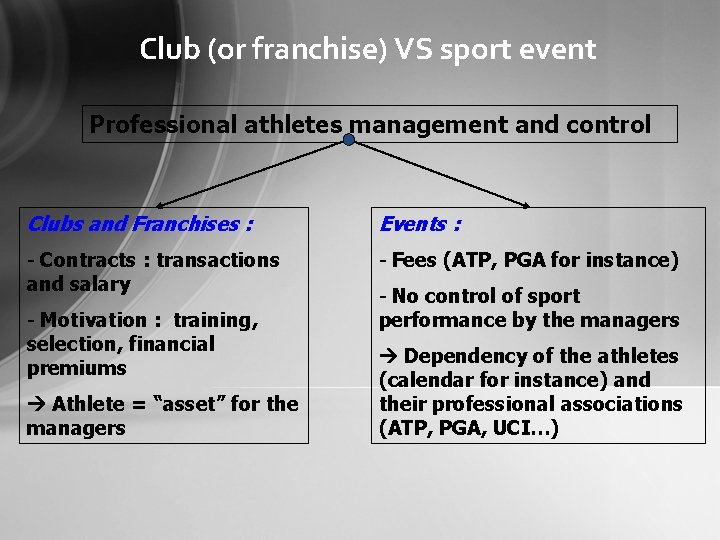
Club (or franchise) VS sport event Professional athletes management and control Clubs and Franchises : Events : - Contracts : transactions and salary - Fees (ATP, PGA for instance) - Motivation : training, selection, financial premiums Athlete = “asset” for the managers - No control of sport performance by the managers Dependency of the athletes (calendar for instance) and their professional associations (ATP, PGA, UCI…)
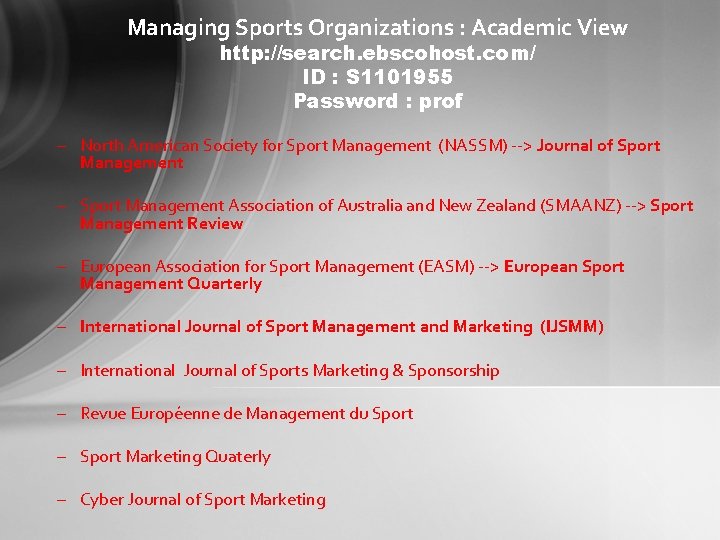
Managing Sports Organizations : Academic View http: //search. ebscohost. com/ ID : S 1101955 Password : prof – North American Society for Sport Management (NASSM) --> Journal of Sport Management – Sport Management Association of Australia and New Zealand (SMAANZ) --> Sport Management Review – European Association for Sport Management (EASM) --> European Sport Management Quarterly – International Journal of Sport Management and Marketing (IJSMM) – International Journal of Sports Marketing & Sponsorship – Revue Européenne de Management du Sport – Sport Marketing Quaterly – Cyber Journal of Sport Marketing
Main “goals” for this seminar ! « Sports organizations [professional Events & Clubs] = management “stake” ? « Proposition of a new Strategic Management and Business Model for these organizations ! « Understand & manage key factors of success (or failure) : sponsoring, public relations, reputation, physical (stadium) & local factors, managerial skills… « Develop your professional skills on : strategic analysis & formulate Sport Organizations Business Plan (Development Plan) : STRATEGIC PLANNER for sport organizations
Focus on “Event Concept” In sports context, “event” is everywhere : « National Championships (every week ! : NBA, MLB, NFL, NHL, LNF, Top 14, Premier League…) « National and International Competitions (JO, World Cups…) « One shot events (every year) : Roland Garros, Tour de France, ATP, PGA, Superbowl, Formula 1… exhibitions… …
For consumers : Entertainment & Event = “experiential service” Key questions Strategic Marketing : « How to show the show ? « How to sell, communicate, package this “experiential service” ? « Who are our consumers : B to B, B to C, C to C… : working on communities (fans : difficult for an event !) Strategy : « To perform and to develop sustainable performances on : sports measures, financial ratios, affluence – audience…

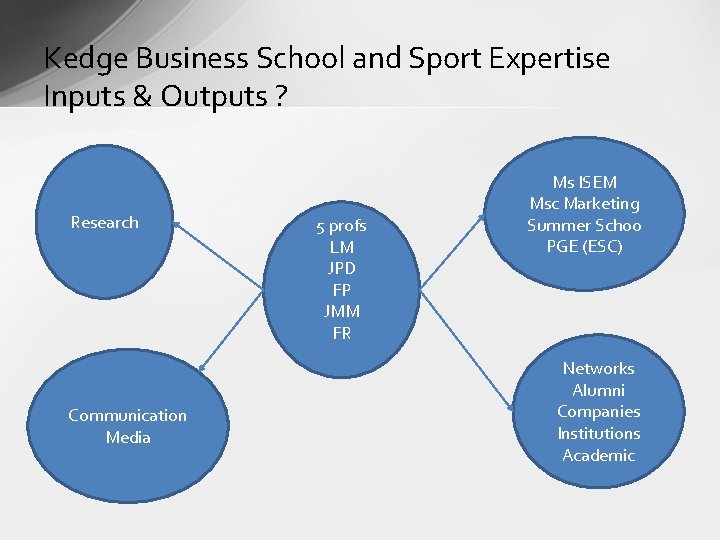
Kedge Business School and Sport Expertise Inputs & Outputs ? Research Communication Media 5 profs LM JPD FP JMM FR Ms ISEM Msc Marketing Summer Schoo PGE (ESC) Networks Alumni Companies Institutions Academic
But… we need definitions (Covell an al. , 2007) « Organization : « Any group of people working together to achieve a common pupose or goals thant could not be attained by individuals working separately » « Management : – The coordination of human, material, technological, and financial resources needed for the organization ti achieve its goals. – Responsibility for performance
But : what is performance for sports organizations ? • Performance indicators (Pis) give us an evaluation process that can provide objective and meaningful performance feedback to aid future decision making. • The methods of evaluation are both quantitative and qualitative but all the final results depend upon one or more manager’ interpretation • The key for sport organizations : your stakeholders analysis.
Sport organizations – performance and stakeholders • You can evaluate returns for : • Média • Athletes • Sponsors • Institutions • Spectators • Cities • Suppliers • Owner …. Various PIs for different objectives and muliple stakeholders…
Managing a club / event ? « Learning by Doing : “operational organization” Self Made Men : (Jean-Marie Leblanc, Jean-François Caujolle, Gilles Moretton…) without academic formation (tacit knowledge and not explicit : see Julien & Vincent presentation…) « Distinction between : – Operational activities : press, ticketing, sports aspects, technical (stage manager) direction, volunteers or vacations management… – Development (you !) : experts in : Marketing, Strategy, Finances, RH… THE FUTURE IN SPORTS ORGANIZATIONS (Jean-Michel Aulas, Jean-Claude Blanc, Patrice Clerc, Christian Prudhomme…) – The twice but without sleeping…
Event : definition « An organized occasion such as a meeting, convention, exhibition, special events, gala, dinner, etc. An event is often composed of several different yet related functions (Getz, 2005) « Principles applying to all events : – Temporary (project) – Unique combination of co-production factors (this aspect is, in fact, the “background” of my courses)
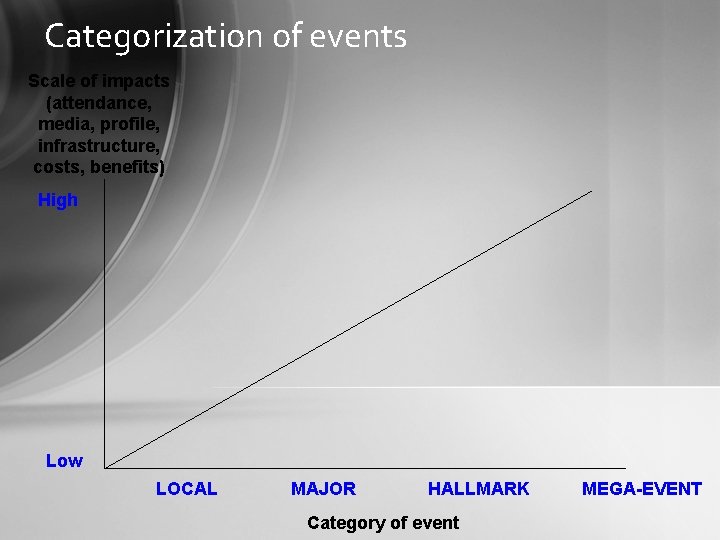
Categorization of events Scale of impacts (attendance, media, profile, infrastructure, costs, benefits) High Low LOCAL MAJOR HALLMARK Category of event MEGA-EVENT
Categorization of events «Local or community events : Local consumers (Beach events, Corrida, Snowboard & Surf contest, ATP International Series Tournaments, National Events…) «Major events : Media interest (coverage & benefits) and capability of attracting significant visitor numbers (Formula 1, Master Series ATP, PGA…)
Categorization of events « Hallmark events : identified with the spirit or ethos of a town, city or region (synonymous with the name of the place) & very traditional (Wimbledon is the best example, 24 H du Man, Paris Dakar, Masters Evian…) « Mega events : so large that they affect whole economics and reverberate in the global media (Olympic Games, FIFA World Cup, IAAF World Championships, Superbowl, March Madness, NBA, MLB, NHL Finals…)
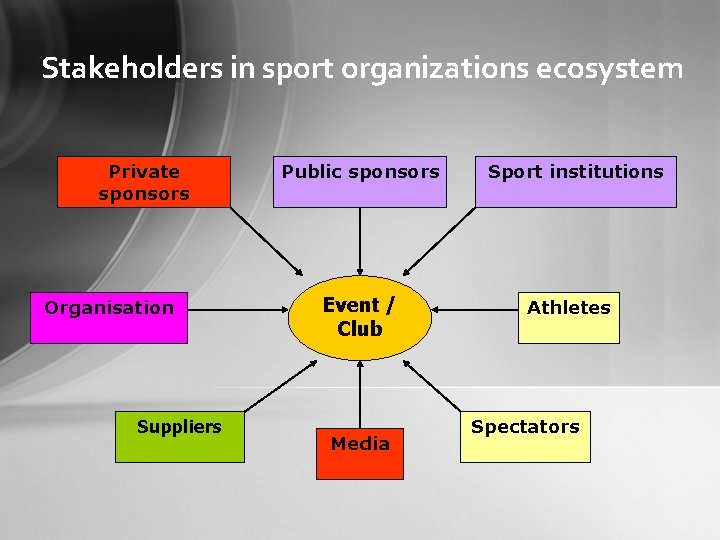
Stakeholders in sport organizations ecosystem Private sponsors Organisation Suppliers Public sponsors Event / Club Media Sport institutions Athletes Spectators
So sport organizations are in the “eye” of important actors “stakeholders” : Our strategic problematic is : How to control external environment (stakeholders) and how to be independent to perform, to develop and maintain ? Now before studying strategic analytic tools : What is Strategy ? What are the more “sensemaking” approaches to analyze a sports organizations and their stakeholders ?
Michael Porter : Competitive Advantage « Competitive strategy is "about being different. It means deliberately choosing a different set of activities to deliver a unique mix of value. " « Strategy is about competitive position, about differentiating yourself in the eyes of the customer, about adding value through a mix of activities different from those used by competitors. « His formal definition : "a combination of the ends (goals) for which the firm is striving and the means (policies) by which it is seeking to get there. "
Henry Mintzberg : 5 “P” « Plan, a "how, " a means of getting from here to there. « Ploy, really just a specific manoeuvre intended to outwit an opponent or competitor. « Pattern in actions over time ; for example, a company that regularly markets very expensive products is using a "high end" strategy. « Position; that is, it reflects decisions to offer particular products or services in particular markets. « Perspective, that is, vision and direction.
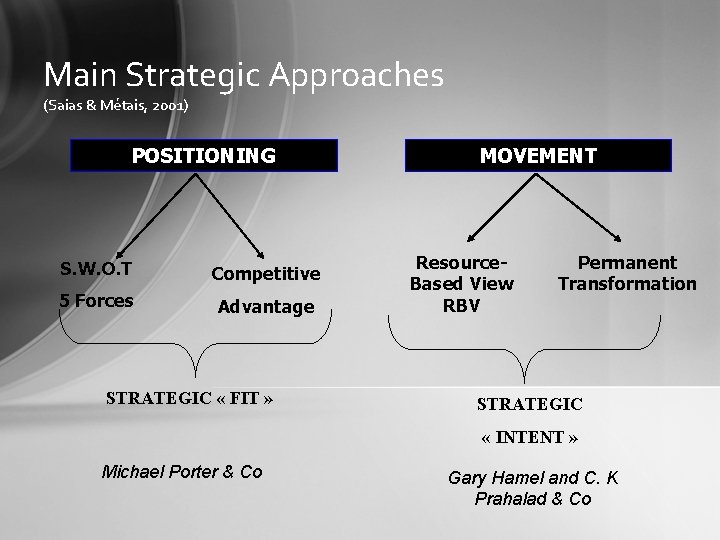
Main Strategic Approaches (Saias & Métais, 2001) POSITIONING S. W. O. T Competitive 5 Forces Advantage STRATEGIC « FIT » MOVEMENT Resource. Based View RBV Permanent Transformation STRATEGIC « INTENT » Michael Porter & Co Gary Hamel and C. K Prahalad & Co
FIT What business are we in ? « S-C-P : Structure Conduct Performance – The structure of the industry will dictate the conduct of firms and thereby their performance (most popular : SWOT or “five-forces” model (Porter, 1979)). « The big illustration is the 5 Forces Model (Porter, 1979).
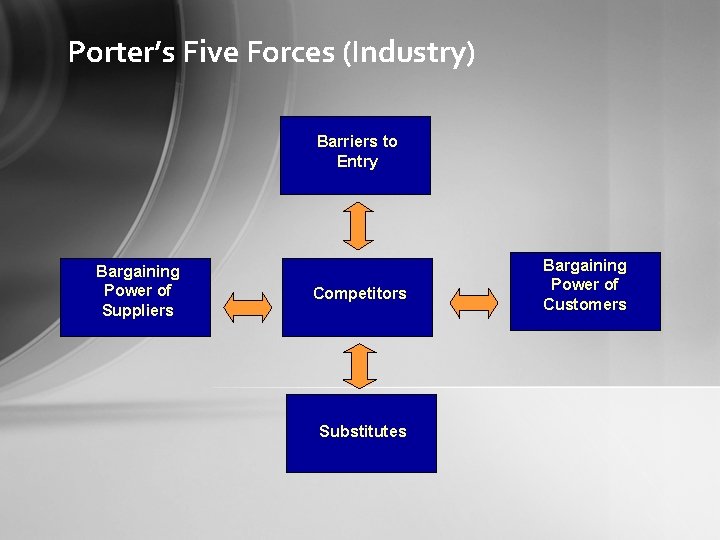
Porter’s Five Forces (Industry) Barriers to Entry Bargaining Power of Suppliers Competitors Substitutes Bargaining Power of Customers
Porter’s Five Forces (Industry) « The bargaining power of customers : – Buyer concentration, volume, relative costs, information availability, price sensitivity… « The bargaining power of suppliers : – Relative costs, supplier concentration, threat of forward integration, cost of inputs relative to selling price of the product
Porter’s Five Forces (Industry) « The threat of new entrants : – Existence of barriers to entry, brand equity, switching costs and absolute cost advantage, access to distribution, learning experience… « The threat of substitute products (services) : – Relative price performance of substitutes, buyer switching costs, perceived level of product differentiation « The intensity of competitive rivalry : – Number of competitors and diversity, rate of industry growth, exit barriers, brand equity, level of advertising expense, informational complexity and asymmetry…
INTENT What are we able to make with what we have ? « RBV (Resource-Based-View, Wernerfelt, 1984, Barney, 1991, Grant, 1991) : certain assets (resources and capabilities) with certain characteristics will lead to sustainable competitive advantage. « Strategy dictated by unique resources and capabilities of the firm (what can the firm do best? )
Concepts definitions « Resources : stocks of available factors that are owned or controlled by the firm (Amit and Schoemaker, 1993) « Capabilities : a firm’s capacity to deploy resources, usually in combination, using organizational processes, to effect a desired end” (Amit and Schoemaker, 1993) « Dynamic capabilities : capacity of the organization to renew competences to be in line with the changing business environment (Teece and al. , 1997). « Asset = resource + capability
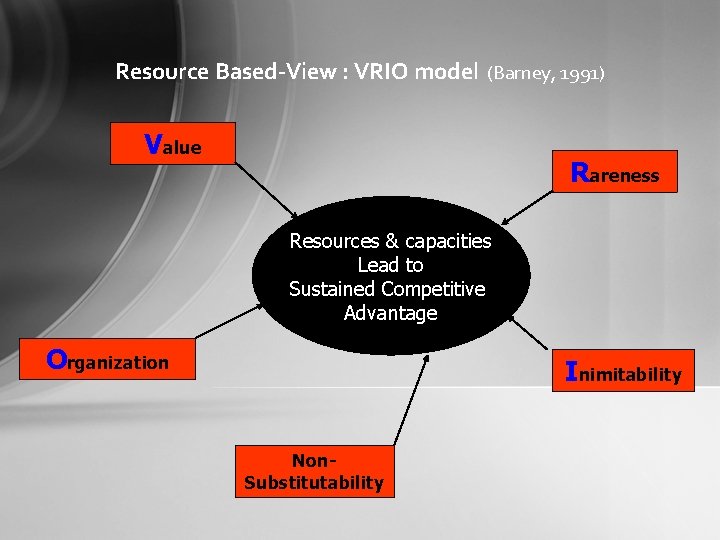
Resource Based-View : VRIO model (Barney, 1991) Value Rareness Resources & capacities Lead to Sustained Competitive Advantage Organization Inimitability Non. Substitutability
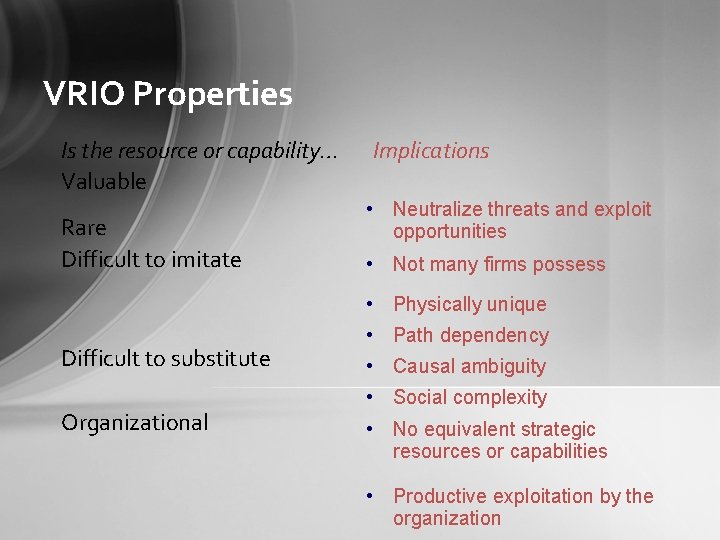
VRIO Properties Is the resource or capability… Valuable Rare Difficult to imitate Implications • Neutralize threats and exploit opportunities • Not many firms possess • Physically unique Difficult to substitute Organizational • Path dependency • Causal ambiguity • Social complexity • No equivalent strategic resources or capabilities • Productive exploitation by the organization
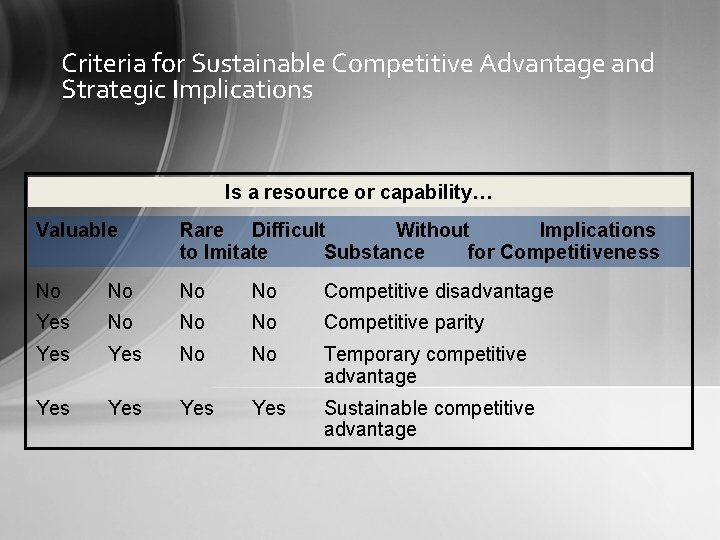
Criteria for Sustainable Competitive Advantage and Strategic Implications Is a resource or capability… Valuable Rare Difficult Without Implications to Imitate Substance for Competitiveness No No Competitive disadvantage Yes No No No Competitive parity Yes No No Temporary competitive advantage Yes Yes Sustainable competitive advantage
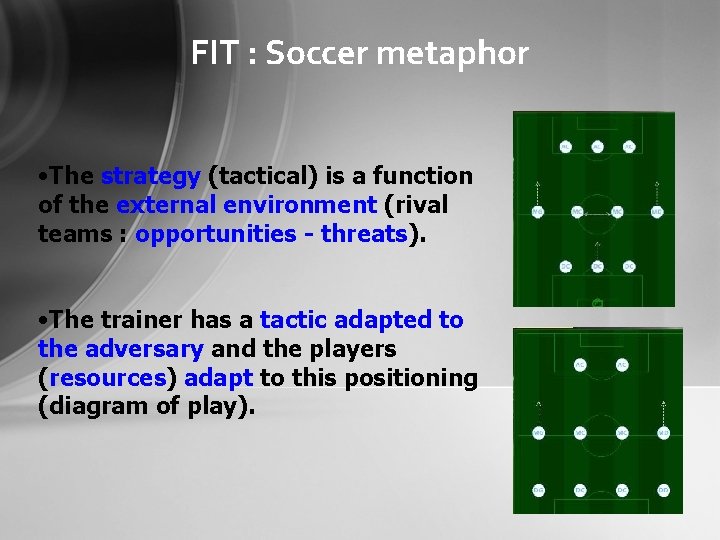
FIT : Soccer metaphor • The strategy (tactical) is a function of the external environment (rival teams : opportunities - threats). • The trainer has a tactic adapted to the adversary and the players (resources) adapt to this positioning (diagram of play).
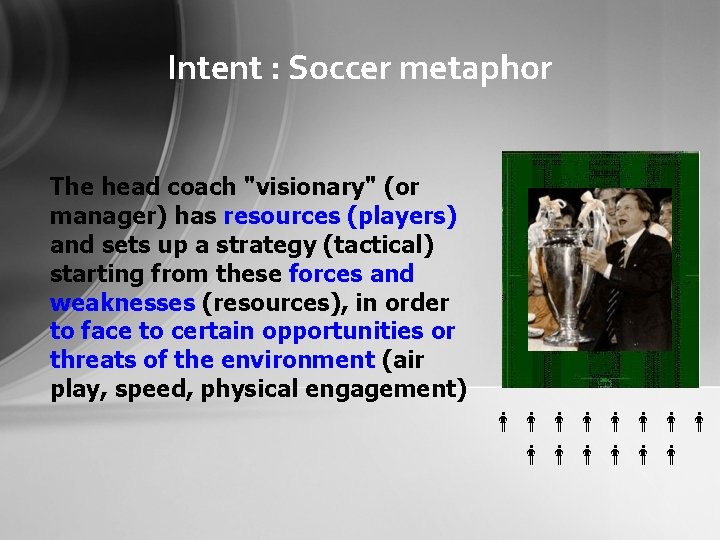
Intent : Soccer metaphor The head coach "visionary" (or manager) has resources (players) and sets up a strategy (tactical) starting from these forces and weaknesses (resources), in order to face to certain opportunities or threats of the environment (air play, speed, physical engagement)
So What ? « How can we “implement” that ? It’s very theoretical ! « Your and my job : to be able to construct a business plan (development) with a “specific RBV analysis” (your “sensemaking background”), and furthermore : – Persuade and control our stakeholders – Maintain our performance – To be “ready” for new opportunities and threats because of very instable sports environment… Managing resources & capabilities = core competency of a “modern” CEO in sport organizations (Jean-Claude Blanc…and you !)
Categorizing resources « Barney (1991) : 3 – Physical capital : technology, plants, equipment, geographical localization… – Human capital : formation, experience, networks - relationships… – Organizational capital : formal structure, control, routines, process, coordination systems… – « Grant (1991) : 6 – financial, physical, human, technological, organizational, reputation. « Wernerfelt (1989) : 3 – Fixed assets : plants, equipment… – “Blueprints” : patent, brand, reputation – Teamwork “effects” : routines, habits, experience…
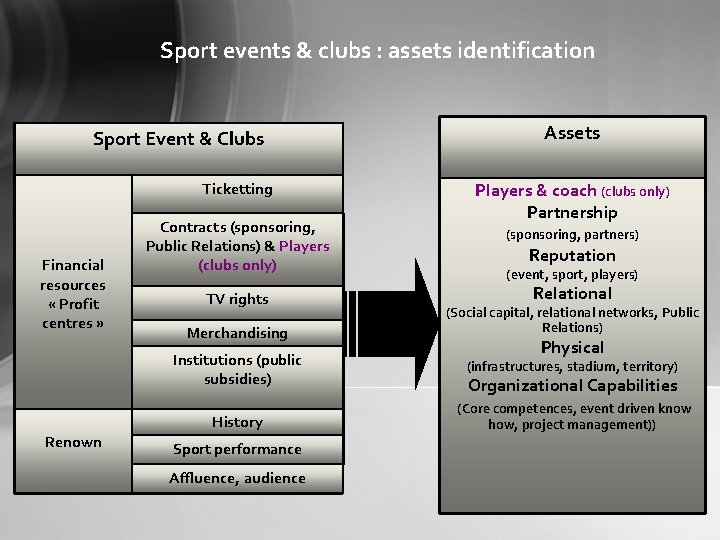
Sport events & clubs : assets identification Sport Event & Clubs Ticketting Financial resources « Profit centres » Contracts (sponsoring, Public Relations) & Players (clubs only) TV rights Merchandising Institutions (public subsidies) Renown History Sport performance Affluence, audience Assets Players & coach (clubs only) Partnership (sponsoring, partners) Reputation (event, sport, players) Relational (Social capital, relational networks, Public Relations) Physical (infrastructures, stadium, territory) Organizational Capabilities (Core competences, event driven know how, project management))
Partnership (sponsorship) resources • Sponsoring : brand image, image transfer, notoriety, visibility, target specificity, TV… – Examples : BNP Paribas, Louis Vuitton, Rollex, Peugeot, Indesit, Adidas, Nike, Fedex, Coca-Cola, Philips, Renault, Mercedes… • Leverage and activate ! $ = Commercial Sponsorship Contracts
Relational Resources • Event Manager’s Social Capital (Christian Bîmes & Jean-Claude Blanc, Patrice Clerc & Jean-Marie Leblanc …) • Relational and business networks ! $ = Public Relations
Reputational Resources • Event legend and history : JO, America’s Cup, Le Tour de France, Roland Garros, Wimbledon… • Corporate Reputation : FFT, Amaury, IMG, Octagon… $ = Media Rights & commercial brands
Physical (territorial) Resources • Stadium : Wimbledon, Roland Garros, Madison Quare Garden… • Territory : Tour de France, F 1, Rally & Tennis (Monte Carlo), 24 H du Man, Stade Toulousain, Pau-Orthez, Derby de la Meije… • Infrastructures : training camps and conditions… $ = Ticketing and merchandising
Dynamic Capabilities and Organization • Dynamic Capabilities : “processes to integrate, reconfigure, gain and release resources – to match and even create market change” – Examples : Stade Français (Rugby) with Max Guazzini or Roland Garros Brand co-branding (Adidas, Peugeot, Lancel…) • Organizational capabilities : Project Management – Most “organizational event” : Tour de France !
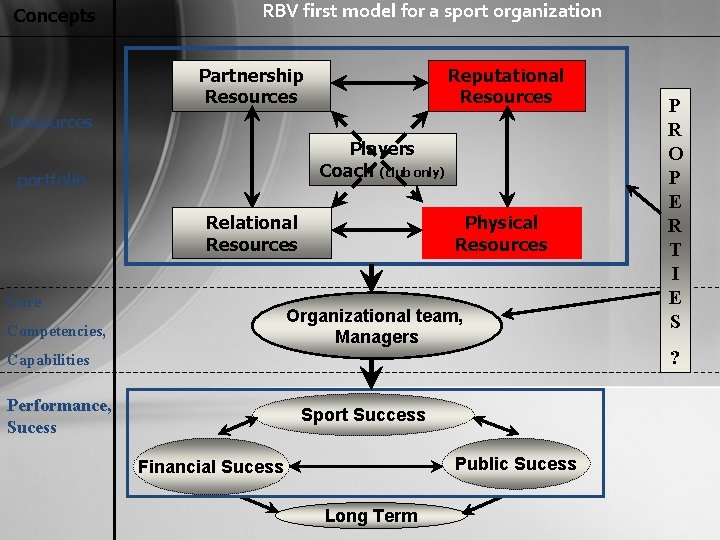
Concepts RBV first model for a sport organization Partnership Resources Reputational Resources Players Coach (club only) portfolio Relational Resources Core Physical Resources Organizational team, Managers Competencies, Capabilities Performance, Sucess Sport Success Public Sucess Financial Sucess Long Term P R O P E R T I E S ?
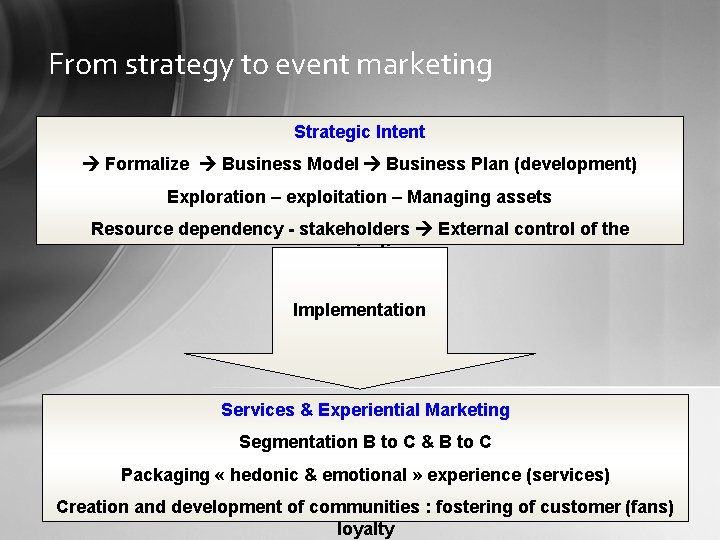
From strategy to event marketing Strategic Intent Formalize Business Model Business Plan (development) Exploration – exploitation – Managing assets Resource dependency - stakeholders External control of the organization Implementation Services & Experiential Marketing Segmentation B to C & B to C Packaging « hedonic & emotional » experience (services) Creation and development of communities : fostering of customer (fans) loyalty
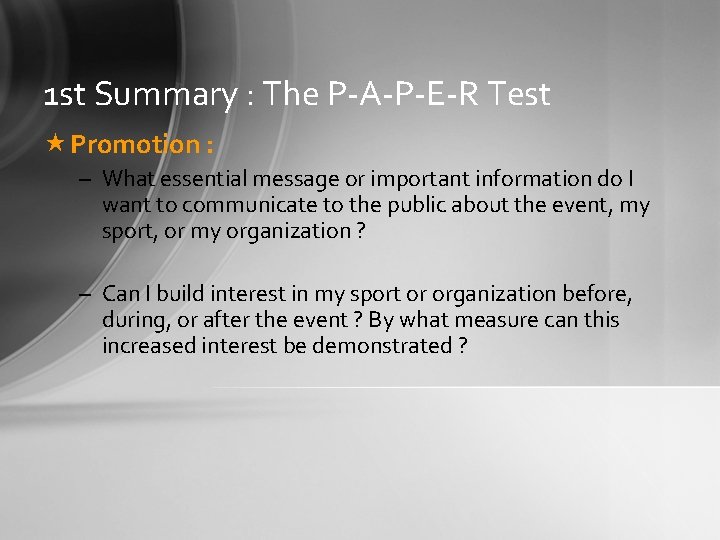
1 st Summary : The P-A-P-E-R Test « Promotion : – What essential message or important information do I want to communicate to the public about the event, my sport, or my organization ? – Can I build interest in my sport or organization before, during, or after the event ? By what measure can this increased interest be demonstrated ?
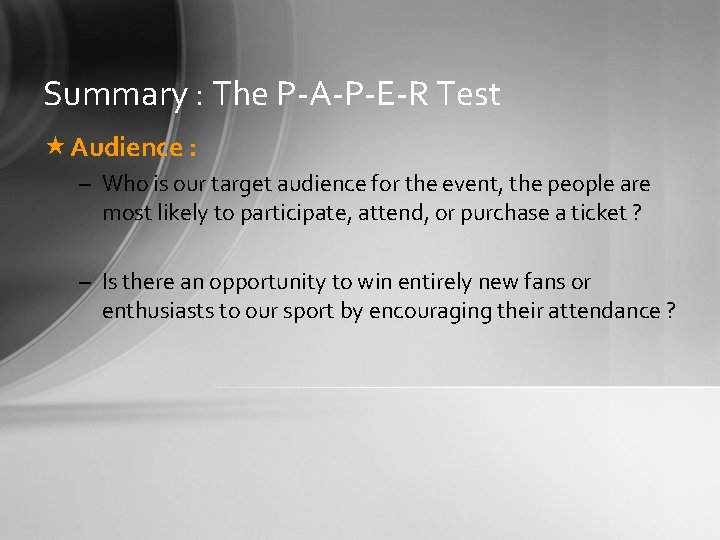
Summary : The P-A-P-E-R Test « Audience : – Who is our target audience for the event, the people are most likely to participate, attend, or purchase a ticket ? – Is there an opportunity to win entirely new fans or enthusiasts to our sport by encouraging their attendance ?
Summary : The P-A-P-E-R Test « Partnerships : – Can we use the event to develop, maintain, or strengthen relationships with our organization’s partners and supporters (e. g. , our fans, athletes, members, donors, sponsors, community leaders, local government) ? – What kind of experience do we want to leave our athletes ad other partners with ? How do we want them to feel before, during, and after the event ?
Summary : The P-A-P-E-R Test « Environment : – What do we need to communicate about the positive attributes of our sports event that sets it apart from other leisure activities similarly competing for the public’s, or a potential sponsor’s, attention ? – Do we need to address a perceived time or inconvenience that attendees, participants, or partners may encounter when deciding to attend ? – Do we need to address a preconceived notion about our sport, or organization, that makes it more difficult to generate attendance or participation ?
Summary : The P-A-P-E-R Test « Revenue : – How much revenue do we need to generate for the event and/or for the organization ? – Do we want or need to generate revenues in excess of expenses ? Is this potential profit essential to growing the event in the future ? – How much money can we invest beyond expected revenues to achieve our objectives ?
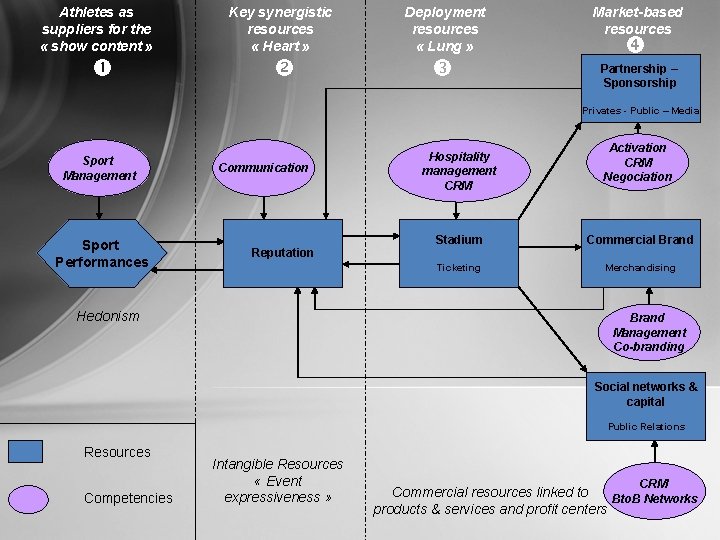
Athletes as suppliers for the « show content » Key synergistic resources « Heart » Deployment resources « Lung » Market-based resources Partnership – Sponsorship Privates - Public – Media Sport Management Sport Performances Communication Reputation Hedonism Hospitality management CRM Activation CRM Negociation Stadium Commercial Brand Ticketing Merchandising Brand Management Co-branding Social networks & capital Public Relations Resources Competencies Intangible Resources « Event expressiveness » CRM Commercial resources linked to Bto. B Networks products & services and profit centers
- Slides: 67