
Lecture 1 INTRODUCTION TO REMOTE SENSING DEPARTMENT OF

- Slides: 17
Lecture # 1 INTRODUCTION TO REMOTE SENSING DEPARTMENT OF CITY AND REGIONAL PLANNING LAHORE COLLEGE FOR WOMEN UNIVERSITYLAHORE NOTES BY: SABA ISLAM
WHAT IS REMOTE SENSING? Remote sensing is the science of acquiring, processing and interpreting images that record the interaction between electro magnetic energy and matter. Remote sensing is the science and art of obtaining information about an object, area, or phenomena through the analysis of data acquired by a device that is not in contact with the object, area, or phenomena under investigation
REMOTE SENSING Remote sensing is the instrumentation, techniques and methods to observe the Earth’s surface at a distance and to interpret the images or numerical values obtained in order to acquire meaningful information of particular objects on Earth.
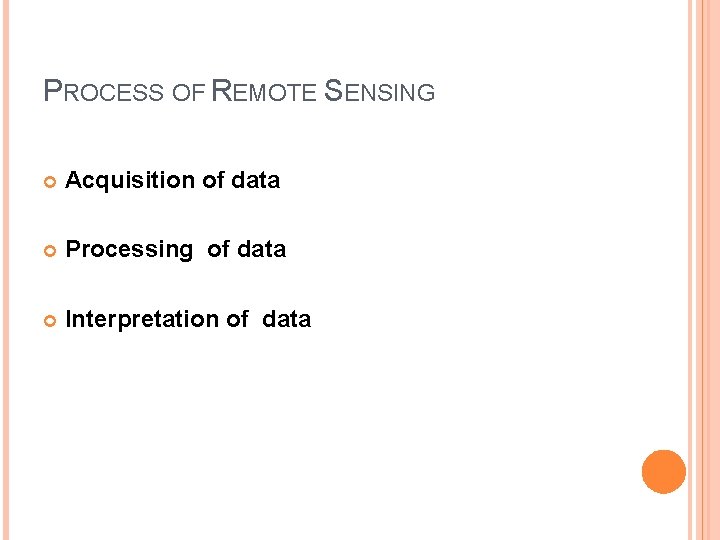
PROCESS OF REMOTE SENSING Acquisition of data Processing of data Interpretation of data
WHY DATA ACQUIRED Data are acquired to yield information for management purposes: Water management Land management Resource management
DATA VS INFORMATION By data we mean representations that can be operated upon by a computer By information we mean data that has been interpreted by human beings.
PURPOSE OF REMOTE SENSING Why those methods used to collect georeferenced, or geospatial data. i. e. • An agronomist is interested in forecasting the overall agricultural production of a large area. • An urban planner needs to identify areas in which dwellings have been built legally. • An engineer needs to determine the optimal configuration for siting of relay stations for a telecommunication Company • A mining engineer is asked to explore an area and to provide a map of the surface mineralogy. A climatologist would like to understand the causes of EL • Niño phenomenon. •
SPATIAL DATA ACQUISITION All GIS developers, one way or another, deal with georeferenced data. They might be involved in the collection of data, processing of data, analysis of data or actually using the data for decision making.
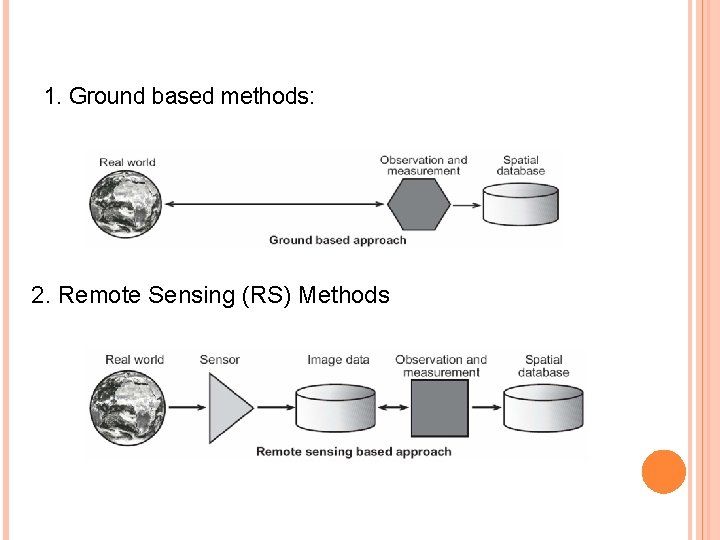
Categories of Spatial Data Acquisition In principle, there are two main categories of spatial data acquisition:
1. Ground based methods: 2. Remote Sensing (RS) Methods
REMOTE SENSING REQUIRES GROUND DATA Although RS data can be interpreted and processed without other information. How ever best results are obtained by linking RS measurements to ground (or surface) measurements and observations.
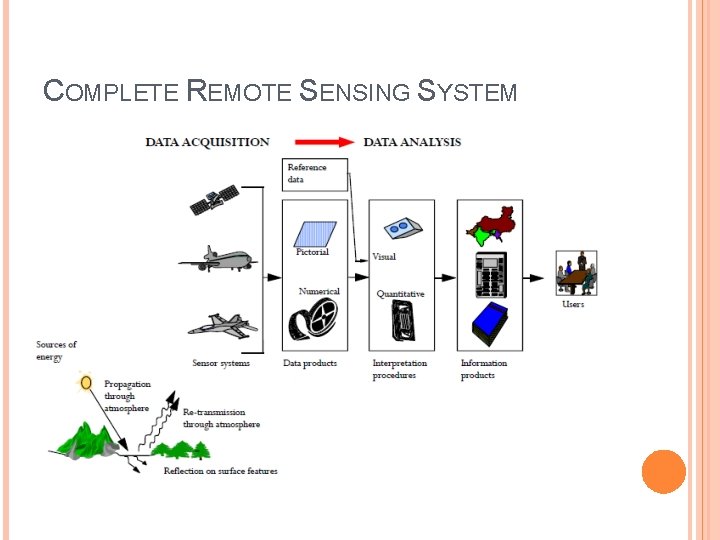
COMPLETE REMOTE SENSING SYSTEM
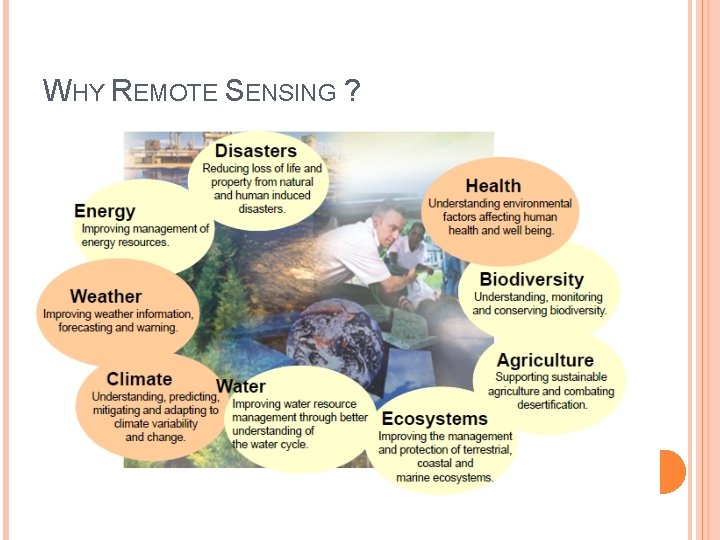
WHY REMOTE SENSING? To recognize macro-patterns which may not be visible from ground To gain an OVERVIEW of an area To gather information on large areas in short time To gather information cost-effectively To gather information on inaccessible places • To replace conventional sources of information (topo sheets, census data etc. )
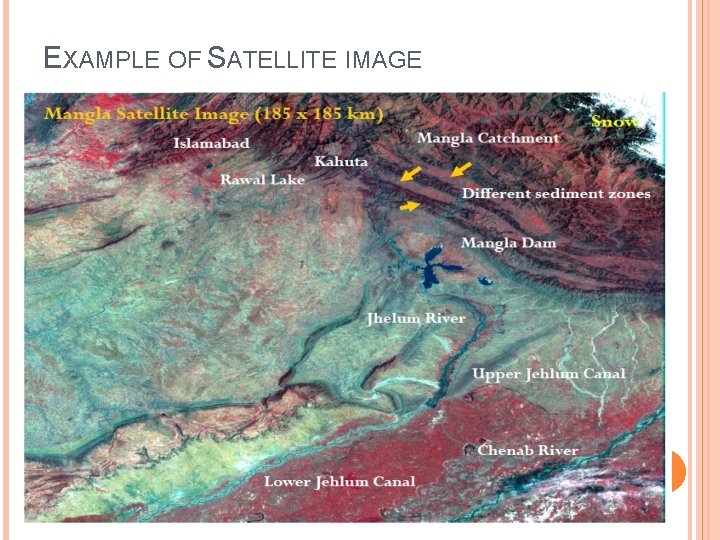
EXAMPLE OF SATELLITE IMAGE
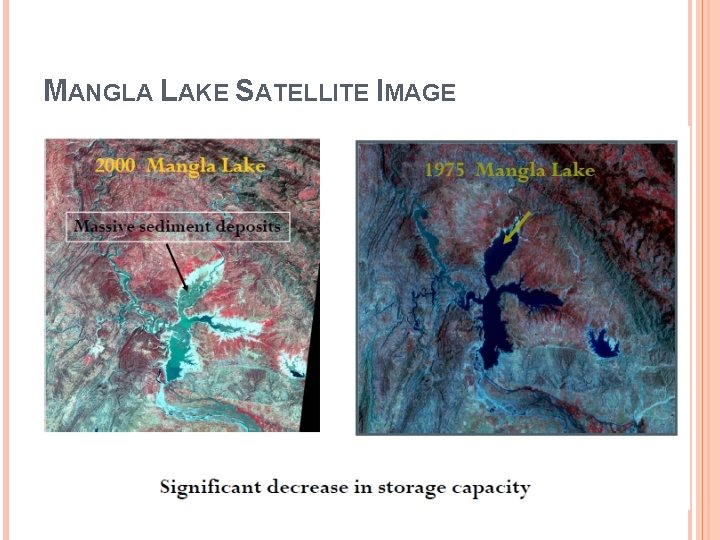
MANGLA LAKE SATELLITE IMAGE
WHY REMOTE SENSING ?
CLASS ACTIVITY Enlist different Applications of Remote Sensing in Town Planning