
Lecture 1 Introduction to Genetics and Cells Honors
- Slides: 13
Lecture #1: Introduction to Genetics and Cells Honors Genetics Ms. Day Copyright © 2009 Pearson Education, Inc.
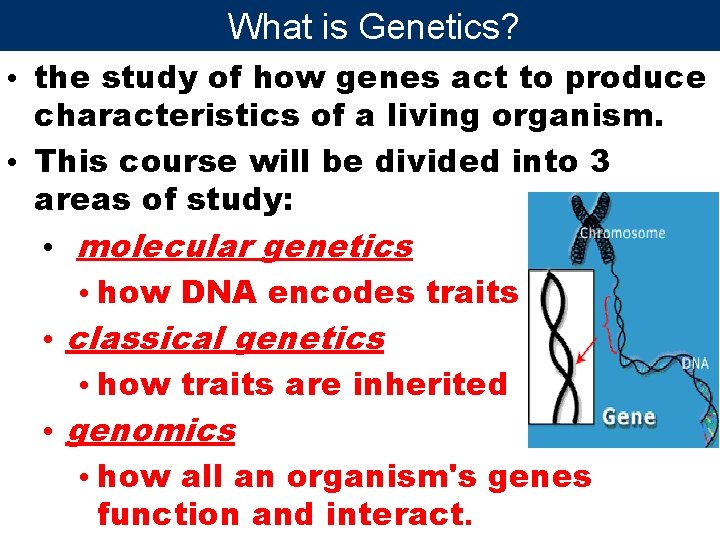
What is Genetics? • the study of how genes act to produce characteristics of a living organism. • This course will be divided into 3 areas of study: • molecular genetics • how DNA encodes traits • classical genetics • how traits are inherited • genomics • how all an organism's genes function and interact. Copyright © 2009 Pearson Education, Inc.
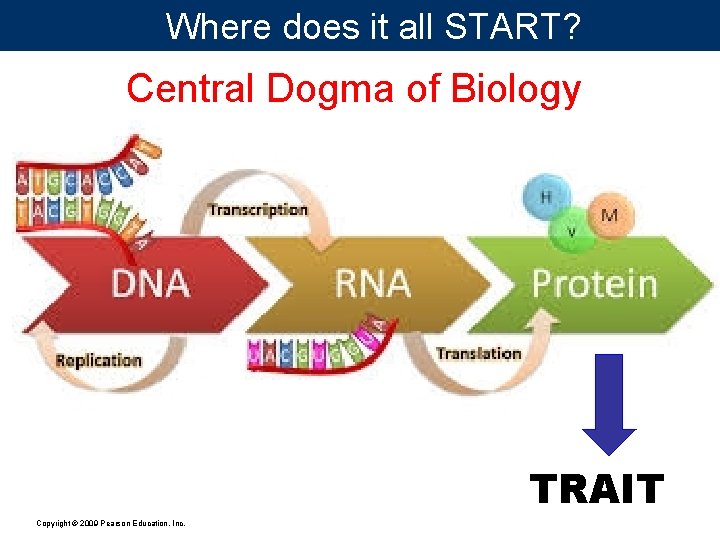
Where does it all START? Central Dogma of Biology TRAIT Copyright © 2009 Pearson Education, Inc.
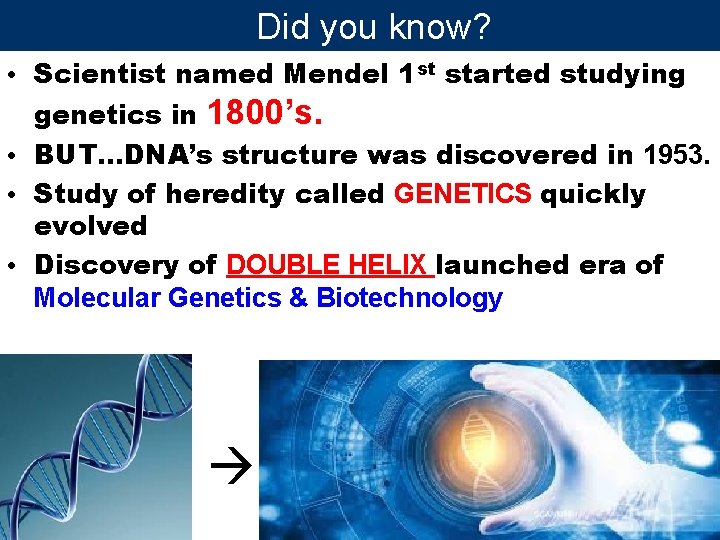
Did you know? • Scientist named Mendel 1 st started studying genetics in 1800’s. • BUT…DNA’s structure was discovered in 1953. • Study of heredity called GENETICS quickly evolved • Discovery of DOUBLE HELIX launched era of Molecular Genetics & Biotechnology Copyright © 2009 Pearson Education, Inc.
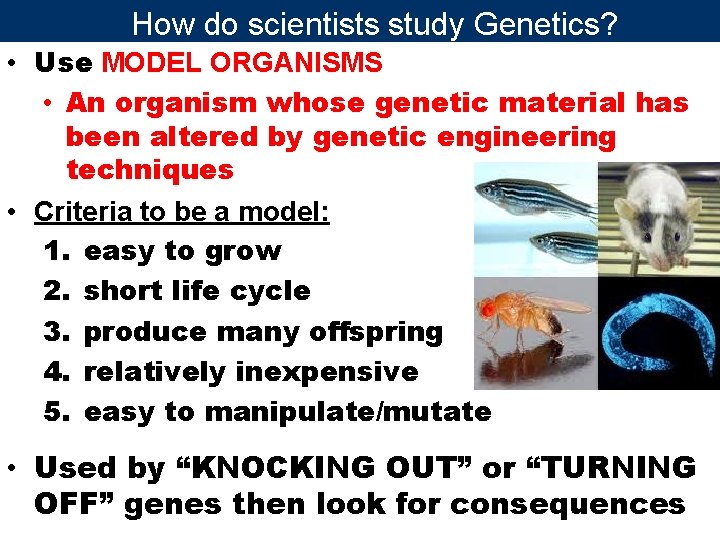
How do scientists study Genetics? • Use MODEL ORGANISMS • An organism whose genetic material has been altered by genetic engineering techniques • Criteria to be a model: 1. easy to grow 2. short life cycle 3. produce many offspring 4. relatively inexpensive 5. easy to manipulate/mutate • Used by “KNOCKING OUT” or “TURNING OFF” genes then look for consequences Copyright © 2009 Pearson Education, Inc.
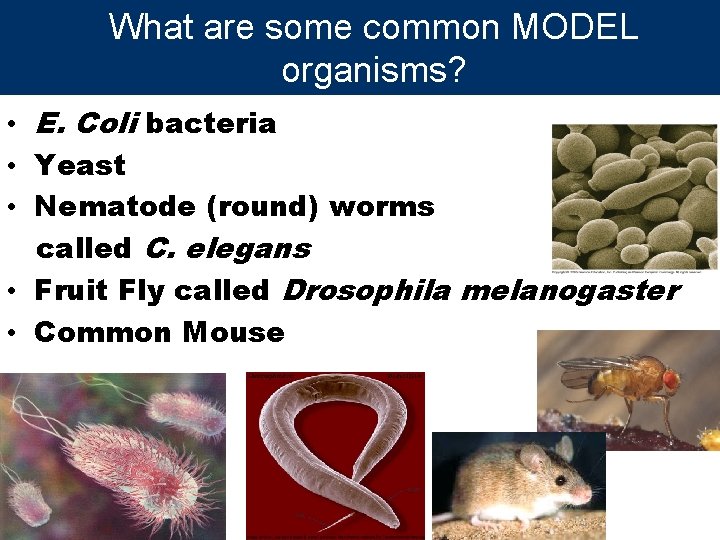
What are some common MODEL organisms? • E. Coli bacteria • Yeast • Nematode (round) worms called C. elegans • Fruit Fly called Drosophila melanogaster • Common Mouse Copyright © 2009 Pearson Education, Inc.
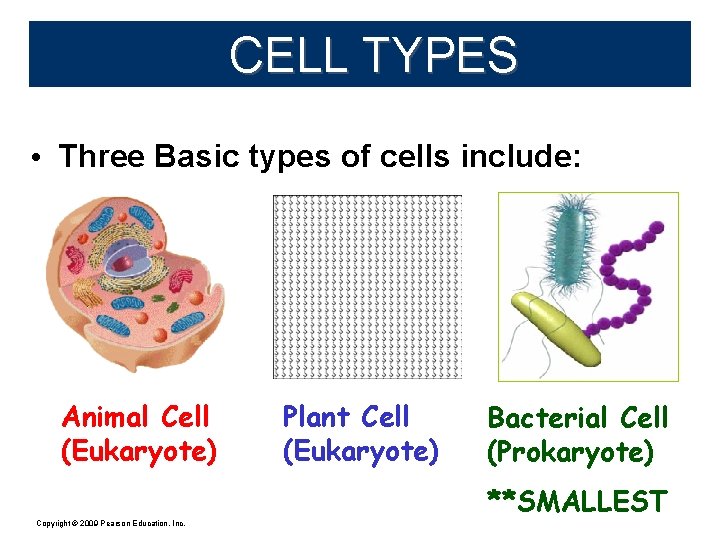
CELL TYPES • Three Basic types of cells include: Animal Cell (Eukaryote) Copyright © 2009 Pearson Education, Inc. Plant Cell (Eukaryote) Bacterial Cell (Prokaryote) **SMALLEST
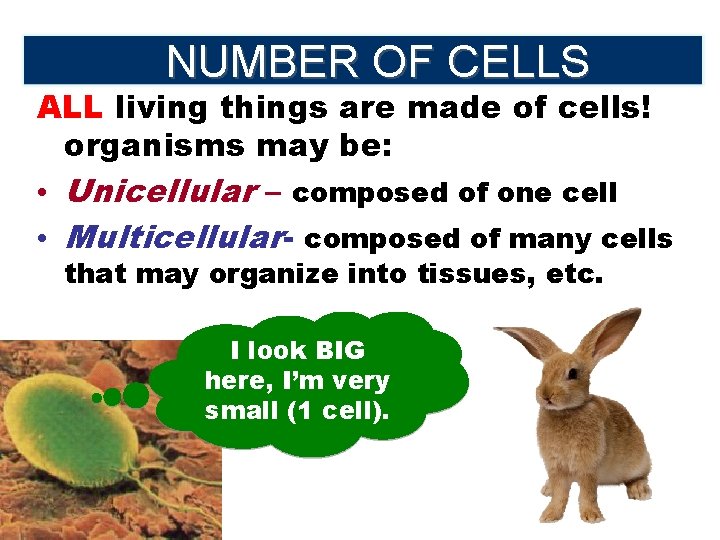
NUMBER OF CELLS ALL living things are made of cells! organisms may be: • Unicellular – composed of one cell • Multicellular- composed of many cells that may organize into tissues, etc. I look BIG here, I’m very small (1 cell). Copyright © 2009 Pearson Education, Inc.
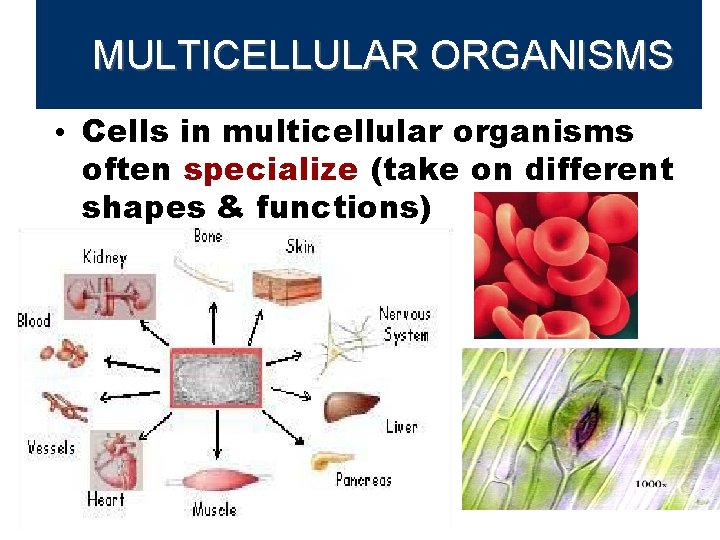
MULTICELLULAR ORGANISMS • Cells in multicellular organisms often specialize (take on different shapes & functions) Copyright © 2009 Pearson Education, Inc.
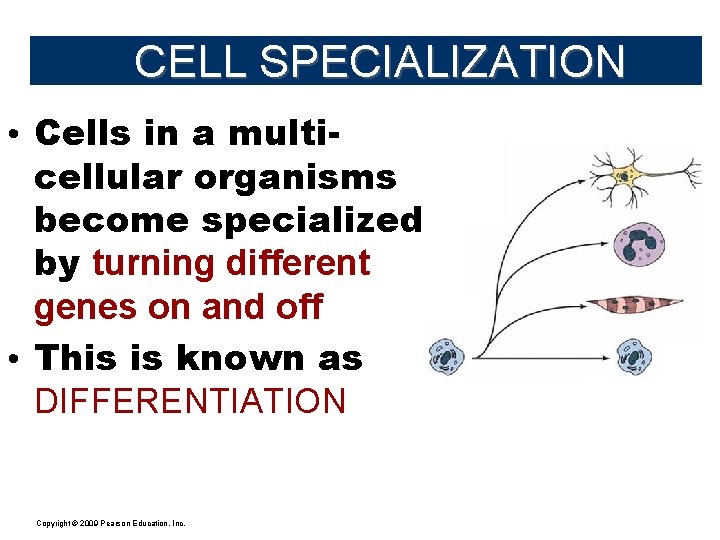
CELL SPECIALIZATION • Cells in a multicellular organisms become specialized by turning different genes on and off • This is known as DIFFERENTIATION Copyright © 2009 Pearson Education, Inc.
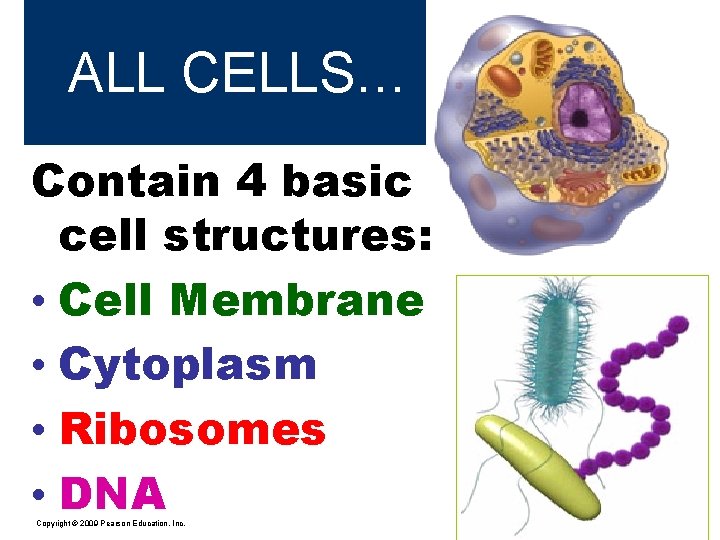
ALL CELLS… Contain 4 basic cell structures: • Cell Membrane • Cytoplasm • Ribosomes • DNA Copyright © 2009 Pearson Education, Inc.
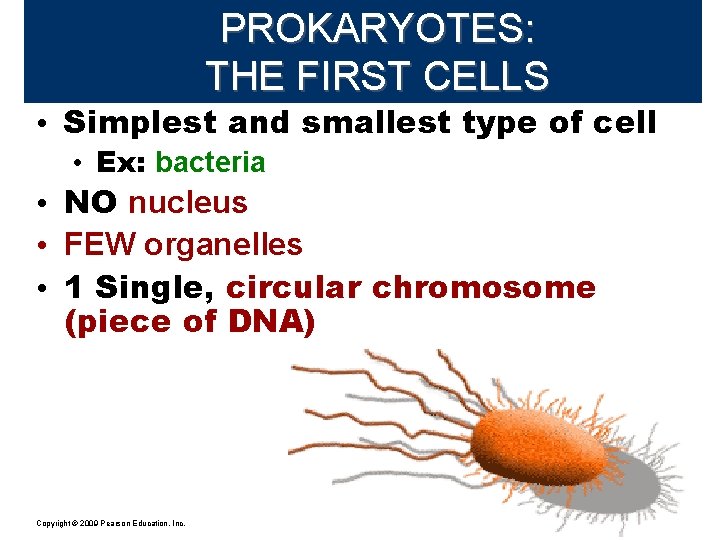
PROKARYOTES: THE FIRST CELLS • Simplest and smallest type of cell • Ex: bacteria • NO nucleus • FEW organelles • 1 Single, circular chromosome (piece of DNA) Copyright © 2009 Pearson Education, Inc.
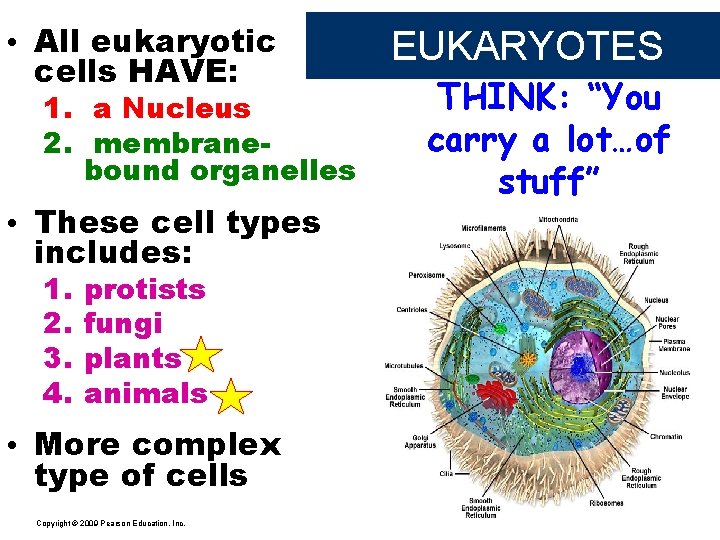
• All eukaryotic cells HAVE: 1. a Nucleus 2. membranebound organelles • These cell types includes: 1. 2. 3. 4. protists fungi plants animals • More complex type of cells Copyright © 2009 Pearson Education, Inc. EUKARYOTES THINK: “You carry a lot…of stuff”