
Lecture 1 Introduction to course Introduction to measurement

- Slides: 30
Lecture 1 • Introduction to course • Introduction to measurement
Pre-requisite (or co-requisite) • 606 • 607 • or permission of instructor
Format • Lectures • Guest lectures • Small group discussions/presentations – group and room assignments to be posted on web-page • Information on web-page – Detailed schedule on web-page – Course objectives on web-page
Web-page • • Detailed schedule Course objectives Lectures Small group exercises – guidelines – group assignments • Assignments • Other?
Readings • Course packs: – 1) required readings – 2 additional readings – more to come! • Available at Copies Nova – (corner of Sherbrook and Peel)
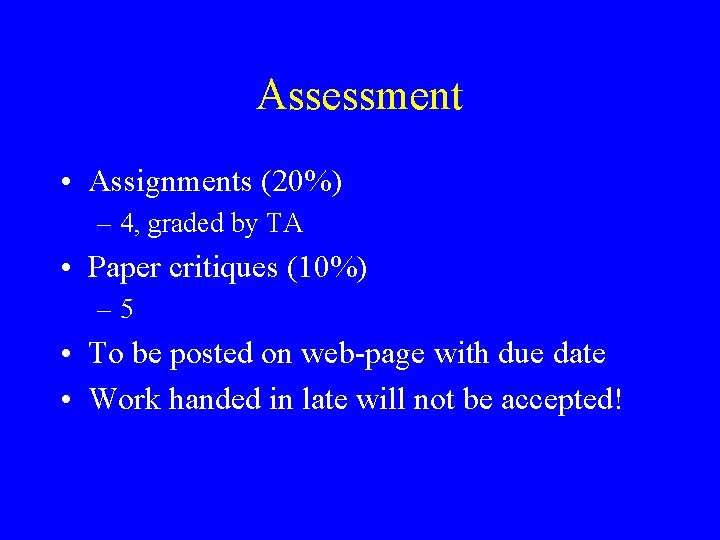
Assessment • Assignments (20%) – 4, graded by TA • Paper critiques (10%) – 5 • To be posted on web-page with due date • Work handed in late will not be accepted!
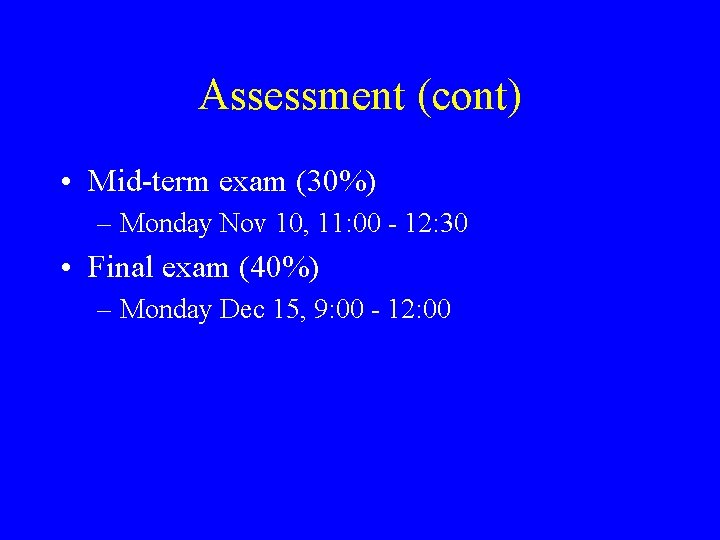
Assessment (cont) • Mid-term exam (30%) – Monday Nov 10, 11: 00 - 12: 30 • Final exam (40%) – Monday Dec 15, 9: 00 - 12: 00
Introduction to measurement • • • Purposes of measurement Types and sources of data Types of variables Questionnaires Types of scale
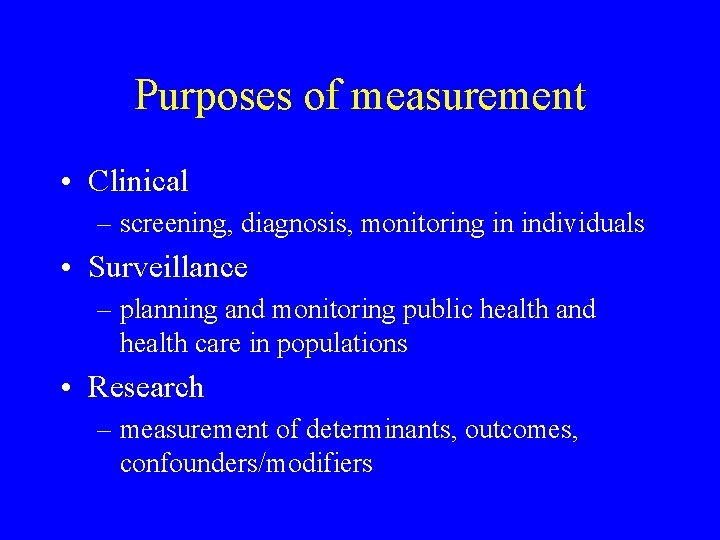
Purposes of measurement • Clinical – screening, diagnosis, monitoring in individuals • Surveillance – planning and monitoring public health and health care in populations • Research – measurement of determinants, outcomes, confounders/modifiers
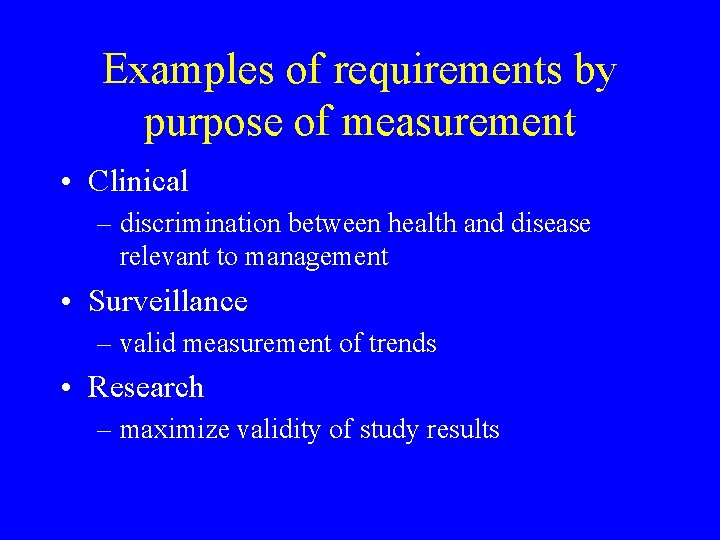
Examples of requirements by purpose of measurement • Clinical – discrimination between health and disease relevant to management • Surveillance – valid measurement of trends • Research – maximize validity of study results
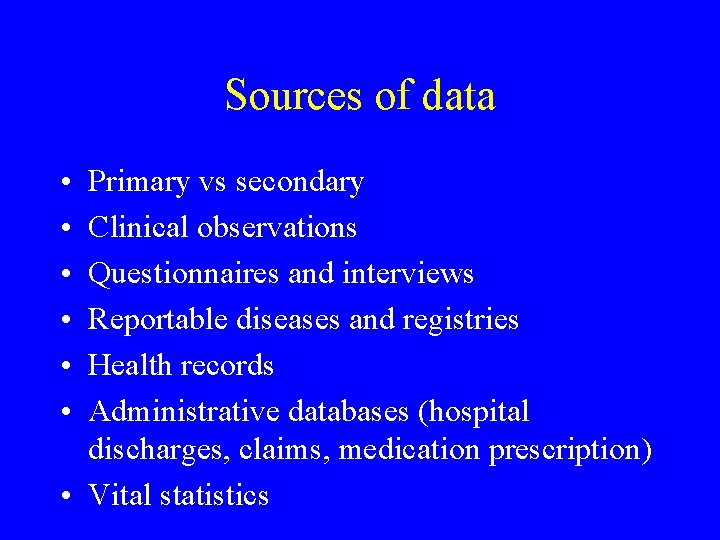
Sources of data • • • Primary vs secondary Clinical observations Questionnaires and interviews Reportable diseases and registries Health records Administrative databases (hospital discharges, claims, medication prescription) • Vital statistics
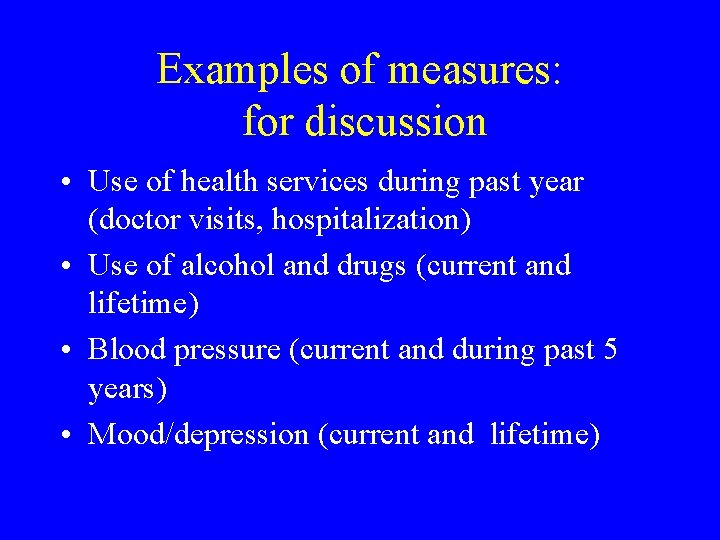
Examples of measures: for discussion • Use of health services during past year (doctor visits, hospitalization) • Use of alcohol and drugs (current and lifetime) • Blood pressure (current and during past 5 years) • Mood/depression (current and lifetime)
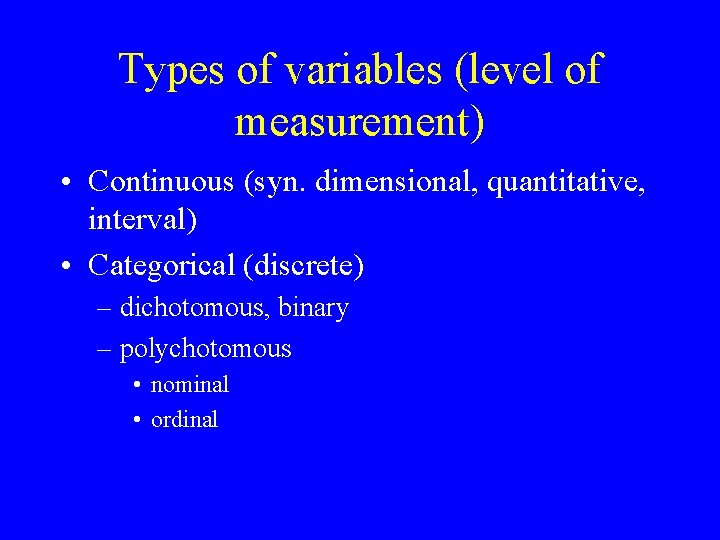
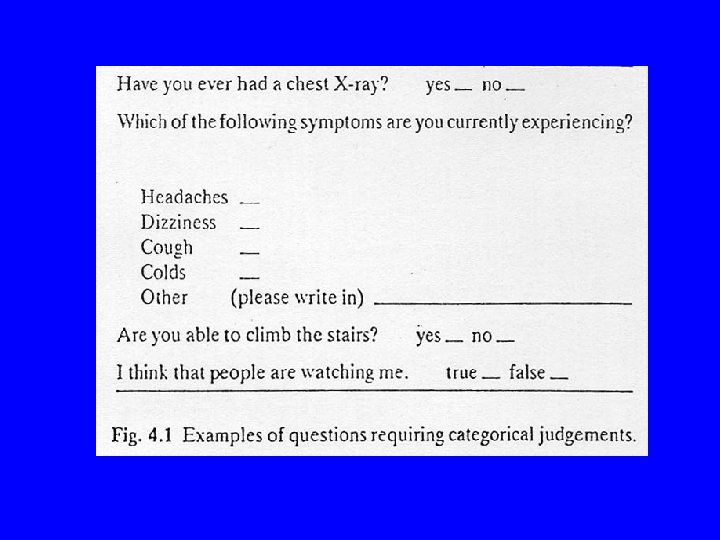
Types of variables (level of measurement) • Continuous (syn. dimensional, quantitative, interval) • Categorical (discrete) – dichotomous, binary – polychotomous • nominal • ordinal
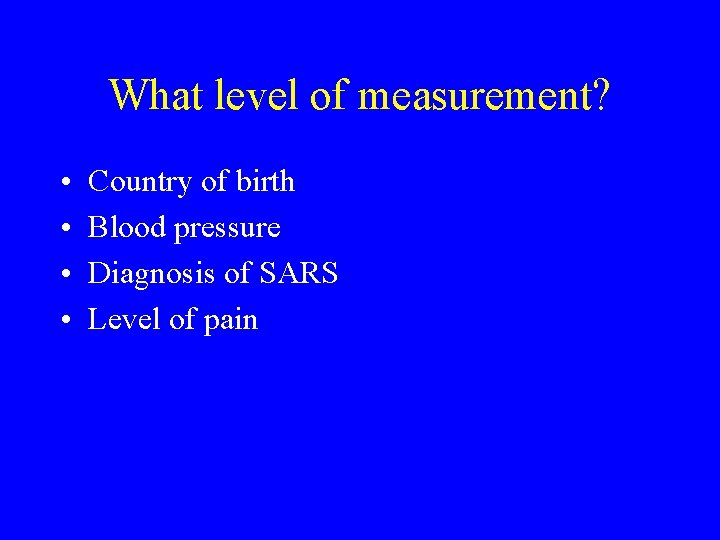
What level of measurement? • • Country of birth Blood pressure Diagnosis of SARS Level of pain
Planning questionnaires • Open-ended or close-ended • Level of measurement • Choice of response scale
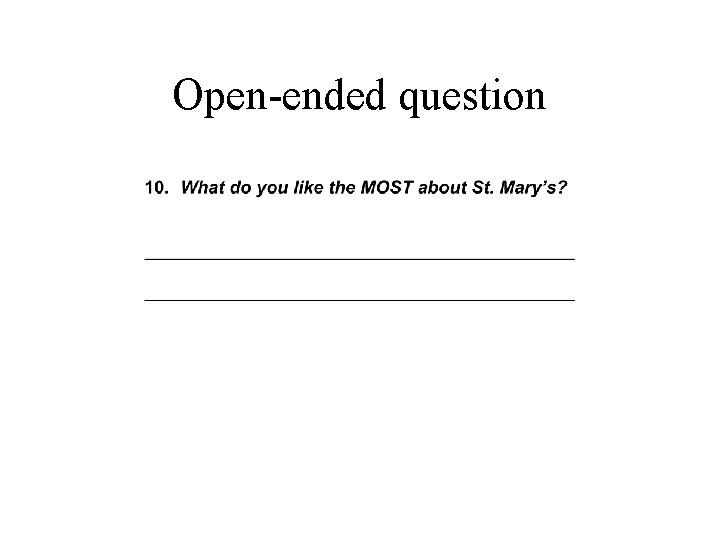
Open-ended question
Question wording: Open- vs close-ended questions • Close-ended questions – used most frequently – easier to analyze • Open-ended questions – useful in exploratory research – basis for developing more structured questions in later research – analysis more time-consuming, requires qualitative methods
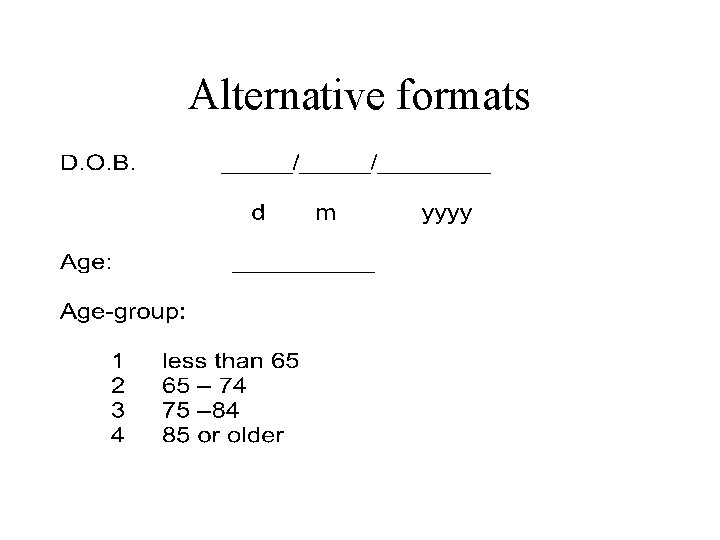
Alternative formats
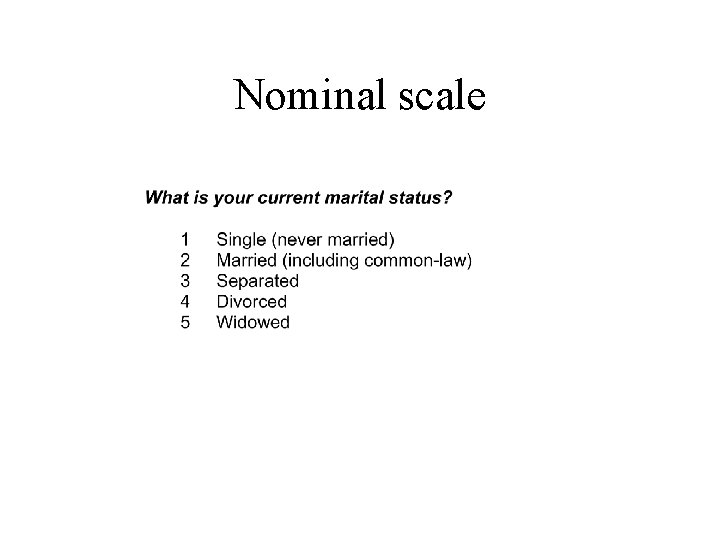
Nominal scale
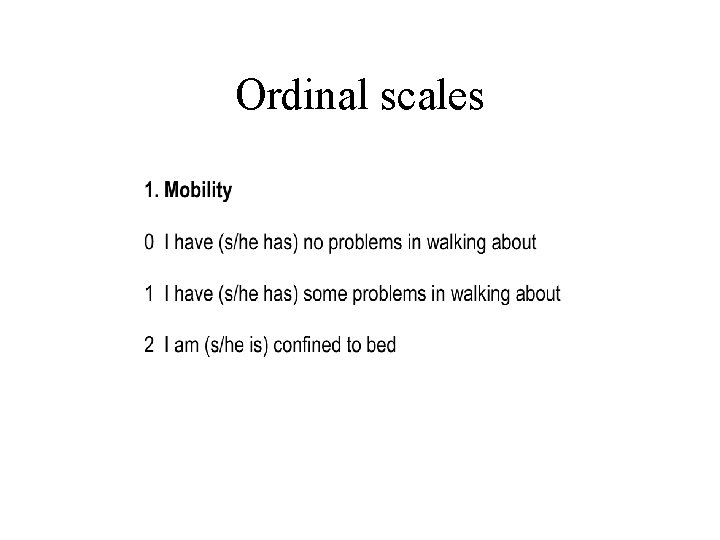
Ordinal scales
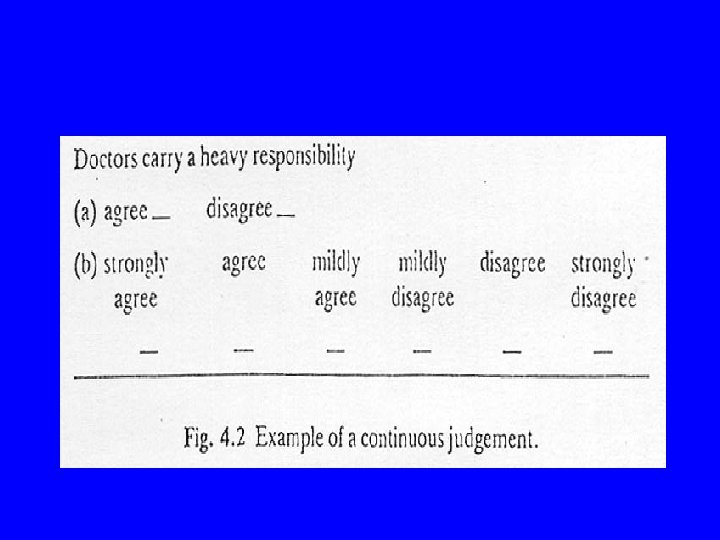
Disadvantages of categorical scales • Loss of information • Loss of precision
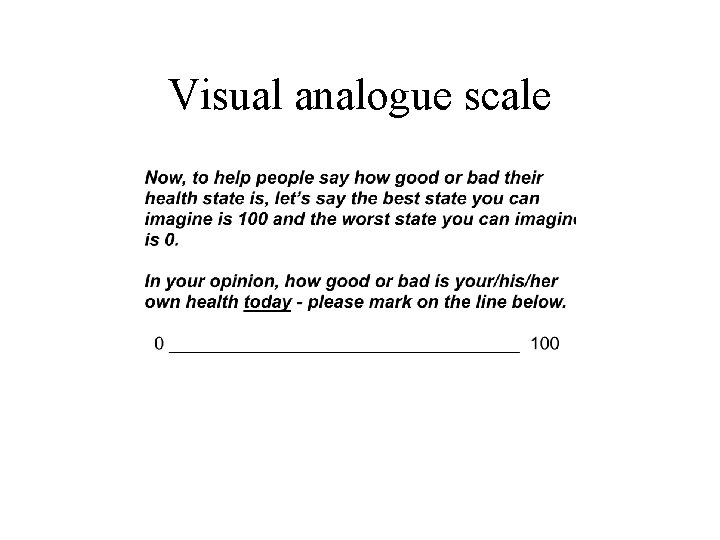
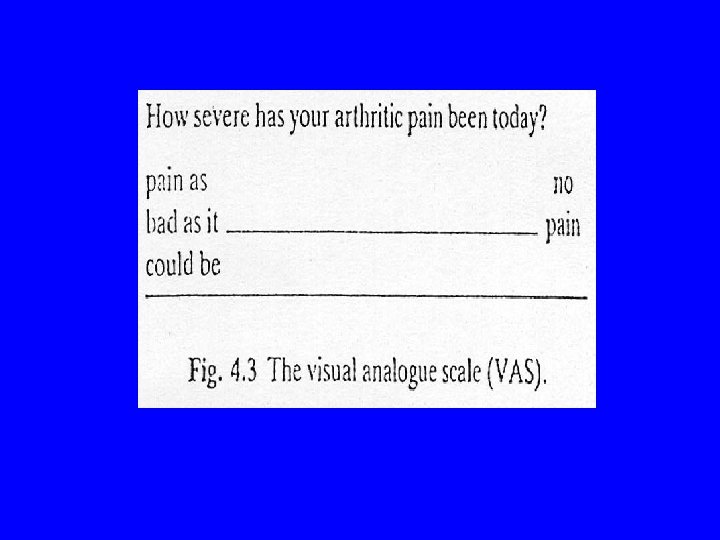
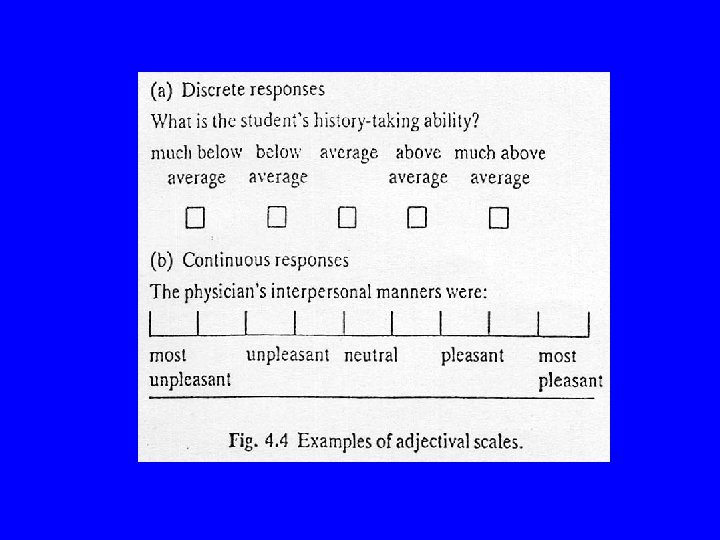
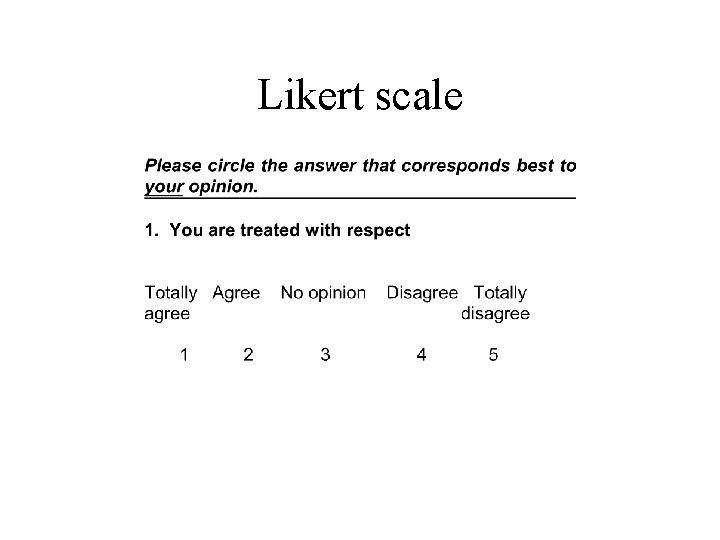
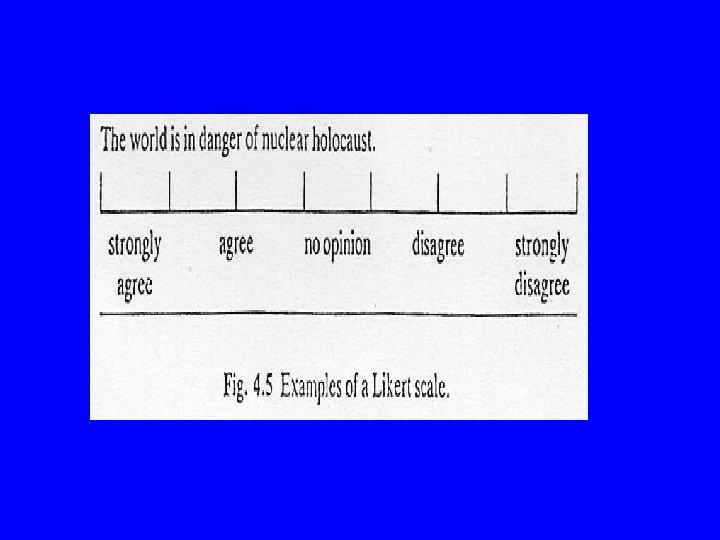
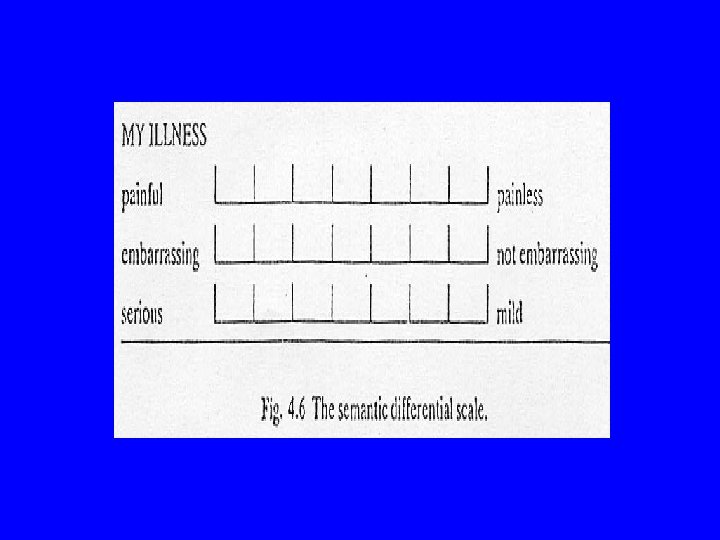
Continuous response scales in questionnaires • • Visual analogue scale Adjectival scale Likert scale Semantic differential scale
Visual analogue scale
Likert scale