
Lecture 1 INTRODUCTION TO COMPUTER NETWORKS Dr Lway
- Slides: 9
Lecture 1 INTRODUCTION TO COMPUTER NETWORKS Dr. Lway Faisal Abdulrazak
What is a Network? A network is a set of devices (often referred to as nodes) connected by communication links. A node can be a computer, printer, or any other device capable of sending and/or receiving data generated by other nodes on the network. A link can be a cable, air, optical fiber, or any medium which can transport a signal carrying information. Why we need Networking? • Sharing information • Sharing hardware or software. • Centralize administration and support. 2
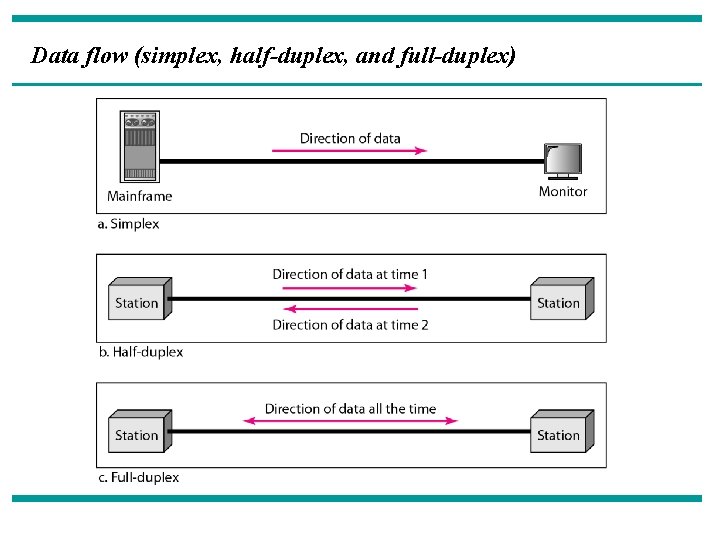
Data flow (simplex, half-duplex, and full-duplex)
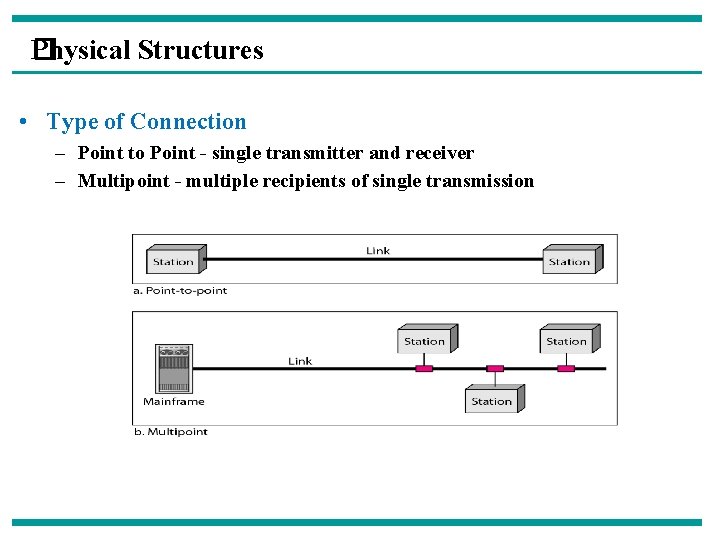
Physical Structures � • Type of Connection – Point to Point - single transmitter and receiver – Multipoint - multiple recipients of single transmission
How many kinds of Networks? • we can classify networks in different ways: • • Based on network size: LAN and WAN (and MAN) Based on management method: Peer-to-peer and Client/Server Based on topology (connectivity): Bus, Star, Ring. . Based on transmission media: Wired (UTP, coaxial cables, fiberoptic cables) and Wireless : : 5
LAN and WAN • Local Area Network (LAN) • Small network, short distance • A room, a floor, a building • Limited by number of computers and distance covered • Serve a department within an organization • Examples: • Network inside the Student Computer Room • Network inside your home 6
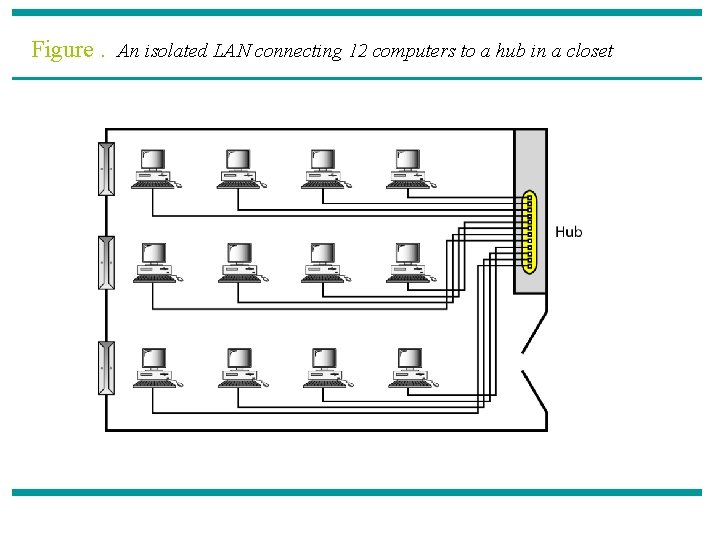
Figure. An isolated LAN connecting 12 computers to a hub in a closet
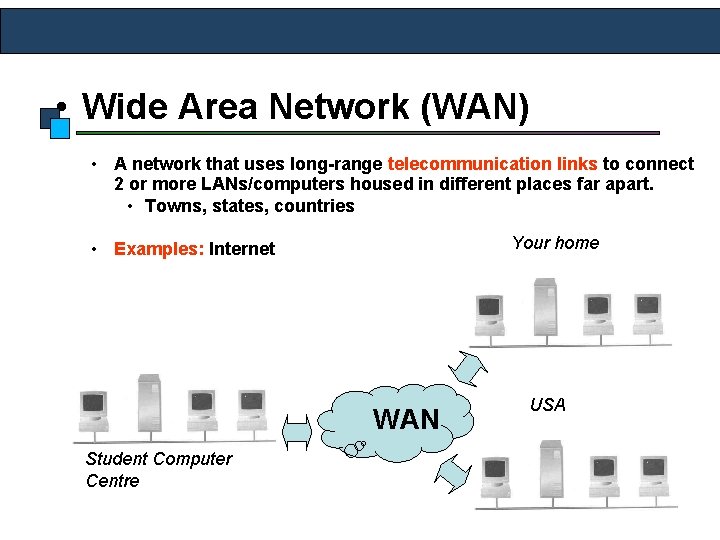
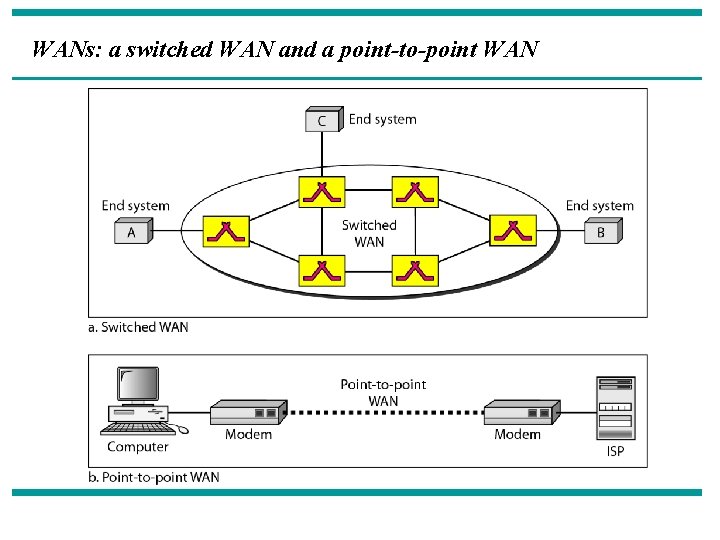
• Wide Area Network (WAN) • A network that uses long-range telecommunication links to connect 2 or more LANs/computers housed in different places far apart. • Towns, states, countries Your home • Examples: Internet WAN USA Student Computer Centre 8
WANs: a switched WAN and a point-to-point WAN