
Lecture 1 Introduction to Accounting 1 2 3
- Slides: 13
Lecture 1: Introduction to Accounting 1. 2. 3. 4. 1 What is accounting? Purpose of accounting. Potential users of accounting information. Providers of accounting information.
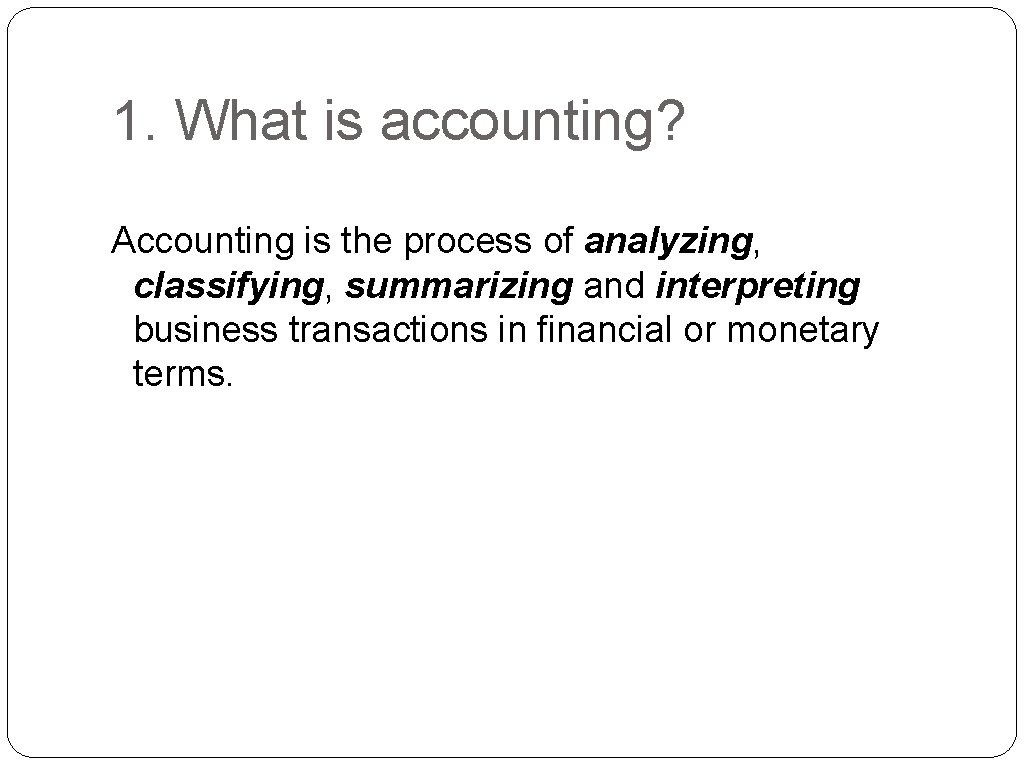
1. What is accounting? Accounting is the process of analyzing, classifying, summarizing and interpreting business transactions in financial or monetary terms. 2
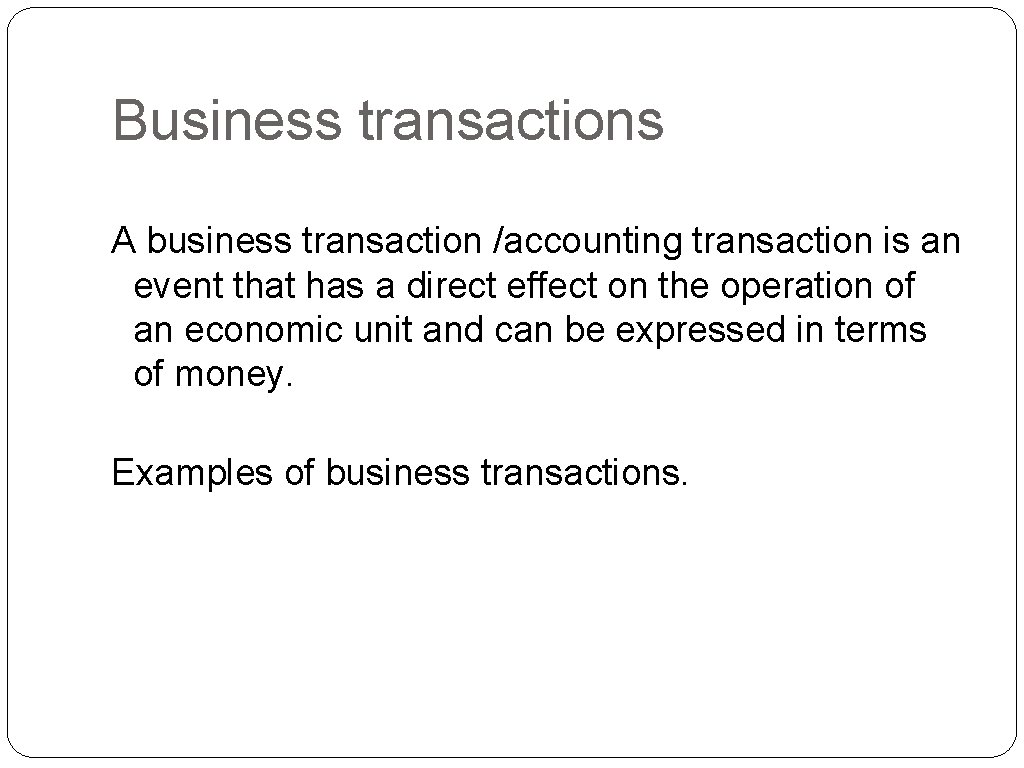
Business transactions A business transaction /accounting transaction is an event that has a direct effect on the operation of an economic unit and can be expressed in terms of money. Examples of business transactions. 3
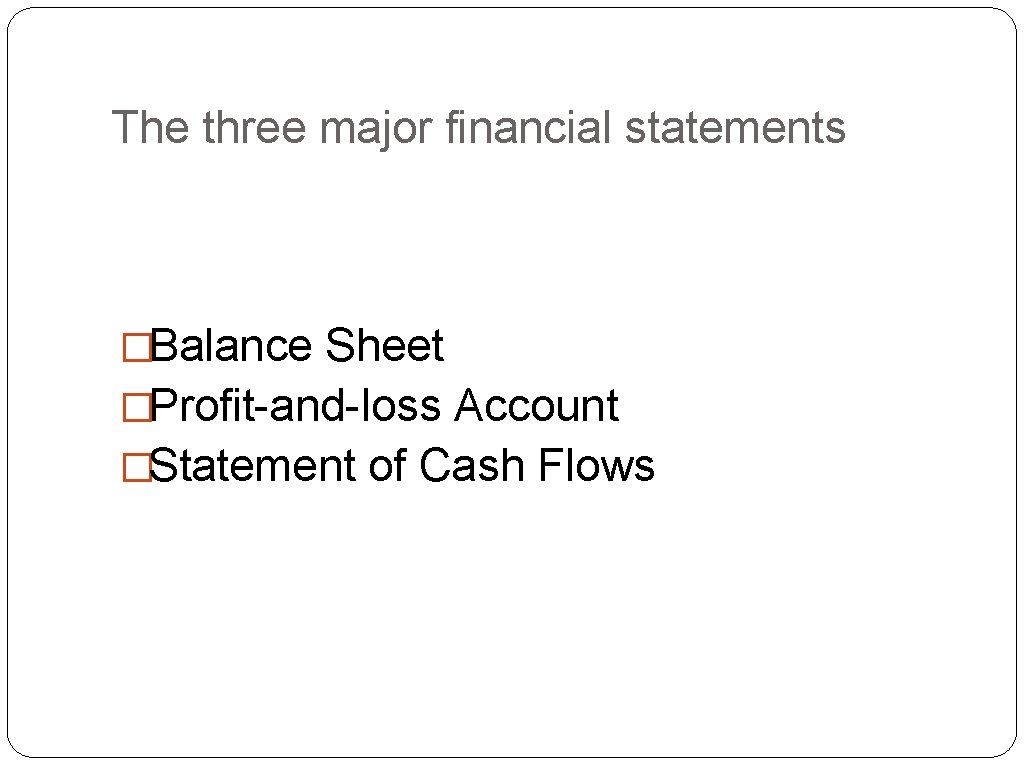
The three major financial statements �Balance Sheet �Profit-and-loss Account �Statement of Cash Flows 4
2. Purpose of accounting The purpose of accounting is to provide financial information to the information users for their decisionmaking. 5
3. Potential users of financial information � � � � 6 Managers Shareholders/Owners Lenders/Creditors Trade unions and employees Business contacts: suppliers, customers… Government Analysts and advisers
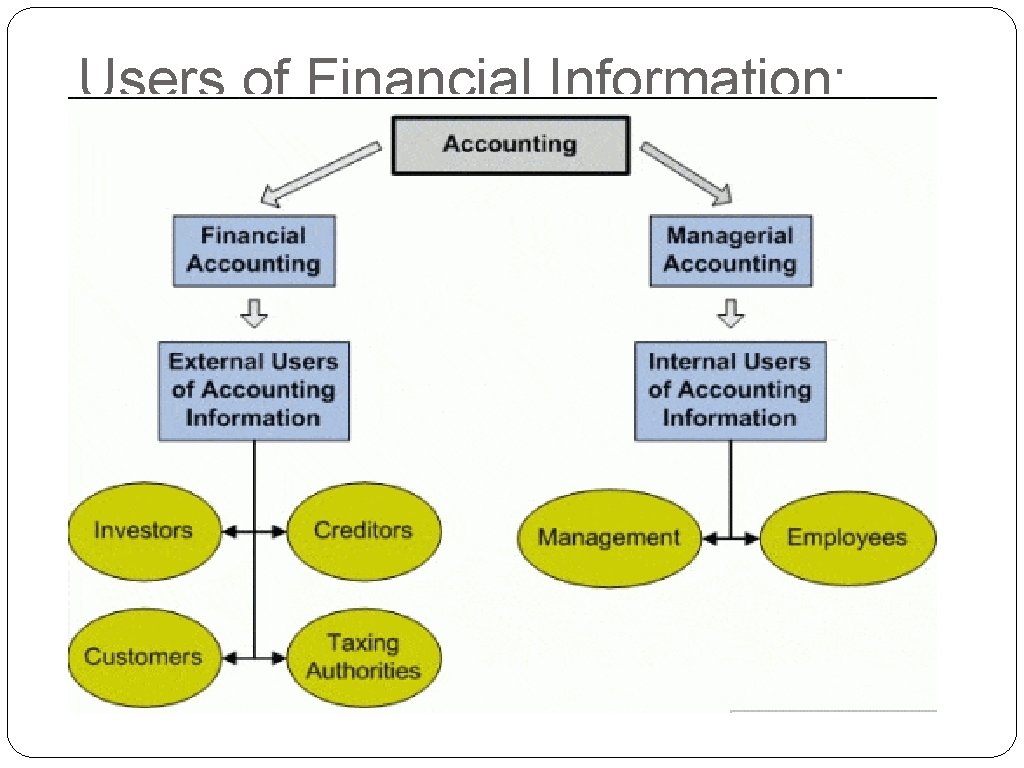
Users of Financial Information:
Classification of accounting �Financial accounting (providing information to external users) �Management accounting (providing information to internal users) 8
4. Providers of financial information �The sole trader �The partnership �The limited liability company 9
Questions: 1. Explain the difference between a stakeholder and a shareholder. 2. Explain why the following groups of people may use the financial information of a company - Employees - Creditors - Managers 3. Define and explain the three major types of company 10
Activity: �Draw a table to compare the advantages and disadvantages of the three main types of company: - Sole trader - Partnership - Limited company 11
Case Study �Vodafone is a huge company that employs thousands of people. It is one of the largest businesses in Europe. �Why might the government be interested in the financial position of this major UK operating company? 12
Homework: �Chapter 1; Q 1. 1 -1. 5 and the Objective test questions �Chapter 2; Q 2. 1 - 2. 3 and the Objective test questions �Read chapter’s 3 & 4 �Class activities and case study if not completed in class time. 13