
Lecture 1 Introduction and History of Billing Coding

Lecture 1 Introduction and History of Billing & Coding
"All politics is local. "

“Ask not what your country can do for you ask what you can do for your country. ” -U. S. President John F. Kennedy Inaugural address on January 20, 1961
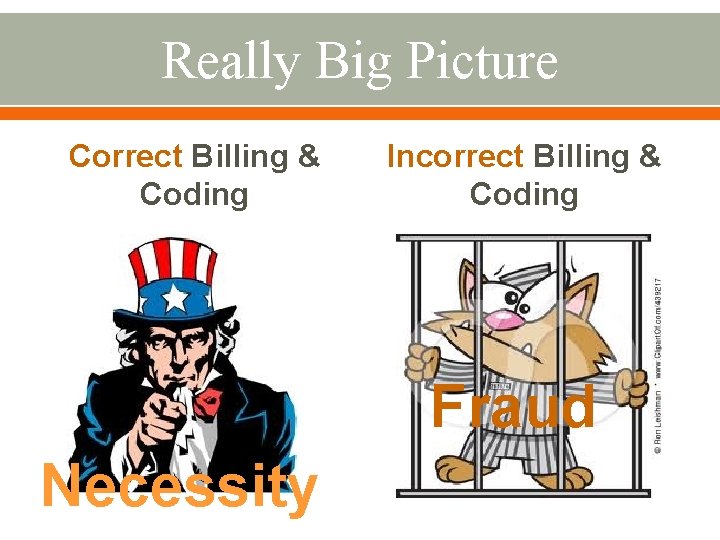
What can correct billing and coding “do for you”? ?

Well, you have to.
If you don’t….
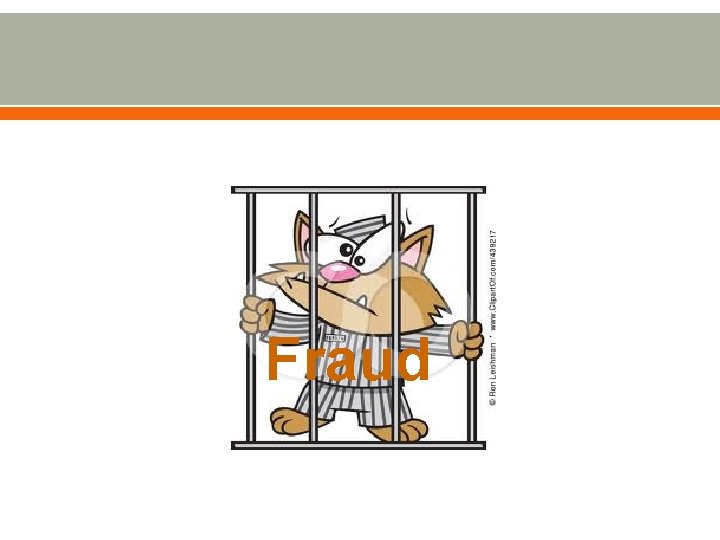
Fraud

“I have a trust fund and will just under-bill everything…”
Fraud That’s fraud too!
As you’ll see, correct documentation associated with correct coding is efficient
… and even improves our note!
“Parallel Universe” of Medical Care Medical Education Complex procedures Specialized knowledge Tailor treatment plan to individuals 4 years of education o Basic sciences Coding and Billing Laymen’s procedure No specialty knowledge required “Arbitrary” rules Template/check-box mentality o Pathophysiology o Clinical sciences o Electives How can this work so well? We’ll see at the end.
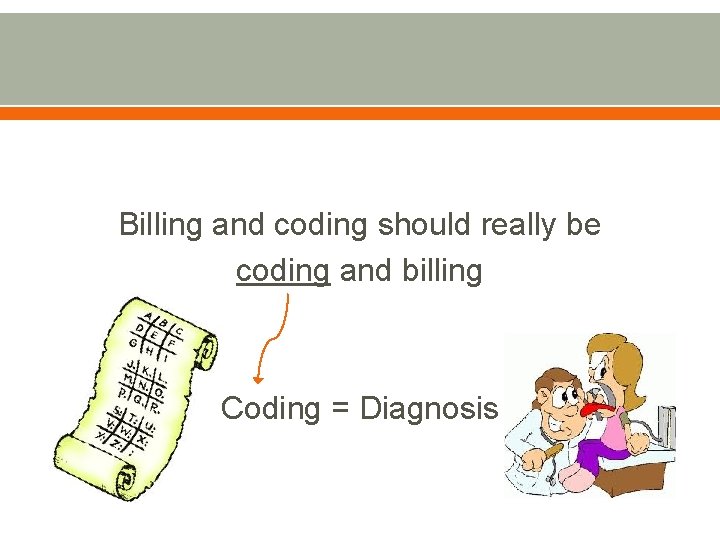
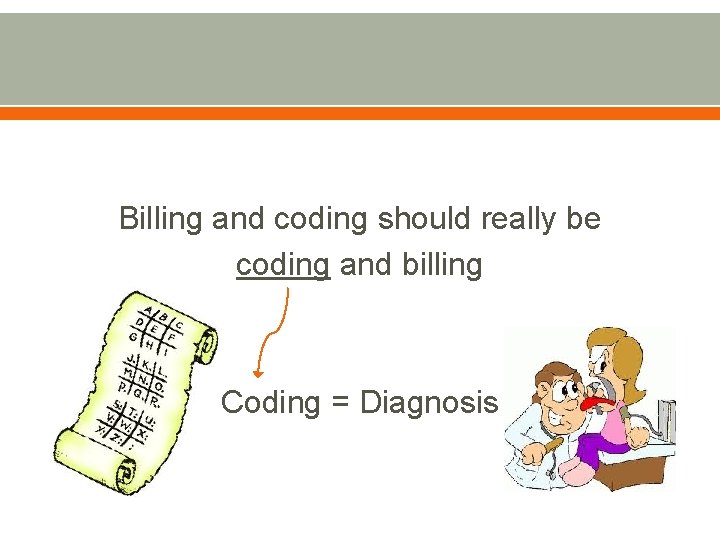
Billing and coding should really be coding and billing Coding = Diagnosis
What Codes? ICD codes International Statistical Classifications of Diseases CPT codes Current Procedural Terminology (owned and operated by) American Medical Association World Health Organization alphanumeric designations o Diagnosis o Symptoms o Cause of death o Inpatient procedures (PCS) numeric designations o Diagnostic “services“ o Therapeutic “services“
More About ICD-10 Last update was 1979 140, 000 codes in ICD-10 There is a code for that! (vs 20, 000 codes in ICD-9) o 9 codes for parrot injuries o 3 codes for flaming water-ski burn injuries ICD-11 already on the way
Billing? Billing follows Medicare guidelines, which almost all insurance companies also follow “gold standard”
Their Ball. Their Bat.
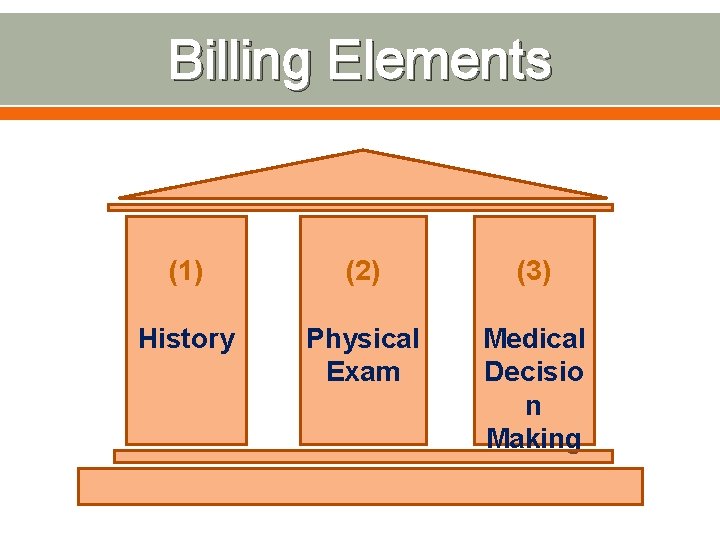
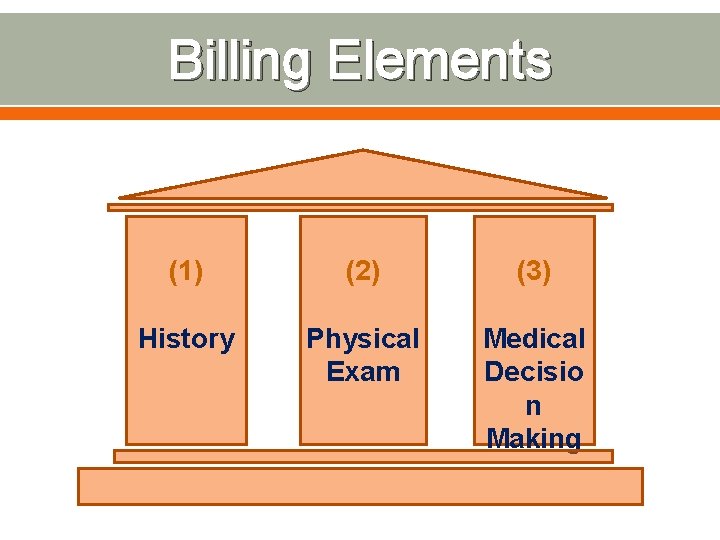
Billing Elements (1) (2) (3) History Physical Exam Medical Decisio n Making
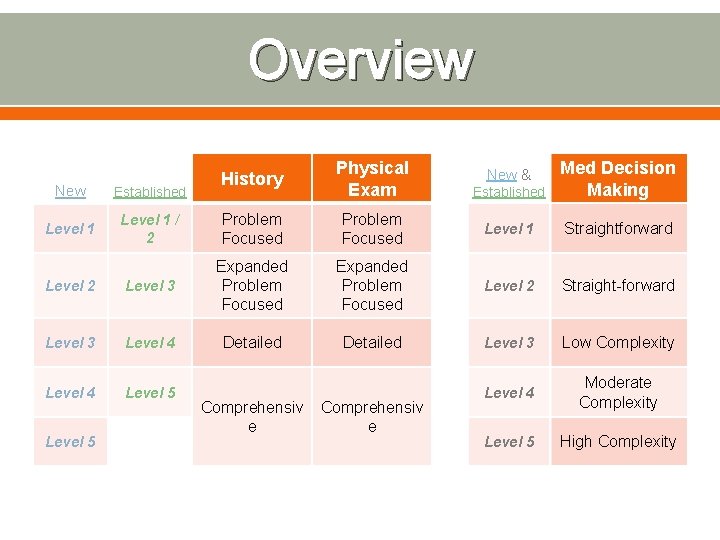
Overview History Physical Exam Established Med Decision Making Problem Focused Level 1 Straightforward Level 3 Expanded Problem Focused Level 2 Straight-forward Level 3 Level 4 Detailed Level 3 Low Complexity Level 4 Level 5 Level 4 Moderate Complexity Level 5 High Complexity New Established Level 1 / 2 Problem Focused Level 2 Level 5 Comprehensiv e New &
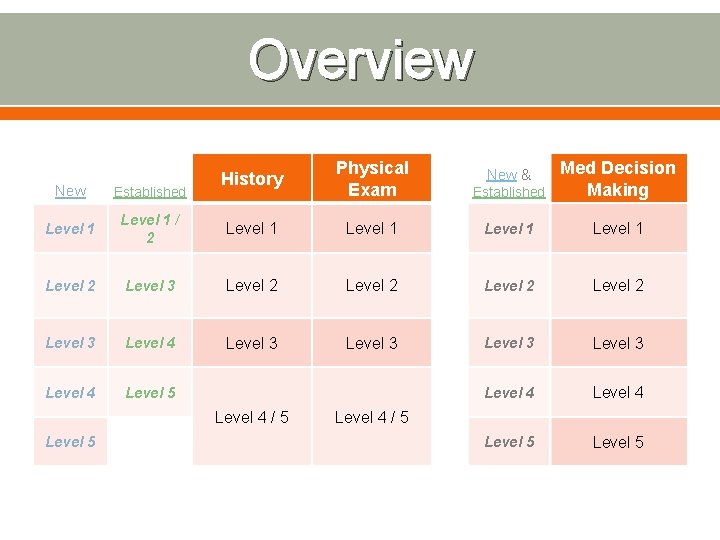
Overview History Physical Exam Established Med Decision Making New & New Established Level 1 / 2 Level 1 Level 2 Level 3 Level 2 Level 3 Level 4 Level 3 Level 4 Level 5 Level 4 / 5
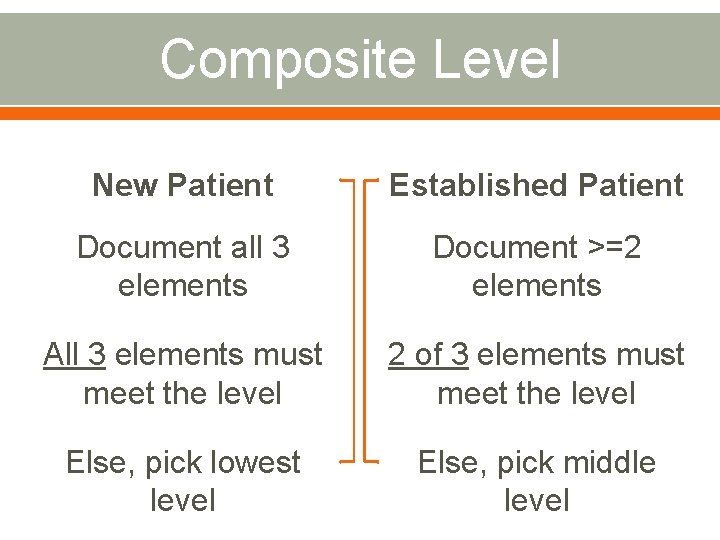
Composite Level New Patient Established Patient Document all 3 elements Document >=2 elements All 3 elements must meet the level 2 of 3 elements must meet the level Else, pick lowest level Else, pick middle level
Quick Example Let’s give it a quick try!
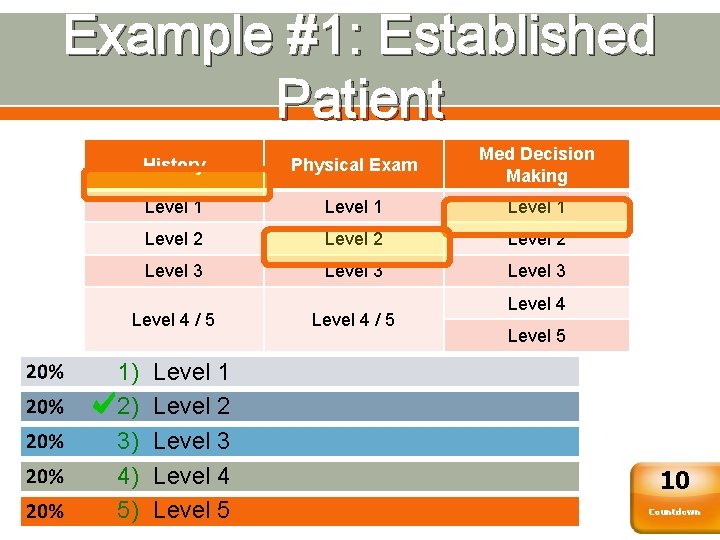
Example #1: Established Patient History Physical Exam Med Decision Making Level 1 Level 2 Level 3 Level 4 / 5 1) 2) 3) 4) 5) Level 1 Level 2 Level 3 Level 4 Level 5 Level 4 / 5 Level 4 Level 5 10 Countdown
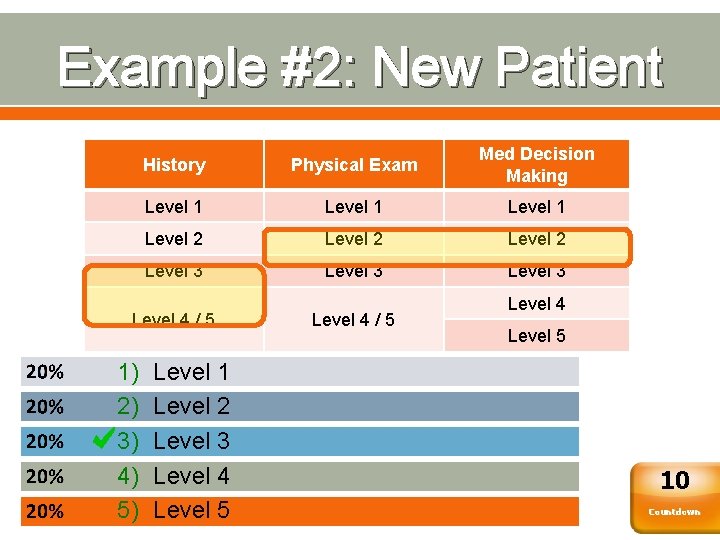
Example #2: New Patient History Physical Exam Med Decision Making Level 1 Level 2 Level 3 Level 4 / 5 1) 2) 3) 4) 5) Level 1 Level 2 Level 3 Level 4 Level 5 Level 4 / 5 Level 4 Level 5 10 Countdown
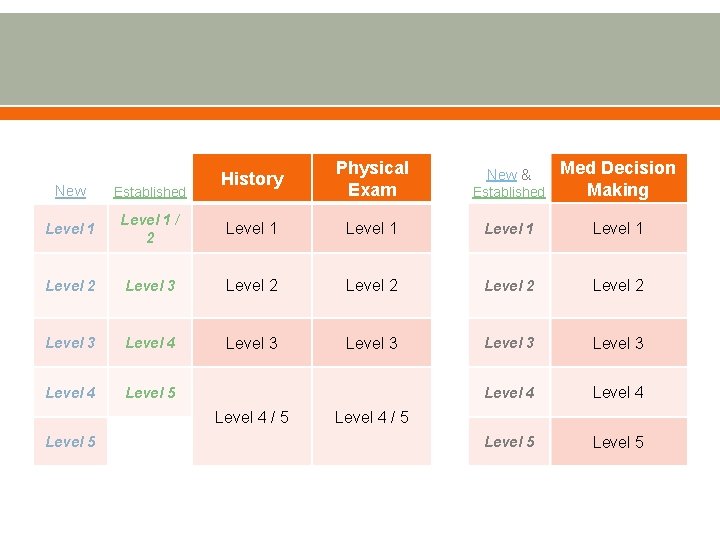
History Physical Exam Established Med Decision Making New & New Established Level 1 / 2 Level 1 Level 2 Level 3 Level 2 Level 3 Level 4 Level 3 Level 4 Level 5 Level 4 / 5

History
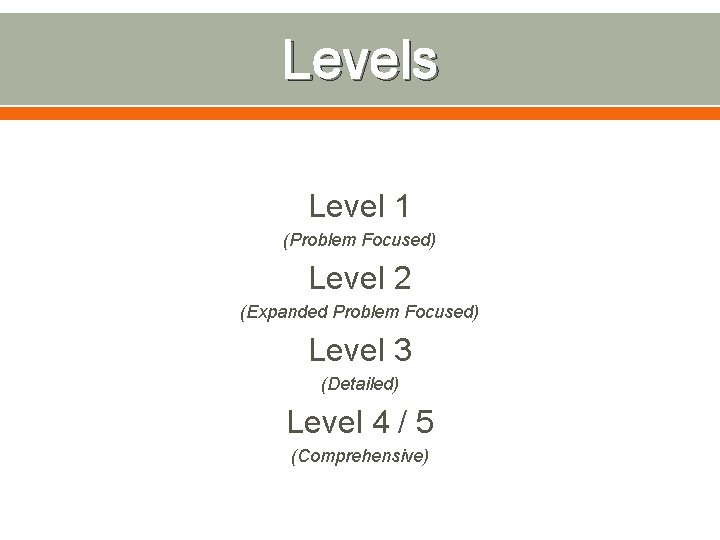
Levels Level 1 (Problem Focused) Level 2 (Expanded Problem Focused) Level 3 (Detailed) Level 4 / 5 (Comprehensive)
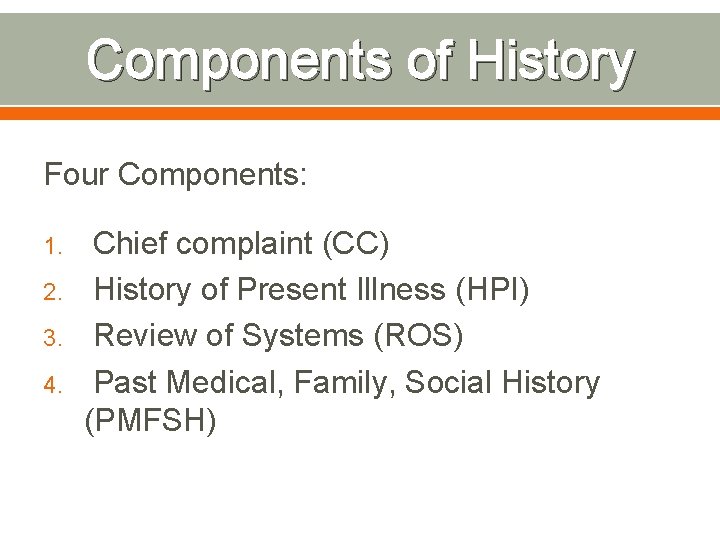
Components of History Four Components: 1. 2. 3. 4. Chief complaint (CC) History of Present Illness (HPI) Review of Systems (ROS) Past Medical, Family, Social History (PMFSH)
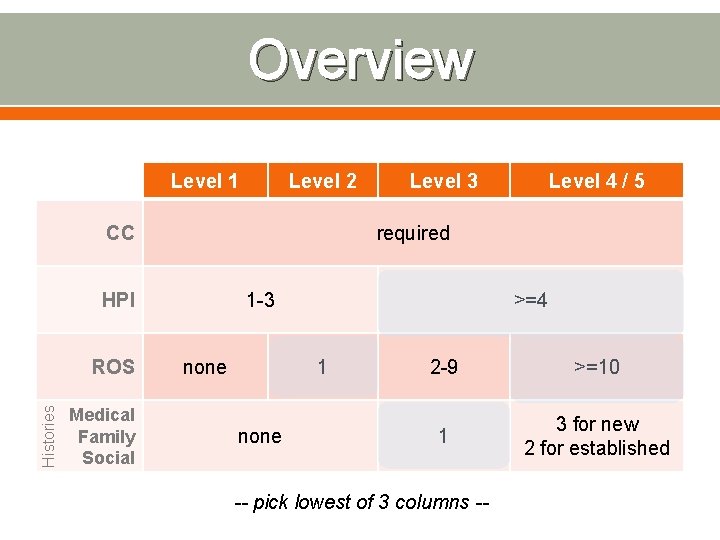
Overview Level 1 Level 2 CC Histories Medical Family Social Level 4 / 5 required HPI ROS Level 3 1 -3 none >=4 1 none 2 -9 >=10 1 3 for new 2 for established -- pick lowest of 3 columns --
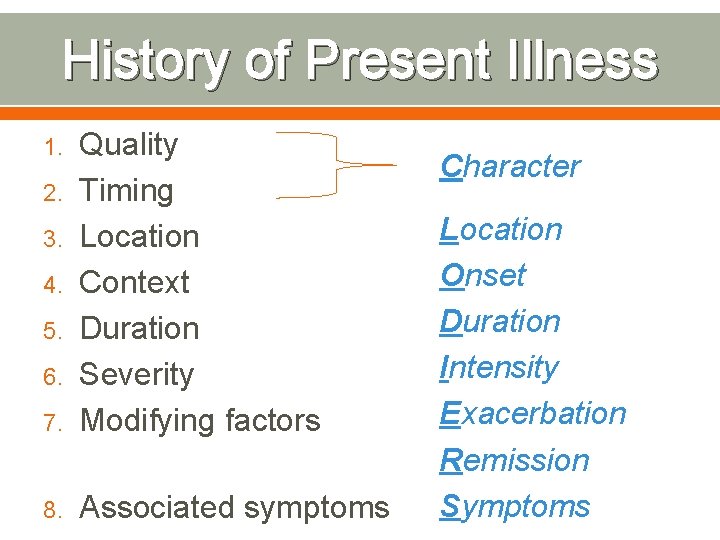
History of Present Illness 7. Quality Timing Location Context Duration Severity Modifying factors 8. Associated symptoms 1. 2. 3. 4. 5. 6. Character Location Onset Duration Intensity Exacerbation Remission Symptoms
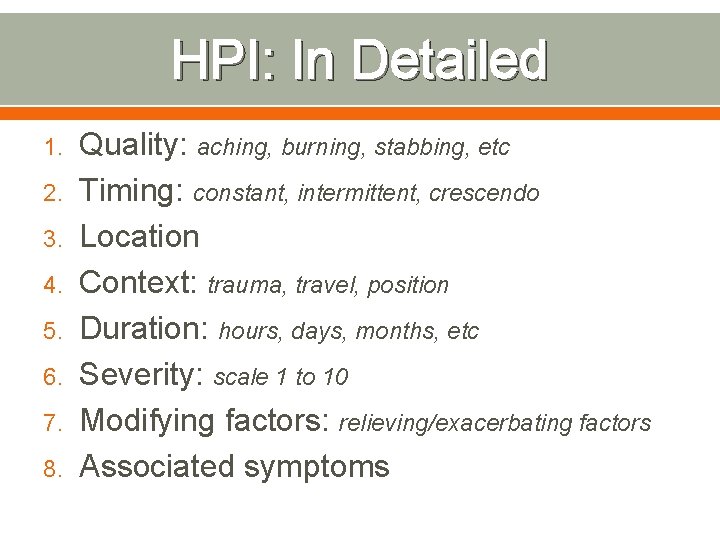
HPI: In Detailed 1. 2. 3. 4. 5. 6. 7. 8. Quality: aching, burning, stabbing, etc Timing: constant, intermittent, crescendo Location Context: trauma, travel, position Duration: hours, days, months, etc Severity: scale 1 to 10 Modifying factors: relieving/exacerbating factors Associated symptoms
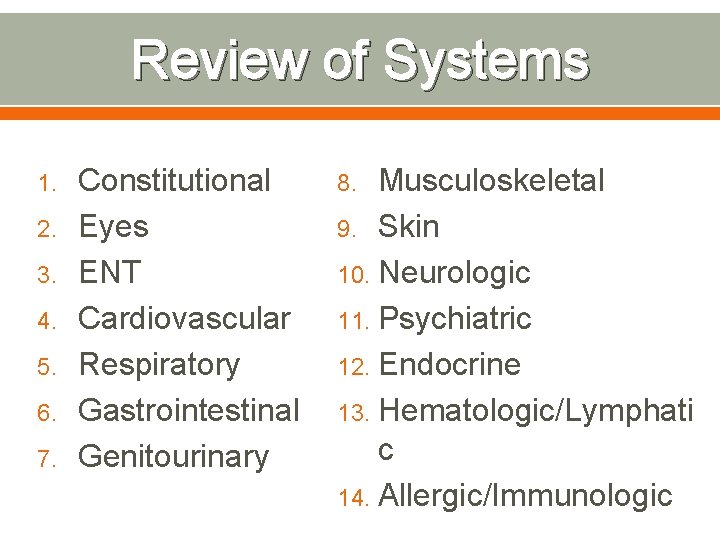
Review of Systems 1. 2. 3. 4. 5. 6. 7. Constitutional Eyes ENT Cardiovascular Respiratory Gastrointestinal Genitourinary Musculoskeletal 9. Skin 10. Neurologic 11. Psychiatric 12. Endocrine 13. Hematologic/Lymphati c 14. Allergic/Immunologic 8.
ROS: In Detailed
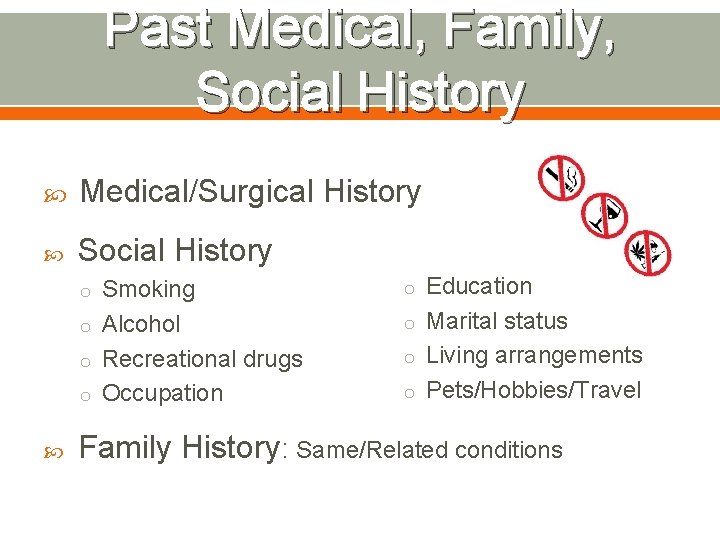
Past Medical, Family, Social History Medical/Surgical History Social History o Smoking o Education o Alcohol o Marital status o Recreational drugs o Living arrangements o Occupation o Pets/Hobbies/Travel Family History: Same/Related conditions

History Examples
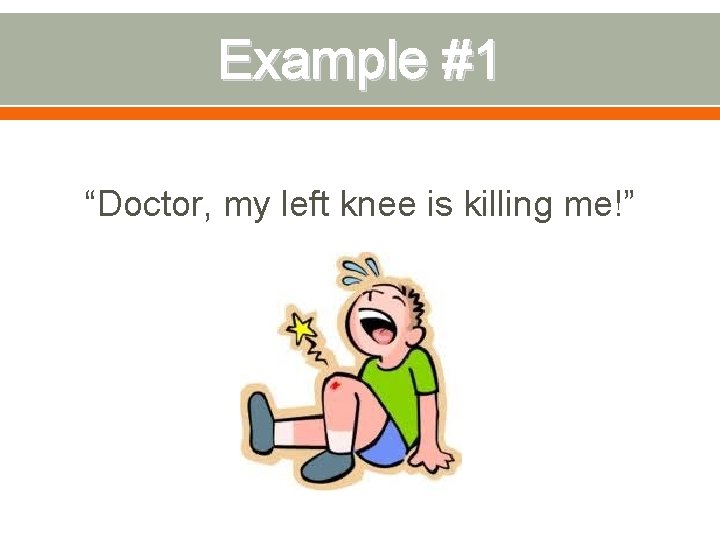
Example #1 “Doctor, my left knee is killing me!”
What is the chief complaint?
What questions do you want to ask in the History of Present Illness?
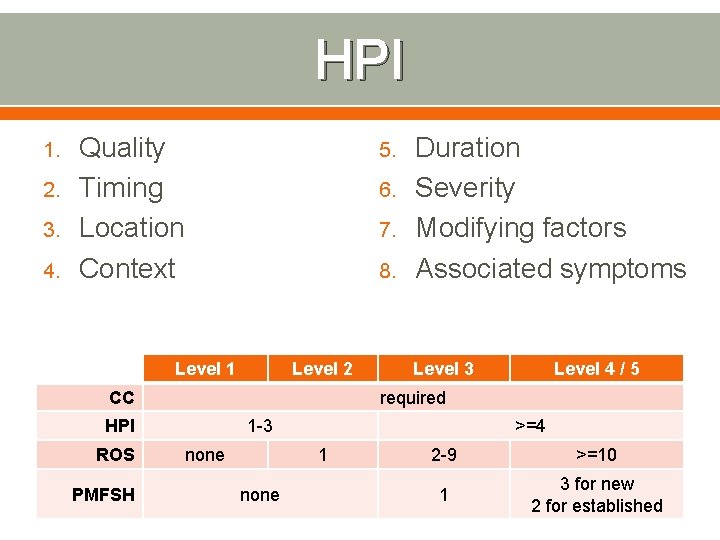
HPI 1. 2. 3. 4. Quality Timing Location Context 5. 6. 7. 8. Level 1 Level 2 CC PMFSH Level 3 Level 4 / 5 required HPI ROS Duration Severity Modifying factors Associated symptoms 1 -3 none >=4 1 none 2 -9 >=10 1 3 for new 2 for established
What questions do you want to ask in the Past Medical, Social, & Family History?
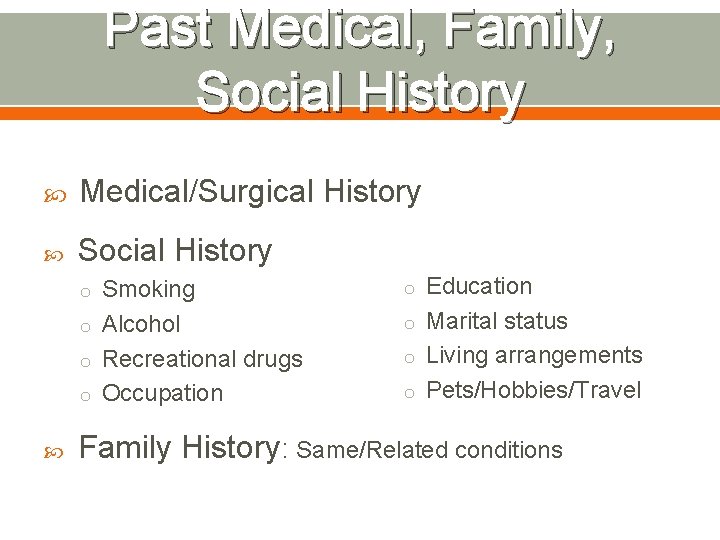
Past Medical, Family, Social History Medical/Surgical History Social History o Smoking o Education o Alcohol o Marital status o Recreational drugs o Living arrangements o Occupation o Pets/Hobbies/Travel Family History: Same/Related conditions
What questions do you want to ask in the Review of Systems?
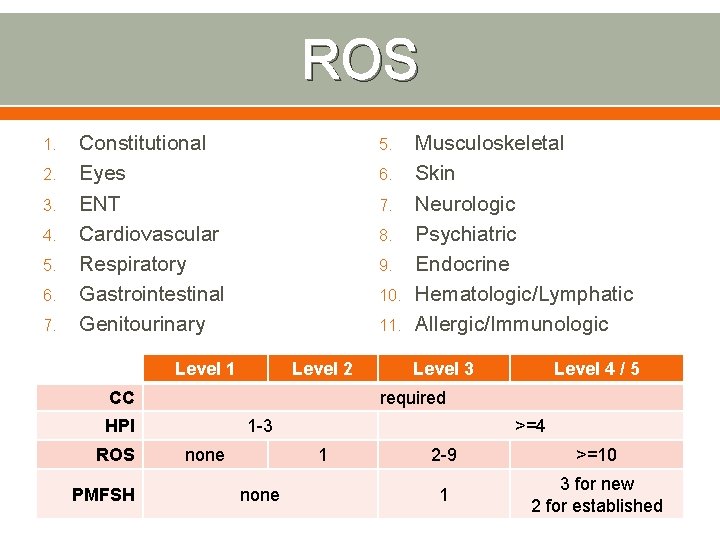
ROS 1. 2. 3. 4. 5. 6. 7. Constitutional Eyes ENT Cardiovascular Respiratory Gastrointestinal Genitourinary 5. 6. 7. 8. 9. 10. 11. Level 1 Level 2 CC PMFSH Level 3 Level 4 / 5 required HPI ROS Musculoskeletal Skin Neurologic Psychiatric Endocrine Hematologic/Lymphatic Allergic/Immunologic 1 -3 none >=4 1 none 2 -9 >=10 1 3 for new 2 for established
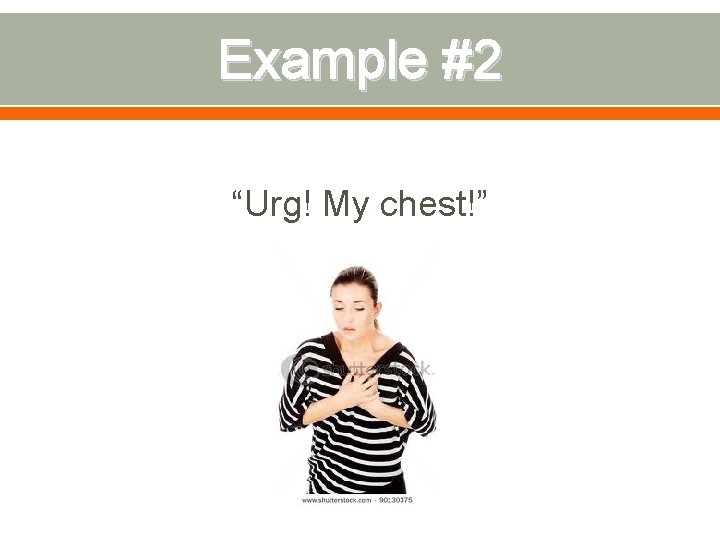
Example #2 “Urg! My chest!”
What is the chief complaint?
What questions do you want to ask in the History of Present Illness?
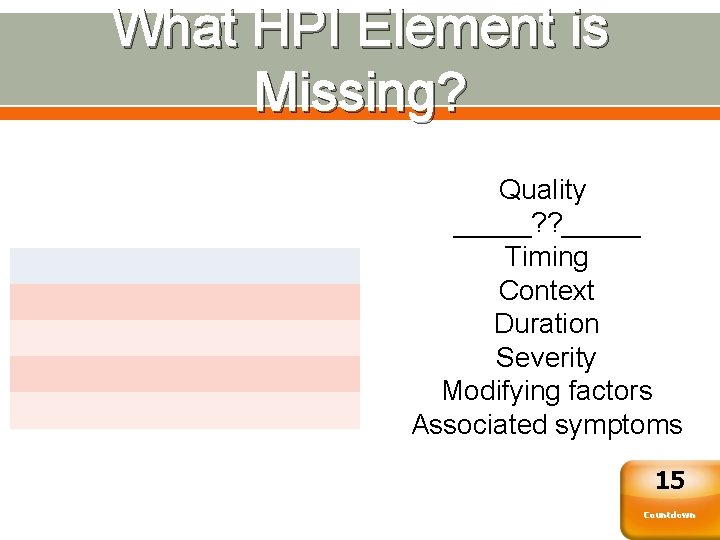
What HPI Element is Missing? Quality _____? ? _____ Timing Context Duration Severity Modifying factors Associated symptoms 15 Countdown
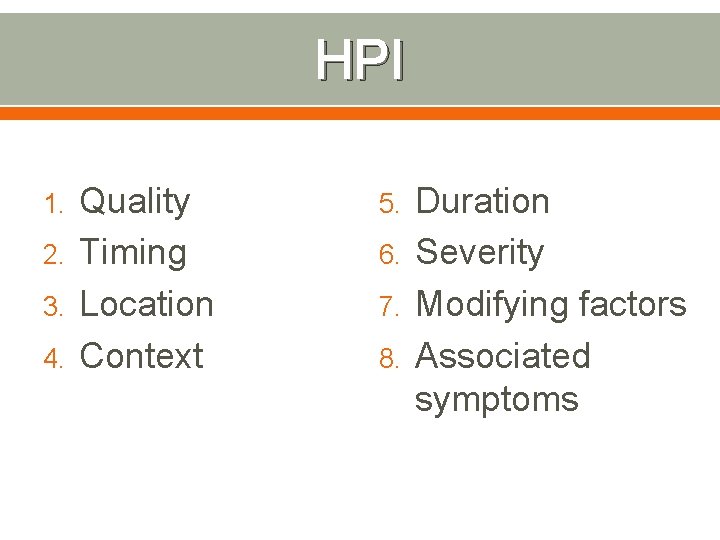
HPI 1. 2. 3. 4. Quality Timing Location Context 5. 6. 7. 8. Duration Severity Modifying factors Associated symptoms
What questions do you want to ask in the Past Medical, Social, & Family History?
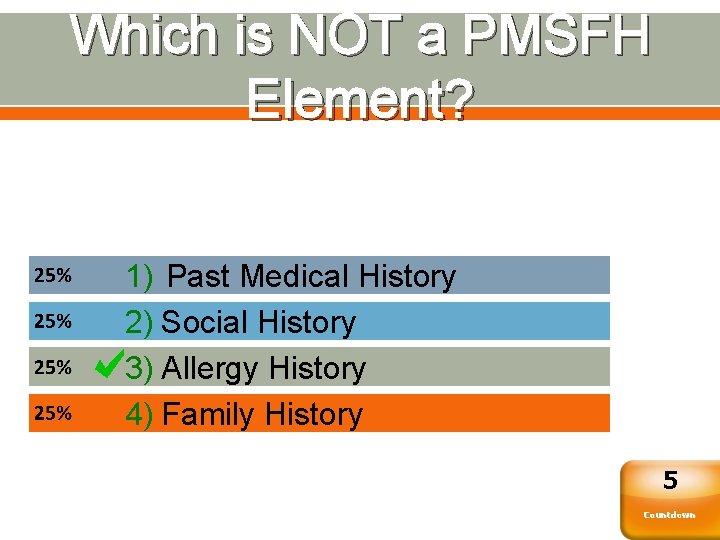
Which is NOT a PMSFH Element? 1) Past Medical History 2) Social History 3) Allergy History 4) Family History 5 Countdown
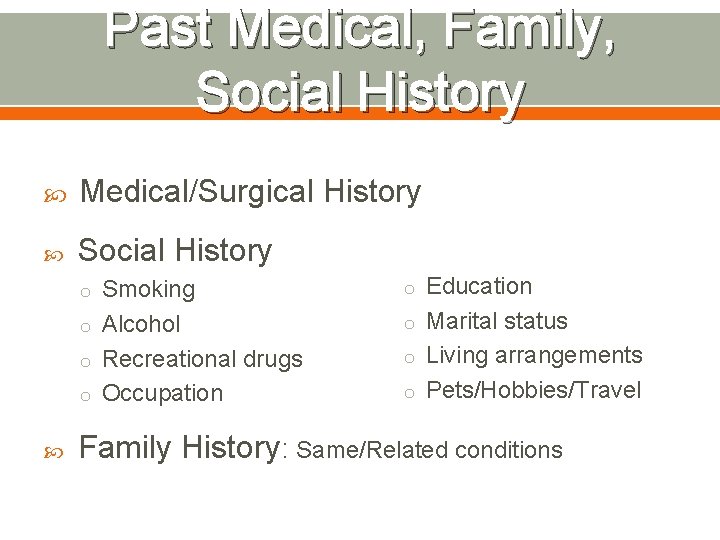
Past Medical, Family, Social History Medical/Surgical History Social History o Smoking o Education o Alcohol o Marital status o Recreational drugs o Living arrangements o Occupation o Pets/Hobbies/Travel Family History: Same/Related conditions
What questions do you want to ask in the Review of Systems?
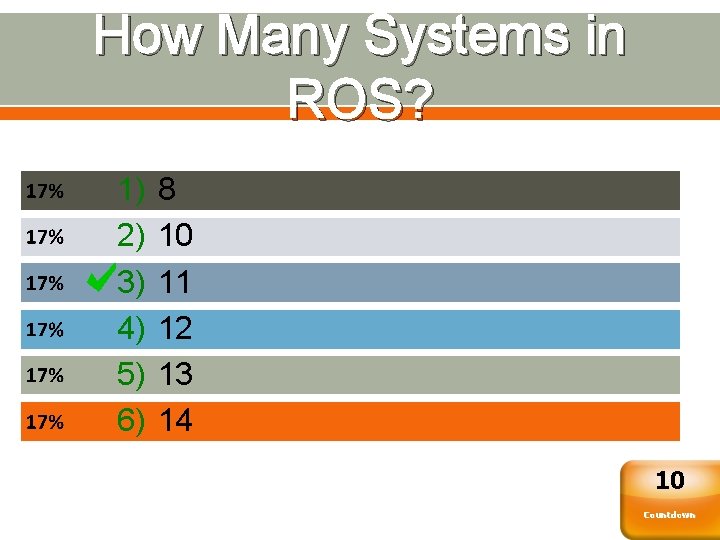
How Many Systems in ROS? 1) 2) 3) 4) 5) 6) 8 10 11 12 13 14 10 Countdown
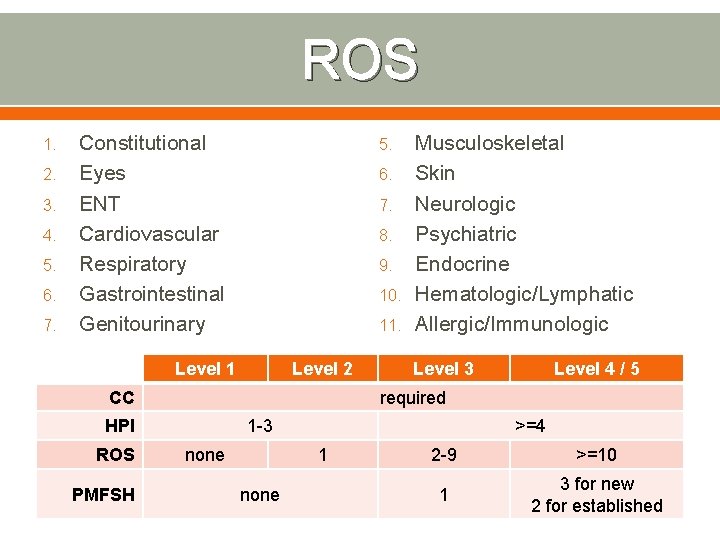
ROS 1. 2. 3. 4. 5. 6. 7. Constitutional Eyes ENT Cardiovascular Respiratory Gastrointestinal Genitourinary 5. 6. 7. 8. 9. 10. 11. Level 1 Level 2 CC PMFSH Level 3 Level 4 / 5 required HPI ROS Musculoskeletal Skin Neurologic Psychiatric Endocrine Hematologic/Lymphatic Allergic/Immunologic 1 -3 none >=4 1 none 2 -9 >=10 1 3 for new 2 for established
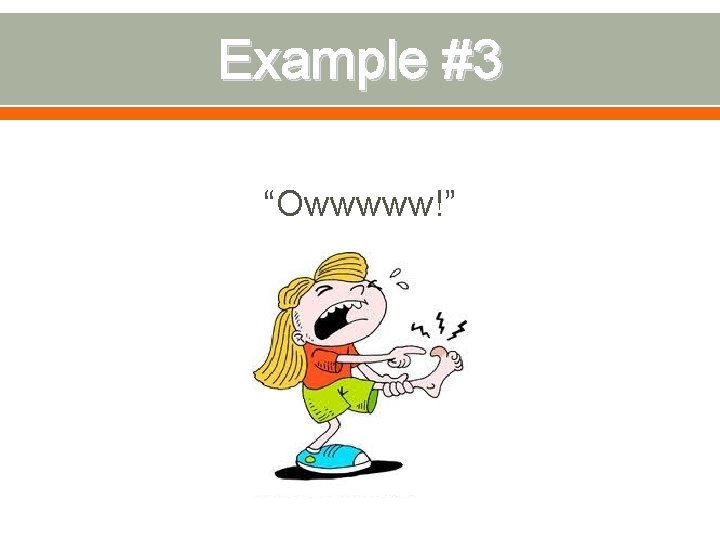
Example #3 “Owwwww!”
What is the chief complaint?
What questions do you want to ask in the History of Present Illness?
HPI 1. 2. 3. 4. Quality Timing Location Context 5. 6. 7. 8. Duration Severity Modifying factors Associated symptoms
HPI Level Question How many elements are in a Level 3 History of Present Illness? 10 Countdown
What questions do you want to ask in the Past Medical, Social, & Family History?
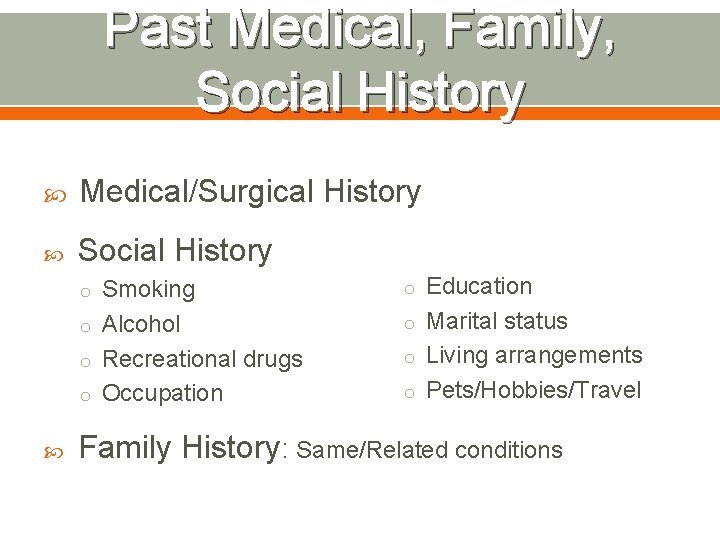
Past Medical, Family, Social History Medical/Surgical History Social History o Smoking o Education o Alcohol o Marital status o Recreational drugs o Living arrangements o Occupation o Pets/Hobbies/Travel Family History: Same/Related conditions
PMFSH Level Question How many elements are in a Level 3 Past Medical Family Social History? 10 Countdown
What questions do you want to ask in the Review of Systems?
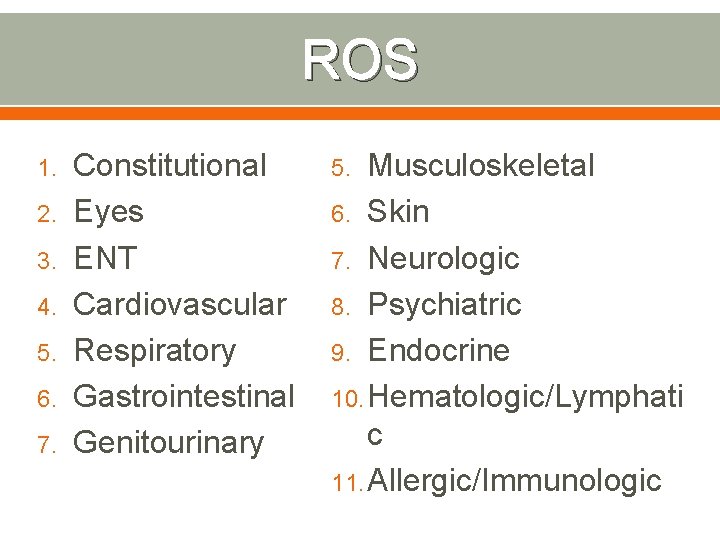
ROS 1. 2. 3. 4. 5. 6. 7. Constitutional Eyes ENT Cardiovascular Respiratory Gastrointestinal Genitourinary Musculoskeletal 6. Skin 7. Neurologic 8. Psychiatric 9. Endocrine 10. Hematologic/Lymphati c 11. Allergic/Immunologic 5.
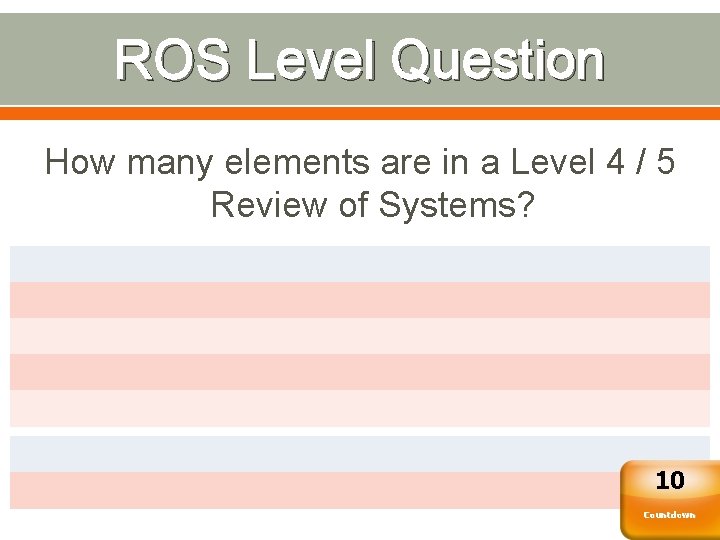
ROS Level Question How many elements are in a Level 4 / 5 Review of Systems? 10 Countdown

Review
What can correct billing and coding “do for you”? ?
Really Big Picture Correct Billing & Coding Incorrect Billing & Coding Fraud Necessity
Billing and coding should really be coding and billing Coding = Diagnosis
Billing? Billing follows Medicare guidelines, which almost all insurance companies also follow “gold standard”
Billing Elements (1) (2) (3) History Physical Exam Medical Decisio n Making
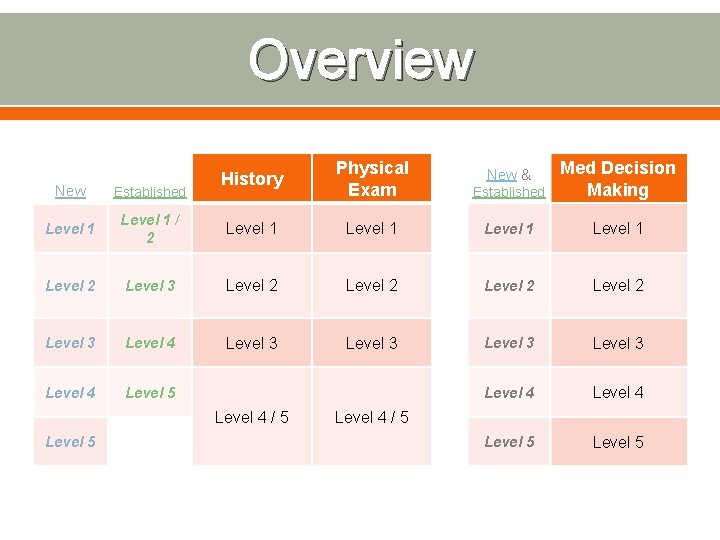
Overview History Physical Exam Established Med Decision Making New & New Established Level 1 / 2 Level 1 Level 2 Level 3 Level 2 Level 3 Level 4 Level 3 Level 4 Level 5 Level 4 / 5
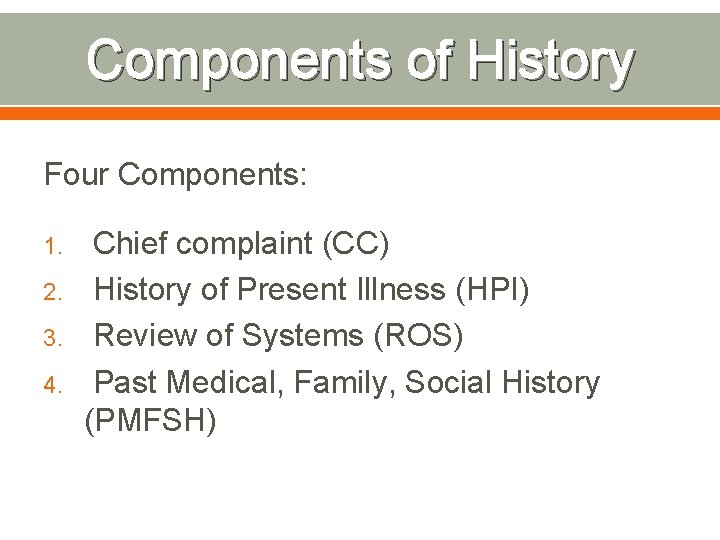
Components of History Four Components: 1. 2. 3. 4. Chief complaint (CC) History of Present Illness (HPI) Review of Systems (ROS) Past Medical, Family, Social History (PMFSH)
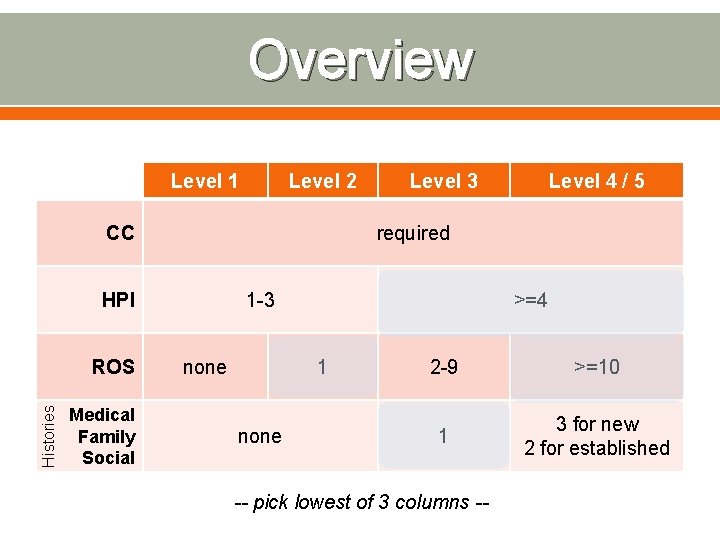
Overview Level 1 Level 2 CC Histories Medical Family Social Level 4 / 5 required HPI ROS Level 3 1 -3 none >=4 1 none 2 -9 >=10 1 3 for new 2 for established -- pick lowest of 3 columns --
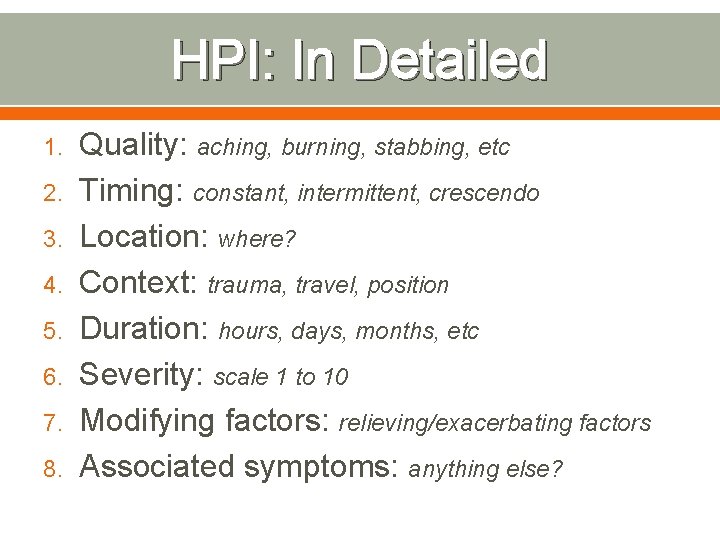
HPI: In Detailed 1. 2. 3. 4. 5. 6. 7. 8. Quality: aching, burning, stabbing, etc Timing: constant, intermittent, crescendo Location: where? Context: trauma, travel, position Duration: hours, days, months, etc Severity: scale 1 to 10 Modifying factors: relieving/exacerbating factors Associated symptoms: anything else?
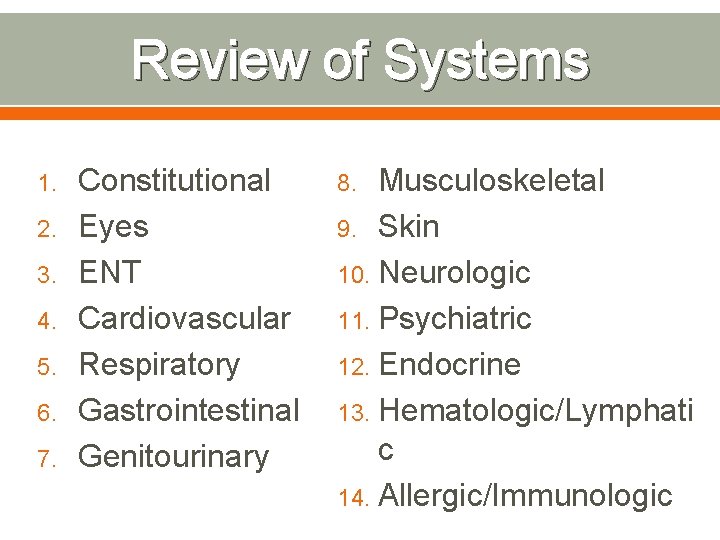
Review of Systems 1. 2. 3. 4. 5. 6. 7. Constitutional Eyes ENT Cardiovascular Respiratory Gastrointestinal Genitourinary Musculoskeletal 9. Skin 10. Neurologic 11. Psychiatric 12. Endocrine 13. Hematologic/Lymphati c 14. Allergic/Immunologic 8.
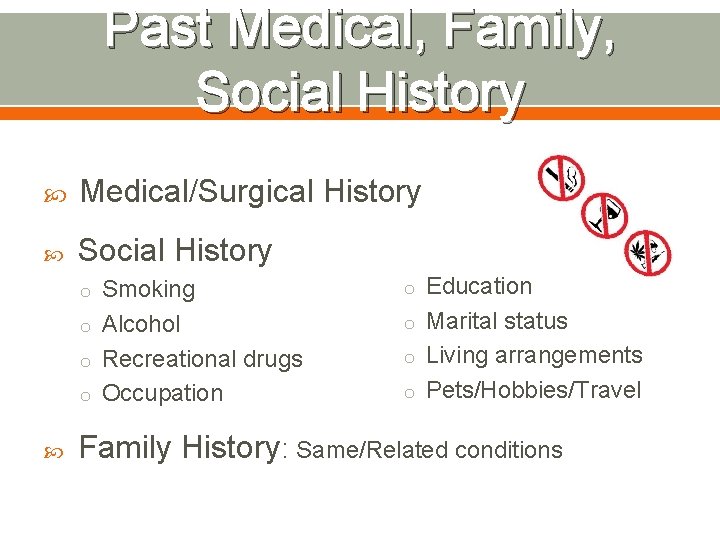
Past Medical, Family, Social History Medical/Surgical History Social History o Smoking o Education o Alcohol o Marital status o Recreational drugs o Living arrangements o Occupation o Pets/Hobbies/Travel Family History: Same/Related conditions

Why It Works
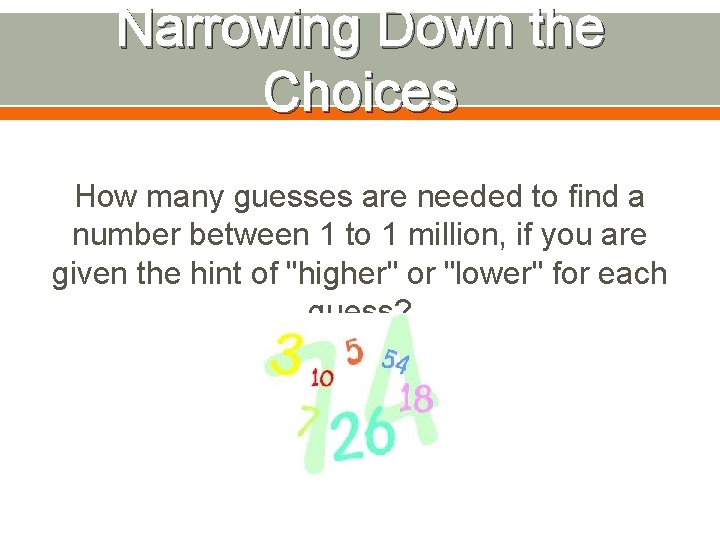
Narrowing Down the Choices How many guesses are needed to find a number between 1 to 1 million, if you are given the hint of "higher" or "lower" for each guess?
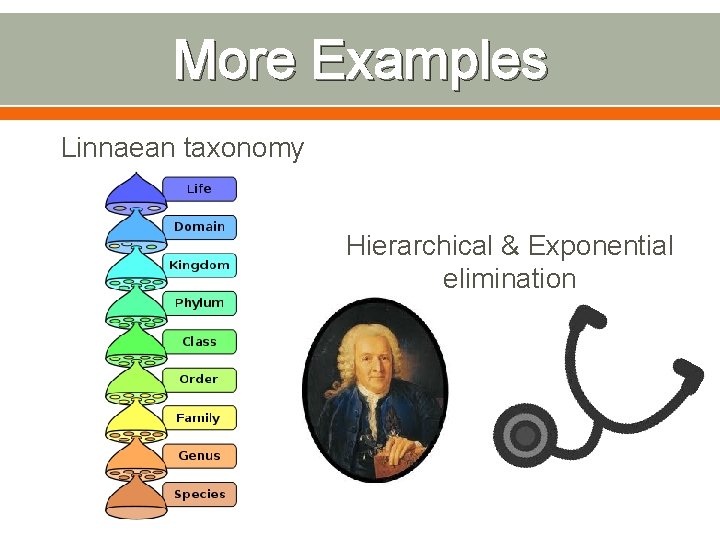
More Examples Linnaean taxonomy Hierarchical & Exponential elimination
- Slides: 80