
Lecture 1 Geochemistry Definition Branch of geology concerned

Lecture (1) Geochemistry Definition : Branch of geology concerned with the abundance and distribution of the chemical elements and their isotopes within the earth or within solid bodies in the solar system, their circulation in natural systems, and the laws governing this distribution and its evolution. Geochemistry is concerned with: 1. The determination of the relative and absolute abundance of the elements in the earth. 2. The study of the distribution and migration of the individual elements in the various parts of the earth with the object of discovering ﺑﻬﺪﻑ ﺍﻛﺘﺸﺎﻑ ﻣﺒﺎﺩ principles governing this distribution and migration. 3. The application of geochemical principles and information in solving human needs.

To introduce in Geochemistry we need some general chemistry review • Periodic table & electronic configurations. • Periodic properties: ionic radius, electron negativity, 1 st ionization potential • Covalent & ionic bonding • Hybridization and molecular orbital ﻟﺘﻮﻟﻴﺪﺍﻻﻭﺭﺑﻴﺘﺎﻝ ﻫﺠﻴﻦ ﻓﻲ ﺟﺰﻳﺌﺔ ﺍﻻﻭﺭﺑﻴﺘﺎﻻﺕ ﺍﻻﺗﺤﺎﺩ ﺑﻴﻦ
Background-Elements and Atoms These are all terms you should already be familiar with: atom - smallest sub-divisible unit of matter that retains unique chemical properties. Composed of electrons, protons and neutrons. element - a fundamental building block of matter defined by a specific number of protons in an atomic nucleus. All atoms of an element have the same number of protons. isotope - different "flavors"" "ﻧﻜﻬﺎﺕ ﺣﺎﻻﺕ of an element that have different numbers of neutrons in their nucleus (thus, they have different atomic masses). radioactive isotope - isotope that decays away radioactively due to an unstable nuclear configuration. stable isotope - one that does not decay radioactively. molecule - a multi-atom material held together by chemical bonds. compound - a multi-element molecule. ion - an atom or molecule that has gained or lost one or more valence or bonding electrons, giving it electronic charge. valence - the outermost electron shell of an atom.
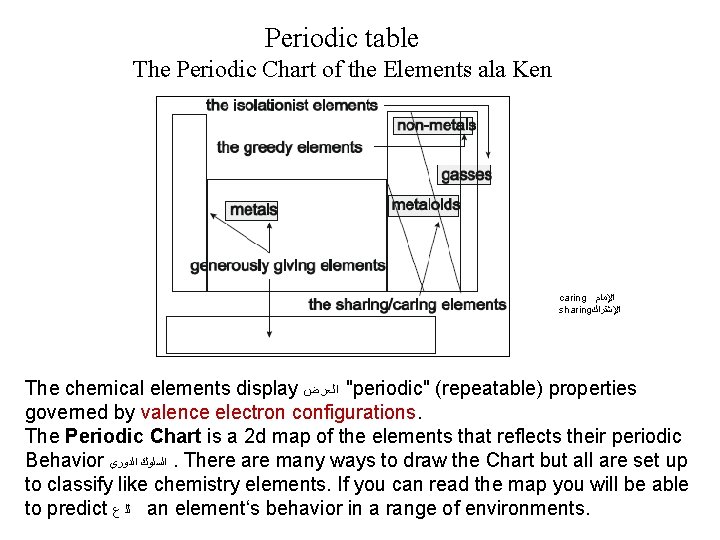
Periodic table The Periodic Chart of the Elements ala Ken caring ﺍﻹﻣﺎﻡ sharing ﺍﻹﺷﺘﺮﺍﻙ The chemical elements display " ﺍﻟﻌﺮﺽ periodic" (repeatable) properties governed by valence electron configurations. The Periodic Chart is a 2 d map of the elements that reflects their periodic Behavior ﺍﻟﺴﻠﻮﻙ ﺍﻟﺪﻭﺭﻱ. There are many ways to draw the Chart but all are set up to classify like chemistry elements. If you can read the map you will be able to predict ﻟﻠ ﻉ an element‘s behavior in a range of environments.
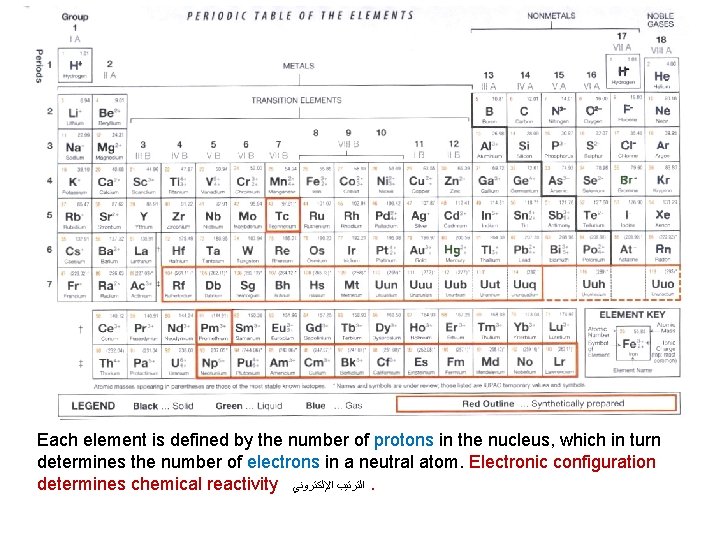
Each element is defined by the number of protons in the nucleus, which in turn determines the number of electrons in a neutral atom. Electronic configuration determines chemical reactivity ﺍﻟﺘﺮﺗﻴﺐ ﺍﻹﻟﻜﺘﺮﻭﻧﻲ.
The importance of electrons Elements that form the columns of the periodic table behave similarly largely because they have similar electron configurations. Outer most electrons are the most important in chemistry because these are more readily ﺑﺴﻬﻮﻟﺔ lost and/or shared. In contrast ﻋﻠﻰ ﺍﻟﻨﻘﻴﺾ ﻣﻦ ﺫﻟﻚ , inner electrons are tightly ﺑﺎﺣﻜﺎﻡ bound to the nucleus by electrostatic forces.
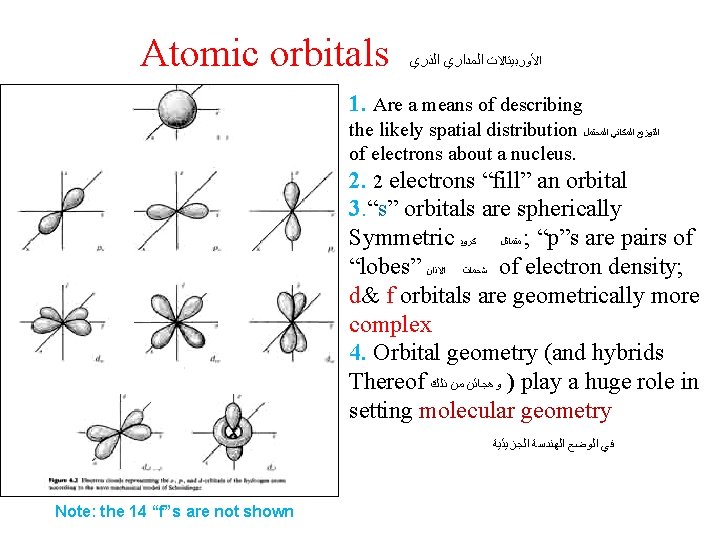
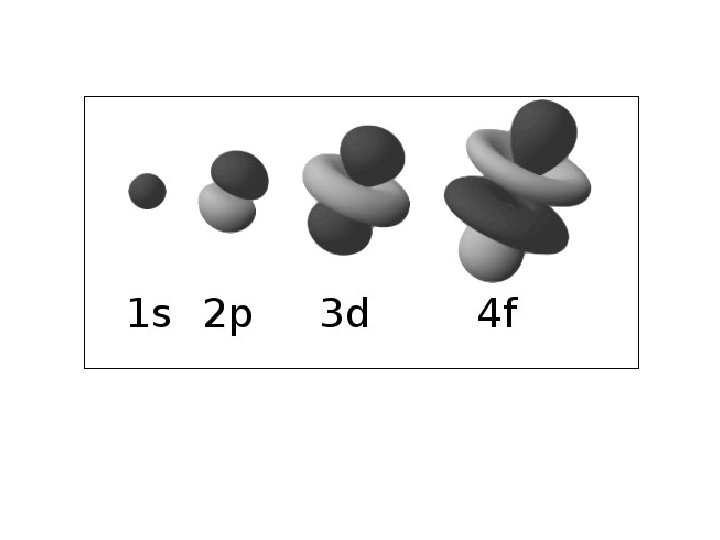
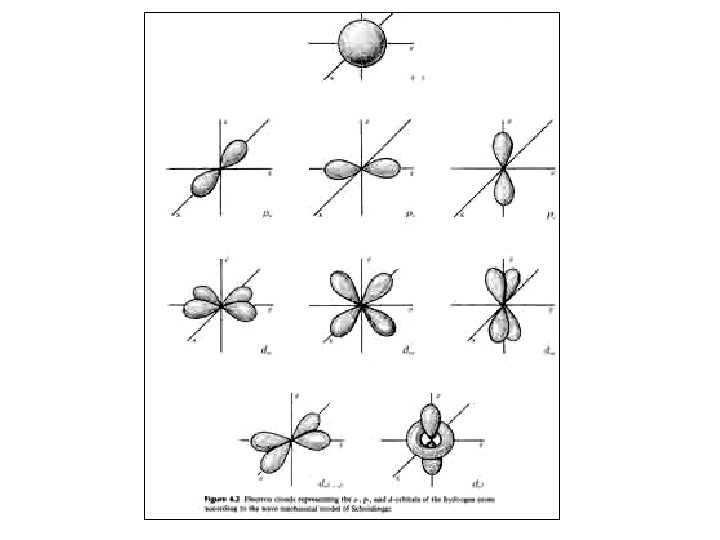
Atomic orbitals ﺍﻷﻮﺭﺑﻴﺘﺎﻻﺕ ﺍﻟﻤﺪﺍﺭﻱ ﺍﻟﺬﺭﻱ 1. Are a means of describing the likely spatial distribution ﺍﻟﺘﻮﺯﻳﻊ ﺍﻟﻤﻜﺎﻧﻲ ﺍﻟﻤﺤﺘﻤﻞ of electrons about a nucleus. 2. 2 electrons “fill” an orbital 3. “s” orbitals are spherically Symmetric “ ; ﻣﺘﻤﺎﺛﻞ ﻛﺮﻭﻳ p”s are pairs of “lobes” ﺷﺤﻤﺎﺕ ﺍﻻﺫﺍﻥ of electron density; d& f orbitals are geometrically more complex 4. Orbital geometry (and hybrids Thereof ) ﻭﻫﺠﺎﺋﻦ ﻣﻦ ﺫﻟﻚ play a huge role in setting molecular geometry ﻓﻲ ﺍﻟﻮﺿﻊ ﺍﻟﻬﻨﺪﺳﺔ ﺍﻟﺠﺰﻳﺌﻴﺔ Note: the 14 “f”s are not shown


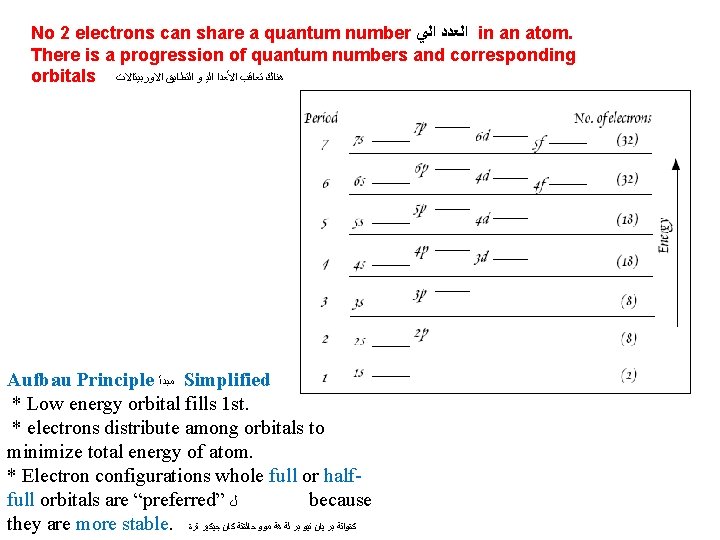
No 2 electrons can share a quantum number ﺍﻟﻌﺪﺩ ﺍﻟﻱ in an atom. There is a progression of quantum numbers and corresponding orbitals ﻫﻨﺎﻙ ﺗﻌﺎﻗﺐ ﺍﻷﻌﺪﺍ ﺍﻟﻳ ﻭ ﺍﻟﺘﻄﺎﺑﻖ ﺍﻻﻭﺭﺑﻴﺘﺎﻻﺕ Aufbau Principle ﻣﺒﺪﺃ Simplified * Low energy orbital fills 1 st. * electrons distribute among orbitals to minimize total energy of atom. * Electron configurations whole full or halffull orbitals are “preferred” ﻝ because they are more stable. ﻛﺓﻮﺍﺗﺔ ﺑﺮ ﻳﺎﻥ ﻧﻴﻮ ﺑﺮ ﻟﺔ ﻫﺔ ﻣﻮﻭ ﺣﺎﻟﺓﺘﺔ ﻛﺎﻥ ﺟﻴﻜﻴﺮ ﺗﺮﺓ
Periodic Properties 1. Atomic radius: ﻧﺼﻒ ﺍﻟﻘﻄﺮ ﺍﻟﺬﻱ Radii of the elements: a. increase down a column b. decrease across a row ( ( )ﺭﻳﺰ left to right). 2. Ion size (ionic radius) a positive atomic ion is generally smaller than the neutral atom. a negative atomic ion is larger than the neutral atom. Atoms contract as they become positive ions because the "pull" of the positively charged nucleus is "felt" by fewer electrons than in a neutral atom. . ﺍﻟﺬﺍﺕ ﺗﻘ ﻋﻨﺪﻣﺎ ﺻﺒﺤﻮ آﻴﻮﻧﺎ ﺇﻟﻤﻮﺟﺒﺔ ﻷﻦ "ﺳﺤ" ﺍﻟﻨﻮﺍ ﺍﻟﻭﻧ ﺇﻟﻤﻮﺟﺒﺔ "ﺣ " ﺑﺎﻷﻠﻜﺘﺮﻭﻧﺎ ﺍﻷﻘ ﺫﺓ ﺍﻟﻄﺒﻴﻌﻴﺔ * Like neutral atoms, radii of ions at a given charge increase down a column. * An iso-electronic series ( )ﻟﺔ ﺭﻳﺰﻛﺪﺍ contracts with increasing atomic mass: Li+ -- Be+2 -- B+3 -- C+4 -- N+5 -- O+6 -- F+7 = big -- small ions
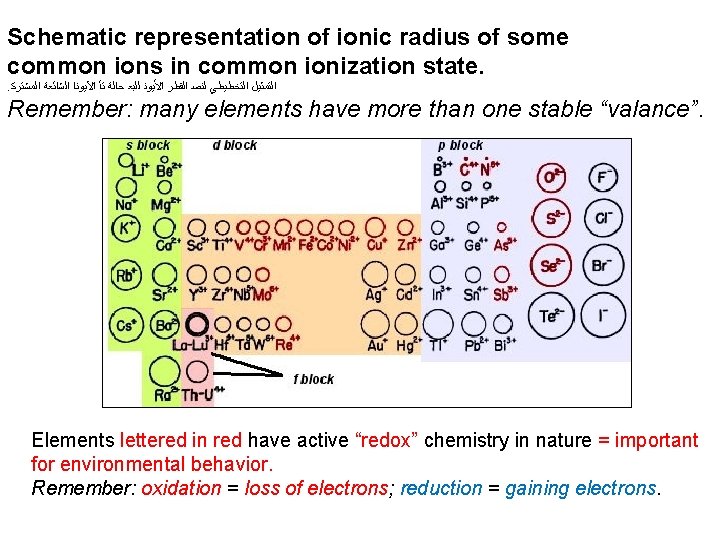
Schematic representation of ionic radius of some common ions in common ionization state. . ﺍﻟﺘﻤﺜﻴﻞ ﺍﻟﺘﺨﻄﻴﻄﻲ ﻟﻨﺼ ﺍﻟﻘﻄﺮ ﺍﻷﻴﻮﻧ ﻟﻠﺒﻌ ﺣﺎﻟﺔ ﺗﺄ ﺍﻵﻴﻮﻧﺎ ﺍﻟﺸﺎﺋﻌﺔ ﺍﻟﻤﺸﺘﺮﻛ Remember: many elements have more than one stable “valance”. Elements lettered in red have active “redox” chemistry in nature = important for environmental behavior. Remember: oxidation = loss of electrons; reduction = gaining electrons.
3. Ionization and Ionization Energy (aka ionization potential): Ionization is the removal or addition of one or more electron(s) from a neutral atom or molecule, making a charged (ionized) species. IE measures how easy or hard it is to remove an electron from an element or ion. (Ionization Energy ) Energies of filled electronic orbitals give rise to common oxidation states for individual elements. . ﻃﺎﻗﺎﺕ ﺍﻻﻭﺭﺑﻴﺘﺎﻻﺕ ﺇﻟﻜﺘﺮﻭﻧﻴﺔ ﻭﺋﺔ ﺳ ﺍﻻﺭﺗﻔﺎﻉ ﺣﺎﻻﺕ ﺃﻜﺴﺪ ﺍﻟﻌﺎﻣﺔ ﻟﻠﻌﻨﺎﺻ ﺍﻟﻔﺮﺩﻳ Electronic structure determines ionic charge and IE.
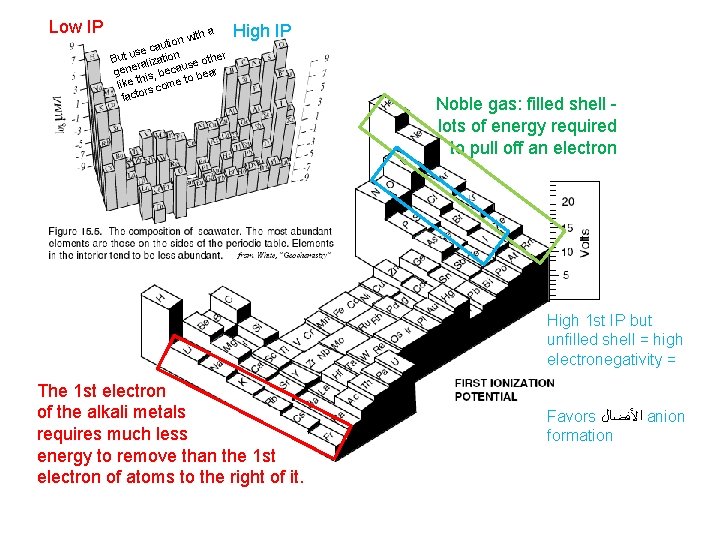
Low IP a with n o i t au se c But u alization se other r u gene is, beca bear o h t like s come t r facto High IP Noble gas: filled shell lots of energy required to pull off an electron High 1 st IP but unfilled shell = high electronegativity = The 1 st electron of the alkali metals requires much less energy to remove than the 1 st electron of atoms to the right of it. Favors ﺍﻷﻔﻀﺎﻝ anion formation
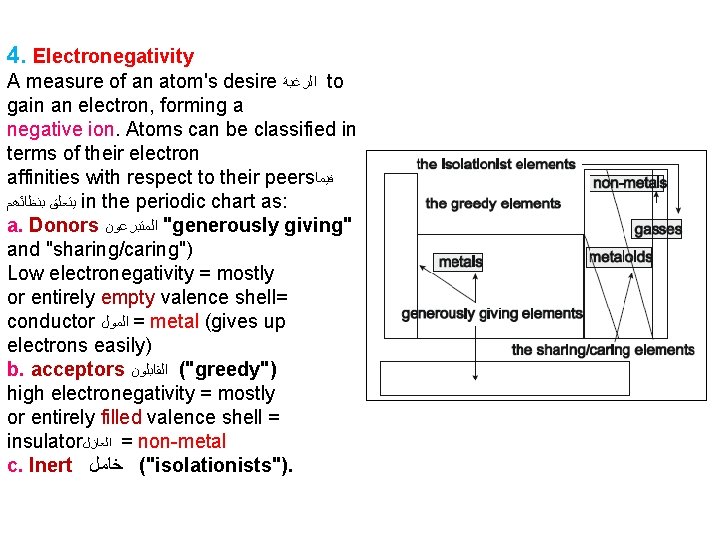
4. Electronegativity A measure of an atom's desire ﺍﻟﺮﻏﺒﺔ to gain an electron, forming a negative ion. Atoms can be classified in terms of their electron affinities with respect to their peers ﻓﻴﻤﺎ ﻳﺘﻌﻠﻖ ﺑﻨﻈﺎﺋﻫﻢ in the periodic chart as: a. Donors " ﺍﻟﻤﺘﺒﺮﻋﻮﻥ generously giving" and "sharing/caring") Low electronegativity = mostly or entirely empty valence shell= conductor = ﺍﻟﻤﻮﻝ metal (gives up electrons easily) b. acceptors "( ﺍﻟﻘﺎﺑﻠﻮﻥ greedy") high electronegativity = mostly or entirely filled valence shell = insulator = ﺍﻟﻌﺎﺯﻝ non-metal c. Inert "( ﺧﺎﻣﻞ isolationists").
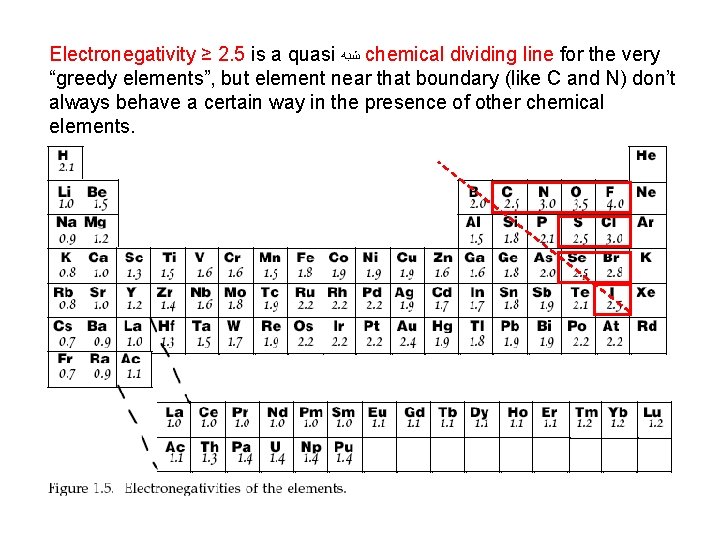
Electronegativity ≥ 2. 5 is a quasi ﺷﺒﻪ chemical dividing line for the very “greedy elements”, but element near that boundary (like C and N) don’t always behave a certain way in the presence of other chemical elements.
- Slides: 18